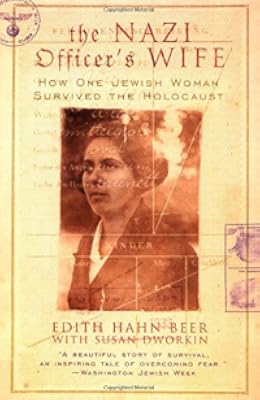
The Nazi Officer's Wife: How One Jewish Woman Survived the Holocaust
by Edith Hahn Beer
On This Page
Description
Edith Hahn was an outspoken young woman in Vienna when the Gestapo forced her into a ghetto and then into a slave labor camp. When she returned home months later, she knew she would become a hunted woman and went underground. With the help of a Christian friend, she emerged in Munich as Grete Denner. There she met Werner Vetter, a Nazi Party member who fell in love with her. Despite Edith's protests and even her eventual confession that she was Jewish, he married her and kept her identity a show more secret. In wrenching detail, Edith recalls a life of constant, almost paralyzing fear. She tells how German officials casually questioned the lineage of her parents; how during childbirth she refused all painkillers, afraid that in an altered state of mind she might reveal something of her past; and how, after her husband was captured by the Soviets, she was bombed out of her house and had to hide while drunken Russian soldiers raped women on the street. Despite the risk it posed to her life, Edith created a remarkable record of survival. She saved every document, as well as photographs she took inside labor camps. Now part of the permanent collection at the Holocaust Memorial Museum in Washington, D.C., these hundreds of documents, several of which are included in this volume, form the fabric of a gripping new chapter in the history of the Holocaust-complex, troubling, and ultimately triumphant. show lessTags
Recommendations






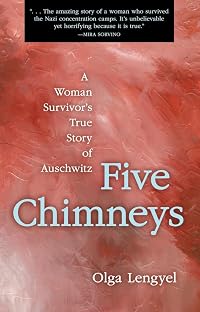
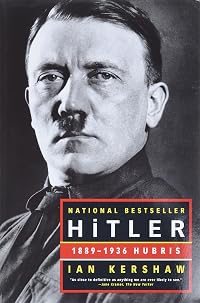
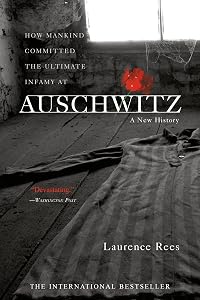
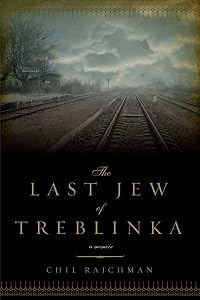
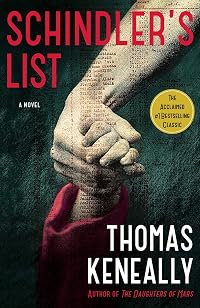

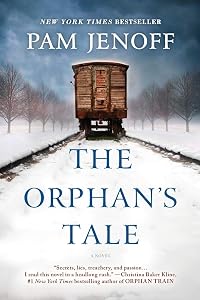
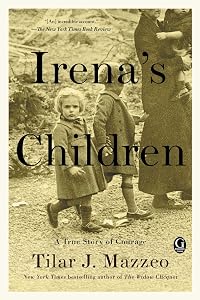
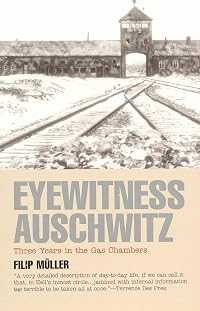

Member Recommendations

by meggyweg
by anonymous user

Member Reviews
Edith Hahn Beer’s memoir of her life prior to and during World War II in Austria and Germany. The book starts before the war and covers her decision to remain in Austria as well as events that led to her marriage to a Nazi. As conditions for European Jews worsened, and with assistance from others, she made the decision to “hide in plain sight.” This is a riveting story of identity, fear, courage, guilt, and redemption. It provides another slice of history, depicting the personal impact of the Nazi regime. It shows the lengths to which a person needed to go to survive. At times, it seemed she was almost apologizing for what she decided to do to escape Nazi persecution, but who can blame her? The tone of this book is one of candor. show more She does not shy away from addressing difficult subjects. I felt like I was sitting down with the author and listening to her tell me her story. Recommended to those interested in the history of World War II, especially personal experiences of that time period. show less
I have mostly read novels and only a couple of nonfiction books about WWII but this might be the first memoir. It doesn’t really talk about concentration camps and atrocities committed on the prisoners but about the human side of the survivors and people who helped them on the way.
Edith is from a loving Jewish family in Vienna studying to be a lawyer. When the Nazi’s come, she is denied her degree, forced out of her home into a ghetto and finally sent to labor camp. She works almost eighty hour work weeks while starving and her only hope being the letters and packages that she received from her mom and Pepi. After her mother is deported to Poland, she refuses to report to the authorities and after managing to secure false papers, show more moves to Munich. There she meets a Nazi party member Werner who falls in love with her and they get married.
There were some comments about Edith’s life that demeaned her for surviving as a German Nazi wife. But that’s the whole point of this book. In times of war, when living is the only matter of concern, is it really worth it to judge a woman for setting up a false identity and surviving under the enemy’s nose. Edith is a smart, intelligent woman who is deprived of everything – her education, dignity, a future, even basic food and shelter – and when all doors close for her freedom, she chooses the one way that she finds. She lives in constant fear of being caught, every minute of her existence, but still manages to carve out a life and family for herself. She suppresses her witty intelligent personality to become a meek submissive wife of a Nazi because all she wants is to live; because that’s the only thing she has left. Finally, when the occupation ends, she gets a chance to resume her true identity, even become a lawyer and judge to help the people who have lost everything in the war.
But this book is not just about Edith. It’s about all the people who chose to help her. Her friend Christl, a German who gave Edith her original papers at great peril to herself. Maria Niedarall, another German who provided her all the encouragement and resources to escape. Pepi, her eternal love whose letters provided her great relief and hope during the whole ordeal before her escape. Even Werner in some ways helps her because despite being his aggressive self and knowing Edith’s truth, he never betrays her.
This book is about humanity – how seemingly good people can turn their backs on friends for personal safety and well-being while at the same time, people from unexpected quarters risk their lives to help their fellow citizens. I think this book is a must read for anyone who thinks living in wartime and surviving is a black and white. Because it is most definitely not. show less
Edith is from a loving Jewish family in Vienna studying to be a lawyer. When the Nazi’s come, she is denied her degree, forced out of her home into a ghetto and finally sent to labor camp. She works almost eighty hour work weeks while starving and her only hope being the letters and packages that she received from her mom and Pepi. After her mother is deported to Poland, she refuses to report to the authorities and after managing to secure false papers, show more moves to Munich. There she meets a Nazi party member Werner who falls in love with her and they get married.
There were some comments about Edith’s life that demeaned her for surviving as a German Nazi wife. But that’s the whole point of this book. In times of war, when living is the only matter of concern, is it really worth it to judge a woman for setting up a false identity and surviving under the enemy’s nose. Edith is a smart, intelligent woman who is deprived of everything – her education, dignity, a future, even basic food and shelter – and when all doors close for her freedom, she chooses the one way that she finds. She lives in constant fear of being caught, every minute of her existence, but still manages to carve out a life and family for herself. She suppresses her witty intelligent personality to become a meek submissive wife of a Nazi because all she wants is to live; because that’s the only thing she has left. Finally, when the occupation ends, she gets a chance to resume her true identity, even become a lawyer and judge to help the people who have lost everything in the war.
But this book is not just about Edith. It’s about all the people who chose to help her. Her friend Christl, a German who gave Edith her original papers at great peril to herself. Maria Niedarall, another German who provided her all the encouragement and resources to escape. Pepi, her eternal love whose letters provided her great relief and hope during the whole ordeal before her escape. Even Werner in some ways helps her because despite being his aggressive self and knowing Edith’s truth, he never betrays her.
This book is about humanity – how seemingly good people can turn their backs on friends for personal safety and well-being while at the same time, people from unexpected quarters risk their lives to help their fellow citizens. I think this book is a must read for anyone who thinks living in wartime and surviving is a black and white. Because it is most definitely not. show less
Edith Hahn Beer’s memoir of her life prior to and during World War II in Austria and Germany. The book starts before the war and covers her decision to remain in Austria as well as events that led to her marriage to a Nazi. As conditions for European Jews worsened, and with assistance from others, she made the decision to “hide in plain sight.” This is a riveting story of identity, fear, courage, guilt, and redemption. It provides another slice of history, depicting the personal impact of the Nazi regime. It shows the lengths to which a person needed to go to survive. At times, it seemed she was almost apologizing for what she decided to do to escape Nazi persecution, but who can blame her? The tone of this book is one of candor. show more She does not shy away from addressing difficult subjects. I felt like I was sitting down with the author and listening to her tell me her story. Recommended to those interested in the history of World War II, especially personal experiences of that time period. show less
This was an excellent memoir, written many many years after the fact by a Jewish woman who survived the Nazi takeover of Austria and all the subsequent horrors through luck, unexpected kindnesses, and ingenuity. This is not a story of survival in the concentration camps, or of hiding out in attics, but rather of assuming a false identity and living a life "beneath the surface of society". After the Russian Army defeated the Germans and took over the town where Edith (then known as Grete) was living, an official asked her "From which camp did you come?". Her answer was "I managed without a camp." Not without hardships and nearly constant fear, however. On the eve of obtaining her qualifications as a lawyer and judge, Edith Hahn was told show more that she would not be allowed to take the final exam, and that as a Jew she was forbidden to return to the University of Vienna for any reason. For the next 8 years Edith managed to hide her race from the official world until the Nazi regime fell, at which time she triumphantly resurrected her true identity and became a family court judge for a brief time -- "the one and only time I had even the slightest power to alleviate any of the suffering in this world."
The title is somewhat misleading, since she did not marry a Nazi officer (her husband was nominally a Nazi, but not even in the military when she married him), and her marriage was only one of the factors that kept her alive and under the radar throughout the course of the war. Not only did she and her daughter survive, but so did a fairly extensive archive of letters, photos and official documents she and a former lover each held on to, at considerable risk. Those documents are now in the custody of the Holocaust Memorial Museum in Washington, D.C. The author died in Israel earlier this year (2009). Highly recommended as a revealing look at life in Nazi Europe from a rather unusual perspective. show less
The title is somewhat misleading, since she did not marry a Nazi officer (her husband was nominally a Nazi, but not even in the military when she married him), and her marriage was only one of the factors that kept her alive and under the radar throughout the course of the war. Not only did she and her daughter survive, but so did a fairly extensive archive of letters, photos and official documents she and a former lover each held on to, at considerable risk. Those documents are now in the custody of the Holocaust Memorial Museum in Washington, D.C. The author died in Israel earlier this year (2009). Highly recommended as a revealing look at life in Nazi Europe from a rather unusual perspective. show less
What a powerful memoir this was - very authentically told - of one woman's life before, during, and after WWII. Edith's words transported me to a time when nothing was as it seemed, when fear became a part of every breath, and trust became a game of russian roulette.
From the title alone, before reading the book, I assumed that Edith, a Jewish woman, lied her way into marriage to a Nazi officer - the truth was far more interesting as this was a story of love and honesty.
From the title alone, before reading the book, I assumed that Edith, a Jewish woman, lied her way into marriage to a Nazi officer - the truth was far more interesting as this was a story of love and honesty.
The author of this memoir was a law student in Vienna when Austria was taken over by the Germans in 1938. Hahn's family were non-observant Jews, but this didn't matter to the Nazis. Edith had completed her studies except for final exams, and she was unable to finish her degree. Hahn spent a couple of years in a work camp doing farm labor and made her way back to Vienna after her release. (This was before the Jews were rounded up and sent to death camps.) Hahn managed to evade transport to Poland with other Viennese Jews. When it became too dangerous for her to continue to hide in Vienna, she assumed the identity of a non-Jewish friend and moved to Germany. She met and married a German man who was a member of the Nazi party. He cared show more more for his own interests than his country's, so when he found out Edith's true identity he did not turn her in. Many of the Holocaust biographies and memoirs I've read are about persons who survived the death camps. It was interesting to read a different kind of survival story. Edith survived probably because she was independent and had no other family members that she was trying to protect. show less
A fascinating look at a little-known aspect of Jewish survival of the Holocaust - hiding in the open. Edith, a lively young Jewish woman with an enviable life in pre-war Vienna, finds herself and her half-Jewish boyfriend Pepi more and more restricted and threatened as Hitler gains power. Edith's experiences in the ghetto, on a slave-labor asparagus farm, in a box factory, are told in a vivid matter-of-fact manner that brings such treatment to horrid life, without being hysterical or manipulative.
When Edith is sent back to join her mother in being sent to Poland (and the death camps), she decides not to report. While in hiding, she tries to stay connected to her friends and Pepi, but their fear of her and her Jewishness kills their love show more for her, and she finds herself adrift. I was struck by the relationship with Pepi and how it changes as she goes deeper underground. Edith is also very eloquent in her discussion of going underground from a psychological aspect. The long-term burial of her real identity, her real personality, her real feelings has a deep and lasting effect on her life for years to come.
Her marriage to Werner Vetter was fascinating. He was Aryan, yes. He was a Nazi party member, yes. But he was also a gifted liar, a lip-service Nazi at best, and fully aware of "Grete's" real identity. Her submission and real fondness for him wars with her re-assertion of self after the war. His fondness for her and very real enjoyment of flouting German law wars with his hidden antisemitism and his need for control. It is a complicated and volatile relationship. The story is a unique and seldom-told one, and I recommend it. show less
When Edith is sent back to join her mother in being sent to Poland (and the death camps), she decides not to report. While in hiding, she tries to stay connected to her friends and Pepi, but their fear of her and her Jewishness kills their love show more for her, and she finds herself adrift. I was struck by the relationship with Pepi and how it changes as she goes deeper underground. Edith is also very eloquent in her discussion of going underground from a psychological aspect. The long-term burial of her real identity, her real personality, her real feelings has a deep and lasting effect on her life for years to come.
Her marriage to Werner Vetter was fascinating. He was Aryan, yes. He was a Nazi party member, yes. But he was also a gifted liar, a lip-service Nazi at best, and fully aware of "Grete's" real identity. Her submission and real fondness for him wars with her re-assertion of self after the war. His fondness for her and very real enjoyment of flouting German law wars with his hidden antisemitism and his need for control. It is a complicated and volatile relationship. The story is a unique and seldom-told one, and I recommend it. show less
Members
- Recently Added By
Lists

Best War Stories
87 works; 16 members

Holocaust
100 works; 13 members

Books Set in Germany
74 works; 12 members

Books about World War II
241 works; 22 members

KayStJ's to-read list
1,616 works; 11 members

Writers at Risk
106 works; 17 members
Books Read in 2007
326 works; 8 members

Holocaust Narratives
159 works; 3 members

Best Survival Stories
97 works; 15 members

Books I have Recommended
208 works; 1 member
Author Information

2+ Works 2,283 Members
All Editions
Some Editions
Awards and Honors
Awards
Notable Lists
Common Knowledge
- Canonical title
- The Nazi Officer's Wife: How One Jewish Woman Survived the Holocaust
- Original publication date
- 1999
- People/Characters
- Edith Hahn; Josef (Pepi) Rosenfeld (Pepi); Werner Vetter
- Important places
- Vienna, Austria; Brandenburg, Germany
- Important events
- Holocaust (1933 | 1945); World War II (1939 | 1945); The Anschluss; Kristallnacht
- Dedication
- In loving memory of my mother, Klothilde Hahn
- First words
- After a while, there were no more onions.
- Quotations
- So you see, we had all the burdens of being Jewish in an anti-Semitic country, but none of the strengths—the Torah learning, the prayers, the welded community. We spoke no Yiddish or Hebrew. We had no deep faith in God. ... (show all)We were not Polish Chassidim or Lithuanian yeshiva scholars. We were not bold free Americans... And there were no Israelis then, no soldiers in the desert, no "nation like other nations." Hold that in your mind as I tell you this story.
I think my father knew how to be Jewish, but he did not teach us. He must have thought we would absorb it with our mother's milk. - Last words
- (Click to show. Warning: May contain spoilers.)And my daughter, Angela, wanting more than anything to know the whole truth at last, read them.
- Canonical DDC/MDS
- 940.5318092
Classifications
- Genres
- Biography & Memoir, General Nonfiction, History, Nonfiction
- DDC/MDS
- 940.5318092 — History & geography History of Europe History of Europe 1918- World War II, 1939-1945 Social, political, economic history; Holocaust Holocaust Standard subdivisions History, geographic treatment, biography Biography
- LCC
- DS135 .A93 .B44 — History of Europe, Asia, Africa and Oceania Asia History of Asia Israel (Palestine). The Jews Jews outside of Palestine
- BISAC
Statistics
- Members
- 2,281
- Popularity
- 8,806
- Reviews
- 67
- Rating
- (3.89)
- Languages
- 9 — Danish, Dutch, English, French, German, Italian, Portuguese, Russian, Swedish
- Media
- Paper, Audiobook, Ebook
- ISBNs
- 33
- UPCs
- 2
- ASINs
- 17