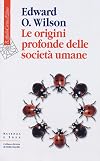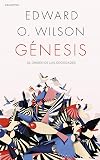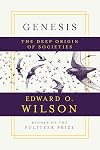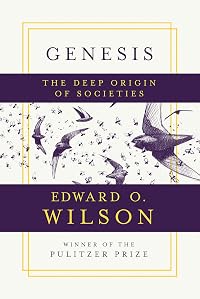
Genesis: The Deep Origin of Societies
by Edward O. Wilson
On This Page
Description
Asserting that religious creeds and philosophical questions can be reduced to purely genetic and evolutionary components, and that the human body and mind have a physical base obedient to the laws of physics and chemistry, Genesis demonstrates that the only way for us to fully understand human behavior is to study the evolutionary histories of nonhuman species. Of these, Wilson demonstrates that at least seventeen-among them the African naked mole rat and the sponge-dwelling shrimp-have been show more found to have advanced societies based on altruism and cooperation. Whether writing about midges who "dance about like acrobats" or schools of anchovies who protectively huddle "to appear like a gigantic fish," or proposing that human society owes a debt of gratitude to "postmenopausal grandmothers" and "childless homosexuals," Genesis is a pithy yet path-breaking work of evolutionary theory, braiding twenty-first-century scientific theory with the lyrical biological and humanistic observations for which Wilson is known. show lessTags
Recommendations











Member Reviews
There exists within evolutionary theory a deep contradiction, one that Charles Darwin noticed back in the nineteenth century. The problem is this: how can evolution by natural selection account for altruistic behavior that benefits the group at the expense of the individual?
The standard view of natural selection, operating at the level of the gene, goes as follows: genetic mutation results in variation in form and function in the individual, which either confers an advantage or disadvantage (or is neutral) in relation to other individuals. If the mutation enhances survival and reproduction in a particular environment, then that individual will flourish and the frequency of those genes will increase within the population.
The problem is show more in explaining altruistic behavior that decreases individual fitness and yet persists, as when insects in a colony forgo reproduction in service of the few members that can reproduce. Standard explanations of natural selection would predict that this behavior would be quickly extinguished.
The answer to the paradox of altruism—one thought of by Darwin himself—is the concept of group selection (facilitated by cooperation among group members), which is the running theme throughout Edward O. Wilson’s latest book, Genesis, used to explain the altruistic behavior found in both insect colonies and other social animals, including humans.
But isn’t group selection a misleading and false way to think about evolution? Doesn’t evolution happen at the level of the gene? And aren’t bodies and groups simply vehicles for the transmission of genes? I used to think so, but after reading this book, along with David Sloan Wilson’s book This View of Life, I now see the inescapable logic of group selection. Here’s Wilson describing the concept:
Let’s unpack this for a minute. Wilson is not denying that genes are the only true replicators; he’s simply pointing out the fact that selection can occur at multiple levels, each of which impact the transmission of genes.
Genes build bodies as vehicles, but it’s the interaction of the vehicle with the environment that is ultimately the target of selection. Individual bodies that have survival and reproductive advantages outcompete other individual bodies and increase the frequency of their genes within the population.
You can take this logic one step further by considering extended phenotypes. A phenotype is “the set of observable characteristics of an individual resulting from the interaction of its genotype with the environment.” The phenotype is simply the physical expression of a trait. An extended phenotype is the genetic expression of a trait outside the body, for example a spider's web. Spiders that weave better webs have an evolutionary advantage and so the genes for the better webs increase their frequency within the population.
Now, just think of groups as a type of extended phenotype. Individuals with cooperative traits, if they allow the group (a kind of superorganism) to function better and beat out other groups, will transmit their cooperative genes by virtue of group survival (and that otherwise would have died out without the group, in the same way a spider will die out without its web).
There are several examples of this in nature, which Wilson recounts in the book. For example, the cells of our body carry out programmed cell death for the benefit of our bodies, and worker ants forgo their own reproduction to serve the reproduction of the queen, leading to a stronger colony that can outcompete other groups. The worker ants are analogous to the individual cells of our body when they sacrifice themselves for the greater good.
The bottom line is this: if trait X persists in a population but would not otherwise persist outside of the group, then trait X has been selected for at the group level, even though it's still the genes prescribing the trait.
This adequately resolves the paradox of altruism, and explains altruistic behavior in all eusocial insects and mammals, including humans. Wilson further explains, in detail and throughout the book, how this came about in biological terms and the evidence for the genetic mutations that can result in the creation of eusocial or cooperative societies of altruists. It’s in these various real-world examples and experiments that the ideas really come to life—and are difficult to argue against.
My only complaint is that book ends rather abruptly. The final chapter on the human story could have been expanded, and the final paragraph ended as if the author ran out of time during a proctored exam. The book could have greatly benefited from a concluding chapter that brought all of the ideas together.
Nonetheless, if you’re looking for a quick read that synthesizes the best evidence for the origin of social, cooperative species, one devoid of myth and superstition and based on the best available scientific evidence, then you won’t be disappointed. I think you’ll also come to see the logic of group selection as the solution to the paradox of altruism, and, in fact, as the only possible solution. show less
The standard view of natural selection, operating at the level of the gene, goes as follows: genetic mutation results in variation in form and function in the individual, which either confers an advantage or disadvantage (or is neutral) in relation to other individuals. If the mutation enhances survival and reproduction in a particular environment, then that individual will flourish and the frequency of those genes will increase within the population.
The problem is show more in explaining altruistic behavior that decreases individual fitness and yet persists, as when insects in a colony forgo reproduction in service of the few members that can reproduce. Standard explanations of natural selection would predict that this behavior would be quickly extinguished.
The answer to the paradox of altruism—one thought of by Darwin himself—is the concept of group selection (facilitated by cooperation among group members), which is the running theme throughout Edward O. Wilson’s latest book, Genesis, used to explain the altruistic behavior found in both insect colonies and other social animals, including humans.
But isn’t group selection a misleading and false way to think about evolution? Doesn’t evolution happen at the level of the gene? And aren’t bodies and groups simply vehicles for the transmission of genes? I used to think so, but after reading this book, along with David Sloan Wilson’s book This View of Life, I now see the inescapable logic of group selection. Here’s Wilson describing the concept:
“For group-level traits as for individuals, the unit of selection is the gene that prescribes the trait. The targets of natural selection, which determine whether genes do either well or poorly, are the traits prescribed by the genes. An individual in a group that competes with other members for food, mates, and status is engaged in natural selection at the individual level. Individuals that interact with other group members in ways that create superior organization through hierarchies, leadership, and cooperation, are engaged in natural selection at the group level. The greater the price extracted by altruism and the resulting loss to the individual’s survival and reproduction, the larger must be the benefit to the group as a whole. The evolutionary biologist David Sloan Wilson (no relation) has nicely expressed the rule for the two levels of selection as follows: within groups, selfish individuals win against altruists, but groups of altruists beat groups of selfish individuals.”
Let’s unpack this for a minute. Wilson is not denying that genes are the only true replicators; he’s simply pointing out the fact that selection can occur at multiple levels, each of which impact the transmission of genes.
Genes build bodies as vehicles, but it’s the interaction of the vehicle with the environment that is ultimately the target of selection. Individual bodies that have survival and reproductive advantages outcompete other individual bodies and increase the frequency of their genes within the population.
You can take this logic one step further by considering extended phenotypes. A phenotype is “the set of observable characteristics of an individual resulting from the interaction of its genotype with the environment.” The phenotype is simply the physical expression of a trait. An extended phenotype is the genetic expression of a trait outside the body, for example a spider's web. Spiders that weave better webs have an evolutionary advantage and so the genes for the better webs increase their frequency within the population.
Now, just think of groups as a type of extended phenotype. Individuals with cooperative traits, if they allow the group (a kind of superorganism) to function better and beat out other groups, will transmit their cooperative genes by virtue of group survival (and that otherwise would have died out without the group, in the same way a spider will die out without its web).
There are several examples of this in nature, which Wilson recounts in the book. For example, the cells of our body carry out programmed cell death for the benefit of our bodies, and worker ants forgo their own reproduction to serve the reproduction of the queen, leading to a stronger colony that can outcompete other groups. The worker ants are analogous to the individual cells of our body when they sacrifice themselves for the greater good.
The bottom line is this: if trait X persists in a population but would not otherwise persist outside of the group, then trait X has been selected for at the group level, even though it's still the genes prescribing the trait.
This adequately resolves the paradox of altruism, and explains altruistic behavior in all eusocial insects and mammals, including humans. Wilson further explains, in detail and throughout the book, how this came about in biological terms and the evidence for the genetic mutations that can result in the creation of eusocial or cooperative societies of altruists. It’s in these various real-world examples and experiments that the ideas really come to life—and are difficult to argue against.
My only complaint is that book ends rather abruptly. The final chapter on the human story could have been expanded, and the final paragraph ended as if the author ran out of time during a proctored exam. The book could have greatly benefited from a concluding chapter that brought all of the ideas together.
Nonetheless, if you’re looking for a quick read that synthesizes the best evidence for the origin of social, cooperative species, one devoid of myth and superstition and based on the best available scientific evidence, then you won’t be disappointed. I think you’ll also come to see the logic of group selection as the solution to the paradox of altruism, and, in fact, as the only possible solution. show less
One of the things I like best about reading E.O. Wilson's books is his ongoing willingness and excitement to engage with new and recent scholarship and discovery. He's not just repeating the same ideas he wrote about forty years ago: he's revising them and updating them based on current research, and also putting long-held views in conversation with the new data.
I was enthralled by this book. I got to see the wide ranging ideas of a noteworthy biologist and his approach to the complexity of the animal kingdom. Wilson organizes evolution into six transitions:
1. Origin of Life.
2. The invention of complex cells.
3. The invention of sexual reproduction (DNA & multiplication of species).
4. The origin of organisms composed of multiple cells.
5. The origin of societies.
6. The origin of language.
The idea or process of altruism is a crucial factor in evolution. With so many species abounding allows scientists to better codify the process of reconstructing what happens in evolution. But eusociality is not a common outcome, where the individual organisms allow themselves certain different roles of living show more such as bees and wasps. Natural selection shows us how various species compete and move to possibly more cooperation (or not). The aspect of violence is prominent within higher mammals, particularly humans and sows that nature is not really gentle. But Wilson closes with the virtue of storytelling among all human societies. show less
1. Origin of Life.
2. The invention of complex cells.
3. The invention of sexual reproduction (DNA & multiplication of species).
4. The origin of organisms composed of multiple cells.
5. The origin of societies.
6. The origin of language.
The idea or process of altruism is a crucial factor in evolution. With so many species abounding allows scientists to better codify the process of reconstructing what happens in evolution. But eusociality is not a common outcome, where the individual organisms allow themselves certain different roles of living show more such as bees and wasps. Natural selection shows us how various species compete and move to possibly more cooperation (or not). The aspect of violence is prominent within higher mammals, particularly humans and sows that nature is not really gentle. But Wilson closes with the virtue of storytelling among all human societies. show less
Nice concise treatment with a deeper discussion of the tension between individual selfishness and group cooperation. Lots of examples from the insect world that is Wilson's expertise.
I liked the material, but Hogan's voice tends to drone so I had to rewind a few times.
Ratings
Members
- Recently Added By
Lists

Big History
72 works; 1 member
Author Information

72+ Works 18,026 Members
He was born in Birmingham, Alabama, in 1929. He is currently Pellegrino University Research Professor & Honorary Curator in Entomology of the Museum of Comparative Zoology at Harvard. He is on the Board of Directors of the Nature Conservancy, Conservation International & the American Museum of Natural History. He lives in Lexington, Massachusetts. show more (Bowker Author Biography) show less
Some Editions
Common Knowledge
- Canonical title*
- Le origini profonde delle società umane
- Original title
- Genesis: The Deep Origin of Societies
- Original publication date
- 2019
- First words
- Prologue
All questions of philosophy that address the human condition come down to three: what are we, what created us, and what do we wish ultimately to become.
The key to the long-term survival of humanity depends on full and correct self-understanding, not just of the past three thousand years of literate history, not across the ten thousand years of of civilization begun during th... (show all)e Neolithic revolution, but back two hundred thousand years with the emergence of fully formed Homo sapiens. - Last words
- (Click to show. Warning: May contain spoilers.)In short, longer social interaction is a key component in the evolution of a larger brain and higher intelligence.
- Publisher's editor
- Wiel, Robert
- Blurbers
- Rhodes, Richard; Wrangham, Richard; Ruse, Michael
*Some information comes from Common Knowledge in other languages. Click "Edit" for more information.
Classifications
Statistics
- Members
- 210
- Popularity
- 155,692
- Reviews
- 5
- Rating
- (3.78)
- Languages
- 5 — Chinese, English, Italian, Portuguese, Spanish
- Media
- Paper, Audiobook, Ebook
- ISBNs
- 17
- ASINs
- 4