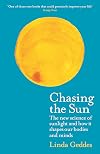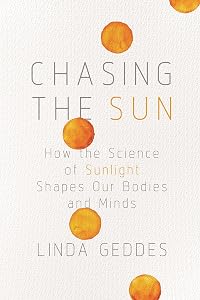
Chasing the sun: the new science of sunlight and how it shapes our bodies and minds
by Linda Geddes
On This Page
Description
Our biology is set up to work in partnership with the sun. Little wonder then that humans have long worshipped and revered our nearest star: life itself arose on earth because its relationship with the sun was a special one, and that relationship still affects us well into the era of electric lighting, indoor workdays, and vitamin D supplements. What are we losing when we sever this ancient biological tie to the sun by spending more and more time inside during the day and surrounded by show more screens at night? Informed by cutting-edge scientific research and sparkling with memorable characters-from the modern druids who worship at Stonehenge each solstice to the Amish farmers who may have the right idea about healthy sleep patterns-Linda Geddes's Chasing the Sun analyzes all aspects of our relationship to the sun. The fascinating stories, innovative science, and unique perspectives in this book make it clear that the ancients were right to put the sun at the center of our world and that it is crucial that we remember this bond as we shape our lives today. show lessTags
Recommendations





























Member Recommendations
WendyRobyn Different topic. Same sense of wonder, same useful applicability to health and wellbeing.
Member Reviews
The sun rises every single day and has done so for the past few billion years. This source of energy has played a pivotal part in the development of life on Earth and not unsurprising, it has been a focus of our collective attention for time immemorial. Many cultures have worshipped it or have tracked its regular path through the heavens and tried to elucidate meaning from it.
As the sun has been a central part of almost all the Earth’s inhabitants, lots of creatures have evolved in tandem with it, including us. Research has shown that the sun is key to our mental well being, sleep, immune systems and circadian rhythms. Too much sun is bad for us as it can cause skin cancers but then so is too little, those that rarely see the sun do show more not generate enough vitamin D that is essential for their health.
One of the biggest disrupters to our health in the modern day is artificial light. Ever since the light bulb was invented, cheap affordable light has been available to all so we have retreated indoors turning pallid in the glow of the modern screens. Office lighting is a good example. The output from the ceilings lights is fairly poor, you only get a fraction of light, around 200 to 300 lux, which is nothing when you compare it to the amount light on a bright day which can reach around 100,000 lux. All of these effects are cumulative, and if you live in northern Europe, then you are much worse off in winter because of the very short days.
I liked this book a lot, it does what a good popular science book should do, gives you a good overview of the subject and touches on lots of different subjects without becoming too academic. On certain elements, for example, on our body clocks and how to improve lighting for those on shift work, in particular, Geddes explores them in a little more depth. Worth reading. show less
As the sun has been a central part of almost all the Earth’s inhabitants, lots of creatures have evolved in tandem with it, including us. Research has shown that the sun is key to our mental well being, sleep, immune systems and circadian rhythms. Too much sun is bad for us as it can cause skin cancers but then so is too little, those that rarely see the sun do show more not generate enough vitamin D that is essential for their health.
One of the biggest disrupters to our health in the modern day is artificial light. Ever since the light bulb was invented, cheap affordable light has been available to all so we have retreated indoors turning pallid in the glow of the modern screens. Office lighting is a good example. The output from the ceilings lights is fairly poor, you only get a fraction of light, around 200 to 300 lux, which is nothing when you compare it to the amount light on a bright day which can reach around 100,000 lux. All of these effects are cumulative, and if you live in northern Europe, then you are much worse off in winter because of the very short days.
I liked this book a lot, it does what a good popular science book should do, gives you a good overview of the subject and touches on lots of different subjects without becoming too academic. On certain elements, for example, on our body clocks and how to improve lighting for those on shift work, in particular, Geddes explores them in a little more depth. Worth reading. show less
Decent Exploration Of The Topic. A couple of caveats to this review up front: This book was released in 2019, and I've read at least a handful of books on the same general topic of human circadian rhythms both before and since. I also read it via Audible, so I have no way of knowing if its documentation is adequate or lacking. These caveats noted, to me this book was more a decent introduction to the general topic than a truly in depth or ground breaking look at it. Most of the things it covered were things I was already generally aware of and even knew a bit of the specifics of due to those other books. So to me, there truly wasn't much "new science" here at all. And yet, the book was very much approachable and enjoyable, and indeed show more seemed great for someone less read in the subject at hand. Geddes herself reads the Audible version, and it is quite clear she both knows her subject well and is genuinely passionate about it, so those are definite bonuses in my take on the book. Overall a truly solid introduction to the topics at hand, told in a very approachable manner even for those less familiar with them. Very much recommended. show less
I read this as a Blinkist summary. So haven’t actually read the full book. However, life is short and art is long and of the making of many books there is no end....so hence I’ve been using Blinkist and it’s better than I originally thought. But clearly one misses the detail of the full book. Here are some snippets from the Blinkist Summary which caught my attention:
There’s actually a lot of internal timing going on in your body, which allows its many functions and processes, such as digestion, to run smoothly. And there’s a single master clock called the suprachiasmatic nucleus, or SCN. It’s essentially a group of around 20,000 cells that reside in your hypothalamus, that plays an important role in many functions, like show more regulating hormones in the body. [This was new information to me...I didn’t know where the circardian clock resided or how it worked]. The SCN coordinates your circadian rhythms. In the morning, certain hormones need to kick in, blood pressure needs to rise, and muscles and energy levels need to get into gear so you can go about your day with strength and vigor.
Likewise, in order for you to have a peaceful night’s rest, your blood pressure and core body temperature need to decrease at bedtime. For this to happen at the right time, your circadian rhythms need to be in sync with the time of day.
So what is primarily responsible for setting this internal clock and making sure it stays on time? The sun. When the sun sets and light fades, it is a trigger for our bodies to start easing into night-time mode. When your eyes catch sunlight in the morning, it is the cue to shut off hormones like melatonin, that help you sleep, and turn on the hormones that make you hungry for breakfast. These rhythms are embedded deep in your DNA and can be traced back to the very primitive cyanobacteria. Plants also have their own circadian rhythms. [Triggered by light at certain wavelengths and I’ve often wondered how they are affected by exotic lighting schemes that illuminate them all night].
The ancient Romans and Greeks were convinced that the sun had healing powers and the Romans used sun baths, called solaria, as a treatment for ailments such as epilepsy, anaemia, asthma, jaundice, and obesity.
Human skin produces Vitamin D in reaction to sunlight. The average British office worker today gets about 587 lux of daily sun in the summertime and 210 lux in winter. Only 100-300 lux make it into the average workplace, making it at least ten times dimmer than outdoors
The average Amish person in Pennsylvania, who continues to work outdoors and gets 4,000 lux. [ A huge difference between inside and outside workers......I wonder how nmany lux farm workers in Australia are exposed to?] .....It isn’t just office workers who tend to be sun-deprived, either–school children suffer from the same lack of sun.......many of us spend our days indoors under artificial lights, working at a desk and staring at a computer screen. As a result, your circadian rhythms are constantly struggling to keep in sync with the actual time of day.
In particular, the blue-white light emitted from computer and smartphone screens can delay the release of the hormone melatonin that primes the body for sleep......According to the International Agency for Research in Cancer, circadian disruption is “probably carcinogenic to humans,”
The disruption of circadian rhythms can also have a huge effect on our mental health and mood. Since the late 1970s, one popular solution has been the light box, essentially a lamp that people can sit in front of and be bathed in substitute sunlight. The town of Rjukan, Norway, took the ambitious step of installing solspeilet, or sun mirrors, in the mountains
This has allowed the small, 3,000-person community two extra hours of much-appreciated direct sunlight on clear days. [Gee...who would want to live there!] In Sweden, a popular cure for Seasonal Affective Disorder (SAD) is time in a sauna followed by a dip in frigid waters......Like sunshine, the warm temperatures of a sauna produce nitric oxide in the skin,
which triggers the release of serotonin, which promotes a good mood. The subsequent dip in cold waters produces a fight-or-flight reaction in the body that, once it subsides, leaves a rush of endorphins.
Seasonal affective disorder is one thing, but chronic depression and bipolar disorder are much more serious issues......A growing number of doctors and researchers have been treating chronic depression and bipolar disorder with chronotherapy, which essentially aims to strengthen a person’s circadian rhythms....Neurologists know that a person’s circadian rhythms are closely tied to the release of neurochemicals like serotonin, which is what antidepressant medications attempt to influence.
Since 1996, Benedetti’s clinic has treated around a thousand patients with bipolar depression. And while many of them didn’t respond well to antidepressant drugs, [What’s “many of them”? mixing percentages and vague terms like “many” makes it impossible to compare] around 70 percent have experienced positive results after receiving triple chronotherapy. A lifestyle that adheres more closely to our inner clocks might be healthier than keeping time with the rest of society. If you understand the importance of circadian rhythms, you’re probably not a fan of daylight saving time, or DST, which disrupts the sleep routines of people across the world......different people have different chronotypes, such as a “night owl” or “lark”–an early riser. Many studies have shown that teenagers generally need more sleep than adults, and that they don’t perform well when they have to wake up early to make it to school by 8 a.m. or earlier. In Edina, multiple high schools shifted their start time from 7:20 to 8:30 a.m., and it proved to be an immediate success. Students felt less tired, got better grades, and attendance rates went up....Many businesses have also started to take chronotherapy seriously, installing indoor lighting that better mimics the way sunlight brightens and dims, and letting employees work from home when possible.
The key message: The sun is more important to our daily lives than you may think. To begin with, it is responsible for synchronizing our circadian rhythms, which are responsible for coordinating many of the functions in our bodies. From allowing us to get a good night’s sleep to controlling when hormones are released, our circadian rhythms are central to our overall performance and health. The sun also gives our bodies much-needed Vitamin D and can influence our moods. Research into mental health has found that resetting our circadian rhythms can help manage chronic depression. Schools and businesses around the world are starting to take our internal clocks more seriously.
Actionable advice: The next time you have jet lag, try taking melatonin. If you’ve ever experienced jet lag after taking a long international trip, then you’ve experienced a mild version of what can happen when your circadian rhythms get out of sync. To help get back in sync, take some melatonin around sunset. Your body naturally releases melatonin when it gets dark outside, as a way to prepare you for deep sleep. But if your circadian rhythms are synced to a different time zone halfway around the world, this is likely not taking place when it should. After a night or two of taking melatonin before bedtime, your rhythms should get back on track.
My take on the book summary: Generally liked it. Learned a few new things..though most of it was familiar to me. Would have liked a bit more on the biochemistry of the suprachiasmatic nucleus but, I guess, one is not going to get that in a “summary”. But probably won’t be rushing to invest in the full book. Three stars from me. show less
There’s actually a lot of internal timing going on in your body, which allows its many functions and processes, such as digestion, to run smoothly. And there’s a single master clock called the suprachiasmatic nucleus, or SCN. It’s essentially a group of around 20,000 cells that reside in your hypothalamus, that plays an important role in many functions, like show more regulating hormones in the body. [This was new information to me...I didn’t know where the circardian clock resided or how it worked]. The SCN coordinates your circadian rhythms. In the morning, certain hormones need to kick in, blood pressure needs to rise, and muscles and energy levels need to get into gear so you can go about your day with strength and vigor.
Likewise, in order for you to have a peaceful night’s rest, your blood pressure and core body temperature need to decrease at bedtime. For this to happen at the right time, your circadian rhythms need to be in sync with the time of day.
So what is primarily responsible for setting this internal clock and making sure it stays on time? The sun. When the sun sets and light fades, it is a trigger for our bodies to start easing into night-time mode. When your eyes catch sunlight in the morning, it is the cue to shut off hormones like melatonin, that help you sleep, and turn on the hormones that make you hungry for breakfast. These rhythms are embedded deep in your DNA and can be traced back to the very primitive cyanobacteria. Plants also have their own circadian rhythms. [Triggered by light at certain wavelengths and I’ve often wondered how they are affected by exotic lighting schemes that illuminate them all night].
The ancient Romans and Greeks were convinced that the sun had healing powers and the Romans used sun baths, called solaria, as a treatment for ailments such as epilepsy, anaemia, asthma, jaundice, and obesity.
Human skin produces Vitamin D in reaction to sunlight. The average British office worker today gets about 587 lux of daily sun in the summertime and 210 lux in winter. Only 100-300 lux make it into the average workplace, making it at least ten times dimmer than outdoors
The average Amish person in Pennsylvania, who continues to work outdoors and gets 4,000 lux. [ A huge difference between inside and outside workers......I wonder how nmany lux farm workers in Australia are exposed to?] .....It isn’t just office workers who tend to be sun-deprived, either–school children suffer from the same lack of sun.......many of us spend our days indoors under artificial lights, working at a desk and staring at a computer screen. As a result, your circadian rhythms are constantly struggling to keep in sync with the actual time of day.
In particular, the blue-white light emitted from computer and smartphone screens can delay the release of the hormone melatonin that primes the body for sleep......According to the International Agency for Research in Cancer, circadian disruption is “probably carcinogenic to humans,”
The disruption of circadian rhythms can also have a huge effect on our mental health and mood. Since the late 1970s, one popular solution has been the light box, essentially a lamp that people can sit in front of and be bathed in substitute sunlight. The town of Rjukan, Norway, took the ambitious step of installing solspeilet, or sun mirrors, in the mountains
This has allowed the small, 3,000-person community two extra hours of much-appreciated direct sunlight on clear days. [Gee...who would want to live there!] In Sweden, a popular cure for Seasonal Affective Disorder (SAD) is time in a sauna followed by a dip in frigid waters......Like sunshine, the warm temperatures of a sauna produce nitric oxide in the skin,
which triggers the release of serotonin, which promotes a good mood. The subsequent dip in cold waters produces a fight-or-flight reaction in the body that, once it subsides, leaves a rush of endorphins.
Seasonal affective disorder is one thing, but chronic depression and bipolar disorder are much more serious issues......A growing number of doctors and researchers have been treating chronic depression and bipolar disorder with chronotherapy, which essentially aims to strengthen a person’s circadian rhythms....Neurologists know that a person’s circadian rhythms are closely tied to the release of neurochemicals like serotonin, which is what antidepressant medications attempt to influence.
Since 1996, Benedetti’s clinic has treated around a thousand patients with bipolar depression. And while many of them didn’t respond well to antidepressant drugs, [What’s “many of them”? mixing percentages and vague terms like “many” makes it impossible to compare] around 70 percent have experienced positive results after receiving triple chronotherapy. A lifestyle that adheres more closely to our inner clocks might be healthier than keeping time with the rest of society. If you understand the importance of circadian rhythms, you’re probably not a fan of daylight saving time, or DST, which disrupts the sleep routines of people across the world......different people have different chronotypes, such as a “night owl” or “lark”–an early riser. Many studies have shown that teenagers generally need more sleep than adults, and that they don’t perform well when they have to wake up early to make it to school by 8 a.m. or earlier. In Edina, multiple high schools shifted their start time from 7:20 to 8:30 a.m., and it proved to be an immediate success. Students felt less tired, got better grades, and attendance rates went up....Many businesses have also started to take chronotherapy seriously, installing indoor lighting that better mimics the way sunlight brightens and dims, and letting employees work from home when possible.
The key message: The sun is more important to our daily lives than you may think. To begin with, it is responsible for synchronizing our circadian rhythms, which are responsible for coordinating many of the functions in our bodies. From allowing us to get a good night’s sleep to controlling when hormones are released, our circadian rhythms are central to our overall performance and health. The sun also gives our bodies much-needed Vitamin D and can influence our moods. Research into mental health has found that resetting our circadian rhythms can help manage chronic depression. Schools and businesses around the world are starting to take our internal clocks more seriously.
Actionable advice: The next time you have jet lag, try taking melatonin. If you’ve ever experienced jet lag after taking a long international trip, then you’ve experienced a mild version of what can happen when your circadian rhythms get out of sync. To help get back in sync, take some melatonin around sunset. Your body naturally releases melatonin when it gets dark outside, as a way to prepare you for deep sleep. But if your circadian rhythms are synced to a different time zone halfway around the world, this is likely not taking place when it should. After a night or two of taking melatonin before bedtime, your rhythms should get back on track.
My take on the book summary: Generally liked it. Learned a few new things..though most of it was familiar to me. Would have liked a bit more on the biochemistry of the suprachiasmatic nucleus but, I guess, one is not going to get that in a “summary”. But probably won’t be rushing to invest in the full book. Three stars from me. show less
A must-read book for 2019. Linda Geddes’s book has changed the way I relate to the sun. After reading it I make sure I spend more of my days getting a high level of sunlight exposure because of its role in regulating my circadian rhythms, improving my mood and shielding myself from diseases such as rickets and multiple sclerosis.
Interesting research.
Книга за слънчевата светлина, която се занимава основно с влиянието на слънчевия цикъл върху съня и доста малко с влиянието на самата светлина върху организма.
Ratings
Members
- Recently Added By
Lists

Science: Health & Medical
100 works; 1 member
Author Information
5+ Works 142 Members
Linda Geddes is a London-based journalist writing about biology, medicine, and technology. She has worked as both a news editor and reporter for New Scientist magazine and has received numerous awards for her journalism, including the Association of British Science Writers' award for Best Investigative Journalism. She is married with two young show more children, Matilda and Max. show less
Awards and Honors
Distinctions
The Guardian Book of the Day (2019-01-12)
Common Knowledge
- Canonical title
- Chasing the sun: the new science of sunlight and how it shapes our bodies and minds
- Original publication date
- 2019
- Dedication
- For my mum,
who tracks the lengthening evenings
with brightening spirits
Classifications
Statistics
- Members
- 98
- Popularity
- 329,139
- Reviews
- 6
- Rating
- (3.97)
- Languages
- English
- Media
- Paper, Audiobook, Ebook
- ISBNs
- 9
- ASINs
- 2