
Elidor
by Alan Garner
On This Page
Description
While exploring a church that is being razed in a Manchester slum, four English children are drawn into another world where they are compelled to combat the evil power which grips most of the land.Tags
Recommendations


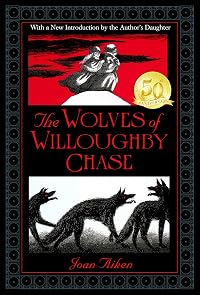
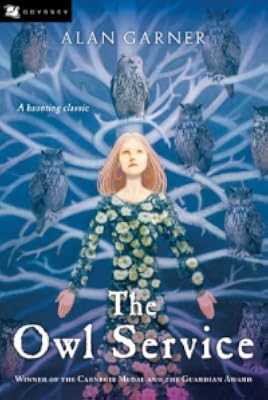
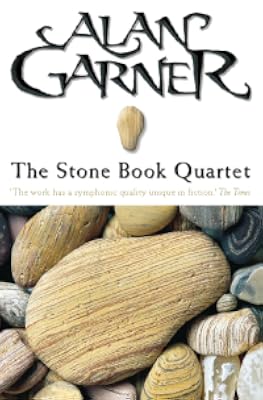
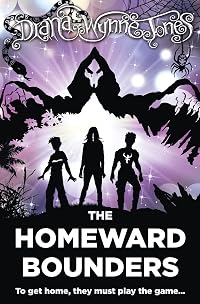


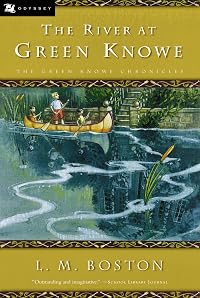
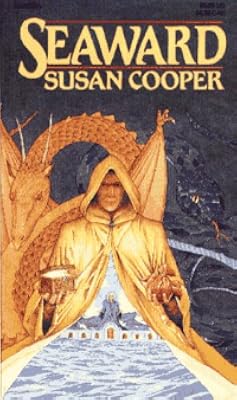

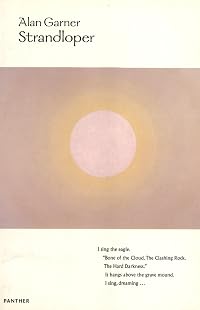
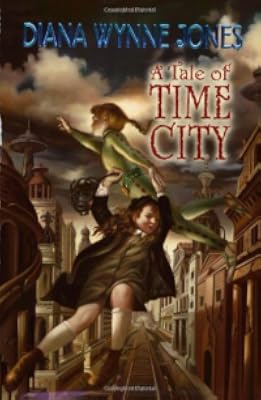



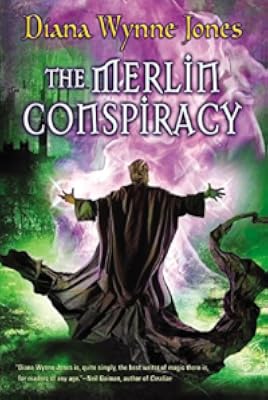
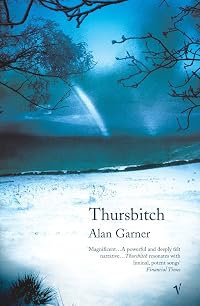

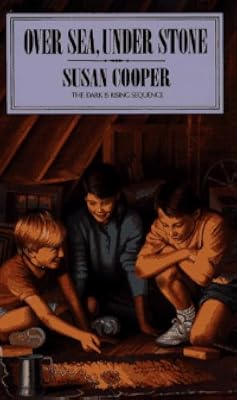
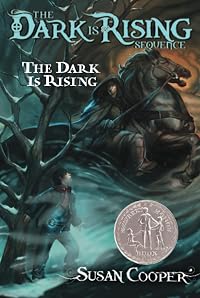
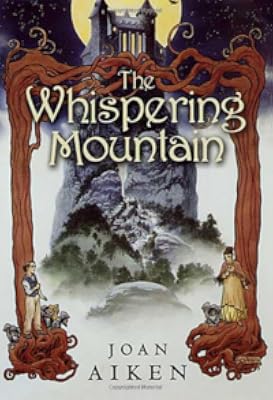
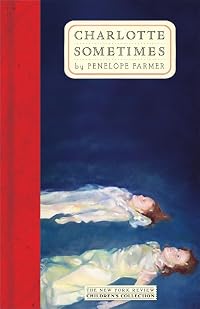


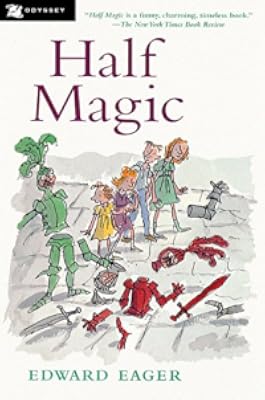
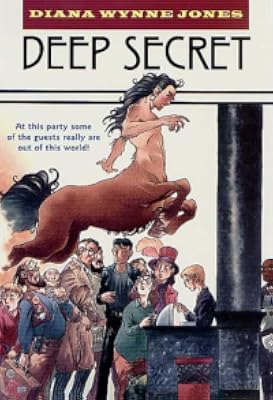
Member Recommendations

by anonymous user
Member Reviews
I miss my old edition of Elidor but it seems to have vanished along with its wonderful illustrations. Elidor, that strange halfway-house book between Garner's more conventional children's fantasies and his truly powerful, timeshifting work in Owl Service and Red Shift.
Four children find themselves almost randomly in an urban wasteland and pass through to another world. When they return they are carrying four Treasures which must be hidden and protected. As time goes on, the children begin to forget and rationalise their experience, but forces on Elidor are trying to break through, homing in on the Treasures themselves.
Elidor is portal fantasy as ghost story. The book is full of strange phenomena: massive build-us of static electricity, show more shadows on walls, mysterious figures on the porch and eyes peeking through letterboxes. A message comes through on a spiritualist's planchette. It is spooky and unnerving and haunting in every sense of the word. It is also tight, spare and economical, without a wasted word or scene, and the terrible sacrifice at the end has always stayed with me. show less
Four children find themselves almost randomly in an urban wasteland and pass through to another world. When they return they are carrying four Treasures which must be hidden and protected. As time goes on, the children begin to forget and rationalise their experience, but forces on Elidor are trying to break through, homing in on the Treasures themselves.
Elidor is portal fantasy as ghost story. The book is full of strange phenomena: massive build-us of static electricity, show more shadows on walls, mysterious figures on the porch and eyes peeking through letterboxes. A message comes through on a spiritualist's planchette. It is spooky and unnerving and haunting in every sense of the word. It is also tight, spare and economical, without a wasted word or scene, and the terrible sacrifice at the end has always stayed with me. show less
This was my first Alan Garner. I only discovered it because I was researching names with some phonetic resemblance to "Arthur" for a story I'm writing and I stumbled on the name "Elidyr" and the associated Welsh folktale. Elidor clearly takes some inspiration from that old story.
I was surprised at how little of the story actually takes place in Elidor. Most of it is back in Manchester with the kids sort of debating and wondering how much of what they experienced was actually real. Not what I expected, but it was executed very well nonetheless. I'll definitely be reading more of Mr. Garner's work.
I was surprised at how little of the story actually takes place in Elidor. Most of it is back in Manchester with the kids sort of debating and wondering how much of what they experienced was actually real. Not what I expected, but it was executed very well nonetheless. I'll definitely be reading more of Mr. Garner's work.
There's a case for saying that Alan Garner is the finest children's author of the late 20th century, but that does him a disservice. His books appeal to children and adults alike and Elidor is a fine example of his work. Set in Manchester, this is the story of four children who accidentally stumble into the dying world of Elidor and are set the task of safeguarding the four Treasures of Elidor against the forces of darkness that threaten to overwhelm it. But those forces find a way into our world and the children find themselves in a race to find the mysterious Findhorn, whose song will bring salvation to Elidor.
Garner's skill at building atmosphere is very evident here as the mundane becomes charged with mystery. In a sense this is show more the opposite of The Lion, The Witch and the Wardrode. Garner sets his action very much in this world, and Elidor is, right up until the very end, shown as a world almost destroyed by fear and darkness.
Note to JK Rowling: Read this and see how it's possible to tell a magical, involving story in 20 chapters and 200 pages. You don't need 600 odd pages and if you think you do, you need a good, brave editor to tell you otherwise. show less
Garner's skill at building atmosphere is very evident here as the mundane becomes charged with mystery. In a sense this is show more the opposite of The Lion, The Witch and the Wardrode. Garner sets his action very much in this world, and Elidor is, right up until the very end, shown as a world almost destroyed by fear and darkness.
Note to JK Rowling: Read this and see how it's possible to tell a magical, involving story in 20 chapters and 200 pages. You don't need 600 odd pages and if you think you do, you need a good, brave editor to tell you otherwise. show less
https://fromtheheartofeurope.eu/elidor-by-alan-garner/
An intensely imagined story of four siblings who are drawn into the mythic struggle of the parallel world of Elidor from their home in early 1960s Manchester. Garner is very good at painting emotional landscapes with few words, and his realisation of Manchester and the surrounding territories in our world and in Elidor are very vivid. Glad to return to this one.
An intensely imagined story of four siblings who are drawn into the mythic struggle of the parallel world of Elidor from their home in early 1960s Manchester. Garner is very good at painting emotional landscapes with few words, and his realisation of Manchester and the surrounding territories in our world and in Elidor are very vivid. Glad to return to this one.
I don't know whether it is that the early parts of this book haven't stood the test of time, whether I've actually read too many books with similar enough underlying ideas, or if it is that the early sections so strongly imprinted on my memory that it just feels like a really obvious start to a story. But I found myself, while enjoying the writing, rolling my eyes at bits of the first third or so.
Which might also be my Gen X cynicism showing. Of course the adult in the alt world is making the kids do all the work. What else are we expecting of the Boomer generation. And no, I don't quite live my life that much in black and white, but it was some of what I was finding irritating here. Unlike other stories with the oblivious adults trope, show more this one was really hard to get through sections where adults could have stepped up, and there were sections where I had to walk away from the book for hours (or days) until I could deal with continuing reading.
Despite me having somewhat grown past it, this is still a strongly written powerful story. I love the ambiguity of the ending, and the cypher of the alternative world -- the viewpoint character(s) really don't have the sophistication/maturity to comprehend what is happening, and the narrative voice doesn't fill that in for the reader. show less
Which might also be my Gen X cynicism showing. Of course the adult in the alt world is making the kids do all the work. What else are we expecting of the Boomer generation. And no, I don't quite live my life that much in black and white, but it was some of what I was finding irritating here. Unlike other stories with the oblivious adults trope, show more this one was really hard to get through sections where adults could have stepped up, and there were sections where I had to walk away from the book for hours (or days) until I could deal with continuing reading.
Despite me having somewhat grown past it, this is still a strongly written powerful story. I love the ambiguity of the ending, and the cypher of the alternative world -- the viewpoint character(s) really don't have the sophistication/maturity to comprehend what is happening, and the narrative voice doesn't fill that in for the reader. show less
Quite how Alan Garner's books are labelled for children remains a mystery to me. This is the earliest of his works I've read, and it's no less a story than the others, though its age shows from being settled in a unique time period; not only postwar bombed-site Manchester, but also technologically with wireless and gramophone and television vertical hold.
Garner's signature terse yet tight prose and negligible character development is evident, as is his reliance on melding folklore and mythology to his ends – Childe Rowland, Elidyr, Tuatha Dé Danann, and that of the unicorn.
“The unicorn… because of its intemperance, not knowing how to control itself before the delight it feels towards maidens, forgets its ferocity and wildness, show more and casting aside all fear it will go up to the seated maiden and sleep in her lap, and thus the hunter takes it.” – Leonardo da Vinci
He does all of this much better in his later works, as one would expect, but no one quite does what he does even at this early stage of his writing. show less
Garner's signature terse yet tight prose and negligible character development is evident, as is his reliance on melding folklore and mythology to his ends – Childe Rowland, Elidyr, Tuatha Dé Danann, and that of the unicorn.
“The unicorn… because of its intemperance, not knowing how to control itself before the delight it feels towards maidens, forgets its ferocity and wildness, show more and casting aside all fear it will go up to the seated maiden and sleep in her lap, and thus the hunter takes it.” – Leonardo da Vinci
He does all of this much better in his later works, as one would expect, but no one quite does what he does even at this early stage of his writing. show less
Well that was an interesting read about four children who find themselves in another world and when they get out the treasures look like junk, only things start happening in their home and getting the treasures back to where they belong may be the only way for their lives to return to normal.
I liked how it featured the doubt from the kids about the reality of the experience, even while the effects of what happened kept creeping into reality, it made it feel quite real and realistic. This stood up well.
I liked how it featured the doubt from the kids about the reality of the experience, even while the effects of what happened kept creeping into reality, it made it feel quite real and realistic. This stood up well.
Members
- Recently Added By
Lists

Favorite Childhood Books
1,651 works; 519 members
1001 Children's Books You Must Read Before You Grow Up
774 works; 101 members

Best Fantasy Novels
821 works; 361 members

Best middle grade books
130 works; 24 members

Favourite Books
1,820 works; 316 members
Books We Love to Reread
695 works; 298 members
Author Information

49+ Works 10,975 Members
Some Editions
Awards and Honors
Awards
Notable Lists
Series
Belongs to Publisher Series
Puffin Story Books (317)
Work Relationships
Common Knowledge
- Canonical title
- Elidor
- Original title
- Elidor
- Original publication date
- 1965-01
- People/Characters
- Nicholas Watson; David Watson; Helen R. Watson; Roland Watson; Malebron
- Important places
- Manchester, England, UK; Elidor
- Related movies
- Elidor (1995 | IMDb)
- Epigraph
- "Childe Rowland to the Dark Tower came..."
- Shakespeare, King Lear - Dedication
- For J.H.
- First words
- "All right", said Nicholas. "You're fed up. So am I. But we're better off here than at home."
- Quotations
- "Is there light in Gorias?"
- Last words
- (Click to show. Warning: May contain spoilers.)The children were alone with the broken windows of a slum.
- Original language
- English UK
Classifications
Statistics
- Members
- 1,289
- Popularity
- 18,955
- Reviews
- 24
- Rating
- (3.74)
- Languages
- 10 — Catalan, Danish, Dutch, English, Finnish, German, Italian, Norwegian (Bokmål), Swedish, Portuguese (Portugal)
- Media
- Paper, Audiobook, Ebook
- ISBNs
- 50
- UPCs
- 1
- ASINs
- 33