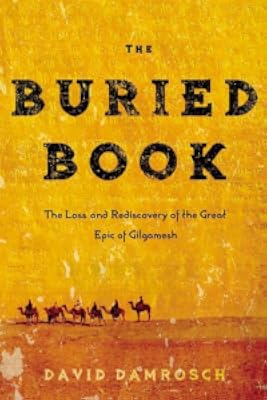
The Buried Book: The Loss and Rediscovery of the Great Epic of Gilgamesh
by David Damrosch
On This Page
Description
Composed by a poet and priest in Middle Babylonia around 1200 BCE, the Epic of Gilgamesh foreshadowed later stories that would become as fundamental as any in human history, the Odyssey and the Bible. But in 600 BCE, the clay tablets that bore the story were lost--buried beneath ashes and ruins when the library of King Ashurbanipal was sacked in a raid. This book begins with the rediscovery of the epic and its decipherment in 1872 by George Smith, a brilliant self-taught linguist, who show more created a sensation when he discovered Gilgamesh among thousands of undistinguished tablets in the British Museum. From there the story goes backward in time, all the way to Gilgamesh himself.--From publisher description. show lessTags
Recommendations
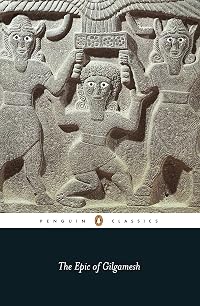
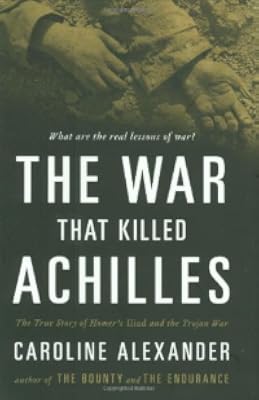










Member Recommendations
_Zoe_ I enjoyed Empires of the Plain much more than The Buried Book. It focuses more on the story than on analyzing the statements of the British archaeologists for traces of prejudice.
20
Member Reviews
The Buried Book gives the history of the Epic of Gilgamesh from rediscovery in the British Museum to the earliest days of Sumerian epic poetry. Yep, that sentence is correct. Damrosch tells the story backwards, peeling back the layers of history like an archaeologist would study a site. He starts with George Smith, who found the tablets among the hundred thousand or so items in the British Museum's Assyrian collection in the late 1800's. He follows with the discovery of the Ninevah library by Hormuzd Rassam, a Mosul native raised by a British sister-in-law to be very British and shut out of upper British society, whose work was purposefully buried by some of the bigger names in British archaeology of the era. Then Damrosch moves to the show more Epic itself, along with the story of Ashurbanipal, the Assyrian King who built the library and collected the tablets, among which were those that became the "standard" Epic of Gilgamesh. Finally, the book concludes with older stories collected and edited to become the Epic, reaching back to the earliest records of Sumerian civilization to get glimpses of a possible historical Gilgamesh.
In each chapter detailing a piece of the story, Damrosch focuses on a person at the center of that part of the story, bringing to life these little known corners of archaeology - both British and Assyrian, for Ashurbanipal was in his own way, an archaeologist restoring even older Sumerian and Chaldean works. But he also pays attention to the societal aspects of the work. For instance, George Smith was interested in finding external evidence to support the history in the Bible, and much of his translation and interpretation of the Gilgamesh story was colored by this motivation. These pictures open up the periods he discusses and really makes the times come to life.
Recommended! show less
In each chapter detailing a piece of the story, Damrosch focuses on a person at the center of that part of the story, bringing to life these little known corners of archaeology - both British and Assyrian, for Ashurbanipal was in his own way, an archaeologist restoring even older Sumerian and Chaldean works. But he also pays attention to the societal aspects of the work. For instance, George Smith was interested in finding external evidence to support the history in the Bible, and much of his translation and interpretation of the Gilgamesh story was colored by this motivation. These pictures open up the periods he discusses and really makes the times come to life.
Recommended! show less
A very entertaining and interesting book centered around the Gilgamesh epic. This is not another translation (although a few lines are translated), but a bipartite history: capsule biographies of the heroes of Mesopotamian archaeology with emphasis on events relating to the discovery and translation of Gilgamesh; and discussion of the influence of the epic on ancient and modern thought and literature.
Author David Damrosch elaborates considerably on the traditional discovery stories. British Museum worker George Smith translated the first tablets (which had been collected years previously by Henry Layard), and was supposedly so excited at reading an independent account of the Deluge that he took off his clothes (although Damrosch show more mentions that by Victorian standards this might have meant he loosened his tie). So far, so good – that’s the anecdote that appears in every account. However, Damrosch goes on to explore Smith’s antecedents – he apparently came from a lower class family (his parents are unknown); was apprenticed to an engraver; and learned Mesopotamian languages by spending his lunch hours in the British Museum. Smith’s subsequent history was a little tragic – he was sent on two expeditions to Mesopotamia, jobs for which he was singularly unsuited; he had no local languages, no archaeological field experience, and no diplomatic skills. The first trip was moderately successfully - he found a tablet originally believed to be a missing piece of the Epic (it later turned out to come from an unrelated story also describing the Deluge) but on the second he spent most of his time in futile attempts to get Ottoman officials to allow him to excavate and eventually died of cholera.
Hormuzd Rassam was another tragic hero involved in the Epic. An Assyrian Christian assistant to Layard he eventually became an archaeologist and diplomat in his own right. He married an Englishwoman, attended Oxford, and made every attempt to turn himself into a proper Englishman – which didn’t work. Henry Layard remained Rassam’s loyal friend, and said “ {Rassam} is one of the honestest and most straightforward fellows I ever knew, and one whose great services have never been acknowledged – because he is a ‘n****r’…” (single quotes in the original, asterisks mine). Unfortunately just about everybody else treated Rassam with condescension at best or outright contempt at worst. In the midst of his archaeological work, Rassam was sent off to Abyssinia where it was thought that as an “Oriental” he would be able to deal with mad King Theodore, who had taken some European missionaries hostage. Rassam and the missionaries spent three years chained in a hut, and it was all over Rassam was criticized as not being the “man for the job” and not forceful enough with Theodore. The missionaries got all the credit for putting up with captivity (which, to be fair, wasn’t fun; Theodore was in the habit of executing people he disliked by twisting their hands and feet off and leaving them to starve) and Rassam got nothing. To add insult to injury, when he got back to England he was accused by E. E. Wallis Budge of absconding with various museum antiquities. I’ve never really liked Budge, but I didn’t know of his treatment of Rassam before. Budge – who adopted the style of an upper class gentleman but who was in fact the illegitimate son of a Cornish waitress – not only accused Rassam of dishonesty behind his back, but went public with it in Museum lectures. Rassam then unadvisedly sued. He won – the judge said he had been treated “shabbily” by Budge – but was only awarded £50. Budge got revenge by systematically expurgating Rassam’s name everywhere he found it in Museum records and assigning credit for Rassam’s work to others in Museum publications. Although I’m reasonably well-versed in Mesopotamian archaeology, I’d never heard of Rassam until reading this book.
The final section of The Buried Book gives a description of the Epic, its evolution from the Sumerian Bilgames poems, and its eventual influence on subsequent civilization. The Deluge account in the Bible is the most obvious example, but subtle influences can be assigned elsewhere – including other sections of the Bible (David and Jonathan as parallels to Gilgamesh and Enkidu), and Homeric myth. The strangest effect came when Saddam Hussein adopted Gilgamesh as a Iraqi hero, to the extent of writing a romance novel (well, it’s got Saddam Hussein listed as the author anyway) vaguely related to the Epic (I’ve got to get a copy of this, but so far it’s only available in Arabic and German. I can read German very slowly with repeated dictionary consultation, but so far my Arabic is limited to la (no), la shukran (no thank you) and wallh ‘na la ‘ryd ‘n (by God, I do not want that)).
At any rate, this is recommended for anybody with casual or greater interest in Gilgamesh and/or Mesopotamian archaeology.
(Added later - 2019 - I apologize for saying "mad king Theodore"; further information indicates he was pretty strongly provoked. Perhaps "tragic king Theodore" would be a better description). show less
Author David Damrosch elaborates considerably on the traditional discovery stories. British Museum worker George Smith translated the first tablets (which had been collected years previously by Henry Layard), and was supposedly so excited at reading an independent account of the Deluge that he took off his clothes (although Damrosch show more mentions that by Victorian standards this might have meant he loosened his tie). So far, so good – that’s the anecdote that appears in every account. However, Damrosch goes on to explore Smith’s antecedents – he apparently came from a lower class family (his parents are unknown); was apprenticed to an engraver; and learned Mesopotamian languages by spending his lunch hours in the British Museum. Smith’s subsequent history was a little tragic – he was sent on two expeditions to Mesopotamia, jobs for which he was singularly unsuited; he had no local languages, no archaeological field experience, and no diplomatic skills. The first trip was moderately successfully - he found a tablet originally believed to be a missing piece of the Epic (it later turned out to come from an unrelated story also describing the Deluge) but on the second he spent most of his time in futile attempts to get Ottoman officials to allow him to excavate and eventually died of cholera.
Hormuzd Rassam was another tragic hero involved in the Epic. An Assyrian Christian assistant to Layard he eventually became an archaeologist and diplomat in his own right. He married an Englishwoman, attended Oxford, and made every attempt to turn himself into a proper Englishman – which didn’t work. Henry Layard remained Rassam’s loyal friend, and said “ {Rassam} is one of the honestest and most straightforward fellows I ever knew, and one whose great services have never been acknowledged – because he is a ‘n****r’…” (single quotes in the original, asterisks mine). Unfortunately just about everybody else treated Rassam with condescension at best or outright contempt at worst. In the midst of his archaeological work, Rassam was sent off to Abyssinia where it was thought that as an “Oriental” he would be able to deal with mad King Theodore, who had taken some European missionaries hostage. Rassam and the missionaries spent three years chained in a hut, and it was all over Rassam was criticized as not being the “man for the job” and not forceful enough with Theodore. The missionaries got all the credit for putting up with captivity (which, to be fair, wasn’t fun; Theodore was in the habit of executing people he disliked by twisting their hands and feet off and leaving them to starve) and Rassam got nothing. To add insult to injury, when he got back to England he was accused by E. E. Wallis Budge of absconding with various museum antiquities. I’ve never really liked Budge, but I didn’t know of his treatment of Rassam before. Budge – who adopted the style of an upper class gentleman but who was in fact the illegitimate son of a Cornish waitress – not only accused Rassam of dishonesty behind his back, but went public with it in Museum lectures. Rassam then unadvisedly sued. He won – the judge said he had been treated “shabbily” by Budge – but was only awarded £50. Budge got revenge by systematically expurgating Rassam’s name everywhere he found it in Museum records and assigning credit for Rassam’s work to others in Museum publications. Although I’m reasonably well-versed in Mesopotamian archaeology, I’d never heard of Rassam until reading this book.
The final section of The Buried Book gives a description of the Epic, its evolution from the Sumerian Bilgames poems, and its eventual influence on subsequent civilization. The Deluge account in the Bible is the most obvious example, but subtle influences can be assigned elsewhere – including other sections of the Bible (David and Jonathan as parallels to Gilgamesh and Enkidu), and Homeric myth. The strangest effect came when Saddam Hussein adopted Gilgamesh as a Iraqi hero, to the extent of writing a romance novel (well, it’s got Saddam Hussein listed as the author anyway) vaguely related to the Epic (I’ve got to get a copy of this, but so far it’s only available in Arabic and German. I can read German very slowly with repeated dictionary consultation, but so far my Arabic is limited to la (no), la shukran (no thank you) and wallh ‘na la ‘ryd ‘n (by God, I do not want that)).
At any rate, this is recommended for anybody with casual or greater interest in Gilgamesh and/or Mesopotamian archaeology.
(Added later - 2019 - I apologize for saying "mad king Theodore"; further information indicates he was pretty strongly provoked. Perhaps "tragic king Theodore" would be a better description). show less
Six-word review: Lost ancient epic comes to light.
Extended review:
If you've read with eager attention the story of how Champollion cracked the code of Egyptian hieroglyphics and how Howard Carter found King Tut's tomb, this book will feed those same appetites for ancient mystery and grand discovery. Literature's oldest epic poem, the story of Gilgamesh, lay buried in a series of broken clay tablets in the Middle East for 2500 years.
The author treats us to a series of narratives of relevant history, from the finding of the tablets in the 19th century and the decoding of the cuneiform script back to the time when they were buried, when the kingdom of Assyria fell to its Babylonian enemies in 612 BCE and the great library of King show more Ashurbanipal collapsed into rubble. At that time the texts themselves were already ancient and harked back to a still more ancient time. These dramas played out in and around the region that is enclosed by the borders of present-day Iraq. The author's account incidentally affords some insights into the lands and peoples that Western forces have lately engaged in war.
This book is not especially compelling literature in its own right, nor does it pretend to be, although it is readable enough and recounts the various crisscross narratives of recent and ancient history in an engaging manner. What I liked is the blend of scholarship and storytelling. I found it fascinating from first to last, the last of it being a surprising discussion of a novel called Zabibah and the King, written by Saddam Hussein and published in Arabic in 2000. The novel allegedly shows the influence of the ancient Akkadian verse account of the life, death, and afterlife of the hero Gilgamesh, whose story also has its echoes in the epics of Homer, in the Arabian Nights, and in the Hebrew Bible.
A great irony of the discovery of these and other inscribed clay tablets of 2500 and more years ago is that, like the artifacts of Pompeii, they owe their preservation to a single catastrophe--in this case, the destruction of Ashurbanipal's palace in Nineveh. The burning and collapse of the library meant that the tablets, though broken and crumbling, were gathered and covered over in an abandoned heap rather than being tossed out like rubbish over the centuries or recycled into building materials as in other cities of ancient origins. Their discovery and eventual decipherment opened the door to a view of past civilizations far remote in time, language, and culture and yet as near to our sensibilities as the human emotions they record. show less
Extended review:
If you've read with eager attention the story of how Champollion cracked the code of Egyptian hieroglyphics and how Howard Carter found King Tut's tomb, this book will feed those same appetites for ancient mystery and grand discovery. Literature's oldest epic poem, the story of Gilgamesh, lay buried in a series of broken clay tablets in the Middle East for 2500 years.
The author treats us to a series of narratives of relevant history, from the finding of the tablets in the 19th century and the decoding of the cuneiform script back to the time when they were buried, when the kingdom of Assyria fell to its Babylonian enemies in 612 BCE and the great library of King show more Ashurbanipal collapsed into rubble. At that time the texts themselves were already ancient and harked back to a still more ancient time. These dramas played out in and around the region that is enclosed by the borders of present-day Iraq. The author's account incidentally affords some insights into the lands and peoples that Western forces have lately engaged in war.
This book is not especially compelling literature in its own right, nor does it pretend to be, although it is readable enough and recounts the various crisscross narratives of recent and ancient history in an engaging manner. What I liked is the blend of scholarship and storytelling. I found it fascinating from first to last, the last of it being a surprising discussion of a novel called Zabibah and the King, written by Saddam Hussein and published in Arabic in 2000. The novel allegedly shows the influence of the ancient Akkadian verse account of the life, death, and afterlife of the hero Gilgamesh, whose story also has its echoes in the epics of Homer, in the Arabian Nights, and in the Hebrew Bible.
A great irony of the discovery of these and other inscribed clay tablets of 2500 and more years ago is that, like the artifacts of Pompeii, they owe their preservation to a single catastrophe--in this case, the destruction of Ashurbanipal's palace in Nineveh. The burning and collapse of the library meant that the tablets, though broken and crumbling, were gathered and covered over in an abandoned heap rather than being tossed out like rubbish over the centuries or recycled into building materials as in other cities of ancient origins. Their discovery and eventual decipherment opened the door to a view of past civilizations far remote in time, language, and culture and yet as near to our sensibilities as the human emotions they record. show less
The story begins in 19th century Iraq with the accidental discovery of the until then unknown Epic of Gilgamesh, and unlike most history books, works backwards in time slowly revealing the mystery of its origins and meaning - this chronology works well, not unlike an archaeological dig. The first half of the book is devoted to two unlikely and largely unsung heroes of the Victorian era who first found and deciphered the tablets, George Smith and Horzmud Rassam. Rassam is probably the most important and unique revelation of the book, as Damrosch restores an unfairly maligned scholar to his rightful place in history and perhaps some immortality. The second half of the book jumps backwards from the 19th century to when the Epic was show more written, discussing the history of the Assyrian kingdom, and the library where the tablets were buried. The tablets were buried around 700 BC when the city was sacked, and thus the Epic lain forgotten from that time until the 19th century. Had the city not been sacked and the tablets not buried, it is likely the Epic would have been lost forever, as most tablets from that period did not survive otherwise.
This is a fun tale, both Smith and Rassam encompass dramatic lives as underdogs who rose from obscurity, overcoming Victorian prejudices of class and race. If nothing else the first half of the book is worth the price of admission, in particular Rassam's side adventure to Ethiopia. Damrosch's literary interpretation of the Epic (Ch. 6) provides valuable insights, such as the importance of cedar trees, making it less "foreign" (both in time and culture) and more universally human. I certainly came away with a new appreciation of the tales message of the quest for immortality.
The Sources and Notes section includes an up to date guide of recent translations of the Epic, recommended reading before deciding which translation(s) to pursue. show less
This is a fun tale, both Smith and Rassam encompass dramatic lives as underdogs who rose from obscurity, overcoming Victorian prejudices of class and race. If nothing else the first half of the book is worth the price of admission, in particular Rassam's side adventure to Ethiopia. Damrosch's literary interpretation of the Epic (Ch. 6) provides valuable insights, such as the importance of cedar trees, making it less "foreign" (both in time and culture) and more universally human. I certainly came away with a new appreciation of the tales message of the quest for immortality.
The Sources and Notes section includes an up to date guide of recent translations of the Epic, recommended reading before deciding which translation(s) to pursue. show less
This is an interesting study of the discovery of the tablets that comprise the most complete sections of the Epic of Gilgamesh. It starts with a discussion about the archaeologists involved in discovering the tablets - what trials they underwent while digging, politics behind their dig, and even quarrels between archaeologists. (Sounds like Wallis E Budge was a jerk despite his fame.) The most interesting story was that of George Smith. He came from a working class background, but he had a brilliant ability to learn languages so he moved up to a classier job as apprentice in a printing shop. He spent all of his free time in the British Library learning languages and looking at ancient documents. Eventually he was hired on, first as a show more volunteer, and then as a full-fledged member of the team to research ancient Babylonian tablets. He was the one to discover the flood story within The Epic of Gilgamesh and he got so excited that he ran around the library in a "state of undress." (How much undressed he was remains a mystery. But I don't imagine he ran naked through the library yelling Eureka! or anything. He probably took off his jacket and loosened his tie.)
The book then jumps back to the time of Ashurbanipal (668-627 BCE), a historical king of Nineveh who collected rare literature from around the world (at least the world within reach of himself). It was inside this buried library, which was destroyed in the fall of Nineveh, that the most complete set of tablets for Gilgamesh was discovered. Buried Book tells of Ashurbanipal's father, who was severely depressed and paranoid. He couldn't read and was terrified that his assistants were hiding things from him when they read correspondences. Historians believe that this may be why Ashurbanipal was encouraged to learn to read at a young age. I found this section quite interesting and wished that there were more to it than there was. Though I suppose you can't say THAT much about a historical figure about whom only fragments of records exist.
The Buried Book then retreats farther into a short analysis of Gilgamesh with historical perspective. It discusses how the trip to tame Humbaba in the forest may have represented Gilgamesh's famed war to retrieve wood in other parts of Persia.
Finally, The Buried Book jumped back to how Gilgamesh has affected modern readers - including a longish section on Saddam Hussein. Apparently, Hussein could see Gilgamesh in himself and this impacted his philosophy on ruling. I was pretty interested to hear that Hussein had written a decent novel - I had no clue! Of course, chances are someone else wrote it from Hussein's notes, but still. Very interesting. show less
The book then jumps back to the time of Ashurbanipal (668-627 BCE), a historical king of Nineveh who collected rare literature from around the world (at least the world within reach of himself). It was inside this buried library, which was destroyed in the fall of Nineveh, that the most complete set of tablets for Gilgamesh was discovered. Buried Book tells of Ashurbanipal's father, who was severely depressed and paranoid. He couldn't read and was terrified that his assistants were hiding things from him when they read correspondences. Historians believe that this may be why Ashurbanipal was encouraged to learn to read at a young age. I found this section quite interesting and wished that there were more to it than there was. Though I suppose you can't say THAT much about a historical figure about whom only fragments of records exist.
The Buried Book then retreats farther into a short analysis of Gilgamesh with historical perspective. It discusses how the trip to tame Humbaba in the forest may have represented Gilgamesh's famed war to retrieve wood in other parts of Persia.
Finally, The Buried Book jumped back to how Gilgamesh has affected modern readers - including a longish section on Saddam Hussein. Apparently, Hussein could see Gilgamesh in himself and this impacted his philosophy on ruling. I was pretty interested to hear that Hussein had written a decent novel - I had no clue! Of course, chances are someone else wrote it from Hussein's notes, but still. Very interesting. show less
It seems there wasn't really enough material to make a whole book about this subject, so the author went down some ratholes in order to do it. I got a lot of info about the British Museum's unfair practices, the stupidity of some eastern governments, how hard it was to be a non-white archaeologist, how little education Smith had and what an asshole Budge was. All well and good, but then I got fanciful tales about two ancient Assyrian rulers (both with the most awesome names though) and then a little bit about Gilgamesh himself. I would have liked to know more about how exactly Smith was able to "crack the code". Ancient writing, unspoken and not understood for centuries is so toweringly mysterious that I wouldn't have any idea how to show more approach it, but somehow with as little education as he had, Smith did. Must have been the name. : ) show less
The Buried Book is the second book in my Summer 2016 Babylonia Reading List. This volume mainly covers the discovery of the ancient ruins of the Babylonian cities, such as Nineveh, Uruk, and Babylon. To be fair, there locations were already known but no excavations had really taken place until the mid 1800's. Most of chapters have to do with the drama between the different colonial powers racing to uncover new clues in the clay tablet quest. Furthermore, there is even more drama between various British archeologists vying for credit on different discoveries and finds. it's all very colonial with very colorful characters bumbling about in the desert. There is a nice summary chapter on the Babylonian Kingdoms that came right before the show more Persian take over. It was surprising to see just how complex these cities were. Uruk was just huge. The city walls went on for miles. Whole date orchards were encompassed by these walls. Every merchant you could imagine hawked there wares and services in the cities. According to the Sumerian (pre-Babylonian) poem The Death of Gilgamesh, Gilgamesh is planning his own tomb and listing out all of his favorite people he is going to bring into the netherworld with him. This list includes Gilgamesh's favorite barber. I guess it's not too surprising but I just love the idea that there have been cities with barbers for 4000 years. I can't imagine this particular barber was too thrilled to be "honored" in this way, but there you go.
In that mundane vein, another delightful part of The Buried Book involves all the various subjects that these uncovered cuneiform tablets contain. The Epic of Gilgamesh is a grand standard tale that was used to teach new scribes how to write cuneiform (which is why we have so many varying pieces of it). But there are far more day-to-day tablets tabulating all manner of things like inventory lists, missives from workshop masters to his apprentices on how to carry out assignments, and complaint tablets. Which leads me to my favorite tablet: a merchant complaining to the king about how one of the king's sons was driving his chariot too fast through the city of Nineveh and knocked over some barrels and didn't stop to make amends. I can just imagine King Shugli having one of his eunuchs coming into the court room going "Uh, your highness, there is a delicate matter I need to discuss with you regarding Prince Ashabanapli" and the king is just all face-in-palm, groaning. Now remember, this is before Homer and before the first versions of the Old Testament were even being inked out on a scroll. It's just hilarious to me that there is actual literal evidence that teenagers and moving vehicles have been a pain in the ass since the dawn of civilization.
Lastly, there is a curious little epilogue regarding Saddam Hussein's interest in Gilgamesh. In his last years in power, Hussein wrote a bizarre romance novel casting himself as a weird version of Gilgamesh. I was also randomly reminded that Hussein was a trained assassin in his youth which led to some equally bizarre misadventures. Also "Dic-Lit" is apparently a thing: literature written by dictators. It's mostly all pretty bad writing. Surprise, surprise.
Anyway, next up on the Babylonian Reading List is Gods, Graves, and Scholars by G.W. Ceram. I really liked reading about the competition between the Victorian archaeologists and I read somewhere that Indiana Jones' character was partly inspired by the archaeologists outlined in Ceram's volume. For instance, that scene in Raiders of the Lost Ark when Indi finds out that the Nazi's are digging in the wrong spot for the Ark of the Covenant and he gets a bunch of laborers to dig in the middle of the night so that the Nazis wouldn't find out till the morning. Yeah, that sort of actually happened but it was just outside Mosul and it was the British/Arab Hormuzd Rassam digging on French archaeologist Victor Place's turf for the lost Archives of Ashurbanipal (which Rassam totally found in one night by the way). Can't wait to "dig" into that book (see what I did there). But, firstly, I need to read Stephen King's The Gunslinger for book club. It might be awhile before you hear back from me regarding anymore juicy archeologist stories. show less
In that mundane vein, another delightful part of The Buried Book involves all the various subjects that these uncovered cuneiform tablets contain. The Epic of Gilgamesh is a grand standard tale that was used to teach new scribes how to write cuneiform (which is why we have so many varying pieces of it). But there are far more day-to-day tablets tabulating all manner of things like inventory lists, missives from workshop masters to his apprentices on how to carry out assignments, and complaint tablets. Which leads me to my favorite tablet: a merchant complaining to the king about how one of the king's sons was driving his chariot too fast through the city of Nineveh and knocked over some barrels and didn't stop to make amends. I can just imagine King Shugli having one of his eunuchs coming into the court room going "Uh, your highness, there is a delicate matter I need to discuss with you regarding Prince Ashabanapli" and the king is just all face-in-palm, groaning. Now remember, this is before Homer and before the first versions of the Old Testament were even being inked out on a scroll. It's just hilarious to me that there is actual literal evidence that teenagers and moving vehicles have been a pain in the ass since the dawn of civilization.
Lastly, there is a curious little epilogue regarding Saddam Hussein's interest in Gilgamesh. In his last years in power, Hussein wrote a bizarre romance novel casting himself as a weird version of Gilgamesh. I was also randomly reminded that Hussein was a trained assassin in his youth which led to some equally bizarre misadventures. Also "Dic-Lit" is apparently a thing: literature written by dictators. It's mostly all pretty bad writing. Surprise, surprise.
Anyway, next up on the Babylonian Reading List is Gods, Graves, and Scholars by G.W. Ceram. I really liked reading about the competition between the Victorian archaeologists and I read somewhere that Indiana Jones' character was partly inspired by the archaeologists outlined in Ceram's volume. For instance, that scene in Raiders of the Lost Ark when Indi finds out that the Nazi's are digging in the wrong spot for the Ark of the Covenant and he gets a bunch of laborers to dig in the middle of the night so that the Nazis wouldn't find out till the morning. Yeah, that sort of actually happened but it was just outside Mosul and it was the British/Arab Hormuzd Rassam digging on French archaeologist Victor Place's turf for the lost Archives of Ashurbanipal (which Rassam totally found in one night by the way). Can't wait to "dig" into that book (see what I did there). But, firstly, I need to read Stephen King's The Gunslinger for book club. It might be awhile before you hear back from me regarding anymore juicy archeologist stories. show less
Members
- Recently Added By
Published Reviews
ThingScore 75
added by doomjesse
Lists

Books about Books
149 works; 24 members

Works cited in Palimpsest: A History of the Written Word by Matthew Battles
79 works; 2 members

el
1,139 works; 1 member

In Our Time books
4,934 works; 2 members
Author Information

52+ Works 3,720 Members
David Damrosch, PhD is Ernest Bernbaum Professor of Literature at Harvard University and a past president of the American Comparative Literature Association. Dr. Damrosch has written widely on comparative and world literature, and his work has been translated into an eclectic variety of languages, including Chinese, Estonian, Hungarian, Turkish, show more and Vietnamese. show less
Some Editions
Work Relationships
Reference guide/companion to
Common Knowledge
- Canonical title
- The buried book : the loss and rediscovery of the great Epic of Gilgamesh; The Buried Book: The Loss and Rediscovery of the Great Epic of Gilgamesh
- Original publication date
- 2007-03-06
- People/Characters
- Gilgamesh; Ashurbanipal, King of Assyria; George Smith; Philip Roth; Saddam Hussein
- Important places
- British Museum, London, England, UK; Iraq; London, England, UK
- Epigraph
- Gilgamesh is stupendous! ... I consider it to be the greatest thing that can happen to a person.
– Rainer Maria Rilke (1916)
Hopes, long cherished, were now to be realized, or were to end in disappointment.... (show all) Visions of palaces underground, of gigantic monsters, of sculptured figures, and endless inscriptions, floated before me. After forming plan after plan for removing the earth, and extricating these treasures, I fancied myself wandering in a maze of chambers from which I could find no outlet.
– Austen Henry Layard,
Nineveh and Its Remains (1849)
He came a far road, was weary, found peace,
and set all his labors on a tablet of stone....
See the cedar tablet-box,
release its clasp of bronze!
Lift the lid of its secret,
take out the tablet of lapis lazuli, and read
the struggles of Gilgamesh and all he endured.
– The Epic of Gilgamesh - Dedication
- For Diana, Eva, and Peter -
a book about exploration
as you go out into the world - Publisher's editor
- Barth, Jennifer
- Blurbers
- Greenblatt, Stephen; Bloom, Harold; Alter, Robert
Classifications
- Genres
- History, Nonfiction, Literature Studies and Criticism
- DDC/MDS
- 809.93353 — Literature & rhetoric Literature, rhetoric & criticism History, description, critical appraisal of more than two literatures Literature displaying specific features, miscellaneous writings Literature displaying other aspects Literature dealing with specific themes and subjects Humanity Human psychological and moral qualities
- LCC
- PJ3771 .G6 .D36 — Language and Literature Oriental languages and literatures Oriental philology and literature Assyriology. Akkadian Literature. Inscriptions
- BISAC
Statistics
- Members
- 430
- Popularity
- 71,712
- Reviews
- 13
- Rating
- (3.74)
- Languages
- English
- Media
- Paper, Audiobook, Ebook
- ISBNs
- 11
- ASINs
- 5