
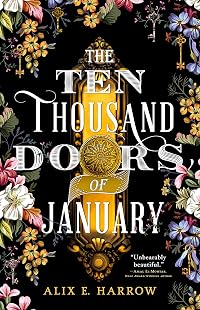
The Ten Thousand Doors of January
by Alix E. Harrow
On This Page
Description
In the early 1900s, a young woman embarks on a fantastical journey of self-discovery after finding a mysterious book. In a sprawling mansion filled with peculiar treasures, January Scaller is a curiosity herself. As the ward of the wealthy Mr. Locke, she feels little different from the artifacts that decorate the halls: carefully maintained, largely ignored, and utterly out of place. Then she finds a strange book. A book that carries the scent of other worlds, and tells a tale of secret show more doors, of love, adventure and danger. Each page turn reveals impossible truths about the world and January discovers a story increasingly entwined with her own. show lessTags
Recommendations


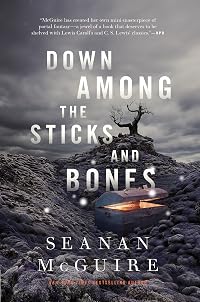
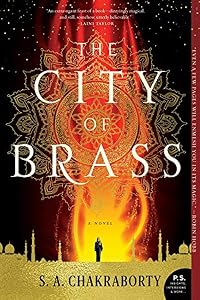
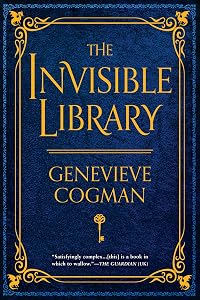
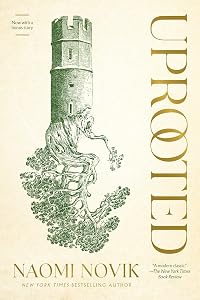
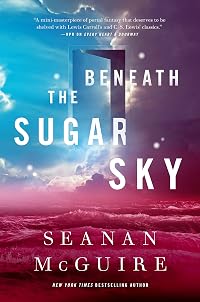
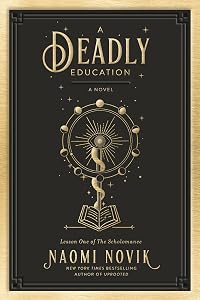
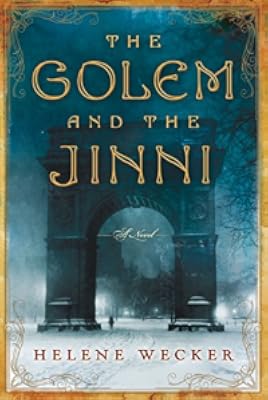
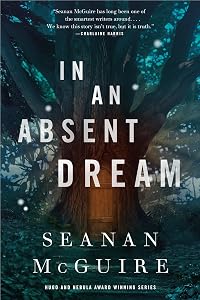




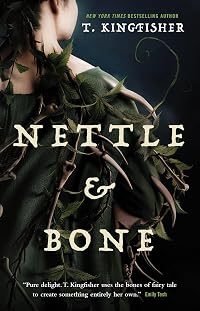
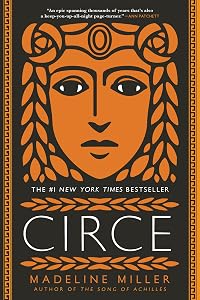
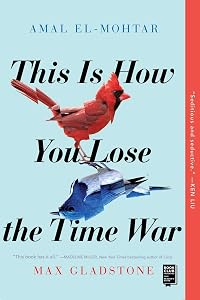
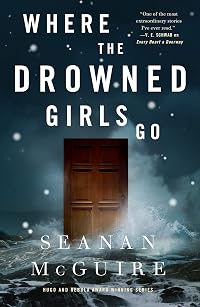

Member Recommendations
Member Reviews
“It is at the moments when the doors open, when things flow between the worlds, that stories happen.”
What a perfect novel to start off a new book journal with! Alix E. Harrow takes us on an incredible adventure, told in dual storylines, alongside protagonist January Scaller as she grows up and discovers the truth about herself and her family’s past. If this simple statement seems mysteriously vague it is because the book only truly reveals itself once its pages are opened, rifled through, and fully devoured to the final scene, and whose magic cannot be told without seeing. January’s story is at once a simple tale of a young girl at a loss for her place in the world, and yet is endlessly complex as Harrow explores a universe in show more which Doors open between worlds, stories lead to everywhere, and everything is exactly as it seems even when it says otherwise. Explore if you dare (and I highly recommend that you should), but be ready to accept what is on the other side of the inevitable Doors that you open within. show less
What a perfect novel to start off a new book journal with! Alix E. Harrow takes us on an incredible adventure, told in dual storylines, alongside protagonist January Scaller as she grows up and discovers the truth about herself and her family’s past. If this simple statement seems mysteriously vague it is because the book only truly reveals itself once its pages are opened, rifled through, and fully devoured to the final scene, and whose magic cannot be told without seeing. January’s story is at once a simple tale of a young girl at a loss for her place in the world, and yet is endlessly complex as Harrow explores a universe in show more which Doors open between worlds, stories lead to everywhere, and everything is exactly as it seems even when it says otherwise. Explore if you dare (and I highly recommend that you should), but be ready to accept what is on the other side of the inevitable Doors that you open within. show less
I can't remember the last time I sobbed so much while reading a book or became so interested in the characters and their circumstances. (It may have been while reading [b:Tigana|104089|Tigana|Guy Gavriel Kay|https://i.gr-assets.com/images/S/compressed.photo.goodreads.com/books/1348738842l/104089._SX50_.jpg|1907200] by [a:Guy Gavriel Kay|60177|Guy Gavriel Kay|https://images.gr-assets.com/authors/1218804723p2/60177.jpg], come to think of it. I remember being just as swept away and desperate to read more.)
I adored everything about The Ten Thousand Doors of January: January herself, of course, her mother and father, Samuel and Jane and Bad. The writing is lyrical and heart-wrenchingly beautiful, but not in a showy way. January's voice is so show more distinct and captivating... the voice of a true Scholar indeed. I loved rooting for her (and her parents!) and following her on the amazing journey she undertakes.
I also have to admit that I typically go to great lengths to avoid reading young adult fiction. I had imagined that all YA main characters were hormonal Mary Sues bouncing from one "too stupid to live" decision to another. (Frankly, that may say more about what I was like as a teenager than anything else.) If this is the calibre of writing and storytelling that hides in the YA section, I've been missing out. show less
I adored everything about The Ten Thousand Doors of January: January herself, of course, her mother and father, Samuel and Jane and Bad. The writing is lyrical and heart-wrenchingly beautiful, but not in a showy way. January's voice is so show more distinct and captivating... the voice of a true Scholar indeed. I loved rooting for her (and her parents!) and following her on the amazing journey she undertakes.
I also have to admit that I typically go to great lengths to avoid reading young adult fiction. I had imagined that all YA main characters were hormonal Mary Sues bouncing from one "too stupid to live" decision to another. (Frankly, that may say more about what I was like as a teenager than anything else.) If this is the calibre of writing and storytelling that hides in the YA section, I've been missing out. show less
I won a copy of this ebook through a Goodreads giveaway.
This mesmerizing book has well earned its advance buzz. It has the feel of a whimsical Victorian novel but with a dark undercurrent, and abounds with magic and far-flung worlds and resilient, realistic characters.
January Scaller is a dark skinned girl raised among unusual privilege. While her father jets around the world on archaeological research, she lives and travels with her wealthy benefactor, Mr. Locke. When she finds a door to another realm as a young child, she could have dismissed the experience as a flight of fancy, but for the strange coin she carried home as a souvenir. Then at age 17, she finds an odd book in her own home: a book about doors, other worlds, two people show more who love each other across time and space, and ultimately, about January herself.
The sheer beauty of the prose delighted me throughout:
"I almost didn’t notice the Door at all. All Doors are like that, half-shadowed and sideways until someone looks at them in just the right way."
"Life has a kind of momentum to it, I’ve found, an accumulated weight of decisions which becomes impossible to shift."
This is an ethereal book of poetic prose and strong women and girls, and love, and magic. I adored it, and will add it to my short list of books for award nominations next year. show less
This mesmerizing book has well earned its advance buzz. It has the feel of a whimsical Victorian novel but with a dark undercurrent, and abounds with magic and far-flung worlds and resilient, realistic characters.
January Scaller is a dark skinned girl raised among unusual privilege. While her father jets around the world on archaeological research, she lives and travels with her wealthy benefactor, Mr. Locke. When she finds a door to another realm as a young child, she could have dismissed the experience as a flight of fancy, but for the strange coin she carried home as a souvenir. Then at age 17, she finds an odd book in her own home: a book about doors, other worlds, two people show more who love each other across time and space, and ultimately, about January herself.
The sheer beauty of the prose delighted me throughout:
"I almost didn’t notice the Door at all. All Doors are like that, half-shadowed and sideways until someone looks at them in just the right way."
"Life has a kind of momentum to it, I’ve found, an accumulated weight of decisions which becomes impossible to shift."
This is an ethereal book of poetic prose and strong women and girls, and love, and magic. I adored it, and will add it to my short list of books for award nominations next year. show less
''Maybe you've even seen one for yourself, standing half-ajar and rotted in an old church, or oiled and shining in a brick wall. Maybe, if you're one of those fanciful persons who find their feet running toward unexpected places, you've even walked through one and found yourself in a very unexpected place indeed.''
January is a young girl torn between two worlds. Her parentage makes her special, yet people see what they want to see, dictated by the (twisted) preconceived notions of the early 20th-century society. Motherless and with an absent father, January tries to find an escape and a purpose to satisfy her ever-searching mind and soul. And then, doors start appearing. Doors leading to different worlds, doors hiding adventure and show more danger. And, perhaps, the key that leads to her past and her family.
''Those of you who are more than casually familiar with books-those of you who spend your free afternoons in frusty bookshops, who offer furtive, kindly strokes along the spines of familiar titles- understand that page raffling is an essential element in the process of introducing oneself to a new book. It isn't about reading the words; it's about reading the smell, which wafts through the pages in a cloud of dust and wool pulp. It might smell expensive and well bound, or it might smell of tissue-thin paper and blurred two -colour print, or of fifty years unread in the home of a tobacco - smoking old man. Books can smell of cheap thrills or painstaking scholarship, of literary weight or unsolved mysteries.''
If nothing else, this novel is rich in beautiful bookish references. I found some of the most powerful descriptions of the impact of books in our lives, the way they shape our souls, the difference we unwittingly form in relation to people who don't touch a book, remaining prisoners of the telly and their mundane microcosm. Books make us soar, imagination runs wild and doors open, leading to new worlds and new characters that become our company. Some momentary, others become friends and loves for life. January discovers a new life through a book of Ten Thousand Doors, aided by a brave young woman.
The same adjectives can be used to characterize January and Jane, two memorable characters that become the perfect companions for such a story. They are faithful to their course, fearless and realistic. But for me, the crown jewel is Ade. Ade and Jul's relationship is beautiful and moving and it touched me so much that once Ade was kept out of the picture, I began to lose interest... At times the narration drags and the dialogue becomes too contemporary, arguably unfaithful to the era depicted. Certain incidents and twists were repetitive and predictable. Once January discovers her past, the writing and the story slow down. In addition, certain parts of the plot seem too neatly wrapped and others were left loose.
I am certain that Fantasy lovers will adore this novel. It was definitely a satisfying and unusual read but it didn't particularly stick with me. Which is fine, not all books can enter the Favourites squad. The writing was beautiful and the themes powerful but I lost focus and grew tired towards the final chapters. Therefore, four stars from me.
''[...] my long years of research have taught me that all stories, even the meanest folktales, matter. They are artifacts and palimpsests, riddles and histories. They are the read threads that we may follow out of the labyrinth. It is my hope that this story is your thread, and at the end of it you will find a door.''
Many thanks to Orbit and NetGalley for the ARC in exchange for an honest review.
My reviews can also be found on https://theopinionatedreaderblog.wordpress.com/ show less
January is a young girl torn between two worlds. Her parentage makes her special, yet people see what they want to see, dictated by the (twisted) preconceived notions of the early 20th-century society. Motherless and with an absent father, January tries to find an escape and a purpose to satisfy her ever-searching mind and soul. And then, doors start appearing. Doors leading to different worlds, doors hiding adventure and show more danger. And, perhaps, the key that leads to her past and her family.
''Those of you who are more than casually familiar with books-those of you who spend your free afternoons in frusty bookshops, who offer furtive, kindly strokes along the spines of familiar titles- understand that page raffling is an essential element in the process of introducing oneself to a new book. It isn't about reading the words; it's about reading the smell, which wafts through the pages in a cloud of dust and wool pulp. It might smell expensive and well bound, or it might smell of tissue-thin paper and blurred two -colour print, or of fifty years unread in the home of a tobacco - smoking old man. Books can smell of cheap thrills or painstaking scholarship, of literary weight or unsolved mysteries.''
If nothing else, this novel is rich in beautiful bookish references. I found some of the most powerful descriptions of the impact of books in our lives, the way they shape our souls, the difference we unwittingly form in relation to people who don't touch a book, remaining prisoners of the telly and their mundane microcosm. Books make us soar, imagination runs wild and doors open, leading to new worlds and new characters that become our company. Some momentary, others become friends and loves for life. January discovers a new life through a book of Ten Thousand Doors, aided by a brave young woman.
The same adjectives can be used to characterize January and Jane, two memorable characters that become the perfect companions for such a story. They are faithful to their course, fearless and realistic. But for me, the crown jewel is Ade. Ade and Jul's relationship is beautiful and moving and it touched me so much that once Ade was kept out of the picture, I began to lose interest... At times the narration drags and the dialogue becomes too contemporary, arguably unfaithful to the era depicted. Certain incidents and twists were repetitive and predictable. Once January discovers her past, the writing and the story slow down. In addition, certain parts of the plot seem too neatly wrapped and others were left loose.
I am certain that Fantasy lovers will adore this novel. It was definitely a satisfying and unusual read but it didn't particularly stick with me. Which is fine, not all books can enter the Favourites squad. The writing was beautiful and the themes powerful but I lost focus and grew tired towards the final chapters. Therefore, four stars from me.
''[...] my long years of research have taught me that all stories, even the meanest folktales, matter. They are artifacts and palimpsests, riddles and histories. They are the read threads that we may follow out of the labyrinth. It is my hope that this story is your thread, and at the end of it you will find a door.''
Many thanks to Orbit and NetGalley for the ARC in exchange for an honest review.
My reviews can also be found on https://theopinionatedreaderblog.wordpress.com/ show less
I genuinely thought I was going to love this. Then the author started hitting a laundry list of things I hate in books.
1. The main character, January, is completely passive for the first 80% of the novel. Things happen to her and she stands there, frozen, letting someone else get hurt in her stead. (While, as the narrator of the book, she goes on and on about “had I but known” and “if only I had done this other thing.” It gets old.) Is this realistic? Yes. Is there a plot relevant reason for it? Yes. But it’s still not fun to read about, and it makes the book drag. It does not help with that drag that a big chunk of the book is actually January reading a book about someone else’s adventures, and yes, you do read that entire show more book within this one. What’s more passive than standing around? Disappearing from the page entirely! January does both. A lot.
2. January survives entirely because of the people who care about her, but those relationships develop off the page. Even though the book starts when January is 7, we never actually see her playing with her childhood friend, Samuel, and even though the book covers the two years she’s living in the smae room as her other friend, Jane, there’s no chance to see them become the kind of friends who would die for each other.
3. Tons of world-shattering love at first sight het of the “there’s a boy and there’s a girl so obviously they’re going to fall in love and I don’t even need to show it” kind. (Seriously. The couple in question have one afternoon talking to each other and then they spend 12 years looking for each other and that afternoon is barely described. I spent the whole book rolling my eyes at this.)
4. Terrible parenting. Like, really genuinely terrible and neglectful, and you’re supposed to root for the parent in question anyway. I could not.
5. January is shut up in a period mental hospital against her will. This is described far more graphically than, say, any of her lifelong friendships developing.
6. Animal harm. Like, seriously, so so so much animal harm — January’s dog is horribly abused on more than one occasion, and for a long period the reader is left in suspense about whether or not the dog is dead. I cannot describe how much I hated it that everyone around January paid the price (in blood and loss) for the things she did, and that included her dog.
Because of all these things I hate, I fell out of the book emotionally, and that meant I started picking up plot holes and problems, and the whole fairy tale aspect stopped working for me. I finished it solely to be able to review it, and I’m not entirely sorry, because the book does get interesting! At around 80%, though, so I wouldn’t recommend anyone else slog through it for that. (And it doesn’t help that a number of plot threads are just ... dropped at the end of the book. Apparently if you resolve the romances you don’t need to resolve anything else.)
Basically, this book was extremely, extremely not for me. But I am giving it one bonus star for entertaining me for that last 20%. show less
1. The main character, January, is completely passive for the first 80% of the novel. Things happen to her and she stands there, frozen, letting someone else get hurt in her stead. (While, as the narrator of the book, she goes on and on about “had I but known” and “if only I had done this other thing.” It gets old.) Is this realistic? Yes. Is there a plot relevant reason for it? Yes. But it’s still not fun to read about, and it makes the book drag. It does not help with that drag that a big chunk of the book is actually January reading a book about someone else’s adventures, and yes, you do read that entire show more book within this one. What’s more passive than standing around? Disappearing from the page entirely! January does both. A lot.
2. January survives entirely because of the people who care about her, but those relationships develop off the page. Even though the book starts when January is 7, we never actually see her playing with her childhood friend, Samuel, and even though the book covers the two years she’s living in the smae room as her other friend, Jane, there’s no chance to see them become the kind of friends who would die for each other.
3. Tons of world-shattering love at first sight het of the “there’s a boy and there’s a girl so obviously they’re going to fall in love and I don’t even need to show it” kind. (Seriously. The couple in question have one afternoon talking to each other and then they spend 12 years looking for each other and that afternoon is barely described. I spent the whole book rolling my eyes at this.)
4. Terrible parenting. Like, really genuinely terrible and neglectful, and you’re supposed to root for the parent in question anyway. I could not.
5. January is shut up in a period mental hospital against her will. This is described far more graphically than, say, any of her lifelong friendships developing.
6. Animal harm. Like, seriously, so so so much animal harm — January’s dog is horribly abused on more than one occasion, and for a long period the reader is left in suspense about whether or not the dog is dead. I cannot describe how much I hated it that everyone around January paid the price (in blood and loss) for the things she did, and that included her dog.
Because of all these things I hate, I fell out of the book emotionally, and that meant I started picking up plot holes and problems, and the whole fairy tale aspect stopped working for me. I finished it solely to be able to review it, and I’m not entirely sorry, because the book does get interesting! At around 80%, though, so I wouldn’t recommend anyone else slog through it for that. (And it doesn’t help that a number of plot threads are just ... dropped at the end of the book. Apparently if you resolve the romances you don’t need to resolve anything else.)
Basically, this book was extremely, extremely not for me. But I am giving it one bonus star for entertaining me for that last 20%. show less
This just got worse as it went along. Too much time was spent explaining stories or alluding to stories, and not enough time was spent actually telling one. The amount of asides and footnotes made listening to the audiobook even more exhausting than it otherwise might have been. I hated Ade's plot line. I hated the motivations of most everyone here. And even when the questions started to get answered, it only left me more irritated. The ending felt very anticlimactic. The moments that unfolded were clearly meant to be powerful and fulfilling. I felt neither.
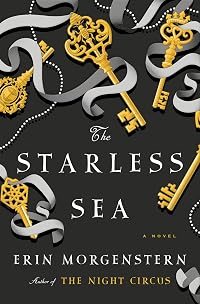
Ten Thousand Doors has often been compared to and lumped in the same category as The Starless Sea. I would like to respectfully disagree. The Starless Sea was a love letter to show more storytelling, thru and thru. But Ten Thousand Doors wanted to be a great story that one would right a love letter about. It failed for me. But 2 stars because I did at least finish it. show less
Ten Thousand Doors has often been compared to and lumped in the same category as The Starless Sea. I would like to respectfully disagree. The Starless Sea was a love letter to show more storytelling, thru and thru. But Ten Thousand Doors wanted to be a great story that one would right a love letter about. It failed for me. But 2 stars because I did at least finish it. show less
The Ten Thousand Doors of January by Alix E. Harrow is a young adult urban fantasy novel about adventure, stories, portals, travel and change. I knew I was going to be in safe hands very early on when our narrator quotes her father on Page 2:
"If we address stories as archaeological sites, and dust through their layers with meticulous care, we find at some level there is always a doorway. A dividing point between here and there, us and them, mundane and magical. It is at the moments when the doors open, when things flow between worlds, that stories happen." Page 2
And that's precisely what happens here. Our narrator is young January Scaller and her life changes forever when she finds a door at the age of seven. January is a difficult show more child with an absent father, and was given a number of nursemaids, who soon quit their position. Here's a robust character description of a new nursemaid from our narrator:
"The newest one [nursemaid] was a German immigrant named Miss Wilda, who wore heavy black woolen gowns and an expression that said she hadn't seen much of the twentieth century yet but heartily disapproved of it thus far. She liked hymns and freshly folded laundry, and detested fuss, mess, and cheek. We were natural enemies." Page 16-17
Don't you just love that? I can picture Miss Wilda perfectly, and even more, I want to read about all the ways they disagreed. Growing up as the ward of Mr William Cornelius Locke - a self-made almost-billionaire and chairman of the New England Archaeological Society - January lives in a mansion full of antiques and rare collectibles, yet is restless. She doesn't interact with anyone her own age, with the occasional exception of Sam, the son of the local grocer.
"I used my most grown-up voice, as if I had never once chased him across the lawn howling for his surrender or fed him magic potions made of pine needles and lake water." Page 33
This is an historical fiction adventure story, and like many great adventure stories before it, there's a book and on finding it, the reader - along with January - is plunged into the story of young Adelaide:
"Standing beside her grandmother's deathbed, woolen dress still smelling of black logwood dye, Ade had felt the way a sapling might as it watched one of the old forest giants come crashing magnificently to rest: awed, and perhaps a little frightened. But when Mama Larson's final breath rattled from her ribs, Ade discovered the same thing the young sapling would have: in the absence of the old tree, there was a hole in the canopy above her." Pages 97-98
Early on it was difficult to separate the stories of Ade (Adelaide) and January in my mind, and the third person narration was briefly confusing, but thankfully it improved as the novel progressed. Harrow's exquisite writing more than compensated for the flow, and I marvelled at her ability to convey so much in just one sentence:
"She took another gulp from the brown glass bottle and muttered herself into silence, complaining about rich folk, young folk, nosy folk, Yankees, and foreigners." Page 338
The Ten Thousand Doors of January reminded me of Strange the Dreamer by Laini Taylor a little, in the shared coming of age quest of sorts that leads to danger, adventure and eventually self discovery. The existence of portals that lead to other worlds isn't new in fiction, and I've enjoyed The Chronicles of Narnia by CS Lewis, The Starless Sea by Erin Morgenstern and more recently Fairy Tale by Stephen King.
In this particular portal fantasy novel, the doors represent change and characters very quickly decide whether that change is good or not. The doors create an inevitable 'leakage between worlds' (the author's words, not mine) which includes people and objects travelling between them. My mind was racing at this point, imagining how this theory could apply to some of the mysteries in our own world as we know it. Perhaps the Voynich manuscript came from one of these worlds, who knows?
Naturally, this gives rise to themes of ethnicity and multiculturalism, as does the idea of preserving each world in its current state and slowing or preventing the use of doorways to freely travel. Younger readers will take this at face value, while mature readers will see how these attitudes and prejudices are reflected in our history and in our present.
I'll leave you with one last quote I hope you might like:
"Those of you who are more than casually familiar with books - those of you who spend your free afternoons in fusty bookshops, who offer furtive, kindly strokes along the spines of familiar titles - understand that page riffling is an essential element in the process of introducing oneself to a new book. .. It might smell expensive and well bound, or it might smell of tissue-thin paper and blurred two-color prints, or of fifty years unread in the home of a tobacco-smoking old man. Books can smell of cheap thrills or painstaking scholarship, of literary weight or unsolved mysteries.
This one smelled unlike any book I'd ever held. Cinnamon and coal smoke, catacombs and loam. Damp seaside evenings and sweat-slick noontimes beneath palm fronds. It smelled as if it had been in the mail for longer than any one parcel could be, circling the world for years and accumulating layers of smells like a tramp wearing too many clothes." Pages 22-23
I just love that quote! I recently learned that bildungsroman is a term used to describe a coming of age story; thanks to Sam for that little pearl. This book was a gift for Christmas and The Ten Thousand Doors of January by Alix E. Harrow is a bildungsroman for those who prefer their reading material to be full of adventure and fantasy with a touch of historical fiction.
Highly recommended. show less
"If we address stories as archaeological sites, and dust through their layers with meticulous care, we find at some level there is always a doorway. A dividing point between here and there, us and them, mundane and magical. It is at the moments when the doors open, when things flow between worlds, that stories happen." Page 2
And that's precisely what happens here. Our narrator is young January Scaller and her life changes forever when she finds a door at the age of seven. January is a difficult show more child with an absent father, and was given a number of nursemaids, who soon quit their position. Here's a robust character description of a new nursemaid from our narrator:
"The newest one [nursemaid] was a German immigrant named Miss Wilda, who wore heavy black woolen gowns and an expression that said she hadn't seen much of the twentieth century yet but heartily disapproved of it thus far. She liked hymns and freshly folded laundry, and detested fuss, mess, and cheek. We were natural enemies." Page 16-17
Don't you just love that? I can picture Miss Wilda perfectly, and even more, I want to read about all the ways they disagreed. Growing up as the ward of Mr William Cornelius Locke - a self-made almost-billionaire and chairman of the New England Archaeological Society - January lives in a mansion full of antiques and rare collectibles, yet is restless. She doesn't interact with anyone her own age, with the occasional exception of Sam, the son of the local grocer.
"I used my most grown-up voice, as if I had never once chased him across the lawn howling for his surrender or fed him magic potions made of pine needles and lake water." Page 33
This is an historical fiction adventure story, and like many great adventure stories before it, there's a book and on finding it, the reader - along with January - is plunged into the story of young Adelaide:
"Standing beside her grandmother's deathbed, woolen dress still smelling of black logwood dye, Ade had felt the way a sapling might as it watched one of the old forest giants come crashing magnificently to rest: awed, and perhaps a little frightened. But when Mama Larson's final breath rattled from her ribs, Ade discovered the same thing the young sapling would have: in the absence of the old tree, there was a hole in the canopy above her." Pages 97-98
Early on it was difficult to separate the stories of Ade (Adelaide) and January in my mind, and the third person narration was briefly confusing, but thankfully it improved as the novel progressed. Harrow's exquisite writing more than compensated for the flow, and I marvelled at her ability to convey so much in just one sentence:
"She took another gulp from the brown glass bottle and muttered herself into silence, complaining about rich folk, young folk, nosy folk, Yankees, and foreigners." Page 338
The Ten Thousand Doors of January reminded me of Strange the Dreamer by Laini Taylor a little, in the shared coming of age quest of sorts that leads to danger, adventure and eventually self discovery. The existence of portals that lead to other worlds isn't new in fiction, and I've enjoyed The Chronicles of Narnia by CS Lewis, The Starless Sea by Erin Morgenstern and more recently Fairy Tale by Stephen King.
In this particular portal fantasy novel, the doors represent change and characters very quickly decide whether that change is good or not. The doors create an inevitable 'leakage between worlds' (the author's words, not mine) which includes people and objects travelling between them. My mind was racing at this point, imagining how this theory could apply to some of the mysteries in our own world as we know it. Perhaps the Voynich manuscript came from one of these worlds, who knows?
Naturally, this gives rise to themes of ethnicity and multiculturalism, as does the idea of preserving each world in its current state and slowing or preventing the use of doorways to freely travel. Younger readers will take this at face value, while mature readers will see how these attitudes and prejudices are reflected in our history and in our present.
I'll leave you with one last quote I hope you might like:
"Those of you who are more than casually familiar with books - those of you who spend your free afternoons in fusty bookshops, who offer furtive, kindly strokes along the spines of familiar titles - understand that page riffling is an essential element in the process of introducing oneself to a new book. .. It might smell expensive and well bound, or it might smell of tissue-thin paper and blurred two-color prints, or of fifty years unread in the home of a tobacco-smoking old man. Books can smell of cheap thrills or painstaking scholarship, of literary weight or unsolved mysteries.
This one smelled unlike any book I'd ever held. Cinnamon and coal smoke, catacombs and loam. Damp seaside evenings and sweat-slick noontimes beneath palm fronds. It smelled as if it had been in the mail for longer than any one parcel could be, circling the world for years and accumulating layers of smells like a tramp wearing too many clothes." Pages 22-23
I just love that quote! I recently learned that bildungsroman is a term used to describe a coming of age story; thanks to Sam for that little pearl. This book was a gift for Christmas and The Ten Thousand Doors of January by Alix E. Harrow is a bildungsroman for those who prefer their reading material to be full of adventure and fantasy with a touch of historical fiction.
Highly recommended. show less
Members
- Recently Added By
Published Reviews
ThingScore 75
Harrow’s novel will hold strong appeal to readers who enjoy portal fantasies featuring adventuresome women.
added by 2wonderY
Lists

Top Five Books of 2020
982 works; 350 members

Female Author
1,235 works; 67 members

Top Five Books of 2021
604 works; 181 members

2020 Hugo Eligible Novels
71 works; 12 members

Books that contain themselves
12 works; 4 members

Pleasant Surprises: Books That Exceeded Our Expectations
418 works; 143 members

Books Read in 2020
4,379 works; 124 members

Books Read in 2023
5,547 works; 145 members

Morphy Pick!
24 works; 1 member

Books I Re-read (...and re-read... and re-read)
25 works; 2 members

Books Read in 2022
5,166 works; 112 members

Books Read in 2019
4,052 works; 110 members

Books Read in 2024
4,623 works; 126 members
Books with a Month's Name in the Title
3 works; 1 member

Books Mentioned in the A+ Autostraddle Pop Up Discords Nov 2022 & Dec 2022
223 works; 3 members

Books Read in 2021
5,361 works; 113 members

9 Mind-Bending Books About Parallel Universes
9 works; 1 member

Best Audiobooks
240 works; 114 members
Author Information

24+ Works 15,500 Members
Some Editions
Awards and Honors
Awards
Distinctions
Notable Lists
Work Relationships
Common Knowledge
- Canonical title
- The Ten Thousand Doors of January
- Original title
- The Ten Thousand Doors of January
- Original publication date
- 2019-09-10
- People/Characters
- January Scaller; Cornelius Locke; Julian Scaller; Adelaide Lee Larson; Samuel Zappia; Jane Irimu
- Dedication
- For Nick, my comrade and compass
- First words
- When I was seven, I found a door. I suspect I should capitalize that word, so you understand I’m not talking about your garden- or common-variety door that leads reliably to a white-tiled kitchen or a bedroom closet.
- Quotations
- There's only one way to run away from your own story, and that's to sneak into someone else's. (Chapter 3, pg 92 Kindle)
- Last words
- (Click to show. Warning: May contain spoilers.)She steps through it, and is gone.
- Publisher's editor
- Evans, Nivia
- Blurbers
- El Mohtar, Amal; Henry, Christina; Pierce, Tamora; Albert, Melissa; Swyler, Erika; Shepherd, Peng (show all 9); Bond, Gwenda; Sullivan, Matthew; Howard, Kat
- Original language
- English
- Canonical DDC/MDS
- 813.6
Classifications
Statistics
- Members
- 4,631
- Popularity
- 3,117
- Reviews
- 207
- Rating
- (4.00)
- Languages
- 12 — Chinese, Czech, English, French, German, Hungarian, Italian, Korean, Polish, Spanish, Turkish, Portuguese (Portugal)
- Media
- Paper, Audiobook, Ebook
- ISBNs
- 34
- ASINs
- 11