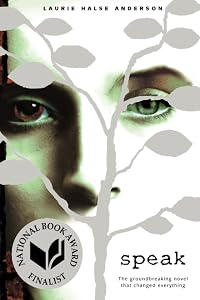
Speak
by Laurie Halse Anderson 
On This Page
Description
A traumatic event near the end of the summer has a devastating effect on Melinda's freshman year in high school.Tags
Recommendations
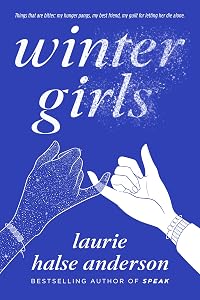
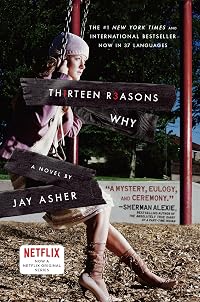

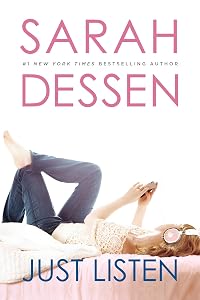
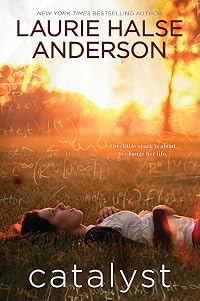
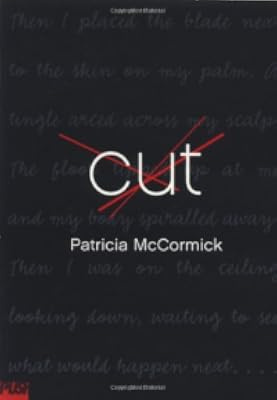
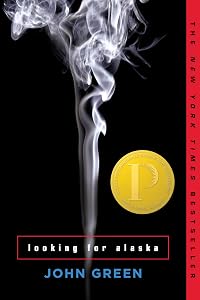
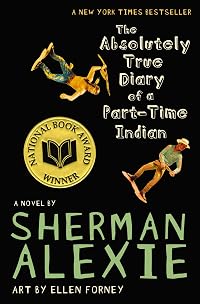
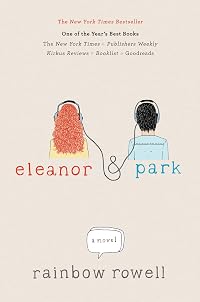
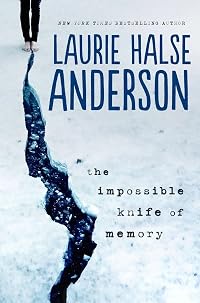
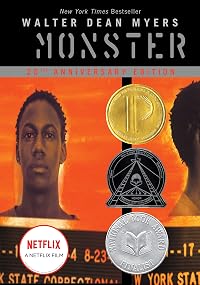
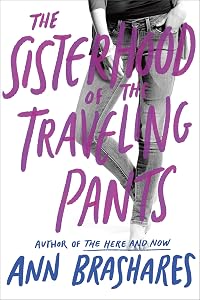


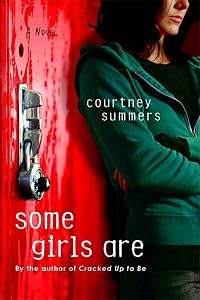
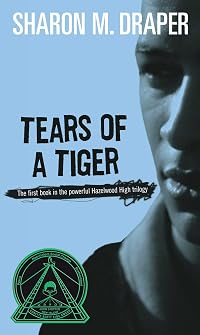
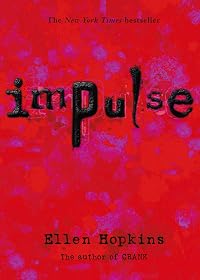
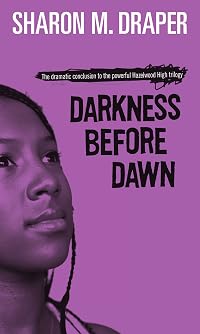

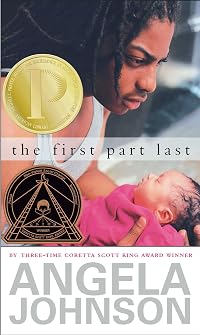
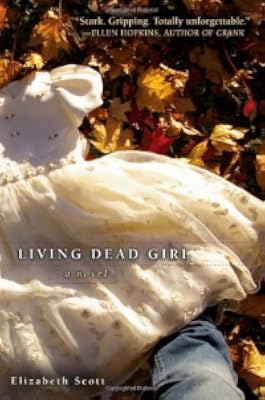
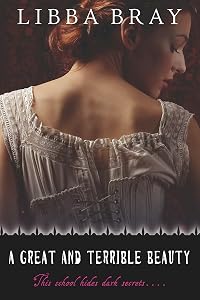
Member Recommendations

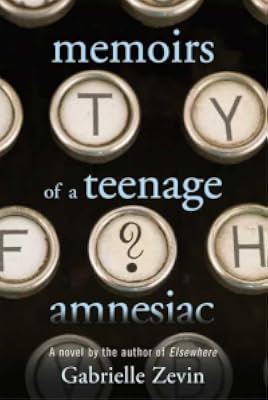
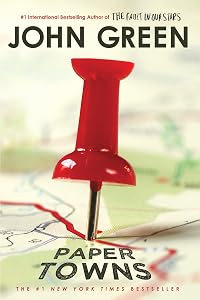
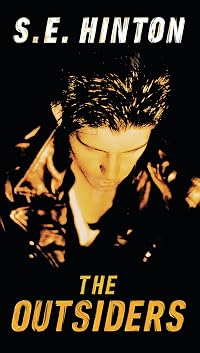
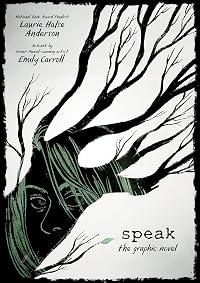
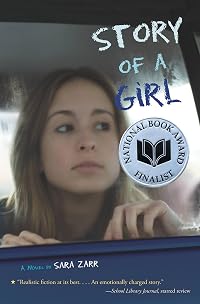
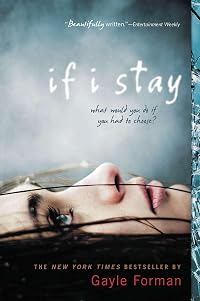
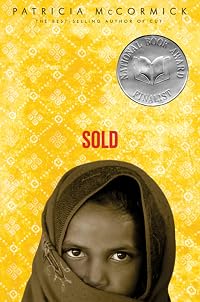
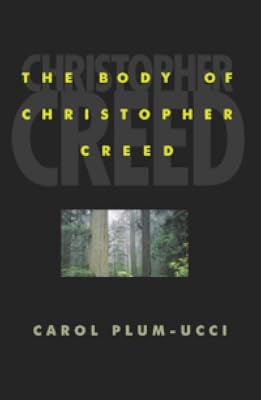
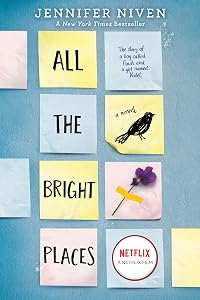
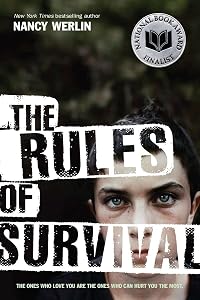
Caramellunacy Both Speak and Wallflower are books about young teens struggling to find acceptance in high school while trying to deal with trauma - both without being preachy or cloying.
20

by anonymous user
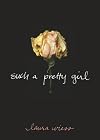

by kaledrina
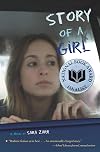

anime_miz Same concept of how a female rebounds from a bad sexual attack.
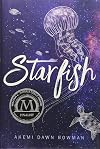
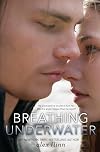
flanisntjustdessert similar plot lines and leads
by kaledrina


by smammers
norabelle414 Books about two different girls who are raped in similar situations, but have different outcomes due to different support systems.
Member Reviews
TW RAPE
Speak is a novel that means something very personal to me. The author managed to capture the pain and conflict that I felt myself as a sexual assault survivor. I saw myself in the Melinda and I saw the people I knew and grew up with in the other characters — including the man who assaulted her.
Reading this book felt therapeutic and healing to me. Melinda had so much more than just her voice taken away from her that night and watching her grow and trust herself into relearning how to use that voice to speak up for herself really allowed me the opportunity to do the same.
I truly believe this is a book that needs to be read by so many people, especially high school students so there can be conversations had about reaching out to show more people to see if they are in need of support and conversations had about sexual assault.
It’s not your fault. Never. Your voice will be heard show less
Speak is a novel that means something very personal to me. The author managed to capture the pain and conflict that I felt myself as a sexual assault survivor. I saw myself in the Melinda and I saw the people I knew and grew up with in the other characters — including the man who assaulted her.
Reading this book felt therapeutic and healing to me. Melinda had so much more than just her voice taken away from her that night and watching her grow and trust herself into relearning how to use that voice to speak up for herself really allowed me the opportunity to do the same.
I truly believe this is a book that needs to be read by so many people, especially high school students so there can be conversations had about reaching out to show more people to see if they are in need of support and conversations had about sexual assault.
It’s not your fault. Never. Your voice will be heard show less
I first read this book at the age of perhaps 11 or 12, and really didn't understand what all the fuss was about. Why? Well, I'd only been at secondary school for about ten minutes, had no knowledge of sexual violence, and thus didn't really appreciate the level of 'reading between the lines' that is required in order to catapult this book up to greatness.
This time around I absolutely loved it! On the surface it is the story of Melinda Sordino, a thirteen year-old girl starting high school for the first time. Unfortunately, Melinda has recently alienated her entire group of best friends - amongst others - by calling the police from a party over the summer. What her ex-friends don't know is why she called the police: she was raped at the show more party by the hottest boy in school. Which brings us to what's going on under the surface - because this isn't just some flighty Mean Girls novel about an unpopular girl in high school. It's really about a young woman slowly healing after a terrible experience, finding her voice, discovering her own strength, and finally being able to speak out about what happened to her. And what a beautifully evoked journey it is...
Not only is the writing deceptively simple and frequently gorgeous, but what really surprised me was how much humour runs through this book! I didn't remember that at all from my first reading, so I was delighted to discover that Anderson has a marvellous knack of combining sparkling wit with troubling themes to offer a reading experience that has it all - it's funny but truthful, sarcastic but airy, tongue-in-cheek but very moving.
One thing I absolutely loved was the idea of art as therapy. Early in the book, Melinda's unconventional and completely awesome art teacher allocates each student an object that will form the basis of their work that year, across as many media and styles as they care to try. Melinda's object is 'tree'. Not only does this offer a metaphor for Melinda's personal growth, strength and return to life as the novel goes on, but her artistic efforts, and Mr Freeman's enthusiastic mentoring, become the means for her to learn self-expression and explore her feelings in new ways. She keeps her work in a deserted janitor's closet (like a mini staffroom), which she cleans, personalises and adapts into her own little sanctuary.
I think these elements of the novel particularly struck a chord with me because I, albeit for different reasons, found similar refuge within my school environment as a teenager. Like Mr Freeman's art room, ours was light, bustling, relaxed, and always open to students during breaks and lunchtimes. I'd tag along with friends who were taking art and spend time doing homework, eating lunch, singing along to the radio, and ogling my crush, a shy boy from the year above who was also a proficient artist and could usually be found hiding away in the art room with his best friend. My 'janitor's closet' was an upstairs classroom, my Mr Freeman a history teacher who would quietly unlock the door for me and unceremoniously throw out any rowdier groups who dared to invade by pretending I was in detention! Like Melinda, I found that having somewhere peaceful to go made school more bearable.
In conclusion, this is a truly fantastic novel. Despite being published fifteen years ago (so around the time I first read it, rather scarily), it still has a wonderful blend of humour and truth, a school setting that is still relatable now, and a strong and inspiring message about sexual violence, self-expression, and having the confidence to speak UP and speak OUT against people who have hurt us and experiences no one should have to endure alone. This is definitely a story that will stick with me this time around - I may even buy my own copy to keep - and I can't wait to read Wintergirls, which is already installed on my TBR shelves! show less
This time around I absolutely loved it! On the surface it is the story of Melinda Sordino, a thirteen year-old girl starting high school for the first time. Unfortunately, Melinda has recently alienated her entire group of best friends - amongst others - by calling the police from a party over the summer. What her ex-friends don't know is why she called the police: she was raped at the show more party by the hottest boy in school. Which brings us to what's going on under the surface - because this isn't just some flighty Mean Girls novel about an unpopular girl in high school. It's really about a young woman slowly healing after a terrible experience, finding her voice, discovering her own strength, and finally being able to speak out about what happened to her. And what a beautifully evoked journey it is...
Not only is the writing deceptively simple and frequently gorgeous, but what really surprised me was how much humour runs through this book! I didn't remember that at all from my first reading, so I was delighted to discover that Anderson has a marvellous knack of combining sparkling wit with troubling themes to offer a reading experience that has it all - it's funny but truthful, sarcastic but airy, tongue-in-cheek but very moving.
One thing I absolutely loved was the idea of art as therapy. Early in the book, Melinda's unconventional and completely awesome art teacher allocates each student an object that will form the basis of their work that year, across as many media and styles as they care to try. Melinda's object is 'tree'. Not only does this offer a metaphor for Melinda's personal growth, strength and return to life as the novel goes on, but her artistic efforts, and Mr Freeman's enthusiastic mentoring, become the means for her to learn self-expression and explore her feelings in new ways. She keeps her work in a deserted janitor's closet (like a mini staffroom), which she cleans, personalises and adapts into her own little sanctuary.
I think these elements of the novel particularly struck a chord with me because I, albeit for different reasons, found similar refuge within my school environment as a teenager. Like Mr Freeman's art room, ours was light, bustling, relaxed, and always open to students during breaks and lunchtimes. I'd tag along with friends who were taking art and spend time doing homework, eating lunch, singing along to the radio, and ogling my crush, a shy boy from the year above who was also a proficient artist and could usually be found hiding away in the art room with his best friend. My 'janitor's closet' was an upstairs classroom, my Mr Freeman a history teacher who would quietly unlock the door for me and unceremoniously throw out any rowdier groups who dared to invade by pretending I was in detention! Like Melinda, I found that having somewhere peaceful to go made school more bearable.
In conclusion, this is a truly fantastic novel. Despite being published fifteen years ago (so around the time I first read it, rather scarily), it still has a wonderful blend of humour and truth, a school setting that is still relatable now, and a strong and inspiring message about sexual violence, self-expression, and having the confidence to speak UP and speak OUT against people who have hurt us and experiences no one should have to endure alone. This is definitely a story that will stick with me this time around - I may even buy my own copy to keep - and I can't wait to read Wintergirls, which is already installed on my TBR shelves! show less
I've been working from a list of 100 best books every teen librarian should read, and this is towards the top of that list. I have to admit, I've been avoiding this one - I've been aware of speak and its subject matter, and I've learned to avoid heavy material as I've found that dark stuff stays with me over long. HOWEVER: I'm so glad I finally read speak.
Melinda starts high school with a secret, and what happened after that secret thing has made her an outcast among her peers. Lonely and friendless, she retreats into herself, speaking very little, but, more importantly, speaking not at all about what happened to her that summer.
This book will break your heart a little, which isn't a bad thing. Melinda's depression rings true, and even show more readers who have not experienced her particular tragedy may still find themselves in her feelings of loneliness and despair (I know I did). Despite the heaviness of the story, there is a feeling of hope, which works well.
I read this for a book group, and we had an intense conversation about it. While one felt it seemed a little after-school special, most of us felt the characters were well-drawn, and the suspense in finding out what actually happened to Melinda appropriate. We also were collectively horrified at how blind the adults in Melinda's life were - how could they not see that she was struggling! Unfortunately, so many adults seem to forget what it was like to be a teenager, and expect some teens to simply be miserable, as if it's something they try on with their jeans and t-shirts. Hopefully, more adults will read excellent teen fiction like speak and remember for a little while the very real pain many teenagers face without adult support...
I recommend you get the 10th anniversary edition of speak. At the beginning, Anderson includes a poem, which, except for the first and last stanzas, is compiled from the millions of reader letters she's received in response to the book over the years. I saw a video once of Anderson reading this poem (before I read the book), and in rereading the poem, I teared up again at the pain in their words, but also the sweetness in their thanking Anderson for the book, as it's helped so many find the courage to speak up about what's happened to them.
Highly recommended. show less
Melinda starts high school with a secret, and what happened after that secret thing has made her an outcast among her peers. Lonely and friendless, she retreats into herself, speaking very little, but, more importantly, speaking not at all about what happened to her that summer.
This book will break your heart a little, which isn't a bad thing. Melinda's depression rings true, and even show more readers who have not experienced her particular tragedy may still find themselves in her feelings of loneliness and despair (I know I did). Despite the heaviness of the story, there is a feeling of hope, which works well.
I read this for a book group, and we had an intense conversation about it. While one felt it seemed a little after-school special, most of us felt the characters were well-drawn, and the suspense in finding out what actually happened to Melinda appropriate. We also were collectively horrified at how blind the adults in Melinda's life were - how could they not see that she was struggling! Unfortunately, so many adults seem to forget what it was like to be a teenager, and expect some teens to simply be miserable, as if it's something they try on with their jeans and t-shirts. Hopefully, more adults will read excellent teen fiction like speak and remember for a little while the very real pain many teenagers face without adult support...
I recommend you get the 10th anniversary edition of speak. At the beginning, Anderson includes a poem, which, except for the first and last stanzas, is compiled from the millions of reader letters she's received in response to the book over the years. I saw a video once of Anderson reading this poem (before I read the book), and in rereading the poem, I teared up again at the pain in their words, but also the sweetness in their thanking Anderson for the book, as it's helped so many find the courage to speak up about what's happened to them.
Highly recommended. show less
The Short of It:
Deceptively powerful.
The Rest of It:
Melinda’s first day of high school is even more horrid than she imagined. The friends that she had during the summer, are no longer speaking to her. Her decision to call the police during a summer party has made her the most unpopular person on the planet and no one wants anything to do with her. Once well liked and popular, Melinda finds herself navigating the first year of high school alone. No one knows her true reason for calling the police that night and if they did, would they even care?
Without going into too much detail, Melinda’s situation is not uncommon (unfortunately), but a situation that has the power to destroy and devastate on many levels. Broken and alone, her only show more option is to become silent. Turning inward, she attempts to make herself invisible and takes to hiding in a janitorial closet at school. As her grades slip, her parents fail her miserably in their poor attempt to understand what she is going through. With no immediate help, she begins to express herself artistically in the only class that she enjoys.
Speak is intensely powerful, yet tastefully done. I’m surprised that so many schools have added it to their banned book lists because it’s a book with an important message and one that deserves to be read. Anderson does a stellar job of conveying Melinda’s pain. There were many times where I found myself thinking about my old high school days, and even though that part of my life took place years ago, not much has changed. Kids can be jerks and “friends” come and go like the tides. The only way to deal with it is to know that you have value and that your voice matters no matter what others think.
Speak has been out for quite some time, but it’s a classic in that it deals with issues that all teens deal with. If you have a teen in your home, I urge you to read it first, share it with them, and then have a discussion about it.
For more reviews, visit my blog: Book Chatter. show less
Deceptively powerful.
The Rest of It:
Melinda’s first day of high school is even more horrid than she imagined. The friends that she had during the summer, are no longer speaking to her. Her decision to call the police during a summer party has made her the most unpopular person on the planet and no one wants anything to do with her. Once well liked and popular, Melinda finds herself navigating the first year of high school alone. No one knows her true reason for calling the police that night and if they did, would they even care?
Without going into too much detail, Melinda’s situation is not uncommon (unfortunately), but a situation that has the power to destroy and devastate on many levels. Broken and alone, her only show more option is to become silent. Turning inward, she attempts to make herself invisible and takes to hiding in a janitorial closet at school. As her grades slip, her parents fail her miserably in their poor attempt to understand what she is going through. With no immediate help, she begins to express herself artistically in the only class that she enjoys.
Speak is intensely powerful, yet tastefully done. I’m surprised that so many schools have added it to their banned book lists because it’s a book with an important message and one that deserves to be read. Anderson does a stellar job of conveying Melinda’s pain. There were many times where I found myself thinking about my old high school days, and even though that part of my life took place years ago, not much has changed. Kids can be jerks and “friends” come and go like the tides. The only way to deal with it is to know that you have value and that your voice matters no matter what others think.
Speak has been out for quite some time, but it’s a classic in that it deals with issues that all teens deal with. If you have a teen in your home, I urge you to read it first, share it with them, and then have a discussion about it.
For more reviews, visit my blog: Book Chatter. show less
And then I thought: Nah.
I could talk about the terrible prose, the lack of plot, the painfully stereotypical characters. I could storm about how Melinda sounded like an eleven year old child rather than a teenager. I could go in depth about the horrendously obvious symbolism, or even the fact that several side plots that are introduced are never mentioned again. But I'm not going to do that.
You know why? Because I've got better things to do. Better books to read, better books to write, things to cook and eat and watch and places to go. All of which would bring me greater joy than writing a rage review for this puppy. I'd
But, I think it is still important to warn you guys. Not only is this book horribly written, but it completely bypasses all the realities of rape (and no, that isn't a spoiler). I was not only angry but disturbed and sickened by the way the subject was handled in this book. It breaks down to something like: Girl gets raped, girl cries over it, girl doesn't seek help, girl makes a tree sculpture and suddenly feels way better.
NO.
I won't stand for that.
It is a cavalier, disgusting, dangerous, and downright reckless way to treat such a complex, nuanced, messy topic. It disgraces survivors of sexual assault everywhere, telling them that rape is just an incident, and when you get it out of your system within less than a fucking year, you're all better.
NO.
Rape is traumatic. Everybody deals with it differently- I understand that- but I loathe the fact that Anderson has portrayed the single most self-destructive way to do so as the right thing to do. Melinda didn't really deal with any of the things that happened to her- she swept them under the rug and pretended that everything ended fine. It's so... superficial. Offhanded. It doesn't dive deep, doesn't even try to scratch the surface. It reduces such an important issue to a minor road bump.
And I'm sorry if I'm getting my knickers in a twist over a fictional young adult book, but that's just the thing- it's a young adult book. It's marketed to impressionable teenagers who may see themselves in an emotionally damaged, moody girl like Melinda, and I really worry about the message that this book is sending them.
So instead of slamming this book in traditional snark-fest fashion, that's my warning to you. It's a terribly written book, but more importantly, the subject is handled with care and respect equivalent to throwing it out of an aeroplane and running it over with a car, then beating it with a stick.
Damn. I feel a lot better. Now I'm off to go read a book I'll actually enjoy- happy reading everyone, and I hope that if you did read this and enjoy it, perhaps now you see a different perspective on how fundamentally poorly the main subject is handled. I don't claim to be right, I'm just putting my own viewpoint out there for you to disagree, agree, or feel conflicted about.
5Q 4P (my codes) 5Q, 4P, J&S (actual VOYA codes)
What do you say when nothing can be said, when the unspeakable has happened and no one believes you? Laurie Halse Anderson's unflinching novel grabs you from the beginning with a raw, authentic voice that strikes a chord with the teenager in all of us. With details like Hairwoman, Mr. Neck, the Zebras, The First Ten Lies They Tell You in High School-, all the smells, fears, loves, and angst of high school are brought to life amidst a terrible event, a heartbreaking aftermath, and one girl's struggle to find her own voice amidst the adolescent swarm.
I was shaken the first time I read this book and that feeling has not changed upon subsequent readings.
What do you say when nothing can be said, when the unspeakable has happened and no one believes you? Laurie Halse Anderson's unflinching novel grabs you from the beginning with a raw, authentic voice that strikes a chord with the teenager in all of us. With details like Hairwoman, Mr. Neck, the Zebras, The First Ten Lies They Tell You in High School-, all the smells, fears, loves, and angst of high school are brought to life amidst a terrible event, a heartbreaking aftermath, and one girl's struggle to find her own voice amidst the adolescent swarm.
I was shaken the first time I read this book and that feeling has not changed upon subsequent readings.
There are so many things about this book that should annoy me. It breaks a lot of the so-called rules of writing, doing things that in other books had driven me insane. The story is almost entirely narrative. People are named based upon certain physical attributes they possess, like Mr. Neck and Hair Woman, and the dialogue (when there is any) is often listed like this:
Mr. Neck: We meet again.
Me: ...
Mr. Neck: Where do you think you're going?
Me: ...
And yet, it's incredible. If you want a perfect example of the power of "voice", read Speak. I kept turning the pages because Melinda demanded that I listen to her story. Which is curious because the thing Melinda struggles to do throughout the book is speak.
A traumatic experience at an show more end-of-summer party has left her practically mute. She speaks only when it is completely unavoidable, and even then her words never express her true feelings. Never even come close to describing the turmoil inside.
She begins her freshman year of high school with no friends and no one to turn to. She withdraws, starts cutting class, and her grades begin to fail. Her parents are well-meaning but are too busy and self-absorbed to break down Melinda's barriers and extract the truth from her.
While Speak's subject matter includes violence, hatred, sex, and infidelity, it is an emotional, touching portrayal of a depressed teenage girl struggling with alienation, honesty, and self-worth while she tries to come to terms with the horror she suffered and find her voice.
Definitely for an older, more mature YA audience but highly recommended. show less
Mr. Neck: We meet again.
Me: ...
Mr. Neck: Where do you think you're going?
Me: ...
And yet, it's incredible. If you want a perfect example of the power of "voice", read Speak. I kept turning the pages because Melinda demanded that I listen to her story. Which is curious because the thing Melinda struggles to do throughout the book is speak.
A traumatic experience at an show more end-of-summer party has left her practically mute. She speaks only when it is completely unavoidable, and even then her words never express her true feelings. Never even come close to describing the turmoil inside.
She begins her freshman year of high school with no friends and no one to turn to. She withdraws, starts cutting class, and her grades begin to fail. Her parents are well-meaning but are too busy and self-absorbed to break down Melinda's barriers and extract the truth from her.
While Speak's subject matter includes violence, hatred, sex, and infidelity, it is an emotional, touching portrayal of a depressed teenage girl struggling with alienation, honesty, and self-worth while she tries to come to terms with the horror she suffered and find her voice.
Definitely for an older, more mature YA audience but highly recommended. show less
Members
- Recently Added By
Published Reviews
ThingScore 95
The plot is gripping and the characters are powerfully drawn, but it is its raw and unvarnished look at the dynamics of the high school experience that makes this a novel that will be hard for readers to forget.
added by khuggard
In her YA fiction debut, Anderson perfectly captures the harsh conformity of high-school cliques and one teen's struggle to find acceptance from her peers. Melinda's sarcastic wit, honesty, and courage make her a memorable character whose ultimate triumph will inspire and empower readers.
added by khuggard
Anderson expresses the emotions and the struggles of teenagers perfectly. Melinda's pain is palpable, and readers will totally empathize with her. This is a compelling book, with sharp, crisp writing that draws readers in, engulfing them in the story.
added by khuggard
Lists

Best Young Adult
399 works; 101 members

Books That Made Me Cry
199 works; 105 members

Recommend the 20 best books you've read in the last five years
2,168 works; 601 members

Banned Books Week 2014
268 works; 63 members

NPRs your favorites: 100 Best Ever Teen Novels
237 works; 49 members

Books for Reluctant Readers
18 works; 3 members

Read the book and saw the movie
1,170 works; 192 members

SLJ's 100 Must-Have YA books
36 works; 2 members

Books set in high school
89 works; 7 members

Most Popular Young Adult Lit on LT
100 works; 4 members
Independent Reading Suggestions
69 works; 3 members

1990s
309 works; 17 members

Vlogbrothers Book Recommendations
307 works; 4 members

Books recommended by Calgary Public Library staff
1,588 works; 4 members

Virginia Banned Books 2023
68 works; 3 members

Top Five Books of 2020
982 works; 350 members

Florida's Book Bans and Challenges
311 works; 4 members

Bullies
44 works; 2 members

Books Read in 2018
4,360 works; 110 members

Banned or Challenged Books
400 works; 37 members

Hazel & Katniss & Harry & Starr Podcast
195 works; 1 member

READ IN 2021
239 works; 4 members
Overdue Podcast
806 works; 9 members

Books Tagged Abuse
152 works; 4 members

Five star books
1,757 works; 108 members

Books About Girls
219 works; 17 members

to get
244 works; 2 members
children's/y.a. reclist
43 works; 2 members
Modern Books for Young Adults
87 works; 11 members

Books Read in 2016
4,666 works; 199 members

B-B to Get
131 works; 1 member
Talk Discussions
Past Discussions
(M94'12) Speak, Laurie Halse Anderson in World Reading Circle (January 2013)
Author Information

57+ Works 51,794 Members
Laurie Halse Anderson was born in Potsdam, New York on October 23, 1961. She received a B.S.L.L. in Languages and Linguistics from Georgetown University in 1984. Before becoming a full-time author, she worked as a freelance reporter. Her first book, Ndito Runs, was published in 1996. She has written numerous books for children including Turkey show more Pox, No Time for Mother's Day, Fever 1793, Speak, Catalyst, Independent Dames: What You Never Knew about the Women and Girls of the American Revolution, Chains and The Impossible Knife of Memory. She also created the Wild at Heart series, which was originally published by American Girl but is now called the Vet Volunteers series and is published by Penguin Books for Young Readers. Anderson has been nominated and won multiple honorary awards for her literary work. For the masterpiece Speak, Anderson won the Printz Honor Book Award, a National Book Award nomination, Golden Kite award, the Edgar Allan Poe Award, and the Los Angeles Times Book Prize. Her book Fever 1793 won the American Library Association Best Book for Young Adults selection and the Junior Library Guild selection. In 2008, Chains was selected for the National Book Award Finalist and in 2009 was awarded for its Historical Fiction the Scott O'Dell Award. (Bowker Author Biography) show less
Laurie Halse Anderson is a LibraryThing Author, an author who lists their personal library on LibraryThing.
Some Editions
Awards and Honors
Awards
Distinctions
Notable Lists
Series
Belongs to Publisher Series
Work Relationships
Is contained in
Has the adaptation
Has as a student's study guide
Common Knowledge
- Canonical title
- Speak
- Original title
- Speak
- Original publication date
- 1999-10-22
- People/Characters
- Melinda Sordino; Andy Evans; Heather; David Petrakis; Ms. Keen; Mr. Freeman (show all 11); Rachel; Nicole; Ivy; Mr. Neck; Hairwoman
- Important places
- Syracuse, New York, USA
- Related movies
- Speak (2004 | IMDb)
- Dedication
- To Sandy Bernstein, who helped me find my voice, and to my husband Greg, who listens
- First words
- It is my first morning of high school.
- Last words
- (Click to show. Warning: May contain spoilers.)Me: "Let me tell you about it."
- Original language
- English US
Classifications
- Genres
- Teen, Young Adult, Fiction and Literature
- DDC/MDS
- 813.54 — Literature & rhetoric American literature in English American fiction in English 1900-1999 1945-1999
- LCC
- PZ7 .A54385 .S — Language and Literature Fiction and juvenile belles lettres Fiction and juvenile belles lettres Juvenile belles lettres
- BISAC
Statistics
- Members
- 16,624
- Popularity
- 402
- Reviews
- 750
- Rating
- (4.10)
- Languages
- 19 — Catalan, Chinese, Czech, Dutch, English, Finnish, French, German, Greek, Hebrew, Hungarian, Italian, Korean, Polish, Portuguese, Spanish, Swedish, Turkish, Ukrainian
- Media
- Paper, Audiobook, Ebook
- ISBNs
- 93
- UPCs
- 1
- ASINs
- 28