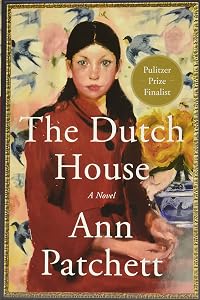
The Dutch House
by Ann Patchett
On This Page
Description
At the end of the Second World War, Cyril Conroy combines luck and a single canny investment to begin an enormous real estate empire, propelling his family from poverty to enormous wealth. His first order of business is to buy a lavish estate in the suburbs outside of Philadelphia. Meant as a surprise for his wife, the house sets in motion the undoing of everyone he loves. The story is told by Cyril's son Danny, as he and his older sister, the brilliantly acerbic and self-assured Maeve, are show more exiled from the house where they grew up by their stepmother. The two wealthy siblings are thrown back into the poverty their parents had escaped from and find that all they have to count on is one another. It is this unshakable bond between them that both saves their lives and thwarts their futures. show lessTags
Recommendations

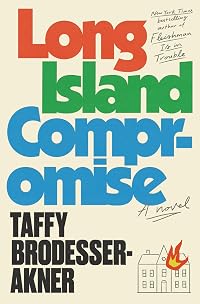
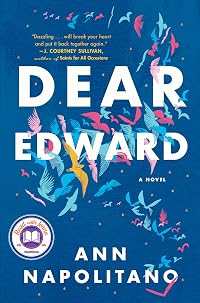
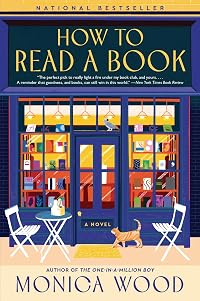
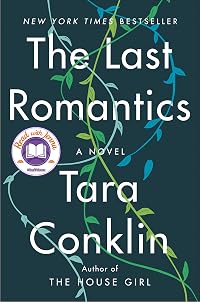





Member Recommendations
shaunie The Dutch House is in some ways a slimmed down, more enjoyable Goldfinch.
42

Member Reviews
Dan Conroy relates the three-generation saga of his family starting with the day his father, real estate developer and landlord Cyril brings his new girlfriend Andrea home to meet Dan and his older sister Maeve. Their meeting is stiff and formal. Dan wonders if his father had forgotten to mention to Andrea that he had children. But whatever her feelings about them might have been, clearly, she loved the house, a three-storey Dutch Colonial Revival mansion in Elkins Park, Pennsylvania, home to Philadelphia’s wealthiest merchants. Large portraits of the VanHoebeeks, the original owners hang in the drawing room, with eyes, Dan remembers, “that would follow a boy with disapproval no matter which of the sofas he chose to sit on.”
Dan show more and Maeve’s mother left them and went to India when Dan was so young that he has no memory of her. He’s content living in the big house with his sister, his father, and their servants Sandy and Jocelyn. He wonders how Andrea might fit into their domestic situation. He reflects:
“After her first appearance at the Dutch House, Andrea lingered like a virus. As soon as we were sure we’d seen the last of her and months would go by without a mention of her name, there she’d be at the dining-room table again, chastened by her absence at first and then slowly warming over time. Andrea, fully warmed, talked about nothing but the house. She was forever going on about some detail of the crown molding or speculating about the exact height of the ceiling, as if the ceiling were entirely new to us.”
Life does not proceed smoothly after Andrea becomes the second Mrs. Conroy in the tale of inheritance and succession, maternal deprivation, real estate development, resentment, revenge, and reconciliation. Family traits and roles are passed down from parent to child and aunt to niece. The strong bond and mutual support between brother and sister, their former servants, and other family members keep them afloat as the tide of their fortunes ebb and flow. This is a cyclical tale of riches to rags to riches, complete with an evil stepmother, told with realistic veracity by a master of the art. show less
Dan show more and Maeve’s mother left them and went to India when Dan was so young that he has no memory of her. He’s content living in the big house with his sister, his father, and their servants Sandy and Jocelyn. He wonders how Andrea might fit into their domestic situation. He reflects:
“After her first appearance at the Dutch House, Andrea lingered like a virus. As soon as we were sure we’d seen the last of her and months would go by without a mention of her name, there she’d be at the dining-room table again, chastened by her absence at first and then slowly warming over time. Andrea, fully warmed, talked about nothing but the house. She was forever going on about some detail of the crown molding or speculating about the exact height of the ceiling, as if the ceiling were entirely new to us.”
Life does not proceed smoothly after Andrea becomes the second Mrs. Conroy in the tale of inheritance and succession, maternal deprivation, real estate development, resentment, revenge, and reconciliation. Family traits and roles are passed down from parent to child and aunt to niece. The strong bond and mutual support between brother and sister, their former servants, and other family members keep them afloat as the tide of their fortunes ebb and flow. This is a cyclical tale of riches to rags to riches, complete with an evil stepmother, told with realistic veracity by a master of the art. show less
Here's another engrossing read from Ann Patchett about the lifelong relationship between two siblings and the house they grow up in.
The Dutch House is an oversize, hand-crafted mansion built by a wealthy Dutch couple outside Philadelphia. After their deaths the house, with all its contents, wind up in the hands of an ambitious real estate entrepreneur, his wife, and two children. It's the relationship between these two children (Danny and Maeve) that is central in the book. Danny is the book's narrator and his sister, six years older, becomes the central figure in his life.
While I won't relay more details for fear of spoiling your own discovery of this wonderful story, the novel turns out to be full of rich, complex and deeply real show more relationships. It explores the ways well-meaning partners unintentionally overlook and hurt their mates. The profound, lifelong bond between parent and child. The ways blended families do and do not work out. And how unresolved childhood issues can haunt adult lives. They are stories about commitment and love, anger and revenge, deep loyalty, and the reliable nature of memory.
The characters are richly drawn and multi-layered and it's a pleasure to accompany them on their individual voyages of self-discovery. show less
The Dutch House is an oversize, hand-crafted mansion built by a wealthy Dutch couple outside Philadelphia. After their deaths the house, with all its contents, wind up in the hands of an ambitious real estate entrepreneur, his wife, and two children. It's the relationship between these two children (Danny and Maeve) that is central in the book. Danny is the book's narrator and his sister, six years older, becomes the central figure in his life.
While I won't relay more details for fear of spoiling your own discovery of this wonderful story, the novel turns out to be full of rich, complex and deeply real show more relationships. It explores the ways well-meaning partners unintentionally overlook and hurt their mates. The profound, lifelong bond between parent and child. The ways blended families do and do not work out. And how unresolved childhood issues can haunt adult lives. They are stories about commitment and love, anger and revenge, deep loyalty, and the reliable nature of memory.
The characters are richly drawn and multi-layered and it's a pleasure to accompany them on their individual voyages of self-discovery. show less
“But nothing ever happens”
- “Lemon Tree” (Fool’s Garden)
I’m going to spoil this rather thoroughly, so proceed with mild caution.
Maeve and Danny are the children of Cyril and Elna Conroy. Cyril built a property empire from scratch, taking Danny along to collect rent in cash. Maeve, Danny’s older sister, is mostly sidelined and left in the care of “Fluffy”, the nanny, and the household staff, Sandy and Jocelyn.
»“Money,” our father said, nodding. It wasn’t a complicated idea.«
Elna is largely out of the picture after leaving, first periodically, soon permanently. While Danny is mostly unaffected due to not even remembering his mother, Maeve is desperate to see her again.
A few years after Elna leaves, Cyril marries show more his second wife, Andrea, who becomes Maeve’s and Danny’s evil stepmother. When Cyril unexpectedly dies, Andrea basically evicts everyone but her own two children, Norma and Bright, from the eponymous “Dutch House” and they build (mostly) independent lives. Good for them.
Unfortunately, that’s all that ever happens in this novel. Yes, the writing is fine and the narrative style is engaging and very sensitive at times…
»“There you are,” she said, and smiled at me. “How are you feeling?”
It would be years before I understood the very real danger of what had happened to me. At the time I saw the surgery as something between a nuisance and an embarrassment. I started to make a joke but she was looking at me with such tenderness I stopped myself. “I’m okay,” I said. My mouth was sticky and dry.
“Listen,” she said, her voice quiet. “It’s me first, then you. Do you understand?”
I gave her a loopy smile but she shook her head.
“Me first.”«
… but I’m sorry, that’s just not good enough. The blurb promises this:
»The Dutch House is the story of a paradise lost, a tour de force that digs deeply into questions of inheritance, love and forgiveness, of how we want to see ourselves and of who we really are.«
This is simply not true. The “Dutch House” never was a paradise for any person in this novel. The house is “paradise” only as a symbol (wealth, safety, belonging), but emotionally it’s contested and poisoned.
»The house is a piece of art.«
The simple fact that the novel tries to cover about 50 years in standard novel length (about 300 pages) does not make it “a tour de force” but only succeeds to ensure that the story about Maeve, as the narrator Danny puts it, leaves her as a thin, unexplored, shallow character. Even if we follow the blurb and take the other characters into this, it still keeps scratching the surface of family dynamics and character exploration.
There simply are no “deep digs” into anything just because the story doesn’t even have enough room to develop fully. Love, death, forgiveness (and too many other aspects); yes, they’re all there but just as part of life, not as something that deserves room to be shown, observed, and evaluated.
In its current form, “The Dutch House” simply depicts primarily two lives unfolding. That’s fine, but it’s far from enough.
Two stars out of five.
Blog | Goodreads | Facebook | Twitter | Mastodon | Instagram | Threads | StoryGraph | LibraryThing | Medium | Matrix | Tumblr
Ceterum censeo Putin esse delendam show less
- “Lemon Tree” (Fool’s Garden)
I’m going to spoil this rather thoroughly, so proceed with mild caution.
Maeve and Danny are the children of Cyril and Elna Conroy. Cyril built a property empire from scratch, taking Danny along to collect rent in cash. Maeve, Danny’s older sister, is mostly sidelined and left in the care of “Fluffy”, the nanny, and the household staff, Sandy and Jocelyn.
»“Money,” our father said, nodding. It wasn’t a complicated idea.«
Elna is largely out of the picture after leaving, first periodically, soon permanently. While Danny is mostly unaffected due to not even remembering his mother, Maeve is desperate to see her again.
A few years after Elna leaves, Cyril marries show more his second wife, Andrea, who becomes Maeve’s and Danny’s evil stepmother. When Cyril unexpectedly dies, Andrea basically evicts everyone but her own two children, Norma and Bright, from the eponymous “Dutch House” and they build (mostly) independent lives. Good for them.
Unfortunately, that’s all that ever happens in this novel. Yes, the writing is fine and the narrative style is engaging and very sensitive at times…
»“There you are,” she said, and smiled at me. “How are you feeling?”
It would be years before I understood the very real danger of what had happened to me. At the time I saw the surgery as something between a nuisance and an embarrassment. I started to make a joke but she was looking at me with such tenderness I stopped myself. “I’m okay,” I said. My mouth was sticky and dry.
“Listen,” she said, her voice quiet. “It’s me first, then you. Do you understand?”
I gave her a loopy smile but she shook her head.
“Me first.”«
… but I’m sorry, that’s just not good enough. The blurb promises this:
»The Dutch House is the story of a paradise lost, a tour de force that digs deeply into questions of inheritance, love and forgiveness, of how we want to see ourselves and of who we really are.«
This is simply not true. The “Dutch House” never was a paradise for any person in this novel. The house is “paradise” only as a symbol (wealth, safety, belonging), but emotionally it’s contested and poisoned.
»The house is a piece of art.«
The simple fact that the novel tries to cover about 50 years in standard novel length (about 300 pages) does not make it “a tour de force” but only succeeds to ensure that the story about Maeve, as the narrator Danny puts it, leaves her as a thin, unexplored, shallow character. Even if we follow the blurb and take the other characters into this, it still keeps scratching the surface of family dynamics and character exploration.
There simply are no “deep digs” into anything just because the story doesn’t even have enough room to develop fully. Love, death, forgiveness (and too many other aspects); yes, they’re all there but just as part of life, not as something that deserves room to be shown, observed, and evaluated.
In its current form, “The Dutch House” simply depicts primarily two lives unfolding. That’s fine, but it’s far from enough.
Two stars out of five.
Blog | Goodreads | Facebook | Twitter | Mastodon | Instagram | Threads | StoryGraph | LibraryThing | Medium | Matrix | Tumblr
Ceterum censeo Putin esse delendam show less
The Dutch House was my first Ann Patchett novel so I had no idea what to expect and was pleasantly surprised.
As the title suggests, this is essentially a story about a house, dating back to the original Dutch owners in the 1940s, and the effect it has on all who live in it - Cyril and Elna Conroy, their children Maeve and Danny, stepmother Andrea and her two daughters as well as the ‘staff’, Fluffy, Sandy and Jocelyn.
Narrated by Danny, The Dutch House is a slow-paced, character-driven story spanning 50 years. Although Maeve was the stand-out character for me - intriguing, vengeful and controlling, feisty, determined and self-sacrificing – the flaws and failings, hopes and desires of everybody else drew me.
Moving and nuanced, sad show more and uplifting, The Dutch House is as much about the purpose and power of property as it is about the people who inhabit it. show less
As the title suggests, this is essentially a story about a house, dating back to the original Dutch owners in the 1940s, and the effect it has on all who live in it - Cyril and Elna Conroy, their children Maeve and Danny, stepmother Andrea and her two daughters as well as the ‘staff’, Fluffy, Sandy and Jocelyn.
Narrated by Danny, The Dutch House is a slow-paced, character-driven story spanning 50 years. Although Maeve was the stand-out character for me - intriguing, vengeful and controlling, feisty, determined and self-sacrificing – the flaws and failings, hopes and desires of everybody else drew me.
Moving and nuanced, sad show more and uplifting, The Dutch House is as much about the purpose and power of property as it is about the people who inhabit it. show less
I discovered Ann Patchett and Anne Tyler at about the same time, as a result of which I've since had an unreasonable tendency to mix them up with each other, even though they are quite different kinds of writer and a generation apart in age. I finally got it straight in my mind which is which, and then Patchett went and wrote an Anne Tyler novel, and I'm back to square one...
... Well, not quite an Anne Tyler novel. There is a big house; we are on the fringes of an East Coast city; there is an Irish-American extended family; they are in the building trade; we have a multi-generation timeline from the 1940s to the present day, and so on. But, for one thing, it's Philadelphia not Baltimore, which probably makes a big difference if you show more happen to know either of them, and for another, where Tyler's stories are usually focussed on the matriarch, this is a story that centres on the absence of the mother.
The central question the book poses — why we find it so much harder to forgive a mother who leaves her children than we do a father — is perhaps a 21st century one, but everything else in this novel is comfortingly, even cloyingly, old-fashioned. The house is only an overgrown suburban villa really, but Patchett turns it into Manderley; people sit in cars and smoke cigarettes; boy meets girl in a train; there are delightful feudal relationships with servants; there's a good selection of funerals, weddings and family celebrations; there's even a portrait that spookily doesn't get any older. It's pleasant reading, very professionally done, a book you wouldn't hesitate to give your grandmother for Christmas, but it's not very likely to be a book you will remember long after you have read it.
I was amused by Tom Hanks's narration of the audiobook: they obviously forgot to get him to record the chapter-numbers and had to patch them in later, and there's a wonderful mix of resignation and exasperation in the way he says "Chapter Seventeen" and so on. show less
... Well, not quite an Anne Tyler novel. There is a big house; we are on the fringes of an East Coast city; there is an Irish-American extended family; they are in the building trade; we have a multi-generation timeline from the 1940s to the present day, and so on. But, for one thing, it's Philadelphia not Baltimore, which probably makes a big difference if you show more happen to know either of them, and for another, where Tyler's stories are usually focussed on the matriarch, this is a story that centres on the absence of the mother.
The central question the book poses — why we find it so much harder to forgive a mother who leaves her children than we do a father — is perhaps a 21st century one, but everything else in this novel is comfortingly, even cloyingly, old-fashioned. The house is only an overgrown suburban villa really, but Patchett turns it into Manderley; people sit in cars and smoke cigarettes; boy meets girl in a train; there are delightful feudal relationships with servants; there's a good selection of funerals, weddings and family celebrations; there's even a portrait that spookily doesn't get any older. It's pleasant reading, very professionally done, a book you wouldn't hesitate to give your grandmother for Christmas, but it's not very likely to be a book you will remember long after you have read it.
I was amused by Tom Hanks's narration of the audiobook: they obviously forgot to get him to record the chapter-numbers and had to patch them in later, and there's a wonderful mix of resignation and exasperation in the way he says "Chapter Seventeen" and so on. show less
I am not entirely sure why I loved this book so much. Two children left with their father in a veritable museum of a house meet with all sorts of tragedies and roadblocks, and yet manage to find solace in one another while remaining forever haunted by the loss of the house. The writing is sublime. We see everything through the eyes of Danny, starting at a very young age until he's in his 50s. The narrative does hop about in time a bit, but it didn't get confusing, thankfully.
The unchanging house is an entity unto itself. It's the people living in it and those who are drawn to it who seem to fall apart.
I do love this show more author's work. show less
The unchanging house is an entity unto itself. It's the people living in it and those who are drawn to it who seem to fall apart.
"I’d never been in the position of getting my head around what I’d been given. I only understood what I’d lost."
I do love this show more author's work. show less
This is a quiet, moving, utterly absorbing story of a brother and a sister. When they were young, they lived in a ridiculous house, a beautiful house, a fairy tale house--the Dutch House. And their mother abandoned them. There is an evil stepmother, as well, and when Danny is older, he and his sister are exiled from the Dutch House. Danny, the brother, narrates the story and was too young to really remember his mother. He never really understands why she left, but he has his older sister instead. It is still that most unforgivable crime for women to commit: abandoning their children. Never mind that men do it all the time, as Danny and Maeve's father did, in a sense--yet Danny grows up angry at his mother and wanting to be his father. show more It takes him a whole lifetime to figure this stuff out--and I'm not sure he ever really does, completely--but in the meantime, he tells the story of his sister, and ultimately of his mother and his daughter and the other women who noiselessly and without fanfare, almost without him noticing, shaped his life. The end, for me, was perfect and moving. Life is a wheel. show less
Members
- Recently Added By
Lists

2020 Women's Prize for Fiction Longlist
16 works; 12 members

Top Five Books of 2020
982 works; 350 members

Best Contemporary Literary Fiction (Around the Last 30 Years)
388 works; 122 members

Recommend the 20 best books you've read in the last five years
2,168 works; 606 members

Favourite Women's Prize for Fiction, Orange & Bailey's Prize contenders
132 works; 52 members

Best 21st Century Books (So Far)
670 works; 86 members

Top Five Books of 2019
387 works; 111 members

Female Author
1,234 works; 67 members
Pulitzer Prize for Fiction - Finalists
88 works; 9 members

Pleasant Surprises: Books That Exceeded Our Expectations
418 works; 143 members

Books Read in 2023
5,547 works; 144 members

Houses and Buildings as Characters in Fiction
182 works; 29 members

Top Five Books of 2021
604 works; 181 members

Kirkus Starred Fiction Reviews of Books Published in 2019
411 works; 12 members

Five star books
1,767 works; 110 members

Novels featuring siblings
133 works; 8 members

Top Five Books of 2019
5 works; 1 member

Mothers and Daughters
114 works; 11 members

Facebook list
55 works; 3 members

Dysfunctional Families
133 works; 7 members

USA Road Trip
50 works; 3 members

Books Set in Pennsylvania
17 works; 5 members

Fiction Published in 2019
35 works; 1 member

A Good Read (Radio 4)
287 works; 1 member

Books Read in 2020
4,379 works; 124 members

Novels featuring Mothers
64 works; 8 members

2021 - List of books read
53 works; 1 member

Which house?
423 works; 16 members

Books Read in 2021
5,361 works; 114 members
Best Audiobooks
240 works; 114 members

NYT Readers best of 21st C
100 works; 8 members

Books Read in 2019
4,052 works; 110 members

READ in 2024
262 works; 1 member
FAB 2024
17 works; 1 member

Top Five Books of 2024
795 works; 264 members

Top Book of the Year - 2010s
10 works; 1 member

Spotted on ABC Book Club
19 works; 1 member

BBC World Book Club
265 works; 5 members
Read with Jenna
91 works; 2 members
Totally Biased List of Tookie’s Favorite Books
10 works; 1 member
Author Information

31+ Works 55,583 Members
Ann Patchett was born on December 2, 1963. She received the Orange Prize for Fiction and the PEN/Faulkner Award in 2002 for her novel Bel Canto. Her other novels include The Patron Saint of Liars, Taft, The Magician's Assistant, and State of Wonder. She has also written several nonfiction works including Truth and Beauty: A Friendship, The Getaway show more Car, The Bookshop Strikes Back, and This Is the Story of a Happy Marriage. Ann's title's Commonweatlth and The Patron Saint of Liars made the New York Time bestseller list. (Bowker Author Biography) show less
Some Editions
Awards and Honors
Awards
Distinctions
The Guardian Book of the Day (2019-09-25)
Read with Jenna (2019-10 – 2019)
Series
Belongs to Publisher Series
Work Relationships
Is contained in
Has as a reference guide/companion
Common Knowledge
- Canonical title
- The Dutch House
- Original title
- The Dutch House
- Original publication date
- 2019-09-24
- People/Characters
- Cyril Conroy; Elna Conroy; Daniel "Danny" James Conroy; Maeve Conroy; Andrea Smith; Norma Smith (show all 17); Bernice "Bright" Smith; Sandy; Jocelyn; Mary Celeste Norcross Conroy; May Conroy; Kevin Conroy; Maurice "Morey" Able; Alice Able; Nell Able; Fiona "Fluffy" DiCamillo; Mr. Otterson
- Important places
- Philadelphia, Pennsylvania, USA; Brooklyn, New York, New York, USA; Barnard College, New York, New York, USA; Columbia University, New York, New York, USA; College of Physicians & Surgeons, New York, New York, USA; New York, New York, USA (show all 10); Rydal, Pennsylvania, USA; Jenkintown, Pennsylvania, USA; VanHoebeek Street; Elkins Park, Pensylvania, USA
- Dedication
- This book is for Patrick Ryan
- First words
- The first time our father brought Andrea to the Dutch House, Sandy, our housekeeper, came to my sister's room and told us to come downstairs.
- Quotations
- There are a few times in life when you leap up and the past that you'd been standing on falls away behind you, and the future you mean to land on is not yet in place, and for a moment you're suspended, knowing nothing and no ... (show all)one, not even yourself.
Sandy and Jocelyn served champagne at the reception, wearing matching black uniforms with white collars and cuffs that Andrea had bought for the occasion. “We look like matrons at a women's penitentiary,” Jocelyn said, ho... (show all)lding up her wrists.
The only way to really understand what money means is to have been poor... (p. 19)
But we overlay the present onto the past. We look back trough the lens of what we know now, so we're not seeing it as the people we were, we're seeing it as the people we are, and that means the past has been radically altere... (show all)d. (pp. 44-45)
The point, I wanted to say, was that we shouldn't still be driving to the Dutch House, and the more we kept up with our hate, the more we were forever doomed to live out our lives in a parked car on VanHoebeek Street. (p. 73)
Penn Station looked like a feedlot and we, the anxious travelers, were the cows standing in pools of melted slush, bundled up and pressed together in the overheated terminal. (pp. 124-125)
Boys in Columbia went to class, and boys in Harlem went to war, a reality not suspended for a friendly Saturday pick-up game. (p. 145)
They clung to their bitterness, both of them. (pp. 238-239)
We had made a fetish out of our misfortune, fallen in love with it. (p. 255)
Men leave their children all the time, and the world celebrates them for it. The Buddah left and Odysseus left and no one gave a shit about their sons. They set out on their noble journeys to do whatever the hell they wanted ... (show all)to do and thousands of years later we're still singing about it. (p. 297)
But when you think of saints, I don't imagine any of them made their families happy (p. 327)
My wife made disparaging remarks about my sister and my sister made disparaging remarks about my wife, and I listened to both of them because it was impossible not to.
"Home is so sad," Maeve said. "It stays as it was left, shaped to the comfort of the last to go as if to win them back. Instead, bereft of anyone to please, it withers so, having no heart to put aside the theft."
Once she ... (show all)was certain Maeve had stopped, Celeste picked up the line in a softer voice. "And turn again to what it started as, a joyous shot at how things ought to be, long fallen wide. You can see how it was: look at the pictures and the cutlery. The music in the piano stool. That vase."
"Larkin," the two cried out together. They could have been married on the spot, Maeve and Celeste. Such was their love at that moment.
I looked at her square on. "I don't believe you."
And my sister, who could outstare an owl, turned her face away. "Well, you should."
Celeste felt her advantage tipping away and she changed her tack like a little sailboat on a windy pond.
Celeste had been so adept at making me her job that I hadn't seen her doing it.
In the end, of course, I told her everything. There was no such thing as jumping into a lake partway.
"It's such a waste," she said, her eyes bright with anger. "I don't know how you can live with it, really. You took someone else's spot in the program, do you ever think about that? Someone who wanted to be a doctor."
"Tru... (show all)st me, whoever that person was, he didn't want to be a doctor either. I did that guy a favor."
The problem wasn't mine, after all, it was hers. Celeste had her heart set on marrying a doctor.
The fact that I had spent the last seven years of my life in various hospitals in New York in no way qualified me to find my sister's room in a hospital in Pennsylvania. There was no logic in the way any hospital was laid out... (show all)–they grew like cancers, with new wings metastasizing unexpectedly at the end of long tunneled halls.
"She needs to rest."
"I'm resting. What could be more restful than this?"
She looked as awkward in the bed, like she was trying out for the role of the patient in a play but underneath the blankets she would have on her... (show all) own clothes and shoes.
I asked her again when it had started. Maybe medical school had done me some good after all. It certainly taught me how to persist with a question that no one saw the point in answering.
Maeve nodded into her pillow. "I crossed the street. I hadn't set foot on that side of the street since the day we left and it made me feel a little sick if you want to know the truth. I kept thinking Andrea was going to come... (show all) running down the driveway with a frying pan."
"Fluffy said she'd just been passing through and she wondered if we still lived in the house."
"And you said No, I just stalk the place."
"She said the first baby they had was a girl and that girl is at Rutgers now. She was on her way to see her and she decided to swing by the old house."
"No one takes geography anymore. The Dutch House isn't on her way to R... (show all)utgers from the city."
I'll admit, the story held a certain lurid fascination when it was about Maeve seeing Fluffy, but I had no interest in pursuing a relationship myself.
"You're picking the woman you like the best from a group of women you don't like," Maeve said. "Your control group is fundamentally flawed."
I'd just come in the front door and I stood in the tiny entry hall to listen. I wasn't eavesdropping, the apartment was too small for that. They knew perfectly well I was there.
"My mother used to say the silkiest sound on earth was a rich woman's laugh."
Both of the kids were sleeping, and even though a fire truck could come wailing down Broadway and not disturb their dreams, the sound of their parents arguing could pull them straight up from a coma.
She might packed my original disappointments away in a box, but she carried the box with her wherever she went.
"I've told her everything that's happened, and I know what happened to her, too. It's amazing what you can find out about a person if you're interested. All these conversations were open to you, by the way."
Maybe Sandy was right, and she (Elna Conroy) was a saint, and saints were universally despised by their families.
Things changed again after that, change being the one constant. I found myself going back to Elkins Park. There was no one to tell me not to. The rage I carried for my mother exhaled and died. There was no place for it anymor... (show all)e. What I was left with was never love but it was something—familiarity, maybe. We took a certain amount of comfort in each other.
In the morning, I looked out the window and saw my daughter floating in the pool on a yellow raft, her black hair trailing behind her like strands of kelp, one long leg reaching out from time to time to push off from the wall... (show all). - Last words
- (Click to show. Warning: May contain spoilers.)"Good," she said. "Take me inside."
- Original language*
- Anglais (Etats-Unis) (Etats-Unis)
*Some information comes from Common Knowledge in other languages. Click "Edit" for more information.
Classifications
Statistics
- Members
- 6,385
- Popularity
- 1,925
- Reviews
- 329
- Rating
- (4.10)
- Languages
- 16 — Chinese, Dutch, English, Estonian, Finnish, French, German, Hebrew, Hungarian, Italian, Korean, Farsi/Persian, Polish, Portuguese, Spanish, Swedish
- Media
- Paper, Audiobook, Ebook
- ISBNs
- 58
- ASINs
- 14