Deeplight
by Frances Hardinge
On This Page
Description
Twenty Thousand Leagues Under the Sea meets Frankenstein in Frances Hardinge's latest fantasy adventure The gods are dead. Decades ago, they turned on one another and tore each other apart. Nobody knows why. But are they really gone forever? When 15-year-old Hark finds the still-beating heart of a terrifying deity, he risks everything to keep it out of the hands of smugglers, military scientists, and a secret fanatical cult so that he can use it to save the life of his best friend, Jelt. show more But with the heart, Jelt gradually and eerily transforms. How long should Hark stay loyal to his friend when he's becoming a monster--and what is Hark willing to sacrifice to save him? show lessTags
Recommendations











Member Reviews
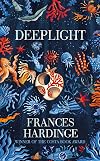
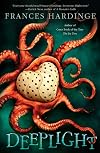
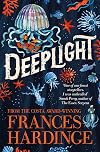
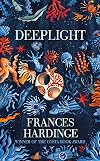
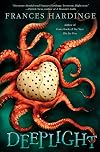
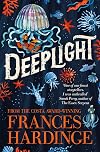
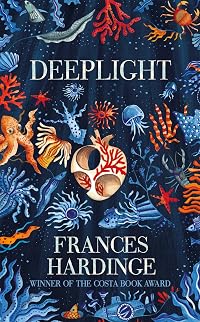
I read Frances Hardinge's The Lie Tree a few years ago and I absolutely loved it, so I was really excited to read Deeplight. Also, can we just take a moment to admire its GORGEOUS cover?
Deeplight is an extremely original book, and the author's world-building is top notch. The islands' history and lore are explained in detail, and the people's complex relationship with their now-extinct gods is explored without it ever feeling like a (fictional) history lesson. It does, however, really take its time with this and I ended up finding the slow pace of the first half rather challenging. I struggled a bit to push through it, and the second half more than compensated for it, but it could easily put some people off.
I really enjoyed seeing the show more characters evolve throughout the book, although I was more than a little frustrated with them most of the time. Hark was definitely one of the most infuriating characters I've seen in a long time, as he keeps making the same mistakes over and over again. He is completely beholden to his best friend Jelt, who supposedly looks after Hark but is rather obviously manipulating and coercing him the entire time. This extremely toxic friendship is the focus of most of the book and, while it does make sense that Hark would be the last one to realise what is glaringly obvious to literally everyone else in the book and out, I was quickly bored by this dynamic.
After pushing through a slow start and an annoying main character, we are rewarded with a wonderful second half and some brilliant supporting characters, all of which more than made up for this book's flaws. I would have liked to see some more of the gods, but what we did get was enough to keep me reading.
Overall, this was a very original and unique fantasy. It's a slow burn with a very slow start and depicts a toxic relationship which could be triggering to some, but once the pace picked up it was definitely worth the initial struggle.
I received an e-arc of this book from the publisher in exchange for my honest review. This did not affect my opinion of the book in any way. show less
Deeplight is an extremely original book, and the author's world-building is top notch. The islands' history and lore are explained in detail, and the people's complex relationship with their now-extinct gods is explored without it ever feeling like a (fictional) history lesson. It does, however, really take its time with this and I ended up finding the slow pace of the first half rather challenging. I struggled a bit to push through it, and the second half more than compensated for it, but it could easily put some people off.
I really enjoyed seeing the show more characters evolve throughout the book, although I was more than a little frustrated with them most of the time. Hark was definitely one of the most infuriating characters I've seen in a long time, as he keeps making the same mistakes over and over again. He is completely beholden to his best friend Jelt, who supposedly looks after Hark but is rather obviously manipulating and coercing him the entire time. This extremely toxic friendship is the focus of most of the book and, while it does make sense that Hark would be the last one to realise what is glaringly obvious to literally everyone else in the book and out, I was quickly bored by this dynamic.
After pushing through a slow start and an annoying main character, we are rewarded with a wonderful second half and some brilliant supporting characters, all of which more than made up for this book's flaws. I would have liked to see some more of the gods, but what we did get was enough to keep me reading.
Overall, this was a very original and unique fantasy. It's a slow burn with a very slow start and depicts a toxic relationship which could be triggering to some, but once the pace picked up it was definitely worth the initial struggle.
I received an e-arc of this book from the publisher in exchange for my honest review. This did not affect my opinion of the book in any way. show less
Thirty years after the monster gods of the islands of Myriad killed each other off in the cataclysm, 14 year old Hark finally is caught during one of his friend Jelk's capers and indentured out to a different island serving among the remnants of the old god's priesthood, while spying on them for his owner. This is a long play on fearsome powers, monsters as gods, the worship of power, the power of fear. And a pretty good story too, though the abusively manipulative Jelk is immediately wearing.
They say that the Undersea was the dwelling place of the gods. They say many things of the Myriad, and all of them are true. The gods were as real as the coastlines and currents and as merciless as the winds and whirlpools.
No one knows who or what the gods were, the giant creatures who lived in the sea and then, mysteriously, all died. But everyone knows that a piece of a dead god can make your fortune. Hark is still a child himself, all of 14 years old, but he knows it, too. That’s why he’s in the crowd when a submarine brings back parts of the Hidden Lady, the god that used to live in the waters around the archipelago on which he lives. His friend, Jelt, knows it too, and he has plans that call for Hark to do some hazardous things show more to make them both rich. Hark pays the price for Jelt’s foolishness, sold into indentured servitude.
Hark is lucky that he has a golden tongue. That gets him purchased by Dr. Vyne, a woman who has need of a good liar. She is a scientist who works with the Sanctuary, home to broken priests who used to lead worship for the now-dead gods, “a haven for those priests who could no longer look after themselves, a retreat from the cruel, incomprehensible, godless world.” Most of Hark’s work involves caring for the old priests, many of whom bear Marks: mutations caused by their exposure to the gods, deep in the Undersea. But Dr. Vyne also has other plans for him, starting with some real schooling, and Hark is delighted to find that this means he’ll be taught to read and write.
But Jelt isn’t willing to give up his hold on Hark, who continues to think of Jelt as his best friend, someone he can’t possibly abandon no matter how dangerous and stupid his plans for the two of them. Things go completely awry when Jelt and Hark stumble across an important piece of a dead god and discover its strange properties. And Hark has to make some decisions about who he wants to be.
The weirdness of Deeplight (2019) — perhaps that should be Weirdness, because this book belongs firmly in the tradition of the New Weird — is toned down more than I’d like, but it’s definitely there. There are strange things to see and learn, many of them in the ocean, where a fair bit of the action in this novel takes place. Deeplight is age-appropriate, despite its resemblance to tales of the Cthulhu Mythos, not too frightening for younger readers, and not too tame for adult readers. It’s a tricky balance to strike, but Frances Hardinge manages it nicely.
There is no doubt that this book is intended to teach a few lessons about making choices, but the world it describes is not any more black and white than ours is — and Hardinge mostly avoids preachiness. There are always trade-offs, and Hark has to learn to make difficult decisions about friendship, his future, and when risks are worth taking.
Deeplight has been nominated for the Lodestar Award for Best Young Adult Book, which is awarded at Worldcon along with the Hugos. It won’t get my vote, though; I would have enjoyed Deeplight a lot more if it had delved into Weirdness more deeply. Writing for a young adult audience probably kept Hardinge from creating a more brooding and horrific atmosphere. That makes sense: one would hardly give Laird Barron’s work to a 12-year-old, for instance. This book would be a good first step into the New Weird for an imaginative young adult without causing nightmares. The experienced and older admirer of the subgenre, however, will be a bit disappointed in reading about a world that has so much Weird promise, but does not fulfill it.
Originally published at http://www.fantasyliterature.com/reviews/deeplight/. show less
No one knows who or what the gods were, the giant creatures who lived in the sea and then, mysteriously, all died. But everyone knows that a piece of a dead god can make your fortune. Hark is still a child himself, all of 14 years old, but he knows it, too. That’s why he’s in the crowd when a submarine brings back parts of the Hidden Lady, the god that used to live in the waters around the archipelago on which he lives. His friend, Jelt, knows it too, and he has plans that call for Hark to do some hazardous things show more to make them both rich. Hark pays the price for Jelt’s foolishness, sold into indentured servitude.
Hark is lucky that he has a golden tongue. That gets him purchased by Dr. Vyne, a woman who has need of a good liar. She is a scientist who works with the Sanctuary, home to broken priests who used to lead worship for the now-dead gods, “a haven for those priests who could no longer look after themselves, a retreat from the cruel, incomprehensible, godless world.” Most of Hark’s work involves caring for the old priests, many of whom bear Marks: mutations caused by their exposure to the gods, deep in the Undersea. But Dr. Vyne also has other plans for him, starting with some real schooling, and Hark is delighted to find that this means he’ll be taught to read and write.
But Jelt isn’t willing to give up his hold on Hark, who continues to think of Jelt as his best friend, someone he can’t possibly abandon no matter how dangerous and stupid his plans for the two of them. Things go completely awry when Jelt and Hark stumble across an important piece of a dead god and discover its strange properties. And Hark has to make some decisions about who he wants to be.
The weirdness of Deeplight (2019) — perhaps that should be Weirdness, because this book belongs firmly in the tradition of the New Weird — is toned down more than I’d like, but it’s definitely there. There are strange things to see and learn, many of them in the ocean, where a fair bit of the action in this novel takes place. Deeplight is age-appropriate, despite its resemblance to tales of the Cthulhu Mythos, not too frightening for younger readers, and not too tame for adult readers. It’s a tricky balance to strike, but Frances Hardinge manages it nicely.
There is no doubt that this book is intended to teach a few lessons about making choices, but the world it describes is not any more black and white than ours is — and Hardinge mostly avoids preachiness. There are always trade-offs, and Hark has to learn to make difficult decisions about friendship, his future, and when risks are worth taking.
Deeplight has been nominated for the Lodestar Award for Best Young Adult Book, which is awarded at Worldcon along with the Hugos. It won’t get my vote, though; I would have enjoyed Deeplight a lot more if it had delved into Weirdness more deeply. Writing for a young adult audience probably kept Hardinge from creating a more brooding and horrific atmosphere. That makes sense: one would hardly give Laird Barron’s work to a 12-year-old, for instance. This book would be a good first step into the New Weird for an imaginative young adult without causing nightmares. The experienced and older admirer of the subgenre, however, will be a bit disappointed in reading about a world that has so much Weird promise, but does not fulfill it.
Originally published at http://www.fantasyliterature.com/reviews/deeplight/. show less
I've read two previous novels by Frances Hardinge, The Lie Tree and A Skinful of Shadows, and found them both strong books, deeply immersive and captivating, full of dark magic and dark truths. I expect to love this too.
Unfortunately, I didn't. Deeplight has an interesting premise: it's set in a fantasy archipelago that was once terrorized by gigantic sea creatures the islanders worshipped. A generation ago, the "gods" all died, and now the islanders harvest their scraps. The novel mostly follows a young street kid who ends up indentured on an island where a scientist in prying into the secrets of the gods, while at the same time he's come into possession of a powerful piece of "godware" himself.
I don't know what it is, but this never show more grabbed me like Hardinge's other novels did. I was never creeped out or unsettled as I was in those books. We're told that gods were terrible, but with some exceptions, the dark atmosphere that suffused her earlier books just isn't here. This is a perfectly serviceable fantasy adventure novel, but thematically, it never came together. There's this idea of storytelling running through the book, but it still doesn't quite cohere; one understands intellectually that there's a connection between the stories of the gods and the stories the narrator tells to get himself out of trouble and the stories we all tell ourselves in order to feel better, but you never feel it. The end just kind of becomes an action climax against cartoon villains.
(I wonder if it's because this is secondary-world fantasy, whereas the other two I've read are historical fantasy? Maybe she's more adept at the latter?)
That sounds like I hated it. I didn't. It's got neat worldbuilding (geographically, culturally, and historically), and some great ideas. But I would say it's a decent book and I know Frances Hardinge can write-- and I wanted her to write-- a great one. show less
Unfortunately, I didn't. Deeplight has an interesting premise: it's set in a fantasy archipelago that was once terrorized by gigantic sea creatures the islanders worshipped. A generation ago, the "gods" all died, and now the islanders harvest their scraps. The novel mostly follows a young street kid who ends up indentured on an island where a scientist in prying into the secrets of the gods, while at the same time he's come into possession of a powerful piece of "godware" himself.
I don't know what it is, but this never show more grabbed me like Hardinge's other novels did. I was never creeped out or unsettled as I was in those books. We're told that gods were terrible, but with some exceptions, the dark atmosphere that suffused her earlier books just isn't here. This is a perfectly serviceable fantasy adventure novel, but thematically, it never came together. There's this idea of storytelling running through the book, but it still doesn't quite cohere; one understands intellectually that there's a connection between the stories of the gods and the stories the narrator tells to get himself out of trouble and the stories we all tell ourselves in order to feel better, but you never feel it. The end just kind of becomes an action climax against cartoon villains.
(I wonder if it's because this is secondary-world fantasy, whereas the other two I've read are historical fantasy? Maybe she's more adept at the latter?)
That sounds like I hated it. I didn't. It's got neat worldbuilding (geographically, culturally, and historically), and some great ideas. But I would say it's a decent book and I know Frances Hardinge can write-- and I wanted her to write-- a great one. show less
This is an emotionally exhausting book, but the story is amazingly detailed, the world building lush, the plotting tight and terrifying. I was initially frustrated by the appearance of yet another emotionally manipulative and abusive 'best friend' in a YA novel. It is getting to be A Thing, and I hate it (yes, there need to be some of these stories, no they don't all need to be this story). However, it turns out that this relationship is critical to the way the story turns out, and our protagonist (Hark) eventually grows up despite his dodgy friend.
In genre terms, this is on the liminal boundary between fantasy and science fiction. Deep sea gods (who all died in the living memory of the older characters), and that particular level of show more faux-historical society are firmly in the fantasy camp, while the fascinating things done with esoteric materials, submersibles, and the peculiar substance of the under-sea are firmly in the 'things I love about SF' camp.
One of the interesting sub-plots is that of Selphin. She's Deaf ('sea-kissed') and afraid of the water -- and daughter of the leader of one of the local smuggling gangs, Rigg. Selphin is happy as she is, but her mother sees her as needing fixing, and is willing to force her to undergo healing. There are eerie thematic similarities to reality here, although it is not her Deafness that her mother seeks to heal, but her fear of the water. show less
In genre terms, this is on the liminal boundary between fantasy and science fiction. Deep sea gods (who all died in the living memory of the older characters), and that particular level of show more faux-historical society are firmly in the fantasy camp, while the fascinating things done with esoteric materials, submersibles, and the peculiar substance of the under-sea are firmly in the 'things I love about SF' camp.
One of the interesting sub-plots is that of Selphin. She's Deaf ('sea-kissed') and afraid of the water -- and daughter of the leader of one of the local smuggling gangs, Rigg. Selphin is happy as she is, but her mother sees her as needing fixing, and is willing to force her to undergo healing. There are eerie thematic similarities to reality here, although it is not her Deafness that her mother seeks to heal, but her fear of the water. show less
Hardinge is amazing at writing for young adults about eldritch horrors and toxic friendships, and in this book sets that all in the depths of ocean around an archipelago. Like Verdigris Deep, everything is wondrously creepy, and here she invents the word frecht which perfectly encapsulates the mode: it's defined as "a twisted beauty that turned your stomach even while it turned your head." Also like Verdigris Deep the Hark's main problem isn't the god-monsters and the politico-military scheming around him, but rather his own "best" - abusive - friend Jelt.
A third main character is Selphin: the author was asked by a reader to include a deaf character, and has integrated deafness as a natural part of the world, where it's seen not as a show more disability but a mark of pride; though communication isn't always straightforward, this is portrayed as Hark's own less-than-perfect command of sign, while Selphin is strengthened by her ability to turn away and refuse to see his words.
Some authors become repetitive, but even though I recognise the mode and tropes, Hardinge's prose is dense enough, the worlds deep enough, and the characters and their psychologies complex enough that I think it would take a lot of books before repetition could ever be any kind of problem. show less
A third main character is Selphin: the author was asked by a reader to include a deaf character, and has integrated deafness as a natural part of the world, where it's seen not as a show more disability but a mark of pride; though communication isn't always straightforward, this is portrayed as Hark's own less-than-perfect command of sign, while Selphin is strengthened by her ability to turn away and refuse to see his words.
Some authors become repetitive, but even though I recognise the mode and tropes, Hardinge's prose is dense enough, the worlds deep enough, and the characters and their psychologies complex enough that I think it would take a lot of books before repetition could ever be any kind of problem. show less
First of all, THAT COVER! I mean, if you can look at THAT and not seriously wonder what's in store for the reader that cracks the spine...you've got more willpower than I.
Story wise, it really draws you in like the last breath of air to a drowning man...though in the undersea, you don't technically drown from breathing air, but that's a tale for another time. Everything has its own history, from the way the world is now to the gods, both past and present. You are enveloped in the friendship turned something much more caustic between Jelt and Hark...and let me just stop right here and say that try as I might, I could not like that boy. I get the deeper things going on and how circumstances, choices (forced and made), and options can show more change a person, but there were other ways, and he was never truly alone. But I digress...the bond between these two is what carries most of the tale, from the shores of Lady's Crave to the Sanctuary to somewhere altogether darker and more mysterious than you could possibly guess. The people they meet along the way, for better or worse, are swept up in the tidal wave of all that is and all the terror to come. It becomes a new living nightmare on the precipice of turning the human race inwards once more to the fears that burdened it in generations past, and fed the evil barely kept at arm's (or tentacle's) length. It all comes down to breaking the cycle of what's been for a future that could be, even if the cost is high to those involved.
All in all, a stunning display of friendship when driven by a purer heart. Even when the cards are down, the difficulty Hark had in facing what could become inevitable was honorable...even though Selphin would probably think it more misguided.
**copy received for review; opinions are my own show less
Story wise, it really draws you in like the last breath of air to a drowning man...though in the undersea, you don't technically drown from breathing air, but that's a tale for another time. Everything has its own history, from the way the world is now to the gods, both past and present. You are enveloped in the friendship turned something much more caustic between Jelt and Hark...and let me just stop right here and say that try as I might, I could not like that boy. I get the deeper things going on and how circumstances, choices (forced and made), and options can show more change a person, but there were other ways, and he was never truly alone. But I digress...the bond between these two is what carries most of the tale, from the shores of Lady's Crave to the Sanctuary to somewhere altogether darker and more mysterious than you could possibly guess. The people they meet along the way, for better or worse, are swept up in the tidal wave of all that is and all the terror to come. It becomes a new living nightmare on the precipice of turning the human race inwards once more to the fears that burdened it in generations past, and fed the evil barely kept at arm's (or tentacle's) length. It all comes down to breaking the cycle of what's been for a future that could be, even if the cost is high to those involved.
All in all, a stunning display of friendship when driven by a purer heart. Even when the cards are down, the difficulty Hark had in facing what could become inevitable was honorable...even though Selphin would probably think it more misguided.
**copy received for review; opinions are my own show less
Members
- Recently Added By
Lists

Books Read in 2020
4,379 works; 124 members

Books Read in 2021
5,361 works; 114 members
Author Information

24+ Works 8,480 Members
Frances Hardinge was born in 1973 in the United Kingdom. Her first novel, Fly By Night, won the Bradford Boase Award in 2006. Her other books include Verdigris Deep / Well Witched, Twilight Robbery, and A Face Like Glass. Cuckoo Song won the Robert Holdstock Award for Best Novel at the British Fantasy Awards in 2015 and The Lie Tree won the 2015 show more Costa Book of the Year award. (Bowker Author Biography) show less
Some Editions
Awards and Honors
Awards
Distinctions
Common Knowledge
- Canonical title
- Deeplight
- Original publication date
- 2019
- People/Characters
- Hark; Jelt; Dr Vyne; Selphin; Quest
- Important places
- Sanctuary; Lady's Crave; The Undersea
- Dedication
- To Ella and the other members of the Young People's Board of the National Deaf Children's Society
- First words
- They say you can sail a thousand miles along the island chain of the Myriad, from the frosty shores of the north, to the lush, sultry islands of the south.
- Quotations
- “I’m glad we’re free, even if we do stupid things with the freedom sometimes. Maybe sometimes there isn’t a right thing to do. Maybe there’s just lots of wrong answers, and you have to pick one you can bear – some... (show all)thing that doesn’t break who you are.”
- Last words
- (Click to show. Warning: May contain spoilers.)"In a while," Hark answered. "I'm listening for now."
Classifications
Statistics
- Members
- 516
- Popularity
- 58,386
- Reviews
- 24
- Rating
- (4.08)
- Languages
- 5 — Catalan, English, French, Italian, Spanish
- Media
- Paper, Audiobook, Ebook
- ISBNs
- 28
- ASINs
- 5