On This Page
Description
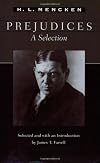
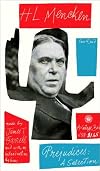
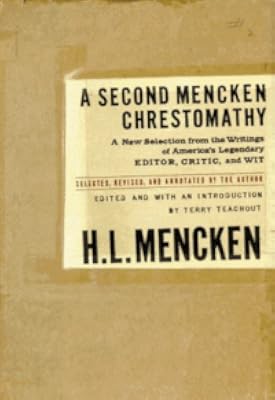
With a style that combined biting sarcasm with the "language of the free lunch counter," Henry Louis Mencken shook politics and politicians for nearly half a century. Now, fifty years after Mencken's death, the Johns Hopkins University Press announces The Buncombe Collection, newly packaged editions of nine Mencken classics: Happy Days, Heathen Days, Newspaper Days, Prejudices, Treatise on the Gods, On Politics, Thirty-Five Years of Newspaper Work, Minority Report, and A Second Mencken show more Chrestomathy. With a style that combined biting sarcasm with the "language of the free lunch counter," Henry Louis Mencken shook politics and politicians for nearly half a century. Now, fifty years after Mencken's death, the Johns Hopkins University Press announces The Buncombe Collection, newly packaged editions of nine Mencken classics: Happy Days, Heathen Days, Newspaper Days, Prejudices, Treatise on the Gods, On Politics, Thirty-Five Years of Newspaper Work, Minority Report, and A Second Mencken Chrestomathy. These thirty-five essays--each a stick of dynamite with a burning fuse--have been selected from six volumes originally published between 1919 and 1927. show lessTags
Recommendations






















Member Reviews
This is undoubtedly the place to start when seeking the many enjoyments available from Mencken's disdainful, vitriolic prose. Few authors ever attain Mencken's knack for just the right moment to introduce the perfect bit of obloquy into his portrait of various representatives of what he referred to as Boobus americanus. These essays, though they are more often literary or intellectual than political, do contain numerous topical allusions, some of which resound across the decades, but many will be headscratchers even to those who have familiarized themselves pretty well with the period. Also, Mencken's literary criticism has not aged particularly well, and he could be very wrong, and thus particularly irritating in his eloquence, on many show more topics. In short, a writer who was much more effective, and persuasive, when arguing against rather than for. show less
An essayist of Orwellian gifts, H.L. Mencken illuminates the American scene prior to 1945. Always entertaining, and full of the epigrammatic genius, his prose flows easily on. His goal was to make a buck, and to educate the American in the face of the larger media exposure backed by business interests. He's the ancestor of Mailer's reportage, and that of Hunter S. Thompson. Anthologies of his essays are not to be missed by the discriminating reader. (and the lover of the sucker punch!)
There were six volumes of "Prejudices" by the end of his life, so keep an eye out.
There were six volumes of "Prejudices" by the end of his life, so keep an eye out.
On loan John Grenke
Ratings
Members
- Recently Added By
Lists

Art of Reading
188 works; 5 members

Catalog
41 works; 2 members
Author Information

186+ Works 7,483 Members
H. L. Mencken 1880-1956 H. L. (Henry Louis) Mencken was born in Baltimore, Maryland, on September 12, 1880. He considered Maryland to be his home despite his many years in New York. As a child he attended Professor Friedrich Knapp's Institute, a private school for children of German descent. He completed his secondary education at Baltimore show more Polytechnic Institute, from which he graduated at the age of 16. Mencken wanted to be a writer but was obligated to work in his father's cigar factory. When his father died suddenly in 1899, Mencken immediately sought a job at the Baltimore Herald. Through he began with no experience in journalism, he quickly learned every job at the newspaper and at age 25 became its editor. Mencken went on to build himself a reputation as one of America's most brilliant writers and literary critics. His basic approach was to question everything and to accept no limits on personal freedom. He attacked organized religion, American cultural and literary standards, and every aspect of American life that he found shallow, ignorant, or false - which was almost everything. From the 1920's until his death, Mencken's sharp wit and penetrating social commentary made him one of the most highly regarded - and fiercely hated - of American social critics. He was later memorialized in the dramatic portrait of the cynical journalist in the play and film Inherit the Wind. Shortly after World War I, Mencken began a project that was to fascinate him for the rest of his life: a study of American language and how it had evolved from British English. In 1919 he published The American Language: A Preliminary Inquiry into the Development of English in the United States. To this and his publisher's surprise, the book sold out quickly; its wit and nonscholarly approach attracted many readers who would not normally buy a book on such a subject. In 1936, a revised and enlarged edition was published, and in 1945 and 1948, supplements were added. The work shows not only how American English differs from British English but how the 300 year American experience shaped American dialect. Thus the book, still considered a classic in its field, is both a linguistic and social history of the United States. Mencken died in his sleep on January 29, 1956. He was interred in Baltimore's Loudon Park Cemetery. (Bowker Author Biography) show less
All Editions
Some Editions
Awards and Honors
Series

Belongs to Publisher Series
Work Relationships
Is contained in
Is an abridged version of
Common Knowledge
- Original publication date
- 1958 (selection) (selection)
Classifications
Statistics
- Members
- 288
- Popularity
- 112,062
- Reviews
- 4
- Rating
- (4.18)
- Languages
- English
- Media
- Paper, Ebook
- ISBNs
- 5
- ASINs
- 16