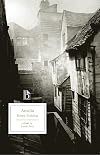
Amelia
by Henry Fielding
On This Page
Description
Though best known for his work in the picaresque romp Tom Jones, the eighteenth-century novelist Henry Fielding explored many literary genres, including the English domestic dramas popularized by luminaries such as Jane Austen and the Bronte sisters. If you love domestic tales that leave you laughing and crying—often on the same page—add Amelia to your must-read list..
Tags
Recommendations



















Member Reviews
Romance escrito em 1749. Dificuldades afligem o casamento de Amelia e Billy Booth resultantes da impetuosidade do marido e da dificuldade de se dizer Não. Amelia - precursora da ¨mulher de verdade¨ cantada por Ataulfo Alves - é irrepreensível em sua paciência, amor, fé e senso de certo e errado com seu cônjuge cansativo e estúpido. O livro é cheio de incidentes e crises. Fielding reconhece o bom senso e a coragem feminina diante das provações consequentes de jogatina, de empréstimos e da incapacidade marital para enfrentar as responsabilidades.
A domestic novel from the earliest days of the English novel written in 1749 and in two volumes. A series of difficulties besets the marriage of Amelia and Billy Booth, mostly as a result of the husband's impetuousness and difficulties in saying "No". Amelia, on the other hand, is irreproachable in her patience, love, faith in, and sense of right and wrong with her rather tiresomely gormless spouse.
This is a novel that doesn't flag because it is full of incident and crises. Fielding acknowledges female good sense and courage in the face of the trials the family is faced with, largely a result of Billy's gambling, borrowing and inability to face up to responsibilities.
One has to say "Thank goodness for a well regulated banking system". show more Billy's problems would have been much eased if it were not for unscrupulous borrowing from so-called friends. show less
This is a novel that doesn't flag because it is full of incident and crises. Fielding acknowledges female good sense and courage in the face of the trials the family is faced with, largely a result of Billy's gambling, borrowing and inability to face up to responsibilities.
One has to say "Thank goodness for a well regulated banking system". show more Billy's problems would have been much eased if it were not for unscrupulous borrowing from so-called friends. show less
Here's what I wrote after reading in 1991: "Slow reading but insightful into the 'moral and social' problems of Fielding's England. Amelia and William Booth endure the trials of marriage but finally find security and happiness through pure, Christian living. They (he) overcome many trials and temptations along the way."
Decent book. Probably could have been improved by being shorter.
»Madame de Riccoboni a altéré l'original anglais, mais elle a rendu le roman plus agréable, d'autant plus qu'elle a pris la liberté d'abréger quelques détails peu intéressants. » D. P.
Jan 21, 2008French
Ratings
Members
- Recently Added By
Lists

The 150 Greatest Novels of All Time
150 works; 6 members
Author Information

263+ Works 15,949 Members
Henry Fielding, 1707 - 1754 A succcessful playwright in his twenties, Henry Fielding turned to the study of law and then to journalism, fiction, and a judgeship after his Historical Register, a political satire on the Walpole government, contributed to the censorship of plays that put him out of business. As an impoverished member of the upper show more classes, he knew the country squires and the town nobility; as a successful young playwright, the London jet set; as a judge at the center of London, the city's thieves, swindlers, petty officials, shopkeepers, and vagabonds. As a political journalist (editor-author of The Champion, 1739-1741; The True Patriot, 1745-1746; The Jacobite's Journal, 1747-1748; The Covent-Garden Journal, 1752), he participated in argument and intrigue over everything from London elections to national policy. He knowledgeably attacked and defended a range of politicians, from ward heelers to the Prince of Wales. When Fielding undertook writing prose fiction to ridicule the simple morality of Pamela by Samuel Richardson, he first wrote the hilarious burlesque Shamela (1741). However, he soon found himself considering all the forces working on humans, and in Joseph Andrews (1742) (centering on his invented brother of Pamela), he played with the patterns of Homer, the Bible, and Cervantes to create what he called "a comic epic poem in prose." His preface describing this new art form is one of the major documents in literary criticism of the novel. Jonathan Wild, a fictional rogue biography of a year later, plays heavily with ironic techniques that leave unsettled Fielding's great and recurring theme: the difficulty of uniting goodness, or an outflowing love of others, with prudence in a world where corrupted institutions support divisive pride rather than harmony and self-fulfillment. In his masterpiece Tom Jones (1749), Fielding not only faces this issue persuasively but also shows for the first time the possibility of bringing a whole world into an artistic unity, as his model Homer had done in verse. Fielding develops a coherent and centered sequence of events-something Congreve had done casually on a small scale in Incognita 60 years before. In addition he also relates the plot organically to character and theme, by which he gives us a vision of the archetypal good person (Tom) on a journey toward understanding. Every act by every character in the book reflects the special and typical psychology of that character and the proper moral response. In Tom Jones, Fielding affirms the existence of an order under the surface of chaos. In his last novel, Amelia (1751), which realistically examines the misery of London, he can find nothing reliable except the prudent good heart, and that only if its possessor escapes into the country. Fielding based the title character on his second wife, with whom he was deeply in love. However, ill himself, still saddened by the deaths of his intensely loved first wife and daughter, and depressed by a London magistrate's endless toil against corruption, Fielding saw little hope for goodness in that novel or in his informal Journal of a Voyage to Lisbon (1755). Shortly after traveling to Lisbon for his health, Fielding died at the age of 47, having proved to his contemporaries and successors that the lowly novel was capable of the richest achievements of art. (Bowker Author Biography) show less
Awards and Honors
Series
Belongs to Publisher Series
Everyman's Library (852-853)
Work Relationships
Is contained in
Contains
Common Knowledge
- Canonical title
- Amelia
- Original publication date
- 1751
- People/Characters
- Amelia
- Important places
- London, England, UK; England, UK
- First words
- The various accidents which befel a very worthy couple after their uniting in the state of matrimony will be the subject of the following history.
- Last words
- (Click to show. Warning: May contain spoilers.)Amelia declared to me the other day, that she did not remember to have seen her husband out of humour these ten years; and, upon my insinuating to her that he had the best of wives, she answered with a smile that she ought to be so, for that he had made her the happiest of women.
- Original language
- English
Classifications
Statistics
- Members
- 419
- Popularity
- 74,159
- Reviews
- 6
- Rating
- (3.35)
- Languages
- 5 — English, French, German, Norwegian, Spanish
- Media
- Paper, Ebook
- ISBNs
- 75
- ASINs
- 17