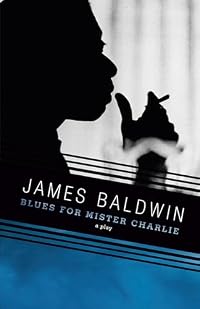
Blues for Mister Charlie: A Play
by James Baldwin
On This Page
Description
In a small Southern town, a white man murders a black man, then throws his body in the weeds. With this act of violence--which is loosely based on the notorious 1955 killing of Emmett Till--Baldwin launches an unsparing and at times agonizing probe of the wounds of race. For where once a white storekeeper could have shot a "boy" like Richard Henry with impunity, times have changed. And centuries of brutality and fear, patronage and contempt, are about to erupt in a moment of truth as show more devastating as a shotgun blast. Baldwin turns a murder and its aftermath into an inquest in which even the most well-intentioned whites are implicated--and in which even a killer receives his share of compassion.--From publisher description. show lessTags
Recommendations

























Member Reviews
James Baldwin's first play is as much a tender revalation of both sides of the racial divide as it is a scathing broadside against racism. Wonderful speeches never feel forced as each character is given a honest voice. A young black man murdered in a small southern town...everyone is complicit...even the victim. And everyone, in the end, is a victim. Baldwin as always expresses what it is to be human.
Inspired by the case of Emmett Till, this is a dramatic look at southern small-town race relations at the mid-century point. As a play, though, it doesn't capture the usual power of Baldwin's prose. I've no doubt that this would be a powerful work when set to the stage, but I don't think a reading can do it justice, particularly with the many characters involved. I might go back to this if I ever get together a class on works related to the Till case, which I've considered doing before, but for now, I'm not sure I'd recommend it on to other readers.
Like most of Baldwin's work I find his anti-intolerance stance admirable. The book did not catch my attention either as a play or a statement. Unlike [b:To Kill a Mockingbird|2657|To Kill a Mockingbird|Harper Lee|http://photo.goodreads.com/books/1214592473s/2657.jpg|3275794], which felt a bit more universal, this book doesn't escape the world it was set in.
I can respect the historical significance of this book, but to a twenty-first century whippersnapper for whom racial coexistance is not an opption but implied in existence, the issues it deals with are disrespectfully and --yes, naively-- discarded as an anachronism in my experienced world. Even when forced to admit its acceptance, the nature of racism has changed such this book may show more not shine enough light on the issues we today grapple. show less
I can respect the historical significance of this book, but to a twenty-first century whippersnapper for whom racial coexistance is not an opption but implied in existence, the issues it deals with are disrespectfully and --yes, naively-- discarded as an anachronism in my experienced world. Even when forced to admit its acceptance, the nature of racism has changed such this book may show more not shine enough light on the issues we today grapple. show less
Some of the speeches just *got* me, especially Richard's last speech to Lyle. Highly recommended.
Ratings
Members
- Recently Added By
Lists


Author Information

120+ Works 41,816 Members
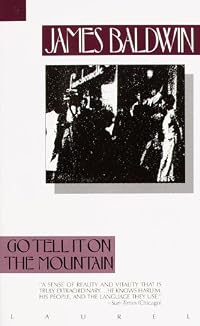
James Baldwin was born on August 2, 1924, in New York. Baldwin's father was a pastor who subjected his children to poverty, abuse, and religious fanaticism. As a result, many of Baldwin's recurring themes, such as alienation and rejection, are attributable to his upbringing. Living the life of a starving artist, Baldwin went through numerous jobs, show more including dishwasher, office boy, factory worker, and waiter. In 1948, he moved to France, where much work originated. Baldwin published Go Tell It on the Mountain in 1953. A largely autobiographical work, it tells of the religious awakening of a fourteen-year-old. In addition to his childhood experiences, his experiences as a black man and a homosexual provided inspiration for such works as Giovanni's Room, Nobody Knows My Name, and Another Country. Baldwin holds a distinguished place in American history as one of the foremost writers of both black and gay literature. He was an active participant in the Civil Rights movement. Baldwin succumbed to cancer on December 1, 1987. (Bowker Author Biography) show less
Series
Belongs to Publisher Series
Work Relationships
Is contained in
Has as a reference guide/companion
Has as a student's study guide
Common Knowledge
- Canonical title*
- Blues voor de blanke man
- Original title
- Blues for Mister Charlie
- Original publication date
- 1964
- People/Characters
- Meridian Henry; Mother Henry; Lyle Britten; Jo Britten; Parnell James; Papa D. (show all 8); Richard; Reverend Phelps
- Important places
- USA
- Dedication
- To the memory of MEDGAR EVERS, and his widow and his children, and to the memory of the dead children of Birmingham
- First words
- LYLE: And may every nigger like this nigger end like this nigger - face down in the weeds!
- Last words
- (Click to show. Warning: May contain spoilers.)JUANITA: Well, we can walk in the same direction, Parnell. Come. Don't look like that. Let's go on.
(Exits.)
(After a moment, Parnell follows.)
Curtain. THE END. - Original language
- English
- Canonical DDC/MDS
- 812.54
- Canonical LCC
- PS3552.A45
*Some information comes from Common Knowledge in other languages. Click "Edit" for more information.
Classifications
Statistics
- Members
- 652
- Popularity
- 44,120
- Reviews
- 5
- Rating
- (3.68)
- Languages
- 7 — Danish, Dutch, English, French, Italian, Norwegian (Bokmål), Spanish
- Media
- Paper, Ebook
- ISBNs
- 11
- ASINs
- 32