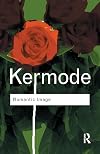
Romantic Image
by Frank Kermode
On This Page
Description
For the past four decades Frank Kermode, critic and writer, has steadily established himself as one of the most brilliant minds of his generation. Author and editor of over forty books, his prodigious output includes some of the best literary criticism to be published. Questioning the public's harsh perception of 'the artist', Kermode at the same time gently pokes fun at artists' own, often inflated, self-image. He identifies what has become one of the defining characteristics of the show more Romantic tradition - the artist in isolation and the emerging power of the imagination. The ingeniousness of Ke show lessTags
Recommendations














Member Recommendations
Member Reviews
The title phrase uses "'Romantic' in a restricted sense, as applicable to the literature of one epoch, beginning in the late years of the eighteenth century and not yet finished [in 1957], and as referring to the high valuation placed during this period upon the image-making powers of the mind at the expense of its rational powers, and to the substitution of organicist for mechanist modes of thinking about works of art." (43) Kermode's study, which he confesses to lie outside of his 'period' of historical specialty, is trained most especially on Yeats and his poetry. Besides the characteristics just listed, another keynote is the suffering isolation of the artist, as denoted by the figure of the Tower. In the first and longer of two show more parts, Kermode establishes the continuity of these concepts among Symbolism, English Romanticism, and their early modern antecedents.
In the second part, he shows how these concepts have been perpetuated through the first half of the 20th century, even when secularized and stripped of the Romantic mystique: the Great Memory and the noumenal world are reduced to the linguistic matrix, but the isolated artist and his revelation of the unparaphrasable image persist nonetheless. Kermode's ultimate goal here is that of "revising historical categories." (165) He is contemptuous of the arbitrariness and falsity of the nostalgic theories of history promoted by Symbolist criticism and its progeny. "The most deplorable consequence of the doctrine is that the periods and poets chosen to illustrate it are bound to receive perverse treatment; you must misrepresent them if you propose to make them justify a false theory." (146) (It's outside the scope of his study, but one might include the Traditionalist school of ideology in this same indictment, despite its diametric reversal of the values of image and rationality, although Symbolists and Traditionalists are fellow-travelers in the supernaturalist element.)
One of the features in this core Romantic view that set me back a little was the opposition of imagination and memory, which has a genealogy back to Blake. As a working magician, I see imagination and memory as mutually dependent and equally dignified, but evidently these theorists didn't. On reflection, perhaps what is at stake is two different sorts of memory. The kind I tend to think of is the spatial memory which accesses an interior world of heuristic images--this would be the antechamber of the "Great Memory" of Yeats. The memory derided by Blake must then be a linear memory of routine and rationalism. The two memories could perhaps correspond to the distinct mnemonic approaches of Giordano Bruno and Peter Ramus.
Kermode is entirely hip to "the whole sumberged magical system of Romantic aesthetic, about which Yeats and some Frenchmen were bold enough to be explicit." (44) The attentive reader will catch Kermode's acknowledgement throughout that "Magic came, in an age of science, to the defence of poetry." (110) Kermode doesn't seem to want to do away with magic, but he cheers a pendulum swing that he sees as just beginning in his time, away from the Romantic and modern neo-Symbolist critical perspectives. He looks forward to a reconsideration by which the mechanical craft of rhetoric may be again accorded its value, as contributing in its way to the true value of poetry.
This book's matter is not especially accessible; Kermode often references poets and critics who are not now--if they ever were--household names in the US. He never gives a full citation for his quotes, and sometimes it's hard to tell whom he's quoting. He provides long passages of untranslated French. (In only one case, a full page of text from Huysmann's A Rebours, I was fortunate enough to have a translation of his source on hand.) I'm sure that graduate students in English are sometimes made to read this book, those others of us capable of enjoying it are probably rather thin on the ground. show less
In the second part, he shows how these concepts have been perpetuated through the first half of the 20th century, even when secularized and stripped of the Romantic mystique: the Great Memory and the noumenal world are reduced to the linguistic matrix, but the isolated artist and his revelation of the unparaphrasable image persist nonetheless. Kermode's ultimate goal here is that of "revising historical categories." (165) He is contemptuous of the arbitrariness and falsity of the nostalgic theories of history promoted by Symbolist criticism and its progeny. "The most deplorable consequence of the doctrine is that the periods and poets chosen to illustrate it are bound to receive perverse treatment; you must misrepresent them if you propose to make them justify a false theory." (146) (It's outside the scope of his study, but one might include the Traditionalist school of ideology in this same indictment, despite its diametric reversal of the values of image and rationality, although Symbolists and Traditionalists are fellow-travelers in the supernaturalist element.)
One of the features in this core Romantic view that set me back a little was the opposition of imagination and memory, which has a genealogy back to Blake. As a working magician, I see imagination and memory as mutually dependent and equally dignified, but evidently these theorists didn't. On reflection, perhaps what is at stake is two different sorts of memory. The kind I tend to think of is the spatial memory which accesses an interior world of heuristic images--this would be the antechamber of the "Great Memory" of Yeats. The memory derided by Blake must then be a linear memory of routine and rationalism. The two memories could perhaps correspond to the distinct mnemonic approaches of Giordano Bruno and Peter Ramus.
Kermode is entirely hip to "the whole sumberged magical system of Romantic aesthetic, about which Yeats and some Frenchmen were bold enough to be explicit." (44) The attentive reader will catch Kermode's acknowledgement throughout that "Magic came, in an age of science, to the defence of poetry." (110) Kermode doesn't seem to want to do away with magic, but he cheers a pendulum swing that he sees as just beginning in his time, away from the Romantic and modern neo-Symbolist critical perspectives. He looks forward to a reconsideration by which the mechanical craft of rhetoric may be again accorded its value, as contributing in its way to the true value of poetry.
This book's matter is not especially accessible; Kermode often references poets and critics who are not now--if they ever were--household names in the US. He never gives a full citation for his quotes, and sometimes it's hard to tell whom he's quoting. He provides long passages of untranslated French. (In only one case, a full page of text from Huysmann's A Rebours, I was fortunate enough to have a translation of his source on hand.) I'm sure that graduate students in English are sometimes made to read this book, those others of us capable of enjoying it are probably rather thin on the ground. show less
This year I have been reading several books by writers from the Romantic Period and some books about this period too, and I thought Romantic image would be a nice edition to that. However, I was very disappointed with this books and even irritated.
First of all, it is not the first time I have heard the suggestion that the Romantic period is not finished, although I think my tutors who brought this idea up got it from this book by Kermode. Frank Kermode was really a big name at that time.
Generally, the Romantic period refers to the writings of the period of the late Eighteenth century till the end of the first quarter of the Nineteenth century, with writers such as Coleridge, Keats, Shelley, Byron and Wordsworth, etc. In Romantic image show more Kermode suggests that the Romantic period is not finished and that for example Yeats belongs to this epoch.
What I don't like about Romantic image is that it barely pays attention to they traditional poets of what is convetionally considered to be the romantic period, while focussing on outliers and obscure writers. There seems to be a lot of names-dropping and high-brow elitism in this book. show less
First of all, it is not the first time I have heard the suggestion that the Romantic period is not finished, although I think my tutors who brought this idea up got it from this book by Kermode. Frank Kermode was really a big name at that time.
Generally, the Romantic period refers to the writings of the period of the late Eighteenth century till the end of the first quarter of the Nineteenth century, with writers such as Coleridge, Keats, Shelley, Byron and Wordsworth, etc. In Romantic image show more Kermode suggests that the Romantic period is not finished and that for example Yeats belongs to this epoch.
What I don't like about Romantic image is that it barely pays attention to they traditional poets of what is convetionally considered to be the romantic period, while focussing on outliers and obscure writers. There seems to be a lot of names-dropping and high-brow elitism in this book. show less
Ratings
Members
- Recently Added By
Author Information

68+ Works 4,870 Members
Sir John Frank Kermode, November 29, 1919 - August 17, 2010 John Kermode was a British literary critic best known for his work The Sense of an Ending: Studies in the Theory of Fiction, published in 1967 (revised 2000), and for his extensive book-reviewing and editing. He was the Lord Northcliffe Professor of Modern English Literature at University show more College London and the King Edward VII Professor of English Literature at Cambridge University. Kermode served during World War II with the Royal Navy. After the war, Kermode held positions at Manchester University, Bristol University, University College of London, and Cambridge University, all in England, and at Columbia University in New York City. He was Charles E. Norton Professor at Harvard University in 1977-78 and Henry Luce Professor at Yale University in 1994. Kermode wrote several books on literary figures, including D.H. Lawrence and Wallace Stevens. His works of criticism include An Appetite for Poetry and The Art of Telling. Kermode was also the editor of the cultural journal, Encounter and his memoir, Not Entitled, was published in 1995. Kermode serves on the editorial board of the London Review of Books and Common Knowledge and has acted as judge for the Booker Prize. He was knighted for his service to English literature and he was named a Foreign Honorary Member of the American Academy of Arts and Letters in 1999. He died in Cambridge on August 17, 2010. (Bowker Author Biography) Frank Kermode has written & edited many works, among them "Forms of Attention" & a memoir, "Not Entitled" (FSG, 1995). He lives in Cambridge, England, & has frequently taught in the United States. (Publisher Provided) show less
Series
Belongs to Publisher Series
Common Knowledge
- Original publication date
- 1957
Classifications
- Genres
- Nonfiction, Literature Studies and Criticism, Fiction and Literature
- DDC/MDS
- 821.809145 — Literature & rhetoric English & Old English literatures British Poetry 1837-1899 History, description, critical appraisal Poetry displaying specific qualities of style, mood, viewpoint Classicism and romanticism
- LCC
- PN1111 .K4 — Language and Literature Literature (General) Literature (General) Poetry History and criticism
- BISAC
Statistics
- Members
- 133
- Popularity
- 245,577
- Reviews
- 2
- Rating
- (3.67)
- Languages
- English
- Media
- Paper, Ebook
- ISBNs
- 10
- ASINs
- 6