On This Page
Description
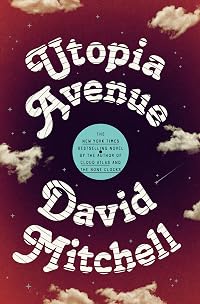
"Soho, London, 1967. Folk-rock-psychedelic quartet Utopia Avenue is formed. Guitarist Jasper de Zoet, a shy, half-Dutch public-school musical prodigy, was hearing voices long before he dropped acid. Keyboardist Elf Holloway must defy the prejudices of her bank manager father, her housewife mother, and her age to forge her own career. Bassist Dean Moss cannot, will not, spend his life on the factory floor like everyone else in Gravesend. Band manager Levon Frankland--gay, Jewish, and show more Canadian--is not unduly burdened by conscience. The drummer is a drummer. Over two years and two albums, Utopia Avenue navigates the dark end of the Sixties: its parties, drugs and egos, political change and personal tragedy; and the trials of life as a working band in London, the provinces, European capitals and, finally, the promised land of America. What is art? What is fame? What is music? How can the whole be more than the sum of its parts? Can idealism change the world? How does your youth shape your life? This is the story of Utopia Avenue. Not everyone lives to the end"-- show lessTags
Recommendations








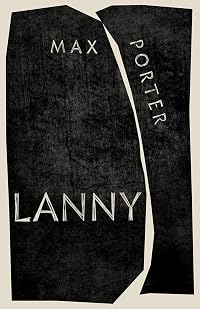

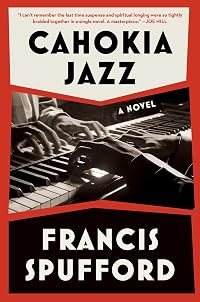


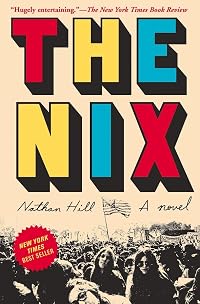


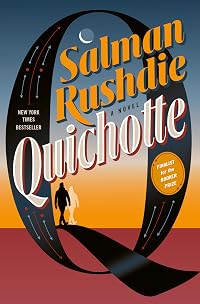



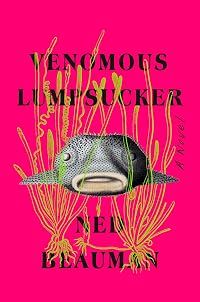


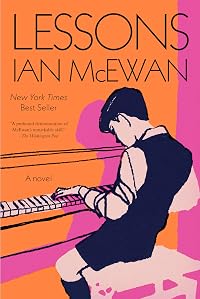
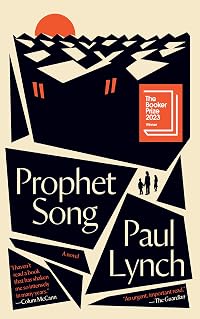
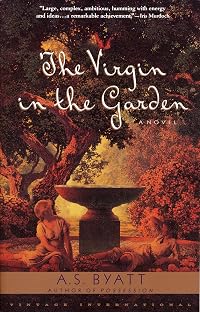

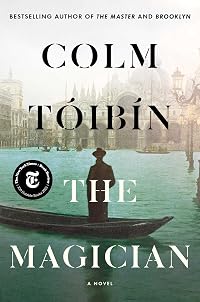
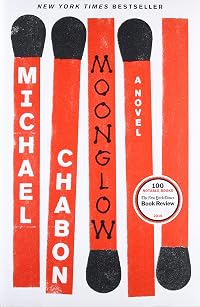

Member Recommendations


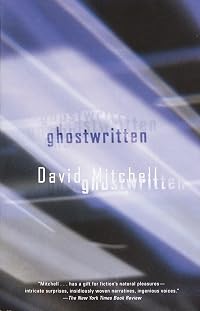
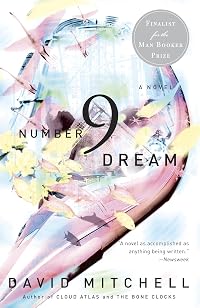
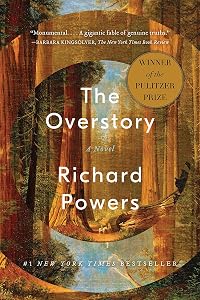
vwinsloe Both books are about fictional rock bands in the 1960s.
Member Reviews
Can David Mitchell write a straight novel without mystic goodies? Utopia Avenue proves he can. Did he? I'm not telling!
What I will tell is that *UA* is a fine recreation of one aspect of the energy and creative seeking of new life that blossomed in the 1960s before Mitchell was even born. Set in '67 and '68, the book follows a unique four-person band who climb the charts in England, the Netherlands, and the USA.
I loved the main characters and wished only for more fookin' Griff, the drummer, who gave the group its rhythmic foundation but received less press than the other three composers and singers. I loved their personal stories and the play-by-play of their performances.
Last word goes to Jasper, the guitar god: "'Songs do not change show more the world....People do....Who or what influences the minds of the people who change the world? My answer is 'Ideas and feelings.' ... Songs. Songs, like dandelion seeds, following across space and time. Who knows where they'll land? Or what they'll bring? .... Feelings and ideas happen. Joy, solace, sympathy,. Assurance. Cathartic sorrow. The idea that life could be, should be, better than this. An invitation to slip into somebody else's skin for a little while. If a song plants an idea or a feeling in a mind, it has already changed the world.'"
Thank you, ER, for my copy of this book.
Keep singing! show less
What I will tell is that *UA* is a fine recreation of one aspect of the energy and creative seeking of new life that blossomed in the 1960s before Mitchell was even born. Set in '67 and '68, the book follows a unique four-person band who climb the charts in England, the Netherlands, and the USA.
I loved the main characters and wished only for more fookin' Griff, the drummer, who gave the group its rhythmic foundation but received less press than the other three composers and singers. I loved their personal stories and the play-by-play of their performances.
Last word goes to Jasper, the guitar god: "'Songs do not change show more the world....People do....Who or what influences the minds of the people who change the world? My answer is 'Ideas and feelings.' ... Songs. Songs, like dandelion seeds, following across space and time. Who knows where they'll land? Or what they'll bring? .... Feelings and ideas happen. Joy, solace, sympathy,. Assurance. Cathartic sorrow. The idea that life could be, should be, better than this. An invitation to slip into somebody else's skin for a little while. If a song plants an idea or a feeling in a mind, it has already changed the world.'"
Thank you, ER, for my copy of this book.
Keep singing! show less
 This review was written for LibraryThing Early Reviewers.
Thanks to NetGalley for my ARC.
I first encountered Slade House in the library and that encounter with that singularly beautiful book-object, and the story within, really put David Mitchell on my radar. Since that moment four years ago I did myself a favor and read Mitchell's back-list and that is now paying off in a huge way. The legendary author's newest offering Utopia Avenue spins a 1960's pop-culture centric, supernatural, worlds colliding, Mitchell back-list referencing mediation on reincarnation and the creative life. The story centers around the short life, two years, of a fictional London based psychedelic group.
The novel is all at once a love song to the 60's, London is vividly imagined and pops off the page, and supernatural show more Easter-eggs in the form of character and thematic tie-ins from Mitchell's other novels: Cloud Atlas, The Thousand Autumns of Jacob de Zoet, and Bone Clocks. If you love 60's to late 60's music then you will revel in the character cameos. Each chapter is organized around the bands song titles and there is a deep dive into music terminology in a way that is naturalistic and drives the story telling forward. Of course the characters are all engaging and Mitchell juggles them all with skill and develops people that you will really care about and want to keep knowing. Two words: Back story. Goodness just so beautiful.
Utopia Avenue is a hell of a fun read. It is expertly written and will have you saving sentences, passages, and entire series of pages to quote from. This is the sort of novel you need to read right now; it is fun and deep and just astonishingly, unsurprisingly because its Mitchell, beautiful.
In the summer of 2020 as the world experiences yet another 'burn it all down' cycle this is the escape you need to dig into. Also if your coming in for total supernatural liftoff this is not that Mitchell has two feet, uneasily, set on the ground. There is just enough of the weird to keep things interesting but its mostly the real world we are dealing with here and Mitchell, yet again, shows he can do that exceedingly well.
Pairs well with
Entire back-list of David Mitchell
Haruki Murakami's Absolutely on Music
(weridly) pairs well with Jeff Vandermeer's novella Bliss. Not readily available. Back in April he did a live reading on Facebook that may or may not be up still. show less
I first encountered Slade House in the library and that encounter with that singularly beautiful book-object, and the story within, really put David Mitchell on my radar. Since that moment four years ago I did myself a favor and read Mitchell's back-list and that is now paying off in a huge way. The legendary author's newest offering Utopia Avenue spins a 1960's pop-culture centric, supernatural, worlds colliding, Mitchell back-list referencing mediation on reincarnation and the creative life. The story centers around the short life, two years, of a fictional London based psychedelic group.
The novel is all at once a love song to the 60's, London is vividly imagined and pops off the page, and supernatural show more Easter-eggs in the form of character and thematic tie-ins from Mitchell's other novels: Cloud Atlas, The Thousand Autumns of Jacob de Zoet, and Bone Clocks. If you love 60's to late 60's music then you will revel in the character cameos. Each chapter is organized around the bands song titles and there is a deep dive into music terminology in a way that is naturalistic and drives the story telling forward. Of course the characters are all engaging and Mitchell juggles them all with skill and develops people that you will really care about and want to keep knowing. Two words: Back story. Goodness just so beautiful.
Utopia Avenue is a hell of a fun read. It is expertly written and will have you saving sentences, passages, and entire series of pages to quote from. This is the sort of novel you need to read right now; it is fun and deep and just astonishingly, unsurprisingly because its Mitchell, beautiful.
In the summer of 2020 as the world experiences yet another 'burn it all down' cycle this is the escape you need to dig into. Also if your coming in for total supernatural liftoff this is not that Mitchell has two feet, uneasily, set on the ground. There is just enough of the weird to keep things interesting but its mostly the real world we are dealing with here and Mitchell, yet again, shows he can do that exceedingly well.
Pairs well with
Entire back-list of David Mitchell
Haruki Murakami's Absolutely on Music
(weridly) pairs well with Jeff Vandermeer's novella Bliss. Not readily available. Back in April he did a live reading on Facebook that may or may not be up still. show less
This review is for my recent and extremely tardy read of a LibraryThing Early Reviewer copy of Utopia Avenue. My explanation--though it's not an excuse--is that when the book first arrived, it was filched from my TBR pile by my Other Reader. It was the first David Mitchell she had read, and she liked it well enough to read six other novels by him right away. (I think she still hasn't read Cloud Atlas, although we saw the film together.)
Utopia Avenue is very much of a piece with Mitchell's universe of psychosotery and atemporals; it may even make connections of plot and character among earlier novels that had previously seemed to be detached from each other. I found it distinctive from my other Mitchell exposure (Cloud Atlas, The Bone show more Clocks, and Slade House) in having a smaller number of viewpoint characters and keeping them all contemporaneous, with the action--outside of some character background reflections and ten pages of epilogue--contained within a very limited timeframe of 1967-8.
The story centers in loose rotation on keyboardist/vocalist Elf Holloway, bassist/vocalist Dean Moss, and lead guitarist Jasper de Zoet, the three songwriter members of the English psychedelic rock-folk fusion band Utopia Avenue. Drummer Peter Griffin (oops! a search engine could have saved Mitchell from accidentally evoking a character from a long-running US cartoon!) got a writing credit on one track, and a corresponding viewpoint chapter--as did producer Levon Frankland. The entire book is structured around the band's three albums, and each chapter is named for a song, focuses on the member who wrote the song, and generally includes the moment of the song's inspiration. It is an impressive, tightly-built container. (I've seen the novel-as-album, chapters-as-tracks conceit done before, notably in Newton's Wake by Ken MacLeod, but not with this level of rigor.)
Within the container, there is a lot of rich character development and a healthy mix of tragedy and triumph. The supernatural psychosoteric business is pretty much invisible until halfway through the book, and becomes the dominant concern at about the 3/4 mark, which is a pattern I have seen in other work by Mitchell. I didn't find so much of the authorial and publishing reflexivity he has dropped into other books. Instead, the story is full of delightful and borderline-gratuitous cameos from music and counterculture celebrities of its era. The chapters are long, but they read quickly. There are plenty of sex and drugs, and they are treated with realistic ambivalence, rather than celebratory glee or cautionary horror.
The sort of brother-sister dynamic between Elf and Dean is quite sweet. After the first third of the book, the band of initial strangers--"curated" by the benevolent Levon--have become fast friends. By the novel's end, they feel like old friends of the reader. show less
Utopia Avenue is very much of a piece with Mitchell's universe of psychosotery and atemporals; it may even make connections of plot and character among earlier novels that had previously seemed to be detached from each other. I found it distinctive from my other Mitchell exposure (Cloud Atlas, The Bone show more Clocks, and Slade House) in having a smaller number of viewpoint characters and keeping them all contemporaneous, with the action--outside of some character background reflections and ten pages of epilogue--contained within a very limited timeframe of 1967-8.
The story centers in loose rotation on keyboardist/vocalist Elf Holloway, bassist/vocalist Dean Moss, and lead guitarist Jasper de Zoet, the three songwriter members of the English psychedelic rock-folk fusion band Utopia Avenue. Drummer Peter Griffin (oops! a search engine could have saved Mitchell from accidentally evoking a character from a long-running US cartoon!) got a writing credit on one track, and a corresponding viewpoint chapter--as did producer Levon Frankland. The entire book is structured around the band's three albums, and each chapter is named for a song, focuses on the member who wrote the song, and generally includes the moment of the song's inspiration. It is an impressive, tightly-built container. (I've seen the novel-as-album, chapters-as-tracks conceit done before, notably in Newton's Wake by Ken MacLeod, but not with this level of rigor.)
Within the container, there is a lot of rich character development and a healthy mix of tragedy and triumph. The supernatural psychosoteric business is pretty much invisible until halfway through the book, and becomes the dominant concern at about the 3/4 mark, which is a pattern I have seen in other work by Mitchell. I didn't find so much of the authorial and publishing reflexivity he has dropped into other books. Instead, the story is full of delightful and borderline-gratuitous cameos from music and counterculture celebrities of its era. The chapters are long, but they read quickly. There are plenty of sex and drugs, and they are treated with realistic ambivalence, rather than celebratory glee or cautionary horror.
The sort of brother-sister dynamic between Elf and Dean is quite sweet. After the first third of the book, the band of initial strangers--"curated" by the benevolent Levon--have become fast friends. By the novel's end, they feel like old friends of the reader. show less
This review was written for LibraryThing Early Reviewers.David Mitchell's latest novel tells the story of an English folk/blues/psychedelic rock band from the 1960s, and gives us glimpses into the lives and minds of each its five motley bandmates (and, to a lesser extent, their manager).
It's impossible, I'm afraid, to resist the urge to compare this with Taylor Jenkins Reid's Daisy Jones & the Six, which I read just a couple of months ago, although I don't know how fair that is to either book. They have a lot of similarities, as they both follow a band from its formation through its rise to stardom, and both do some interesting things with structure (an "oral history" format in Daisy Jones' case, and a non-linear narrative for each chapter in the case of Utopia Avenue). But Daisy Jones, I'd show more say, is a zippier and more emotionally satisfying read, whereas Utopia Avenue is more complex and contemplative, with more flashes of literary brilliance (and, sorry Ms. Reid, better song lyrics). But it's also a lot more flawed, in ways I find all the more frustrating because it was also so good in so many ways.
My biggest problem with it is in the part of the story that focuses on bassist Jasper de Zoet, which probably forms the closest thing to a plot the novel has. Not to put too fine a point on it, Jasper seems to have some kind of ghost buried in his mind trying to possess him, and the truly weird supernatural shenanigans surrounding said ghost just feel deeply, deeply out of place in this otherwise realistic novel. I like supernatural shenanigans a lot, in the right context, but this was absolutely not it. And while you can maybe try to chalk Jasper's hauntings up to psychosis instead of treating them as real, that fails to work, either, for a whole host of reasons. It also doesn't help that Jasper's story is clearly meant to tie in with a couple of Mitchell's other novels, which I have not yet read. (I have them on my ridiculously overfull TBR shelves, but I felt I ought to read this one first, since I got a free review copy and needed to, well, review it. Silly me, I didn't thank that would be a problem!) But while I probably would have gotten a bit more out of those story elements if I had read the earlier books, I very much doubt it would have helped all that much. And it's a bit sad, really, because Jasper is a good character and I can't help feeling he deserved a story I could actually believe in.
I also had problems with the ending, which I felt was abrupt, contrived, and unsatisfying, as well as some lesser issues, such as the way many of the celebrity cameos felt a little too awkwardly wink-wink to me.
And yet, despite all that, I can't help feeling this was a good book. It engaged me. I liked the characters, and found their world and their lives and their personalities interesting and worth spending time with. Mitchell's writing is often beautiful and insightful and emotionally resonant. But god damn, do I wish I could read the book it seems like it could have been, instead.
Rating: I'm giving this 4/5. Because it's a truly excellent novel burdened with some maddening flaws, which I guess knocks it down to just "good." And four stars works for "good." But I feel like there ought to be some kind of asterisk on that rating. show less
It's impossible, I'm afraid, to resist the urge to compare this with Taylor Jenkins Reid's Daisy Jones & the Six, which I read just a couple of months ago, although I don't know how fair that is to either book. They have a lot of similarities, as they both follow a band from its formation through its rise to stardom, and both do some interesting things with structure (an "oral history" format in Daisy Jones' case, and a non-linear narrative for each chapter in the case of Utopia Avenue). But Daisy Jones, I'd show more say, is a zippier and more emotionally satisfying read, whereas Utopia Avenue is more complex and contemplative, with more flashes of literary brilliance (and, sorry Ms. Reid, better song lyrics). But it's also a lot more flawed, in ways I find all the more frustrating because it was also so good in so many ways.
My biggest problem with it is in the part of the story that focuses on bassist Jasper de Zoet, which probably forms the closest thing to a plot the novel has. Not to put too fine a point on it, Jasper seems to have some kind of ghost buried in his mind trying to possess him, and the truly weird supernatural shenanigans surrounding said ghost just feel deeply, deeply out of place in this otherwise realistic novel. I like supernatural shenanigans a lot, in the right context, but this was absolutely not it. And while you can maybe try to chalk Jasper's hauntings up to psychosis instead of treating them as real, that fails to work, either, for a whole host of reasons. It also doesn't help that Jasper's story is clearly meant to tie in with a couple of Mitchell's other novels, which I have not yet read. (I have them on my ridiculously overfull TBR shelves, but I felt I ought to read this one first, since I got a free review copy and needed to, well, review it. Silly me, I didn't thank that would be a problem!) But while I probably would have gotten a bit more out of those story elements if I had read the earlier books, I very much doubt it would have helped all that much. And it's a bit sad, really, because Jasper is a good character and I can't help feeling he deserved a story I could actually believe in.
I also had problems with the ending, which I felt was abrupt, contrived, and unsatisfying, as well as some lesser issues, such as the way many of the celebrity cameos felt a little too awkwardly wink-wink to me.
And yet, despite all that, I can't help feeling this was a good book. It engaged me. I liked the characters, and found their world and their lives and their personalities interesting and worth spending time with. Mitchell's writing is often beautiful and insightful and emotionally resonant. But god damn, do I wish I could read the book it seems like it could have been, instead.
Rating: I'm giving this 4/5. Because it's a truly excellent novel burdened with some maddening flaws, which I guess knocks it down to just "good." And four stars works for "good." But I feel like there ought to be some kind of asterisk on that rating. show less
This review was written for LibraryThing Early Reviewers.A fictional account of a band formed in London in the late 1960s. The band is Utopia Avenue and its story is compelling. The four members and their manager are good and interesting characters. Each person is carefully drawn. When David Mitchell sticks to the real story – the band, their individual stories, and their ascendance in the world of rock music – it’s quite good. And when Mitchell describes their songs and some live sets in detail it’s enough to make me want to hear the music, and almost enough to create it in my mind.
But the story could have used some further editing. There’s a lot of detail that would have better served as backstory and not included in the book.
And here’s my main issue with the book. Mitchell show more continuously employs the conceit of dropping Utopia Avenue and its members into situations where they are interacting with real luminaries of the 60’s rock world. At first it’s disconcerting, then annoying. It doesn’t work – to me. Others may think differently. A party at the Chelsea Hotel with Janis Joplin and Leonard Cohen. Episodes with Syd Barrett, Mick Jones, Mick Jagger, David Bowie, Marc Bolan and others. An acid trip with Jerry Garcia – which is actually beautifully described. The Utopia Avenue story would have been good enough without the repeated brushes with greatness to mark their progress up the ladder of fame. The book continually veers between really good and should have been left out. show less
But the story could have used some further editing. There’s a lot of detail that would have better served as backstory and not included in the book.
And here’s my main issue with the book. Mitchell show more continuously employs the conceit of dropping Utopia Avenue and its members into situations where they are interacting with real luminaries of the 60’s rock world. At first it’s disconcerting, then annoying. It doesn’t work – to me. Others may think differently. A party at the Chelsea Hotel with Janis Joplin and Leonard Cohen. Episodes with Syd Barrett, Mick Jones, Mick Jagger, David Bowie, Marc Bolan and others. An acid trip with Jerry Garcia – which is actually beautifully described. The Utopia Avenue story would have been good enough without the repeated brushes with greatness to mark their progress up the ladder of fame. The book continually veers between really good and should have been left out. show less
This review was written for LibraryThing Early Reviewers.The latest in David Mitchell's literary universe!
mid-late 1960s, London. The band Utopia Avenue is put together with Dean Moss on bass, Jasper de Zoet on guitar, Elf Holloway on keys and piano, and Peter Griffin on drums. The first 3 all write and sing. With different musical styles, the band is a little eclectic, but the personalities fit.
The four and their manager, Levon, work hard. They tour and drive and tour. They write and jam. They become real people and not just characters. 1960s musicians dip in and out, as do characters from Mitchell's other books. As we learn more about their backgrounds, we understand more about their own goals and dreams--and normal non-musician life marches on in each of their families. They take any show more publicity, and they begin to build a base. They get to do a small tour and some recording in the US. And then it all falls apart.
———
a touch Daisy Jones-ish, but so much better. I love how Mitchell pulls in characters from his other books--what kind of a world does he have in his head? This one is easier to follow than Cloud Atlas, but that touch of magic relaism/myticism/whatever you want to call it is still there.
The last 5-10% of this book is heartbreaking. I cried, and books rarely get me. The I had weird book-influenced dreams all night. And now I have a book hangover.
----
Thanks to Random House and NetGalley for providing me with an egalley of this book. show less
mid-late 1960s, London. The band Utopia Avenue is put together with Dean Moss on bass, Jasper de Zoet on guitar, Elf Holloway on keys and piano, and Peter Griffin on drums. The first 3 all write and sing. With different musical styles, the band is a little eclectic, but the personalities fit.
The four and their manager, Levon, work hard. They tour and drive and tour. They write and jam. They become real people and not just characters. 1960s musicians dip in and out, as do characters from Mitchell's other books. As we learn more about their backgrounds, we understand more about their own goals and dreams--and normal non-musician life marches on in each of their families. They take any show more publicity, and they begin to build a base. They get to do a small tour and some recording in the US. And then it all falls apart.
———
a touch Daisy Jones-ish, but so much better. I love how Mitchell pulls in characters from his other books--what kind of a world does he have in his head? This one is easier to follow than Cloud Atlas, but that touch of magic relaism/myticism/whatever you want to call it is still there.
The last 5-10% of this book is heartbreaking. I cried, and books rarely get me. The I had weird book-influenced dreams all night. And now I have a book hangover.
----
Thanks to Random House and NetGalley for providing me with an egalley of this book. show less
When I think of stories that I love, they tend to be heavy on the action and adventure, with a strong plot and even stronger characters. Stories I usually avoid are those that don’t seem to go anywhere and that mimic reality a bit too much. Novels by David Mitchell, in my mind, usually fall into the former category, which is why I jumped at the opportunity to read his latest novel, Utopia Avenue. Imagine my surprise when I discovered that Utopia Avenue is not at all an adventure story but rather more of that latter category that I try to avoid. This time, though, I am so glad I did not avoid it at all.
Utopia Avenue is a phenomenal story of four very different people who come together to form a band in the late 1960s while the world show more changes around them. As a character-driven novel, Mr. Mitchell takes great care to create characters and develop them to the point where their stories become real in your mind. To enhance that feel of reality, he intersperses interactions between some of the top musicians and celebrities of the time.
Not only are the characters fabulous in their very real issues, which includes everything from mental illness to financial problems to relationship drama, but Mr. Mitchell also finds a way to create their music through words. He provides enough context for most readers to be able to parse together the very exploratory sounds the band creates. For those readers with a broader musical understanding, he makes you wish there were Utopia Avenue albums you could discover for yourself.
Utopia Avenue may not be exciting. There are no car chases, no magical spells, no quests the band must achieve. At its essence, it is a simple story about a group of four people who are as different as could be but come together through their love of music and performing and a need to make a name for themselves. We see their struggles and their successes and watch them grow into a family through all of it. Through Mr. Mitchell’s stellar writing, nothing happens but everything happens. Utopia Avenue may not be the type of story I traditionally enjoy, but it will go on the list as one of my favorite novels of 2020. show less
Utopia Avenue is a phenomenal story of four very different people who come together to form a band in the late 1960s while the world show more changes around them. As a character-driven novel, Mr. Mitchell takes great care to create characters and develop them to the point where their stories become real in your mind. To enhance that feel of reality, he intersperses interactions between some of the top musicians and celebrities of the time.
Not only are the characters fabulous in their very real issues, which includes everything from mental illness to financial problems to relationship drama, but Mr. Mitchell also finds a way to create their music through words. He provides enough context for most readers to be able to parse together the very exploratory sounds the band creates. For those readers with a broader musical understanding, he makes you wish there were Utopia Avenue albums you could discover for yourself.
Utopia Avenue may not be exciting. There are no car chases, no magical spells, no quests the band must achieve. At its essence, it is a simple story about a group of four people who are as different as could be but come together through their love of music and performing and a need to make a name for themselves. We see their struggles and their successes and watch them grow into a family through all of it. Through Mr. Mitchell’s stellar writing, nothing happens but everything happens. Utopia Avenue may not be the type of story I traditionally enjoy, but it will go on the list as one of my favorite novels of 2020. show less
Members
- Recently Added By
Lists

Top Five Books of 2020
982 works; 350 members
The Guardian Books of the Year 2020
126 works; 8 members

Books Read in 2020
4,379 works; 124 members

Books Read in 2022
5,226 works; 115 members

TBR - Older Books
92 works; 1 member

Books We Discovered On LibraryThing
530 works; 130 members

Top Five Books of 2025
954 works; 303 members
Author Information

18+ Works 50,314 Members
Awards and Honors
Awards
Distinctions
Notable Lists
RUSA CODES Listen List (Listen-Alike – Listen-Alike to “The Final Revival of Opal and Nev” by Dawnie Walton – 2022)
Series

Common Knowledge
- Canonical title
- Utopia Avenue
- Original title
- Utopia Avenue
- Original publication date
- 2020-07-14
- People/Characters
- Elf Holloway; Dean Moss; Griff Griffin; Jasper de Zoet; Knock Knock; Levon Frankland (show all 19); Rod Dempsey; Harry Moffat; Bruce Fletcher; Bea Holloway; Mecca Rohmer; Luisa Rey; Bartolomew Caesar 'Bat' Segundo; Leonard Cohen; David Bowie; Gene Clark; Jimi Hendrix; Jerry Garcia; John Lennon
- Important places
- London, England, UK; New York, New York, USA; Los Angeles, California, USA; San Francisco, California, USA
- Dedication
- In memory of Susan Kamil
- First words
- Dean hurries past the Phoenix Theatre, dodges a blind man in dark glasses, steps onto Charing Cross Road to overtake a slow-moving woman and pram, leaps a grimy puddle and swerves into Denmark Street where he skids on a sheet... (show all) of black ice.
- Quotations
- Art is a paradox. It is no sense but it is sense. (8%)
True love is the act of trying to love. Effortless love is as dubious as effortless gardening. (20%)
The snag with Paradise is, it's hard to earn a living there." (73%)
Life's precious. We forget it. All the time. We should't wait until a funeral to remember. (75%)
'Songs do not change the worls,' declares Jasper. 'People do. People pass laws, riot, hear God and act accordingly. People invent, kill, make babies, start wars.' Jasper lights a Malboro. 'Which begs a question. "Who or what ... (show all)influences the minds of the people who change the world?" My answer is "Ideas and feelings." Which begs a question. "Where do ideas and feelings originate?" My answer is, "Others. One's heart and mind. The press. The arts. Stories. Last, but not least, songs." Songs. Songs, like dandelion seeds, billowing across space and time. Who knows where they'll land? Or what they'll bring?" Jasper leans into the mic sings a miscellany of single lines from nine or ten songs.... 'Where will these song seeds land? It's the Parable of the Sower. Often, usually, they land on barren soil and don't take root. But sometimes, they land in a mind that is ready. Is fertile. What happens then? Feelings and ideas happen. Joy, solace, sympathy. Assurance Carthartic sorrows. The idea that life could be, should be, better than this An invitation to slip into somebody else's skin for a little while. If a song plants an idea or a feeling in a mind, it has already changed the world.' (88%)
The only people who actually live in dreams are people in comas. (90%) - Last words
- (Click to show. Warning: May contain spoilers.)Dean, the last words are yours.
- Original language
- English
- Canonical DDC/MDS
- 823.914
- Canonical LCC
- PR6063.I785
Classifications
Statistics
- Members
- 1,504
- Popularity
- 15,426
- Reviews
- 82
- Rating
- (4.00)
- Languages
- 11 — Czech, Dutch, English, Finnish, French, German, Italian, Polish, Spanish, Turkish, Chinese, traditional
- Media
- Paper, Audiobook, Ebook
- ISBNs
- 39
- ASINs
- 8
