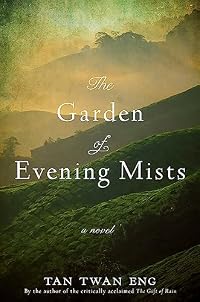
The Garden of Evening Mists
by Tan Twan Eng
On This Page
Description
"Malaya, 1951. Yun Ling Teoh, the scarred lone survivor of a brutal Japanese wartime camp, seeks solace among the jungle-fringed tea plantations of Cameron Highlands. There she discovers Yugiri, the only Japanese garden in Malaya, and its owner and creator, the enigmatic Aritomo, exiled former gardener of the emperor of Japan. Despite her hatred of the Japanese, Yun Ling seeks to engage Aritomo to create a garden in memory of her sister, who died in the camp. Aritomo refuses but agrees to show more accept Yun Ling as his apprentice "until the monsoon comes." Then she can design a garden for herself. As the months pass, Yun Ling finds herself intimately drawn to the gardener and his art, while all around them a communist guerilla war rages. But the Garden of Evening Mists remains a place of mystery. Who is Aritomo and how did he come to leave Japan? And is the real story of how Yun Ling managed to survive the war perhaps the darkest secret of all?"--P. [4] of cover. show lessTags
Recommendations











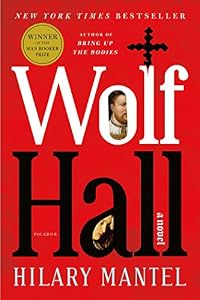
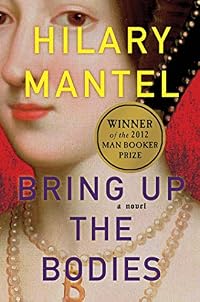




Member Recommendations
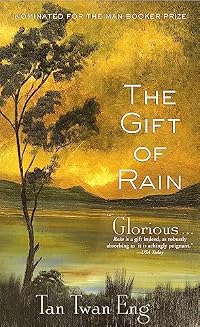
M_Clark The Gift of Rain is the first book by Tan Twan Eng and is actually much better than The Garden of Evening Mists
CGlanovsky Non-linear storytelling. Post-colonial novel. Deals with a period of political unrest.
Member Reviews
The Garden of Evening Mists- Tan Eng
Audio version performed by Anna Bentinck
5 stars
“Memories I had locked away have begun to break free, like shards of ice fracturing off an arctic shelf. In sleep, these broken floes drift toward the morning light of remembrance.”
When Yun Ling first comes to Yugiri in the decade following World War Two she remembers her sister’s death and their three years in a Japanese death camp. When she returns to Yugiri 40 years later, she remembers Aritomo. Aritomo, once the Japanese emperor’s gardener, created Yugiri, the Garden of Evening Mists. The garden was designed and built before the war in the Camaron Highlands of Malaya. Yun Ling has spent most of her life trying to forget, but as her aging show more brain threatens to erase her memories forever, she begins to record her story.
This is an intricate, layered story that worked beautifully on every level. The prose is poetic and suited to the exotic location. As the story develops, it is filled with details about Japanese gardens, woodblock printing, and surprisingly, tattoos. The characters are flawed, complex, and very real. They are people who grapple with devastating loss, survivor guilt, divided loyalties, and dangerous secrets. In the end some of the secrets are revealed. Some of the truth will never be completely revealed. Despite the lack of definitive answers, the ending of the book felt entirely correct.
Anna Bentinck’s performance of this book was outstanding. She handled all of the character voices and accents perfectly. I was especially impressed that she was able to maintain a consistent voice for Yun Ling while perceptibly aging the voice for the different time periods of the narrative. show less
Audio version performed by Anna Bentinck
5 stars
“Memories I had locked away have begun to break free, like shards of ice fracturing off an arctic shelf. In sleep, these broken floes drift toward the morning light of remembrance.”
When Yun Ling first comes to Yugiri in the decade following World War Two she remembers her sister’s death and their three years in a Japanese death camp. When she returns to Yugiri 40 years later, she remembers Aritomo. Aritomo, once the Japanese emperor’s gardener, created Yugiri, the Garden of Evening Mists. The garden was designed and built before the war in the Camaron Highlands of Malaya. Yun Ling has spent most of her life trying to forget, but as her aging show more brain threatens to erase her memories forever, she begins to record her story.
This is an intricate, layered story that worked beautifully on every level. The prose is poetic and suited to the exotic location. As the story develops, it is filled with details about Japanese gardens, woodblock printing, and surprisingly, tattoos. The characters are flawed, complex, and very real. They are people who grapple with devastating loss, survivor guilt, divided loyalties, and dangerous secrets. In the end some of the secrets are revealed. Some of the truth will never be completely revealed. Despite the lack of definitive answers, the ending of the book felt entirely correct.
Anna Bentinck’s performance of this book was outstanding. She handled all of the character voices and accents perfectly. I was especially impressed that she was able to maintain a consistent voice for Yun Ling while perceptibly aging the voice for the different time periods of the narrative. show less
What a joy for the reader to unfold layer upon layer of narrative in this Booker-nominated novel. Set in the Cameron Highlands, outside of Kuala Lumpur, it is told by Yun Ling Teoh, sole survivor of a Japanese prison camp during WWII. In 1951, she returns to the area and, in an ironic twist, becomes an apprentice to a famed Japanese gardener Aritomo, exiled gardener to the Emperor Hirohito. Before the monsoons come, she helps to reconstruct his garden, Yugiri, and despite her hatred of the Japanese, is increasingly drawn to the inscrutable gardener. She expects that she will be able to construct a Japanese garden in memory of her sister, who died in the prison camp. All this takes place as the Communist terrorists are posing a threat to show more all those living in the highlands.
In evocative prose, Eng takes us back and forth in time, as the garden takes its place at the center of the novel and comes to represent memories, which make up the main theme of the book. Fast forward thirty years, and Yun Ling has been struck by a neurological disorder that is destroying her memory. And there are many mysteries she would like to solve before her memory is gone completely. She still does not know who Aritomo really is and why he was exiled from Japan? Why was her friend Magnus always so sure of his safety as the Communists targeted other neighbors? What is the story behind “Yamashita’s Gold” and is it fact or fiction? And is she hiding something herself? How did she become the lone survivor of a prison camp that no one will acknowledge existed?
But time and again it’s Eng’s superlative prose that makes the narrative sing:
”Bats are flooding out from the hundreds of caves that perforate these mountainsides. I watch them plunge into the mists without any hesitation, trusting in the echoes and silences in which they fly. Are all of us the same, I wonder, navigating our lives by interpreting the silences between words spoken, analyzing the returning echoes of our memory in order to chart the terrain, in order to make sense of the world around us?” (Page 307)
Lovely, isn’t it? Highly recommended. show less
In evocative prose, Eng takes us back and forth in time, as the garden takes its place at the center of the novel and comes to represent memories, which make up the main theme of the book. Fast forward thirty years, and Yun Ling has been struck by a neurological disorder that is destroying her memory. And there are many mysteries she would like to solve before her memory is gone completely. She still does not know who Aritomo really is and why he was exiled from Japan? Why was her friend Magnus always so sure of his safety as the Communists targeted other neighbors? What is the story behind “Yamashita’s Gold” and is it fact or fiction? And is she hiding something herself? How did she become the lone survivor of a prison camp that no one will acknowledge existed?
But time and again it’s Eng’s superlative prose that makes the narrative sing:
”Bats are flooding out from the hundreds of caves that perforate these mountainsides. I watch them plunge into the mists without any hesitation, trusting in the echoes and silences in which they fly. Are all of us the same, I wonder, navigating our lives by interpreting the silences between words spoken, analyzing the returning echoes of our memory in order to chart the terrain, in order to make sense of the world around us?” (Page 307)
Lovely, isn’t it? Highly recommended. show less
Judge Teoh Yun Ling has retired due to illness. She returns to her mountain home, where her memories of the past are rekindled. Yun Ling was a survivor of a Japanese concentration camp. After the war, she is determined to honour her dead sister by building a Japanese garden. Ironically, the only man who can help her with this is Aritomo, a Japanese gardener who was a loyal servant of the emporer in whose name Yun Ling and her family were brutalised.
Tan does a great job of exploring Yun Ling's deep and conflicted emotions about the Japanese, family, and the circumstances of her survival. His writing is beautiful; his evocation of Aritomo's garden amid the Malaysian hill country it is nestled in make you feel as if you are actually show more there.
For me, this is the book that should have won the Booker. It is a far more original concept than Hilary Mantel's, and memorably written. show less
The Garden of Evening Mists is a novel I discovered last year thanks to several members of LT who wrote glowing reviews about it, and while I don't know if I can do as good a job as they did in conveying why I was prompted to give it a rare 5-star rating, I can say this is a novel I would unreservedly recommend to everyone, except readers who prefer to avoid difficult, disturbing topics, as a good portion of it deals with the brutality the Malayans had to suffer under the Japanese invasion during WWII. A fascinating story and exquisite writing carried me away and I both badly wanted to devour the whole thing in one fell swoop, while at the same time not wanting it to end. The story is told by Yun Ling Teoh, a woman of Chinese descent, show more born in Malaysia. When we meet her at the very start of the novel, she is poised to go into retirement two years early from her position as a justice of the peace. She is secretly suffering from a mysterious brain condition which threatens to strip her of the capacity for expressing herself or understanding language, and this prompts her to write her life story before she loses the ability to convey her memories. To take on this task, she has returned to a former residence in the Cameron Highlands, where the Garden of Evening Mists of the title lays in need of much repair.
In 1951, Yun Ling found herself to be the sole survivor of a Japanese internment camp and decided she wanted to create a Japanese garden in memory of her sister, who kept them both alive by retreating to an imaginary garden through the worst of the treatment they suffered while in captivity. We are not to learn till late in the story what circumstances led to the death of this beloved sister, but we know Yun Ling has decided to devote the rest of her life to honouring her memory. There is a Japanese gardener, Aritomo, living in the Highlands; he is the exiled former gardener of the emperor of Japan, whom Yun Ling approaches to ask him to create a garden for her sister. This she does despite her strong reservations; she has developed a visceral hatred for the Japanese after the treatment she suffered during the internment in camps which, according to what we know and what is told in the course of the novel, had a lot in common with the dehumanizing brutality the Nazi Germans showed in the concentration camps of Europe.
We learn that Aritomo didn't accept to create this memorial garden, but offered instead to take her on as his apprentice, and Yun Ling accepted in hopes she would later be equipped to create that garden herself. The novel travels back and forth in time, from the present—with the aging Yun Ling telling her story and trying to get the long-neglected garden back into its original shape—to 1951, the year she worked on Aritomo's 'Garden of Evening Mists'. During that time, Communist rebels were terrorizing the land, and Yun Ling's life was endangered as she had pronounced judgments to convict and deport some of these rebels. Eventually, she takes us back to the internment camp during the war, whose location has always remained a mystery, and where we know Yun Ling lost two fingers and her beloved sister. The Yun Ling of 1951 and the narrator of the 'present' incarnation (sometime in the 80s) is embittered by her experiences in the war and weighed down by hatred for her former tormentors, but her daily contact with the garden and Aritomo, and her wish to leave behind a legacy in her sister's name, help her to revisit her past and try to cast it in a new light.
There are mysteries and complexities at the heart of the novel which are only revealed when Yun Ling the author is ready to unearth them. It is a visually lush experience, with exquisite writing which had me rewinding the audiobook constantly, just for the pleasure of 'rereading' sections filled with gorgeous imagery. In some rare cases when I've listened to an audiobook, I feel compelled to also buy the book in a print edition, and this is one such case. That being said, I was completely satisfied with the audiobook and found the narration by Anna Bentinck truly excellent. She has a facility with accents, which she renders in a subtle way, and also adjusted her voice so that it was easy to follow whether we were hearing the older, or the younger Yun Ling, situating us in time with no further markers. But I want to get a paperback copy of this novel so I can do something I never allow myself usually, which is to underline all the little moments of pure poetry so I may savour them at my own pace. This novel, shortlisted for the Man Booker Prize in 2012 would definitely have deserved to win, and might have done so if it hadn't had the bad luck of being nominated in the same year as Hilary Mantel's equally excellent Bring Up the Bodies. I'll be looking out for whatever else Tan Twan Eng puts his hand to.
I should add that reading this story not very long after finishing Snow Falling on Cedars and watching the movie version of that novel last week, formed an interesting change of perspective; where Gutterson’s novel dealt with the discrimination Japanese Americans suffered during WWII and it’s aftermath, this book showed us the kinds of horrors the Japanese army inflicted on it’s victims during the same war. However, Tan Twan Eng, far from dwelling solely on these shameful events, also shows us a Japanese culture, and individuals within that culture, who are capable of great acts of beauty, and of mercy. show less
In 1951, Yun Ling found herself to be the sole survivor of a Japanese internment camp and decided she wanted to create a Japanese garden in memory of her sister, who kept them both alive by retreating to an imaginary garden through the worst of the treatment they suffered while in captivity. We are not to learn till late in the story what circumstances led to the death of this beloved sister, but we know Yun Ling has decided to devote the rest of her life to honouring her memory. There is a Japanese gardener, Aritomo, living in the Highlands; he is the exiled former gardener of the emperor of Japan, whom Yun Ling approaches to ask him to create a garden for her sister. This she does despite her strong reservations; she has developed a visceral hatred for the Japanese after the treatment she suffered during the internment in camps which, according to what we know and what is told in the course of the novel, had a lot in common with the dehumanizing brutality the Nazi Germans showed in the concentration camps of Europe.
We learn that Aritomo didn't accept to create this memorial garden, but offered instead to take her on as his apprentice, and Yun Ling accepted in hopes she would later be equipped to create that garden herself. The novel travels back and forth in time, from the present—with the aging Yun Ling telling her story and trying to get the long-neglected garden back into its original shape—to 1951, the year she worked on Aritomo's 'Garden of Evening Mists'. During that time, Communist rebels were terrorizing the land, and Yun Ling's life was endangered as she had pronounced judgments to convict and deport some of these rebels. Eventually, she takes us back to the internment camp during the war, whose location has always remained a mystery, and where we know Yun Ling lost two fingers and her beloved sister. The Yun Ling of 1951 and the narrator of the 'present' incarnation (sometime in the 80s) is embittered by her experiences in the war and weighed down by hatred for her former tormentors, but her daily contact with the garden and Aritomo, and her wish to leave behind a legacy in her sister's name, help her to revisit her past and try to cast it in a new light.
There are mysteries and complexities at the heart of the novel which are only revealed when Yun Ling the author is ready to unearth them. It is a visually lush experience, with exquisite writing which had me rewinding the audiobook constantly, just for the pleasure of 'rereading' sections filled with gorgeous imagery. In some rare cases when I've listened to an audiobook, I feel compelled to also buy the book in a print edition, and this is one such case. That being said, I was completely satisfied with the audiobook and found the narration by Anna Bentinck truly excellent. She has a facility with accents, which she renders in a subtle way, and also adjusted her voice so that it was easy to follow whether we were hearing the older, or the younger Yun Ling, situating us in time with no further markers. But I want to get a paperback copy of this novel so I can do something I never allow myself usually, which is to underline all the little moments of pure poetry so I may savour them at my own pace. This novel, shortlisted for the Man Booker Prize in 2012 would definitely have deserved to win, and might have done so if it hadn't had the bad luck of being nominated in the same year as Hilary Mantel's equally excellent Bring Up the Bodies. I'll be looking out for whatever else Tan Twan Eng puts his hand to.
I should add that reading this story not very long after finishing Snow Falling on Cedars and watching the movie version of that novel last week, formed an interesting change of perspective; where Gutterson’s novel dealt with the discrimination Japanese Americans suffered during WWII and it’s aftermath, this book showed us the kinds of horrors the Japanese army inflicted on it’s victims during the same war. However, Tan Twan Eng, far from dwelling solely on these shameful events, also shows us a Japanese culture, and individuals within that culture, who are capable of great acts of beauty, and of mercy. show less
I have been teasing this book over in my mind to try to understand why I disliked it. I found it interesting, if slow, and rather accomplished and eventful. But there was still something that made me dislike it – something fundamental – and I think I have pinpointed what it is.
At one point towards the end of the novel (pg. 324), our two most important characters make an offhand misinterpretation the Garden of Eden story, the great foundational myth of Western civilization. Juxtaposing it with the Japanese art of gardening – represented by the titular Garden of Evening Mists – the book presents the Eden myth as one of a garden where "nothing dies or decays… nothing changes… how miserable". And it got me thinking about the show more previous 300+ pages of Tan Twan Eng's book, its chronicle of wartime Japanese atrocities and the reader's immersion in Eastern artistic philosophy. You see, the Eden myth is not, as Tan contends, about an unchanging utopia; it is about man falling from paradise and always working back towards it, aware of his mortality and his sin. The Western artistic tradition therefore has at its base a delicacy and a pathos but also a robustness regarding the tragedy of life. Japanese art, in contrast (so far as I understand it, and as Tan presents it) separates the two completely – fragility and cruelty – with no relation between them. You have to undergo extreme discipline so that one does not intrude upon the other. Consequently, Tan's book does not survive the appalling atrocities it frames and its beauty rings hollow.
Because the Japanese behaviour in World War Two is one of the most unequivocally obscene stains on humanity ever delivered. Tan does not endeavour to provide an apologia for it – quite the opposite, some of his descriptions turn the stomach – but by separating the fragility from the cruelty he ends up with some rather distasteful scenarios. The book's theme – our protagonist Yun Ling's character development mirroring the creation of the garden – makes sense within the principles of the Japanese garden (and therefore, Tan has written something that is technically quite impressive), but it is the imposition that rankles. Japan dominates the book, and it is the vicious, depraved, fascistic bullying incarnation of Japan, the one which won out in the 1930s and 40s. The book is set in Malaysia, and follows a Malaysian, but it is Japan which inflicts horror upon her (the war crimes), Japan which dominates her (her lover is Japanese) and it is Japan which heals her (the garden). It is cultural relativism of the most dangerous kind (the invader makes you sick, but don't worry, he has the cure – for a price) and limp moral acquiescence to imperialism. It is quite unintentional on Tan's part – rather, it is a consequence of obeying the principles of Japanese art – but often nauseating, quite at odds with the effect Tan is seeking to create. Stepping delicately around potential spoilers, the point at the end regarding the tattoos killed off my remaining goodwill, but the idea of the tattoo is ironically appropriate: the years 1931-45 saw Japan burn a sick black brand upon the East, and we are supposed to admire the handiwork. Everything has to bend before Japanese asceticism, or break. I prefer a clean break.
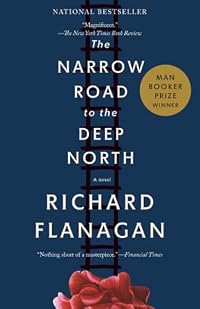
This was my fatal dispute with the book, but there were other drawbacks. It is long and slow – not necessarily a failing in a book, but it is here. Tan laboriously teases out a number of mysteries, but those that are eventually answered are given mundane answers and those that are not – the most interesting ones – are left hanging in the air. The characters have very little, well, character; despite what happens to them and what they uncover, very little of it seems to pack a punch. Even the prose – which is something the book is almost universally praised for in reviews – comes across as too light and fancy. My eyes involuntarily glazed over most of it, and Tan often overcooks it with some weird, wispy lines that try hard to be artistic and 'literary'. Like the Japanese garden, there are attempts at profundity that sometimes work but are always artificial. It fails to provide the juxtaposition and toughness that, for example, the similar (but much superior) The Narrow Road to the Deep North by Richard Flanagan provides.
It is a rare thing; a good book that accomplishes what it sets out to do, but which regardless I do not like. If it were not for the technical accomplishment, there would be nothing to really recommend in The Garden of Evening Mists. Perhaps this is enough for some people, and perhaps it should be enough for me. The Eastern principles demand that I separate the fragility from the cruelty – as though we live in two separate worlds and suffering does not matter – but I cannot. I cannot. I come from the tradition of those who fell from Eden and I cannot ignore sin. show less
At one point towards the end of the novel (pg. 324), our two most important characters make an offhand misinterpretation the Garden of Eden story, the great foundational myth of Western civilization. Juxtaposing it with the Japanese art of gardening – represented by the titular Garden of Evening Mists – the book presents the Eden myth as one of a garden where "nothing dies or decays… nothing changes… how miserable". And it got me thinking about the show more previous 300+ pages of Tan Twan Eng's book, its chronicle of wartime Japanese atrocities and the reader's immersion in Eastern artistic philosophy. You see, the Eden myth is not, as Tan contends, about an unchanging utopia; it is about man falling from paradise and always working back towards it, aware of his mortality and his sin. The Western artistic tradition therefore has at its base a delicacy and a pathos but also a robustness regarding the tragedy of life. Japanese art, in contrast (so far as I understand it, and as Tan presents it) separates the two completely – fragility and cruelty – with no relation between them. You have to undergo extreme discipline so that one does not intrude upon the other. Consequently, Tan's book does not survive the appalling atrocities it frames and its beauty rings hollow.
Because the Japanese behaviour in World War Two is one of the most unequivocally obscene stains on humanity ever delivered. Tan does not endeavour to provide an apologia for it – quite the opposite, some of his descriptions turn the stomach – but by separating the fragility from the cruelty he ends up with some rather distasteful scenarios. The book's theme – our protagonist Yun Ling's character development mirroring the creation of the garden – makes sense within the principles of the Japanese garden (and therefore, Tan has written something that is technically quite impressive), but it is the imposition that rankles. Japan dominates the book, and it is the vicious, depraved, fascistic bullying incarnation of Japan, the one which won out in the 1930s and 40s. The book is set in Malaysia, and follows a Malaysian, but it is Japan which inflicts horror upon her (the war crimes), Japan which dominates her (her lover is Japanese) and it is Japan which heals her (the garden). It is cultural relativism of the most dangerous kind (the invader makes you sick, but don't worry, he has the cure – for a price) and limp moral acquiescence to imperialism. It is quite unintentional on Tan's part – rather, it is a consequence of obeying the principles of Japanese art – but often nauseating, quite at odds with the effect Tan is seeking to create. Stepping delicately around potential spoilers, the point at the end regarding the tattoos killed off my remaining goodwill, but the idea of the tattoo is ironically appropriate: the years 1931-45 saw Japan burn a sick black brand upon the East, and we are supposed to admire the handiwork. Everything has to bend before Japanese asceticism, or break. I prefer a clean break.
This was my fatal dispute with the book, but there were other drawbacks. It is long and slow – not necessarily a failing in a book, but it is here. Tan laboriously teases out a number of mysteries, but those that are eventually answered are given mundane answers and those that are not – the most interesting ones – are left hanging in the air. The characters have very little, well, character; despite what happens to them and what they uncover, very little of it seems to pack a punch. Even the prose – which is something the book is almost universally praised for in reviews – comes across as too light and fancy. My eyes involuntarily glazed over most of it, and Tan often overcooks it with some weird, wispy lines that try hard to be artistic and 'literary'. Like the Japanese garden, there are attempts at profundity that sometimes work but are always artificial. It fails to provide the juxtaposition and toughness that, for example, the similar (but much superior) The Narrow Road to the Deep North by Richard Flanagan provides.
It is a rare thing; a good book that accomplishes what it sets out to do, but which regardless I do not like. If it were not for the technical accomplishment, there would be nothing to really recommend in The Garden of Evening Mists. Perhaps this is enough for some people, and perhaps it should be enough for me. The Eastern principles demand that I separate the fragility from the cruelty – as though we live in two separate worlds and suffering does not matter – but I cannot. I cannot. I come from the tradition of those who fell from Eden and I cannot ignore sin. show less
This is the second book I have read by this Malaysian author, which was shortlisted for the Booker Prize 2012. Teoh Yun Ling is a judge in Kuala Lumpur retiring one day in the late 1980s, and the novel is set partly during the Second World War when she was a Japanese prisoner of war, and partly in 1951 when she was learning the art of Japanese horticulture from Nakamura Aritomo, a Japanese expert who remained in Malaya during the war. As was the case with The House of Doors, I found the flitting between timelines sometimes confusing, especially as this sometimes happened in section breaks on consecutive pages. Nevertheless, I love the poetical writing style of this author. This is above all, a novel about memory and its loss over time, show more as shown by Teoh trying to come to terms with her memories of wartime torture and privation in a slave labour camp, her memories of her younger sister who was forced to work in the labour camp brothel and who was killed along with almost all the other prisoners when Japan lost the war, and her mother's progressive dementia as she retreats in her mind from the memory of losing her daughter. Despite all this sadness and tragedy, and a number of other deaths and suffering during the communist-inspired State of Emergency in the 1950s, I found this an inspiring and thought-provoking read, at least partly because I was reading it on holiday in Malaysia and finished it on my return from a day trip to Cameron Highlands, where the 1951 strand of the story is set. show less
This is a beautifully written, lyrical story of the life of a Malaysian woman who is looking back at the important events of her life before illness steals her memory. Initially this is a slow moving book, but as it progresses so many fascinating people and events are added and the mysteries deepen and widen until you are totally caught up in the story and find yourself reading long into the night.
One of the things which intrigued me was that clouds were frequently mentioned—clouds in the sky, clouds reflected in the water, the clouding of people’s eyes, and clouds were often used in the names of places and things in the book as well. Since clouds can reveal as well as obscure things, throughout the book I was captivated by trying show more to discover whether something was being hidden or exposed. My only problem with the book, and it’s as minor one, was that sometimes the intersection of certain lives in the plot was a bit too convenient.
If you are a lover of character-driven fiction, do yourself an immense favor and read this book.
There were many, many beautiful descriptions in this book, but these are two of my favorites:
“It was odd how Aritomo’s life seemed to glance off mine; we were like two leaves falling from a tree, touching each other now and again as they spiraled to the forest floor.”
“The sun hatched out from behind the clouds, transforming the surface of the rocks into a shimmer of turquoise and yellow and red and purple and green, as through the light had passed through a prism. The wings of the butterflies twitched and beat faster. In small clusters they lifted off from the rocks, hanging in the light for a few moments before dispersing into the jungle, like postage stamps scattered by the wind show less
One of the things which intrigued me was that clouds were frequently mentioned—clouds in the sky, clouds reflected in the water, the clouding of people’s eyes, and clouds were often used in the names of places and things in the book as well. Since clouds can reveal as well as obscure things, throughout the book I was captivated by trying show more to discover whether something was being hidden or exposed. My only problem with the book, and it’s as minor one, was that sometimes the intersection of certain lives in the plot was a bit too convenient.
If you are a lover of character-driven fiction, do yourself an immense favor and read this book.
There were many, many beautiful descriptions in this book, but these are two of my favorites:
“It was odd how Aritomo’s life seemed to glance off mine; we were like two leaves falling from a tree, touching each other now and again as they spiraled to the forest floor.”
“The sun hatched out from behind the clouds, transforming the surface of the rocks into a shimmer of turquoise and yellow and red and purple and green, as through the light had passed through a prism. The wings of the butterflies twitched and beat faster. In small clusters they lifted off from the rocks, hanging in the light for a few moments before dispersing into the jungle, like postage stamps scattered by the wind show less
Members
- Recently Added By
Published Reviews
ThingScore 75
The language is as lush as the landscape he seeks to describe. His prose is punctuated with clever imagery; in reuniting with Teoh, Eng brilliantly describes Frederick's wry reaction "A smile skims across his face, capsizing an instant later."
Though on the whole the descriptive narrative was attractive, at times more concision might have saved it from becoming overwrought, as in my view it show more was, and rather frustratingly holding back what was otherwise a compelling and unique story. show less
Though on the whole the descriptive narrative was attractive, at times more concision might have saved it from becoming overwrought, as in my view it show more was, and rather frustratingly holding back what was otherwise a compelling and unique story. show less
added by geocroc
As in his first novel, The Gift of Rain, Tan employs exotic settings and mystical aspects of Japanese culture to drive his narrative. But this time the effect is darker. Aritomo's mastery of the art of shakkei - "Borrowed Scenery" - initially seems enlightened, but as we come to question his true motives for absconding to this obscure backwater, it appears increasingly deceptive.
Though later show more plot elements surrounding a search for buried wartime treasure do not always complement the atmosphere Tan has carefully constructed, this is a beautiful, dark and wistful exploration of loss and remembrance that, appropriately, will stay with you long after reading. show less
Though later show more plot elements surrounding a search for buried wartime treasure do not always complement the atmosphere Tan has carefully constructed, this is a beautiful, dark and wistful exploration of loss and remembrance that, appropriately, will stay with you long after reading. show less
added by geocroc
This novel ticks many boxes: its themes are serious, its historic grounding solid, its structure careful, its old-fashioned ornamentalism respectable. The reason I found it impossible to love is the quality of the writing. There is no discernible personality in the dutiful, dull voice of Yun Ling, and non-events stalk us on every page: "for a timeless moment I looked straight into his eyes"; show more "For a long while he does not say anything. Finally he begins to speak in a slow, steady voice." The self-conscious dialogue resembles a history lesson collated for the benefit of the western reader, and everything is ponderously "like" something else, so it takes twice as long: "We were like two moths around a candle, circling closer and closer to the flames, waiting to see whose wings would catch fire first." Despite the dramatic events, the overall effect is one of surprising blandness, like something you've read before. show less
added by vancouverdeb
Lists

Top Five Books of 2013
1,564 works; 722 members

Best 21st Century Books (So Far)
670 works; 86 members

Booker Prize
491 works; 62 members

Top Five Books of 2014
1,064 works; 398 members

Garden-fiction
67 works; 20 members

Dishonourable Mentions of 2013
189 works; 62 members

Top Five Books of 2021
604 works; 181 members

Literature by People of Color
81 works; 9 members
International IMPAC Dublin Literary Award
179 works; 6 members

Man Booker Prize Longlist 2012
12 works; 2 members

Books Read in 2023
5,547 works; 144 members

Books from around the world: Asia
11 works; 1 member

BBC Radio 4 Bookclub
340 works; 13 members

for you little gardener and lover of trees
14 works; 2 members

Booker Prize Shortlist: Titles Not Yet Read
161 works; 4 members

Reading Globally
136 works; 16 members
IMPAC Dublin Literary Award 2014 longlist
150 works; 3 members

Tonikat reading completed on Librarything journals
329 works; 2 members

To Read
617 works; 7 members

Around the World in 80 Books
79 works; 4 members
Walter Scott Prize Winners and Shortlist
66 works; 6 members

BBC World Book Club
261 works; 5 members

Widely acclaimed, one book per year
105 works; 3 members

Books We Want To Read Again For The First Time
384 works; 160 members

Books We Couldn't Put Down
443 works; 197 members

Take Four Books
131 works; 1 member
Talk Discussions
Past Discussions
The Garden of Evening Mists by Tan Twan Eng in Booker Prize (September 2015)
Author Information

Some Editions
Awards and Honors
Awards
Distinctions
Common Knowledge
- Canonical title
- The Garden of Evening Mists
- Original title
- The Garden of Evening Mists
- Original publication date
- 2012-02-11
- People/Characters
- Yun Ling Teoh; Aritomo; Frederick Pretorius; Magnus Pretorius
- Important places
- Malaysia; Cameron Highlands; Kuala Lumpur, Malaysia; Japan
- Important events
- Malayan Emergency; Japanese occupation of Malaya 1941-45
- Epigraph
- There is a goddess of Memory, Mnemosyne; but none of Forgetting. Yet there should be, as they are twin sisters, twin powers, and walk on either side of us, disputing for sovereignty over us and who we are, all the way unti... (show all)l death.
Richard Holmes, A Meander Through Memory and Forgetting - Dedication
- For my sister
And
Opgedra aan A J Buys — sonder jou sou hierdie boek dubbel so lank en halfpad so goed wees. Mag jou eie mooi taal altyd gedy. - First words
- On a mountain above the clouds once lived a man who had been the gardener of the Emperor of Japan.
- Quotations
- Memory is like patches of sunlight in an overcast valley, shifting with the movement of the clouds. Now and then the light will fall on a particular point in time, illuminating it for a moment before the wind seals up the gap... (show all), and the world is in shadows again.
Are all of us the same, I wonder, navigating our lives by interpreting the silences between words spoken, analyzing the returning echoes of our memory in order to chart the terrain, in order to make sense of the world around ... (show all)us? - Last words
- (Click to show. Warning: May contain spoilers.)I watch the heron circle the pond, a leaf spiralling down to the water, setting off silent ripples across the garden.
- Original language
- English
Classifications
Statistics
- Members
- 1,850
- Popularity
- 11,635
- Reviews
- 117
- Rating
- (4.11)
- Languages
- 10 — Chinese, Dutch, English, Estonian, French, German, Hungarian, Italian, Romanian, Spanish
- Media
- Paper, Audiobook, Ebook
- ISBNs
- 50
- ASINs
- 24