On This Page
Description
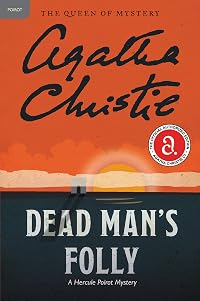
When a mock murder game staged for charity threatens to turn into the real thing, the intrepid Hercule Poirot is called in to take part in this Dead Man's Folly, a classic from the queen of suspense, Agatha Christie.Sir George and Lady Stubbs, the hosts of a village fete, hit upon the novel idea of staging a mock murder mystery. In good faith, Ariadne Oliver, the well-known crime writer, agrees to organize their murder hunt.
Despite weeks of meticulous planning, at the last minute Ariadne show more calls her friend Hercule Poirot for his expert assistance. Instinctively, she senses that's something sinister is about to happen....
. show less
Tags
Recommendations

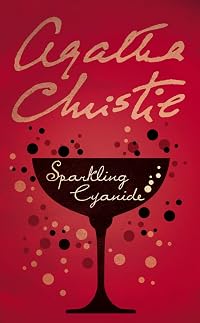

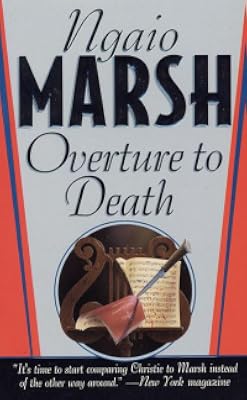

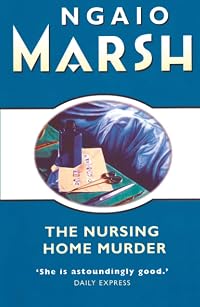
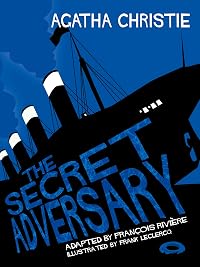




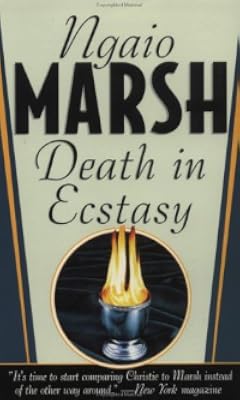


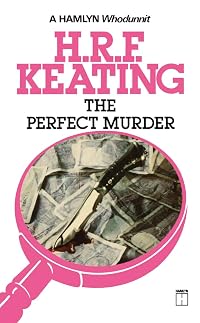

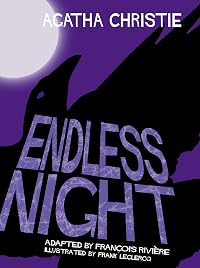
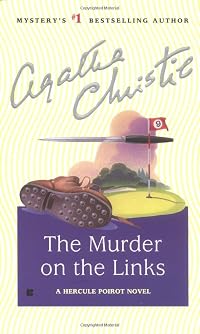



Member Recommendations
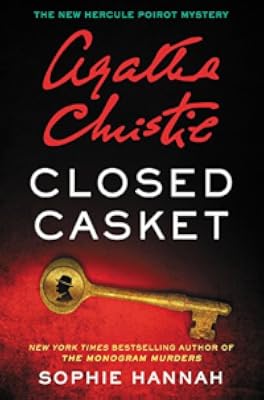
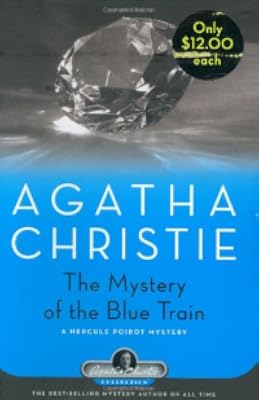
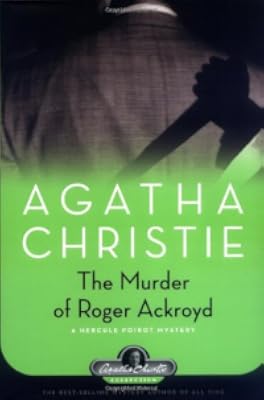
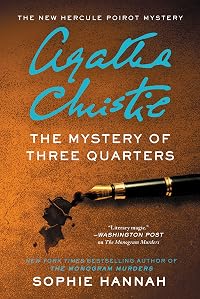
Porua Dead Man's Folly is another book in the series of books that features Hercule Poirot with his friend Mrs. Ariadne Oliver. Cards on the Table is the book in which Poirot meets Mrs. Oliver for the first time and what an eventful meeting that turns out to be! Anyone who enjoys the friendship Poirot and Mrs. Oliver share must read Cards on the Table to know how this endearing and long lasting alliance started.
60
Member Reviews
I was smiling through the first half of this book. After setting aside the last two Christie books, 'Hickory Dickory Dock' and 'Destination Unknown', I was glad to find that 'Dead Man's Folly' opened well. It was fast, direct and amusing. I liked that Poirot was involved from the very beginning, well before the first body had hit the ground. I especially liked that he was dragged into the affair by the inimitable Mrs Oliver who leashed him by his curiosity and tugged so hard that he jumped on a train the same day without knowing anything about why he'd been summoned.
Poirot spent the first half of the book flipping between bemusement and frustration. He shared Mrs Oliver's sense that something about the planned murder mystery game was show more off but he didn't know what it was. The cast of characters was nicely drawn (although I did have to push aside the casual misogyny, snobbery, racism and xenophobia that almost all the characters took for granted). The first body caught Poirot and Mrs Oliver by surprise. They literally stumbled over it.
The police then took over the investigation. Poirot remained bemused and played, at most, a supporting role to the Inspector investigating the death. What followed was closer to a police procedural than Poirot's normal probing and posturing. Most of the information is gathered by the police, with Poirot acting, for once, as a good listener in whom people are willing to confide. I particularly enjoyed watching the police and Poirot both struggle to get past the defences of Mrs Folliat, who seemed to me to be a more aristocratic version of Jane Marple, only playing for the other side.
The second half of the book was entertaining but didn't live up to the promise of its beginning. It seemed to me that everything apart from the cleverness of the plot started to fade. Mrs Oliver disappeared without any further contribution. Neither the police nor Poirot could turn the information that they'd gathered into a solution. Time passed. The story almost stalled Then, suddenly, so suddenly that it felt rather rushed, Poirot worked it out and the killer was identified.
I thought the plot was ingenious and the exposition was skilful but I rather got the impression that Agatha Christie ran out of steam and looked for a way to share the cleverness of the crime with as little effort as possible. The big reveal was a nicely written scene but it still felt like a bit of an infodump.
I enjoyed 'Dead Man's Folly' but I was left with the feeling that I'd have ranked it as one of Christie's best offerings if it had been baked for a little longer and if there'd been a little more of Mrs Olivier to brighten things up a bit. show less
Poirot spent the first half of the book flipping between bemusement and frustration. He shared Mrs Oliver's sense that something about the planned murder mystery game was show more off but he didn't know what it was. The cast of characters was nicely drawn (although I did have to push aside the casual misogyny, snobbery, racism and xenophobia that almost all the characters took for granted). The first body caught Poirot and Mrs Oliver by surprise. They literally stumbled over it.
The police then took over the investigation. Poirot remained bemused and played, at most, a supporting role to the Inspector investigating the death. What followed was closer to a police procedural than Poirot's normal probing and posturing. Most of the information is gathered by the police, with Poirot acting, for once, as a good listener in whom people are willing to confide. I particularly enjoyed watching the police and Poirot both struggle to get past the defences of Mrs Folliat, who seemed to me to be a more aristocratic version of Jane Marple, only playing for the other side.
The second half of the book was entertaining but didn't live up to the promise of its beginning. It seemed to me that everything apart from the cleverness of the plot started to fade. Mrs Oliver disappeared without any further contribution. Neither the police nor Poirot could turn the information that they'd gathered into a solution. Time passed. The story almost stalled Then, suddenly, so suddenly that it felt rather rushed, Poirot worked it out and the killer was identified.
I thought the plot was ingenious and the exposition was skilful but I rather got the impression that Agatha Christie ran out of steam and looked for a way to share the cleverness of the crime with as little effort as possible. The big reveal was a nicely written scene but it still felt like a bit of an infodump.
I enjoyed 'Dead Man's Folly' but I was left with the feeling that I'd have ranked it as one of Christie's best offerings if it had been baked for a little longer and if there'd been a little more of Mrs Olivier to brighten things up a bit. show less
A murder mystery game, with Poirot and Ariadne Oliver! Dead Man's Folly had all the makings of a fantastic Agatha Christie novel. Unfortunately, while the story was very well done, the mystery itself left much to be desired.
I enjoy the mysteries that showcase Ariadne Oliver. I love the character, who seems very much to be a caricature of Agatha Christie herself. Her calling for Poirot to help her prevent a murder that hasn't happened yet set the stage for a wealth of possibilities. And Dead Man's Folly made great use of the investigative collaboration.
The problem with Dead Man's Folly, and it's a huge one, was the ending. Agatha Christie usually gives us the clues, lets us figure out who we think is the murderer, and then shows us how show more naive we really are in the end. While there were clues in Dead Man's Folly, all were basically pointless. The killer, while being a complete surprise, came out of nowhere. No one could have figured it out, as it seemed to be a case of picking a random character at the last minute and creating evidence to make it all seem plausible. A wonderful premise, but a lackluster ending. show less
I enjoy the mysteries that showcase Ariadne Oliver. I love the character, who seems very much to be a caricature of Agatha Christie herself. Her calling for Poirot to help her prevent a murder that hasn't happened yet set the stage for a wealth of possibilities. And Dead Man's Folly made great use of the investigative collaboration.
The problem with Dead Man's Folly, and it's a huge one, was the ending. Agatha Christie usually gives us the clues, lets us figure out who we think is the murderer, and then shows us how show more naive we really are in the end. While there were clues in Dead Man's Folly, all were basically pointless. The killer, while being a complete surprise, came out of nowhere. No one could have figured it out, as it seemed to be a case of picking a random character at the last minute and creating evidence to make it all seem plausible. A wonderful premise, but a lackluster ending. show less
I thought this book from beginning to end was classic Agatha Christie. I was happy to read it, especially since it felt like the last few books have been hit or misses for me.
This one has Hercule Poirot in it from beginning to end. Called in by Adriane Oliver because of a "feeling" she has, Poirot travels to her and listens to her explaining she feels she is being led to something in order for a real murder to take place.
The characters in this one are really fascinating. We have Adriane who was written less like a total buttinsky in this one and actually did add a lot to this book. I thought the characters of Sir George and Lady Stubbs were puzzling and was intrigued by them both. Reading about how Sir George married Lady Stubbs even show more if she has a mental deficiency was surprising. We also get a married couple on the brink of divorce, the efficient secretary, a lone architect, and the former owner of the home that Sir George and Lady Stubbs to contend with. The book did not feel overly long even with this many characters.
I thought that Poirot was at the top of his game in this one, and it is funny how known he is to some people, there are references to other cases he investigated in this one, and once again I have to puzzle about Poirot's age. This book takes place in the 1950s. There is once again mentions of the changes that England has undergone since the end of War World II. A lot of family estates have been let go and turned into hotels or hostels. There are young people from all over traveling and wearing scandalous clothing (the young girls wear shirts, the men have overly long hair) and seem to have no problem with trespassing on other people's grounds.
One wonders how Agatha Christie felt about the changing times in England. Reading about how Poirot feels about things was funny (he was horrified by how the women dressed and wondered how did they think they would attract the opposite sex dressed the way that they did) and you can definitely feel a divide between the old England and the new.
The writing reminded me of classic Christie (The Murder of Roger Ackroyd) days. I felt like in her last few books she may have been phoning it in a bit. I had to re-read this one in parts because I did miss some things here and there after I got to the end. The flow was pitch perfect in this book, and I actually found myself reading faster to get to the ending.
The setting of the home of George and Lady Stubbs felt haunted to me in a way. We of course find out the reason behind that at the end.
The ending left me sad and a bit horrified (yeah for once I can say that a Poirot book gave me serious pause) when you find out what exactly has gone on and who knew. show less
This one has Hercule Poirot in it from beginning to end. Called in by Adriane Oliver because of a "feeling" she has, Poirot travels to her and listens to her explaining she feels she is being led to something in order for a real murder to take place.
The characters in this one are really fascinating. We have Adriane who was written less like a total buttinsky in this one and actually did add a lot to this book. I thought the characters of Sir George and Lady Stubbs were puzzling and was intrigued by them both. Reading about how Sir George married Lady Stubbs even show more if she has a mental deficiency was surprising. We also get a married couple on the brink of divorce, the efficient secretary, a lone architect, and the former owner of the home that Sir George and Lady Stubbs to contend with. The book did not feel overly long even with this many characters.
I thought that Poirot was at the top of his game in this one, and it is funny how known he is to some people, there are references to other cases he investigated in this one, and once again I have to puzzle about Poirot's age. This book takes place in the 1950s. There is once again mentions of the changes that England has undergone since the end of War World II. A lot of family estates have been let go and turned into hotels or hostels. There are young people from all over traveling and wearing scandalous clothing (the young girls wear shirts, the men have overly long hair) and seem to have no problem with trespassing on other people's grounds.
One wonders how Agatha Christie felt about the changing times in England. Reading about how Poirot feels about things was funny (he was horrified by how the women dressed and wondered how did they think they would attract the opposite sex dressed the way that they did) and you can definitely feel a divide between the old England and the new.
The writing reminded me of classic Christie (The Murder of Roger Ackroyd) days. I felt like in her last few books she may have been phoning it in a bit. I had to re-read this one in parts because I did miss some things here and there after I got to the end. The flow was pitch perfect in this book, and I actually found myself reading faster to get to the ending.
The setting of the home of George and Lady Stubbs felt haunted to me in a way. We of course find out the reason behind that at the end.
The ending left me sad and a bit horrified (yeah for once I can say that a Poirot book gave me serious pause) when you find out what exactly has gone on and who knew. show less
This late-stage Poirot novel is not a critical darling, and I agree that the mystery and its resolution does not really have the subtle clues and red herrings that Christie was capable of. However, I do not read these mysteries to try to solve them myself, but as entertainment, and this one did entertain me thoroughly.
I have to say that I really enjoy Ariadne Oliver. She's my favorite Poirot supporting character, much better than Captain Hastings, who thankfully only appeared in a few of the early novels. Ariadne Oliver is the author's alter ego, a female crime writer depicted as kind of foolish but with the occasional moment of, mostly unconscious, insight. I always enjoy the way she talks and confounds Poirot.
I also enjoyed that here show more we have Poirot all the time. It's not one of those novels where he appears only for the second half of the story.
So, true, this novel is not among Christie's most dazzling investigations, and the resolution was perhaps a bit too sensational (is this becoming a trend at this point? the previous novel,
Hickory Dickory Dock, also had an unlikely and sensational solution, more so than this one). However, it was always entertaining and intriguing, so I had a great time reading it. show less
I have to say that I really enjoy Ariadne Oliver. She's my favorite Poirot supporting character, much better than Captain Hastings, who thankfully only appeared in a few of the early novels. Ariadne Oliver is the author's alter ego, a female crime writer depicted as kind of foolish but with the occasional moment of, mostly unconscious, insight. I always enjoy the way she talks and confounds Poirot.
I also enjoyed that here show more we have Poirot all the time. It's not one of those novels where he appears only for the second half of the story.
So, true, this novel is not among Christie's most dazzling investigations, and the resolution was perhaps a bit too sensational (is this becoming a trend at this point? the previous novel,
Hickory Dickory Dock, also had an unlikely and sensational solution, more so than this one). However, it was always entertaining and intriguing, so I had a great time reading it. show less
It's a village fête with a twist: instead of a treasure hunt, noted mystery novelist Ariadne Oliver has been tasked with devising a "Murder Hunt". Sounds like a lot of fun! However, Mrs. Oliver is concerned. She has a strange feeling that things could go wrong. So she calls in Hercule Poirot, on the pretence of being the prize-giver for the Murder Hunt, but unfortunately he is too late to prevent a real murder…
This will be one of the final novels adapted for Agatha Christie's Poirot, and I have to say this seems like one that will work better on the screen. I found the book itself kind of plodded along until the murder, and then it took Poirot much longer than seemed usual to crack the case. The solution, once revealed, was very show more clever, albeit not entirely expected from my point of view. Perhaps a more attentive reader than I will pick up the clues more carefully. show less
This will be one of the final novels adapted for Agatha Christie's Poirot, and I have to say this seems like one that will work better on the screen. I found the book itself kind of plodded along until the murder, and then it took Poirot much longer than seemed usual to crack the case. The solution, once revealed, was very show more clever, albeit not entirely expected from my point of view. Perhaps a more attentive reader than I will pick up the clues more carefully. show less
Ariadne Oliver, the well-known crime novelist, is staying with Sir and Lady Stubbs at their home in Nassecombe, Devon, engaged to organise a murder hunt for the summer fete. Feeling that something isn't quite right and that someone is subtly manipulating her, she rings up Hercule Poirot and asks him to join her under the pretext of handing out the prizes. On the day of the fete the murder hunt takes a tragic turn when the young village girl who was playing the murder victim is found strangled to death, and the lady of the house vanishes without a trace, presumed dead. Hercule Poirot asks questions and inevitably is the only person to see the connections.
This is a highly enjoyable and rather complex murder mystery, where Hercule Poirot, show more rather unusually, doesn't immediately have the answer to the puzzle to hand. While the solution makes sense within the confines of the novel, it is – like the solutions in a lot of Christie's novels – rather far-fetched, involvinga bigamous marriage and someone living under a false name . There are plenty of red herrings, while the few clues are expertly placed. The atmosphere at the house is well executed, even if the characterisation is occasionally painted with somewhat broad brush strokes.
Some readers may find the liberal and casual use of terms such as 'subnormal', 'mentally undeveloped' and 'feeble minded' for characters displaying signs of lower intelligence offensive, a clear sign that the novel has dated a lot (originally published in 1956). show less
This is a highly enjoyable and rather complex murder mystery, where Hercule Poirot, show more rather unusually, doesn't immediately have the answer to the puzzle to hand. While the solution makes sense within the confines of the novel, it is – like the solutions in a lot of Christie's novels – rather far-fetched, involving
Some readers may find the liberal and casual use of terms such as 'subnormal', 'mentally undeveloped' and 'feeble minded' for characters displaying signs of lower intelligence offensive, a clear sign that the novel has dated a lot (originally published in 1956). show less
Mystery novelist Ariadne Oliver summons Hercule Poirot to a country estate in Nassecomb, owned by Sir George and Lady Stubbs, where she is organizing a charity “murder hunt” because her gut tells her that a real murder will take place. Although Poirot is annoyed and reluctant at first, he intervenes, but the “pretend” murder victim, a teenage girl, is nevertheless actually killed, a woman disappears, and an old man dies. Despite all the clues, Poirot is baffled until he assembles the clues in the right way. Slow start but then the momentum picks up and the motive was a complete surprise to me.
Members
- Recently Added By
Lists

Crime and Mysteries to Read
746 works; 31 members

British Mystery
469 works; 14 members

Agatha Christie Poirot
43 works; 2 members

Books About Murder
313 works; 7 members

Favorite Books from the 1950s
33 works; 2 members

Detective Stories
343 works; 5 members

Survey of Classic Fantastic Fiction
36 works; 9 members

Fêtes worse than death? — Village festivals in fiction
37 works; 7 members

TBR
77 works; 1 member

Books Read in 2025
4,128 works; 98 members

Our Favorite Comfort Reads
334 works; 200 members

Agatha Christie Chronology
93 works; 1 member

Fiction With Familiar Settings
280 works; 94 members
Author Information

2,208+ Works 443,184 Members
One of the most successful and beloved writer of mystery stories, Agatha Mary Clarissa Christie was born in 1890 in Torquay, County Devon, England. She wrote her first novel, The Mysterious Affair at Styles, in 1920, launching a literary career that spanned decades. In her lifetime, she authored 79 crime novels and a short story collection, 19 show more plays, and six novels written under the name of Mary Westmacott. Her books have sold over a billion copies in the English language with another billion in 44 foreign languages. Some of her most famous titles include Murder on the Orient Express, Mystery of the Blue Train, And Then There Were None, 13 at Dinner and The Sittaford Mystery. Noted for clever and surprising twists of plot, many of Christie's mysteries feature two unconventional fictional detectives named Hercule Poirot and Miss Jane Marple. Poirot, in particular, plays the hero of many of her works, including the classic, The Murder of Roger Ackroyd (1926), and Curtain (1975), one of her last works in which the famed detective dies. Over the years, her travels took her to the Middle East where she met noted English archaeologist Sir Max Mallowan. They married in 1930. Christie accompanied Mallowan on annual expeditions to Iraq and Syria, which served as material for Murder in Mesopotamia (1930), Death on the Nile (1937), and Appointment with Death (1938). Christie's credits also include the plays, The Mousetrap and Witness for the Prosecution (1953; film 1957). Christie received the New York Drama Critics' Circle Award for 1954-1955 for Witness. She was also named Dame Commander of the Order of the British Empire in 1971. Christie died in 1976. (Bowker Author Biography) show less
Some Editions
Series


Belongs to Publisher Series
Scherz Krimi (526)
Weltbild SammlerEditionen (48046)
Work Relationships
Is contained in
Agatha Christie's Detectives: Five Complete Novels (The Murder At The Vicarage, Dead Man's Folly, Sad Cypress, Towards Zero, N or M?) by Agatha Christie
Poirot: The Complete Ariadne Oliver, Vol. 1: Cards on the Table, Mrs. McGinty's Dead, Dead Man's Folly, Plus Two Short Stories by Agatha Christie
Agatha Christie Crime Collection: Dead Man's Folly / The Man in the Brown Suit / Murder is Easy by Agatha Christie
El misterioso caso de Styles ; Los cuatro grandes ; El templete de Nasse House ; El misterio de Pale Horse ; El misterio de Listerdale by Agatha Christie
Has the adaptation
Agatha Christie Classic Mystery Collection (Murder Is Easy/Caribbean Mystery/Murder with Mirrors/Thirteen for Dinner/Dead Man's Folly/Murder in Three Acts/Sparkling Cyanide/The Man in the Brown Suit) by Christopher Petit
Is an expanded version of
Common Knowledge
- Canonical title
- Dead Man's Folly
- Original title
- Dead Man's Folly
- Alternate titles
- A extravagancia do morto (BR) (BR)
- Original publication date
- 1956-10-01
- People/Characters
- Hercule Poirot; Ariadne Oliver; Sir George Stubbs; Lady Hattie Stubbs; Detective Inspector Bland; Michael Weyman (show all 26); Amanda Brewis; Alec Legge; Peggy Legge; Amy Folliat; Felicity Lemon; Etienne de Sousa (Paul Lopez in the novella); Marlene Tucker; Sally Legge (Peggy Legge in the novella); Wilfred Masterton; Connie Masterton; Jim Warburton, Captain Warburton (Warborough in the novella); Old Merdle or Merdell; Henden; Bob Henson (Police Constable); Lorimer (Police Constable); Jim Tucker; Mrs Tucker; Marilyn Tucker; Superintendent Baldwin; Major Merrall (Chief constable)
- Important places
- Nassecombe, Devon, England, UK; Devon, England, UK; London, England, UK
- Related movies
- Dead Man's Folly (1986 | IMDb)
- Dedication
- To Humphrey and Peggie Trevelyan
- First words
- It was Miss Lemon, Poirot's efficient secretary, who took the telephone call.
- Quotations
- "I can't help you," said Mrs Oliver. "I can't imagine who could have done it. At least, of course, I can imagine - I can imagine anything! That's the trouble with me. I can imagine things now - this minute. I could eve... (show all)n make them sound all right, but of course none of them would be true. I mean, she could have been murdered by someone who just likes murdering girls but that's too easy - and, anyway, too much of a coincidence that somebody should be at this fete who wanted to murder a girl. And how would he know that Marlene was in the boathouse? Or she might have known some secret about somebody's love affairs, or she may have recognised somebody who was concealing his identity - or she may have known a secret about where some treasure was buried during the war. Or the man in the launch may have thrown somebody into the river and she saw it from the window of the boathouse - or she may even have got hold of some very important message in secret code and not known what it was herself."
- Last words
- (Click to show. Warning: May contain spoilers.)There are some things that one has to face quite alone. . . ."
- Original language
- Englisch
- Disambiguation notice
- In 1954, Agatha Christie wrote the novella Hercule Poirot and the Greenshore Folly with the intention of donating the proceeds to a fund set up to buy stained glass windows for her local church at Churston Ferrers, and... (show all) she filled the story with references to local places, including her own home of Greenway. But having completed it, she decided instead to expand the story into a full-length novel, Dead Man’s Folly, which was published two years later, and donated a Miss Marple story (Greenshaw’s Folly) to the church fund instead. PLEASE DO NOT COMBINE!
Since the characters are chiefly the same, I have noted the character's name in the novella when it is different. If a character has only a surname in one version, and both a first name and surname in the other, I have used the full name in both works.
Classifications
Statistics
- Members
- 3,753
- Popularity
- 4,365
- Reviews
- 65
- Rating
- (3.64)
- Languages
- 24 — Catalan, Chinese, Czech, Danish, Dutch, English, Estonian, Finnish, French, German, Hungarian, Indonesian, Italian, Japanese, Lithuanian, Norwegian (Bokmål), Norwegian, Polish, Portuguese, Serbian, Slovenian, Spanish, Swedish, Turkish
- Media
- Paper, Audiobook, Ebook
- ISBNs
- 131
- UPCs
- 1
- ASINs
- 87