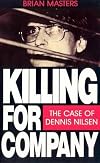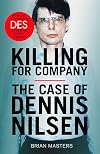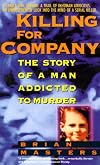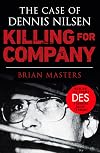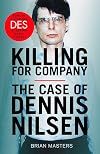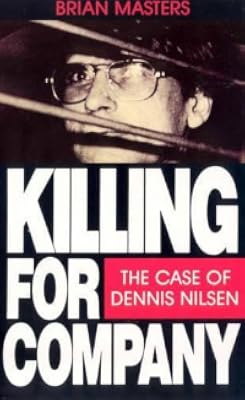
Killing for Company: The Case of Dennis Nilsen
by Brian Masters
On This Page
Description
Dennis Nilsen, who died in May 2018, murdered at least 15 people before his arrest in 1983. This groundbreaking criminal study of his killings was written with Nilsen's full cooperation, resulting in a fascinating - and horrifying - portrait of the man who worshipped death. In February 1983, residents of Muswell Hill had been plagued by blocked drains. When a plumber was called to investigate, he discovered a large blockage of biological material. To his horror, it appeared to be formed of show more human flesh and bones.The next day, local resident Dennis Nilsen was arrested. 'Are we talking about one body or two?' a detective asked. Nilsen replied 'Fifteen or sixteen, since 1978. I'll tell you everything. 'Within days he had confessed to fifteen gruesome murders over a period of four years. His victims, mostly young gay men at a time when society cared little for them, had never been missed. Brian Masters, with Nilsen's full cooperation, has produced a unique study of a murderer's mind, essential reading for true crime aficionados. show lessTags
Recommendations












Member Reviews
This disturbing book about a serial killer (published within a year of Nilsen's trial and conviction) is to be taken seriously. It does not hide the dreadful details of Nilsen's run of fifteen (possibly twelve) murders over six years but it does not do so to excite or horrify for the sake of doing so.
Brian Masters, whose first biographies were of French literary figures and the aristocracy, turned to serial killers (he later produced works on Jeffrey Dahmer and Rosemary West) with this book when he decided to contact, perhaps naively, the killer on remand to see if he would co-operate.
Nilsen was very much the co-operating type. As soon as he was arrested, he more than spilled the beans to the police interviewers. He poured out every show more detail he could remember whether he embellished from faulty memory or not. Where facts could be checked, they generally did.
There was never any question that he 'did it' even if only six counts of murder and two counts of attempted murder were actually on the charge sheet but only whether his 'doing it' represented a form of diminished responsibility or not under English law.
As a case study in 'psychopathic' (although Masters rightly has a problem with this designation) behaviour, it is stunning even if (to be honest) I share the view of some critics that perhaps Masters sometimes took the narcissistic Nilsen too much at face value.
The complaint is not that Masters is 'too sympathetic' to Nilsen the person but that he may have become a little too sympathetic (from a social point of view) to the world view of the 'semi-autistic' (his term) serial killer who perhaps might not be able to be anything other than he is.
Nevertheless that implied 'sotto voce' quality of being prepared to listen to a man who called himself a monster enabled Master to get access to a huge amount of information on the strange mind that presented itself to the court and which clearly enjoyed the passion of killing.
Masters' judgements are subtle and generally wise. He works hard to be detached without going to extremes of moral outrage or excessive sympathy. He gives the victims their due. He allows us to judge whether Nilsen's rationality was that of M. Verdoux in his social critiques.
Nilsen was quite clearly a killer who enjoyed killing and did so 'for company' - that is, in order to deal with an existential loneliness experienced by other 'semi-autistic' people whose world falls apart and then who is presented with new possibilities - but he was far more complex than that.
For example, like many people of his type who do not go on to kill, he was a model citizen in many ways - a hardworking active trades unionist, committed civil servant and social justice activist 'avant la lettre' who failed to be promoted because of his personality and not because of his work.
His world fell apart on work issues. An impulsive murder in 1978 gave him some kind of outlet, a pleasure such as nothing else could give him even as he knew what he did was wrong. But the 'wrongness' was second order to the pleasure and so, after a year, he killed again.
Once his second killing had taken place at the end of 1979, the constraints were removed and 1980 saw six (five in the last half of the year), four in 1981, two in 1982 and the final one in January 1983 when he was caught. Eight were never identified. Three may have been fabricated.
His ability to kill was partly a matter of his own true nature allowed out of its social box of discipline (self-imposed discipline is often important to psychopaths) but also of social circumstance - the London of the depressed early 1980s with is loners and runaways.
The killings were about power rather than sex although there were necrophiliac aspects to the murders and undoubtedly a dark gay eroticism in a period that was still very difficult for homosexuals - legal but still often despised and treated as outcasts.
It is probable that many of the victims were provincial runaways of confused sexuality as much as gay who were coming to London because it offered more hope of acceptance than some provincial back water. However, not all were male prostitutes or addicts or vagrants.
One suspects that the delusion that he was 'helping' his victims out of a miserable life may have had some strength to it but it was a delusion. Some victims escaped at great risk to himself because the mood was not right for a killing. Others came to his flat and left without harm.
There was an apparent randomness that was nothing of the kind. Nilsen needed just the right conditions to take pleasure in his private ritual killing and his recklessness on occasions was the recklessnes not of the stupid man but the man who had become a void, beyond depression.
There are very few such detailed sets of raw material (direct confession and detailed diary writings and interviews) available to analysts of crime although there are other similar cases, all telling their tale with a mix of narcissism, manipulation of the reader and honesty that is unnerving.
Nilsen liked to write poetry about his 'feelings' and experiences (not actually that bad though we would like them to be otherwise) and was happy to draw (badly) artistic representations of his crimes. Disturbingly it seems that writing poetry is a common attribute of serial killers.
All in all, I felt this was an important book and that Masters, a sensitive bisexual writer (as Nilsen was bisexual), gives us the raw material to make a judgement that is not necessarily his. I felt that if he was 'simpatico' to the killer it was to his oddball aspect because Masters too is an oddball.
I may be wrong but, as Masters spends a great deal of time on Nilsen's unstable working class origins, this may reflect his own experiences of similar instability. I think this helps give us insights into the killer without suggesting that oddball instability must result in killing.
Masters is absolutely right to suggest that we are all truly unknowable and that includes Nilsen. I saw a man who was 'psychopathic', manipulative and taking everyone for a ride to the end but also complex and not a monster but human-all-too-human
The 'problem of the psychopath' (bad term though that is) is one of the most important for us as a species because these people are very much part of the human mix and are all around us - only a very few of them have means and motive to become truly dangerous.
Masters allows us to see that means in the Nilsen case were as important as motive. Once the pleasure of killing is discovered, the serial killer becomes unstoppable until he is stopped by outside forces - he often wants to be stopped because he cannot stop himself.
It is as if a psychic tension builds up that can only be relieved by some ritual act (this is probably not an alien idea to many of reading this review). In Nilsen's case, on at least twelve occasions, psychic tension associated with music and alcohol was relieved through ritualised murder.
The questions is how to stop the serial killer before they start. This suggests both that society does not push these semi-autistic people into a corner and that society structures itself so that runaways and social flotsam are not permitted to be lost in society's cracks.
Nilsen could kill (once he had a taste for it) because he knew where to pick up people with no connections who could not be tracked (not so easy nowadays thanks to technology) or missed and because no one questioned or investigated bad smells in a flat or strange bonfires.
But not pushing these people into a corner might be equally important which might mean a degree of working around psychopaths as much as containing them through surveillance. They like rules so give them rules and then watch them like a hawk.
In the end, Nilsen was caught because the human remains he flushed down the toilet bunged up the drains and he came quietly. He was not unintelligent and part of his intelligence was to know when he was beat and that his impulsive behaviour had to reach a terminus.
At his trial (a full chapter that centres on the debate about diminished responsibility), neither jury nor judge were convinced by defence arguments that his impulsive killing was a mental disorder rather than a rational act. That common sense judgment has to be right.
The alternative would be to give 'criminal psychopaths' a free pass (and would they not exploit that!) and have them out on the streets much sooner than society can bear. However, the social judgment does hide a brutal reality - these people have brains wired up differently from ours.
Since 1985, the problem of the psychopath continues to be swept under the table. On the one hand, like paedophiles, they cannot help what they are. They are part of the general human condition and technically equal in holding fundamental rights. Most do no harm and many are highly productive.
The fashionable view is to avoid the problem by insisting that there is no problem until one of them does something outrageous or by asserting that society must be structured as if they did not exist or to treat the extreme examples as sports or rareties instead of the tip of a potential iceberg.
This book won't solve the problem (it may not be soluable in human society) but it will provide a very thoughtful account of a person who was not stupid, who had a brain wired up in a certain way, had certain life experiences and was then given the means to indulge himself in his greatest joy. show less
Brian Masters, whose first biographies were of French literary figures and the aristocracy, turned to serial killers (he later produced works on Jeffrey Dahmer and Rosemary West) with this book when he decided to contact, perhaps naively, the killer on remand to see if he would co-operate.
Nilsen was very much the co-operating type. As soon as he was arrested, he more than spilled the beans to the police interviewers. He poured out every show more detail he could remember whether he embellished from faulty memory or not. Where facts could be checked, they generally did.
There was never any question that he 'did it' even if only six counts of murder and two counts of attempted murder were actually on the charge sheet but only whether his 'doing it' represented a form of diminished responsibility or not under English law.
As a case study in 'psychopathic' (although Masters rightly has a problem with this designation) behaviour, it is stunning even if (to be honest) I share the view of some critics that perhaps Masters sometimes took the narcissistic Nilsen too much at face value.
The complaint is not that Masters is 'too sympathetic' to Nilsen the person but that he may have become a little too sympathetic (from a social point of view) to the world view of the 'semi-autistic' (his term) serial killer who perhaps might not be able to be anything other than he is.
Nevertheless that implied 'sotto voce' quality of being prepared to listen to a man who called himself a monster enabled Master to get access to a huge amount of information on the strange mind that presented itself to the court and which clearly enjoyed the passion of killing.
Masters' judgements are subtle and generally wise. He works hard to be detached without going to extremes of moral outrage or excessive sympathy. He gives the victims their due. He allows us to judge whether Nilsen's rationality was that of M. Verdoux in his social critiques.
Nilsen was quite clearly a killer who enjoyed killing and did so 'for company' - that is, in order to deal with an existential loneliness experienced by other 'semi-autistic' people whose world falls apart and then who is presented with new possibilities - but he was far more complex than that.
For example, like many people of his type who do not go on to kill, he was a model citizen in many ways - a hardworking active trades unionist, committed civil servant and social justice activist 'avant la lettre' who failed to be promoted because of his personality and not because of his work.
His world fell apart on work issues. An impulsive murder in 1978 gave him some kind of outlet, a pleasure such as nothing else could give him even as he knew what he did was wrong. But the 'wrongness' was second order to the pleasure and so, after a year, he killed again.
Once his second killing had taken place at the end of 1979, the constraints were removed and 1980 saw six (five in the last half of the year), four in 1981, two in 1982 and the final one in January 1983 when he was caught. Eight were never identified. Three may have been fabricated.
His ability to kill was partly a matter of his own true nature allowed out of its social box of discipline (self-imposed discipline is often important to psychopaths) but also of social circumstance - the London of the depressed early 1980s with is loners and runaways.
The killings were about power rather than sex although there were necrophiliac aspects to the murders and undoubtedly a dark gay eroticism in a period that was still very difficult for homosexuals - legal but still often despised and treated as outcasts.
It is probable that many of the victims were provincial runaways of confused sexuality as much as gay who were coming to London because it offered more hope of acceptance than some provincial back water. However, not all were male prostitutes or addicts or vagrants.
One suspects that the delusion that he was 'helping' his victims out of a miserable life may have had some strength to it but it was a delusion. Some victims escaped at great risk to himself because the mood was not right for a killing. Others came to his flat and left without harm.
There was an apparent randomness that was nothing of the kind. Nilsen needed just the right conditions to take pleasure in his private ritual killing and his recklessness on occasions was the recklessnes not of the stupid man but the man who had become a void, beyond depression.
There are very few such detailed sets of raw material (direct confession and detailed diary writings and interviews) available to analysts of crime although there are other similar cases, all telling their tale with a mix of narcissism, manipulation of the reader and honesty that is unnerving.
Nilsen liked to write poetry about his 'feelings' and experiences (not actually that bad though we would like them to be otherwise) and was happy to draw (badly) artistic representations of his crimes. Disturbingly it seems that writing poetry is a common attribute of serial killers.
All in all, I felt this was an important book and that Masters, a sensitive bisexual writer (as Nilsen was bisexual), gives us the raw material to make a judgement that is not necessarily his. I felt that if he was 'simpatico' to the killer it was to his oddball aspect because Masters too is an oddball.
I may be wrong but, as Masters spends a great deal of time on Nilsen's unstable working class origins, this may reflect his own experiences of similar instability. I think this helps give us insights into the killer without suggesting that oddball instability must result in killing.
Masters is absolutely right to suggest that we are all truly unknowable and that includes Nilsen. I saw a man who was 'psychopathic', manipulative and taking everyone for a ride to the end but also complex and not a monster but human-all-too-human
The 'problem of the psychopath' (bad term though that is) is one of the most important for us as a species because these people are very much part of the human mix and are all around us - only a very few of them have means and motive to become truly dangerous.
Masters allows us to see that means in the Nilsen case were as important as motive. Once the pleasure of killing is discovered, the serial killer becomes unstoppable until he is stopped by outside forces - he often wants to be stopped because he cannot stop himself.
It is as if a psychic tension builds up that can only be relieved by some ritual act (this is probably not an alien idea to many of reading this review). In Nilsen's case, on at least twelve occasions, psychic tension associated with music and alcohol was relieved through ritualised murder.
The questions is how to stop the serial killer before they start. This suggests both that society does not push these semi-autistic people into a corner and that society structures itself so that runaways and social flotsam are not permitted to be lost in society's cracks.
Nilsen could kill (once he had a taste for it) because he knew where to pick up people with no connections who could not be tracked (not so easy nowadays thanks to technology) or missed and because no one questioned or investigated bad smells in a flat or strange bonfires.
But not pushing these people into a corner might be equally important which might mean a degree of working around psychopaths as much as containing them through surveillance. They like rules so give them rules and then watch them like a hawk.
In the end, Nilsen was caught because the human remains he flushed down the toilet bunged up the drains and he came quietly. He was not unintelligent and part of his intelligence was to know when he was beat and that his impulsive behaviour had to reach a terminus.
At his trial (a full chapter that centres on the debate about diminished responsibility), neither jury nor judge were convinced by defence arguments that his impulsive killing was a mental disorder rather than a rational act. That common sense judgment has to be right.
The alternative would be to give 'criminal psychopaths' a free pass (and would they not exploit that!) and have them out on the streets much sooner than society can bear. However, the social judgment does hide a brutal reality - these people have brains wired up differently from ours.
Since 1985, the problem of the psychopath continues to be swept under the table. On the one hand, like paedophiles, they cannot help what they are. They are part of the general human condition and technically equal in holding fundamental rights. Most do no harm and many are highly productive.
The fashionable view is to avoid the problem by insisting that there is no problem until one of them does something outrageous or by asserting that society must be structured as if they did not exist or to treat the extreme examples as sports or rareties instead of the tip of a potential iceberg.
This book won't solve the problem (it may not be soluable in human society) but it will provide a very thoughtful account of a person who was not stupid, who had a brain wired up in a certain way, had certain life experiences and was then given the means to indulge himself in his greatest joy. show less
Verily, Brian Masters hath woven a tale most dark and grim in "Killing for Company". The chronicle of Dennis Nilsen's foul deeds, that took hold in London in the days of yore, doth strike terror into the heart of even the stoutest reader. Masters' prose is as eloquent as a sonnet, yet as piercing as a dagger. The machinations of Nilsen's mind are wrought with such depth that it doth cause one to ponder the very nature of man. This tome is not for the faint of spirit, but for those who seek to delve into the darkest corners of the human psyche, it is a work of great substance.
Excellent and detailed account of serial killer Nilsen. Divided into chapters covering discrete stages of his life, Origins, Childhood, Army etc right through to Trial and a subsequent and final chapter entitled Answers. The tone of the book is balanced and fairly objective. Due to the level of detail, particularly that concerning his childhood, the young Nilsen elicits some sympathy but the older one ultimately defies any understanding. Ostensibly, Nilsen killed (according to himself) in order to prevent people he liked from leaving him. The exploration of his history although fascinating fails to adequately explain, to me at least, this assertion nor does the trial which is most interesting for the clashes between psychiatrists and show more lawyers. The last chapter, Answers, allows author Brian Masters to take Nilsen's crimes and discuss them within a range of contexts including comparisons with other serial killers. This chapter was fascinating but ultimately a full explanation for Nilsen remains elusive. show less
Dennis Nielsen was one of the most famous British serial killer. His biography is not the easiest to read but provides a unique insight to the mind of a psychopath`s inner logic.
PS. The miniseries "Des" starring the brilliant David Tennant is a must to see!
PS. The miniseries "Des" starring the brilliant David Tennant is a must to see!
Alas I did not write a review back then but I did gave it 5 stars and I remember that I liked it.
---------------------------------------------------------------------
ETA Checked and I gave it 9 out of 10 so not really 5 stars.
Decided to re read and finished reading yesterday. Now after having read true crime books for 15 years I think I am more experienced now then when I first started reading about about this subject.
That being said I would not give this book 5 stars again. Yes this book is filled with information about the murder and go's very deep into Nilsen's psyche. The author and the killer became friends which makes for interesting reading but there is one thing missing... The victims story.
First of all I did not like that the show more author jumped about. I skipped the first 2 chapters called preface and arrest and started with origins cause even though I knew a bit of this case I like my tc books in chronological order.First all was fine but then all of a sudden the author began about all the men Nilsen killed and some details and then jump back.
I felt there was a lack of interests for the victims. All the author cared about to seems to me was knowing more about Nilsen. So I felt he was biased.
Another thing which I do not blame the author back then, not all the victims were known and especially the first victim the so called Irish guy was Nilsen's first kill of which he fantasized about.
In 2006 I think they thanks to DNA? discovered who the victim was and he was not 18/19 runaway as Nilsen told Masters and the cops, but a 14 year old innocent boy.
Curious to find out more about the victims.
All in all even though Nilsen is known as the man who killed because he was lonely, like Dahmer in a way, I still think he was a selfish control freak and loved the control and am not so sure he was ever sorry.
So I am going to change this to 4 stars. show less
---------------------------------------------------------------------
ETA Checked and I gave it 9 out of 10 so not really 5 stars.
Decided to re read and finished reading yesterday. Now after having read true crime books for 15 years I think I am more experienced now then when I first started reading about about this subject.
That being said I would not give this book 5 stars again. Yes this book is filled with information about the murder and go's very deep into Nilsen's psyche. The author and the killer became friends which makes for interesting reading but there is one thing missing... The victims story.
First of all I did not like that the show more author jumped about. I skipped the first 2 chapters called preface and arrest and started with origins cause even though I knew a bit of this case I like my tc books in chronological order.First all was fine but then all of a sudden the author began about all the men Nilsen killed and some details and then jump back.
I felt there was a lack of interests for the victims. All the author cared about to seems to me was knowing more about Nilsen. So I felt he was biased.
Another thing which I do not blame the author back then, not all the victims were known and especially the first victim the so called Irish guy was Nilsen's first kill of which he fantasized about.
In 2006 I think they thanks to DNA? discovered who the victim was and he was not 18/19 runaway as Nilsen told Masters and the cops, but a 14 year old innocent boy.
Curious to find out more about the victims.
All in all even though Nilsen is known as the man who killed because he was lonely, like Dahmer in a way, I still think he was a selfish control freak and loved the control and am not so sure he was ever sorry.
So I am going to change this to 4 stars. show less
Serial killer book.
Ratings
Members
- Recently Added By
Lists

True Crime Books
62 works; 15 members

True Crime
156 works; 1 member
Author Information

34+ Works 891 Members
Awards and Honors
Common Knowledge
- Canonical title
- Killing for Company: The Case of Dennis Nilsen
- Original publication date
- 1985
- People/Characters
- Dennis Nilsen
- Important places
- London, England, UK; Cricklewood, London, England, UK; Muswell Hill, London, England, UK
- First words
- The north London suburb of Muswell Hill is middle class, residential, and almost intolerably placid.
- Canonical DDC/MDS
- 364.15230924
Classifications
- Genres
- General Nonfiction, Nonfiction, Biography & Memoir
- DDC/MDS
- 364.15230924 — Society, government, & culture Social problems and social services Crime Criminal offenses Offenses against the person Homicide Murder History, geographic treatment, biography Biography
- LCC
- HV6248 .N58 .M37 — Social sciences Social pathology. Social and public welfare. Criminology Social pathology. Social and public welfare. Criminology Criminal classes
- BISAC
Statistics
- Members
- 320
- Popularity
- 99,285
- Reviews
- 6
- Rating
- (3.74)
- Languages
- English, German
- Media
- Paper, Audiobook, Ebook
- ISBNs
- 16
- ASINs
- 1