
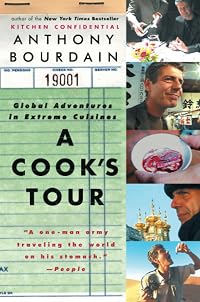
A Cook's Tour: Global Adventures in Extreme Cuisines
by Anthony Bourdain
On This Page
Description
From Japan where he eats traditional fugu, a poisonous blowfish that can only be prepared by specially licensed chefs, to a delectable snack in the Mecong Delta, follows the author as he embarks on a quest around the world to find the ultimate meal.Tags
Recommendations
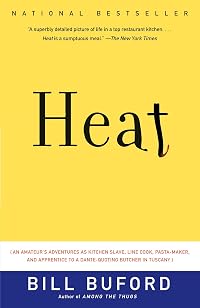
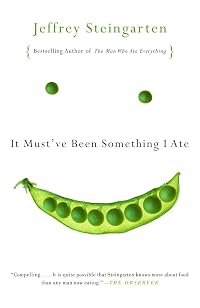
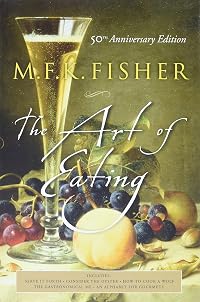
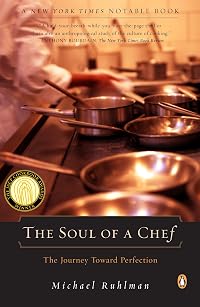



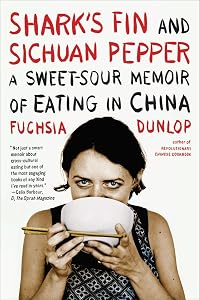
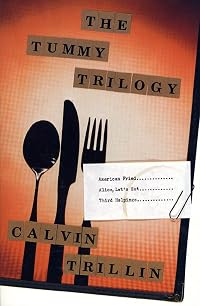
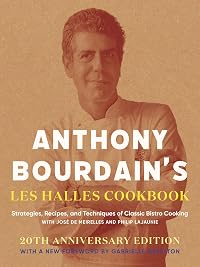
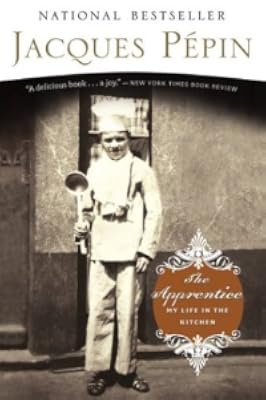




Member Recommendations
Member Reviews
Although I've watched Anthony Bourdain on TV, this is the first of his books that I've read. (Most of my familiarity with him is from No Reservations and The Taste, where I've very much enjoyed his cynical sense of humor and appreciation for good food without pretentions.)
Published in 2001, this is the narrative of Mr. Bourdain's experiences while filming the first season of A Cook's Tour, immediately after the success of [b:Kitchen Confidential: Adventures in the Culinary Underbelly|33313|Kitchen Confidential Adventures in the Culinary Underbelly|Anthony Bourdain|https://i.gr-assets.com/images/S/compressed.photo.goodreads.com/books/1433739086l/33313._SY75_.jpg|4219] and during his first marriage to Nancy Putkoski, his high school show more girlfriend, who he portrays as a no-nonsense woman who was ready to throat punch the film crew who followed him on his (mostly solo) adventures.
My thoughts:
The non-chronological organization didn't really work for me. We begin in Vietnam and revisit that country at various times, but the chapters, written as stand-alone essays, zip through Mr. Bourdain's travels: Portugal, Cambodia, Scotland, Mexico, etc., without any discernable organization.
Mr. Bourdain describes himself at various times throughout the book as being manic-depressive. Whether that diagnosis was ever professionally confirmed, it's certainly not contradicted by the way his life ended. The organization of the book concentrates the depressive chapters in the first half and the manic in the second half. This made the first half very difficult for me to read, while the second half was a delight. I struggled to get through Mr. Bourdain's generational guilt over Vietnam, his omnivore's dilemma over the violent death of a Portuguese pig, his (understandable) disgust at Cambodian and Russian corruption. Only a glowing review from a GR friend kept me reading. But then Mr. Bourdain's love for the UK and the Mexican village from which most of his kitchen staff come, and all the glorious upside of Vietnamese cuisine completely redeemed my reading experience. (A nearly two-decade-old critique of some of the chefs I know from cooking shows -- Jamie Oliver, Gordon Ramsey, Eric Ripert, Thomas Keller, etc -- is highly entertaining.)
The unattainable objective of this book journey is to find a perfect meal. Along the way, Mr. Bourdain finds many great meals, which he describes in detail: lots of meat, especially the bits that take time and skill to make edible, lots of super-fresh seafood, the dishes passed down and perfected through countless generations.
There are many diatribes along the way about vegan "Nazis," the EU, anyone who would limit his personal freedom to eat whatever he damn well wants to eat (and smoke wherever he damn well wants to smoke).
I struggled with a rating for this book. The first half was a 2 or 3, the second half a 4 or 5. Usually my 4-star ratings come with a hearty recommendation. This one comes with a few disclaimers. If you particularly like global cuisine and/or Mr. Bourdain, you will probably enjoy this book. Otherwise, maybe not so much. show less
Published in 2001, this is the narrative of Mr. Bourdain's experiences while filming the first season of A Cook's Tour, immediately after the success of [b:Kitchen Confidential: Adventures in the Culinary Underbelly|33313|Kitchen Confidential Adventures in the Culinary Underbelly|Anthony Bourdain|https://i.gr-assets.com/images/S/compressed.photo.goodreads.com/books/1433739086l/33313._SY75_.jpg|4219] and during his first marriage to Nancy Putkoski, his high school show more girlfriend, who he portrays as a no-nonsense woman who was ready to throat punch the film crew who followed him on his (mostly solo) adventures.
My thoughts:
The non-chronological organization didn't really work for me. We begin in Vietnam and revisit that country at various times, but the chapters, written as stand-alone essays, zip through Mr. Bourdain's travels: Portugal, Cambodia, Scotland, Mexico, etc., without any discernable organization.
Mr. Bourdain describes himself at various times throughout the book as being manic-depressive. Whether that diagnosis was ever professionally confirmed, it's certainly not contradicted by the way his life ended. The organization of the book concentrates the depressive chapters in the first half and the manic in the second half. This made the first half very difficult for me to read, while the second half was a delight. I struggled to get through Mr. Bourdain's generational guilt over Vietnam, his omnivore's dilemma over the violent death of a Portuguese pig, his (understandable) disgust at Cambodian and Russian corruption. Only a glowing review from a GR friend kept me reading. But then Mr. Bourdain's love for the UK and the Mexican village from which most of his kitchen staff come, and all the glorious upside of Vietnamese cuisine completely redeemed my reading experience. (A nearly two-decade-old critique of some of the chefs I know from cooking shows -- Jamie Oliver, Gordon Ramsey, Eric Ripert, Thomas Keller, etc -- is highly entertaining.)
The unattainable objective of this book journey is to find a perfect meal. Along the way, Mr. Bourdain finds many great meals, which he describes in detail: lots of meat, especially the bits that take time and skill to make edible, lots of super-fresh seafood, the dishes passed down and perfected through countless generations.
There are many diatribes along the way about vegan "Nazis," the EU, anyone who would limit his personal freedom to eat whatever he damn well wants to eat (and smoke wherever he damn well wants to smoke).
I struggled with a rating for this book. The first half was a 2 or 3, the second half a 4 or 5. Usually my 4-star ratings come with a hearty recommendation. This one comes with a few disclaimers. If you particularly like global cuisine and/or Mr. Bourdain, you will probably enjoy this book. Otherwise, maybe not so much. show less
一直很欣賞Anthony Bourdain的節目,在一群永遠正面且歡樂的美食節目中,他的直言不諱(或說毒舌)和挑戰禁忌是異類也是清流。他的書又比同名的節目好看,因為後者礙於電視尺度或政治正確不免有所顧忌。書雖然少了視覺衝擊,但更具感染力和吸引力。
A lot of people first heard about Tony Bourdain with the publication of Kitchen Confidential, the irreverent expose of the restaurant culture that elevated him from being a self-confessed mediocre chef to a celebrated author. Although I have since laughed my way through that book, I discovered Bourdain through his travel- and food-oriented show No Reservations. I love his sardonic take on the myriad dining scenes throughout the world and the generous way he treats cooks who ply their craft with respect and dedication, regardless of their comparative station.
That is also the reason I enjoyed reading A Cook’s Tour so much. This book, which was published in conjunction with a television series of the same name, is basically a show more first-generation version of No Reservations. Bourdain’s passions for both cooking and traveling the world first came together in this project and the result is always interesting and occasionally fascinating. His search for the “perfect” meal takes him to the remote reaches of such places as Cambodia, Russia, Portugal, Japan, Scotland, Mexico, and the Sahara; the chapter on Viet Nam is especially good and chronicles the origin of the author’s well-known love affair with that country. As always, Bourdain’s writing is sharp and insightful and, at times, surprisingly beautiful.
This is a very different book than Kitchen Confidential but one that I found to be a great deal more satisfying. It does not produce the kind of sound-bite moments of that earlier work—the whole “don’t order fish on Mondays” thing, for instance—but it was written far more from the heart. Bourdain may have cooked in second-tier restaurants, but he is a first-class travel and food writer and that talent is fully realized here. show less
That is also the reason I enjoyed reading A Cook’s Tour so much. This book, which was published in conjunction with a television series of the same name, is basically a show more first-generation version of No Reservations. Bourdain’s passions for both cooking and traveling the world first came together in this project and the result is always interesting and occasionally fascinating. His search for the “perfect” meal takes him to the remote reaches of such places as Cambodia, Russia, Portugal, Japan, Scotland, Mexico, and the Sahara; the chapter on Viet Nam is especially good and chronicles the origin of the author’s well-known love affair with that country. As always, Bourdain’s writing is sharp and insightful and, at times, surprisingly beautiful.
This is a very different book than Kitchen Confidential but one that I found to be a great deal more satisfying. It does not produce the kind of sound-bite moments of that earlier work—the whole “don’t order fish on Mondays” thing, for instance—but it was written far more from the heart. Bourdain may have cooked in second-tier restaurants, but he is a first-class travel and food writer and that talent is fully realized here. show less
Certainly entertaining, with Bourdain's trademark attitude. At times, though, Bourdain comes across as a hypocrite. (He tries to use the old "people are starving in Africa" line to justify his own extravagances.) This is not a good look. As he himself admits, he has "sold his soul" to the television devil.
> I had, you see, sold my soul to the devil. ‘We’ll follow you around,’ said the nice man from the television production company. ‘No lighting equipment, no boom mikes, no script. It’ll be very unobtrusive. Just be yourself.’ … I’ve had a lot of fun trashing Emeril and Bobby and the Food Network’s stable of stars over the last few years. God, I hated their shows. Now I’ve gone over to the dark side, too. Watching show more Emeril bellowing catchphrases at his wildly barking seal-like studio audience, I find myself feeling empathy for the guy. Because I know, I think, how it happened. One sells one’s soul in increments, slowly, over time. … But when you hear me carping about how lonely and sick and frightened I am, holed up in some Cambodian backwater, know that there’s a television crew a few doors down the hall. That changes things.
> Today, while lesser mortals cower around their veggie plates in hemp sandals, cringing at the thought of contamination by animal product, St. John’s devotees – and there are a lot of them – flock to his plain, undecorated dining room to revel in roasted marrow, rolled spleen, grilled ox heart, braised belly, and fried pig’s tails. It was a very ballsy position to take back in the early nineties – and it’s an even ballsier proposition today, when the Evil Axis Powers of Health Nazis, Vegetarian Taliban, European Union bureaucrats, antismoking crystal worshipers, PETA fundamentalists, fast-food theme-restaurant moguls, and their sympathizers are consolidating their fearful hold on popular dining habits and practices.
> The enemy wants your cheese. They want you never again to risk the possibility of pleasure with a reeking, unpasteurized Stilton, an artisanal wine, an oyster on the half shell. They have designs on stock. Stock! (Bones, you know – can’t have that.) The backbone of everything good! They want your sausage. And your balls, too. In short, they want you to feel that same level of discomfort approaching a plate of food that so many used to feel about sex. … Do I overstate the case? Go to Wisconsin. Spend an hour in an airport or a food court in the Midwest; watch the pale, doughy masses of pasty-faced, Pringle-fattened, morbidly obese teenagers. Then tell me I’m worried about nothing. These are the end products of the Masterminds of Safety and Ethics, bulked up on cheese that contains no cheese, chips fried in oil that isn’t really oil, overcooked gray disks of what might once upon a time have been meat, a steady diet of Ho-Hos and muffins, butterless popcorn, sugarless soda, flavorless light beer. A docile, uncomprehending herd, led slowly to a dumb, lingering, and joyless slaughter.
> It was difficult for me to be polite (though I was outnumbered). I’d recently returned from Cambodia, where a chicken can be the difference between life and death. These people in their comfortable suburban digs were carping about cruelty to animals but suggesting that everyone in the world, from suburban Yuppie to starving Cambodian cyclo driver, start buying organic vegetables and expensive soy substitutes. To look down on entire cultures that’ve based everything on the gathering of fish and rice seemed arrogant in the extreme.
> And the hypocrisy of it all pissed me off. Just being able to talk about this issue in reasonably grammatical language is a privilege, subsidized in a yin/yang sort of a way, somewhere, by somebody taking it in the neck. Being able to read these words, no matter how stupid, offensive, or wrongheaded, is a privilege, your reading skills the end product of a level of education most of the world will never enjoy. Our whole lives – our homes, the shoes we wear, the cars we drive, the food we eat – are all built on a mountain of skulls. Meat, say the PETA folks, is ‘murder.’ And yes, the wide world of meat eating can seem like a panorama of cruelty at times. But is meat ‘murder’? Fuck no. … Hide in your fine homes and eat vegetables, I was thinking. Put a Greenpeace or NAACP bumper sticker on your Beemer if it makes you feel better (so you can drive your kids to their all-white schools). Save the rainforest – by all means – so maybe you can visit it someday, on an ecotour, wearing comfortable shoes made by twelve-year-olds in forced labor. Save a whale while millions are still sold into slavery, starved, fucked to death, shot, tortured, forgotten. When you see cute little kids crying in rubble next to Sally Struthers somewhere, be sure to send a few dollars. show less
> I had, you see, sold my soul to the devil. ‘We’ll follow you around,’ said the nice man from the television production company. ‘No lighting equipment, no boom mikes, no script. It’ll be very unobtrusive. Just be yourself.’ … I’ve had a lot of fun trashing Emeril and Bobby and the Food Network’s stable of stars over the last few years. God, I hated their shows. Now I’ve gone over to the dark side, too. Watching show more Emeril bellowing catchphrases at his wildly barking seal-like studio audience, I find myself feeling empathy for the guy. Because I know, I think, how it happened. One sells one’s soul in increments, slowly, over time. … But when you hear me carping about how lonely and sick and frightened I am, holed up in some Cambodian backwater, know that there’s a television crew a few doors down the hall. That changes things.
> Today, while lesser mortals cower around their veggie plates in hemp sandals, cringing at the thought of contamination by animal product, St. John’s devotees – and there are a lot of them – flock to his plain, undecorated dining room to revel in roasted marrow, rolled spleen, grilled ox heart, braised belly, and fried pig’s tails. It was a very ballsy position to take back in the early nineties – and it’s an even ballsier proposition today, when the Evil Axis Powers of Health Nazis, Vegetarian Taliban, European Union bureaucrats, antismoking crystal worshipers, PETA fundamentalists, fast-food theme-restaurant moguls, and their sympathizers are consolidating their fearful hold on popular dining habits and practices.
> The enemy wants your cheese. They want you never again to risk the possibility of pleasure with a reeking, unpasteurized Stilton, an artisanal wine, an oyster on the half shell. They have designs on stock. Stock! (Bones, you know – can’t have that.) The backbone of everything good! They want your sausage. And your balls, too. In short, they want you to feel that same level of discomfort approaching a plate of food that so many used to feel about sex. … Do I overstate the case? Go to Wisconsin. Spend an hour in an airport or a food court in the Midwest; watch the pale, doughy masses of pasty-faced, Pringle-fattened, morbidly obese teenagers. Then tell me I’m worried about nothing. These are the end products of the Masterminds of Safety and Ethics, bulked up on cheese that contains no cheese, chips fried in oil that isn’t really oil, overcooked gray disks of what might once upon a time have been meat, a steady diet of Ho-Hos and muffins, butterless popcorn, sugarless soda, flavorless light beer. A docile, uncomprehending herd, led slowly to a dumb, lingering, and joyless slaughter.
> It was difficult for me to be polite (though I was outnumbered). I’d recently returned from Cambodia, where a chicken can be the difference between life and death. These people in their comfortable suburban digs were carping about cruelty to animals but suggesting that everyone in the world, from suburban Yuppie to starving Cambodian cyclo driver, start buying organic vegetables and expensive soy substitutes. To look down on entire cultures that’ve based everything on the gathering of fish and rice seemed arrogant in the extreme.
> And the hypocrisy of it all pissed me off. Just being able to talk about this issue in reasonably grammatical language is a privilege, subsidized in a yin/yang sort of a way, somewhere, by somebody taking it in the neck. Being able to read these words, no matter how stupid, offensive, or wrongheaded, is a privilege, your reading skills the end product of a level of education most of the world will never enjoy. Our whole lives – our homes, the shoes we wear, the cars we drive, the food we eat – are all built on a mountain of skulls. Meat, say the PETA folks, is ‘murder.’ And yes, the wide world of meat eating can seem like a panorama of cruelty at times. But is meat ‘murder’? Fuck no. … Hide in your fine homes and eat vegetables, I was thinking. Put a Greenpeace or NAACP bumper sticker on your Beemer if it makes you feel better (so you can drive your kids to their all-white schools). Save the rainforest – by all means – so maybe you can visit it someday, on an ecotour, wearing comfortable shoes made by twelve-year-olds in forced labor. Save a whale while millions are still sold into slavery, starved, fucked to death, shot, tortured, forgotten. When you see cute little kids crying in rubble next to Sally Struthers somewhere, be sure to send a few dollars. show less
Bourdain writes just as he delivers his monologues on his TV shows, no BS, gets straight to the point, says what he feels in his gut. The book is a series of vignettes, bouncing around the world in sixteen chapters, but some places like Vietnam he revisits. It may be a cook's tour, but food is really just his path to the culture and history of a place. He's a travel writer in his own right, bringing his own particular experience and his unique optic to new places. However surly and rebellious he may come off, he really models what a good traveller should be: friendly, humble, curious, respectful, and honest, especially about himself. The book isn't revelatory, but it is fun to experience these places and cultures as Tony does, with a show more heart wide open and a mind similarly disposed. show less
It's Bourdain - what can I say except that he writes with an infectious conviction that doesn't pull punches and always goes for the jugular. These stories are write-ups of his tv episodes and exploits so if you, like me, miss the guy and his poignant cultural observations ... you can hear his voice coming off the pages.
Well worth a weekend reading binge.
Well worth a weekend reading binge.
Just like his TV show: a bit irreverent, a bit audacious -- but I'm selfishly interested mostly in those episodes that take place somewhere I've traveled. The others....are usually good but less compelling for me. Probably because Bourdain's show (and his writing) isn't meant to be an intro to a new country or culture, but is focused more specifically on exploring food (which CAN be a big part of a place's culture) and a bit of adventure -- I feel like Bourdain is like icing on the cake. He's awesome don't get me wrong, I'm a big fan -- but without the context of the cake, you can't really just eat spoonful after spoonful of icing. Alas. Three stars because I've only been to half the places in the book, which is to say I skipped through show more most of the other sections. Is that his fault? No, but I can't give more stars to a book that I read in such a piecemeal way. But I loved those pieces! show less
Members
- Recently Added By
Author Information

47+ Works 25,320 Members
Anthony Bourdain was born in New York City on June 25, 1956. He graduated from the Culinary Institute of America in 1978. He wrote numerous nonfiction books including Kitchen Confidential: Adventures in the Culinary Underbelly, The Nasty Bits, A Cook's Tour, No Reservations: Around the World on an Empty Stomach, Medium Raw, and Appetites: A show more Cookbook. He also wrote several works of fiction including the graphic novel Get Jiro! and the comic Anthony Bourdain's Hungry Ghosts. He was the host of several television shows including A Cook's Tour, Anthony Bourdain: No Reservations, The Layover, and Parts Unknown. He committed suicide on June 8, 2018 at the age of 61. (Bowker Author Biography) show less
Some Editions
Awards and Honors
Awards
Series
Belongs to Publisher Series
Work Relationships
Is contained in
Common Knowledge
- Canonical title
- A Cook's Tour: Global Adventures in Extreme Cuisines
- Original title
- A cook's tour
- Original publication date
- 2001-11-19
- People/Characters
- Anthony Bourdain
- Important places
- Portugal; France; Vietnam; Cambodia; Puebla, Mexico; Morocco (show all 10); St. Petersburg, Russia; Scotland, UK; San Francisco, California, USA; Tokyo, Japan
- Related movies
- A Cook's Tour (2002 | IMDb)
- Dedication
- To Nancy
- First words
- Dear Nancy, I'm about as far away from you as I've ever been - a hotel (the hotel, actually, in Pailin, a miserable one-horse dunghole in northwest Cambodia, home to those not-so-adorable scamps, the Khmer Rouge.
- Last words
- (Click to show. Warning: May contain spoilers.)Even here - I use everything.
- Original language
- English
Classifications
- Genres
- Travel, Food & Cooking, General Nonfiction, Biography & Memoir, Nonfiction
- DDC/MDS
- 641.013 — Applied science & technology Home economics & family management Food, Cooking & Recipes / Meals, Picnics standard subdivisions Philosophy and theory [formerly: Epicurism]
- LCC
- TX652.9 .B68 — Technology Home economics Home economics Cooking
- BISAC
Statistics
- Members
- 3,231
- Popularity
- 5,305
- Reviews
- 66
- Rating
- (3.82)
- Languages
- 14 — Chinese, Czech, Danish, Dutch, English, Estonian, Finnish, German, Italian, Norwegian (Bokmål), Polish, Portuguese, Spanish, Swedish
- Media
- Paper, Audiobook, Ebook
- ISBNs
- 40
- UPCs
- 2
- ASINs
- 13