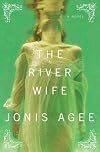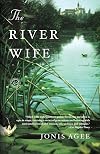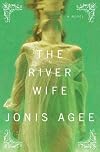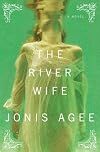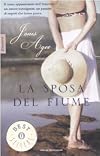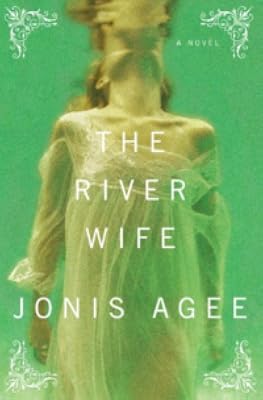
The River Wife
by Jonis Agee
On This Page
Description
Fiction. Literature. Romance. Historical Fiction. HTML:From acclaimed novelist Jonis Agee, whom The New York Times Book Review called “a gifted poet of that dark lushness in the heart of the American landscape,” The River Wife is a sweeping, panoramic story that ranges from the New Madrid earthquake of 1811 through the Civil War to the bootlegging days of the 1930s.When the earthquake brings Annie Lark’s Missouri house down on top of her, she finds herself pinned under the massive show more roof beam, facing certain death. Rescued by French fur trapper Jacques Ducharme, Annie learns to love the strong, brooding man and resolves to live out her days as his “River Wife.”
More than a century later, in 1930, Hedie Rails comes to Jacques’ Landing to marry Clement Ducharme, a direct descendant of the fur trapper and river pirate, and the young couple begin their life together in the very house Jacques built for Annie so long ago. When, night after late night, mysterious phone calls take Clement from their home, a pregnant Hedie finds comfort in Annie’s leather-bound journals. But as she reads of the sinister dealings and horrendous misunderstandings that spelled out tragedy for the rescued bride, Hedie fears that her own life is paralleling Annie’s, and that history is repeating itself with Jacques’ kin.
Among the family’s papers, Hedie encounters three other strong-willed women who helped shape Jacques Ducharme’s life–Omah, the freed slave who took her place beside him as a river raider; his second wife, Laura, who loved money more than the man she married; and Laura and Jacques’ daughter, Maddie, a fiery beauty with a nearly uncontrollable appetite for love. Their stories, together with Annie’s, weave a haunting tale of this mysterious, seductive, and ultimately dangerous man, a man whose hand stretched over generations of women at a bend in the river where fate and desire collide.
The River Wife richly evokes the nineteenth-century South at a time when lives changed with the turn of a card or the flash of a knife. Jonis Agee vividly portrays a lineage of love and heartbreak, passion and deceit, as each river wife comes to discover that blind devotion cannot keep the truth at bay, nor the past from haunting the present. show less
Tags
Recommendations









Member Reviews
Jonis Agee is an ambitious novelist who’ll take a risk. In "The River Wife" she has written a “Western” (how many women writers have tried THAT?) that explores - through the eyes of five very different women - the settlement of a small parcel of land along the Mississippi River in Missouri from 1811, the year of the New Madrid earthquake, until the 1930s.
The life of each woman in this sprawling saga has been touched by her relationship with the French fur-trapper and amoral river pirate Jacques Ducharme. From Annie Lark, the teenager left for dead by her family after the earthquake, who Ducharme rescued and loved, to Hedie Rails, the woman Jacques’ bootlegger grandson would marry in 1930, Agee weaves a tapestry of complex show more themes: isolation, hardship, identity and independence, loyalty and friendship, unspeakable violence and desolation.
Not all the women are as beautifully drawn as Annie Lark and Omah, Jacques’ partner in crime. Laura, Jacques’ second wife, is manipulated more like a paper doll than a human character. (Perhaps I have a bias against gold-diggers?)
The violence in the book may not be suitable for young or squeamish readers.
Agee’s risk pays off. "The River Wife" offers its characters remarkably rich personal histories and explores the consequences of their decisions. The action and uncompromising violence are compelling. If only a thoughtful movie producer would buy this book, we’d be treated to five strong female roles and a potential Oscar-winning male role in a gritty compelling drama. An "Unforgiven" with a feminine twist.
I received this book as part of the LibraryThing Early Reviewer program. I thank Dick and TimmyPal for their invaluable suggestions. show less
The life of each woman in this sprawling saga has been touched by her relationship with the French fur-trapper and amoral river pirate Jacques Ducharme. From Annie Lark, the teenager left for dead by her family after the earthquake, who Ducharme rescued and loved, to Hedie Rails, the woman Jacques’ bootlegger grandson would marry in 1930, Agee weaves a tapestry of complex show more themes: isolation, hardship, identity and independence, loyalty and friendship, unspeakable violence and desolation.
Not all the women are as beautifully drawn as Annie Lark and Omah, Jacques’ partner in crime. Laura, Jacques’ second wife, is manipulated more like a paper doll than a human character. (Perhaps I have a bias against gold-diggers?)
The violence in the book may not be suitable for young or squeamish readers.
Agee’s risk pays off. "The River Wife" offers its characters remarkably rich personal histories and explores the consequences of their decisions. The action and uncompromising violence are compelling. If only a thoughtful movie producer would buy this book, we’d be treated to five strong female roles and a potential Oscar-winning male role in a gritty compelling drama. An "Unforgiven" with a feminine twist.
I received this book as part of the LibraryThing Early Reviewer program. I thank Dick and TimmyPal for their invaluable suggestions. show less
 This review was written for LibraryThing Early Reviewers.
The River Wife is a multi-generational saga about the women involved with a mysterious fur-trapper turned river pirate in 19th century Missouri. This is mainly a romantic adventure novel toggling back and forth between different time periods reminiscent of Diana Gabaldon's Outlander series, although our female protagonists Annie Lark, Omah, Maddie and Heddie have aligned themselves with the proverbial bad guys in this tale. The premise and story structure are interesting with Hedie, our only first person narrator, discovering details of the family history through old diaries, ghosts, and eerie tragic parallels in her own life.
Despite a potentially promising storyline, I unequivocally would not recommend this novel to any serious reader. show more Ms. Agee's writing is inconsistent, uninspired, plodding and devoid of any dramatic tension. She tells us a story (and a rather predictable amateurish one at that); but does not show us the scene, does not show us her characters' hearts or personalities. In fact, even our four main characters have virtually indistinguishable points of view. And although the ostensibly dramatic events of their lives unfold over different historical time periods, the details of the Missouri River fronteir, the end of slavery, the Civil War, and the Depression are almost totally absent from her writing.
Even fans of easy plot driven reading for women are bound to be disappointed as the action scenes are so dispiritedly written they are almost nonsensical. This book seems to be written in a hurry with the best writing at the beginning surrounding Annie Lark and culminating in the night of the dog fight, and rapidly spiralling downward to a lackluster and unconvincing ending surrounding the Gattos and Hedie's husband Clement. I only finished this novel out of a sense of obligation having been selected as an early reviewer. I am sorry to say it was one of the worst books I have ever read. show less
Despite a potentially promising storyline, I unequivocally would not recommend this novel to any serious reader. show more Ms. Agee's writing is inconsistent, uninspired, plodding and devoid of any dramatic tension. She tells us a story (and a rather predictable amateurish one at that); but does not show us the scene, does not show us her characters' hearts or personalities. In fact, even our four main characters have virtually indistinguishable points of view. And although the ostensibly dramatic events of their lives unfold over different historical time periods, the details of the Missouri River fronteir, the end of slavery, the Civil War, and the Depression are almost totally absent from her writing.
Even fans of easy plot driven reading for women are bound to be disappointed as the action scenes are so dispiritedly written they are almost nonsensical. This book seems to be written in a hurry with the best writing at the beginning surrounding Annie Lark and culminating in the night of the dog fight, and rapidly spiralling downward to a lackluster and unconvincing ending surrounding the Gattos and Hedie's husband Clement. I only finished this novel out of a sense of obligation having been selected as an early reviewer. I am sorry to say it was one of the worst books I have ever read. show less
The River Wife by Jonis Agee is a multigenerational, epic novel covering the lives of five women related either by marriage, partnership, or birth to the 19th-century French fur-trapper and river pirate, Jacques Ducharme. These are the stories of Ducharme women—Annie Lark, Laura, Omah, Maddie, and Heide. Their stories cover the period from the great New Madrid earthquake of 1812, through the Civil War, and into the bootlegging era of the 1930s. These women inhabit a wild, harsh land in the boot heel of Tennessee, a difficult unforgiving place. Each Ducharme woman is unique, but they share the same traits of intelligence, beauty and headstrong passion for a better life. Some radiate warmth, gentleness, forgiveness, and loyalty. Others show more hide cunning and manipulation. In the end, each woman falls prey to, and must find some way to deal with, the charm and all-consuming possessive love of Jacques Ducharme—a man who is as charismatic as he is ruthless.
This is not a romance novel. The ecstasy of being in love, the slow process of learning to love, and the utter devastation of being the focus of narcissistic love are central to the text. But the major theme of this novel is more subtle. The five women at the heart of this novel feel chained, and each seeks her own unique path to freedom and self-fulfillment. Some succeed well, others succeed with significant compromise, and some fail. This is a redemptive tale about the life-changing choices that move us toward self-fulfillment. Don't expect these five Ducharme women to be bigger than life; this book is not epic in that definition of the word. These are everyday, fully realistic heroines—women who must survive whatever way they can.
Agee's prose is cinematic. The overall experience is like watching an addictive miniseries. There is a lot happening, with many parallels between the different women. There is danger, violence, suspense, ghostly apparitions, treachery, pirate's treasure, intrigue, and murder—enough to keep almost anyone's interest piqued. Even the famous naturalist John James Audubon makes a brief, stunning appearance and has an important impact on the plot. But don’t expect a fast-paced novel; this is a subtle, slow, lyrical, sensual, and heart-felt novel about what it means to make life-changing choices.
Typically, I shy away from multigenerational novels. But, I had plenty of time, and a desire to find out what all the fuss was about this notable, prize-winning author. So, I let this book take possession of me and I was mesmerized. What I enjoyed best about this book are its many take-your-breath-away, astonishing, wide-screen images—like hidden treasure—so lyrical and lovely that they will probably stick with me for a lifetime. Take, for example, the singularly startling image of crippled, weak, grief-stricken Annie Lark, secured to a chair, resting on a small wooden platform, hoisted up into highest branches of a tall tree, and there, for hours on end gazing out over the far expanses of the flat Mississippi bottomland, feeling the breeze, and closely studying the insects and birds. Here we are spellbound while Annie Lark experiences the first stirrings of freedom and self-discovery. This is powerful stuff. No wonder so many have made so much about this talented author. show less
This is not a romance novel. The ecstasy of being in love, the slow process of learning to love, and the utter devastation of being the focus of narcissistic love are central to the text. But the major theme of this novel is more subtle. The five women at the heart of this novel feel chained, and each seeks her own unique path to freedom and self-fulfillment. Some succeed well, others succeed with significant compromise, and some fail. This is a redemptive tale about the life-changing choices that move us toward self-fulfillment. Don't expect these five Ducharme women to be bigger than life; this book is not epic in that definition of the word. These are everyday, fully realistic heroines—women who must survive whatever way they can.
Agee's prose is cinematic. The overall experience is like watching an addictive miniseries. There is a lot happening, with many parallels between the different women. There is danger, violence, suspense, ghostly apparitions, treachery, pirate's treasure, intrigue, and murder—enough to keep almost anyone's interest piqued. Even the famous naturalist John James Audubon makes a brief, stunning appearance and has an important impact on the plot. But don’t expect a fast-paced novel; this is a subtle, slow, lyrical, sensual, and heart-felt novel about what it means to make life-changing choices.
Typically, I shy away from multigenerational novels. But, I had plenty of time, and a desire to find out what all the fuss was about this notable, prize-winning author. So, I let this book take possession of me and I was mesmerized. What I enjoyed best about this book are its many take-your-breath-away, astonishing, wide-screen images—like hidden treasure—so lyrical and lovely that they will probably stick with me for a lifetime. Take, for example, the singularly startling image of crippled, weak, grief-stricken Annie Lark, secured to a chair, resting on a small wooden platform, hoisted up into highest branches of a tall tree, and there, for hours on end gazing out over the far expanses of the flat Mississippi bottomland, feeling the breeze, and closely studying the insects and birds. Here we are spellbound while Annie Lark experiences the first stirrings of freedom and self-discovery. This is powerful stuff. No wonder so many have made so much about this talented author. show less
This review was written for LibraryThing Early Reviewers.***This review contains mild SPOILERS***
"The River Wife" spans several generations of a southern Missouri family living alongside the Mississippi River, starting with one of the New Madrid earthquakes in 1812, and taking us beyond the Great Depression in the 1930s. I enjoyed this book very much; it kept me turning the pages, even when the events in the story were troubling (which, of course, is to be expected in a book about pioneer life; it was not unusual for people to die sudden and even violent deaths).
In a way, the title is somewhat deceptive, as there is not one, but several "river wives." Really, the story centers around "One-Armed" Jacques Ducharme, a French fur trapper who turns inn-keeper and river pirate. Over the years, the show more story is told by the various women in his life, so it's their stories we can actively experience, although all the way through, Jacques is really the central figure, the one who holds everyone else together over the years. I found it interesting that, in spite of his importance to the story (or perhaps because of it), the author chose not to divulge certain details about this man. We never hear the full story, for example, of how he loses his arm. In a lesser book, this would have seemed like a failing, a "loose end" which was stupidly neglected, but in this case, somehow it worked (and, it was obviously deliberate, not an oversight). We're not supposed to understand him fully, just as none of the women in his life ever could, with the exception perhaps of Omah (but she was good at keeping her own counsel).
The story is well-written, with beautiful, descriptive prose, but not so flowery as to be distracting. Great characters, all of whom are flawed in various ways, their sins ranging from vanity and pride to outright murderous greed. And yet, there were none of the main characters whom I found truly unlikable, or so despicable that I couldn't feel compassion for their trials, or hope for them to succeed in their endeavors (even criminal ones). I also enjoyed the appearance of J.J. Audubon, who's something of a personal hero for me.
Probably my favorite thing about this book is the way it kept it's pace and flavor throughout, something which historical "sagas" like this often fail to do, in my experience. I tend to really enjoy the early parts of the story, but as it comes closer to the present day, the narrative speeds up, the characters are less well-developed, the stories fall apart, and I lose interest. This one stayed fresh and interesting all the way through, and the characters in the later part of the story were every bit as well-drawn as the ones we met early in the book.
Something I found seductive about this book is the way the author leaves some things open to speculation, even some things which seem very important in the story (the story behind Jacques losing his arm, for example). I kept waiting for explanations for certain things, until I realized that they just were not coming, and I had to decide for myself. I was also intrigued by the way the author wove in the ghosts and supernatural elements, without making them the focus of the book, which is almost always the case when supernatural things appear in literature. Certainly, the property was haunted by Annie, and others. Jacques must surely have done some sort of sorcery in order to keep his youth for so long. Here again, though, these things are never spelled out; only mentioned in passing, which made me even more curious while at the same time leaving the reader to decide for her/himself just what might have been happening.
With all the things I loved about the book, I will also say that at times I found it challenging. Yes, I expected people to die, but a few of those deaths were very difficult to read. Also, on the whole, I found the story depressing, rather than uplifting, leaving me with the feeling that this was an excellent book I enjoyed while I was reading it, but not something I'll want to contemplate at length, or read again someday. (I also feel this way about many of the books Oprah chose for her bookclub in the early 2000s). On the whole, I took it as a study of how greed destroys people and families. And yet, this one family does manage to hang on, if only by a thread; as far as we know, by the end of the book there is but a single descendent of Jacques remaining, and Jacques' treasure hoard remains undiscovered. What we learn in the epilogue came as no surprise (although I don't think I'd actually guessed about Vishti's parentage), but it was still a flat note on which to end the story. We are given a ray of hope, though (or the possibility of hope, anyway); will Swan be able to overcome the family curse? (The author never comes out and says the family is cursed, but surely that's what we're meant to conclude from all that happens over the years). In any case, if they do find the treasure, I have little hope that it will really "save" them. Jacques had his wealth throughout most of the story, yet the happiness his family experienced was always fleeting, nonetheless.
So, I would definitely recommend this book, as it was well-written and interesting, and I would read other books by this author. Just don't choose it when you're looking for something light and cheerful.
(Note: I received this book through Random House's Early Reviewers program). show less
"The River Wife" spans several generations of a southern Missouri family living alongside the Mississippi River, starting with one of the New Madrid earthquakes in 1812, and taking us beyond the Great Depression in the 1930s. I enjoyed this book very much; it kept me turning the pages, even when the events in the story were troubling (which, of course, is to be expected in a book about pioneer life; it was not unusual for people to die sudden and even violent deaths).
In a way, the title is somewhat deceptive, as there is not one, but several "river wives." Really, the story centers around "One-Armed" Jacques Ducharme, a French fur trapper who turns inn-keeper and river pirate. Over the years, the show more story is told by the various women in his life, so it's their stories we can actively experience, although all the way through, Jacques is really the central figure, the one who holds everyone else together over the years. I found it interesting that, in spite of his importance to the story (or perhaps because of it), the author chose not to divulge certain details about this man. We never hear the full story, for example, of how he loses his arm. In a lesser book, this would have seemed like a failing, a "loose end" which was stupidly neglected, but in this case, somehow it worked (and, it was obviously deliberate, not an oversight). We're not supposed to understand him fully, just as none of the women in his life ever could, with the exception perhaps of Omah (but she was good at keeping her own counsel).
The story is well-written, with beautiful, descriptive prose, but not so flowery as to be distracting. Great characters, all of whom are flawed in various ways, their sins ranging from vanity and pride to outright murderous greed. And yet, there were none of the main characters whom I found truly unlikable, or so despicable that I couldn't feel compassion for their trials, or hope for them to succeed in their endeavors (even criminal ones). I also enjoyed the appearance of J.J. Audubon, who's something of a personal hero for me.
Probably my favorite thing about this book is the way it kept it's pace and flavor throughout, something which historical "sagas" like this often fail to do, in my experience. I tend to really enjoy the early parts of the story, but as it comes closer to the present day, the narrative speeds up, the characters are less well-developed, the stories fall apart, and I lose interest. This one stayed fresh and interesting all the way through, and the characters in the later part of the story were every bit as well-drawn as the ones we met early in the book.
Something I found seductive about this book is the way the author leaves some things open to speculation, even some things which seem very important in the story (the story behind Jacques losing his arm, for example). I kept waiting for explanations for certain things, until I realized that they just were not coming, and I had to decide for myself. I was also intrigued by the way the author wove in the ghosts and supernatural elements, without making them the focus of the book, which is almost always the case when supernatural things appear in literature. Certainly, the property was haunted by Annie, and others. Jacques must surely have done some sort of sorcery in order to keep his youth for so long. Here again, though, these things are never spelled out; only mentioned in passing, which made me even more curious while at the same time leaving the reader to decide for her/himself just what might have been happening.
With all the things I loved about the book, I will also say that at times I found it challenging. Yes, I expected people to die, but a few of those deaths were very difficult to read. Also, on the whole, I found the story depressing, rather than uplifting, leaving me with the feeling that this was an excellent book I enjoyed while I was reading it, but not something I'll want to contemplate at length, or read again someday. (I also feel this way about many of the books Oprah chose for her bookclub in the early 2000s). On the whole, I took it as a study of how greed destroys people and families. And yet, this one family does manage to hang on, if only by a thread; as far as we know, by the end of the book there is but a single descendent of Jacques remaining, and Jacques' treasure hoard remains undiscovered. What we learn in the epilogue came as no surprise (although I don't think I'd actually guessed about Vishti's parentage), but it was still a flat note on which to end the story. We are given a ray of hope, though (or the possibility of hope, anyway); will Swan be able to overcome the family curse? (The author never comes out and says the family is cursed, but surely that's what we're meant to conclude from all that happens over the years). In any case, if they do find the treasure, I have little hope that it will really "save" them. Jacques had his wealth throughout most of the story, yet the happiness his family experienced was always fleeting, nonetheless.
So, I would definitely recommend this book, as it was well-written and interesting, and I would read other books by this author. Just don't choose it when you're looking for something light and cheerful.
(Note: I received this book through Random House's Early Reviewers program). show less
This review was written for LibraryThing Early Reviewers.The New Madrid earthquake is the beginning of this novel, and the natural history of the area is an underlying symbol of life at the side of the treacherous, changeable Mississippi River, from sand boils to hardwood forests. A fascinating cast of characters takes this family tale through three generations, with the focus on the women who try to hold things together. I loved the interweaving of the stories and the strength of the women, each of whom is a "River Wife." Not a happy-endings type of story, but a realistic, gritty novel of hard times, betrayal, love and loyalty.
Several generations of a family living along the banks of the Missouri River are chronicled here. The river and the history of the river direct the course of this families life. Haunted by the lives, and slometimes the very ghosts, of their ancestors, each generation must come to terms with the history of their family and their place in the world. Each of the individuals makes decisions for survival, some honorable and some not so. But each of these decisions help the family to survive and to push into the next generation.
Agee's prose is lyrical and beautiful in ways that many authors struggle for their whole careers. There is a poetry to her descriptions of the land, the people who work it, and the events which shape their lives. show more Agee's ear for the peculiar language of the area is unique and dead on. Her characters are complete and deep and, even when they are not likable, they are intriguing. Agee has been overlooked for far too long and this novel, the most widely marketed, deserves the attention of readers.
5 bones!!!! show less
Agee's prose is lyrical and beautiful in ways that many authors struggle for their whole careers. There is a poetry to her descriptions of the land, the people who work it, and the events which shape their lives. show more Agee's ear for the peculiar language of the area is unique and dead on. Her characters are complete and deep and, even when they are not likable, they are intriguing. Agee has been overlooked for far too long and this novel, the most widely marketed, deserves the attention of readers.
5 bones!!!! show less
I started out liking this book, but halfway in, I couldn't wait to be done with it. A modern-day bride finds a series of notebooks in the family home and reads the story of Annie Lark, a young girl who became trapped by a felled beam during an earthquake. Her fearful family leave her to die on her own, but she is rescued by Jacques Ducharmes, a French fur trader, and Annie lives with him as his wife. Jacques begins to play out his dream of building a hotel to serve passersby on the Mississippi. All of which is interesting enough, but then I hit a series of grisly scenes of animal abuse, stabbings, and a baby ripped open by dogs, Ugh. And this pretty much sets the tone for the rest of the book, which follows the Ducharmes women through show more the decades. Each one is married to a violent man with criminal dealings. Plus the story keeps jumping back and forth through time and family additions (half brothers, slave mistresses, etc.). Maybe if I hadn't been so bored and disgusted, I wouldn't have had such a hard time keeping track of who was whom and how they were all related. But the bottom line is that I hated them all and really didn't care. Not to mention that Agee throws in a bit of mumbo jumbo as Jacques supposedly has made a pact with the devil and barely ages. It has been a long time since I was this glad to have finished a book. show less
Members
- Recently Added By
Lists

Books Set in Missouri
29 works; 4 members

Books With Water Words in the Title
186 works; 12 members
Author Information

Awards and Honors
Awards
Common Knowledge
- Canonical title
- The River Wife
- Original publication date
- 2007
- People/Characters
- Hedie Rails Ducharme; Annie Lark Ducharme; Jacques Ducharme; Omah Ducharme; Maddie Ducharme; Laura Burke Shut Ducharme
- Important places
- Mississippi, USA; Missouri, USA
- Important events
- New Madrid Earthquakes (1811)
- Epigraph
- "There is no evil angel but Love." Love's Labour's Lost
- Dedication
- For Brent Spencer
- First words
- The trees were so vertical - that's the first thing I noticed, even before the river.
- Last words
- (Click to show. Warning: May contain spoilers.)I was seventeen, and he was a grown man almost twice my age, but I had come to believe in love's evil angel...
- Blurbers
- Gruen, Sara; See, Lisa; Hansen, Ron; Vreeland, Susan; Scofield, Sandra; Martin, Lee
Classifications
Statistics
- Members
- 417
- Popularity
- 74,520
- Reviews
- 31
- Rating
- (3.33)
- Languages
- English, Italian
- Media
- Paper, Audiobook, Ebook
- ISBNs
- 9
- ASINs
- 1