On This Page
Description
The young student Nathanael remains haunted by his childhood fears: he is convinced that Coppelius, a strange night-time visitor who used to come to his house to conduct alchemical experiments with his father - the latter dying as a consequence of one of those sessions - was none other than the Sandman, a mythical figure who was said to steal the eyes of children who refused to go to sleep. When a mysterious Italian salesman with a beautiful daughter moves into town, Nathanael's suspicions show more are reawakened, pushing him to the brink of madness as extraordinary events unfold. show lessTags
Recommendations


































Member Recommendations

Member Reviews
The Sandman is a nightmarish figure from the childhood memories of the main character, Nathanael, and to what degree the characters Coppelius and Coppola are actually daemonic creatures or projections of Nathanael's fears, Hoffmann leaves to the reader to decide. The most horrifying element for me was Nathanael's extreme narcissism, in which he was very much a pitiable victim as well as, ultimately, an abuser. There's lots of psychology to unpack, which Freud did, badly, in my opinion.
Freud's analysis of Hoffman's "The Sandman" in his essay The Uncanny focuses on Nathanael's "castration complex" as a means of resolving the 'good' and 'bad' father figures in his psyche. Freud consistently misapprehended the accounts of childhood abuse show more his clients told him of, because how could the respectable burghers of Vienna who brought to him their wives, daughters and sons, be the same monsters who plagued their dreams, or the same men who paid his fees?
Consequently, Freud developed a psychological theory based on his inability to face the horrifying truth of patriarchal violence and abuse, presenting the world with the victim-blaming concepts of a feminine predisposition to neurosis and of childhood sexual fantasizing over parents, ideas which, sadly, continue to give cover to paedophiles and abusers, especially when the perpetrators are people of "good (or royal) character". show less
Freud's analysis of Hoffman's "The Sandman" in his essay The Uncanny focuses on Nathanael's "castration complex" as a means of resolving the 'good' and 'bad' father figures in his psyche. Freud consistently misapprehended the accounts of childhood abuse show more his clients told him of, because how could the respectable burghers of Vienna who brought to him their wives, daughters and sons, be the same monsters who plagued their dreams, or the same men who paid his fees?
Consequently, Freud developed a psychological theory based on his inability to face the horrifying truth of patriarchal violence and abuse, presenting the world with the victim-blaming concepts of a feminine predisposition to neurosis and of childhood sexual fantasizing over parents, ideas which, sadly, continue to give cover to paedophiles and abusers, especially when the perpetrators are people of "good (or royal) character". show less
About the title story only...
E.T.A. HOFFMANN, The Sandman
(1816).
Remarkably modern-feeling in theme, probably because lately we've had quite a few writers harking back to this kind of story. The sinister traveling merchant Coppelius/Coppola, selling his 'eyes-a' is reflected in “Ilse, Who Saw Clearly” by E. Lily Yu, for example. And of course, the whole steampunk genre loves to explore the idea of clockwork automata.
To a modern reader, the structure of the story flows a bit oddly and unevenly, and the language is quite overwrought (although this may be an artifact of translation [?]) - but its careful ambiguity and depiction of a decline into madness are effectively done. I was familiar with the plotline of the ballet, Coppélia, show more which was based on this story - but the original tale is far, far darker. show less
E.T.A. HOFFMANN, The Sandman
(1816).
Remarkably modern-feeling in theme, probably because lately we've had quite a few writers harking back to this kind of story. The sinister traveling merchant Coppelius/Coppola, selling his 'eyes-a' is reflected in “Ilse, Who Saw Clearly” by E. Lily Yu, for example. And of course, the whole steampunk genre loves to explore the idea of clockwork automata.
To a modern reader, the structure of the story flows a bit oddly and unevenly, and the language is quite overwrought (although this may be an artifact of translation [?]) - but its careful ambiguity and depiction of a decline into madness are effectively done. I was familiar with the plotline of the ballet, Coppélia, show more which was based on this story - but the original tale is far, far darker. show less
A creepy and original Gothic masterclass, with the added bonus of carrying great thematic depth. Traumatised from youth by stories of the Sandman, a folklore figure who helps children fall to sleep, our unfortunate protagonist Nathaniel associates this benign character with a brutal man who worked with his father when Nathaniel was a child, who coincidentally arrived at their house each night when the children were sent to bed. As a young adult, Nathaniel encounters a man who reminds him of his father's old associate, and begins a descent into madness.
The story carries a lot of depth, and like many great short stories it can be interpreted in different ways; namely, whether Nathaniel is correct in his suspicions or whether he is truly show more going mad. It sets the then-contemporary Enlightenment and Romantic movements against each other, much like its stablemate Frankenstein by Mary Shelley, which was published a couple of years later. It is a very accomplished story, even in translation, and serves as a bridge between traditional supernatural-monster folklore and more modern psychological horror. But it is more than a cultural museum piece: it reads very well and is an all-round excellent choice for a short dose of rich, rewarding entertainment. show less
The story carries a lot of depth, and like many great short stories it can be interpreted in different ways; namely, whether Nathaniel is correct in his suspicions or whether he is truly show more going mad. It sets the then-contemporary Enlightenment and Romantic movements against each other, much like its stablemate Frankenstein by Mary Shelley, which was published a couple of years later. It is a very accomplished story, even in translation, and serves as a bridge between traditional supernatural-monster folklore and more modern psychological horror. But it is more than a cultural museum piece: it reads very well and is an all-round excellent choice for a short dose of rich, rewarding entertainment. show less
Nathanael’s childhood is haunted by the mysterious figure of Coppelius, a lawyer-friend of his father who regularly turns up at their house for night-time alchemical sessions. Nathanael associates Coppelius with the mythical Sandman, the legendary being said to steal the eyes of children who refuse to go to sleep. When Nathanael’s father dies as a result of an experiment gone wrong, this ominous mental link is sealed once and for all. Years later, with Nathanael now a university student, unwelcome memories are reawakened by the arrival in town of Italian barometer salesman Coppola. Could he be Coppelius under an assumed name? And what is his association with Professor Spalanzani? Nathanael’s ruminations increasingly skirt show more obsession. His infatuation with Olimpia, Spalanzani’s perfectly-formed but strangely uncommunicative daughter, only adds to his emotional confusion.
I have the impression that continental Gothic tends to be more earnest and intense than English Gothic. No doubt this is a generalisation which invites any number of exceptions. However, it is certainly true of E.T.A. Hoffmann’s The Sandman (1816). Almost unremittingly dark, its bleakness is only tempered, if at all, by occasional bursts of black humour. The plot is underpinned by vague aura of supernatural dread, although from the start there is a strong suggestion that this is a tale not of ghosts or monsters but of a very human madness which may be more terrifying than any phantom.
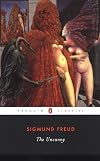
A classic of its kind, The Sandman has inspired later authors including Poe and composers such as Delibes and Offenbach. This annotated Alma Classics edition features a new translation by Christopher Moncrieff and includes in an Appendix a few pages from Sigmund Freud’s The Uncanny – a celebrated essay which gives a predictably psycho-sexual interpretation of Hoffmann’s novella. show less
I have the impression that continental Gothic tends to be more earnest and intense than English Gothic. No doubt this is a generalisation which invites any number of exceptions. However, it is certainly true of E.T.A. Hoffmann’s The Sandman (1816). Almost unremittingly dark, its bleakness is only tempered, if at all, by occasional bursts of black humour. The plot is underpinned by vague aura of supernatural dread, although from the start there is a strong suggestion that this is a tale not of ghosts or monsters but of a very human madness which may be more terrifying than any phantom.
A classic of its kind, The Sandman has inspired later authors including Poe and composers such as Delibes and Offenbach. This annotated Alma Classics edition features a new translation by Christopher Moncrieff and includes in an Appendix a few pages from Sigmund Freud’s The Uncanny – a celebrated essay which gives a predictably psycho-sexual interpretation of Hoffmann’s novella. show less
Nathanael’s childhood is haunted by the mysterious figure of Coppelius, a lawyer-friend of his father who regularly turns up at their house for night-time alchemical sessions. Nathanael associates Coppelius with the mythical Sandman, the legendary being said to steal the eyes of children who refuse to go to sleep. When Nathanael’s father dies as a result of an experiment gone wrong, this ominous mental link is sealed once and for all. Years later, with Nathanael now a university student, unwelcome memories are reawakened by the arrival in town of Italian barometer salesman Coppola. Could he be Coppelius under an assumed name? And what is his association with Professor Spalanzani? Nathanael’s ruminations increasingly skirt show more obsession. His infatuation with Olimpia, Spalanzani’s perfectly-formed but strangely uncommunicative daughter, only adds to his emotional confusion.
I have the impression that continental Gothic tends to be more earnest and intense than English Gothic. No doubt this is a generalisation which invites any number of exceptions. However, it is certainly true of E.T.A. Hoffmann’s The Sandman (1816). Almost unremittingly dark, its bleakness is only tempered, if at all, by occasional bursts of black humour. The plot is underpinned by vague aura of supernatural dread, although from the start there is a strong suggestion that this is a tale not of ghosts or monsters but of a very human madness which may be more terrifying than any phantom.
A classic of its kind, The Sandman has inspired later authors including Poe and composers such as Delibes and Offenbach. This annotated Alma Classics edition features a new translation by Christopher Moncrieff and includes in an Appendix a few pages from Sigmund Freud’s The Uncanny – a celebrated essay which gives a predictably psycho-sexual interpretation of Hoffmann’s novella. show less
I have the impression that continental Gothic tends to be more earnest and intense than English Gothic. No doubt this is a generalisation which invites any number of exceptions. However, it is certainly true of E.T.A. Hoffmann’s The Sandman (1816). Almost unremittingly dark, its bleakness is only tempered, if at all, by occasional bursts of black humour. The plot is underpinned by vague aura of supernatural dread, although from the start there is a strong suggestion that this is a tale not of ghosts or monsters but of a very human madness which may be more terrifying than any phantom.
A classic of its kind, The Sandman has inspired later authors including Poe and composers such as Delibes and Offenbach. This annotated Alma Classics edition features a new translation by Christopher Moncrieff and includes in an Appendix a few pages from Sigmund Freud’s The Uncanny – a celebrated essay which gives a predictably psycho-sexual interpretation of Hoffmann’s novella. show less
It seems Central-European Gothic stories are much more frightening than there Anglo-American counterparts, perhaps because they go back deeper having roots in pre-Christian stories and medieval literature. Within barely 70 pages Der Sandmann can be shown to have several layers of meaning, each more frightening than the other.
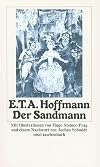
There are numerous editions of classic literature, but I must say this series of DTV is among the more original. The edition is issued in the "Bibliothek der Erstausgaben" (Library of First Editions). Although published without extensive introduction, and only a small glossary, the book throughout has line numbers and the page breaks of the original (historical first) edition are indicated by "page numbers" in show more square brackets in the text. This edition is published with an afterword by Joseph Kiermeier-Debre, but I also read the afterword to the Reclam edition by Rudolf Drux, which I liked more.
I was elated to discover that Delibes ballet "Coppelia" is a reference to this short story.
This was a very impressive story, and while the critical literature opened some avenues for understanding, the story completely speaks for itself, and offers a thoroughly thrilling reading experience. Highly recommended. show less
There are numerous editions of classic literature, but I must say this series of DTV is among the more original. The edition is issued in the "Bibliothek der Erstausgaben" (Library of First Editions). Although published without extensive introduction, and only a small glossary, the book throughout has line numbers and the page breaks of the original (historical first) edition are indicated by "page numbers" in show more square brackets in the text. This edition is published with an afterword by Joseph Kiermeier-Debre, but I also read the afterword to the Reclam edition by Rudolf Drux, which I liked more.
I was elated to discover that Delibes ballet "Coppelia" is a reference to this short story.
This was a very impressive story, and while the critical literature opened some avenues for understanding, the story completely speaks for itself, and offers a thoroughly thrilling reading experience. Highly recommended. show less
Pobre Nathaniel é um mancebo lunático? Ou há realmente um homem da areia, a fazer-nos sonhar acordado? De modo que aos poucos a sua imaginação, apesar das advertências psicoanalíticas de seu primeiro amor Clara, toma conta de sua vida, realizando projeções exacerbadas que nos dão um aspecto do lúgubre misturado à vergonha alheia.
Members
- Recently Added By
Published Reviews
ThingScore 75
A timeless nightmare that taught Freud a thing or two
added by MissWatson
Lists

German Literature
518 works; 55 members

Best Fantasy Originally Published in a Language Other Than English
84 works; 24 members

Speculative Fiction from around the World
610 works; 18 members

Works Referenced in The League of Extraordinary Gentlemen
122 works; 6 members

Books Read in 2021
5,361 works; 114 members
Author Information

German writer, composer, and painter ErnstTheodor Amadeus Hoffman was born in Konigsberg, Prussia in 1776. After beginning a career in the law, Hoffman turned to music, working as a conductor, music director, and critic, and later composing a ballet, an opera, and other works. He established himself as a writer with the four-volume story show more collection Phatasiestucke in Callier Manier (Fantasy Stories in the Manner of Callot), which was published in 1814-1815. Even though he published several novels and story collections, including Nachtstucke (Hoffman's Strange Stories, 1817) and Die Serapionsbruder (The Serapion Brethren, 1819-1821), Hoffman continued to support himself as a legal official in Berlin. This struggle between artistry and bureaucracy is played out in many of his works. Hoffman died of progressive paralysis in 1822. (Bowker Author Biography) show less
Some Editions
Awards and Honors
Notable Lists
Series

Belongs to Publisher Series
Work Relationships
Is contained in
Has the adaptation
Inspired
Has as a student's study guide
Has as a teacher's guide
Common Knowledge
- Canonical title
- The Sandman [short story]
- Original title
- Der Sandmann
- Original publication date
- 1816
- People/Characters
- Coppelius (The Sandman); Nathanael; Lothar; Clara; Spalanzani; Giuseppe Coppola
- First words
- No doubt you are all very worried because I have not written for such a long, long time.
- Last words
- (Click to show. Warning: May contain spoilers.)From this one might assume that she had finally found the domestic peace and happiness that suited her cheerful, light-hearted nature, and which Nathanael, with his deep inner conflicts, would never have been able to offer her.
- Original language
- German
- Disambiguation notice
- 3150002303 Reclam UB book
3159600114 Reclam UB eBook
3458326340 1986 softcover German insel taschenbuch 934
Classifications
- Genres
- Fiction and Literature, General Fiction, Horror
- DDC/MDS
- 833.6 — Literature & rhetoric German & related literatures German fiction 1750-1832 : 18th century, classical period, romantic period
- LCC
- PT2360 .S3 — Language and Literature German, Dutch and Scandinavian literatures German literature Individual authors or works 1700-ca. 1860/70
- BISAC
Statistics
- Members
- 694
- Popularity
- 41,201
- Reviews
- 16
- Rating
- (3.68)
- Languages
- 12 — Catalan, Chinese, Dutch, English, French, German, Italian, Portuguese, Russian, Spanish, Swedish, Turkish
- Media
- Paper, Audiobook, Ebook
- ISBNs
- 82
- ASINs
- 19