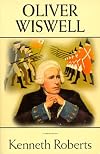
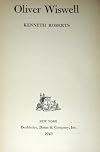
Oliver Wiswell
by Kenneth Roberts
On This Page
Description
In Oliver Wiswell, Kenneth Roberts portrays the view of the Loyalists (those colonists who supported the British monarchy) in the American Revolution. Though branded by U.S. history as cowardly traitors, many of them were people of strong convictions and fierce bravery.Tags
Recommendations















Member Reviews
This tips Kenneth Roberts onto my must-read-everything-ever-written-by-them list. Portrays the American Revolution from a loyalist perspective detailing the atrocities of that civil war committed by the rebels upon their own countrymen - labeling anyone a Tory who questioned the new patriots thus allowing them to be persecuted/imprisoned/murdered and, end-game, seizing their property - and the ineptitude of the British military hampered by class prejudices and more concern for English politics than protecting their loyal subjects and preserving the colonies. While Oliver Wiswell is a fictitious character allowing the reader to traverse across the colonies and the Atlantic to London and Paris (the French supported the rebels), Roberts, show more primarily an historian, paints a vivid and thorough rendition of America's founding. So satisfying to finally replace the shiny bullshit learned in school with reality. show less
Read an article last year re: the best historical fiction of the Revolutionary War (link: https://allthingsliberty.com/2019/05/the-best-historical-fiction-about-the-ameri... ) and this title was often recommended. I can see why.
This historical fiction novel presents the perspective of American Loyalists as reported by the fictional Oliver Wiswell who was himself a Loyalist. Not just about the British coming over to fight, but this was considered a civil war in that Rebels and Loyalists aka Tories were against each other even if they were neighbors, etc. In fact Oliver is in love with a girl from a "rebel" family.
An extensive amount of research by the author obviously went into this — it‘s over 800 pages long so it took me a while show more to read this. With this research, the author allows Oliver (and the reader) to experience several aspects of incidents in the Revolutionary War: the events in Boston (where Oliver initially lives), Long Island New York, a stint in Paris, traveling to Kentucky and then to Ninety Six in North Carolina and finally settling into Canada. Most people could not have really been that well-traveled back in those days, but it serves the purpose to show several dimensions of the warring factions between Rebels and Tories. I enjoyed this wide-lens perspective nevertheless.
Published 1940 - old fashioned story telling format. I felt the female characters (of which there were only just a few) did not much more than bat their eyelashes. But a modern reader has to consider the times of when this was published, and that this is largely a male-centric novel.
This (and I believe the rest of Roberts' works also) is out of print. I was fortunate to obtain a copy (in great condition, to boot) just before a recent Wall Street Journal article called attention to this novel -- prices skyrocketed after that. show less
This historical fiction novel presents the perspective of American Loyalists as reported by the fictional Oliver Wiswell who was himself a Loyalist. Not just about the British coming over to fight, but this was considered a civil war in that Rebels and Loyalists aka Tories were against each other even if they were neighbors, etc. In fact Oliver is in love with a girl from a "rebel" family.
An extensive amount of research by the author obviously went into this — it‘s over 800 pages long so it took me a while show more to read this. With this research, the author allows Oliver (and the reader) to experience several aspects of incidents in the Revolutionary War: the events in Boston (where Oliver initially lives), Long Island New York, a stint in Paris, traveling to Kentucky and then to Ninety Six in North Carolina and finally settling into Canada. Most people could not have really been that well-traveled back in those days, but it serves the purpose to show several dimensions of the warring factions between Rebels and Tories. I enjoyed this wide-lens perspective nevertheless.
Published 1940 - old fashioned story telling format. I felt the female characters (of which there were only just a few) did not much more than bat their eyelashes. But a modern reader has to consider the times of when this was published, and that this is largely a male-centric novel.
This (and I believe the rest of Roberts' works also) is out of print. I was fortunate to obtain a copy (in great condition, to boot) just before a recent Wall Street Journal article called attention to this novel -- prices skyrocketed after that. show less
Read in 2008 A very fair account of the Tories side in the American Revolution. It makes the reader realize that the Tories loved their country as much as did the Rebels, felt differently about breaking away from England. It makes one realize how terribly each side treated the other. Another excellent book by KR.
It isn't often that I go back more than 70+ years to find a book to read but awhile back I was give a used copy of Kenneth Roberts' book, Oliver Wiswell. The premise of Roberts' historical novel is that the American revolutionary war was as much the first civil war as a war of independence from England. The entire book is written from the perspective of an American Loyalist. Lest you think this approach is only a fictional construct, Thomas B. Allen just wrote a NONFICTION history of the Loyalists called "Tories" and documents many similar experiences of Oliver Wiswell.
The book narrates the events in the life 0f the books namesake, Oliver Wiswell; Yale undergraduate, Massachusetts native and ardent Loyalist. The book opens with Oliver show more rescuing his soon-to-be adventure companion, Tom Buell from a tar and feathering at the hands of a rebel mob. Oliver and Tom then flee the wrath of rebel neighbors and begin a serious of adventures that form the backdrop for the entire book. Roberts doesn't overlook a love interest for the young Oliver and ties him back to his roots in Massachusetts through his love of Sally Leighton, a neighbor. The love affair between Oliver and Sally is a Shakespearean Montague-Capulet plot as Oliver is Loyalist and Sally is of a rebel family.
Roberts does an excellent job of weaving the events of the entire revolutionary war from the occupation of Boston by the British, through numerous battles from Bunker Hill to Yorktown ending with the exodus of ten of thousands of Loyalists to Nova Scotia. He has Oliver and Tom traveling through most of the American colonies, Halifax, England and France. Roberts accomplishes this narrative in a realistic and lively manner in 836 pages.
Today, Kenneth Roberts isn't a well known popular author. Roberts was born in Kennebuk, Maine in 1885 and died in 1957. He was a graduate of Cornell University and served as a lieutenant in World War I station as an intelligence officer in Siberia. His journalistic career started with the Boston Post and later the Saturday Evening Post. As a historical novelist Roberts was a prolific writer from 1929 to 1955. The focus of all his novels are the events from the American Revolution through the War of 1812. His novels were mainstays as top 10 best sellers including Northwest Passage, Oliver Wiswell and Lydia Bailey.
Oliver Wiswell is recommended reading for a different perspective on the Revolutionary War. Though a work of fiction, Oliver Wiswell is well grounded in fact and does not embellish events for dramatic effect. show less
The book narrates the events in the life 0f the books namesake, Oliver Wiswell; Yale undergraduate, Massachusetts native and ardent Loyalist. The book opens with Oliver show more rescuing his soon-to-be adventure companion, Tom Buell from a tar and feathering at the hands of a rebel mob. Oliver and Tom then flee the wrath of rebel neighbors and begin a serious of adventures that form the backdrop for the entire book. Roberts doesn't overlook a love interest for the young Oliver and ties him back to his roots in Massachusetts through his love of Sally Leighton, a neighbor. The love affair between Oliver and Sally is a Shakespearean Montague-Capulet plot as Oliver is Loyalist and Sally is of a rebel family.
Roberts does an excellent job of weaving the events of the entire revolutionary war from the occupation of Boston by the British, through numerous battles from Bunker Hill to Yorktown ending with the exodus of ten of thousands of Loyalists to Nova Scotia. He has Oliver and Tom traveling through most of the American colonies, Halifax, England and France. Roberts accomplishes this narrative in a realistic and lively manner in 836 pages.
Today, Kenneth Roberts isn't a well known popular author. Roberts was born in Kennebuk, Maine in 1885 and died in 1957. He was a graduate of Cornell University and served as a lieutenant in World War I station as an intelligence officer in Siberia. His journalistic career started with the Boston Post and later the Saturday Evening Post. As a historical novelist Roberts was a prolific writer from 1929 to 1955. The focus of all his novels are the events from the American Revolution through the War of 1812. His novels were mainstays as top 10 best sellers including Northwest Passage, Oliver Wiswell and Lydia Bailey.
Oliver Wiswell is recommended reading for a different perspective on the Revolutionary War. Though a work of fiction, Oliver Wiswell is well grounded in fact and does not embellish events for dramatic effect. show less
"Oliver Wiswell" by Kenneth Roberts is an excellent book. It is a unique Revolutionary War novel in that it presents very convincingly the injustices endured by Americans broadly described as loyalists. These people were both educated, successful professional individuals and simple country people content to continue to live their lives without suffering interference by others
Two ot the book's themes particularly impressed me. I was astounded at how savagely rebel Americans treated the loyalist population. No family holding beliefs that differed from their rebel neighbors was exempt from punishment. Houses and barns were burned, livestock killed, property seized, and individuals physically harmed or killed. Hatred was pervasive. At the show more war's end, no loyalist could remain in America. Loyalists emigrated to Kentucky, Nova Scotia, Bermuda and the Bahamas, and Gibraltar.
Equally impressive was the author's portrayal of British arrogance. Virtually every British officer from general to lieutenant and every British governmental official considered every American to be beneath him. Valuable advice given to them by knowledgeable loyalists was always rejected. Opportunities to vanquish the rebel army and end the war early were thrown away by British generals who would not heed such advice and act promptly and decisively. British protection of the loyalist population ranged from indifference to criminal negligence. Loyalists came to understand that the British were not their allies and that they had to fend for themselves..
I enjoyed the author's accounting of the major events of the war from the loyalist perspective. I was reminded of how incompetent Generals Howe and Clinton were and how obstinate the king and his ministers behaved in their waging of the war. The novel's main character and his faithful companion, Tom Buell, were witnesses or participants in just about every event. My interest in the author's accounting of each event allowed me to excuse this departure from reality. Helpting also was the author's excellent characterization of all who appeared and his knowledgeable detail of how people at that period of time lived. show less
Two ot the book's themes particularly impressed me. I was astounded at how savagely rebel Americans treated the loyalist population. No family holding beliefs that differed from their rebel neighbors was exempt from punishment. Houses and barns were burned, livestock killed, property seized, and individuals physically harmed or killed. Hatred was pervasive. At the show more war's end, no loyalist could remain in America. Loyalists emigrated to Kentucky, Nova Scotia, Bermuda and the Bahamas, and Gibraltar.
Equally impressive was the author's portrayal of British arrogance. Virtually every British officer from general to lieutenant and every British governmental official considered every American to be beneath him. Valuable advice given to them by knowledgeable loyalists was always rejected. Opportunities to vanquish the rebel army and end the war early were thrown away by British generals who would not heed such advice and act promptly and decisively. British protection of the loyalist population ranged from indifference to criminal negligence. Loyalists came to understand that the British were not their allies and that they had to fend for themselves..
I enjoyed the author's accounting of the major events of the war from the loyalist perspective. I was reminded of how incompetent Generals Howe and Clinton were and how obstinate the king and his ministers behaved in their waging of the war. The novel's main character and his faithful companion, Tom Buell, were witnesses or participants in just about every event. My interest in the author's accounting of each event allowed me to excuse this departure from reality. Helpting also was the author's excellent characterization of all who appeared and his knowledgeable detail of how people at that period of time lived. show less
A well-written book, and well researched. Kenneth Roberts was well known in his day, and at least one movie was made form one of his books. I really enjoy "Oliver Wiswell" as it reveals the extent to which the War of Independence (American Model), was a Civil War. The amount of political hagiography that clothes the period needs corrective books like this one. Well worth a re-print. The author included a partial bibliography of his sources following the dedication page. I was surprised to discover that this was on a top ten list for 2 years after it's publication.
Long but pretty good historical novel. Learned what it felt like to be a loyalist or Tory during the American Revolution. Quite a different viewpoint!
Members
- Recently Added By
Lists

Must-Read Maine
146 works; 90 members

Publisher's Weekly Bestsellers - Part II - 1940 - 1979
355 works; 5 members

The American Revolution -- in Parts
6 works; 3 members

Art Bourgeau's Favorites [Mystery Lovers Companion, 1986]
124 works; 2 members
Author Information

23+ Works 3,357 Members
Awards and Honors
Distinctions
Common Knowledge
- Canonical title*
- Oliver Wiswell
- Alternate titles*
- Oliverio Wiswell
*Some information comes from Common Knowledge in other languages. Click "Edit" for more information.
Classifications
Statistics
- Members
- 349
- Popularity
- 90,072
- Reviews
- 12
- Rating
- (4.08)
- Languages
- English, French, Hungarian, Italian
- Media
- Paper
- ISBNs
- 6
- ASINs
- 26