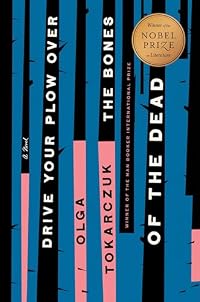
Drive Your Plow Over the Bones of the Dead
by Olga Tokarczuk
On This Page
Description
In a remote Polish village, Janina devotes the dark winter days to studying astrology, translating the poetry of William Blake, and taking care of the summer homes of wealthy Warsaw residents. Her reputation as a crank and a recluse is amplified by her not-so-secret preference for the company of animals over humans. Then a neighbor, Big Foot, turns up dead. Soon other bodies are discovered, in increasingly strange circumstances. As suspicions mount, Janina inserts herself into the show more investigation, certain that she knows whodunit. If only anyone would pay her mind . . . -- A deeply satisfying thriller cum fairy tale, Drive Your Plow over the Bones of the Dead is a provocative exploration of the murky borderland between sanity and madness, justice and tradition, autonomy and fate. Whom do we deem sane? it asks. Who is worthy of a voice? show lessTags
Recommendations


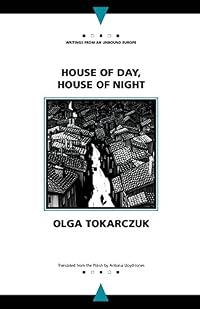
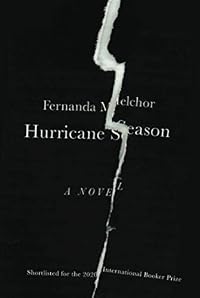
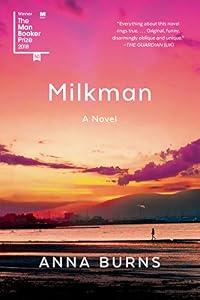
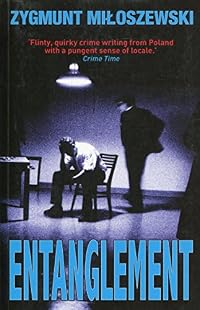


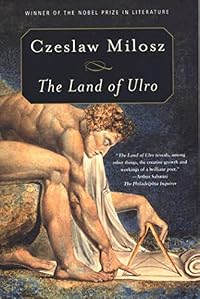
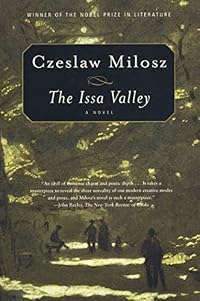
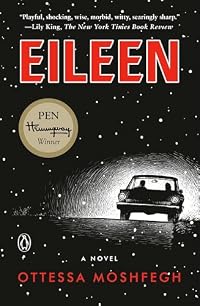
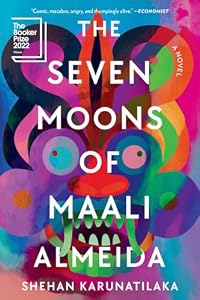

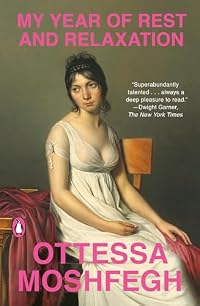
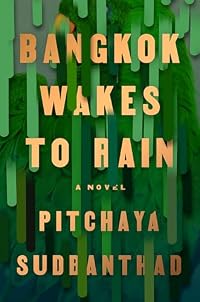
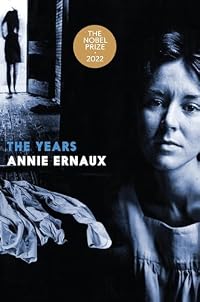
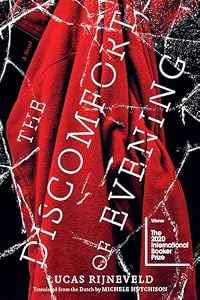
Member Recommendations

Bookwomble The book of Blakean aphorisms from which Olga Tokarczuk took the title of her book.
vwinsloe Eccentric vegetarian literary types
Member Reviews
A quaint rural town, a few mysterious deaths, a little old lady discussing those deaths with friends over tea. Is it an Agatha Christie mystery? No, dear reader, this is something far weirder, and also a very fun read. This is Olga Tokarczuk's Drive Your Plow Over the Bones of the Dead.
Janina Duszejko is our first person narrator of this tale, which as other reviewers have noted, is part murder mystery and part fairy tale as told by the witch. Full of atmosphere, and quotes from the poetry of William Blake (from which the title derives), the tale is interspersed with Janina's thoughts on animal rights, astrology, the primacy of nature, the ghosts which haunt her boiler room, and most of all a subversive sense of humor.
The story is set show more in a small Polish village near the border with the Czech Republic. It's on "the Plateau", an area known for it's harsh winters. Few people chose to live there year 'round - just Janina and a couple of other neighbors. It's with the death of one of her neighbors that the book opens.
The setting of this book easily drew me in. I too live in a small, rural area, in my case close to the Canadian border, also known for it's harsh winters, and where few choose to live year 'round. Once I was drawn in I quickly realized what an imaginative, thought provoking, genre-bending ride this book is. It's a 2019 Nobel winner to boot.
This book was translated from the original Polish by Antonia Lloyd-Jones. The English version is both lyrical and straightforward.
If you like mysteries, thrillers, or atmospheric tales, and if you appreciate an off-beat sense of humor than you'll like this book. I give Drive Your Plow Over the Bones of the Dead Four Stars ⭐⭐⭐⭐ show less
Janina Duszejko is our first person narrator of this tale, which as other reviewers have noted, is part murder mystery and part fairy tale as told by the witch. Full of atmosphere, and quotes from the poetry of William Blake (from which the title derives), the tale is interspersed with Janina's thoughts on animal rights, astrology, the primacy of nature, the ghosts which haunt her boiler room, and most of all a subversive sense of humor.
The story is set show more in a small Polish village near the border with the Czech Republic. It's on "the Plateau", an area known for it's harsh winters. Few people chose to live there year 'round - just Janina and a couple of other neighbors. It's with the death of one of her neighbors that the book opens.
The setting of this book easily drew me in. I too live in a small, rural area, in my case close to the Canadian border, also known for it's harsh winters, and where few choose to live year 'round. Once I was drawn in I quickly realized what an imaginative, thought provoking, genre-bending ride this book is. It's a 2019 Nobel winner to boot.
This book was translated from the original Polish by Antonia Lloyd-Jones. The English version is both lyrical and straightforward.
If you like mysteries, thrillers, or atmospheric tales, and if you appreciate an off-beat sense of humor than you'll like this book. I give Drive Your Plow Over the Bones of the Dead Four Stars ⭐⭐⭐⭐ show less
In an isolated Polish community near the Czech border, Janina is one of the only three people who live there all year round. When one of them, a poacher disliked by Janina, is found dead, it falls to her and the other neighbor to dress him and notify the authorities. When a second man goes missing and a third man is found murdered, Janina notices things that are missed by the authorities, like the animal tracks around the bodies.
This is an odd and wonderful noir, with a main character who is even more interesting than the murders. Janina is given to strong opinions, deeply devoted to astrology and considers animals every bit as conscious and valuable as human beings.
This was a wonderful introduction to Tokarczuk, who has won both the show more Man Booker Prize and the Nobel Prize. I look forward to reading more by her. show less
This is an odd and wonderful noir, with a main character who is even more interesting than the murders. Janina is given to strong opinions, deeply devoted to astrology and considers animals every bit as conscious and valuable as human beings.
This was a wonderful introduction to Tokarczuk, who has won both the show more Man Booker Prize and the Nobel Prize. I look forward to reading more by her. show less
This is a strange and wonderful book, a combination murder mystery, fairy tale, political polemic, and character study. That's a lot to cram into one column, and it took me quite a while to get deeply involved. The central character is an old Polish woman who cares at least as deeply for animals as for people, and who is a committed astrologer, convinced that the stars determine our lives and characters. She has friends (an odd group) but she also has enemies. As the novel progresses, it turns out to be operating on several levels, asking profound questions as well as the ones on the surface. When I first started listening, I didn't know if I would finish. By the time I had finished, I had ordered a physical book: I want to reread it, show more and there are many passages I want to highlight. show less
This is the third book I'm reading by Olga Tokarczuk (I have not read her booker winning novel just yet) and I enjoyed it immensely, of course. Part of the enjoyment I derive from reading Olga Tokarczuk is the folklorish tone of her writing, how she incorporates the rural landscape, & how deep & dark she goes into the psyche of the human mind. Reading her words is like falling into another world. Describing this book recently, however, I mentioned that it seems that she is writing this one a little closer to human understanding.
The book is a thriller from the perspective of Mrs Janina Duszejko, an elderly astrologer, William Blake translator, English teacher, animal lover, & a menace to authority. In the midst of the mystery of a series show more of murders, we hear her thoughts on human nature, astrology, ecology, and the preciousness of animals. Her mode of existence is one completely different from those in the rural town she is in, where hunting is a sport & nature something under human dominion. The novel is often saturated with her grief at how the animals & the natural world suffer & her helplessness in preventing the evil. For her, this reveals some deeper truth about human nature:
“The human psyche evolved in order to defend itself against seeing the truth. To prevent us from catching sight of the mechanism. The psyche is our defense system—it makes sure we'll never understand what's going on around us. Its main task is to filter information, even though the capabilities of our brains are enormous. For it would be impossible for us to carry the weight of this knowledge. Because every tiny particle of the world is made of suffering.”
One of the most thrilling parts of the novel (for me) was when she goes up to the priest in the middle of his sermon where he was praising the of hunting animals & simply said: ‘Hey, you, get down from there,’ She repeats her demand another time before finally saying: ‘Get down from that pulpit this instant! And get out of here!’
The audacity of her! I loved it. There was something utterly pure in her conviction that made her telling a priest to get out of his own church seem perfectly logical.
Some are taking the book as some kind of serious ecological treatise. I am not sure if that is the intention, this is, after all, a piece of literary fiction it would be folly to presume the protaganist's views are Tokarczuk's. But I absolutely enjoyed the depth of her character & how it allowed the novel to explore deeply this everyday violence & what it reveals about human nature, its values, & how we have decided to organise our society.
This was the most moving passage for me in the book:
"And how will I cope? After all, I'm like them too. My life's harvest is not the building material for anything, neither in my time, now, nor in any other, never.
But why should we have to be useful and for what reason? Who divided the world into useless and useful, and by what right? Does a thistle have no right to life, or a Mouse that eats the grain in a warehouse? What about Bees and Drones, weeds and roses? Whose intellect can have the audacity to judge who is better and who worse? A large tree, crooked and full of holes, survives for centuries without being cut down, because nothing could possibly be made out of it. This example should raise the spirits of people like us. Everyone knows the profit to be reaped from the useful, but nobody knows the benefit to be gained from the useless." show less
The book is a thriller from the perspective of Mrs Janina Duszejko, an elderly astrologer, William Blake translator, English teacher, animal lover, & a menace to authority. In the midst of the mystery of a series show more of murders, we hear her thoughts on human nature, astrology, ecology, and the preciousness of animals. Her mode of existence is one completely different from those in the rural town she is in, where hunting is a sport & nature something under human dominion. The novel is often saturated with her grief at how the animals & the natural world suffer & her helplessness in preventing the evil. For her, this reveals some deeper truth about human nature:
“The human psyche evolved in order to defend itself against seeing the truth. To prevent us from catching sight of the mechanism. The psyche is our defense system—it makes sure we'll never understand what's going on around us. Its main task is to filter information, even though the capabilities of our brains are enormous. For it would be impossible for us to carry the weight of this knowledge. Because every tiny particle of the world is made of suffering.”
One of the most thrilling parts of the novel (for me) was when she goes up to the priest in the middle of his sermon where he was praising the of hunting animals & simply said: ‘Hey, you, get down from there,’ She repeats her demand another time before finally saying: ‘Get down from that pulpit this instant! And get out of here!’
The audacity of her! I loved it. There was something utterly pure in her conviction that made her telling a priest to get out of his own church seem perfectly logical.
Some are taking the book as some kind of serious ecological treatise. I am not sure if that is the intention, this is, after all, a piece of literary fiction it would be folly to presume the protaganist's views are Tokarczuk's. But I absolutely enjoyed the depth of her character & how it allowed the novel to explore deeply this everyday violence & what it reveals about human nature, its values, & how we have decided to organise our society.
This was the most moving passage for me in the book:
"And how will I cope? After all, I'm like them too. My life's harvest is not the building material for anything, neither in my time, now, nor in any other, never.
But why should we have to be useful and for what reason? Who divided the world into useless and useful, and by what right? Does a thistle have no right to life, or a Mouse that eats the grain in a warehouse? What about Bees and Drones, weeds and roses? Whose intellect can have the audacity to judge who is better and who worse? A large tree, crooked and full of holes, survives for centuries without being cut down, because nothing could possibly be made out of it. This example should raise the spirits of people like us. Everyone knows the profit to be reaped from the useful, but nobody knows the benefit to be gained from the useless." show less
Poland. Janina Duszejko, an elderly, misanthropic, animal-loving, astrology-wielding, ghost-perceiving mystic who "see[s] nothing but Catastrophes," is awakened in the night by the neighbor she calls Oddball and led to the scene of the death of the unsavory neighbor she has christened Big Foot. More deaths follow. Mrs. Duszejko is also a former teacher working with a former pupil at translating Blake into Polish, and she is less concerned with finding a murderer than the nature of evil and the course of justice. The title and epigraphs are from Blake, and this is only nominally a murder mystery.
Janina Duszejko is a bit cranky. A onetime civil engineer, she teaches English in a rural Polish school near the Czech border, translates Blake for fun (a quote from "Proverbs of Hell" is the book's title) and charts oddly detailed horoscopes. She's getting on in years, with aches and pains that bring her closer to God, or so might have said one of her lovers. She has opinions: Lately the town's hunters are dying, and Mrs. Duszejko tells neighbors (and, insistently, the police) that it's the animals' revenge. Either she's off her rocker or on to something--or both. Nominally this novel is a murder mystery, but mostly we're just trying to figure out Mrs. Duszejko, and there's plenty to solve.
I listened to this in audiobook format.
This novel is about an old woman living in rural Poland. She lives a fairly solitary life doing astrology, translating William Blake, and admiring the forest animals. Meanwhile, a string of unusual murders wraps up her and her entire village in their mysteries. I enjoyed the main character-- her stubborn individuality and lack of concern for the opinions of others-- though her astrology obsession became tiresome for me at times. Despite there being several gruesome murders, this book is dryly humorous and has a certain warmth as a group of unlikely friends timidly forms. I loved the ending, even though you could see it coming from early in the book.
This novel is about an old woman living in rural Poland. She lives a fairly solitary life doing astrology, translating William Blake, and admiring the forest animals. Meanwhile, a string of unusual murders wraps up her and her entire village in their mysteries. I enjoyed the main character-- her stubborn individuality and lack of concern for the opinions of others-- though her astrology obsession became tiresome for me at times. Despite there being several gruesome murders, this book is dryly humorous and has a certain warmth as a group of unlikely friends timidly forms. I loved the ending, even though you could see it coming from early in the book.
Members
- Recently Added By
Lists

Best 21st Century Books (So Far)
670 works; 86 members

Recommend the 20 best books you've read in the last five years
2,167 works; 601 members

Top Five Books of 2020
982 works; 348 members

EU Fiction: 1950-2022
223 works; 68 members

Top Five Books of 2021
604 works; 180 members

The Guardian's 100 best books of the 21st century
100 works; 21 members

Nobel Price Winners
222 works; 20 members

Top Five Books of 2022
736 works; 272 members

Books With Interesting Titles
173 works; 14 members

Kirkus Starred Fiction Reviews of Books Published in 2019
411 works; 12 members

Books Read in 2020
4,379 works; 124 members

Five star books
1,755 works; 108 members

Books Read in 2022
5,164 works; 113 members

Favorite Books in Translation
320 works; 133 members

Books With Complete Sentence Titles
374 works; 15 members

Books for Dustin
19 works; 1 member

CXB Books read in 2026
4 works; 1 member

Books We Discovered On LibraryThing
530 works; 130 members

Books Read in 2025
4,090 works; 97 members

Widely acclaimed, one book per year
105 works; 3 members

TBR of Books I Don't Own
132 works; 1 member

Books With the Most Memorable Titles
478 works; 158 members

Books for Birute
39 works; 1 member

2024
34 works; 1 member

NYT Readers best of 21st C
100 works; 8 members

Not the NYT list of top 100 21st century books
100 works; 6 members

Stuff from Bard
70 works; 1 member

At the Library
217 works; 1 member

Books Read in 2021
5,361 works; 113 members

Unmarried women
66 works; 6 members

Books Read in 2026
1,684 works; 62 members
Author Information

35+ Works 11,150 Members
All Editions
Some Editions
Awards and Honors
Series
Belongs to Publisher Series
Common Knowledge
- Canonical title
- Drive Your Plow Over the Bones of the Dead
- Original title
- Prowadź swój pług przez kości umarłych
- Original publication date
- 2009 (Original Polnisch) (Original Polnisch); 2011 (Deutsch) (Deutsch); 2018 (English: Lloyd-Jones) (English: Lloyd-Jones)
- People/Characters
- Janina Duszejko; Oddball (Świętopełk Świerszczyński); Big Foot; Dizzy (Dionizy); Black Coat (Świerszczyński Jr.); Good News (show all 12); Anzelm Innerd; Grey Lady; Borys Sznajder; Wolf Eye; Father Rustle; Doctor Ali
- Important places
- Poland; Kłodsko Valley, Poland; Wrocław, Lower Silesia, Poland; Luftzug, Poland; Achthozja, Poland
- Dedication*
- Für Zbyszek und Agata
- First words
- I am already at an age and additionally in a state where I must always wash my feet thoroughly before bed, in the event of having to be removed by an ambulance in the Night.
- Last words
- (Click to show. Warning: May contain spoilers.)But I know I still have plenty of time.
- Blurbers
- Proulx, Annie; Perry, Sarah; Alexievich, Svetlana; Theroux, Marcel; Battersby, Eileen; Kassabova, Kapka (show all 11); Mars-Jones, Adam; Jordan, Justine; Moss, Chris; Aslanyan, Anna; Anderson, Darran
- Original language
- Polish
- Canonical DDC/MDS
- 891.8537
- Canonical LCC
- PG7179.O37
*Some information comes from Common Knowledge in other languages. Click "Edit" for more information.
Classifications
- Genres
- Fiction and Literature, General Fiction, Mystery
- DDC/MDS
- 891.8537 — Literature & rhetoric Literatures of other languages East Indo-European and Celtic literatures West and South Slavic languages (Bulgarian, Slovene, Polish, Czech, Slovak, Serbo-Croatian, and Macedonian) Polish Polish fiction 1919–1989
- LCC
- PG7179 .O37 — Language and Literature Slavic languages and literatures. Baltic languages. Albanian language Slavic. Baltic. Albanian Slavic Polish
- BISAC
Statistics
- Members
- 4,316
- Popularity
- 3,464
- Reviews
- 183
- Rating
- (3.93)
- Languages
- 23 — Basque, Chinese, Czech, Danish, Dutch, English, Estonian, Finnish, French, German, Greek, Hebrew, Hungarian, Italian, Polish, Portuguese, Romanian, Russian, Sinhalese, Slovenian, Spanish, Swedish, Turkish
- Media
- Paper, Audiobook, Ebook
- ISBNs
- 81
- ASINs
- 12