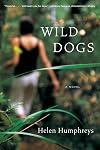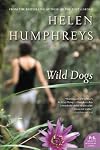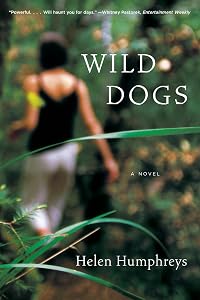
Wild Dogs
by Helen Humphreys
On This Page
Description
Alice's boyfriend abandons her dog, which joins a feral pack. Every evening, Alice and five others gather at the forest's edge, trying to call their dogs back. Most have similar tales of jealousy or vengeance enacted upon them through their dogs: Jamie is rebelling against his stepfather; Lily, who has suffered brain damage, is considered irresponsible. Becoming more deeply involved, Alice moves out to a cabin on land owned by Malcolm, one of the group, whose motives in having her there are show more suspicious. As she falls in love with the wildlife biologist whose wolf has gained lead of the pack, she feels the tug between love's wild power and her desire to domesticate it. After a tragic accident, all members of the group must rethink their lives and find their places in an untamed world. Wild Dogs strips away the conventions of love and passion to reveal deeper, richer truths. show lessTags
Recommendations





















Member Reviews
Damn fine book, full of surprises, and always at a bit of a slant. Humphreys manages to write about a diverse collection of people (and dogs), all intertwined, as individuals. Each of these people is alone in a way that anyone secretly recognizes. After all, we all live alone. Here, in this slightly surreal book, this is made manifest in a way I've never quite seen before. Certain revelations seem to tear the narrative open-- and then you realize, no, this changes nothing. This is a book not quite like any other. You should read it.
The last book I read was so disappointing that I headed to my bookshelf to find a book that I knew would be good. This book was more than good; it is a superb work of literature. Helen Humphreys you never disappoint me.
Six people who have had dogs go missing go to an area where a dog pack has been seen every night for weeks. They are a disparate group and would normally never have any contact with each other. But the loss of their dogs has united them and some form close bonds. Alice is the first narrator; her dog, Hawk, was dumped off in the area by her boyfriend without her knowledge. She left the boyfriend but hasn't been able to get Hawk back. She's been sleeping in her car since she hasn't been able to find a place she can afford show more on her wages as a gas station clerk. One of the other people in the group, Malcolm, offers her the use of a cabin on his property. It is very basic with no electricity or running water but Alice likes it. And then Alice falls in love with another group member who she doesn't name but she addresses all her thoughts to this person. I assumed all during this portion that the person Alice fell in love with was a man but, in fact, it was another woman. Rachel is a wolf researcher and her dog was, in fact, a wolf that had been orphaned in her research wolf pack. The other three members of the group are: Lily, a woman who suffered some loss of brain function as a result of being caught in a house fire; Jamie, a teen-aged boy who is regularly beaten by his stepfather; Walter, a widower who lives in the basement of his daughter and son-in-law's house. Their quest seems hopeless and some of the people do fall away from the group. Lily disappears entirely and Jamie starts hanging out with some older boys. Just when it seems the rest might give up Walter's dog returns to him. That gives some hope which is cruelly snatched away when some hunters go out to hunt the dogs because they have been killing livestock. Rachel leaves to return to her wolf research and Alice is devastated. However there are some changes to the lives of the others and the ending is optimistic.
"The heart is a wild and fugitive creature.
The heart is a dog who comes home."
You don't have to be a dog lover to enjoy this book; just enjoy Humphreys' craftmanship and way with words. show less
Six people who have had dogs go missing go to an area where a dog pack has been seen every night for weeks. They are a disparate group and would normally never have any contact with each other. But the loss of their dogs has united them and some form close bonds. Alice is the first narrator; her dog, Hawk, was dumped off in the area by her boyfriend without her knowledge. She left the boyfriend but hasn't been able to get Hawk back. She's been sleeping in her car since she hasn't been able to find a place she can afford show more on her wages as a gas station clerk. One of the other people in the group, Malcolm, offers her the use of a cabin on his property. It is very basic with no electricity or running water but Alice likes it. And then Alice falls in love with another group member who she doesn't name but she addresses all her thoughts to this person. I assumed all during this portion that the person Alice fell in love with was a man but, in fact, it was another woman. Rachel is a wolf researcher and her dog was, in fact, a wolf that had been orphaned in her research wolf pack. The other three members of the group are: Lily, a woman who suffered some loss of brain function as a result of being caught in a house fire; Jamie, a teen-aged boy who is regularly beaten by his stepfather; Walter, a widower who lives in the basement of his daughter and son-in-law's house. Their quest seems hopeless and some of the people do fall away from the group. Lily disappears entirely and Jamie starts hanging out with some older boys. Just when it seems the rest might give up Walter's dog returns to him. That gives some hope which is cruelly snatched away when some hunters go out to hunt the dogs because they have been killing livestock. Rachel leaves to return to her wolf research and Alice is devastated. However there are some changes to the lives of the others and the ending is optimistic.
"The heart is a wild and fugitive creature.
The heart is a dog who comes home."
You don't have to be a dog lover to enjoy this book; just enjoy Humphreys' craftmanship and way with words. show less
Alice has lost her dog, Hawk. Alice’s boyfriend has taken the dog and dumped her in a wood behind a farm where a pack of wild dogs is known to roam. When Alice goes to the field to call for Hawk to return to her, she encounters five other souls who have lost their dogs to the pack. A loose bond forms between these six people who stand on the edge of the woods night after night calling their dogs home, and it is their stories that drive this novel.
As Alice looks back upon the events of the summer and attempts to deal with her feelings for one of the other dog owners, she says:
It is impossible to fully inhabit a moment again. That is part of the inherent sorrow of life. This can never be that. I can never really let you know how much I show more felt for you that August afternoon.
So much of this novel is about those fleeting moments, the ones in which we might have touched a person or affected their lives; the moments in which we are touched or affected ourselves. And it is about the love we feel for an animal that we think would never desert us, but has; or perhaps a person who we thought would, but doesn’t.
Each of these people is carrying the load of being unusual, abused, frightened, or just alone. Each of them is clinging to the memory of their animal, as we cling to the unconditional love of a pet, particularly if we have not known love of any other kind.
It’s like you’ve got your foot in a door and for a while you can keep the door open, but the door just gets heavier and heavier against your foot and eventually it closes shut on you. There was one day when I couldn’t keep my foot in that door any more. There was one day when I no longer believed the dogs would come back and that one last day shut out all the other days when I did believe.
Trusting one another or even themselves is impossible.
I have been betrayed so many times that, of course, it is what I know and what I will eventually do myself. Never trust anyone who has been betrayed. Betrayal never loses its edge, never really goes away.
This is a short novel, only 185 pages, and I read it in one sitting. I had no desire to pull away from it. I felt so attached to the dogs and the people. I wanted the happily ever after ending. What I got was a strong sense of what it is to be lonely, misunderstood, mistreated, betrayed and what it feels like to suddenly realize you are not the only person dealing with those realities. Helen Humphrey is a masterful writer and this is a powerful book. show less
As Alice looks back upon the events of the summer and attempts to deal with her feelings for one of the other dog owners, she says:
It is impossible to fully inhabit a moment again. That is part of the inherent sorrow of life. This can never be that. I can never really let you know how much I show more felt for you that August afternoon.
So much of this novel is about those fleeting moments, the ones in which we might have touched a person or affected their lives; the moments in which we are touched or affected ourselves. And it is about the love we feel for an animal that we think would never desert us, but has; or perhaps a person who we thought would, but doesn’t.
Each of these people is carrying the load of being unusual, abused, frightened, or just alone. Each of them is clinging to the memory of their animal, as we cling to the unconditional love of a pet, particularly if we have not known love of any other kind.
It’s like you’ve got your foot in a door and for a while you can keep the door open, but the door just gets heavier and heavier against your foot and eventually it closes shut on you. There was one day when I couldn’t keep my foot in that door any more. There was one day when I no longer believed the dogs would come back and that one last day shut out all the other days when I did believe.
Trusting one another or even themselves is impossible.
I have been betrayed so many times that, of course, it is what I know and what I will eventually do myself. Never trust anyone who has been betrayed. Betrayal never loses its edge, never really goes away.
This is a short novel, only 185 pages, and I read it in one sitting. I had no desire to pull away from it. I felt so attached to the dogs and the people. I wanted the happily ever after ending. What I got was a strong sense of what it is to be lonely, misunderstood, mistreated, betrayed and what it feels like to suddenly realize you are not the only person dealing with those realities. Helen Humphrey is a masterful writer and this is a powerful book. show less
I don't think Helen Humphreys can write a book I don't love although the plot of this one had me scratching my head until she completely drew me in with her luscious prose and thought provoking narrative. The story opens with six people standing on the edge of a forest calling their dogs. They've each lost their dog because someone else in their life thought they knew what was best. The six of them have formed their own unlikely union even as their dogs prowl the forest joined in an uneasy cadre.
The first half of the book is told by Alice, using the second person narrative form and is, at first a little off-putting. In the hands of a less skilled writer it could have been disastrous but when we realize that Alice is writing this part of show more the book as a love letter to one of the other group members it's easier to understand Humphreys' choice in the matter. The rest of the book is told, in turn, by each of the other group members and we learn their history and the sadness that has brought them to this point.
As we've come to expect from Humphreys, she is taking the long view and using her brief novel to paint a complex picture of man's cruelty to man. These characters will not come out unscathed and, as a matter of fact, it is when a tragedy takes place that the novel gains its momentum and all that the author has set up begins to wind down. And also as we've come to expect, it is Humphrey's gift of language that makes this another stand out offering from the Canadian author. One of the characters muses:
"Memory is a barricade against forgetting; light is a bulwark against darkness; life is a flex against the stillness of the grave. Maybe that's what I'm trying to do here, clear a space in all the debris, through all the anxieties and worries, where I can just exist, easily and simply, entire, for as long as I have left." (Page 159)
It's the theme of memory and loneliness that predominate the narrative and it's the resolution of these themes that makes for another lovely addition to this author's impressive portfolio. Highly recommended. show less
The first half of the book is told by Alice, using the second person narrative form and is, at first a little off-putting. In the hands of a less skilled writer it could have been disastrous but when we realize that Alice is writing this part of show more the book as a love letter to one of the other group members it's easier to understand Humphreys' choice in the matter. The rest of the book is told, in turn, by each of the other group members and we learn their history and the sadness that has brought them to this point.
As we've come to expect from Humphreys, she is taking the long view and using her brief novel to paint a complex picture of man's cruelty to man. These characters will not come out unscathed and, as a matter of fact, it is when a tragedy takes place that the novel gains its momentum and all that the author has set up begins to wind down. And also as we've come to expect, it is Humphrey's gift of language that makes this another stand out offering from the Canadian author. One of the characters muses:
"Memory is a barricade against forgetting; light is a bulwark against darkness; life is a flex against the stillness of the grave. Maybe that's what I'm trying to do here, clear a space in all the debris, through all the anxieties and worries, where I can just exist, easily and simply, entire, for as long as I have left." (Page 159)
It's the theme of memory and loneliness that predominate the narrative and it's the resolution of these themes that makes for another lovely addition to this author's impressive portfolio. Highly recommended. show less
A haunting tale of six people bonding together each night at the edge of the forest, calling/crying out to their dogs to return after they fled and became wild. Frustratingly, there are short spurts of time when the dogs can be seen but refuse to obey.
The sense of loss each person feels signifies other rents in the torn fabric of the fragile psyche of all the characters.
It is a tale of love, of loss, of the illusion of owning something or some one and the futility of holding on long after the object of affection flees and refuses to return.
While initially the story is told through the perceptions of Alice, each successive chapter allows insights through the eyes of the other characters. Each person was vulnerably hurt by events or show more persons who have harmed them. The dogs represent yet one more abandonment.
This is the first book of Humphrey's that I've read and I'll be sure to look for more. show less
The sense of loss each person feels signifies other rents in the torn fabric of the fragile psyche of all the characters.
It is a tale of love, of loss, of the illusion of owning something or some one and the futility of holding on long after the object of affection flees and refuses to return.
While initially the story is told through the perceptions of Alice, each successive chapter allows insights through the eyes of the other characters. Each person was vulnerably hurt by events or show more persons who have harmed them. The dogs represent yet one more abandonment.
This is the first book of Humphrey's that I've read and I'll be sure to look for more. show less
A tough read, but Humphreys creates a balanced novella which is as it should be as she is writing about love and the contradictory (understatement) nature of the human heart. A motley group assemble nightly to call for their dogs who have gone wild, joining a pack. They have crossed over from tame to wild. Many have had a family member "dispose" of the dog by taking it and leaving it out in the wild. In other words, they are in difficulties to begin with and for most their dogs were a lifeline. A beautiful book. In the back Humphreys saysn (better than I can), in an interview, "I think that as humans we alternately crave order and chaos. We want the nice, paved-over street and tidy houses, but, after a time, we grow bored with that and show more want to destroy it all and start again. This is what love can do for us. It is perhaps the only thing that can satisfy these conflicting desires in us. . . "Humphreys understanding and reflections on dogs and our relationship with them are profound. ***** show less
I am a huge fan of Helen Humphreys' novels, having read and adored The Frozen Thames, Coventry, Afterimage, and The Lost Garden. No one writes more beautifully, and few writers have such poignant insights into the human spirit. Those are characteristics apparent in Wild Dogs, too, although its plot is quite a turn from what I've come to expect from Humphreys.
Each night a group of six very different people meet at the edge of the woods behind Cooper's farm. There's Alice, a sad loner who has recently left her boyfriend; Walter, an elderly man who was recently widowed; Jamie, a 15-year old who believes that his stepfather hates him; Malcolm, an eccentric 40-year old who lives with his mother; Lily, a young woman who was brain-damaged in a show more childhood accident; and an expert on wolves. Though very different, they all have something in common: their former pets are now part of a wild dog pack. Some ran off, some were dropped off by family members who couldn't or wouldn't keep them. And each night their owners gather in hopes of catching a glimpse of their dogs, calling to them in hopes that their calls might be answered. These six people, all emotionally damaged and, like the dogs, in hiding for reasons of their own, form a tenuous pack of sorts--a pack that, like that of the dogs, can be both supportive and destructive.
Humphreys begins with a lengthy narration of events by Alice, but in the end, each of the six characters (plus the father of one) gets the chance to summarize what happened from his or her perspective. Each of their lives has been deeply changed by their shared experience. Although Wild Dogs is harsher and darker than Humphreys's usual fare, it nevertheless shines at its heart with a small glimmer of hope and the sense that we might, if we dare to risk it, be one another's salvation. show less
Each night a group of six very different people meet at the edge of the woods behind Cooper's farm. There's Alice, a sad loner who has recently left her boyfriend; Walter, an elderly man who was recently widowed; Jamie, a 15-year old who believes that his stepfather hates him; Malcolm, an eccentric 40-year old who lives with his mother; Lily, a young woman who was brain-damaged in a show more childhood accident; and an expert on wolves. Though very different, they all have something in common: their former pets are now part of a wild dog pack. Some ran off, some were dropped off by family members who couldn't or wouldn't keep them. And each night their owners gather in hopes of catching a glimpse of their dogs, calling to them in hopes that their calls might be answered. These six people, all emotionally damaged and, like the dogs, in hiding for reasons of their own, form a tenuous pack of sorts--a pack that, like that of the dogs, can be both supportive and destructive.
Humphreys begins with a lengthy narration of events by Alice, but in the end, each of the six characters (plus the father of one) gets the chance to summarize what happened from his or her perspective. Each of their lives has been deeply changed by their shared experience. Although Wild Dogs is harsher and darker than Humphreys's usual fare, it nevertheless shines at its heart with a small glimmer of hope and the sense that we might, if we dare to risk it, be one another's salvation. show less
Members
- Recently Added By
Lists

Favorite Animal Fiction
359 works; 156 members

BingoDOG - Animals in Adult Fiction
78 works; 20 members
Author Information

29+ Works 3,009 Members
Helen Humphreys is the author of four collections of poetry & one previous novel, "Leaving Earth", which won the Toronto Book Award, was a "New York Times" Notable Book, & was published in six languages. "Afterimage" was inspired by an exhibition of Julia Margaret Cameron's photographs. Humphreys lives in Kingston, Ontario. (Bowker Author show more Biography) show less
Awards and Honors
Series
Belongs to Publisher Series
Common Knowledge
- Canonical title
- Wild Dogs
- Related movies
- Adapted for the stage by Anne Hardcastle, produced at CanStage in Toronto, fall 2008
- Epigraph
- As I lay dying
the woman with the dog's eyes
would not close my eyes for me...
Homer, The Odyssey, Book XI
translated by William Faulkner - Last words
- (Click to show. Warning: May contain spoilers.)The heart is a dog who comes home.
Classifications
- Genres
- General Fiction, Fiction and Literature, LGBTQ+, Romance
- DDC/MDS
- 813.54 — Literature & rhetoric American literature in English American fiction in English 1900-1999 1945-1999
- LCC
- PR9199.3 .H822 .W55 — Language and Literature English English Literature English literature: Provincial, local, etc.
- BISAC
Statistics
- Members
- 192
- Popularity
- 170,968
- Reviews
- 16
- Rating
- (3.72)
- Languages
- Dutch, English, Italian
- Media
- Paper, Ebook
- ISBNs
- 11
- ASINs
- 1