
On This Page
Description
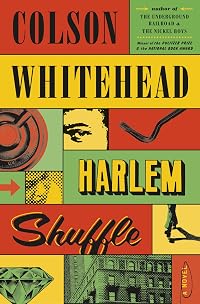
To his customers and neighbors on 125th street, Carney is an upstanding salesman of reasonably priced furniture, making a decent life for himself and his family. He and his wife Elizabeth are expecting their second child, and if her parents on Strivers Row dont approve of him or their cramped apartment across from the subway tracks, its still home. Few people know he descends from a line of uptown hoods and crooks, and that his façade of normalcy has more than a few cracks in it. Cracks show more that are getting bigger all the time. Cash is tight, especially with all those installment-plan sofas, so if his cousin Freddie occasionally drops off the odd ring or necklace, Ray doesnt ask where it comes from. He knows a discreet jeweler downtown who doesnt ask questions, either. Then Freddie falls in with a crew who plan to rob the Hotel Theresathe Waldorf of Harlemand volunteers Rays services as the fence. The heist doesnt go as planned; they rarely do. Now Ray has a new clientele, one made up of shady cops, vicious local gangsters, two-bit pornographers, and other assorted Harlem lowlifes. Thus begins the internal tussle between Ray the striver and Ray the crook. As Ray navigates this double life, he begins to see who actually pulls the strings in Harlem. Can Ray avoid getting killed, save his cousin, and grab his share of the big score, all while maintaining his reputation as the go-to source for all your quality home furniture needs? Harlem Shuffles ingenious story plays out in a beautifully recreated New York City of the early 1960s. Its a family saga masquerading as a crime novel, a hilarious morality play, a social novel about race and power, and ultimately a love letter to Harlem. But mostly, its a joy to read, another dazzling novel from the Pulitzer Prize and National Book Award-winning Colson Whitehead. show lessTags
Recommendations






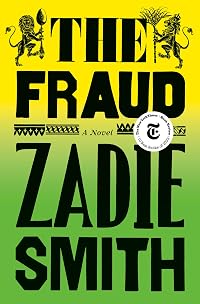
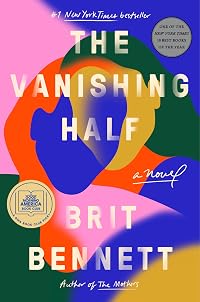
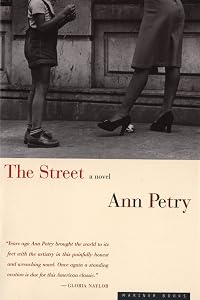
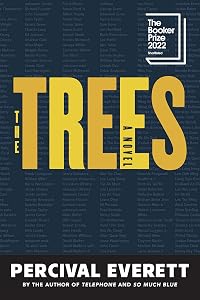
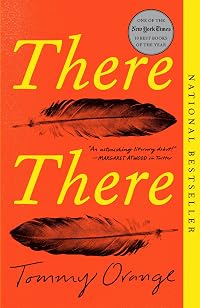

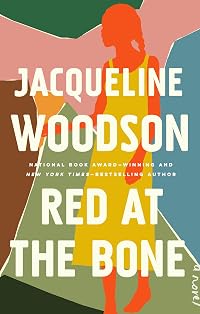
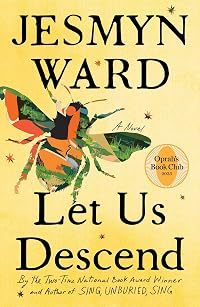
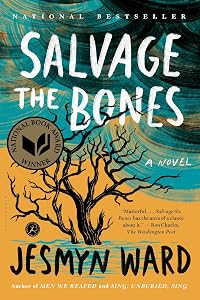

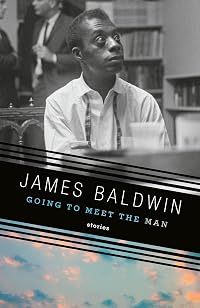
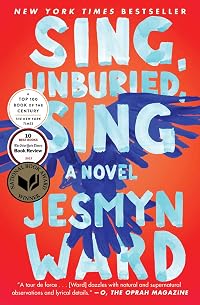
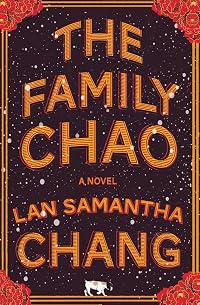
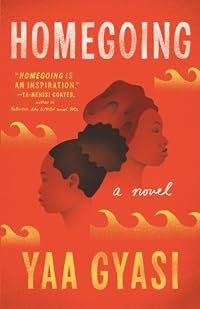
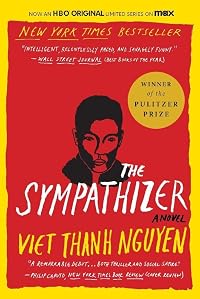
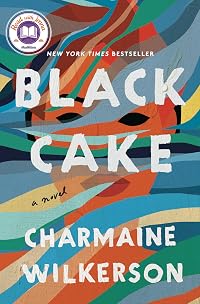
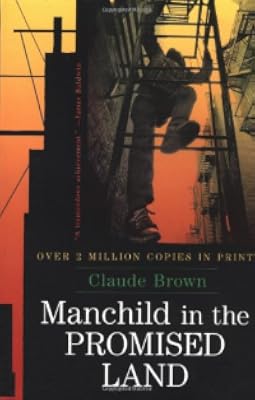
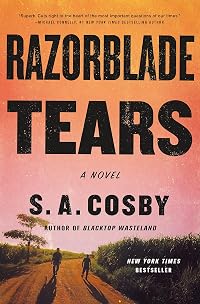

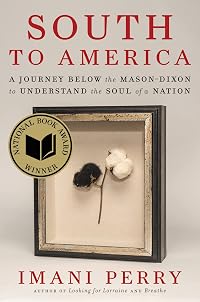
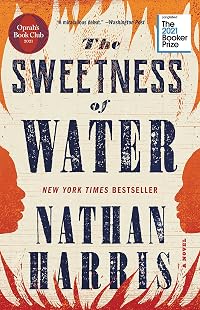
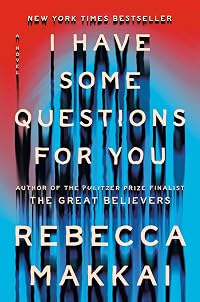
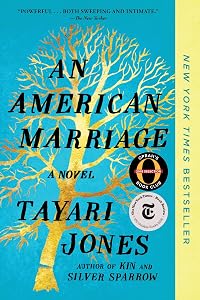
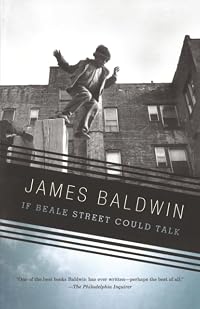
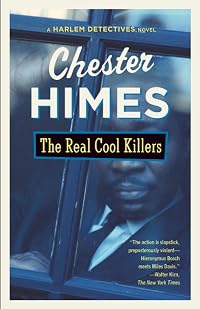
Member Recommendations

by Othemts
Member Reviews
The operative word for recommending this book is trust. Trust the author, trust his process. If you know Colson Whitehead as an author, you can be sure he will deliver. For a bit I wondered, do I care? But the protagonist, Ray Carney, is a complex and intriguing character so I was on board for wherever this would take me. Whitehead has such sharp writing skills that his characters just pull you along as you learn what surrounds them in their time in history and what caused them to make the choices they make. Whitehead also provides many side characters that could be the whole show on their own. By the end I was totally sold and much better informed for the reading of this book.
This is Whitehead's take on a heist novel, set in Harlem in the early 1960s. We don't get in on the execution of the event itself, as our protagonist, Ray Carney is an involuntary participant on the periphery of the action. Ray has a retail furniture store, selling some pretty nice stuff, supporting his family well enough, and dreaming of a better apartment in a nicer neighborhood one day. OK, maybe some of his "second-hand" furniture might have fallen off a truck, or come from a source he'd rather not know about. Aaand, he's not averse to fencing a few pieces of jewelry and other smallish valuables his god-help-me cousin Freddie brings by from time to time. The extra cash is useful. But by and large, Ray would like to think of himself show more as a legitimate businessman who has risen out of the criminal circles his father was known to inhabit. Of course, he's learned a lot by association, and he understands how the underworld of Harlem works. So when Freddie gets involved in an overly ambitious heist of safe deposit box contents from the so-called "Waldorf of Harlem", it's no surprise that he volunteers his cousin Ray to move the stuff. The trouble is, Ray had previously told Freddie he wanted no part of this ridiculous scheme, and now he is stuck between the gang and the cops, with no apparent means of escape. The novel is not high on narrative tension, but it is gripping in another way, as Ray and the reader explore the nuances of "doing the right thing", family loyalties, and all kinds of other issues that truly cannot be reduced to "black and white" simplicity. The setting is irresistible, and rendered with the love of NYC in general, Harlem in particular, which was so beautifully displayed in Whitehead's The Colossus of New York. This is how you make us understand what there is to love about a place that is home despite its dangers. show less
I’m going to be honest, Harlem Shuffle by Colson Whitehead starts slow. Like, what’s going on, there are so many characters, it feels a lot like Deacon King Kong (but “gasp”-- not as good), if this was anyone but Whitehead it may just fall into the DNF pile slow. But, it is Colson Whitehead, so I kept reading and eventually Whitehead’s fine writing, attention to detail and sense of humor began to work their magic until I cared about Ray Carney, his furniture store, and his family at the core of the novel. Told in three parts (1959, 1961, and 1964), it centers around Carney who runs a legitimate business, but cannot escape the legacy of his well-known crook father and the bond with his dubious cousin, Freddie. Don’t be fooled show more by the “heist-thriller” billing — Whitehead has written a historical novel about New York in the early 60s, full of sharp social commentary and racial justice themes. It’s also a masterwork in character development, as Whitehead gives us as complex a character as I can remember in recent fiction while still managing an (eventually) page-turning plot. A must-read for any serious reader. show less
Ray Carney is only slightly crooked: he owns a furniture shop in Harlem and dreams of moving to a nice apartment with his wife and kids, and only occasionally has "gently used" items in his store into whose provenance he does not ask. Then his cousin Freddie asks him to be the fence for a big heist a buddy of his is planning, getting Carney deeper into the seedier side of town.
The book is structured in three parts: 1959, 1961, and 1964. Each of these has pivotal events in Carney's life, and - the final third in particular - New York City. The city Whitehead paints is detailed and rich, and we get to know the Black neighborhoods and question whether Carney's crime is really any worse than what other, more "upstanding" citizens are show more perpetrating at the same time. A great book club book and one that would reward rereading because when you already know the plot and what will happen to the characters, you can then concentrate on the details, the language, and the other elements that make one of Whitehead's stories so special. show less
The book is structured in three parts: 1959, 1961, and 1964. Each of these has pivotal events in Carney's life, and - the final third in particular - New York City. The city Whitehead paints is detailed and rich, and we get to know the Black neighborhoods and question whether Carney's crime is really any worse than what other, more "upstanding" citizens are show more perpetrating at the same time. A great book club book and one that would reward rereading because when you already know the plot and what will happen to the characters, you can then concentrate on the details, the language, and the other elements that make one of Whitehead's stories so special. show less
Another novel in which Whitehead seems to be in his unplugged mode and writing for the sheer joy of storytelling. This time we hear about the adventures of Mike Carney, Jr., the son of a no-account stick-up man who's gone straight -- or as straight as he can go -- by getting into the furniture business and opening up his store in Harlem. This is the early sixties, and so Mike's race determines much of what he can and can't do and how he can or can't do it. The Civil Rights movement and the first urban riots of the sixties keep up a constant hum in the background, too. But I think that the author seems much more interested in other questions. Carney's got a sideline in fencing stolen jewelry and electronics, a secret he keeps both from show more his employees and -- in a sense -- himself. Carney is a professional with a college degree and he takes his life as a small business owner seriously, but given his background and the realities of earning a living, he can only afford to be so honest. A childhood spent among minor criminals and a family member who's still mostly on the wrong side of the law also gives Carney a couple of perspectives you don't find at most Rotary Club meetings. Throughout "Harlem Shuffle," we see our protagonist reconsider the meaning and importance of his inheritance, sometimes discovering parts of himself he never suspected were there. Carney -- often to his disappointment -- also discovers that race and class affect even the way that the underworld operates, though some of his adventures open new doors, too. We watch, for example, how he learns much more about jewelry than the average furniture salesman and also watch how each moral compromise moves him further from the by-the-book businessman that he'd like to be. Carney starts out small time, but it isn't too long before we see that much of the neighborhood's on the take, in one way or another. There is, it seems something ugly hiding behind everybody's high-minded rhetoric, and, while he isn't he crook that his father was, Carney's just smart enough to sense it. His dubious origins turn out to be useful, even in the straight world.
"Harlem Shuffle" is, I suppose, historical fiction, and it's easy to see a the author put in time doing research. At the same time, the novel never feels overly constricted by either its temporal or geographical setting. Whitehead is still writing to tell a story, and I've got little doubt that he's one of our best. But what I might have enjoyed most is the parts of the novel's Harlem setting that the passage of time has more or less erased. Carney's looked down on by his in-laws, certified blue-chip members of the "talented tenth," the kind of black professionals who were once thought to be able to make it in America even, sometimes even by those who considered most black people utterly irredeemable. We hear about a set of clubs, businesses, subtle social differentiations that held real weight in small, tightly knit neighborhoods of black up-and-comers. Much of these institutions and perspectives were more or less washed away by the success of the Civil Rights movement and the racial integration that followed, however limited it might have been, in much the same way that advances in technology decimated the commercial district where you could always take your radio to get it fixed. Meanwhile, Carney watches his father's "associates" fade into history as the drug trade moves in. There are parts of "Harlem Shuffle" that don't fit squarely with the dominant narrative of the United States in the sixties, and it's one of the things that makes it an exceptionally interesting book. I found "Harlem Shuffle" to be compulsively readable, if for no other reason that Colson Whitehead seems to depict Mike Carney's character and his particular social coordinates with such exactness and with such apparent ease. Enjoyable and highly recommendable. show less
"Harlem Shuffle" is, I suppose, historical fiction, and it's easy to see a the author put in time doing research. At the same time, the novel never feels overly constricted by either its temporal or geographical setting. Whitehead is still writing to tell a story, and I've got little doubt that he's one of our best. But what I might have enjoyed most is the parts of the novel's Harlem setting that the passage of time has more or less erased. Carney's looked down on by his in-laws, certified blue-chip members of the "talented tenth," the kind of black professionals who were once thought to be able to make it in America even, sometimes even by those who considered most black people utterly irredeemable. We hear about a set of clubs, businesses, subtle social differentiations that held real weight in small, tightly knit neighborhoods of black up-and-comers. Much of these institutions and perspectives were more or less washed away by the success of the Civil Rights movement and the racial integration that followed, however limited it might have been, in much the same way that advances in technology decimated the commercial district where you could always take your radio to get it fixed. Meanwhile, Carney watches his father's "associates" fade into history as the drug trade moves in. There are parts of "Harlem Shuffle" that don't fit squarely with the dominant narrative of the United States in the sixties, and it's one of the things that makes it an exceptionally interesting book. I found "Harlem Shuffle" to be compulsively readable, if for no other reason that Colson Whitehead seems to depict Mike Carney's character and his particular social coordinates with such exactness and with such apparent ease. Enjoyable and highly recommendable. show less
Ray Carney tries to run an honest business as a furniture store proprietor in Harlem, but occasionally fences stolen items for his cousin Freddie. When Freddie gets a reluctant Ray involved in a bigger robbery, it sets off a series of events that reveal to Ray the underworld of criminals, business leaders, and politicians in Black Harlem, as well as the bigger players in white New York. The novel is framed around three incidents set between 1959 and 1964:
The crackling dialogue and well-formed characters bring to life Black New York the overlooked time after the Harlem Renaissance but before Black Power. It's a funny book, but never at the expense of the characters' humanity. It makes you think just how much of the "Joe Ordinary" life is built on hustling and crime. show less
- a heist of the Hotel Theresa that goes wrong
- Ray's revenge plot against a business man who conned him out of $500
- coinciding with the Harlem riots of 1964, Freddie gets caught up in a plot with the wayward son of a white, old money family that controls vast portions of New York City
- real estate
The crackling dialogue and well-formed characters bring to life Black New York the overlooked time after the Harlem Renaissance but before Black Power. It's a funny book, but never at the expense of the characters' humanity. It makes you think just how much of the "Joe Ordinary" life is built on hustling and crime. show less
To Harlem residents, Ray Carney seems to be an upstanding furniture owner and salesman. He aspires to sell reasonably priced items to furnish people's houses and apartments and live a middle-class life by providing for his family. However, he descends from a family involved in crime, and he's never fully escaped those roots. To those crooks who know his dark side, he represents an opportunity.
His cousins and connections allow him to live a double life, hidden even from his wife. He has all the means and economic privileges of an upstanding life, but he can't shake the need to "shuffle" stolen merchandise from the streets into customer's hands. Eventually, these propensities spiral out of his control, to the detriment of his personal show more business, his crime-ridden family, and his individual integrity. Will he survive? Only those who finish the book will find out for sure.
Author Colson Whitehead guides us through through the dark side of our personal journeys and the compromises we make to survive in life. He does so in a crime story that accelerates as the pages turn. In the meantime, he teaches us about race and power and the inevitable double standards of modern life. This page-turner is well worth reading to pass the time while educating one's self on reality's hidden underside. show less
His cousins and connections allow him to live a double life, hidden even from his wife. He has all the means and economic privileges of an upstanding life, but he can't shake the need to "shuffle" stolen merchandise from the streets into customer's hands. Eventually, these propensities spiral out of his control, to the detriment of his personal show more business, his crime-ridden family, and his individual integrity. Will he survive? Only those who finish the book will find out for sure.
Author Colson Whitehead guides us through through the dark side of our personal journeys and the compromises we make to survive in life. He does so in a crime story that accelerates as the pages turn. In the meantime, he teaches us about race and power and the inevitable double standards of modern life. This page-turner is well worth reading to pass the time while educating one's self on reality's hidden underside. show less
Members
- Recently Added By
Published Reviews
Already having tackled everything from zombies to metaphorical railroads, Whitehead turned to noir and humor for his latest release, Harlem Shuffle. At once a character study about a furniture salesman living in New York City in the early 1960s and a narrative that explores how even good people can be slightly crooked for all the right reasons, Harlem Shuffle is a funny, violent novel that show more doubles as a love letter to New York City’s seedy underbelly and the plethora of characters that made it unique....Harlem Shuffle is many things. On the surface, it is a crime novel with a family saga at its core. However, as readers have come to expect from Whitehead, the narrative is also an exploration of race and power dynamics that coexists with a story about the eternal battle between ethics and need whenever money enters the equation. show less
added by Lemeritus
A heist with a cast of zany characters, tongue-in-cheek dialogue, questionable criminal skills, and of course, a bumbling, incompetent thief or two are undoubtedly part of the charm of Colson Whitehead's Harlem Shuffle. But the novel is also a powerful tale of a man's love for his family and the neighborhood where he lives. And the man at the center of that tale is a devastatingly enjoyable show more character who has a true gift for words — if not always the smartest actions. show less
added by Lemeritus
“Harlem Shuffle” brings Whitehead’s unwavering eloquence — at one point he describes traffic as “honking molasses” — to a mix of city history, niche hangouts, racial stratification, high hopes and low individuals....Though it’s a slightly slow starter, “Harlem Shuffle” has dialogue that crackles, a final third that nearly explodes, hangouts that invite even if they’re show more Chock Full o’ Nuts and characters you won’t forget even if they don’t stick around for more than a few pages. show less
added by Lemeritus
Lists

Books recommended by Barack Obama
295 works; 28 members

Sense of place
156 works; 13 members

Books Read in 2023
5,547 works; 145 members

Anticipated 2021 Reads
231 works; 7 members

Black Authors
384 works; 32 members

FT Best books of 2021: Fiction
12 works; 1 member

Radio 4 Book at Bedtime
12 works; 1 member

Netgalley Reads
458 works; 3 members

Obama Reads
181 works; 3 members

Books Read in 2022
5,166 works; 114 members

Books Read in 2021
5,361 works; 114 members

Wishlist
48 works; 1 member

Books We'd Want on a Desert Island
203 works; 131 members

Top Five Books of 2023
767 works; 317 members

Books Read in 2024
4,623 works; 126 members

Novels with a city or town in the title
61 works; 1 member
Author Information

19+ Works 29,771 Members
Colson Whitehead was born on November 6, 1969. He graduated from Harvard College and worked at the Village Voice writing reviews of television, books, and music. His first novel, The Intuitionist, won the Quality Paperback Book Club's New Voices Award. His other books include The Colossus of New York, Sag Harbor, and Zone One. He won the Young show more Lions Fiction Award and the Anisfield-Wolf Book Award for John Henry Days, the PEN/Oakland Award for Apex Hides the Hurt, and the National Book Award for fiction and the Pulitzer Prize for fiction for The Underground Railroad. His reviews, essays, and fiction have appeared in numerous publications including the New York Times, The New Yorker, New York Magazine, Harper's and Granta. He has received a MacArthur Fellowship, a Whiting Writers Award, and a fellowship at the Cullman Center for Scholars and Writers. (Bowker Author Biography) show less
Some Editions
Awards and Honors
Awards
Distinctions
The Guardian Book of the Day (2021-09-06)
Notable Lists
RUSA CODES Listen List (Listen-Alike – Listen-Alike to “Stories from the Tenants Downstairs” by Sidik Fofana – 2023)
Series

Common Knowledge
- Canonical title
- Harlem Shuffle
- Original title
- Harlem Shuffle
- Original publication date
- 2021-09-14 (1e édition originale américaine, Doubleday) (1e é | dition originale amé | ricaine, Doubleday); 1923-01-04 (1e traduction et édition française, Albin Michel) (1e traduction et é | dition franç | aise, Albin Michel)
- People/Characters
- Carney; Freddie; Elizabeth; Linus
- Important places
- Harlem, New York, New York, USA
- Important events
- Riot of 1964 instigated by the police shooting of James Powell
- Dedication
- for Beckett
- First words
- His cousin Freddie brought him on the heist one hot night in early June.
- Quotations
- If something big was afoot, Aronowitz twirled in his chair and scurried into the workshop in the back, to more grunts. He reminded Carney of a squirrel in the park, darting helter-skelter after lost nuts.
The way he saw it, living taught you that you didn’t have to live the way you’d been taught to live. You came from one place but more important was where you decided to go.
Everyone had secret corners and alleys that no one else saw—what mattered were your major streets and boulevards, the stuff that showed up on other people’s maps of you.
Finding out you were free six months after the fact didn’t seem like something to celebrate. More like it was telling you to read the morning paper.
Carney didn’t go to church. Blasphemers on one side of the family, skeptics on the other, and both sides liked to sleep in.
The stairwell creaked in such a way that if it collapsed, no one could say there’d been no warning.
We’ll sue, and it will take years, and the city will pay because millions and millions are still cheaper than putting a true price on killing a black boy.
There are things a parent can utter to a child that should not be heard by others. Verdicts and spiky assessments, pettiness masquerading as principle and magnified by time, grudges that have taken root in the bones. A witnes... (show all)s can render these things indelible and real in a way that they wouldn’t be if there were no one else around. - Last words
- (Click to show. Warning: May contain spoilers.)It was such a pretty block and on certain nights when it was cool and quiet it was as if you didn't live in the city at all.
- Original language*
- Anglais (Etats-Unis) (Etats-Unis)
- Canonical DDC/MDS
- 813.54
- Canonical LCC
- PS3573.H4768
*Some information comes from Common Knowledge in other languages. Click "Edit" for more information.
Classifications
- Genres
- Historical Fiction, General Fiction, Fiction and Literature, Mystery
- DDC/MDS
- 813.54 — Literature & rhetoric American literature in English American fiction in English 1900-1999 1945-1999
- LCC
- PS3573 .H4768 — Language and Literature American literature American literature Individual authors 1961-
- BISAC
Statistics
- Members
- 3,155
- Popularity
- 5,498
- Reviews
- 127
- Rating
- (3.88)
- Languages
- 14 — Catalan, Danish, Dutch, English, Finnish, French, German, Hungarian, Italian, Polish, Spanish, Swedish, Turkish, Portuguese (Portugal)
- Media
- Paper, Audiobook, Ebook
- ISBNs
- 46
- ASINs
- 7