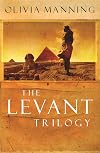
The Levant Trilogy
by Olivia Manning
The Levant trilogy (Collections and Selections — 1-3), Fortunes of War (Collections and Selections — 4-6)
On This Page
Description
"It's the spring of 1941 and the German army's eastward march appears unstoppable. In the Egyptian desert, the young officer Simon Boulderstone, twenty years old and wet behind the ears, waits in dreadful anticipation of his first experience of combat. The people of Cairo are waiting, too. In crowded apartments, refugees from Europe wait; in palm-shaded mansions, Anglo-Egyptians wait. At night they are joined in the city's bars and cabarets by soldiers on leave, looking for a last dance show more before going off to the front lines. Into this mix enter Guy and Harriet Pringle, whose story began in Olivia Manning's magisterial Balkan Trilogy. They have successfully escaped Nazi-occupied Greece but are dogged by uncertainties about their marriage. And, as Simon discovers that the realities of war are both more prosaic and more terrible than he had imagined, Harriet is forced to confront her precarious health and her place beside her husband"-- show lessTags
Recommendations




































Member Recommendations

Member Reviews
I read the final three installments in Olivia Manning's six book series as one book, [The Levant Trilogy]. The series begins with [The Balkan Trilogy] - read that first! - but do read these! I ended up absolutely loving them.
In The Levant Trilogy, Guy and Harriet Pringle are now in Egypt. There are some new characters, including Simon Boulderstone, a very young officer trying to navigate both becoming an adult and becoming part of a world war. I loved the addition of his story and thought it really rounded out the book. Guy and Harriet continue to have marital problems, with Guy going about his life without really including Harriet. He seems to assume she will always just be there waiting for him. At one point in, I think, the last show more volume of the six, he references being 25, and I thought - Oh! they are so young!! I think I had pictured them in their 30s for some reason, probably because the situations they are in are so adult and difficult.
During most of this trilogy, Harriet is ill with a stomach issue. She meets many new people in Egypt and makes some real friends, unlike in the Balkan trilogy. These people are developed in a much more satisfactory way and really add to the quality of the writing. In fact, I found from the first pages that The Levant Trilogy is a huge step up in the writing quality over The Balkan Trilogy. Manning had definitely become a more confident and skilled writer over the time of writing these six books. I highly enjoyed these and I'm so grateful to LT for bringing them to my attention! show less
In The Levant Trilogy, Guy and Harriet Pringle are now in Egypt. There are some new characters, including Simon Boulderstone, a very young officer trying to navigate both becoming an adult and becoming part of a world war. I loved the addition of his story and thought it really rounded out the book. Guy and Harriet continue to have marital problems, with Guy going about his life without really including Harriet. He seems to assume she will always just be there waiting for him. At one point in, I think, the last show more volume of the six, he references being 25, and I thought - Oh! they are so young!! I think I had pictured them in their 30s for some reason, probably because the situations they are in are so adult and difficult.
During most of this trilogy, Harriet is ill with a stomach issue. She meets many new people in Egypt and makes some real friends, unlike in the Balkan trilogy. These people are developed in a much more satisfactory way and really add to the quality of the writing. In fact, I found from the first pages that The Levant Trilogy is a huge step up in the writing quality over The Balkan Trilogy. Manning had definitely become a more confident and skilled writer over the time of writing these six books. I highly enjoyed these and I'm so grateful to LT for bringing them to my attention! show less
Guy and Harriet arrive in Cairo, their personal situation as precarious as the city's, with Rommel's Akrika Corp seemingly closing in. Their marriage is under strain, as is Harriet's health, and once again they are in the midst of a shifting cast of characters, including the young Major, Simon, with whom Harriet climbs a pyramid and witnesses a distressing scene after a child is killed by an unexploded bomb. The quiet desperation of their lives, the arbitrary intrusion of death, the sense of youth being wasted in this limbo of fear and boredom when it isn't being snuffed out altogether, the haunting traumas of violent experiences, and Harriet's futile search for independence from Guy because Guy simply won't ever change, all form a show more compelling, even haunting portrait of life in wartime. show less
Having already read The Balkan Trilogy, I was eager to read The Levant Trilogy, the last three books of Olivia Mannings’ massive World War II opus, Fortunes of War. It did not disappoint me. Like the first, this second trilogy is as much about the Harriet and Guy Pringle’s marriage as it is about the War. In fact, the war is more distant in these three books, even when Rommel’s army is just fifty miles away.
The first two books in the trilogy, The Danger Tree and The Battle Lost and Won, take place in Cairo where the Pringles fled after the fall of Greece. As in The Balkan Trilogy, there is another character who carries part of the weight of the story. This time its Simon Boulderstone. He is far less interesting than Prince Yakimov show more whose death in Greece was senseless and perfect for being so senseless. Simon, though, is nothing like Yakimov. He’s maturing, growing from youth to maturity. He is the anti-Yakimov, suffering from a highly developed sense of responsibility, not fecklessness.
Guy is still Guy, gregarious and popular, spreading himself too thin and ultimately, selfish in his disregard for his wife Harriet. Harriet, though, is changing, coming into her own, finding her own friends, exploring Cairo on her own. At the end of the second book, she’s done with Guy’s disregard and decides to go back to England on a special evacuation ship. At the last minute, she goes with some Wrens to Syria, purely on impulse, not really sure what she plans to do.
This brings us to the last book, The Sum of Things, where she is exploring Syria, Lebanon, and Palestine while Guy is back in Cairo, believing her dead along with all the others who died on that transport ship. For the first time, Guy’s friends point out that he was a neglectful, selfish husband. He begins to see things through her eyes. The incident from the second book that provoked Harriet’s decision to leave is revisited twice in this final book, by both Guy and Harriet. She had been given a brooch with rose diamonds by her friend Angela, a valuable gift she loved. Guy took it from her to give to another woman, not for romantic reasons, but because he though it an appropriate addition to her costume for a show he was producing. Seeing it on that woman, now that Harriet is dead, he demanded its return. Harriet also retold that story, to the woman who first gave the brooch to her, an example of Guy’s disregard for her feelings.
The Levant Trilogy is fascinating. It gives us a very revealing and deep look at a world that is long gone in Cairo, Syria, Lebanon, and Palestine. Harriet is an acute observer of people and interested in the people, places and history. She explores. She is also growing into a more self-confident and independent woman. Manning died that year the last of the three books in this trilogy was published. Many assume a third trilogy that would cover the last two years of the war was planned. That makes sense as the end seems incomplete.
However, it’s still satisfying. I was happy to see Harriet leave Gus. She was offered options. Other men are drawn to her and she had chances, in Romania, in Greece, in Syria, in Lebanon…but she realizes, it seems, that there is freedom in Gus’s self-absorbed disregard. And now she has a taste for freedom.
★★★★
http://tonstantweaderreviews.wordpress.com/2017/03/10/the-levant-trilogy-by-oliv... show less
The first two books in the trilogy, The Danger Tree and The Battle Lost and Won, take place in Cairo where the Pringles fled after the fall of Greece. As in The Balkan Trilogy, there is another character who carries part of the weight of the story. This time its Simon Boulderstone. He is far less interesting than Prince Yakimov show more whose death in Greece was senseless and perfect for being so senseless. Simon, though, is nothing like Yakimov. He’s maturing, growing from youth to maturity. He is the anti-Yakimov, suffering from a highly developed sense of responsibility, not fecklessness.
Guy is still Guy, gregarious and popular, spreading himself too thin and ultimately, selfish in his disregard for his wife Harriet. Harriet, though, is changing, coming into her own, finding her own friends, exploring Cairo on her own. At the end of the second book, she’s done with Guy’s disregard and decides to go back to England on a special evacuation ship. At the last minute, she goes with some Wrens to Syria, purely on impulse, not really sure what she plans to do.
This brings us to the last book, The Sum of Things, where she is exploring Syria, Lebanon, and Palestine while Guy is back in Cairo, believing her dead along with all the others who died on that transport ship. For the first time, Guy’s friends point out that he was a neglectful, selfish husband. He begins to see things through her eyes. The incident from the second book that provoked Harriet’s decision to leave is revisited twice in this final book, by both Guy and Harriet. She had been given a brooch with rose diamonds by her friend Angela, a valuable gift she loved. Guy took it from her to give to another woman, not for romantic reasons, but because he though it an appropriate addition to her costume for a show he was producing. Seeing it on that woman, now that Harriet is dead, he demanded its return. Harriet also retold that story, to the woman who first gave the brooch to her, an example of Guy’s disregard for her feelings.
The Levant Trilogy is fascinating. It gives us a very revealing and deep look at a world that is long gone in Cairo, Syria, Lebanon, and Palestine. Harriet is an acute observer of people and interested in the people, places and history. She explores. She is also growing into a more self-confident and independent woman. Manning died that year the last of the three books in this trilogy was published. Many assume a third trilogy that would cover the last two years of the war was planned. That makes sense as the end seems incomplete.
However, it’s still satisfying. I was happy to see Harriet leave Gus. She was offered options. Other men are drawn to her and she had chances, in Romania, in Greece, in Syria, in Lebanon…but she realizes, it seems, that there is freedom in Gus’s self-absorbed disregard. And now she has a taste for freedom.
★★★★
http://tonstantweaderreviews.wordpress.com/2017/03/10/the-levant-trilogy-by-oliv... show less
Harriet and Guy have moved on to Egypt. Guy continues to be friends to everyone except his wife, indeed there are times when you could slap him for being so wrapped up in himself. New characters - Simon, a soldier, Angela, a greiving mother and then more hangers-on.
You don't often get to hear about how civilians got through the war, so this makes Manning pretty unique.
You don't often get to hear about how civilians got through the war, so this makes Manning pretty unique.
Second part of Manning's Fortuness of War, and in many ways a step up from the first part, the Balkan trilogy. Her renowned ability to capture place comes to the fore here and Cairo is a character in its own right, much more so than Bucharest or Athens. She also portrays more of the war itself. Her psychological portrait of the Pringles continues and the characters develop well. Guy is driven into even further distance from Harriet by his need to justify his existence as a civilian, whereas Harriet starts to break free from her reliance on Guy and becomes more accepting of others. The minor characters are well drawn. What lets the book down in my view is the ending. Guy's behaviour when Harriet returns to Cairo seems quite bizarre and show more at odds with his earlier (albeit brief) increased self awareness. And that Harriet lets him away with it is even more bizarre. The ending does seem somewhat rushed - there has been speculation that Manning was planning a further volume, which would make sense. Overall though, an absorbing and well crafted work. 16 October 2018 show less
This trilogy is the second of two trilogies comprising "The Fortunes of War" by Olivia Manning. As was true of "The Balkan Trilogy ", "The Levant Trilogy" is absolutely outstanding reading. These semi-autobiographical novels pick up where the first trilogy ended. Guy and Harriet Pringle have barely escaped Greece as the Nazis invaded. They find themselves in the Middle East with old and new compatriots, social class gone askew, the ever present threat of the advance of the German armed forces, and marital tension complicating every aspect of their lives. Manning's storytelling is excellent, using crisp prose with vibrant descriptive passages bringing the landscape and antiquities to life on the page. Quirky characters abound as well. I show more definitely connected with Harriet's quest for selfhood and was rooting for her all along. A quietly fantastic read! show less
I couldn't wait to read this sequel to Manning's "The Balkan Trilogy" because I was so enthralled both by the story of Harriet and Guy Pringle and their life at the edge of the beginning of the second world war and by Manning's excellent and psychologically insightful writing. Alas, although many reviewers seem to consider "The Levant Trilogy" superior to the Balkan, I have the opposite opinion.
In "The Levant Trilogy," Manning broadens her view to consider another protagonist, Simon Boulderstone, a young officer posted to Egypt at the time when the Germans are 50 miles from Alexandria, and the war in the desert in general. His story is alternated with that of Harriet and Guy, who have landed in Cairo, having escaped from Greece just show more ahead of the Nazis at the end of "The Balkan Trilogy." Diluting the concentration of the focus on Guy and Harriet and their immediate circle, and expanding the view to the war itself in addition to its impact on the everyday life of civilians, reduced the intensity of the story. The peripheral characters seemed less carefully drawn, and were on the whole less interesting than those in the previous trilogy, and Harriet's trips to Luxor and then to Syria and Jerusalem seem almost designed to provide a travelogue, and minimally to advance the plot and her psychological development.
I did enjoy the book, and it did once again provide an interesting look at life at the edge of war, as well, this time, at the war itself, but I missed the intensity of Manning's focus on the place and the psychology of her characters and their relationships, including Harriet and Guy's marriage, in the first trilogy. show less
In "The Levant Trilogy," Manning broadens her view to consider another protagonist, Simon Boulderstone, a young officer posted to Egypt at the time when the Germans are 50 miles from Alexandria, and the war in the desert in general. His story is alternated with that of Harriet and Guy, who have landed in Cairo, having escaped from Greece just show more ahead of the Nazis at the end of "The Balkan Trilogy." Diluting the concentration of the focus on Guy and Harriet and their immediate circle, and expanding the view to the war itself in addition to its impact on the everyday life of civilians, reduced the intensity of the story. The peripheral characters seemed less carefully drawn, and were on the whole less interesting than those in the previous trilogy, and Harriet's trips to Luxor and then to Syria and Jerusalem seem almost designed to provide a travelogue, and minimally to advance the plot and her psychological development.
I did enjoy the book, and it did once again provide an interesting look at life at the edge of war, as well, this time, at the war itself, but I missed the intensity of Manning's focus on the place and the psychology of her characters and their relationships, including Harriet and Guy's marriage, in the first trilogy. show less
Members
- Recently Added By
Lists

Top Five Books of 2013
1,562 works; 721 members

Top Five Books of 2022
736 works; 272 members

Middle East Fiction
179 works; 16 members

Best books made into television
66 works; 4 members

egypt novels
16 works; 2 members

THE WAR ROOM
813 works; 24 members

Global Reads: Books Set in the Middle East and North Africa
50 works; 8 members
Author Information

27+ Works 3,698 Members
Series

The Levant trilogy
3 works (Collections and Selections — 1-3)

Fortunes of War
6 works (Collections and Selections — 4-6)
Belongs to Publisher Series
Work Relationships
Common Knowledge
- Canonical title
- The Levant Trilogy
- Original title
- The Levant Trilogy
- Original publication date
- 1982 (Trilogy) (Trilogy)
- People/Characters
- Harriet Pringle; Guy Pringle; Simon Boulderstone
- Important places
- Cairo, Egypt
- Important events
- Western Desert Campaign (1940 | 1943)
- Related movies
- Fortunes of War (1987 | TV miniseries | IMDb)
- Blurbers
- Burgess, Anthony
Classifications
Statistics
- Members
- 760
- Popularity
- 37,099
- Reviews
- 18
- Rating
- (4.04)
- Languages
- English, Finnish, Greek
- Media
- Paper, Ebook
- ISBNs
- 13
- ASINs
- 10