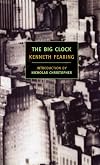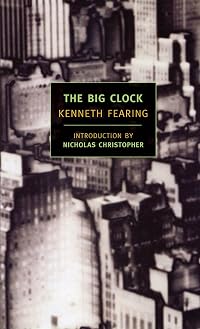
The Big Clock
by Kenneth Fearing
On This Page
Description
George Stroud is a hard-drinking, tough-talking, none-too-scrupulous writer for a New York media conglomerate that bears a striking resemblance to Time, Inc. in the heyday of Henry Luce. One day, before heading home to his wife in the suburbs, Stroud has a drink with Pauline, the beautiful girlfriend of his boss, Earl Janoth. Things happen. The next day, Stroud escorts Pauline home, leaving her off at the corner just as Janoth returns from a trip. The day after that, Pauline is found show more murdered in her apartment. Janoth knows there was one witness to his entry into Pauline's apartment on the night of the murder; he knows that man must have been the man Pauline was with before he got back; but he doesn't know who he was. Janoth badly wants to get his hands on that man, and he picks one of his most trusted employees to track him down: George Stroud. Who else?How does a man escape from himself? No book has ever dramatized that question to more perfect effect than The Big Clock, a masterpiece of American noir. show lessTags
Recommendations












Member Reviews
3.5/5
A short and sweet thriller noir that highlights the crushing weight of the capitalist system and does an excellent job of ratcheting up the tension every few pages. I haven't read much in the way of crime fiction, but this has convinced me that there is a space in this genre that would really enjoy, even if The Big Clock doesn't hit all the right notes for me.
We follow George Stroud, a serial alcoholic, adulterer, and liar, who is employed by a seedy magazine publishing company owned by another goon named Earl Janoth. Stroud has an illicit affair with Janoth's girlfriend, Pauline, and successful hides it from his family. After escorting Pauline home one day, things take a turn when Stoud sees Janoth entering her building with her, show more only to find out that she is found dead the next day. The sole witness to the crime, Stroud must hides his involvement, not only because Janoth is trying to find the mysterious figure that had seen him at Pauline's apartment, but because if he goes to the cops to rat Janoth out, he will undoubtedly loose his wife and child because of his admitted adultery. The tension of The Big Clock grows like a vice around Stroud as both the police and Janoth try to find him, and he desperately tries to slow the investigation on both sides.
Needless to say, there's really nobody in this book that's a role model, with perhaps the exception of Stroud's wife and child. This is a grim picture of corporate America, of the inescapable pressing force of the machinery that controls us all, and how the few that do escape the race are capable of doing so in no small part due to their contemptible moral values. There are some particularly memorable lines as Fearing describes the monolithic building that the publishing company occupies, and the 'offerings' it requires from the people who work there day in and day out. Fearing's character work is also impressive, creating a few memorable figures that represent this era of noir writing well.
I appreciated that Fearing switched point of view several times, lending us a more personal perspective on other characters, and giving us an outside look at Stroud himself. My biggest gripe was that it took too long for the inciting action to take place. Not that those pages go to waste, they do a good job of setting up the framework for the ensuing drama, but I almost put the book down because it didn't grip me within the first 50 pages (since the book is only 170 pages long). If nothing else, The Big Clock has certainly created an itch in me for more of this genre and style of writing. The Big Clock is a perfect book for a short afternoon read that you can finish in a few hours, which at the same time doesn't sacrifice meaningful theme work to be entertaining. show less
A short and sweet thriller noir that highlights the crushing weight of the capitalist system and does an excellent job of ratcheting up the tension every few pages. I haven't read much in the way of crime fiction, but this has convinced me that there is a space in this genre that would really enjoy, even if The Big Clock doesn't hit all the right notes for me.
We follow George Stroud, a serial alcoholic, adulterer, and liar, who is employed by a seedy magazine publishing company owned by another goon named Earl Janoth. Stroud has an illicit affair with Janoth's girlfriend, Pauline, and successful hides it from his family. After escorting Pauline home one day, things take a turn when Stoud sees Janoth entering her building with her, show more only to find out that she is found dead the next day. The sole witness to the crime, Stroud must hides his involvement, not only because Janoth is trying to find the mysterious figure that had seen him at Pauline's apartment, but because if he goes to the cops to rat Janoth out, he will undoubtedly loose his wife and child because of his admitted adultery. The tension of The Big Clock grows like a vice around Stroud as both the police and Janoth try to find him, and he desperately tries to slow the investigation on both sides.
Needless to say, there's really nobody in this book that's a role model, with perhaps the exception of Stroud's wife and child. This is a grim picture of corporate America, of the inescapable pressing force of the machinery that controls us all, and how the few that do escape the race are capable of doing so in no small part due to their contemptible moral values. There are some particularly memorable lines as Fearing describes the monolithic building that the publishing company occupies, and the 'offerings' it requires from the people who work there day in and day out. Fearing's character work is also impressive, creating a few memorable figures that represent this era of noir writing well.
I appreciated that Fearing switched point of view several times, lending us a more personal perspective on other characters, and giving us an outside look at Stroud himself. My biggest gripe was that it took too long for the inciting action to take place. Not that those pages go to waste, they do a good job of setting up the framework for the ensuing drama, but I almost put the book down because it didn't grip me within the first 50 pages (since the book is only 170 pages long). If nothing else, The Big Clock has certainly created an itch in me for more of this genre and style of writing. The Big Clock is a perfect book for a short afternoon read that you can finish in a few hours, which at the same time doesn't sacrifice meaningful theme work to be entertaining. show less
Racing the Clock of Life
The Big Clock is a different kind of murder/crime novel, but nonetheless dark and tawdry as American Noir should be. It’s different because the murder doesn’t come until well into the novel, and then really isn’t the focus of the suspenseful race against the clock. The focus is George Stroud, an ambitious magazine writer/editor, a man who drinks hard and cheats on his wife, who thinks quite highly of himself, of his intelligence, and his appreciation of aesthetics, particularly when it comes to art. The plot is a finely honed chase story about an innocent man, at least innocent of murder, trying to save his life. Even more, it’s a keen psychological probing of a cunning mind, that of George show more Stroud.
Outlined, the story begins with George grumbling to himself at a party thrown by his employer, Earl Janoth, chairman of Janoth Enterprises, an agglomeration of magazines. There he meets Pauline Delos, a magnetic blonde, who also happens to be seeing Janoth. Sometime later George and Pauline hookup, when George’s wife and daughter are safely out of town. The pair have a wild weekend in New York, where they buy a painting that proves a key clue in the tale, and upstate in Albany. At the end, he sees her home, but not to her door because Janoth is arriving at that precise moment. George holds back in the shadows, unrecognized. Next thing he knows, Pauline is dead and the most likely murderer is Janoth. In a twist, though, to protect himself, Janoth and his business partner concoct a tale about the mystery man, who is the only one who can place Janoth at Pauline’s apartment, with the objective of eliminating him. They sic the full resources of the publishing house on finding the man, and they put George in charge. George, faced with the task of ferreting out himself, has to continually throw his team of investigative reporters off his scent, until, at the end, they have pretty much closed in on him. It’s then that Fearing springs a surprise, the seed of which he has placed in plain view at the outset of the novel.
Readers will find two features of the novel particularly interesting. First, the clock of the title; it serves as both a sort of stopwatch counting down the hours and minutes until George finds himself exposed. It also functions as an overarching symbol of the relentless grind of life, it’s unalterable march to the fatal moment in every life. The second are the Louise Patterson paintings; one hanging in George’s office builds tension as we readers and George wait for somebody to identify it as a Patterson. Even more, though, George’s attachment to his Patterson paintings, and specifically the one from the antique shop, speak volumes about George’s character: his self-pride, his superior aesthetic eye, and his willingness to behave recklessly to preserve is purchase, which is really part and parcel of his identity.
You’ll find The Big Clock not only suspenseful but more sophisticated than the typical noir crime novel. show less
The Big Clock is a different kind of murder/crime novel, but nonetheless dark and tawdry as American Noir should be. It’s different because the murder doesn’t come until well into the novel, and then really isn’t the focus of the suspenseful race against the clock. The focus is George Stroud, an ambitious magazine writer/editor, a man who drinks hard and cheats on his wife, who thinks quite highly of himself, of his intelligence, and his appreciation of aesthetics, particularly when it comes to art. The plot is a finely honed chase story about an innocent man, at least innocent of murder, trying to save his life. Even more, it’s a keen psychological probing of a cunning mind, that of George show more Stroud.
Outlined, the story begins with George grumbling to himself at a party thrown by his employer, Earl Janoth, chairman of Janoth Enterprises, an agglomeration of magazines. There he meets Pauline Delos, a magnetic blonde, who also happens to be seeing Janoth. Sometime later George and Pauline hookup, when George’s wife and daughter are safely out of town. The pair have a wild weekend in New York, where they buy a painting that proves a key clue in the tale, and upstate in Albany. At the end, he sees her home, but not to her door because Janoth is arriving at that precise moment. George holds back in the shadows, unrecognized. Next thing he knows, Pauline is dead and the most likely murderer is Janoth. In a twist, though, to protect himself, Janoth and his business partner concoct a tale about the mystery man, who is the only one who can place Janoth at Pauline’s apartment, with the objective of eliminating him. They sic the full resources of the publishing house on finding the man, and they put George in charge. George, faced with the task of ferreting out himself, has to continually throw his team of investigative reporters off his scent, until, at the end, they have pretty much closed in on him. It’s then that Fearing springs a surprise, the seed of which he has placed in plain view at the outset of the novel.
Readers will find two features of the novel particularly interesting. First, the clock of the title; it serves as both a sort of stopwatch counting down the hours and minutes until George finds himself exposed. It also functions as an overarching symbol of the relentless grind of life, it’s unalterable march to the fatal moment in every life. The second are the Louise Patterson paintings; one hanging in George’s office builds tension as we readers and George wait for somebody to identify it as a Patterson. Even more, though, George’s attachment to his Patterson paintings, and specifically the one from the antique shop, speak volumes about George’s character: his self-pride, his superior aesthetic eye, and his willingness to behave recklessly to preserve is purchase, which is really part and parcel of his identity.
You’ll find The Big Clock not only suspenseful but more sophisticated than the typical noir crime novel. show less
Racing the Clock of Life
The Big Clock is a different kind of murder/crime novel, but nonetheless dark and tawdry as American Noir should be. It’s different because the murder doesn’t come until well into the novel, and then really isn’t the focus of the suspenseful race against the clock. The focus is George Stroud, an ambitious magazine writer/editor, a man who drinks hard and cheats on his wife, who thinks quite highly of himself, of his intelligence, and his appreciation of aesthetics, particularly when it comes to art. The plot is a finely honed chase story about an innocent man, at least innocent of murder, trying to save his life. Even more, it’s a keen psychological probing of a cunning mind, that of George show more Stroud.
Outlined, the story begins with George grumbling to himself at a party thrown by his employer, Earl Janoth, chairman of Janoth Enterprises, an agglomeration of magazines. There he meets Pauline Delos, a magnetic blonde, who also happens to be seeing Janoth. Sometime later George and Pauline hookup, when George’s wife and daughter are safely out of town. The pair have a wild weekend in New York, where they buy a painting that proves a key clue in the tale, and upstate in Albany. At the end, he sees her home, but not to her door because Janoth is arriving at that precise moment. George holds back in the shadows, unrecognized. Next thing he knows, Pauline is dead and the most likely murderer is Janoth. In a twist, though, to protect himself, Janoth and his business partner concoct a tale about the mystery man, who is the only one who can place Janoth at Pauline’s apartment, with the objective of eliminating him. They sic the full resources of the publishing house on finding the man, and they put George in charge. George, faced with the task of ferreting out himself, has to continually throw his team of investigative reporters off his scent, until, at the end, they have pretty much closed in on him. It’s then that Fearing springs a surprise, the seed of which he has placed in plain view at the outset of the novel.
Readers will find two features of the novel particularly interesting. First, the clock of the title; it serves as both a sort of stopwatch counting down the hours and minutes until George finds himself exposed. It also functions as an overarching symbol of the relentless grind of life, it’s unalterable march to the fatal moment in every life. The second are the Louise Patterson paintings; one hanging in George’s office builds tension as we readers and George wait for somebody to identify it as a Patterson. Even more, though, George’s attachment to his Patterson paintings, and specifically the one from the antique shop, speak volumes about George’s character: his self-pride, his superior aesthetic eye, and his willingness to behave recklessly to preserve is purchase, which is really part and parcel of his identity.
You’ll find The Big Clock not only suspenseful but more sophisticated than the typical noir crime novel. show less
The Big Clock is a different kind of murder/crime novel, but nonetheless dark and tawdry as American Noir should be. It’s different because the murder doesn’t come until well into the novel, and then really isn’t the focus of the suspenseful race against the clock. The focus is George Stroud, an ambitious magazine writer/editor, a man who drinks hard and cheats on his wife, who thinks quite highly of himself, of his intelligence, and his appreciation of aesthetics, particularly when it comes to art. The plot is a finely honed chase story about an innocent man, at least innocent of murder, trying to save his life. Even more, it’s a keen psychological probing of a cunning mind, that of George show more Stroud.
Outlined, the story begins with George grumbling to himself at a party thrown by his employer, Earl Janoth, chairman of Janoth Enterprises, an agglomeration of magazines. There he meets Pauline Delos, a magnetic blonde, who also happens to be seeing Janoth. Sometime later George and Pauline hookup, when George’s wife and daughter are safely out of town. The pair have a wild weekend in New York, where they buy a painting that proves a key clue in the tale, and upstate in Albany. At the end, he sees her home, but not to her door because Janoth is arriving at that precise moment. George holds back in the shadows, unrecognized. Next thing he knows, Pauline is dead and the most likely murderer is Janoth. In a twist, though, to protect himself, Janoth and his business partner concoct a tale about the mystery man, who is the only one who can place Janoth at Pauline’s apartment, with the objective of eliminating him. They sic the full resources of the publishing house on finding the man, and they put George in charge. George, faced with the task of ferreting out himself, has to continually throw his team of investigative reporters off his scent, until, at the end, they have pretty much closed in on him. It’s then that Fearing springs a surprise, the seed of which he has placed in plain view at the outset of the novel.
Readers will find two features of the novel particularly interesting. First, the clock of the title; it serves as both a sort of stopwatch counting down the hours and minutes until George finds himself exposed. It also functions as an overarching symbol of the relentless grind of life, it’s unalterable march to the fatal moment in every life. The second are the Louise Patterson paintings; one hanging in George’s office builds tension as we readers and George wait for somebody to identify it as a Patterson. Even more, though, George’s attachment to his Patterson paintings, and specifically the one from the antique shop, speak volumes about George’s character: his self-pride, his superior aesthetic eye, and his willingness to behave recklessly to preserve is purchase, which is really part and parcel of his identity.
You’ll find The Big Clock not only suspenseful but more sophisticated than the typical noir crime novel. show less
The Big Clock is a first rate noir novella from 1946, a gripping story of suspense that is widely regarded as a classic. Protagonist George Stroud cheats on his wife and spends the night with the girlfriend of his own boss – Earl Janoth, the powerful head of a major publishing empire. Not knowing who she has been with, Janoth kills her in a jealous rage; he then puts George in charge of finding who her lover was in order to pin the blame on that person. Without giving away the plot, it will suffice to say that George and Janoth are engaged in a desperate battle of wits, one in which both their lives are at stake.
The Big Clock is chilling, and peopled by well- drawn distinctive characters. The story transcends the genre of crime show more fiction, being less “hardboiled” in tone than surrealistic. It takes the unusual approach of being narrated by each of its major characters in the first- person. Thus, the reader not only gains an omniscient view of events as they unfold, but sees each of the characters through the eyes of the others – and none (as viewed by the reader) is particularly admirable. Despite the subject matter, the novel has irony, satire, symbolism, humor, and humanity (as in George’s interactions with his infant daughter Georgia). The pace moves inexorably towards a gripping climax. While some find the ending is a bit of a let-down, it’s hard for me to imagine how else the story could have been ended.
No one pens a hardboiled line quite like Kenneth Fearing. Of Pauline Delos, Janoth’s blonde mistress (with whom George has his dangerous affair): The eye saw nothing but innocence, to the instincts she was undiluted sex, the brain said here was a perfect hell. Earl Janoth’s ruthless subordinate, Steve Hagan is “a hard, dark little man whose soul had been hit by lightning, which he'd liked. His mother was a bank vault, and his father an International Business Machine." One character remarks: ”Judas must have been a born conformist, a naturally common-sense, rubber-stamp sort of fellow who rose far above himself when he became involved with a group of people who were hardly in society, let alone a profitable business.”
As for the clock of the book’s title, I take it to be an ambiguous metaphor for a world governed by powerful impersonal forces and remorseless fate. The clock “measures people the same way it measures money, and the growth of trees, the lifespan of mosquitoes and morals, the advance of time.” Early in the novel, George reflects ”The big clock was running as usual… Sometimes the hands of the clock actually raced, and at other times they hardly moved at all. But that made no difference to the big clock. The hands could move backward, and the time it told would be right just the same. It would still be running as usual, because all the other watches have to be set by the big one, which is even more powerful than the calendar, and to which one automatically adjusts his entire life. And later: “The super-clock would go on forever, it was too massive to be stopped. But it had no brains, and I did. I could escape from it.”
The Big Clock was Kenneth Fearing’s only notable novel (his other work included poetry and minor works of fiction, some of which were published in the pulp magazines under a pseudonym). The book was adapted into a successful Paramount film starring Ray Milland and Maureen O'Sullivan. (In the film, the clock is not metaphorical, but a giant timepiece that occupies the lobby of the great publishing company where Janoth and George Stroud work). The book and the movie brought Fearing quite a lot of money, which he reported frittered away on alcohol.
For a fine essay on this novel and other writings of Kenneth Fearing, see the link below:
http://www.brooklynrail.org/2007/04/books/not-yet-on-the show less
The Big Clock is chilling, and peopled by well- drawn distinctive characters. The story transcends the genre of crime show more fiction, being less “hardboiled” in tone than surrealistic. It takes the unusual approach of being narrated by each of its major characters in the first- person. Thus, the reader not only gains an omniscient view of events as they unfold, but sees each of the characters through the eyes of the others – and none (as viewed by the reader) is particularly admirable. Despite the subject matter, the novel has irony, satire, symbolism, humor, and humanity (as in George’s interactions with his infant daughter Georgia). The pace moves inexorably towards a gripping climax. While some find the ending is a bit of a let-down, it’s hard for me to imagine how else the story could have been ended.
No one pens a hardboiled line quite like Kenneth Fearing. Of Pauline Delos, Janoth’s blonde mistress (with whom George has his dangerous affair): The eye saw nothing but innocence, to the instincts she was undiluted sex, the brain said here was a perfect hell. Earl Janoth’s ruthless subordinate, Steve Hagan is “a hard, dark little man whose soul had been hit by lightning, which he'd liked. His mother was a bank vault, and his father an International Business Machine." One character remarks: ”Judas must have been a born conformist, a naturally common-sense, rubber-stamp sort of fellow who rose far above himself when he became involved with a group of people who were hardly in society, let alone a profitable business.”
As for the clock of the book’s title, I take it to be an ambiguous metaphor for a world governed by powerful impersonal forces and remorseless fate. The clock “measures people the same way it measures money, and the growth of trees, the lifespan of mosquitoes and morals, the advance of time.” Early in the novel, George reflects ”The big clock was running as usual… Sometimes the hands of the clock actually raced, and at other times they hardly moved at all. But that made no difference to the big clock. The hands could move backward, and the time it told would be right just the same. It would still be running as usual, because all the other watches have to be set by the big one, which is even more powerful than the calendar, and to which one automatically adjusts his entire life. And later: “The super-clock would go on forever, it was too massive to be stopped. But it had no brains, and I did. I could escape from it.”
The Big Clock was Kenneth Fearing’s only notable novel (his other work included poetry and minor works of fiction, some of which were published in the pulp magazines under a pseudonym). The book was adapted into a successful Paramount film starring Ray Milland and Maureen O'Sullivan. (In the film, the clock is not metaphorical, but a giant timepiece that occupies the lobby of the great publishing company where Janoth and George Stroud work). The book and the movie brought Fearing quite a lot of money, which he reported frittered away on alcohol.
For a fine essay on this novel and other writings of Kenneth Fearing, see the link below:
http://www.brooklynrail.org/2007/04/books/not-yet-on-the show less
Oh, yes, how the clock still goes on humming. Kenneth Fearing heard its mechanical, deadly heartbeat, saw its two giant claws scrapping around and around the numerals – twelve on top, six on bottom, nine on the right and three on the left, back in the 1940s when he wrote his novel, The Big Clock – a tale about the work-a-day world filled with people willing to conform, no matter what the price: high blood pressure, cerebral hemorrhages, ulcers eating out the lining of their stomach, moral decay eating out their soul. As Fearing’s main character George Stroud says about the clock: “It would be easier and simpler to get squashed, stripping its gears than to be crushed helping it along.”
One of my all-time favorites, Kenneth show more Fearing’s classic noir/thriller published in 1946 is not only a caustic commentary on American business but a story holding the reader in suspense with a keen desire to keep turning the pages to find out what happens next right up to the last sentence. More specifically, the novel features the following:
Multiple Narrator/Rotating First-Person
Not only is the story told from the point of view of George Stroud, a sharp-looking, nimble-minded publishing executive/husband/father, but from the point of view of six other men and women – and with each rotation of first-person narrator the story picks up serious momentum and drives toward its conclusion. Considering how effective multiple narrators can be in the hands of an accomplished writer, it’s surprising this literary technique isn’t employed more frequently.
Femme Fatale
What’s classic hardboiled noir without a femme fatale? There’s Vivian Sternwood in Chandler’s The Big Sleep, Brigid O'Shaughnessy in Hammett’s Maltese Falcon, Phyllis Dietrichson in Cain’s Double Indemnity -- and, yes, of course, Pauline Delos in The Big Clock. Here’s George Stroud’s first impressions when meeting Pauline at a posh uptown Manhattan party: “She was tall, ice-blonde, and splendid. The eye saw nothing but innocence, to the instincts she was undiluted sex, the brain said here was a perfect hell.” Incidentally, here are the first impressions of a similar sharp-looking, nimble-minded married man on meeting femme fatale Caroline Crowley at a similar posh uptown Manhattan party in Colin Harrison’s 1996 thriller, Manhattan Nocturne: “She may well have been the most beautiful woman in the room. . . . her face was no less beautiful as it approached, but I could see a certain determination in her features.” Goodness, some things never change.
The Power of Myth
Robert Bly speaks of a major character from ancient Norse mythology: the giant: the giant is a being we can not only view as huge, cannibalistic, mean, violent and heavy-footed, but also as psychic energy from our shadow side that can, when we become enraged, take possession of us. Perhaps, on some level, the author was aware of this mythology when writing how business tycoon Earl Janoth reacts with extreme violence after Pauline makes accusations about his homosexual relations with Earl’s life-long friend/business colleague: “It wasn’t me, any more. It was some giant a hundred feet tall, moving me around, manipulating my hands and arms and even my voice. He straightened my legs, and I found myself standing.“
Greenwich Village Artist
George Stroud collects the paintings of Louise Patterson. As a point of contrast to the men and women droning their life away in an office, Louise is a complete eccentric who hates anything smelling of the business world. Since events pull her into the story, she interacts with Stroud and his colleagues. Here is a snatch of dialogue where she lambasts one of the mousy white-collar types, “What the hell do you mean by giving my own picture some fancy title I never thought of at all? How do you dare, you horrible little worm, how do you dare to throw your idiocy all over my work?” The author gives Louise Patterson a turn as one of the first-person narrators -- a real treat for readers.
The Art of the Novel
Kenneth Fearing was a poet as well as a novelist. Although The Big Clock is a scathing depiction of the world of business, it is also a work of first-rate literature: all of the characters are complex and developed. There are no easy answers given; rather, Fearing’s poetic vision prompts us to reflect deeply on the challenges we face living in a modern, urbanized, highly standardized, clock-driven world.
A New York Review Books (NYRB) Classic, its two hundred pages, can be read in a few days -- highly, highly recommended. I wish I could give it ten stars but the system only goes up to five.
Kenneth Fearing (1902-1961) show less
Oh, yes, how the clock still goes on humming. Kenneth Fearing heard its mechanical, deadly heartbeat, saw its two giant claws scrapping around and around the numerals – twelve on top, six on bottom, nine on the right and three on the left, back in the 1940s when he wrote his novel, The Big Clock – a tale about the work-a-day world filled with people willing to conform, no matter what the price: high blood pressure, cerebral hemorrhages, ulcers eating out the lining of their stomach, moral decay eating out their soul. As Fearing’s main character George Stroud says about the clock: “It would be easier and simpler to get squashed, stripping its gears than to be crushed helping it along.”
One of my all-time favorites, Kenneth show more Fearing’s classic noir/thriller published in 1946 is not only a caustic commentary on American business but a story holding the reader in suspense with a keen desire to keep turning the pages to find out what happens next right up to the last sentence. More specifically, the novel features the following:
Multiple Narrator/Rotating First-Person
Not only is the story told from the point of view of George Stroud, a sharp-looking, nimble-minded publishing executive/husband/father, but from the point of view of six other men and women – and with each rotation of first-person narrator the story picks up serious momentum and drives toward its conclusion. Considering how effective multiple narrators can be in the hands of an accomplished writer, it’s surprising this literary technique isn’t employed more frequently.
Femme Fatale
What’s classic hardboiled noir without a femme fatale? There’s Vivian Sternwood in Chandler’s The Big Sleep, Brigid O'Shaughnessy in Hammett’s Maltese Falcon, Phyllis Dietrichson in Cain’s Double Indemnity -- and, yes, of course, Pauline Delos in The Big Clock. Here’s George Stroud’s first impressions when meeting Pauline at a posh uptown Manhattan party: “She was tall, ice-blonde, and splendid. The eye saw nothing but innocence, to the instincts she was undiluted sex, the brain said here was a perfect hell.” Incidentally, here are the first impressions of a similar sharp-looking, nimble-minded married man on meeting femme fatale Caroline Crowley at a similar posh uptown Manhattan party in Colin Harrison’s 1996 thriller, Manhattan Nocturne: “She may well have been the most beautiful woman in the room. . . . her face was no less beautiful as it approached, but I could see a certain determination in her features.” Goodness, some things never change.
The Power of Myth
Robert Bly speaks of a major character from ancient Norse mythology: the giant: the giant is a being we can not only view as huge, cannibalistic, mean, violent and heavy-footed, but also as psychic energy from our shadow side that can, when we become enraged, take possession of us. Perhaps, on some level, the author was aware of this mythology when writing how business tycoon Earl Janoth reacts with extreme violence after Pauline makes accusations about his homosexual relations with Earl’s life-long friend/business colleague: “It wasn’t me, any more. It was some giant a hundred feet tall, moving me around, manipulating my hands and arms and even my voice. He straightened my legs, and I found myself standing.“
Greenwich Village Artist
George Stroud collects the paintings of Louise Patterson. As a point of contrast to the men and women droning their life away in an office, Louise is a complete eccentric who hates anything smelling of the business world. Since events pull her into the story, she interacts with Stroud and his colleagues. Here is a snatch of dialogue where she lambasts one of the mousy white-collar types, “What the hell do you mean by giving my own picture some fancy title I never thought of at all? How do you dare, you horrible little worm, how do you dare to throw your idiocy all over my work?” The author gives Louise Patterson a turn as one of the first-person narrators -- a real treat for readers.
The Art of the Novel
Kenneth Fearing was a poet as well as a novelist. Although The Big Clock is a scathing depiction of the world of business, it is also a work of first-rate literature: all of the characters are complex and developed. There are no easy answers given; rather, Fearing’s poetic vision prompts us to reflect deeply on the challenges we face living in a modern, urbanized, highly standardized, clock-driven world.
A New York Review Books (NYRB) Classic, its two hundred pages, can be read in a few days -- highly, highly recommended. I wish I could give it ten stars but the system only goes up to five.
Kenneth Fearing (1902-1961) show less
A noir classic, The Big Clock by Kenneth Fearing was originally published in 1946. Set in New York, George Stroud works in publishing for a large conglomerate. He becomes involved with Pauline who is the mistress of his powerful boss, Earl Janoth. One night he leaves her at the corner near her apartment just as Janoth arrives. The next day, Pauline is found murdered. Janoth knows that someone was with Pauline and is a potential witness that can place him at the scene. To find this potential witness and “quiet” him, he arranges to have his staff track Pauline’s activities. George is put in charge of the investigation.
This story has been adapted for film a couple of times, once for a Ray Milland film and then again, loosely, in show more 1987 as the Kevin Costner thriller, “No Way Out". It is an ingenious plot, with many twists and turns to keep the reader on their toes. The narration jumps from character to character, as George races to prove Janoth is the murderer before Janoth finds out about his tie to Pauline and silences him. Thrown into the mix is an eccentric artist who could also identify George as the man with Pauline on that fateful night.
This sounds exciting on paper but somehow I just wasn’t pulled into the story and I found a few things rather confusing. For example, the main character is called George, his wife was Georgette and his daughter was named Georgia, but at one point or another they all went by "George". Another thing that I found disconcerting was the number of different characters doing the narration of the story which meant the reader was being bombarded by a number of different viewpoints. Finally, none of the characters excited my interest so in the end I really didn’t care about the fate of any of them. show less
This story has been adapted for film a couple of times, once for a Ray Milland film and then again, loosely, in show more 1987 as the Kevin Costner thriller, “No Way Out". It is an ingenious plot, with many twists and turns to keep the reader on their toes. The narration jumps from character to character, as George races to prove Janoth is the murderer before Janoth finds out about his tie to Pauline and silences him. Thrown into the mix is an eccentric artist who could also identify George as the man with Pauline on that fateful night.
This sounds exciting on paper but somehow I just wasn’t pulled into the story and I found a few things rather confusing. For example, the main character is called George, his wife was Georgette and his daughter was named Georgia, but at one point or another they all went by "George". Another thing that I found disconcerting was the number of different characters doing the narration of the story which meant the reader was being bombarded by a number of different viewpoints. Finally, none of the characters excited my interest so in the end I really didn’t care about the fate of any of them. show less
Members
- Recently Added By
Lists

Noirvember: The Best Noir
113 works; 56 members

501 Must-Read Books
529 works; 72 members

Books mentioned in Julian Symons’ Bloody Murder
438 works; 6 members

Barzun and Taylor's Classics of Crime
93 works; 3 members

Noirvember: Potential Reads
23 works; 1 member

Art Bourgeau's Favorites [Mystery Lovers Companion, 1986]
124 works; 2 members
Author Information

19+ Works 1,083 Members
Some Editions
Awards and Honors
Distinctions
Notable Lists
Series
Belongs to Publisher Series
Work Relationships
Is contained in
Has the adaptation
Common Knowledge
- Canonical title
- The Big Clock
- Original title
- The Big Clock; The big clock
- Alternate titles
- No Way Out
- Original publication date
- 1946
- People/Characters
- George Stroud; Georgette Stroud; Pauline Delos; Earl Janoth; Steve Hagen; Roy Cordette (show all 7); Louise Patterson
- Important places
- New York, USA
- Related movies
- The Big Clock (1948 | IMDb); No Way Out (1987 | IMDb); Police Python 357 (1976 | IMDb)
- Dedication
- For Nan
- First words
- I first met Pauline Delos at one of those substantial parties Earl Janoth liked to give every two or three months, attended by members of the staff, his personal friends, private moguls, and public nobodies, all in haphazard ... (show all)rotation.
- Quotations
- She was tall, ice-blonde, and splendid. The eye saw nothing but innocence, to the instincts she was undiluted sex, the brain said here was a perfect hell.
Some of them were unaware they were gentlemen and scholars. Some of them tomorrow's famous fugitives from justice. A sizable sprinkling of lunatics, so plausible they had never been suspected and never would be. Memorable ban... (show all)krupts of the future, the obscure suicides of ten or twenty years from now. Potentially fabulous murderers. The mothers or fathers of truly great people I would never know.
For business purposes he and Janoth were one and the same person, except that in Hagen's slim and sultry form, restlessly through his veins, there flowed some new, freakish, molten virulence.
And five minutes later, two blocks away, I arrived at the Janoth Building, looming like an eternal stone deity among a forest of its fellows. It seemed to prefer human sacrifices of the flesh and of the spirit, over any other... (show all) token of devotion. Daily, we freely made them.
I turned into the echoing lobby, making mine.
The awfulness of Monday morning is the world's great common denominator. To the millionaire and the coolie it is the same, because there can be nothing worse.
It came to me again that a child drinking milk has the same vacant, contented expression of the well-fed cow who originally gave it. There is a real spiritual kinship there. - Last words
- (Click to show. Warning: May contain spoilers.)My taxi slowed and stopped for a red light. I looked out of the window and saw a newspaper headline on the corner stand. EARL JANOTH, OUSTED PUBLISHER, PLUNGES TO DEATH.
- Blurbers
- Chandler, Raymond; Rakosi, Carl; Pearl, Nancy; Symons, Julian; Barzun, Jacques
- Original language
- English
- Disambiguation notice
- Also published as "No Way Out".
Classifications
Statistics
- Members
- 741
- Popularity
- 38,043
- Reviews
- 33
- Rating
- (3.73)
- Languages
- 8 — Catalan, English, French, German, Italian, Norwegian (Bokmål), Spanish, Swedish
- Media
- Paper, Audiobook, Ebook
- ISBNs
- 28
- ASINs
- 18