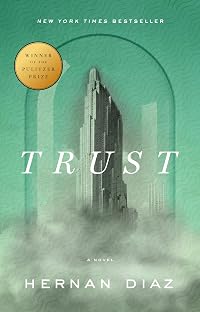
Trust
by Hernan Diaz
On This Page
Description
"Buzzy and enthralling ...A glorious novel about empires and erasures, husbands and wives, staggering fortunes and unspeakable misery...Fun as hell to read." --Oprah Daily "A genre-bending, time-skipping story about New York City's elite in the roaring '20s and Great Depression."--Vanity Fair "A riveting story of class, capitalism, and greed." --Esquire "Captivating."--NPR "Exhilarating." --New York TimesAn unparalleled novel about money, power, intimacy, and perception Even through the show more roar and effervescence of the 1920s, everyone in New York has heard of Benjamin and Helen Rask. He is a legendary Wall Street tycoon; she is the daughter of eccentric aristocrats. Together, they have risen to the very top of a world of seemingly endless wealth--all as a decade of excess and speculation draws to an end. But at what cost have they acquired their immense fortune? This is the mystery at the center of Bonds, a successful 1937 novel that all of New York seems to have read. Yet there are other versions of this tale of privilege and deceit. Hernan Diaz's TRUST elegantly puts these competing narratives into conversation with one another--and in tension with the perspective of one woman bent on disentangling fact from fiction. The result is a novel that spans over a century and becomes more exhilarating with each new revelation. At once an immersive story and a brilliant literary puzzle, TRUST engages the reader in a quest for the truth while confronting the deceptions that often live at the heart of personal relationships, the reality-warping force of capital, and the ease with which power can manipulate facts. show lessTags
Recommendations



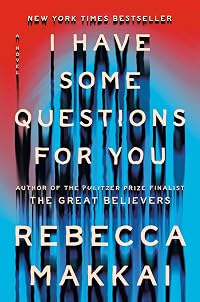
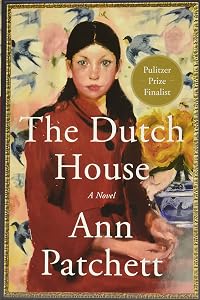
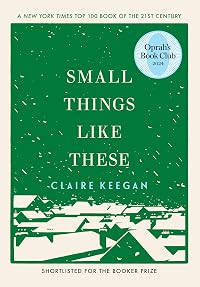

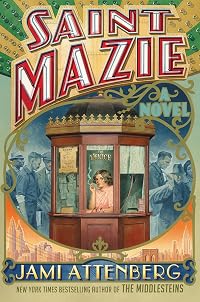






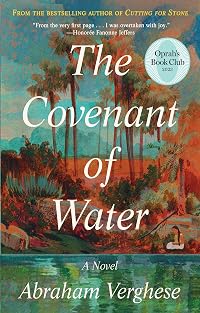
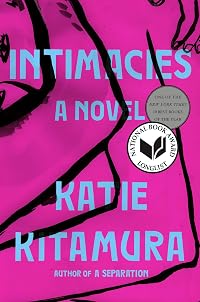
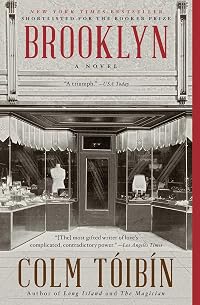
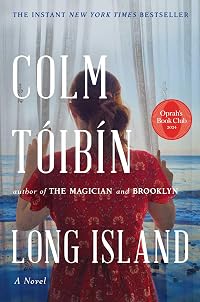
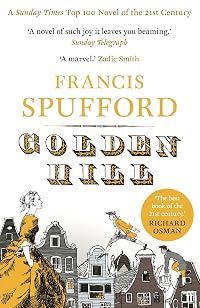
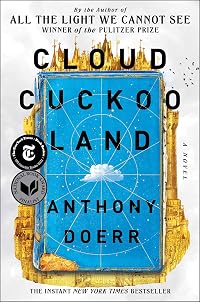
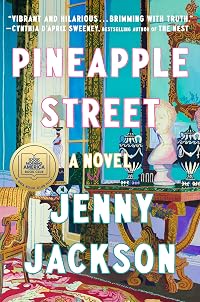

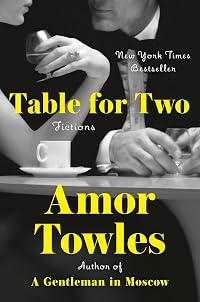

Member Recommendations
allthegoodbooks One of the themes of The Lacuna is about truth and who is telling it. This is the same in Trust. Both use different genre to do this and both leave the answer open as to how and who you should trust.
allthegoodbooks Similar themes - who do we believe and how do we know
Member Reviews
Boiling the plot down to the simplest terms, this is the story of a fabulously successful New York financier, Andrew Bevel, at the turn of the century: his ancestors, his childhood and extraordinary marriage, his rising prestige and wealth, his role in exploiting (manipulating?) the roiling financial markets of the 1920s, his eccentricities, his legacy. Along the way, Diaz explores the relationship between capitalism, civic responsibility, and self-interest (echoes of Gordon Gekko's "greed is good"); the complicated forms of co-dependence that bind parents and children, husbands and wives; and - most of all - the many ways that wealth and power can be used to distort truth.
But this summary scarcely does justice to the deceptively show more twisty tale that is reworked - by the time the book is over - three times over. The first section, "Bonds," recounts the tale from the perspective of a novelist who has transformed the outlines of Bevel's life into a critically acclaimed novelization. The second section, "My Life," is composed of excerpts from Bevel's never-completed autobiography. The third section "A Memoir, Remembered," is recounted by Bevel's ghostwriter - it's in this section that you begin to appreciate the web that Diaz has been subtly weaving. Then in the fourth/last section, "Futures" - composed of excerpts from the diary of the Bevel's extraordinary wife - Diaz pulls the rug out entirely, challenging readers to reassess all the simple/easy/convenient assumptions they've spent the prior 300 pages forming.
Diaz is a gloriously gifted storyteller. His characters are deeply complex and original, his prose eloquent and smart, his insights into human nature grippingly authentic. This is one of the most original works I've read in a long time. "Trust" me - you won't regret the time you spend on this engrossing, inventive, highly human tale of pride, perspective, and power. show less
But this summary scarcely does justice to the deceptively show more twisty tale that is reworked - by the time the book is over - three times over. The first section, "Bonds," recounts the tale from the perspective of a novelist who has transformed the outlines of Bevel's life into a critically acclaimed novelization. The second section, "My Life," is composed of excerpts from Bevel's never-completed autobiography. The third section "A Memoir, Remembered," is recounted by Bevel's ghostwriter - it's in this section that you begin to appreciate the web that Diaz has been subtly weaving. Then in the fourth/last section, "Futures" - composed of excerpts from the diary of the Bevel's extraordinary wife - Diaz pulls the rug out entirely, challenging readers to reassess all the simple/easy/convenient assumptions they've spent the prior 300 pages forming.
Diaz is a gloriously gifted storyteller. His characters are deeply complex and original, his prose eloquent and smart, his insights into human nature grippingly authentic. This is one of the most original works I've read in a long time. "Trust" me - you won't regret the time you spend on this engrossing, inventive, highly human tale of pride, perspective, and power. show less
I read In the Distance earlier in the year. This was his debut (2017) and it was impressive. Lo and behold, his second novel Trust came out in May and I knew I wanted to read it. Now, I don’t have a head for finance, other than balancing our checkbook and taking care of some minor investments, so I am surprised how much I loved his novel about the financial world and the people that sit at the top of it. This is due to this author’s mighty storytelling and craftsmanship. For a 400-hundred-page book, the pages flew.
This is a tough novel to describe, without spoiling the wonderful story structure that Diaz has built here. It begins with Benjamin Rask, following his rise in the financial world, in the 1920s, to become a Wall Street show more Tycoon. Cool and a bit ruthless. This is presented as a novel in a novel, called “Bonds”. Okay, what follows will have to be up for the reader to discover and it is brilliant. The title is perfect because “Trust” permeates nearly every page, in it’s many different forms. My favorite book of the year. show less
This is a tough novel to describe, without spoiling the wonderful story structure that Diaz has built here. It begins with Benjamin Rask, following his rise in the financial world, in the 1920s, to become a Wall Street show more Tycoon. Cool and a bit ruthless. This is presented as a novel in a novel, called “Bonds”. Okay, what follows will have to be up for the reader to discover and it is brilliant. The title is perfect because “Trust” permeates nearly every page, in it’s many different forms. My favorite book of the year. show less
As other reviewers have noted, "Trust" is a story told in four stages. It moves from a fictional account of a financier's rise to prominence to an attempted autobiography by the man himself to a brief memoir by his amanuensis during this project — the daughter of an Italian typesetter with anarchist political tendencies — to the diary of the financier's wife, who turns out to play a very different role in this story than the reader had previously been lead to believe. You could also say, though, that "Trust" is a biography of financial capital itself, the invisible glue that holds the economic system we live under together and affects us all, whether we can feel its effects or not. Diaz's writing is exacting and meticulous show more throughout much of this book, so if it doesn't really sound like a barrel of fun, well, there's a reason for that.
Even though a Marxist does, as I've mentioned, show up in this book, he's portrayed as an impulsive, emotional dreamer. He's also broke: the wheels of history obviously aren't turning the way he thought they would. Meanwhile, the power and movement of money is felt throughout the text, from his run-down Italian neighborhood to the skyscrapers popping up all over Manhattan. "Trust" is a postmodern novel in a lot of different ways. Much of it has that curious, impersonal, detached air that seems to be a common feature of these novels. That is, until, the last section in which a character that had once merely been written about finally gets to say her peace, if only in writing, and this in a novel that's already shown us several unreliable narrators. I have to say that Diaz sticks the landing beautifully: the book takes on a human dimension that it had previously lacked, and, by the last pages, I was genuinely moved. But it took a while to get there, and there was still a part of me that wanted to shake the author's hand and say, "that was a neat trick," which isn't I suppose much of a recommendation.
And perhaps all of this points to a larger point about art and commerce. I think that "Braveheart" is a terrible movie, and I'm nobody's ultra-nationalist, but when Mel Gibson yelled "Freedom" with his face all painted up, well, that was pretty memorable. By contrast, Leonardo DiCaprio's heartfelt speech to Congress about why transatlantic air routes should be open to multiple competing characters falls flat, at least on an emotional level. I'm no socialist, but I'll readily admit that capitalism seems to lack a heroic character, and I certainly felt that absence while reading "Trust." This isn't to say that it's a bad book: it's well-written, well-constructed, subtle and clever. But only in the last few pages was I able to locate a beating heart within the text, and I imagine that some readers may not have enough patience to do so, or feel disappointed even at the book's end. Recommended, but only if Ben Marcus and Thomas Pynchon happen to be your personal heroes. show less
Even though a Marxist does, as I've mentioned, show up in this book, he's portrayed as an impulsive, emotional dreamer. He's also broke: the wheels of history obviously aren't turning the way he thought they would. Meanwhile, the power and movement of money is felt throughout the text, from his run-down Italian neighborhood to the skyscrapers popping up all over Manhattan. "Trust" is a postmodern novel in a lot of different ways. Much of it has that curious, impersonal, detached air that seems to be a common feature of these novels. That is, until, the last section in which a character that had once merely been written about finally gets to say her peace, if only in writing, and this in a novel that's already shown us several unreliable narrators. I have to say that Diaz sticks the landing beautifully: the book takes on a human dimension that it had previously lacked, and, by the last pages, I was genuinely moved. But it took a while to get there, and there was still a part of me that wanted to shake the author's hand and say, "that was a neat trick," which isn't I suppose much of a recommendation.
And perhaps all of this points to a larger point about art and commerce. I think that "Braveheart" is a terrible movie, and I'm nobody's ultra-nationalist, but when Mel Gibson yelled "Freedom" with his face all painted up, well, that was pretty memorable. By contrast, Leonardo DiCaprio's heartfelt speech to Congress about why transatlantic air routes should be open to multiple competing characters falls flat, at least on an emotional level. I'm no socialist, but I'll readily admit that capitalism seems to lack a heroic character, and I certainly felt that absence while reading "Trust." This isn't to say that it's a bad book: it's well-written, well-constructed, subtle and clever. But only in the last few pages was I able to locate a beating heart within the text, and I imagine that some readers may not have enough patience to do so, or feel disappointed even at the book's end. Recommended, but only if Ben Marcus and Thomas Pynchon happen to be your personal heroes. show less
Four and a half stars rounded up because the half-star I'd have taken off was more related to a format mismatch than the writing or performance itself.
I REALLY liked this, it was a heck of a ride. It's hard to give a full review without revealing things that are best encountered in context - not just story spoilers, but the way in which the story is told and how you figure out what each piece of the book has to do with the others. Each section was well-written for what it was; I genuinely enjoyed the opening novel(la), and then the deeper dives into the story definitely kept me reading - er, listening.
But this wasn't just a literary puzzle; it was also a (usually subtle) commentary on greed and the way capitalism can be exploited; about show more how our perspective of events is always affected by the intentions and skill of the people controlling the narrative; about the nature of capitalism and money as a concept; about how hard it can be to find reality when multiple entities want us to believe different things; about how what we perceive because of all of the above can eventually *become* -- for better or worse (usually worse) -- our reality, our memories, ourselves.
All that, and each individual story-within-the-story was interesting in and of itself, with main and side characters who will stay with me. Stay through the second section, it makes much more sense as you go.
I listened to the audiobook while commuting, and while each narrator was excellent, I did find myself wanting to see physical pages because I have a feeling there were some elements that couldn't be conveyed aloud; also, there were sections of journal that would have been better on paper, I think. show less
I REALLY liked this, it was a heck of a ride. It's hard to give a full review without revealing things that are best encountered in context - not just story spoilers, but the way in which the story is told and how you figure out what each piece of the book has to do with the others. Each section was well-written for what it was; I genuinely enjoyed the opening novel(la), and then the deeper dives into the story definitely kept me reading - er, listening.
But this wasn't just a literary puzzle; it was also a (usually subtle) commentary on greed and the way capitalism can be exploited; about show more how our perspective of events is always affected by the intentions and skill of the people controlling the narrative; about the nature of capitalism and money as a concept; about how hard it can be to find reality when multiple entities want us to believe different things; about how what we perceive because of all of the above can eventually *become* -- for better or worse (usually worse) -- our reality, our memories, ourselves.
All that, and each individual story-within-the-story was interesting in and of itself, with main and side characters who will stay with me. Stay through the second section, it makes much more sense as you go.
I listened to the audiobook while commuting, and while each narrator was excellent, I did find myself wanting to see physical pages because I have a feeling there were some elements that couldn't be conveyed aloud; also, there were sections of journal that would have been better on paper, I think. show less
The first thing that strikes you about Trust, Hernan Diaz’ intriguing examination of the power of wealth to shape and distort memories, is its inventive structure. The story unfurls through four nested books-within-the-book, starting with a popular novel from the 1930s about a fictionalized financier and his talented but reclusive wife who gained much of their riches by exploiting the tumultuous economic conditions in the years leading up to the stock market crash of October 1929. This is followed by a fragmented, self-serving memoir by Andrew Bevel, the real-life financier on whom the first story was based, that tries to “correct” the record and undo the damage to his professional reputation. This, in turn, evokes the written show more remembrances of Ida Partenza, the woman who was hired by Bevel to serve as his personal secretary and ghost writer. Finally, through the discovery decades later of the journal of Mildred Bevel, the financier’s wife, the last chapter of the tale is ultimately revealed.
I found this book to be entertaining and quite interesting, both for its style as well as its substance. Of course, whether you like the sort of meta-fictional playfulness exhibited by the novel’s structure might depend on how traditional you like the stories you read to be. While there are certainly plenty examples of post-modern literary excesses, some of my favorite recent reading experiences have experimented with composition to great effect, including Ian McEwan’s Atonement, Margaret Atwood’s The Blind Assassin, and David Mitchell’s Cloud Atlas. Whether Diaz’ work rises to the same level of renown as those novels remains to be seen, but it is clear that Trust offers an intricate and well-conceived story in which all of the puzzle pieces fit quite nicely, even as the main plot line bounces back and forth through the years.
It might be easy to understate the quality of story itself for all the stylistic sleight-of-hand the author employs, but this would be a mistake. Diaz demonstrates a nice knack for combining historical fiction of the Jazz Age and Great Depression eras with the mystery of just how the Bevels accumulated their wealth in the first place. Although the resolution of the mystery is not particularly surprising—it is signaled well in advance of the final nested section—the entire story is engaging and compelling, particularly when Ida’s memories take center stage. I especially enjoyed the realistic depictions of how capital markets functioned in the 1920s and 30s and how easy it was to manipulate them. Indeed, one of the unifying themes in the novel is the many ways in which powerful men and women seek to bend the truth for either their personal gain or to shape the narrative of their legacies. A striking irony of the book’s title is that none of the narrators is totally reliable, and the reader is left wondering just who he or she can actually trust. This is a thought-provoking book and one that I can highly recommend. show less
I found this book to be entertaining and quite interesting, both for its style as well as its substance. Of course, whether you like the sort of meta-fictional playfulness exhibited by the novel’s structure might depend on how traditional you like the stories you read to be. While there are certainly plenty examples of post-modern literary excesses, some of my favorite recent reading experiences have experimented with composition to great effect, including Ian McEwan’s Atonement, Margaret Atwood’s The Blind Assassin, and David Mitchell’s Cloud Atlas. Whether Diaz’ work rises to the same level of renown as those novels remains to be seen, but it is clear that Trust offers an intricate and well-conceived story in which all of the puzzle pieces fit quite nicely, even as the main plot line bounces back and forth through the years.
It might be easy to understate the quality of story itself for all the stylistic sleight-of-hand the author employs, but this would be a mistake. Diaz demonstrates a nice knack for combining historical fiction of the Jazz Age and Great Depression eras with the mystery of just how the Bevels accumulated their wealth in the first place. Although the resolution of the mystery is not particularly surprising—it is signaled well in advance of the final nested section—the entire story is engaging and compelling, particularly when Ida’s memories take center stage. I especially enjoyed the realistic depictions of how capital markets functioned in the 1920s and 30s and how easy it was to manipulate them. Indeed, one of the unifying themes in the novel is the many ways in which powerful men and women seek to bend the truth for either their personal gain or to shape the narrative of their legacies. A striking irony of the book’s title is that none of the narrators is totally reliable, and the reader is left wondering just who he or she can actually trust. This is a thought-provoking book and one that I can highly recommend. show less
Oh, what a tangled Gilded Age web is woven here! The book includes four novels (or three novels and one lame attempt), with the essential connection between #1 and #2 frustratingly non-obvious until it comes into focus. #1, by fiction writer Harold Vanner, is a non--authorized fictional biography misrepresenting the source of financier Andrew Bevel's successful manipulation of Wall St during the Crash, and also includes the premise of wife Mildred’s horrifying death in Switzerland by primitive electro-shock treatment ordered by her husband. #2 is Bevel’s lame attempt to redeem the virtue of Mildred, but he gives up and hires ghostwriter Ida Partenza to create #3. Ida is the daughter of a struggling anarchist Italian immigrant show more father, whom she idolizes until she realizes how his political beliefs limit them to a life of abject penury. The unnamed father is one of the strongest characters, admirable in his steadfast adherence to his politics but unconscious of his mistreatment of, dependence upon, and complete lack of appreciation for Ida. This theme that carries through the entire plot and is also manifested in the Bevel family by Andrew, the Gilded Age husband and by Mildred’s mother, a manipulator dependent on wealthy friends to marry off her daughter and keep herself socially prominent. Book #4, finally, holds the truth.
This is a difficult and ultimately rewarding tale, worthy of a second reading and of the Booker Prize awarded the novel in 2022.
Quotes: "Most men smoked cigars so they could talk to other men."
"God is the most uninteresting answer to the most interesting questions." show less
This is a difficult and ultimately rewarding tale, worthy of a second reading and of the Booker Prize awarded the novel in 2022.
Quotes: "Most men smoked cigars so they could talk to other men."
"God is the most uninteresting answer to the most interesting questions." show less
I love a novel of elisions, there's a feeling of recognition here for my era of reading second world literature. This is an insightful story about erasure and realignment, where the context is always key.
I see a number of reviews that wanted the book to be about something else, or didn't connect to what they considered the story of the main character, who I certainly don't see as the center of this work at all. I have sympathy, I've also read books that I wanted to be something else. This one I find stunning for what it is.
I see a number of reviews that wanted the book to be about something else, or didn't connect to what they considered the story of the main character, who I certainly don't see as the center of this work at all. I have sympathy, I've also read books that I wanted to be something else. This one I find stunning for what it is.
Members
- Recently Added By
Published Reviews
Though framed as a novel, “Trust” is actually an intricately constructed quartet of stories — what Wall Street traders would call a 4-for-1 stock split.... In summary “Trust” sounds repellently overcomplicated, but in execution it’s an elegant, irresistible puzzle. The novel isn’t just about the way history and biography are written; it’s a demonstration of that process. By the show more end, the only voice I had any faith in belonged to Diaz. show less
added by Lemeritus
Trust by Hernan Diaz is one of those novels that's always pulling a fast one on a reader. Take the opening section: You settle in, become absorbed in the story and, then, 100 pages or so later — Boom! — the novel lurches into another narrative that upends the truth of everything that came before.... Trust is all about money, particularly, the flimflam force of money in the stock market, show more and its potential, as a character says, "to bend and align reality" to its own purposes.... Literary fiction, too, is a fantastic commodity in which our best writers become criminals of the imagination, stealing our attention and our very desires. Diaz, whose last novel, In the Distance, reworked the myths of masculine individualism in the American West, makes an artistic fortune in Trust. And we readers make out like bandits, too. show less
added by Lemeritus
Trust: both a moral quality and a financial arrangement, as though virtue and money were synonymous. The term also has a literary bearing: Can we trust this tale? Is this narrator reliable? ... Taken together, the four parts make “Trust” into a strangely self-reflexive work: strangely, because unlike some metafictional exercises this book does more than chase its own tail. The true show more circularity here lies in the workings of capital, in a monetary system so self-referential that it has forgotten what Diaz himself remembers. For “Trust” always acknowledges the world that lies outside its own pages. It recognizes the human costs of a great fortune, even though its characters can see nothing beyond their own calculations; they are most guilty when most innocent, most enthralled by the abstraction of money itself. show less
added by Lemeritus
Lists

Recommend the 20 best books you've read in the last five years
2,168 works; 602 members

Pulitzer Prize Winners for Fiction
102 works; 54 members

Books Read in 2023
5,547 works; 145 members

Top Five Books of 2022
736 works; 272 members

Books recommended by Barack Obama
295 works; 28 members

Books published and read in 2022
82 works; 5 members

Books Read in 2022
5,168 works; 114 members

Obama Reads
181 works; 3 members

Books Read in 2024
4,623 works; 126 members

Books Read 2026
9 works; 1 member

Top Five Books of 2025
954 works; 303 members

Still to Read 2023
5 works; 1 member

NYT 100 best books of 21st C
100 works; 31 members

2024. Nuestro año literario (Faustino Sánchez)
20 works; 1 member

NYT Readers best of 21st C
100 works; 8 members

READ in 2024
262 works; 1 member

2023 Notable Books for Adults
26 works; 2 members

Best-Reviewed Books of 2022
10 works; 1 member

Library List - Pulitzer
18 works; 1 member
Author Information

3 Works 4,667 Members
Some Editions
Awards and Honors
Common Knowledge
- Canonical title
- Trust
- Original publication date
- 2022
- People/Characters
- Andrew Bevel; Mildred Bevel; Ida Partenza
- Important places*
- New York, New York, USA; Europa
- Dedication
- To Anne, Elsa, Marina, and Ana
- First words
- Because he had enjoyed almost every advantage since birth, one of the few privileges denied to Benjamin Rask was that of a heroic rise: his was not a story of an unbreakable will forging a golden destiny for itself out of lit... (show all)tle more than dross.
- Quotations
- Those who accused him of being excessively frugal failed to understand that, in truth, he had no appetites to repress.
most men smoked so that they could talk to other men.
the ideal conditions for business were never given. One had to create them.
self-interest, if properly directed, need not be divorced from the common good
These two principles (we make our own weather; personal gain ought to be a public asset) I have always striven to follow.
No enterprise can fully succeed without a true understanding of human behavior.
After staring at the facade for a while, I realize it is not the building I am looking at but my memories that, like tracing paper, cover it.
I had never coveted any of his luxuries. They had intimidated and angered me, yes, but above all they had always made me feel unwelcome and alien. As if I were a displaced earthling, alone in a different world—a more expens... (show all)ive one that also thought itself better.
He took two or three shallow spoonfuls. Having soup made him look old and weak.
"There's nothing heroic about defending other people's interests just because they happen to coincide with yours. Cooperation, when its objective is personal gain, should never be confused with solidarity."
Later, over the years, both at work and in my personal life, I have had countless men repeat my ideas back to me as if they were theirs—as if I would not remember having come up with those thoughts in the first place.
It's not that I'm tired of him. I'm tired of the person I become around him.
We fell into our roles. Where there's a ventriloquist, there's a dummy.
God is the most uninteresting answer to the most interesting questions.
Short selling is folding back time. The past making itself present in the future.
Like a retrograde or a palindrome.
D F# E A / A E F# D.
A song played in reverse.
The orchestra played the kind of music where you know what's coming next, where you can listen ahead.
Feel I've been here for decades. Has time slowed down or sped up?
The terrifying freedom of knowing that nothing, from now on, will become a memory
It took me a while to realize the hum was inside my head
Is a waveless noise still a sound?
A selfish hand has a short reach. - Last words
- (Click to show. Warning: May contain spoilers.)Unthreaded.
- Blurbers
- Groff, Lauren; Kushner, Rachel; Woodson, Jacqueline; Nunez, Sigrid; Strouse, Jean; Silber, Joan
- Original language
- English
- Canonical DDC/MDS
- 813.6
- Canonical LCC
- PS3604.I17
*Some information comes from Common Knowledge in other languages. Click "Edit" for more information.
Classifications
Statistics
- Members
- 3,846
- Popularity
- 4,113
- Reviews
- 131
- Rating
- (3.86)
- Languages
- 14 — Catalan, Danish, Dutch, English, Finnish, French, German, Italian, Korean, Norwegian (Bokmål), Portuguese, Spanish, Swedish, Turkish
- Media
- Paper, Audiobook, Ebook
- ISBNs
- 38
- ASINs
- 15