
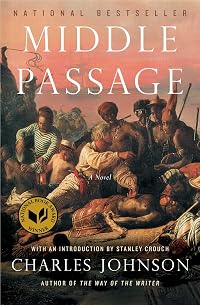
Middle Passage
by Charles Johnson
On This Page
Description
In 1830, Rutherford Calhoun, a newly freed slave leading a dissolute life in New Orleans, finds himself forced into marriage.Tags
Recommendations













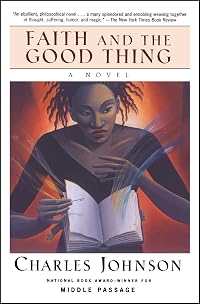
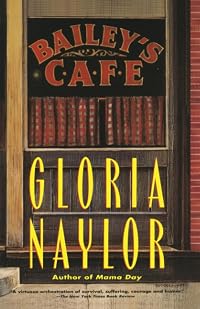
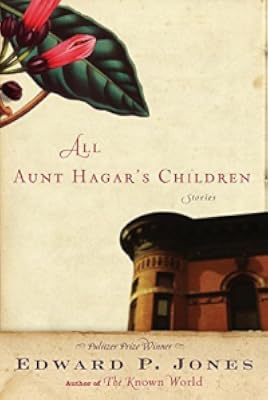
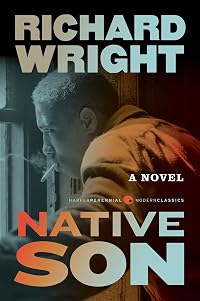



Member Recommendations
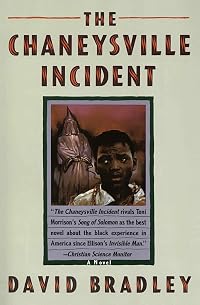
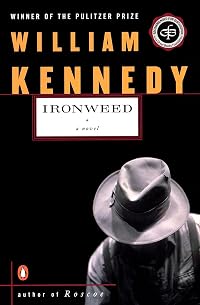
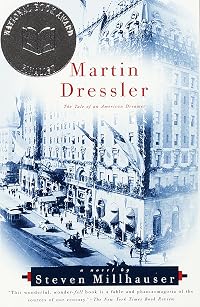
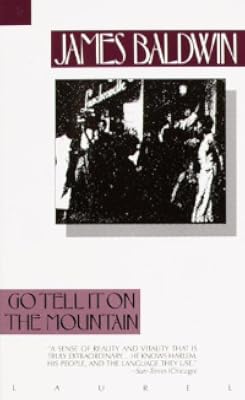
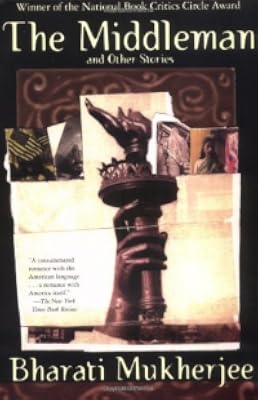
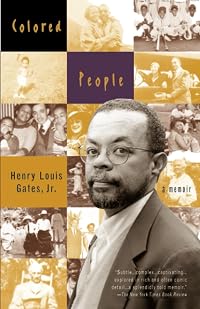
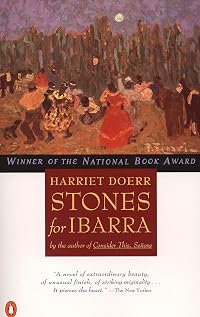
thesmellofbooks Young men in dire straits on the open seas, a background of oppression, and historical richness are a few of the elements these books share. They are both ripping good yarns.

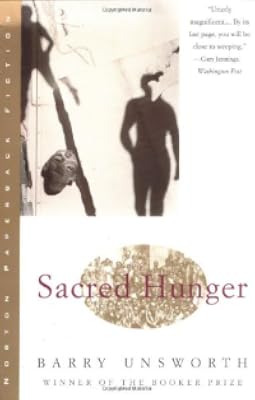
rebeccanyc While Middle Passage is a complex, philosophical, and psychological look not only at the slave trade but also at the African-American experience more broadly, Sacred Hunger, which also focuses on the slave trade, is a more straightforward historical novel.
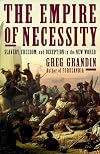
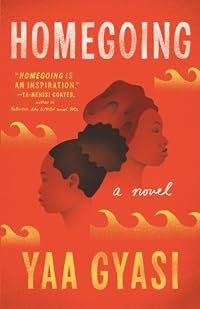
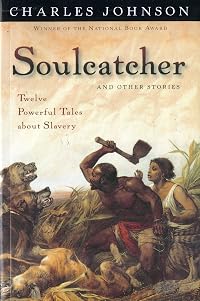
pitjrw Complimentary treatments of slavery and slave revolts in the context of American ideology and self deception.
Member Reviews
First, readers need to understand that this is not a narrative about the slave trade, any more than Moby Dick is about the whaling industry. Instead, it’s a rich and fascinating exploration of the human nature, class, race, religion, slavery, freedom, and – above all – the great American experiment … all couched in the lush seductive prose of a poet and scholar who has no compunction inviting philosophy, mythology, world literature, mathematics, and natural sciences to the party.
Though written over 30yrs ago, this story is also “woke” in ways that 1970s U.S. could never have appreciated and contains content that is unnervingly relevant to todays’ society. It’s almost as if Middle Passage has been sitting out there show more waiting for society to catch up with it.
Where to start? Perhaps with two of literature’s more fascinating characters: Rutherford Calhoun, a freed, African American bondsman and likeable rogue who finds himself unwittingly crewing a slave trading ship across the Middle Passage; and Captain Ebenezer Falcon, the larger-than-life, vain-glorious, sensualist, autodidact, goblin-like, scene-stealing captain of The Republic. Note the ship’s name, because on one level, this book is most definitely an exploration of the American Republic and the “Protestant ethic” upon which it is supposedly built. In both characters, Johnson cunningly juxtapositions all the things that we like to believe make Americans great – our work ethic, our self-taught genius, our unwavering faith in self-determination – with all the traits that simultaneously taint us: our unbound capitalist greed, our conviction of moral superiority. It’s no coincidence that the moment the ship (“parts of which are always being replaced, so that the ship that sets forth on the journey scarcely resembles the ship that arrives at the end of it” – get it?) finally flounders is when these two opposing forces become so incompatible that the whole system rips apart. A warning ... or a prediction?
Or wait – maybe this is a book about human nature? Johnson suggests this when he has Falcon warn us in advance: “The sea does things to your head, Calhoun, terrible unravelings of belief that aren’t in a cultured man’s metaphysic.” (And just in case you missed that allusion, Johnson adds an ACTUAL primitive God locked up in a box in the hold of the ship.) So it should come as no surprise that this is also an exploration of dual nature of humanity – our yearning for a collective utopia (“E Pluribus Unum – from many, one”) vs. our determined individualism; our belief in religious freedom vs. our practice of religious intolerance; our allegiance to free will even as we wield concepts like Manifest Destiny to justify slavery; our celebration of peace except when the most convenient way to establish peace is by waging war. Is it even possible for a species possessing so many "transcendental rifts" in their nature to live happy or just lives?
Or wait – maybe this is a book about slavery? A decent book club could spend the entire meeting just parsing the novel’s various views on racism – from the novel’s depiction of the Allmuseri as more civilized than the “civilization” set to enslave them (which, in turn, begs comparison with certain Native American cultures), to Falcon’s belief that “equal opportunity” is responsible for robbing blacks of the educational rigor they need to flourish, to Calhoun’s meditations on his own identity as a highly-educated, freed black American vs. the relationship he forms with Ngonyama and Baleka - there’s plenty of ground to cover.
But wait – are we sure this isn’t about politics? Because Falcon’s leadership dynamic – “Never explain; never apologize!” - has a sort of ripped-from-the-headlines feel about it, and there’s that scene where they use conditioning to train the ships’ dogs to loath the captain’s enemies, so that when the time comes, the captain knows he can always call on his dogs to faithfully protect him, regardless of morality, which reminds me of a certain President and his unquestioningly loyal followers ....
The truth, of course, is that the novel is all of these and more, all tied up in an unbelievably short, taut narrative stuffed with a cast of magnificently memorable grotesques, rousing sea adventure, outrageously funny anecdotes (dark but genuinely funny), madly creative set-pieces, and possibly some of the most vivid prose I’ve read in ages, efficient where it needs to be efficient (“Had [Cringle] been a woman … he’d be the kind who could do Leibnizian logic or Ptolemaic astronomy but hid the fact in order not to frighten off suitors; or, if a slave, one who could bend spoons with his mind but didn’t so white people wouldn’t get panicky”), funny where it needs to be funny (“Madame Marie Toulouse, a Creole who had spent her young womanhood as the mistress of first a banker, then a famous actor, a minister, and finally a mortician … [having] used the principle of
‘one for the money, two for the show, three to get ready, and four to go’”), and evocative where it needs to be evocative (“… sitting on the rain-leached pier in heavy, liquescent air, in shimmering light so soft and opalescent that sunlight could not fully pierce the fine erotic mist, limpid and luminous at dusk …”).
Trust me, you won’t regret the time you spend reading this … or the time you then spend rereading large parts of it again (and possibly again) when you realize how much content you failed to understand or appreciate the first time through! show less
Though written over 30yrs ago, this story is also “woke” in ways that 1970s U.S. could never have appreciated and contains content that is unnervingly relevant to todays’ society. It’s almost as if Middle Passage has been sitting out there show more waiting for society to catch up with it.
Where to start? Perhaps with two of literature’s more fascinating characters: Rutherford Calhoun, a freed, African American bondsman and likeable rogue who finds himself unwittingly crewing a slave trading ship across the Middle Passage; and Captain Ebenezer Falcon, the larger-than-life, vain-glorious, sensualist, autodidact, goblin-like, scene-stealing captain of The Republic. Note the ship’s name, because on one level, this book is most definitely an exploration of the American Republic and the “Protestant ethic” upon which it is supposedly built. In both characters, Johnson cunningly juxtapositions all the things that we like to believe make Americans great – our work ethic, our self-taught genius, our unwavering faith in self-determination – with all the traits that simultaneously taint us: our unbound capitalist greed, our conviction of moral superiority. It’s no coincidence that the moment the ship (“parts of which are always being replaced, so that the ship that sets forth on the journey scarcely resembles the ship that arrives at the end of it” – get it?) finally flounders is when these two opposing forces become so incompatible that the whole system rips apart. A warning ... or a prediction?
Or wait – maybe this is a book about human nature? Johnson suggests this when he has Falcon warn us in advance: “The sea does things to your head, Calhoun, terrible unravelings of belief that aren’t in a cultured man’s metaphysic.” (And just in case you missed that allusion, Johnson adds an ACTUAL primitive God locked up in a box in the hold of the ship.) So it should come as no surprise that this is also an exploration of dual nature of humanity – our yearning for a collective utopia (“E Pluribus Unum – from many, one”) vs. our determined individualism; our belief in religious freedom vs. our practice of religious intolerance; our allegiance to free will even as we wield concepts like Manifest Destiny to justify slavery; our celebration of peace except when the most convenient way to establish peace is by waging war. Is it even possible for a species possessing so many "transcendental rifts" in their nature to live happy or just lives?
Or wait – maybe this is a book about slavery? A decent book club could spend the entire meeting just parsing the novel’s various views on racism – from the novel’s depiction of the Allmuseri as more civilized than the “civilization” set to enslave them (which, in turn, begs comparison with certain Native American cultures), to Falcon’s belief that “equal opportunity” is responsible for robbing blacks of the educational rigor they need to flourish, to Calhoun’s meditations on his own identity as a highly-educated, freed black American vs. the relationship he forms with Ngonyama and Baleka - there’s plenty of ground to cover.
But wait – are we sure this isn’t about politics? Because Falcon’s leadership dynamic – “Never explain; never apologize!” - has a sort of ripped-from-the-headlines feel about it, and there’s that scene where they use conditioning to train the ships’ dogs to loath the captain’s enemies, so that when the time comes, the captain knows he can always call on his dogs to faithfully protect him, regardless of morality, which reminds me of a certain President and his unquestioningly loyal followers ....
The truth, of course, is that the novel is all of these and more, all tied up in an unbelievably short, taut narrative stuffed with a cast of magnificently memorable grotesques, rousing sea adventure, outrageously funny anecdotes (dark but genuinely funny), madly creative set-pieces, and possibly some of the most vivid prose I’ve read in ages, efficient where it needs to be efficient (“Had [Cringle] been a woman … he’d be the kind who could do Leibnizian logic or Ptolemaic astronomy but hid the fact in order not to frighten off suitors; or, if a slave, one who could bend spoons with his mind but didn’t so white people wouldn’t get panicky”), funny where it needs to be funny (“Madame Marie Toulouse, a Creole who had spent her young womanhood as the mistress of first a banker, then a famous actor, a minister, and finally a mortician … [having] used the principle of
‘one for the money, two for the show, three to get ready, and four to go’”), and evocative where it needs to be evocative (“… sitting on the rain-leached pier in heavy, liquescent air, in shimmering light so soft and opalescent that sunlight could not fully pierce the fine erotic mist, limpid and luminous at dusk …”).
Trust me, you won’t regret the time you spend reading this … or the time you then spend rereading large parts of it again (and possibly again) when you realize how much content you failed to understand or appreciate the first time through! show less
Not a perfect or a 'grand' novel by any stretch but I will say that, in many instances, there are seeds of greatness here that I can completely see bearing fruit in later works by this author. Charles Johnson's "Middle Passage" is a bold literary experiment in many ways; firstly, it attempts to wrest the slave narrative from the grip of austerity and arch seriousness and into something far more, well, I won't say 'fun' but I will borrow one of the words used frequently to describe the text: picaresque (and the fact that the intro mentions Saul Bellow, Mr Augie I'm so god damn picaresque it hurts to smile when I smile March). Secondly, this is a very positive minded work. Now, it's not positive in the sense that it attempts to make show more slavery a pleasant part of history (it's not quite Life is Beautiful about it) and the details depicted in the text inhering in the slave trade are suitably horrific. But over the course of the novel I couldn't help but feel that Johnson was trying to tell a distinctly 'happy' story. This happiness finds fertile soil in the various gestures towards a more Eastern understanding of the world (specifically rooted, authorial fallacy spare me, in Charles Johnson's noted Buddhism) and in the various bits of humor (some of it lame and failed but most of it actually fairly funny) laced throughout the text.
But, overall, this is a good novel, rock solid even. It answers the gloom and misery and perpetual sense of alienation of postmodernism with a kind of joie de vive in writing and verbiage that would make the likes of Bellow, Updike and Nabokov proud. However, this is not without its problems as more than a few times (especially towards the beginning) Johnson's style choices came off as increasingly twee and even saccharine at times. Hell, there were more than a few moments where I have expected Rutherford Calhoun to burst into an Oklahoma style musical number. Luckily, Johnson learns to rein himself in while maintaining his sense of authorial exuberance, a tricky divide to negotiate and one he does, for the most part (especially closer to the novel's conclusion) with aplomb.
So, this is worth a read, most definitely. Just grin and bear the author's quite frankly dorky predilections for the first fifty or so pages and you will find an incredibly meritorious work just waiting for your appreciation and study. show less
But, overall, this is a good novel, rock solid even. It answers the gloom and misery and perpetual sense of alienation of postmodernism with a kind of joie de vive in writing and verbiage that would make the likes of Bellow, Updike and Nabokov proud. However, this is not without its problems as more than a few times (especially towards the beginning) Johnson's style choices came off as increasingly twee and even saccharine at times. Hell, there were more than a few moments where I have expected Rutherford Calhoun to burst into an Oklahoma style musical number. Luckily, Johnson learns to rein himself in while maintaining his sense of authorial exuberance, a tricky divide to negotiate and one he does, for the most part (especially closer to the novel's conclusion) with aplomb.
So, this is worth a read, most definitely. Just grin and bear the author's quite frankly dorky predilections for the first fifty or so pages and you will find an incredibly meritorious work just waiting for your appreciation and study. show less
Protagonist Rutherford Calhoun had grown up in Illinois as a slave. His owner provided education and eventually freed him. He traveled to New Orleans where he became a thief. In 1830, when threatened with a forced marriage to settle his debts, he stows away on a ship. After it is too late, he finds out they are headed to Africa to pick up slaves from Senegal and Gambia. He becomes the cook’s assistant.
As the only black man on the ship, Rutherford acts as a liaison between the Africans and the crew. One of the Africans has learned some English and serves as a translator. The captain is a tyrant, and during the return trip, the crew plans a mutiny and the slaves plan to revolt. The trip back contains some gruesome scenes. There is an show more unusual presence in the hold of the ship, taken onboard in Africa, which wreaks havoc on the minds of the captain, sailors, and Africans. (I am unclear on the author’s intent with including this “presence.”)
The Middle Passage of the title is the second leg of the slave trade, where African slaves were taken from their home continent to the Caribbean. In this book it also refers to the passage of Rutherford from his wayward youth to a more knowledgeable adult. It is a combination of picaresque, historical fiction, and social commentary.
Those looking for realistic content should look elsewhere, as there are many anachronisms, coincidences, and improbable events (not to mention the strange “presence.”) For example, the Africans and Rutherford communicate extremely well considering they have only one partially fluent translator. The end of the ship’s journey requires a huge suspension of disbelief. I think the author is telling an adventurous story while also making other philosophical comments about racial issues in America.
3.5 show less
As the only black man on the ship, Rutherford acts as a liaison between the Africans and the crew. One of the Africans has learned some English and serves as a translator. The captain is a tyrant, and during the return trip, the crew plans a mutiny and the slaves plan to revolt. The trip back contains some gruesome scenes. There is an show more unusual presence in the hold of the ship, taken onboard in Africa, which wreaks havoc on the minds of the captain, sailors, and Africans. (I am unclear on the author’s intent with including this “presence.”)
The Middle Passage of the title is the second leg of the slave trade, where African slaves were taken from their home continent to the Caribbean. In this book it also refers to the passage of Rutherford from his wayward youth to a more knowledgeable adult. It is a combination of picaresque, historical fiction, and social commentary.
Those looking for realistic content should look elsewhere, as there are many anachronisms, coincidences, and improbable events (not to mention the strange “presence.”) For example, the Africans and Rutherford communicate extremely well considering they have only one partially fluent translator. The end of the ship’s journey requires a huge suspension of disbelief. I think the author is telling an adventurous story while also making other philosophical comments about racial issues in America.
3.5 show less
The Middle Passage was the notoriously deadly second leg of the so-called triangular slave trade, the leg that brought the enslaved Africans from their homes to the US and the Caribbean, and in this book it is not only that but also the passage of the protagonist, freed slave Rutherford Calhoun, from his ne'er-do-well youth to a better understanding of the choices he can make about how he wants to live. Those seeking a traditional historical novel should look elsewhere, because while much of this book is searingly historical, much also springs from the creatively fictional mind of Johnson, so that there are events that are improbable and coincidental and language and words that would not have been around in the 1830s. It seems to me show more that Johnson, while focusing on the horrors (and some are not for the faint of heart) of the slave trade and telling an engaging story, also wants the book to reflect the African-American experience more broadly. There's a lot going on in this book, including philosophical discussions and a look at (mostly bad) father-son relationships.
Rutherford Calhoun grew up enslaved in Illinois with a slave-owner who educated him in western literature and philosophy and then freed him; he then headed to New Orleans where he lived the life of a thief and a womanizer. When threatened by a local crime king, Papa Zeringue, with a forced marriage to schoolteacher Isadora in exchange for having his many debts forgiven, he gets drunk and stows away on a slaving ship, the interestingly named Republic. Thus, his nightmare begins, for the captain is a psychologically and physically deformed tyrant and the ship is on its last legs. In Africa, they take on a cargo of the Allmuseri, a mysterious (and imaginary) tribe who allegedly have magical powers, along with a special crate acquired by the captain and stored in the hold, the contents of which are subject of much speculation and fear.
As the return voyage begins, there is trouble on the ship: the craziness of the captain, the discontent of the crew, terrible weather, and of course the anger of the captives. Rutherford becomes something of a go-between with the Africans, as the only black man on the ship, especially with a man named Ngonyama who has learned some English and serves as a translator. (One of the improbable aspects of this book is the ease with which everyone communicates.) He is also friendly with Cringle, the first mate, and Squibb, the usually inebriated cook (whose assistant he is), and becomes very fond of a young Allmuseri girl, Baleka. Disasters happen, some gruesome; Rutherford becomes acquainted with the being in the crate in the hold and gets dangerously sick; a big coincidence takes place; and Rutherford, very thoughtfully, comes into his own.
I started out thinking this was a straightforward action and anti-slavery novel, and Johnson certainly keeps the plot moving along, but I gradually realized it was much more complex, philosophical, and psychological, and that it was aiming higher than a traditional historical novel. Additionally I had to suspend disbelief and go with the flow of Johnson's imagination.
As a final note, I've had this book on the TBR since 1991. I decided to read it after reading Sacred Hunger. They are very different books, but complementary. show less
Rutherford Calhoun grew up enslaved in Illinois with a slave-owner who educated him in western literature and philosophy and then freed him; he then headed to New Orleans where he lived the life of a thief and a womanizer. When threatened by a local crime king, Papa Zeringue, with a forced marriage to schoolteacher Isadora in exchange for having his many debts forgiven, he gets drunk and stows away on a slaving ship, the interestingly named Republic. Thus, his nightmare begins, for the captain is a psychologically and physically deformed tyrant and the ship is on its last legs. In Africa, they take on a cargo of the Allmuseri, a mysterious (and imaginary) tribe who allegedly have magical powers, along with a special crate acquired by the captain and stored in the hold, the contents of which are subject of much speculation and fear.
As the return voyage begins, there is trouble on the ship: the craziness of the captain, the discontent of the crew, terrible weather, and of course the anger of the captives. Rutherford becomes something of a go-between with the Africans, as the only black man on the ship, especially with a man named Ngonyama who has learned some English and serves as a translator. (One of the improbable aspects of this book is the ease with which everyone communicates.) He is also friendly with Cringle, the first mate, and Squibb, the usually inebriated cook (whose assistant he is), and becomes very fond of a young Allmuseri girl, Baleka. Disasters happen, some gruesome; Rutherford becomes acquainted with the being in the crate in the hold and gets dangerously sick; a big coincidence takes place; and Rutherford, very thoughtfully, comes into his own.
I started out thinking this was a straightforward action and anti-slavery novel, and Johnson certainly keeps the plot moving along, but I gradually realized it was much more complex, philosophical, and psychological, and that it was aiming higher than a traditional historical novel. Additionally I had to suspend disbelief and go with the flow of Johnson's imagination.
As a final note, I've had this book on the TBR since 1991. I decided to read it after reading Sacred Hunger. They are very different books, but complementary. show less
Okay, I recognize that I am not as perceptive as some readers in understanding why an author takes certain approaches and uses certain techniques. I am bright enough to recognize what is being done most of the time, but not always able to determine why it is being done. This is the case with Middle Passage. For instance,
I recognize that the narrator's (Calhoun) voice is much different at the beginning of the story than in later journal entries. What I struggled with is that in the first few journal entries it felt like this individual was from the 1960's or 70's, not the 1830's. Also, Calhoun is very funny, glib, light-hearted in the early entries, but his tone better aligns with the events later in the story. This discrepancy seems odd show more since he did not begin writing the journal entries until later in the storyline.
I did not understand the existence of the Allmuseri's god below decks. What did he represent? What was he supposed to bring to the story? It brought an aspect of the mystical to a story that seemed like it would have been more powerful staying in the real-world.
Events in the plot seemed too convenient. The uprising by the Allmuseri's happened so closely to when the mutiny was to take place. Calhoun gets saved by a ship on which Papa and Isadora are passengers?
What are we to think of Calhoun? He provides the key to Ngonyama supposedly to help the Allmuseri's gain their freedom, but at other times he speaks highly of the reliance between he and his shipmates that is necessary to survive. He gives up the group of his shipmates including Cringle--a man he supposedly admires at some level, who are planning the mutiny, to Falcon--a man he supposedly detests. Clearly, Calhoun is confused about his allegiances. I am confused about what I can find to like or admire about the guy.
I recognize that Calhoun's ideas of what he wants from life and what freedom means to him changes as a result of his experiences, but then who wouldn't be transformed by what he survived?
I am sure at least some of my comments are my inability as a reader to measure up to the novel, but when there is this much that bothers me I tend to think it is not all me. show less
I recognize that the narrator's (Calhoun) voice is much different at the beginning of the story than in later journal entries. What I struggled with is that in the first few journal entries it felt like this individual was from the 1960's or 70's, not the 1830's. Also, Calhoun is very funny, glib, light-hearted in the early entries, but his tone better aligns with the events later in the story. This discrepancy seems odd show more since he did not begin writing the journal entries until later in the storyline.
I did not understand the existence of the Allmuseri's god below decks. What did he represent? What was he supposed to bring to the story? It brought an aspect of the mystical to a story that seemed like it would have been more powerful staying in the real-world.
Events in the plot seemed too convenient. The uprising by the Allmuseri's happened so closely to when the mutiny was to take place. Calhoun gets saved by a ship on which Papa and Isadora are passengers?
What are we to think of Calhoun? He provides the key to Ngonyama supposedly to help the Allmuseri's gain their freedom, but at other times he speaks highly of the reliance between he and his shipmates that is necessary to survive. He gives up the group of his shipmates including Cringle--a man he supposedly admires at some level, who are planning the mutiny, to Falcon--a man he supposedly detests. Clearly, Calhoun is confused about his allegiances. I am confused about what I can find to like or admire about the guy.
I recognize that Calhoun's ideas of what he wants from life and what freedom means to him changes as a result of his experiences, but then who wouldn't be transformed by what he survived?
I am sure at least some of my comments are my inability as a reader to measure up to the novel, but when there is this much that bothers me I tend to think it is not all me. show less
…the irrefragable truth is each person in his heart believes his beliefs is best. Fact is, down deep, no man’s democratic. We’re closer anarchists, I’d wager.”
This was another book I added to my TBR list more than two decades ago…no idea why. And, it’s another interesting surprise!
It’s the story of a black man that stows away on a slave ship rather than be forced to marry a woman he likes, but who puts a damper on his lust for irresponsibility.
As the story evolves, we learn that there are far worse men than him, several of whom are on the ship. The journey turns tragic and our protagonist turns philosophical.
It’s a quick, educational, insightful and quirky read. Another must for an anti-racist reading list.
This was another book I added to my TBR list more than two decades ago…no idea why. And, it’s another interesting surprise!
It’s the story of a black man that stows away on a slave ship rather than be forced to marry a woman he likes, but who puts a damper on his lust for irresponsibility.
As the story evolves, we learn that there are far worse men than him, several of whom are on the ship. The journey turns tragic and our protagonist turns philosophical.
It’s a quick, educational, insightful and quirky read. Another must for an anti-racist reading list.
i spent a lot of this feeling like our narrator was very contemporary in his speech. someone mentioned this might be because he was taught to read and write. i suppose! i enjoyed it, it was just different.
ultimately, i just wished there was a happy ending for literally anyone other than our narrator. it was so disappointing to learn that all but 3 children died in the tribe. i understand happy endings aren't always realistic, but rutherford got his after never establishing loyalty to anyone. i think, in this fictional world, we can allow for a few men and women to be spared and saved too.
it was surprisingly very funny at times. i think this, alongside Isadora, were the main elements that kept me going! It was a short read with show more beautiful writing and imagery. This was an assignment for class but I enjoyed it very much. show less
ultimately, i just wished there was a happy ending for literally anyone other than our narrator. it was so disappointing to learn that all but 3 children died in the tribe. i understand happy endings aren't always realistic, but rutherford got his after never establishing loyalty to anyone. i think, in this fictional world, we can allow for a few men and women to be spared and saved too.
it was surprisingly very funny at times. i think this, alongside Isadora, were the main elements that kept me going! It was a short read with show more beautiful writing and imagery. This was an assignment for class but I enjoyed it very much. show less
Members
- Recently Added By
Published Reviews
ThingScore 100
Both [Middle Passage and The Wizard of Oz] say so much about the illusions of our society and the freedom and disappointments in life; however, the one point that echoes the loudest to me is that Rutherford and Dorothy's experiences lead to self-discovery, which is always a good thing.
added by Shortride
Lists

Best First Lines
133 works; 8 members

Unshelved Book Clubs
579 works; 5 members

Charleston Syllabus (waitingtoderail)
143 works; 2 members

National Book Award - Fiction
78 works; 10 members

Great Short Books: A Year of Reading-Briefly
59 works; 4 members

Recommended Reading : 600 Classics Reviewed, Editors of Salem Press, 2015
634 works; 6 members

Books Featured on Readers' Review of the Diane Rehm Show
161 works; 8 members
Author Information

29+ Works 3,286 Members
Some Editions
Awards and Honors
Awards
Distinctions
Work Relationships
Is abridged in
Has as a student's study guide
Common Knowledge
- Canonical title
- Middle Passage
- Original publication date
- 1990
- People/Characters
- Rutherford Calhoun; Jackson Calhoun; Peleg Chandler (Calhouns' former master); Isadora Bailey (School teacher); Papa Zeringue (New Orleans business man); Santos (Zeringue's minion) (show all 14); Josiah Squibb (Cook); Ebenezer Falcon (Captain); Tommy O'Toole (Cabin boy); Peter Cringle (First mate); Matthew McGaffin (Sailor); Nathaniel Meadows (Barber-surgeon); Ngonyama (Allmuseri); Belaka (Allmuseri)
- Important places
- Makanda, Illinois, USA; New Orleans, Louisiana, USA; Atlantic Ocean; Senegambia (West Africa)
- Epigraph
- Homo est quo dammodo omnia -- Saint Thomas Aquinas
What port awaits us, Davy Jones' or home? I've heard of slavers drifting, drifting, playthings of wind and storm and chance, their crews gone bind, the jungle hatred crawling up on deck. -- Robert Hayden "Middle Passage"
Who sees variety and not the Unity wanders on from death to death -- Brihad-aranyaka Upanishad - Dedication
- To Joan for the last twenty-two years
- Last words
- (Click to show. Warning: May contain spoilers.)Isadora drifted toward rest, nestled snugly beside me, where she would remain all night while we, forgetful of ourselves, gently crossed the Flood, and countless seas of suffering.
Classifications
Statistics
- Members
- 1,539
- Popularity
- 14,873
- Reviews
- 21
- Rating
- (3.76)
- Languages
- 5 — Dutch, English, French, German, Spanish
- Media
- Paper, Audiobook, Ebook
- ISBNs
- 29
- ASINs
- 9