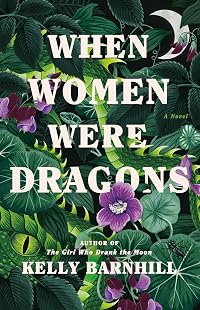
When Women Were Dragons
by Kelly Barnhill
On This Page
Description
"Alex Green is a young girl in a world much like ours. But this version of 1950's America is characterized by a significant event: The Mass Dragoning of 1955, when hundreds of thousands of ordinary wives and mothers sprouted wings, scales and talons, left a trail of fiery destruction in their path, and took to the skies. Was it their choice? What will become of those left behind? Why did Alex's beloved Aunt Marla transform but her mother did not? Alex doesn't know. It's taboo to speak of. show more Forced into silence, Alex nevertheless must face the consequences of this disturbing event: a mother more protective than ever; a father growing increasingly distant; the upsetting insistence that her aunt never even existed; and helping to raise a beloved younger girl obsessed with dragons far beyond propriety. In this timely and timeless speculative novel, award-winning author Kelly Barnhill boldly explores rage, memory, and the forced limitations of girlhood. When Women Were Dragons exposes a world that wants to keep women small-their lives and their prospects-and examines what happens when they rise en masse and take up the space they deserve"-- show lessTags
Recommendations
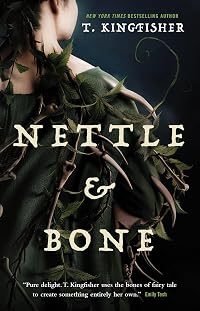
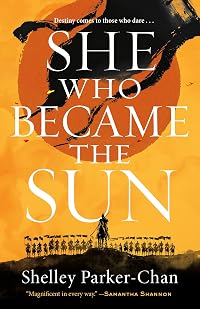
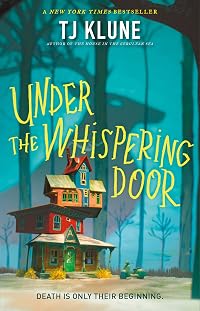
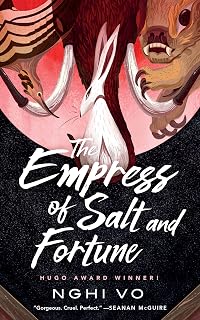
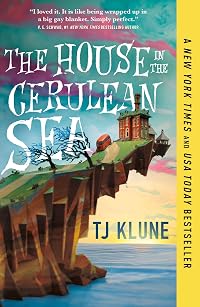
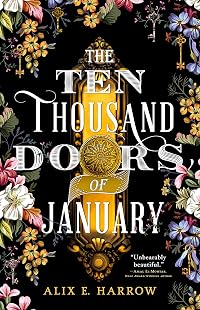
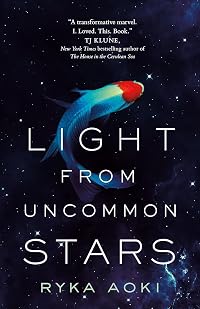
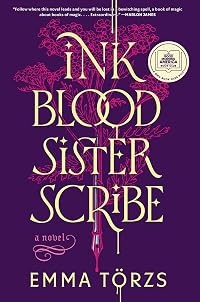




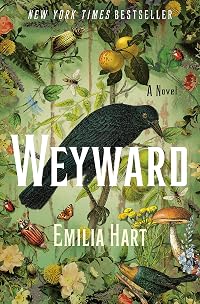
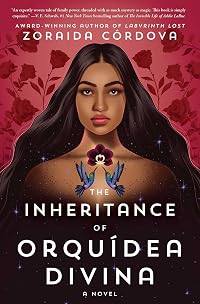
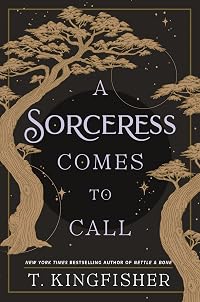
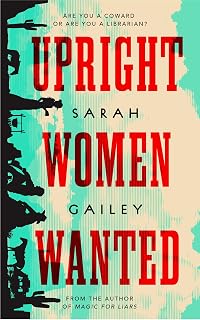
Member Recommendations

lottpoet When Girls Becoming Young Women Become 'Violent Beasts'
Member Reviews
In this fantasy/alternative history, women spontaneously transform into dragons, a fact that is denied and suppressed - even the Mass Dragoning event of 1955, when Alex's aunt Marla transforms, and Alex's cousin Beatrice becomes her sister, a lie enforced by Alex's mother. Math- and science-minded Alex obeys the rule of silence, but eventually wants to know more, and is helped by a powerful librarian, Mrs. Gyzinska, who also aids dragon researchers, including Dr. Henry Gantz.
Told mainly in first person past tense from Alex's perspective, but also includes sections of Gantz's testimony before HUAC, and his written research.
Thematically similar but tonally different from The Power by Naomi Alderman, When Women Were Dragons examines the show more impact of denial and silence, versus a scientific inquiry mindset that searches for evidence and asks questions to reach the truth; it also imagines the destructive, satisfying power of rage unleashed by the oppressed against the oppressor. And, it imagines a world in transformation from a society that forgets to one that accepts.
Quotes
"There cannot be science without the interrogation of closely held beliefs, as well as the demolition of personal aversions and biases. There cannot be science without the free and unfettered dissemination of truth. (Gantz to HUAC, 1957, p. 5)
People are awfully good at forgetting unpleasant things. (40)
Embarrassment, as it turns out, is more powerful than information. And shame is the enemy of truth. (54)
"...we do believe that the changes to which I refer are both biologic and intentional. The evidence seems to suggest that it is a chosen metamorphosis." (68)
There is freedom in forgetting.
Or at least it is something that feels like freedom. (160)
When does fear become anger? When does anger become fear? Or were they the same? (192)
"Anger is a funny thing. And it does funny things to us if we keep it inside. I encourage you to consider a question: Who benefits, my dear, when you force yourself to not feel angry?" (Mrs. Gyzinska, 208)
Was I the immovable object, or was I the unstoppable force? Perhaps I was both. Perhaps this is what we learn from our mothers. (228)
"It's just magic. All of us got some." (Marla to Alex, 242)
I contend that it was not the loss that hurt the culture, but the pressure to ignore that loss. The pressure to forget. But what, I wonder, would happen if people weren't allowed to forget? (Gantz, 247)
"It's not a matter of letting anything stand. It's a matter of accepting that the world isn't the same as you thought it was before." (Alex to Randall, 270-271)
Change is hard....It is painful to let go of the things we once thought were true....Science rarely gives us answers. Rather, science gives us the means by which we may ask more questions: it provides context, connection, and background. It compounds our curiosities. (Gantz, 279)
While it is true that there is a freedom in forgetting....there is a tremendous power in remembrance. (Gantz, 280)
"The choice itself is precious." (Gantz to Alex, 306)
Gratitude is a funny thing. It feels so similar to joy. (320)
What is grief, but love that's lost its object? (334) show less
Told mainly in first person past tense from Alex's perspective, but also includes sections of Gantz's testimony before HUAC, and his written research.
Thematically similar but tonally different from The Power by Naomi Alderman, When Women Were Dragons examines the show more impact of denial and silence, versus a scientific inquiry mindset that searches for evidence and asks questions to reach the truth; it also imagines the destructive, satisfying power of rage unleashed by the oppressed against the oppressor. And, it imagines a world in transformation from a society that forgets to one that accepts.
Quotes
"There cannot be science without the interrogation of closely held beliefs, as well as the demolition of personal aversions and biases. There cannot be science without the free and unfettered dissemination of truth. (Gantz to HUAC, 1957, p. 5)
People are awfully good at forgetting unpleasant things. (40)
Embarrassment, as it turns out, is more powerful than information. And shame is the enemy of truth. (54)
"...we do believe that the changes to which I refer are both biologic and intentional. The evidence seems to suggest that it is a chosen metamorphosis." (68)
There is freedom in forgetting.
Or at least it is something that feels like freedom. (160)
When does fear become anger? When does anger become fear? Or were they the same? (192)
"Anger is a funny thing. And it does funny things to us if we keep it inside. I encourage you to consider a question: Who benefits, my dear, when you force yourself to not feel angry?" (Mrs. Gyzinska, 208)
Was I the immovable object, or was I the unstoppable force? Perhaps I was both. Perhaps this is what we learn from our mothers. (228)
"It's just magic. All of us got some." (Marla to Alex, 242)
I contend that it was not the loss that hurt the culture, but the pressure to ignore that loss. The pressure to forget. But what, I wonder, would happen if people weren't allowed to forget? (Gantz, 247)
"It's not a matter of letting anything stand. It's a matter of accepting that the world isn't the same as you thought it was before." (Alex to Randall, 270-271)
Change is hard....It is painful to let go of the things we once thought were true....Science rarely gives us answers. Rather, science gives us the means by which we may ask more questions: it provides context, connection, and background. It compounds our curiosities. (Gantz, 279)
While it is true that there is a freedom in forgetting....there is a tremendous power in remembrance. (Gantz, 280)
"The choice itself is precious." (Gantz to Alex, 306)
Gratitude is a funny thing. It feels so similar to joy. (320)
What is grief, but love that's lost its object? (334) show less
This sizzling feminist fantasy about women who spontaneously turn into dragons and how the phenomenon is handled by the rest of the world is original and bright and occasionally very funny.
Now, come on – how could you not applaud a book that drops that on you on page 41?
Kelly Barnhill’s perfectly logical takeoff point (you should excuse the pun) is the pressure-cooker conformity imposed on so many Americans in the mid-50s, but particularly on women. With show more their avenues of self-expression, professional opportunities, and personal freedom as relentlessly compressed by church and legislature and public opinion as their bodies were compressed by ironclad girdles and rocket-nosecone bras, what sane person would not opt to be huge and ferocious and utterly magnificent? And, given an era dominated by the McCarthy Hearings and the House Un-American Activities Committee, how could the public response be anything but denial, denial, denial?
The novel operates both on a personal level, following Alex Green and her family as they deal with the dragoning of Alex’s aunt Marla, and on a much wider scale looking at the ways in which truth becomes malleable and certain segments of the population become marginalized for their differences. As Alex grows up, she is constantly torn between her love of and responsibility for her cousin Beatrice, left functionally orphaned by Marla’s departure, and Alex’s own academic goals, more or less constantly thwarted by the prevalent “girls can’t” philosophy, the loss of her mother, and the actions of one of the most despicable fictional fathers ever created.
And here’s where the first of the problems arise with the tale. Alex’s father is drawn as such a villain that he veers into straw man territory. His only function in the book seems to be being mean, until his final scene with Alex, wherein his emotional turnaround is utterly unbelievable. Even the dragons mellow toward the end of the novel, changing from fierce and fearsome manifestations of female power to nurturing aunties who go around succoring orphans and stopping wars. You know, as dragons do.
Barnhill uses a wonderful and original ongoing metaphor dealing with knots – the drawing together and binding of power they represent, the intricate patterning not always immediately obvious to the eye, and the sense of overarching design and purpose. It’s a beautiful subtext throughout the narrative, and helps keep things afloat when the action threatens to bog down near the conclusion.
The underlying power of the narrative and the strong family bonds that do survive manage to keep this novel well worth reading, but it’s certainly not without flaws. show less
On April 25, 1955, between the hours of 11:45 a.m. and 2:50 p.m., central time, 642,987 American women – wives and mothers, all – became dragons … and no fewer than 1,246 philandering husbands [were] extracted from the embrace of their mistresses and devoured on the spot.
Now, come on – how could you not applaud a book that drops that on you on page 41?
Kelly Barnhill’s perfectly logical takeoff point (you should excuse the pun) is the pressure-cooker conformity imposed on so many Americans in the mid-50s, but particularly on women. With show more their avenues of self-expression, professional opportunities, and personal freedom as relentlessly compressed by church and legislature and public opinion as their bodies were compressed by ironclad girdles and rocket-nosecone bras, what sane person would not opt to be huge and ferocious and utterly magnificent? And, given an era dominated by the McCarthy Hearings and the House Un-American Activities Committee, how could the public response be anything but denial, denial, denial?
The novel operates both on a personal level, following Alex Green and her family as they deal with the dragoning of Alex’s aunt Marla, and on a much wider scale looking at the ways in which truth becomes malleable and certain segments of the population become marginalized for their differences. As Alex grows up, she is constantly torn between her love of and responsibility for her cousin Beatrice, left functionally orphaned by Marla’s departure, and Alex’s own academic goals, more or less constantly thwarted by the prevalent “girls can’t” philosophy, the loss of her mother, and the actions of one of the most despicable fictional fathers ever created.
And here’s where the first of the problems arise with the tale. Alex’s father is drawn as such a villain that he veers into straw man territory. His only function in the book seems to be being mean, until his final scene with Alex, wherein his emotional turnaround is utterly unbelievable. Even the dragons mellow toward the end of the novel, changing from fierce and fearsome manifestations of female power to nurturing aunties who go around succoring orphans and stopping wars. You know, as dragons do.
Barnhill uses a wonderful and original ongoing metaphor dealing with knots – the drawing together and binding of power they represent, the intricate patterning not always immediately obvious to the eye, and the sense of overarching design and purpose. It’s a beautiful subtext throughout the narrative, and helps keep things afloat when the action threatens to bog down near the conclusion.
The underlying power of the narrative and the strong family bonds that do survive manage to keep this novel well worth reading, but it’s certainly not without flaws. show less
This book is rather obviously an allegory for women's rights, gay rights, civil rights, and an exploration of the anger of women. But it doesn't creak though it repeats, and repetition is part of the structure. It's is a bit impeded by wanting to tell more story than quite fits into a compact plot so there is some roughness in the flow when the thrust of the rather slow quiet action shifts.
WHERE TO EVEN START?????
it feels like this book was made for me, specifically. i just spent the last few hours, finishing it while sobbing, closing the book, wiping my face, and jumping into the zoom yoga class i signed up for before having a second to breathe. i was thinking abt it through the whole class. i think i'm gonna be thinking abt it for a long time. i think i'm gonna need to eventually buy this one as a library copy is not gonna be enough for me. i'm gonna want to re-read this.
literally, a story abt mothers and daughters, sisters, aunts, intelligent women, sexism, taking up space, getting through it by sheer force of will, sapphic (possibly even poly?!!?) queer characters, learning to be okay with change, with changing your show more mind, with loving the parts of people that serve you and letting go of the things that might not anymore, and DRAGONS. ALSO THERE ARE DRAGONS. THE WOMEN (some) GET TO BECOME DRAGONS, THAT'S IN THE TITLE AND IT HAPPENS AND IT'S GLORIOUS.
all of this felt catered to my most loved things to be explored in fiction. i cried harder than i have at a book in a good long while, maybe not even in places the author might have meant for ppl to possibly feel like a little cry (this book rlly hit all my buttons and also in my soul in a way that i will both be seeking damages for and very grateful for).
(also, should be noted, i'm a pisces and a cancer rising, i cry at everything, but i cried HARD and for a long time, more than once).
i love this book. i want to read it again. show less
it feels like this book was made for me, specifically. i just spent the last few hours, finishing it while sobbing, closing the book, wiping my face, and jumping into the zoom yoga class i signed up for before having a second to breathe. i was thinking abt it through the whole class. i think i'm gonna be thinking abt it for a long time. i think i'm gonna need to eventually buy this one as a library copy is not gonna be enough for me. i'm gonna want to re-read this.
literally, a story abt mothers and daughters, sisters, aunts, intelligent women, sexism, taking up space, getting through it by sheer force of will, sapphic (possibly even poly?!!?) queer characters, learning to be okay with change, with changing your show more mind, with loving the parts of people that serve you and letting go of the things that might not anymore, and DRAGONS. ALSO THERE ARE DRAGONS. THE WOMEN (some) GET TO BECOME DRAGONS, THAT'S IN THE TITLE AND IT HAPPENS AND IT'S GLORIOUS.
all of this felt catered to my most loved things to be explored in fiction. i cried harder than i have at a book in a good long while, maybe not even in places the author might have meant for ppl to possibly feel like a little cry (this book rlly hit all my buttons and also in my soul in a way that i will both be seeking damages for and very grateful for).
(also, should be noted, i'm a pisces and a cancer rising, i cry at everything, but i cried HARD and for a long time, more than once).
i love this book. i want to read it again. show less
I thoroughly enjoyed reading When Women Were Dragons by Kelly Barnhill. It’s a novel with well-developed, interesting characters from a scientist masquerading as a librarian, to a remote father, to a mother trying to hold off cancer so she can raise her children. The book makes you think about male-female roles, the joy of being a woman, freedom of the press, keeping secrets, and choices. And if that sounds too serious, don’t despair. It’s also an absorbing story that will draw you in and keep you reading to the very last page. It’s referred been labelled a fantasy novel, but that’s far, far too limiting.
On April 25, 1955, 642,987 women spontaneously turned into dragons and flew away from their previous lives.
It was considered a shameful act and these women were never acknowledged again. It was as if they had never existed at all.
Such was the case with Alex’s aunt Marla, who dragoned on that day leaving her young daughter Beatrice and a shiftless drunk husband behind. Beatrice came to live with Alex’s family; it was never admitted that she had had a previous life.
Scientists were forbidden from studying the phenomena. Those scientists who persisted were actively persecuted.
Slowly it became realized that the new dragons had previously been living lives that were smaller than they were: unfit husbands, careers that were open to women show more in the 1950’s, even loving other women.
And as the daughters (and the rare son) of this generation of unspeakable women grew up, magical things begin to happen.
I loved this book. Never make yourself smaller than you are! show less
It was considered a shameful act and these women were never acknowledged again. It was as if they had never existed at all.
Such was the case with Alex’s aunt Marla, who dragoned on that day leaving her young daughter Beatrice and a shiftless drunk husband behind. Beatrice came to live with Alex’s family; it was never admitted that she had had a previous life.
Scientists were forbidden from studying the phenomena. Those scientists who persisted were actively persecuted.
Slowly it became realized that the new dragons had previously been living lives that were smaller than they were: unfit husbands, careers that were open to women show more in the 1950’s, even loving other women.
And as the daughters (and the rare son) of this generation of unspeakable women grew up, magical things begin to happen.
I loved this book. Never make yourself smaller than you are! show less
When Women Were Dragons is a coming-of-age story that begins in 1955, when a large number of women suddenly transform into dragons, and when many philandering husbands are eaten by dragons. If you smell a feminist metaphor here, you are not wrong. The story of Alex, whose mother dies and whose father leaves her to raise her adopted cousin, is well told, but the symbols are repeated long after Barnhill has made her point.
Members
- Recently Added By
Lists

Top Five Books of 2022
736 works; 272 members

2023 Hugo Awards -- Eligible Works -- Novels
70 works; 21 members

Pleasant Surprises: Books That Exceeded Our Expectations
418 works; 143 members

Books Read in 2023
5,547 works; 145 members

Books Read in 2022
5,168 works; 111 members

Newbery Adjacent
747 works; 3 members

Top Five Books of 2023
767 works; 317 members

Books Read in 2024
4,623 works; 126 members

Best Audiobooks
240 works; 114 members

Books We Couldn't Put Down
443 works; 197 members

Top Five Books of 2024
795 works; 264 members
Author Information

35+ Works 10,498 Members
Kelly Barnhill is a children's book author. Her novels include The Mostly True Story of Jack, Iron Hearted Violet, The Witch's Boy, and The Girl Who Drank the Moon, which received the 2017 John Newbery Medal. She has also received the World Fantasy Award, the Parents Choice Gold Award, the Texas Library Association Bluebonnet award, and a show more Charlotte Huck Honor. (Bowker Author Biography) show less
Some Editions
Awards and Honors
Awards
Distinctions
Notable Lists
Common Knowledge
- Canonical title
- When Women Were Dragons
- Original title
- When Women Were Dragons
- Original publication date
- 2022-05-03
- People/Characters
- Alex Green; Beatrice Green; Aunt Marla
- Important places
- Wisconsin, USA
- Important events
- Mass Dragoning of 1955
- Epigraph
- The dragon is in the barrow, wise and proud with treasures. -- Anglo-Saxon proverb
They were ferocious in appearance, terrible in shape with great heads, long necks, thin faces, yellow complexions, shaggy ears, wild foreheads, fierce eyes, foul mouths, horses' teeth, throats vomiting flames, twisted jaws, t... (show all)hick lips, strident voices, singed hair, fat cheeks, pigeon breasts, scabby thighs, knotty knees, crooked legs, swollen ankles, splay feet, spreading mouths, raucous cries. For they grew so terrible to hear with their mighty shriekings that they filled almost the whole intervening space between heaven and earth with their discordant bellowings.
-Life of Saint Guthlac by Felix, an East Anglian monk, approximately AD 730, in which the good monk describes the original occupants of the barrow where the Saint had attempted to build his hermitage.
If I, like Solomon...
could have my wish--
my wish... O to be a dragon,
a symbol of the power of Heaven--of silkworm
size or immense; at times invisible.
Felicitous phenomenon!
-- "O to b... (show all)e a Dragon" by Marianne Moore, 1959 - Dedication
- For Christine Blasey Ford,
whose testimony triggered this narrative;
And for my children --
dragons, all. - First words
- Greetings, Mother--
I do not have much time. - Last words
- (Click to show. Warning: May contain spoilers.)And now I will teach it to you.
- Publisher's editor
- Boudreaux, Lee
- Blurbers
- Grossman, Lev; Garmus, Bonnie
- Canonical DDC/MDS
- 813.6
Classifications
Statistics
- Members
- 1,993
- Popularity
- 10,558
- Reviews
- 55
- Rating
- (3.89)
- Languages
- 5 — English, German, Polish, Portuguese, Spanish
- Media
- Paper, Audiobook, Ebook
- ISBNs
- 20
- ASINs
- 5