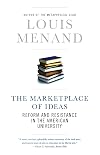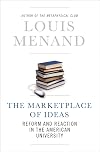
The Marketplace of Ideas: Reform and Resistance in the American University
by Louis Menand
The Page-Barbour Lectures at the University of Virginia (2008)
On This Page
Description
Has American higher education become a dinosaur? Why do professors all tend to think alike? What makes it so hard for colleges to decide which subjects should be required? Why do teachers and scholars find it so difficult to transcend the limits of their disciplines? Why, in short, are problems that should be easy for universities to solve so intractable? The answer, Louis Menand argues, is that the institutional structure and the educational philosophy of higher education have remained the show more same for one hundred years, while faculties and student bodies have radically changed and technology has drastically transformed the way people produce and disseminate knowledge. Sparking a long-overdue debate about the future of American education, The Marketplace of Ideas examines what professors and students-and all the rest of us-might be better off without while assessing what is worth saving in our traditional university institutions. show lessTags
Recommendations

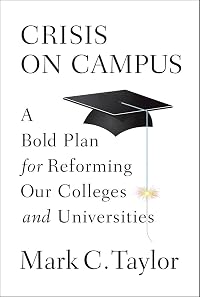
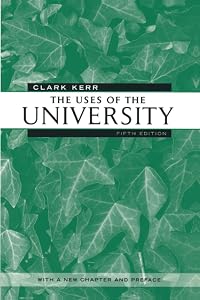
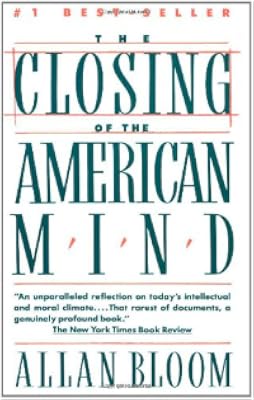
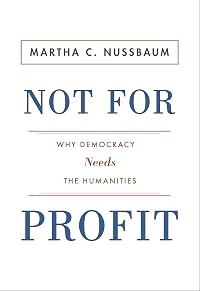








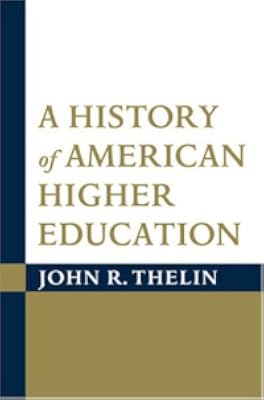
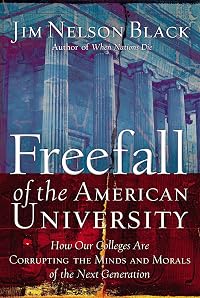
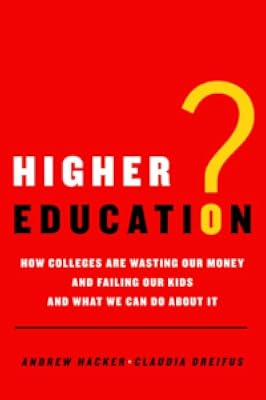
Member Recommendations


Member Reviews
This short book is really a long essay, and while I found it engaging and thoughtful, it would have been better served if it had been expanded a bit for the book edition. I read it as a humanities scholar - fresh out of graduate school in philosophy, and heading into liberal arts education. I fit the target demographic. Menand frequently discusses topics and issues about academic culture that are left untranslated, and some of the key terms about methodology in literary criticism (a background that Menand comes out of) are left underdeveloped. While the book is mostly going to be of interest to folks in academia like myself, Menand is engaging with really important and interesting questions about the purpose of education that could have show more been made more accessible to a general audience.
The first part of the essay concerns the history of the liberal arts and the humanities in particular. I found it a compelling read, particularly as a debunking explanation. He nicely illustrates the history behind many of our most tried and true cliches about the intrinsic value of knowledge, which casts light on the fact that their apparent self-evidence is hardly a convincing argument. These ideas come out of the historical circumstances in which they first formulated, and while knowing the history does not mean that these ideas are bad ones, it does pose a vital question to us: do we defend them because they are well reasoned claims, or because they seem obviously true because of their historical legacy?
Menand's chapter on interdisciplinarity is also thoughtful, if perhaps not entirely convincing. He makes a number of astute points about the importance of disciplines, and how the notion of interdisciplinarity is based upon the assumption that we have these disciplinary boundaries in place. The central insight of Menand's account is that there is a tension between our interest in dissolving disciplinary boundaries, and the role that these boundaries play in legitimizing the work in the field to begin with. As a philosopher, my work is evaluated by other philosophers (such as through peer-reviewed journals). Having a institutionally defined discipline of philosophy protects my work at the same time that it legitimates it. While it is also an insulating influence, criticisms of that influence typically rest on the credentials conferred by having the discipline in the first place.
I did not find Menand's case here, however, wholly compelling. One of the ways in which this structure is actually reinforced by interdisciplinarity is that the interactions between disciplines occur between ambassadors of the respective field. If I, a philosopher, get together with a linguist, we will both bring our perspectives into play. But we cannot critique one another. We can provide authority-driven claims (the linguist tells me what linguists say, and I tell her what philosophers say), but these are based upon our disciplinary expertise. As a result, there really isn't any dissolving of the boundaries, there is only the strengthening of them.
This is perhaps an apt description of many cases of interdisciplinarity between established professionals. Yet, I think it loses sight of the influence this notion can have on developing students. My own work in the philosophy of linguistics required training in linguistics, by linguists. Colleagues working in the philosophy of physics typically have to develop a real mastery of the physics literature. While these cases do not typically involve a complete breakdown of disciplinary boundaries (our degrees are still granted by philosophy departments after all), they do show a potential for richer collaboration. I suspect that what Menand has in mind by "interdisciplinarity" is only a strong version, in which the boundaries between disciplines dissolve away and we are free to pursue problems with whatever skills are most appropriate. Yet, there are weaker forms of interdisciplinarity which do weaken regimented disciplinary boundaries even if they are not subverisve with regard to them. Training philosophers in physics does not undermine either field, but it can help produce people with the skills necessary to move from one work in one area to the other. This sort of improved conversation and collaboration is a worthwhile aim for interdisciplinary work, even if it is not the subverting type that Menand has in mind.
This is a rich and interesting book, whether it is in Menand's historical work, his informed speculations about institutional effects or his thoughtful challenges to the status quo. Anyone with an interest in the modern liberal arts university, particularly those of us most committed to its ideals, could benefit from reflecting on his ideas. show less
The first part of the essay concerns the history of the liberal arts and the humanities in particular. I found it a compelling read, particularly as a debunking explanation. He nicely illustrates the history behind many of our most tried and true cliches about the intrinsic value of knowledge, which casts light on the fact that their apparent self-evidence is hardly a convincing argument. These ideas come out of the historical circumstances in which they first formulated, and while knowing the history does not mean that these ideas are bad ones, it does pose a vital question to us: do we defend them because they are well reasoned claims, or because they seem obviously true because of their historical legacy?
Menand's chapter on interdisciplinarity is also thoughtful, if perhaps not entirely convincing. He makes a number of astute points about the importance of disciplines, and how the notion of interdisciplinarity is based upon the assumption that we have these disciplinary boundaries in place. The central insight of Menand's account is that there is a tension between our interest in dissolving disciplinary boundaries, and the role that these boundaries play in legitimizing the work in the field to begin with. As a philosopher, my work is evaluated by other philosophers (such as through peer-reviewed journals). Having a institutionally defined discipline of philosophy protects my work at the same time that it legitimates it. While it is also an insulating influence, criticisms of that influence typically rest on the credentials conferred by having the discipline in the first place.
I did not find Menand's case here, however, wholly compelling. One of the ways in which this structure is actually reinforced by interdisciplinarity is that the interactions between disciplines occur between ambassadors of the respective field. If I, a philosopher, get together with a linguist, we will both bring our perspectives into play. But we cannot critique one another. We can provide authority-driven claims (the linguist tells me what linguists say, and I tell her what philosophers say), but these are based upon our disciplinary expertise. As a result, there really isn't any dissolving of the boundaries, there is only the strengthening of them.
This is perhaps an apt description of many cases of interdisciplinarity between established professionals. Yet, I think it loses sight of the influence this notion can have on developing students. My own work in the philosophy of linguistics required training in linguistics, by linguists. Colleagues working in the philosophy of physics typically have to develop a real mastery of the physics literature. While these cases do not typically involve a complete breakdown of disciplinary boundaries (our degrees are still granted by philosophy departments after all), they do show a potential for richer collaboration. I suspect that what Menand has in mind by "interdisciplinarity" is only a strong version, in which the boundaries between disciplines dissolve away and we are free to pursue problems with whatever skills are most appropriate. Yet, there are weaker forms of interdisciplinarity which do weaken regimented disciplinary boundaries even if they are not subverisve with regard to them. Training philosophers in physics does not undermine either field, but it can help produce people with the skills necessary to move from one work in one area to the other. This sort of improved conversation and collaboration is a worthwhile aim for interdisciplinary work, even if it is not the subverting type that Menand has in mind.
This is a rich and interesting book, whether it is in Menand's historical work, his informed speculations about institutional effects or his thoughtful challenges to the status quo. Anyone with an interest in the modern liberal arts university, particularly those of us most committed to its ideals, could benefit from reflecting on his ideas. show less
Much of what Menand writes is fairly obvious, but I still think it is important to actually see it in print. He is right that the current model of academia is not really working anymore, and it is still based on the 19th and early 20th-century model. I wish he offered some ideas for solutions to these problems, but it is a great starting point for discussion. With the economy in the garbage, perhaps one good thing is that there will probably be other routes to "professionalization" besides a college degree.
This book is a good look into the world of academia and particularly at the humanities. The university system and its curricula in the United States went through a great transformation in the late nineteenth century, and this system is still inplace for the most part.
The first chapte deals with the idea of the need for a core curriculum that each undergraduate liberal arts student should take. Some colleges put a great stock in this, Colubmia and Harvard being noteworthy and where Menand has taught. As a side note, when I was choosing a college in the early 1960's, I specifically chose a college without a core curriculum, University of Pennsylvania.
The second chapter deals with the "Humanities Revolution." Their need has been show more questioned, many courses have devolved into filaments of inquiry, and the number of student majoring in the tradtional humanities has dropped considerably in the last 30 years.
The third chapter deals iwth interdisciplinarity and anxiety. Menand questions this development and sees a great deal of frustration among his colleagues. I see interdisciplanrity as a great corrective to the narrowness of much advanced academic study. I can see the improvement in non-fiction relatd to this. The Annales School of France is a trenchant example of how history has become more interesting to read.
The final chapter deals with how the politics of among many professors are so similar, and are generally liberal or left-wing comared to the populace as a whole.
A good read show less
The first chapte deals with the idea of the need for a core curriculum that each undergraduate liberal arts student should take. Some colleges put a great stock in this, Colubmia and Harvard being noteworthy and where Menand has taught. As a side note, when I was choosing a college in the early 1960's, I specifically chose a college without a core curriculum, University of Pennsylvania.
The second chapter deals with the "Humanities Revolution." Their need has been show more questioned, many courses have devolved into filaments of inquiry, and the number of student majoring in the tradtional humanities has dropped considerably in the last 30 years.
The third chapter deals iwth interdisciplinarity and anxiety. Menand questions this development and sees a great deal of frustration among his colleagues. I see interdisciplanrity as a great corrective to the narrowness of much advanced academic study. I can see the improvement in non-fiction relatd to this. The Annales School of France is a trenchant example of how history has become more interesting to read.
The final chapter deals with how the politics of among many professors are so similar, and are generally liberal or left-wing comared to the populace as a whole.
A good read show less
Menand's history of the development of core curricula at Columbia and Yale is the book's greatest strength.
Just read the essay version that was published online. There's too much history of academic administration here for most people to care.
Ratings
Members
- Recently Added By
Published Reviews
ThingScore 75
Menand’s discussion of general education starts on a wry note: “The process of designing a new general education curriculum and selling it to the faculty has been compared to a play by Samuel Beckett, but the comparison is inapt. Beckett’s plays are short.” One usually hears that general education courses are in a parlous state because hyperspecialized professors disdain teaching broad show more introductory courses. But the real story is more complicated. show less
added by Shortride
Louis Menand's The Marketplace of Ideas manages to do many things in four short essays—describe the changing self-conception of the university, identify the difficulties behind curricular reform, and analyze the anxieties of humanities professors. But the book's chief accomplishment is its insistence that what we take for academic crises are probably just academic problems, and they are ours show more to solve. show less
added by Shortride
Author Information

14+ Works 4,606 Members
Louis Menand is Professor of English at the Graduate Center of the City University of New York
Series

Belongs to Publisher Series
Common Knowledge
- Canonical title
- The Marketplace of Ideas: Reform and Resistance in the American University
- Original title
- The Marketplace of Ideas: Reform and Resistance in the American University
- Original publication date
- 2010
- Dedication
- To the Task Force
Alison
David
David
Mary
Stephanie
Steve - First words
- Knowledge is our most important business.
- Last words
- (Click to show. Warning: May contain spoilers.)But they need to ignore the world's demand that they reproduce its self-image.
- Blurbers
- Appiah, K. Anthony; Booth, Alison; Feldman, Noah; Castle, Terry
- Original language
- English
Classifications
- Genres
- Nonfiction, General Nonfiction, History, Philosophy
- DDC/MDS
- 378.01 — Society, government, & culture Education Higher education (Tertiary education) Definition of college and university; Aim
- LCC
- LB2322.2 .M45 — Education Theory and practice of education Theory and practice of education Higher education
- BISAC
Statistics
- Members
- 218
- Popularity
- 146,968
- Reviews
- 5
- Rating
- (3.76)
- Languages
- English
- Media
- Paper, Audiobook, Ebook
- ISBNs
- 7
- ASINs
- 5