
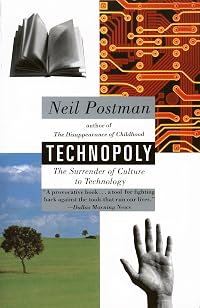
Technopoly: The Surrender of Culture to Technology
by Neil Postman
On This Page
Description
In this witty, often terrifying work of cultural criticism, Postman chronicles our transformation into a Technopoly: a society that no longer merely uses technology as a support system but instead is shaped by it. According to Postman, technology is rapidly gaining sovereignty over social institutions and national life to become self-justifying, self-perpetuating, and omnipresent. He warns that this will have radical consequences for the meanings of politics, art, religion, family, show more education, privacy, intelligence, and truth, as they are redefined to fit the requirements of the technological thought-world. show lessTags
Recommendations






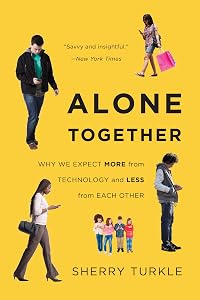

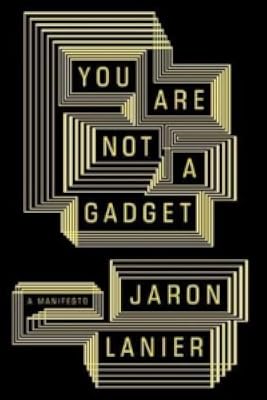
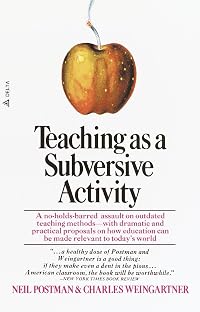
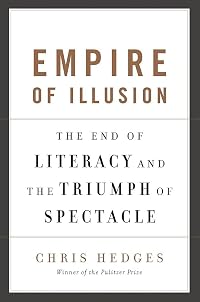












Member Recommendations


proximity1 Le destin technologique , which presents interesting complementary reading to Technopoly, was published in the same year, 1992. Both are fascinating and both are by brilliant thinkers. See also, by J-J Salomon, in English, Mirages of development : science and technology for the third worlds
proximity1 see also: http://www.librarything.com/catalog_bottom.php?tag=A+Reading+Course+in+%27Technology+%26+Society%27+-+main+text&view=proximity1



The Limits of Power: The End of American Exceptionalism (American Empire Project) by Andrew Bacevich
proximity1 The logical consequences of technopoly go hand in hand with an ever-expanding and ever-more-intrusive state surveillance aparatus which their proponents try to justify by assumptions about national security matters. These works, both so important, should be read together or serially for greater effect.
Head in the Cloud: Why Knowing Things Still Matters When Facts Are So Easy to Look Up by William Poundstone
themulhern These books have an affinity: Postman looks at the bigger picture and Poundstone is relatively trivial. Poundstone is a great deal more contemporary. They both are about a technology that can take away all our capacity to think.
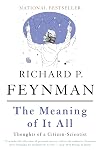
themulhern Both are thoughtful books by smart people. They intersect in their impatience with the pretensions of the social sciences.

themulhern "Pillar" is a case study of the effects of technology on culture which Postman addresses in "Technopoly".
Member Reviews
Neil Postman is currently spinning in his grave, yelling "I told you so! I told you so!"
In this book, he argues that the US has become a technopoly, which he defines as a culture where the needs of technology are more important as drivers of change then the needs of humans, where efficiency is valued above all else, and where we have a glut of information that is unmitigated by any kind of moral or intellectual filters. This was a pretty decent description of segments of the US in 1992, but it pretty much describes the whole world now.
In some ways, he reads like an angry old crank yelling about the kids these days and their lack of religion/philosophy/morality. On the other hand, he sure does have a point, especially when he talks about show more our unfiltered access to way too much information and how that makes all information meaningless. He didn't take it to the next step, where we are so vulnerable to misinformation that we are willing to overthrow democracy because we believe a bunch of lies, but I think he would be totally unsurprised that technocracy has led us to this point.
Postman offers some semblance of a solution in his final chapter, which is a new approach to school curriculum, which maybe seemed remotely achievable in 1992 but is laughably naive now. show less
In this book, he argues that the US has become a technopoly, which he defines as a culture where the needs of technology are more important as drivers of change then the needs of humans, where efficiency is valued above all else, and where we have a glut of information that is unmitigated by any kind of moral or intellectual filters. This was a pretty decent description of segments of the US in 1992, but it pretty much describes the whole world now.
In some ways, he reads like an angry old crank yelling about the kids these days and their lack of religion/philosophy/morality. On the other hand, he sure does have a point, especially when he talks about show more our unfiltered access to way too much information and how that makes all information meaningless. He didn't take it to the next step, where we are so vulnerable to misinformation that we are willing to overthrow democracy because we believe a bunch of lies, but I think he would be totally unsurprised that technocracy has led us to this point.
Postman offers some semblance of a solution in his final chapter, which is a new approach to school curriculum, which maybe seemed remotely achievable in 1992 but is laughably naive now. show less
Another pithy Neil Postman polemic! And he's mostly right, too. Once one becomes familiar with Neil Postman, I think one can read individual chapters as stand-alone essays.
So, I went straight to Chapter 9: Scientism, as I already have a dismissive attitude to the so-called "social sciences", based on reading works written fairly long ago, like Feynman's essay on "Cargo Cult Science" and more recent things, like the psychological experiments on a frozen salmon. Bad ideas of scientism as Postman lists them:
1. The methods of the natural sciences can be applied to the study of human behavior.
2. Social science generates specific principles which can be used to organize society on a rational and humane basis.
3. Faith in science can serve as a show more comprehensive belief system that gives meaning to life, as well as a sense of well-being, morality, and even immortality.
He points out that both scientists and "social scientists" use quantities, that's not proof that they're doing the same thing, any more than it's proof that accountants are doing science. Both sometimes do things that they call experiments, of course. "Social science" is, he points out, unfalsifiable. "Social science" is our modern substitute for the kind of thing we might usually seek through the reading of novels, and learn more by so doing. What is going on in "social science" is the establishment of a mythology.
Good quotation:
"Unlike science, social research never rediscovers anything. It only rediscovers what people once were told and need to be told again."
Chapter 10, "The Great Symbol Drain" is a bit harder to follow. I think I'm so constructed that anything that has symbolic meaning has to be complicated. A flag, for instance, means nothing to me in itself, even if the country does. Postman also talks about more complicated symbols, those that arise in religion for example. He claims that the reproduction of images makes them less meaningful, but I'm not sure that's true, either. His statement that cultures must find narratives is interesting in 2020, but chilling because it makes comparisons of the USA in 2021 with the Germany of the pre-WWII years all too easy to see as illuminating or plausible. There is a brief foray into education and a somewhat prescient remark about how "education must become a tribal affair; that is, each subculture must find its own story and symbols, and use them as the moral basis of education." This isn't what's happening, now a single subculture is asserting its incoherent philosophy of education as far as it can.
There is an excellent quotation from Plato's Phaedrus in Chapter 1. Below is a slightly different translation:
"""
If men learn this, it will implant forgetfulness in their souls; they will cease to exercise memory because they rely on that which is written, calling things to remembrance no longer from within themselves, but by means of external marks. What you have discovered is a recipe not for memory, but for reminder. And it is no true wisdom that you offer your disciples, but only its semblance, for by telling them of many things without teaching them you will make them seem to know much, while for the most part they know nothing, and as men filled, not with wisdom, but with the conceit of wisdom, they will be a burden to their fellows.
"""
That's our internet, alright. show less
So, I went straight to Chapter 9: Scientism, as I already have a dismissive attitude to the so-called "social sciences", based on reading works written fairly long ago, like Feynman's essay on "Cargo Cult Science" and more recent things, like the psychological experiments on a frozen salmon. Bad ideas of scientism as Postman lists them:
1. The methods of the natural sciences can be applied to the study of human behavior.
2. Social science generates specific principles which can be used to organize society on a rational and humane basis.
3. Faith in science can serve as a show more comprehensive belief system that gives meaning to life, as well as a sense of well-being, morality, and even immortality.
He points out that both scientists and "social scientists" use quantities, that's not proof that they're doing the same thing, any more than it's proof that accountants are doing science. Both sometimes do things that they call experiments, of course. "Social science" is, he points out, unfalsifiable. "Social science" is our modern substitute for the kind of thing we might usually seek through the reading of novels, and learn more by so doing. What is going on in "social science" is the establishment of a mythology.
Good quotation:
"Unlike science, social research never rediscovers anything. It only rediscovers what people once were told and need to be told again."
Chapter 10, "The Great Symbol Drain" is a bit harder to follow. I think I'm so constructed that anything that has symbolic meaning has to be complicated. A flag, for instance, means nothing to me in itself, even if the country does. Postman also talks about more complicated symbols, those that arise in religion for example. He claims that the reproduction of images makes them less meaningful, but I'm not sure that's true, either. His statement that cultures must find narratives is interesting in 2020, but chilling because it makes comparisons of the USA in 2021 with the Germany of the pre-WWII years all too easy to see as illuminating or plausible. There is a brief foray into education and a somewhat prescient remark about how "education must become a tribal affair; that is, each subculture must find its own story and symbols, and use them as the moral basis of education." This isn't what's happening, now a single subculture is asserting its incoherent philosophy of education as far as it can.
There is an excellent quotation from Plato's Phaedrus in Chapter 1. Below is a slightly different translation:
"""
If men learn this, it will implant forgetfulness in their souls; they will cease to exercise memory because they rely on that which is written, calling things to remembrance no longer from within themselves, but by means of external marks. What you have discovered is a recipe not for memory, but for reminder. And it is no true wisdom that you offer your disciples, but only its semblance, for by telling them of many things without teaching them you will make them seem to know much, while for the most part they know nothing, and as men filled, not with wisdom, but with the conceit of wisdom, they will be a burden to their fellows.
"""
That's our internet, alright. show less
It is difficult, if not impossible, stray too far into the literature of contemporary cultural criticism without running headlong into a Neil Postman reference…typically brief, often coated with a benign diplomacy that betrays nothing useful, and sometimes with a tone of sighing obligation. It seems that, like Stanley Fish, Neil Postman is one of that breed of intellectual that takes an almost excessive delight in raining on OTHER people's parades.
I'll admit, as a scholar in my own small right, I felt a bit uncomfortable reading a scholar who…well, deeply questioned whether or not our culture even really understood what "scholarship" really was. (Just read his thoughts on social "science" and the value of "statistics," and you'll show more understand that last sentence.)
But Postman is not some sociology prof-reject out to right some past tenure-interview-gone-terribly-awry. The project of "Technology" is at once more basic and more profound. Honestly, I found the argument of the book incredibly simple and easy-to-follow: The relationship of humanity to its technologies has passed through two complete evolutionary stages: from tool-using to technocracy and has now entered a third phase that is the title of the book. The issue here is not the development of specific technologies (note the lowercase "t") but a shift in the positioning of Technology (note the capital "T") in relationship to other domains of knowledge. No longer content to coexist with, say, other realms of truth-telling like Religion and Tradition, Technology now threatens to overtake them. As Postman writes:
"Technopoly eliminates alternatives to itself…It does not make them illegal. It does not make them immoral. It does not even make them unpopular. It makes them invisible and therefore irrelevant" (p. 48).
Technopoly is, he summarizes, "totalitarian technocracy." To put his point in more theological terms that I can better grasp, modern Western societies (especially the USA) now have more faith in the promise of Technology than they do in the promise of Humanity. (Faith in the promise of Divinity began its slow fade with the rise of the Enlightenment, but that is a digression from the topic at hand.) The balance has subtly shifted from optimism that WE (Humanity) could shape Technology to meet OUR ends to a new kind of optimism that Technology could rescue/save US from the frightening ends to which we have put it. So, in the Technopolist world, the answer to, say, the threat of nuclear holocaust is—in fact, MUST be—a technological one. Bigger bombs, better defense systems, satellites with lasers…you get the point, I hope.
Postman is not out to destroy Technology; he doesn't promote some impossible return to a pre-technological age. Rather, he wants to break Technology's DOMINATION over other ways and realms of human knowing. Postman simply tries to illuminate Technopoly's slow creep. Ever so subtly, Technology has become the Master and Humanity has assumed the role of servant. Truth is reduced to Data; Wisdom is misidentified as Information. And anything that does not easily convert to a "data-stream" format—any Truth that cannot be spit out as a number in a data table—becomes useless. What makes the effects of Technopoly so insidious is both their subtlety and their pervasiveness. This kind of thinking is literally everywhere, from dating websites that match users based on some system of personality "profiling" to educational assessment strategies that focus on "data-driven decision-making processes" (if I had a dollar for every time I heard THAT phrase at an accreditation conference). And in a Technopoly, the educator doesn't even think to ask: "Why should data be what drives educational decisions?" What a person earns after completing a college degree actually tells you very little about whether or not they are an "educated" person; it's simply a good way for the government to track their ROI on student grants & loans programs, a classically Technopolist concern.
I suppose it feels a bit overblown to describe a book as "revolutionary." And perhaps you will think Postman's work ISN'T that, after all. But it is the closest I'VE come to a "revolutionary" read in the past few years. Postman's problem is not that his observations are off-base; his problem is that they are prophetic…observations that will "take on" meaning and significance as the decades pass. And, unfortunately, as with the observations of most prophets, I fear their truth will recognized by most in society at a point too late to matter. show less
I'll admit, as a scholar in my own small right, I felt a bit uncomfortable reading a scholar who…well, deeply questioned whether or not our culture even really understood what "scholarship" really was. (Just read his thoughts on social "science" and the value of "statistics," and you'll show more understand that last sentence.)
But Postman is not some sociology prof-reject out to right some past tenure-interview-gone-terribly-awry. The project of "Technology" is at once more basic and more profound. Honestly, I found the argument of the book incredibly simple and easy-to-follow: The relationship of humanity to its technologies has passed through two complete evolutionary stages: from tool-using to technocracy and has now entered a third phase that is the title of the book. The issue here is not the development of specific technologies (note the lowercase "t") but a shift in the positioning of Technology (note the capital "T") in relationship to other domains of knowledge. No longer content to coexist with, say, other realms of truth-telling like Religion and Tradition, Technology now threatens to overtake them. As Postman writes:
"Technopoly eliminates alternatives to itself…It does not make them illegal. It does not make them immoral. It does not even make them unpopular. It makes them invisible and therefore irrelevant" (p. 48).
Technopoly is, he summarizes, "totalitarian technocracy." To put his point in more theological terms that I can better grasp, modern Western societies (especially the USA) now have more faith in the promise of Technology than they do in the promise of Humanity. (Faith in the promise of Divinity began its slow fade with the rise of the Enlightenment, but that is a digression from the topic at hand.) The balance has subtly shifted from optimism that WE (Humanity) could shape Technology to meet OUR ends to a new kind of optimism that Technology could rescue/save US from the frightening ends to which we have put it. So, in the Technopolist world, the answer to, say, the threat of nuclear holocaust is—in fact, MUST be—a technological one. Bigger bombs, better defense systems, satellites with lasers…you get the point, I hope.
Postman is not out to destroy Technology; he doesn't promote some impossible return to a pre-technological age. Rather, he wants to break Technology's DOMINATION over other ways and realms of human knowing. Postman simply tries to illuminate Technopoly's slow creep. Ever so subtly, Technology has become the Master and Humanity has assumed the role of servant. Truth is reduced to Data; Wisdom is misidentified as Information. And anything that does not easily convert to a "data-stream" format—any Truth that cannot be spit out as a number in a data table—becomes useless. What makes the effects of Technopoly so insidious is both their subtlety and their pervasiveness. This kind of thinking is literally everywhere, from dating websites that match users based on some system of personality "profiling" to educational assessment strategies that focus on "data-driven decision-making processes" (if I had a dollar for every time I heard THAT phrase at an accreditation conference). And in a Technopoly, the educator doesn't even think to ask: "Why should data be what drives educational decisions?" What a person earns after completing a college degree actually tells you very little about whether or not they are an "educated" person; it's simply a good way for the government to track their ROI on student grants & loans programs, a classically Technopolist concern.
I suppose it feels a bit overblown to describe a book as "revolutionary." And perhaps you will think Postman's work ISN'T that, after all. But it is the closest I'VE come to a "revolutionary" read in the past few years. Postman's problem is not that his observations are off-base; his problem is that they are prophetic…observations that will "take on" meaning and significance as the decades pass. And, unfortunately, as with the observations of most prophets, I fear their truth will recognized by most in society at a point too late to matter. show less
Read at work over lunch breaks.
I was going to write that this book is absolutely terrible, that its use should be confined to classes on the use of polemic and advanced straw-man attacks. Nearly every paragraph contains something deeply flawed, whether arguing from specious analogy, exaggerated mischaracterizations, citing an authority rather than proving or demonstrating his point, assuming points he can't make, and on on on on on. If you kept the paragraphs that didn't commit errors of logic or fallacies of argument, there may only be a few pages remaining. And this is sad, as there are several good ideas buried underneath all this drek. It's an elitist (remember when the only people talking and doing things were the 10%?), show more conservative (Burkean-type, but also Go Nancy Reagan!), pro-American (isn't it just wonderful that the Chinese in Tiananmen Square made a replica Statue of Liberty? America is the best, when functioning "properly") rant for a lost age that only existed for a few, if at all. He slams our attitude to science as being religious, then urges on a return to a more reverent religious time (this is a common argument, and it never makes any sense). And let's just say that Technopoly is a shorthand for everything Postman doesn't like about modern society. Technical, bureaucratic, computerized, saturated with simple entertainments and advertising, short sighted with no regard for history. The good parts lurk amongst this overstated and poorly stitched together mix.
Bah. I mean, I was going to write a lot more, pages more, and was going to attempt to be coherent. But instead this is all that is going to come out.
Except! The last chapter. Oh, that last chapter. It is, for the most part, incredibly good. He proposes some solutions to the problems of Technopoly, and I largely agree. It must begin with education, as it is one of the few technologies we have (note: I'm using Postman's terminology; I'm profoundly uncomfortable calling our educational apparatus a technology) that people will allow to be modified, and it directly addresses people's attitudes and behaviours. His proposal is actually modest, and he admits that it is only a beginning. He suggests that all of our classes be taught with a strong historical component, in essence demystifying the content, which allows the student a chance to critically engage the material. He wants Semantics taught in language classes, so that we may come to understand how words come to have meaning, how they relate to the world and to the senses we want to give them. A history of Science will show students that Science is more than just facts and weird equations, that it is a profound venture into understanding how the world works and our place in it, and that the people involved in creating it were all too human. Where does this leave History classes? History is to change from lists of facts of names and dates, an incomprehensible schmozzle if ever there was one, to teaching how history is created, why it is written the way it is, and the uses to which it has been put to use. No history is neutral, all have their inherent bias. This helps center a student in a world of deeper cultural influences, to tell a richer and more involved story of their origins and how they fit in to the present, and how to better grasp the stories of those who come from different cultural backgrounds. Of interest, as he is a conservative, he believes that when this is done properly, it will avoid the worst excesses of cultural relativism.
So, I applaud his last chapter. Unfortunately, it can't really redeem the mess that is the rest of the book.
2 stars oc show less
I was going to write that this book is absolutely terrible, that its use should be confined to classes on the use of polemic and advanced straw-man attacks. Nearly every paragraph contains something deeply flawed, whether arguing from specious analogy, exaggerated mischaracterizations, citing an authority rather than proving or demonstrating his point, assuming points he can't make, and on on on on on. If you kept the paragraphs that didn't commit errors of logic or fallacies of argument, there may only be a few pages remaining. And this is sad, as there are several good ideas buried underneath all this drek. It's an elitist (remember when the only people talking and doing things were the 10%?), show more conservative (Burkean-type, but also Go Nancy Reagan!), pro-American (isn't it just wonderful that the Chinese in Tiananmen Square made a replica Statue of Liberty? America is the best, when functioning "properly") rant for a lost age that only existed for a few, if at all. He slams our attitude to science as being religious, then urges on a return to a more reverent religious time (this is a common argument, and it never makes any sense). And let's just say that Technopoly is a shorthand for everything Postman doesn't like about modern society. Technical, bureaucratic, computerized, saturated with simple entertainments and advertising, short sighted with no regard for history. The good parts lurk amongst this overstated and poorly stitched together mix.
Bah. I mean, I was going to write a lot more, pages more, and was going to attempt to be coherent. But instead this is all that is going to come out.
Except! The last chapter. Oh, that last chapter. It is, for the most part, incredibly good. He proposes some solutions to the problems of Technopoly, and I largely agree. It must begin with education, as it is one of the few technologies we have (note: I'm using Postman's terminology; I'm profoundly uncomfortable calling our educational apparatus a technology) that people will allow to be modified, and it directly addresses people's attitudes and behaviours. His proposal is actually modest, and he admits that it is only a beginning. He suggests that all of our classes be taught with a strong historical component, in essence demystifying the content, which allows the student a chance to critically engage the material. He wants Semantics taught in language classes, so that we may come to understand how words come to have meaning, how they relate to the world and to the senses we want to give them. A history of Science will show students that Science is more than just facts and weird equations, that it is a profound venture into understanding how the world works and our place in it, and that the people involved in creating it were all too human. Where does this leave History classes? History is to change from lists of facts of names and dates, an incomprehensible schmozzle if ever there was one, to teaching how history is created, why it is written the way it is, and the uses to which it has been put to use. No history is neutral, all have their inherent bias. This helps center a student in a world of deeper cultural influences, to tell a richer and more involved story of their origins and how they fit in to the present, and how to better grasp the stories of those who come from different cultural backgrounds. Of interest, as he is a conservative, he believes that when this is done properly, it will avoid the worst excesses of cultural relativism.
So, I applaud his last chapter. Unfortunately, it can't really redeem the mess that is the rest of the book.
2 stars oc show less
Thought provoking. A very prescient, for its day, insight into the trouble with technologies, particularly the way we unthinkingly embrace all technology as an advance and sign off progress instead of considering the consequences of a trivialized onslaught of information that is worse than meaningless as it renders us dumb and confused in a world divorced from connection and historical perspective and meaning. Postman cautions the reader to beware of polls (always ask, what was being asked! I.e is it okay to smoke while praying? No. Is it okay to pray while smoking? Yes) all subjects should be taught as history, not just history. He wants to find reverence again in religion but here I think he misses the opportunity for secular faith show more which will bring us or of our destructive extractive culture…but overall very good and thoughtful. The medium is the message. show less
Long reviews are mostly necessary (or enjoyable) for more flawed works; it is more tedious to recount the countless ways in which a book succeeds than the ways in which it fails. This review will therefore be of modest proportions.
Technopoly is the second Postman book I've read after his brilliant Amusing Ourselves to Death. As with the previous book, Technopoly is accessible, but not dumbed-down; it has a depth of philosophical insight without being to technical (no pun intended); and its arguments are rendered in complex but lucid prose.
The problems and critiques it raises are many-faceted and diverse: from medical technologies to symbol devaluation in advertising, from the historical development of technopoly (in opposition to show more technocracy, and previously, simply tools) to the possible solutions. The critiques are clear-headed and well argued for and I appreciated Postman's ideas about what a counter-technopolical curriculum might look like. However, the book was short on practical ways in which the knowledge presented therein might be circulated and implemented; Postman is not a strategist, which perhaps is fine, as long as others are willing to take up that cross.
I was slightly disappointed, although ultimately understanding, of his dismissal of a curriculum (and more broadly, a culture) devoted to the ultimate end of God's glory. Society calls this idea outdated, and Postman expects it to garner little support, but I fail to see how own idea of narrative of human ascent is necessarily any more contemporary, and how it avoids the pitfalls of "progress" narratives. Also, by framing the curriculum in that way, he is validating the secularizing forces that also played a role in establishing technopoly. In fact, he is very wary of analyzing the problems of technopoly through a clearly Catholic lens, which I think might have been quite fruitful. Of course, Postman had his audience in mind, I suppose, but the omission was slightly disheartening.
All in all: a wonderful book that has left me with much food for thought, and that I will probably revisit in the near future. Also, I want to read everything Postman has ever written. show less
Technopoly is the second Postman book I've read after his brilliant Amusing Ourselves to Death. As with the previous book, Technopoly is accessible, but not dumbed-down; it has a depth of philosophical insight without being to technical (no pun intended); and its arguments are rendered in complex but lucid prose.
The problems and critiques it raises are many-faceted and diverse: from medical technologies to symbol devaluation in advertising, from the historical development of technopoly (in opposition to show more technocracy, and previously, simply tools) to the possible solutions. The critiques are clear-headed and well argued for and I appreciated Postman's ideas about what a counter-technopolical curriculum might look like. However, the book was short on practical ways in which the knowledge presented therein might be circulated and implemented; Postman is not a strategist, which perhaps is fine, as long as others are willing to take up that cross.
I was slightly disappointed, although ultimately understanding, of his dismissal of a curriculum (and more broadly, a culture) devoted to the ultimate end of God's glory. Society calls this idea outdated, and Postman expects it to garner little support, but I fail to see how own idea of narrative of human ascent is necessarily any more contemporary, and how it avoids the pitfalls of "progress" narratives. Also, by framing the curriculum in that way, he is validating the secularizing forces that also played a role in establishing technopoly. In fact, he is very wary of analyzing the problems of technopoly through a clearly Catholic lens, which I think might have been quite fruitful. Of course, Postman had his audience in mind, I suppose, but the omission was slightly disheartening.
All in all: a wonderful book that has left me with much food for thought, and that I will probably revisit in the near future. Also, I want to read everything Postman has ever written. show less
We all recognize the changing world around us: our phones are computers, our computers are televisions, and our bookshelves are now condensed to a single Kindle reader. Books upon books have been written on the subject, but all of them seem to echo the question, "What next?". For this, Postman has a remedy; we should not be asking, "What next?", but "Why?".
In a rather brilliant and often very clever dissection of modern culture, Postman breaks down when technology became a tool to be used by humans and turned into the master. He outlines three major time periods in culture: tool-using cultures, technocracies, and technopolies. The first uses tools as a means to carry out an overarching ideology (for instance, supposing the printing show more press will be a boon to Catholicism). The technocracies see technology as a means to improve upon the human condition. Finally, technopolies arise, wherein the former ideology is destroyed, and technology itself becomes both the new guiding ideology and the means.
Postman, without becoming alarmist or shaking his walking stick at televisions/radios/etc., manages to explain why this is not a good thing, and what the ramifications of such a technopoly are. We have already seen them ourselves, in the presence of bureaucracies that seem uncaring and soulless to those who are crushed beneath it.
The book was written in 1992, which sometimes dates it - there is no reference to the Internet and its wider implications, for instance - but other than that, it seems oddly prescient.
He feels obliged at the end to offer a solution, which is unfortunately almost necessary to those who choose a lack of a solution as a valid defense for ignoring the criticism itself, and though it was certainly stirring and inspirational, and no doubt would work, it is patently obvious that as higher-education institutions themselves are wrapped up in the new technopoly and cease to see students anymore, but instead, consumers, the practical implication is nigh impossible; colleges want their money.
Still, he proposes that there is no way to stop it, but we can show an awareness and practice "technological modesty" - recognizing that technology, in and itself, is not always progress, and that even technology used for good purposes can lead to social debits and unintended consequences. show less
In a rather brilliant and often very clever dissection of modern culture, Postman breaks down when technology became a tool to be used by humans and turned into the master. He outlines three major time periods in culture: tool-using cultures, technocracies, and technopolies. The first uses tools as a means to carry out an overarching ideology (for instance, supposing the printing show more press will be a boon to Catholicism). The technocracies see technology as a means to improve upon the human condition. Finally, technopolies arise, wherein the former ideology is destroyed, and technology itself becomes both the new guiding ideology and the means.
Postman, without becoming alarmist or shaking his walking stick at televisions/radios/etc., manages to explain why this is not a good thing, and what the ramifications of such a technopoly are. We have already seen them ourselves, in the presence of bureaucracies that seem uncaring and soulless to those who are crushed beneath it.
The book was written in 1992, which sometimes dates it - there is no reference to the Internet and its wider implications, for instance - but other than that, it seems oddly prescient.
He feels obliged at the end to offer a solution, which is unfortunately almost necessary to those who choose a lack of a solution as a valid defense for ignoring the criticism itself, and though it was certainly stirring and inspirational, and no doubt would work, it is patently obvious that as higher-education institutions themselves are wrapped up in the new technopoly and cease to see students anymore, but instead, consumers, the practical implication is nigh impossible; colleges want their money.
Still, he proposes that there is no way to stop it, but we can show an awareness and practice "technological modesty" - recognizing that technology, in and itself, is not always progress, and that even technology used for good purposes can lead to social debits and unintended consequences. show less
Members
- Recently Added By
Lists

Bret Victor's Five-Star List
46 works; 5 members

Ten Books That Have Stayed With Me
160 works; 30 members

culture
320 works; 1 member

Books & Films Referenced by Cal Newport's Deep Work
43 works; 1 member

At the Library
217 works; 1 member
Author Information

32+ Works 12,844 Members
Born in Brooklyn, New York, and educated at the State University of New York and Columbia University, Neil Postman is a communications theorist, educator, and writer who has been deeply involved with the issue of the impact of the media and advanced communications technology on American culture. In his many books, Postman has strongly opposed the show more idea that technology will "save" humanity. In fact, he has focused on the negative ways in which television and computers alter social behavior. In his book Technopoly, Postman argues that the uncontrolled growth of technology destroys humanity by creating a culture with no moral structure. Thus, technology can be a dangerous enemy as well as a good friend. Postman, who is married and has three children, currently is a professor of media ecology at New York University and editor of Et Cetera, the journal of general semantics. In addition to his books, he has contributed to various magazines and periodicals, including Atlantic and The Nation. He has also appeared on the television program Sunrise Semester. Postman is the holder of the Christian Lindback Award for Excellence in Teaching from New YorkUniversity. (Bowker Author Biography) show less
Awards and Honors
Distinctions
Common Knowledge
- Canonical title
- Technopoly: The Surrender of Culture to Technology
- Original title
- Technopoly: The Surrender of Culture to Technology
- Original publication date
- 1992
- Epigraph
- Whether or not it draws on new scientific research, technology is a branch of moral philosophy, not of science. Paul Goodman, New Reformation
- Dedication
- For Faye and Manny
- First words
- You will find in Plato's Phaedrus a story about Thamus, the king of a great city in Upper Egypt.
- Last words
- (Click to show. Warning: May contain spoilers.) On the matter of roots, I want to end my proposal [ "that every teacher ... be a 'history' teacher" ... "that every subject be taught as history"...] by including two subjects indispensible to any understanding of where we have come from. The first is the history of technology, which as much as any science and art provides part of the story of humanity's confrontation with nature and indeed with our own limitations. It is important for students to be shown, for example, the connection between the invention of eyeglasses in the thirteenth century and experiments with gene-splicing in the twentieth: that in both cases we reject the proposition that anatomy is destiny, and through technology define our own destiny. In brief, we need students who will understand the relationships between our technics and our social and psychic worlds, so that they may begin informed conversations about where technology is taking us and how. ...
To summarize: I am proposing, as a beginning, a curriculum in which all subjects are presented as a stage in humanity's historical development; in which the philosophies of science, of history, of language, of technology, and of religion are taught; and in which there is a strong emphasis on classical forms of artistic expression. This is a curriculum which goes "back to the basics" but not quite in the way the tecnocrats mean it. And it is most certainly in opposition to the spirit of Technopoly. I have no illusion that such an education program can bring a halt to the thrust of a technological thought-world. But perhaps it will help to begin and sustain a serious conversation that will allow us to distance ourselves from that thought-world, and then criticize and modify it. Which is the hope of my book as well. - Original language
- English
Classifications
Statistics
- Members
- 2,161
- Popularity
- 9,407
- Reviews
- 23
- Rating
- (3.91)
- Languages
- 13 — Chinese, Danish, Dutch, English, French, German, Hebrew, Italian, Norwegian (Bokmål), Norwegian, Polish, Spanish, Turkish
- Media
- Paper, Audiobook, Ebook
- ISBNs
- 28
- ASINs
- 8