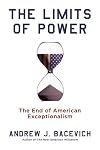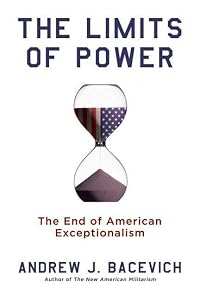
The Limits of Power: The End of American Exceptionalism (American Empire Project)
by Andrew Bacevich
The American Empire Project
On This Page
Description
The Limits of Power identifies a profound triple crisis facing America: the economy, in remarkable disarray, can no longer be fixed by relying on expansion abroad; the government, transformed by an imperial presidency, is a democracy in form only; U.S. involvement in endless wars, driven by a deep infatuation with military power, has been a catastrophe for the body politic. These pressing problems threaten all of us, Republicans and Democrats. If the nation is to solve its predicament, it show more will need the revival of a distinctly American approach: the neglected tradition of realism. Andrew J. Bacevich, uniquely respected across the political spectrum, offers a historical perspective on the illusions that have governed American policy since 1945. The realism he proposes includes respect for power and its limits; sensitivity to unintended consequences; aversion to claims of exceptionalism; skepticism of easy solutions, especially those involving force; and a conviction that the books will have to balance. Only a return to such principles, Bacevich argues, can provide common ground for fixing America's urgent problems before the damage becomes irreparable.--From publisher description. show lessTags
Recommendations



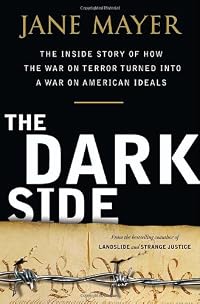
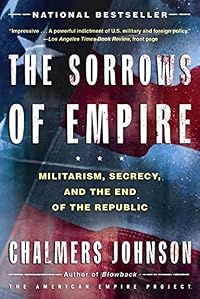
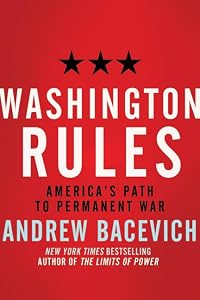
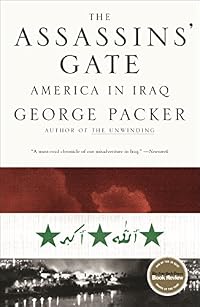

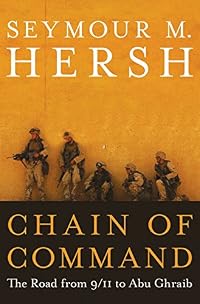
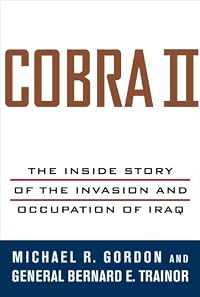
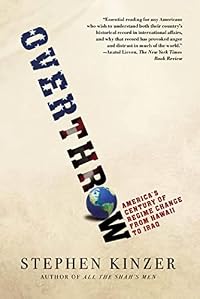
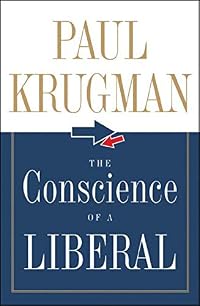


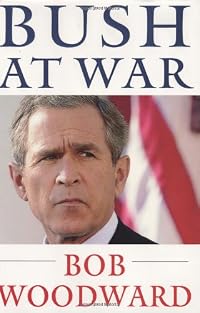
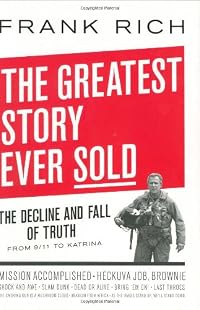
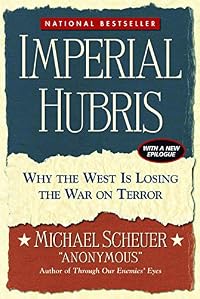


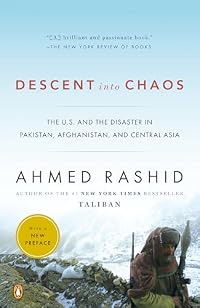
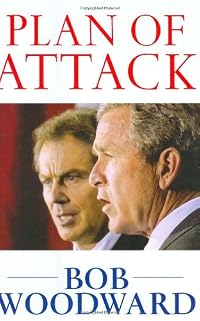

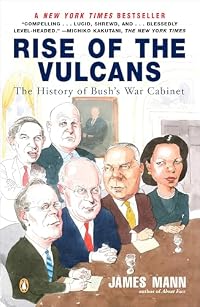
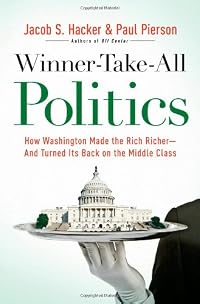
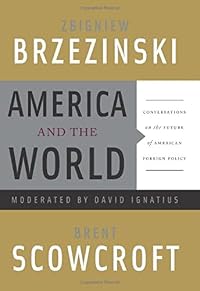

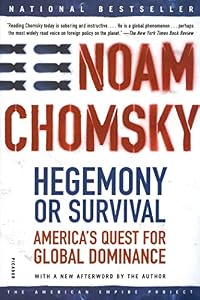
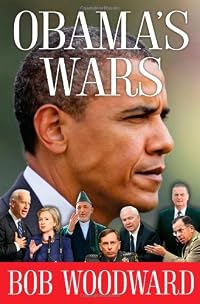
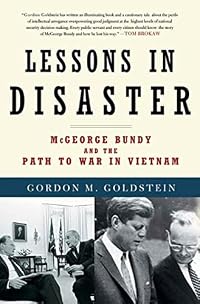
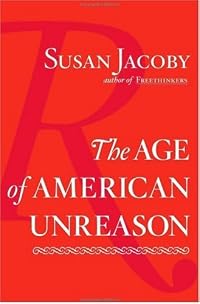
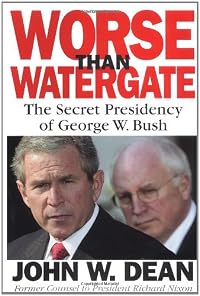

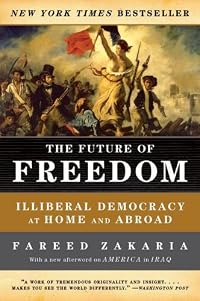
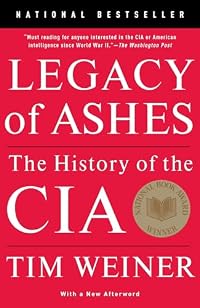
Member Recommendations
proximity1 The logical consequences of technopoly go hand in hand with an ever-expanding and ever-more-intrusive state surveillance aparatus which their proponents try to justify by assumptions about national security matters. These works, both so important, should be read together or serially for greater effect.
Member Reviews
The Limits of Power is Andrew Bacevich’s (justly) acclaimed The New American Militarism distilled, streamlined, and rebalanced. It is a fiercer, angrier book than its predecessor—one that spends proportionally less time outlining the problem and more calling on the nation and its leaders to wake up and implement a solution.
The problem is the same one outlined in Militarism: An unsustainable state of perpetual war driven by a misguided ambition to remake the world in America’s image and so ensure a steady flow of the cheap petroleum to which we, as a society, have become addicted. Here, more than in Militarism, Bacevich points to the decades between 1960 and 1980 as the pivotal moment when the United States abandoned fiscal show more discipline and personal responsibility in favor of a culture of mindless consumerism, and an awareness of the human cost of war for a fantasy that technology could make it cheap and easy. What we sowed then, we have been reaping ever since, in Beirut and Mogdishu, Kabul and Baghdad. The solution, he concludes, is for the United States to grow up, abandon its delusions, and—recognizing that a perpetual war footing is not sustainable—re-learn the meaning of sacrifice.
Preference for this presentation of the argument over the one in Militarism will be, for the most part, a matter of rhetorical taste. The former book is, to use an oversimplified analogy, condensed lecture course in the history of American foreign policy; this one is a radically extended op-ed essay. The former offers more depth and nuance, this one has a clearer through-line and passion in sufficient quantities to edge it toward “jeremiad” territory. Read Militarism for depth of understanding it promotes, or Limits for material to enliven your next impromptu political argument, or both . . . either way, though, read Bacevich. show less
The problem is the same one outlined in Militarism: An unsustainable state of perpetual war driven by a misguided ambition to remake the world in America’s image and so ensure a steady flow of the cheap petroleum to which we, as a society, have become addicted. Here, more than in Militarism, Bacevich points to the decades between 1960 and 1980 as the pivotal moment when the United States abandoned fiscal show more discipline and personal responsibility in favor of a culture of mindless consumerism, and an awareness of the human cost of war for a fantasy that technology could make it cheap and easy. What we sowed then, we have been reaping ever since, in Beirut and Mogdishu, Kabul and Baghdad. The solution, he concludes, is for the United States to grow up, abandon its delusions, and—recognizing that a perpetual war footing is not sustainable—re-learn the meaning of sacrifice.
Preference for this presentation of the argument over the one in Militarism will be, for the most part, a matter of rhetorical taste. The former book is, to use an oversimplified analogy, condensed lecture course in the history of American foreign policy; this one is a radically extended op-ed essay. The former offers more depth and nuance, this one has a clearer through-line and passion in sufficient quantities to edge it toward “jeremiad” territory. Read Militarism for depth of understanding it promotes, or Limits for material to enliven your next impromptu political argument, or both . . . either way, though, read Bacevich. show less
Eschew foreign entanglements. Beware the military industrial complex. Stop being fat, lazy, and greedy. All good pieces of advice. But how many times can you repeat them before they become "turn down that noise you call music" and "hey you kids, get off my lawn?"
Bacevich seems determined to find out. For 176 pages, he creates a catalog of ways, small and large, in which American society and (mostly) politics is fatally flawed. Only in the last 6 pages of the book does he bother to suggest concrete strategies that might make things better.
It's worth pointing out that I think Bacevich is right about an awful lot of this analysis. But at the end of the day, he has almost no point but hectoring, negative criticism.
Bacevich seems determined to find out. For 176 pages, he creates a catalog of ways, small and large, in which American society and (mostly) politics is fatally flawed. Only in the last 6 pages of the book does he bother to suggest concrete strategies that might make things better.
It's worth pointing out that I think Bacevich is right about an awful lot of this analysis. But at the end of the day, he has almost no point but hectoring, negative criticism.
Bacevich is clearly angry. He's angry that the lives of young patriotic men like Pat Tilman and his own son have been wasted on poorly-thought-out wars that don't further American interests. Unlike most political scientists, he himself is a veteran (Vietnam and Iraq) who reached the rank of colonel, so he is not intimidated by the prospect of engaging with the arguments of military and defense department officials, and these are the most successful and convincing parts of the book. He shows that without compulsory national service (a draft) the U.S. cannot sustain long wars, but without talented leadership, the military is not capable of waging small, smart wars (he treats Tommy Franks as almost beneath contempt, and most of the other show more generals don't fare much better). This unfortunately leaves him regretting that to save the nation, we have to stop waging war, especially so-called "preventive war." The book covers a lot of bases, starting with a criticism of American consumerism (which, due to its unthinking reliance on oil, holds our foreign policy hostage to our greed) and our culture ("vulgar and soft") and then moving on to the imperial presidency and finally to an excoriation of the American military and political leadership, which he feels has been in a downward spiral since Forrestal. Not heavily academic, the book is written for the educated lay reader, and the prose is readable and quotable--although its "bold" tone is clearly thought by some to detract from the work. show less
It is rare to find a book that preaches without pretentiousness, warns without hyperbole, and makes evangelicals and acolytes out of its readers.
Here is a book I don't want to simply own, it's a book I want to carry and quote from; I want to share, give away, and discuss.
I think of books like Marx's Das Capital, Weber's Economy and Society, Smith's the Wealth of Nations, Wilberforce's Abolition of the Slave Trade, and Wollstonecraft's Vindication of the Rights of Woman.
This book belongs on a small shelf of books with the possibility of shifting the way we both think and act.
Here is a book I don't want to simply own, it's a book I want to carry and quote from; I want to share, give away, and discuss.
I think of books like Marx's Das Capital, Weber's Economy and Society, Smith's the Wealth of Nations, Wilberforce's Abolition of the Slave Trade, and Wollstonecraft's Vindication of the Rights of Woman.
This book belongs on a small shelf of books with the possibility of shifting the way we both think and act.
Bacevich argues that from Reagan through Bush (and probably Obama though he was only a candidate when this was written), a consistent sense of American exceptionalism coupled with the belief that military power can solve all problems has disguised the real source of all of our international crises, which is that we are a shallow and profligate people, willing to accept the most venal lies as long as we have secure access to lots of cheap oil. I rate books more on the ideas they conjure up rather than whether or not I agree with them and in those terms I rate this highly. But use Kagan's Of Paradise and Power (or something similar) as a counter-weight.
This book contains some good questions about where we are as a nation and what we are making priorities by how we spend our money and how we excercise force with our military might. This was written before president Obama took office. Several things that were blamed on Republicans or neo-cons are still things that are practiced by the current administration. But there was some discussion on how some things have stayed the same. The government keeps getting bigger and Americans seem to keep on believing that we are an exceptional nation that makes the rules that the rest of the world needs to follow. We are spending and consuming our way into oblivion.
He discusses how the military sees war currently and how the view has changed since show more WWII and since Vietnam and how the nation's view of what war means has changed. This included discussion on how we have rejected the draft as a means to create a citizen army and how we now depend on a professional fighting force. It is easier politically to send a professional force into war than it is to convince the country that drafting people away from their normal lives is appropriate.
The military does not plan to win wars. We win battles and topple regimes but we stayed in Iraq and Afganistan this time with no military plan to win. He was fairly critical of Gen Tommy Franks (commander who was in charge of invading Iraq and Afganistan) and his failure to plan beyong beating the convential forces we attacked.
In his summation chapter he deals with two ideas I didn't feel he really discussed earlier on that I disagree with. One was nuclear disarmement. He wants the US to totally get rid of all our nukes and states "Furthermore, the day is approaching when the United States will be able to deter other nuclear-armed states, like Russia and China, without itself relying on nuclear weapons." He goes on to talk about how precision munitions are better. He also makes an offhand comment about how America was not justified in using the atom bomb to end the war with Japan. I completely disagree. More nations are getting access to the bomb and giving up this option leaves us at the mercy of their threats unless we strike as soon as they threaten.
The other idea was that we needed to end our dependence on energy sources outside our borders and to do this we need to end global warming. I'm not convinced these two things tie together really well.
A retired army Colonel, the author's son was US Army Lieutenant killed in action in 2007. There are many negative comments about the direction our country is going. Some of these come off as reasoned and some of them are reasonable. However, I have to wonder how much of his view on this subject is informed by the fact that his son died fighting to support our efforts in the middle east. show less
He discusses how the military sees war currently and how the view has changed since show more WWII and since Vietnam and how the nation's view of what war means has changed. This included discussion on how we have rejected the draft as a means to create a citizen army and how we now depend on a professional fighting force. It is easier politically to send a professional force into war than it is to convince the country that drafting people away from their normal lives is appropriate.
The military does not plan to win wars. We win battles and topple regimes but we stayed in Iraq and Afganistan this time with no military plan to win. He was fairly critical of Gen Tommy Franks (commander who was in charge of invading Iraq and Afganistan) and his failure to plan beyong beating the convential forces we attacked.
In his summation chapter he deals with two ideas I didn't feel he really discussed earlier on that I disagree with. One was nuclear disarmement. He wants the US to totally get rid of all our nukes and states "Furthermore, the day is approaching when the United States will be able to deter other nuclear-armed states, like Russia and China, without itself relying on nuclear weapons." He goes on to talk about how precision munitions are better. He also makes an offhand comment about how America was not justified in using the atom bomb to end the war with Japan. I completely disagree. More nations are getting access to the bomb and giving up this option leaves us at the mercy of their threats unless we strike as soon as they threaten.
The other idea was that we needed to end our dependence on energy sources outside our borders and to do this we need to end global warming. I'm not convinced these two things tie together really well.
A retired army Colonel, the author's son was US Army Lieutenant killed in action in 2007. There are many negative comments about the direction our country is going. Some of these come off as reasoned and some of them are reasonable. However, I have to wonder how much of his view on this subject is informed by the fact that his son died fighting to support our efforts in the middle east. show less
We Americans are in denial. as long as they insist that the power of the USA is without limits, they will continue to guzzle imported oil, binge on imports, dream imperial dreams. We will ignore the necessity of settling accounts, the budget, debt, and consumption as politicians (both parties) erode military might on unnecessary and winnable wars. We will continue to allow officials responsible for failed policies to dodge accountability. Are we willfully self-destructive? It often seems so. Bacevich analyzes the more dangerous national myths that currently (mis)guide American policy.
"The United States today finds itself threatened by three interlocking crises. The first of the crises is economic and cultural, the second political, and show more the third military. All three share this characteristic: They are of our own making."
Concerned about the direction the US is headed? You need to read this book. show less
"The United States today finds itself threatened by three interlocking crises. The first of the crises is economic and cultural, the second political, and show more the third military. All three share this characteristic: They are of our own making."
Concerned about the direction the US is headed? You need to read this book. show less
Members
- Recently Added By
Lists

Hungry for more
3 works; 1 member

United States Foreign Policy & Foreign Relations
25 works; 2 members
Author Information

32+ Works 2,994 Members
Andrew Bacevich was born in Normal Illinois. He was a graduate of West Point in 1969 and served in the U.S. Army during the Vietnam War. He later held posts in Germany and the Persian Gulf up until his retirement from service in the early 1990's. He has a PhD in American Diplomatic History from Princeton University and has taught at West Point and show more Johns Hopkins University before joining the faculty at Boston University in 1998 and becoming Professor of International Relations. He has been a critic of the U.S. occupation of Iraq calling the conflict a catastrophic failure. He wrote several books including American Empire: The Realities and Consequences of U.S. Diplomacy and Washington Rules. (Bowker Author Biography) show less
Awards and Honors
Distinctions
Notable Lists
Series

Belongs to Publisher Series
Common Knowledge
- Publisher's editor
- Engelhardt, Tom
- Blurbers
- Johnson, Chalmers; Carroll, James; Trainor, Bernard E.; Lieven, Anatol; Danner, Mark
Classifications
- Genres
- Nonfiction, Politics and Government, General Nonfiction, History
- DDC/MDS
- 320.973 — Society, government, & culture Political science Types of Government Political situation and conditions North America United States
- LCC
- JK271 .B24 — Political Science Political institutions and public administration (United States) Political institutions and public administration United States
- BISAC
Statistics
- Members
- 832
- Popularity
- 32,882
- Reviews
- 25
- Rating
- (3.86)
- Languages
- English, German
- Media
- Paper, Audiobook, Ebook
- ISBNs
- 8
- ASINs
- 5