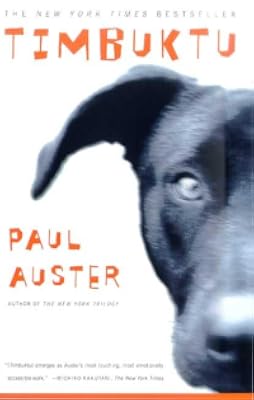
Timbuktu
by Paul Auster
On This Page
Description
Mr. Bones, a canine companion to a homeless man named Willy G. Christmas, accompanies his dying master on a trip to Baltimore in search of an ex-high school teacher.Tags
Recommendations
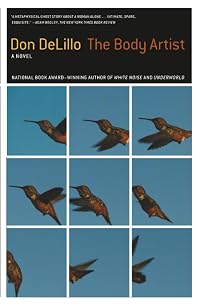
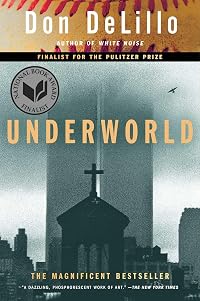
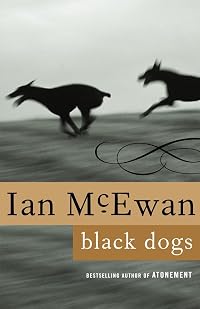
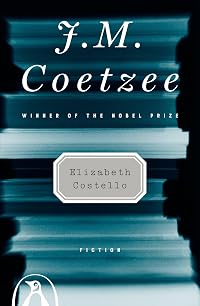

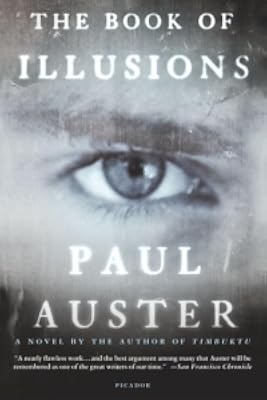
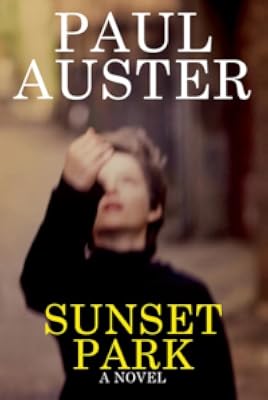
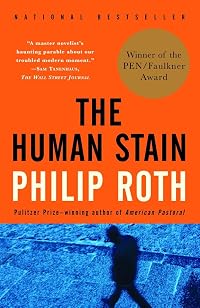
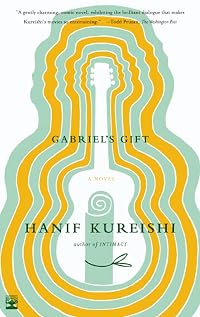

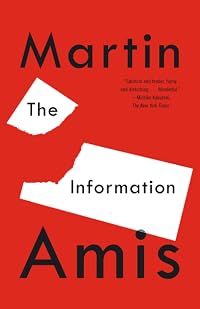
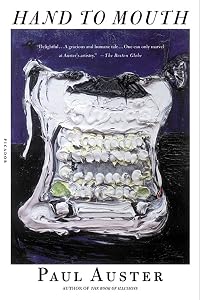
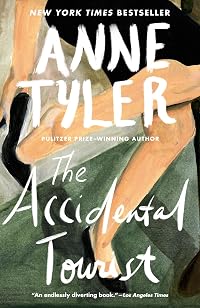
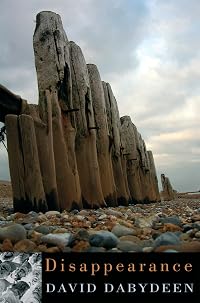
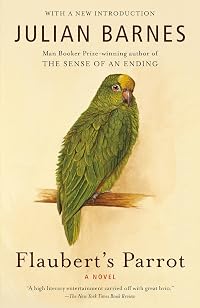
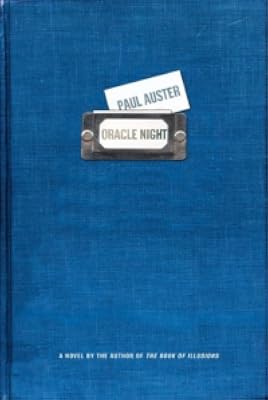
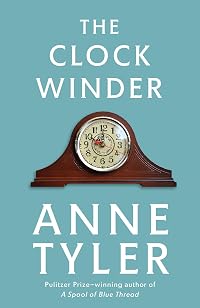

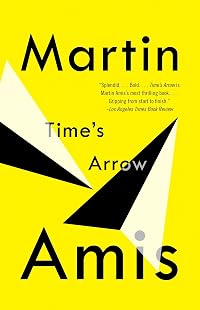
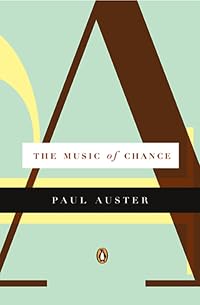
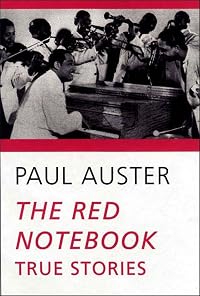


Member Recommendations
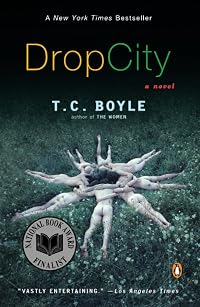
Firmin by Sam Savage
sanddancer Both quirky, but not too cutesy stories told from the perspective of animals.
30
dogearsbooks Another story from the dog's perspective, this is a laugh-and-cry festival and very satisfying.
Member Reviews
When I think of Paul Auster, I think of strange, mysterious stories that bob and weave like a boxer. So it's easy to see why I would find Timbuktu to be a strange story for him to have written. Though it is a simple and straightforward story, it touches emotional depths that are impressively powerful and leaves an incredible impact on the reader when it's all said and done.
The story revolves around a dog named Mr. Bones--a dog that, though never anthropomorphized, is nevertheless capable of extraordinarily complex and humanlike thought. His owner, Willy Christmas, is a homeless man on a quest to find his old teacher in Baltimore before dying. When Willy collapses in the city, Mr. Bones takes off to escape being sent to the pound, and show more over the course of the coming days, meets a number of new owners that give him insight into what his life really means.
Auster's style is incredibly compelling throughout the book, as he mostly deals with characters that are less than highly educated but still have powerful, resonating emotions and ideas. It's easy to think that characters as simple as, say, Willy could never possibly feel the kinds of things that Auster describes, but he couches them in such straightforward stories and memories that it all feels cogent and coherent. He never plays dumb with the reader or betrays his characters, and it makes the read that much more enjoyable.
Dog lovers will obviously find lots to love about this book, but Paul Auster's gift is that he takes a story like this and makes it far deeper and more affecting that it appears on the surface. By the time you turn the final page, you are so invested in Mr. Bones that you almost miss him, even as he is left in a curiously ambiguous space. For such a brief, basic tale, Timbuktu packs a wallop, and is surely not one to be missed. show less
The story revolves around a dog named Mr. Bones--a dog that, though never anthropomorphized, is nevertheless capable of extraordinarily complex and humanlike thought. His owner, Willy Christmas, is a homeless man on a quest to find his old teacher in Baltimore before dying. When Willy collapses in the city, Mr. Bones takes off to escape being sent to the pound, and show more over the course of the coming days, meets a number of new owners that give him insight into what his life really means.
Auster's style is incredibly compelling throughout the book, as he mostly deals with characters that are less than highly educated but still have powerful, resonating emotions and ideas. It's easy to think that characters as simple as, say, Willy could never possibly feel the kinds of things that Auster describes, but he couches them in such straightforward stories and memories that it all feels cogent and coherent. He never plays dumb with the reader or betrays his characters, and it makes the read that much more enjoyable.
Dog lovers will obviously find lots to love about this book, but Paul Auster's gift is that he takes a story like this and makes it far deeper and more affecting that it appears on the surface. By the time you turn the final page, you are so invested in Mr. Bones that you almost miss him, even as he is left in a curiously ambiguous space. For such a brief, basic tale, Timbuktu packs a wallop, and is surely not one to be missed. show less
Mr. Bones believes that Timbuktu is where you go when you die. He picked this up from his longtime companion—a wandering street poet named Willy G. Christmas. W.G. Christmas may have the soul of a poet and sport a fabulous tattoo of Santa Claus, but the life he shares with his friend is never easy.
This short book gets down, down to around a dog's height, as Mr. Bones is a mutt. In Timbuktu, Paul Auster looks through a dog's eyes to give the reader a completely different perspective from which to see life. The clean, sparse writing compliments perfectly the simpler life that our main character leads in his dog world. The needs and the confusions of life are much different for a dog, yet our species share many of the same desires. If show more everyone read Timbuktu, fewer people would want to be treated like dogs. This is a special little book that won't take anyone long to read, but most will remember it for a long time. show less
This short book gets down, down to around a dog's height, as Mr. Bones is a mutt. In Timbuktu, Paul Auster looks through a dog's eyes to give the reader a completely different perspective from which to see life. The clean, sparse writing compliments perfectly the simpler life that our main character leads in his dog world. The needs and the confusions of life are much different for a dog, yet our species share many of the same desires. If show more everyone read Timbuktu, fewer people would want to be treated like dogs. This is a special little book that won't take anyone long to read, but most will remember it for a long time. show less
Willy G Christmas (a surname he took on following a revelation) and Mr Bones travel together, with occasional wintertime respites at Mama-Sans apartment . It's an interesting life, and Mr Bones can't imagine anything better. Willy has never denied him the opportunity to savor an interesting smell and has never treated him anything less than equal.
What a sweet and tender book this was. Anyone who has ever loved a dog will be thrilled to learn that our best friends understand Ingloosh, are blessed with prescience, and never, ever, forget us. I cried like a little baby when it ended, but this is a far cry from the token sentimentality of "Marley and Me." Here you have a tough life as seen by the dog who lives it. It's a wonderful concept, show more and a book that has changed the way I see my own dog, one that I will think about for a long time to come. show less
What a sweet and tender book this was. Anyone who has ever loved a dog will be thrilled to learn that our best friends understand Ingloosh, are blessed with prescience, and never, ever, forget us. I cried like a little baby when it ended, but this is a far cry from the token sentimentality of "Marley and Me." Here you have a tough life as seen by the dog who lives it. It's a wonderful concept, show more and a book that has changed the way I see my own dog, one that I will think about for a long time to come. show less
The Voice and the Cliches: As a fan of Auster's works (I liked NY Trilogy, In the Country of Last Things, Moon Palace, Invention of Solitude, Hand to Mouth), I went into this book fearing the worst. A couple of friends told me it wasn't very good, and they were unfortunately correct.The two most detrimental factors that contributed to the failure of this book are as follows:
1) The fairy-tale-esque narrator voice. Mostly it's condescending, and very quickly it becomes annoying. I don't know what Auster was thinking, choosing this particular narrative style. It just doesn't work.
2) Cliches. There's so much lazy writing in this novel -- just start counting the number of cliches Auster uses. It's criminal.
I've been noticing an awful lot of books narrated by dogs lately--have been recommended a few and have politely demurred. I hate feeling emotionally manipulated and tend to avoid books that are intentional tearjerkers, which most animal stories are. Happily, this book, which chronicles the life and memories of one canine Mr. Bones (literary reference alert!) after his homeless master is lost. Auster is, I think, the type of author who tends to just collapse under the weight of his ideas; this is one of his few that has held up to the end. It's funny, and sad--& yet somehow managed to avoid the pitfalls of sentimentality that tend to pepper animal stories. I liked Mr. Bones' voice best & very much. Though he sometimes tended to the show more overly literary and destroyed the conceit, Mr. Bones on the whole was perfectly baffled and always doggy; when he was wise (which he was) it did not feel forced. show less
For those used to the almost psychedelic complexity of Auster’s novels, Timbuktu will come as something of a shock. It’s short, sweet, and utterly simple: a lovely and moving story of a dog that loses his master. The story is told in omniscient third person, but it takes the dog’s point of view and never wavers from it. There are no subtexts, few literary allusions, and even the idea of a dog capable of serious thought comes across as completely straight and oddly believable. The book is clean, and suitable for young adult readers. The protagonist is Mr Bones, the dog whose thoughts drive the narrative. As the book opens, Mr Bones’ master, Willy G Christmas, is dying, and is on a mission to find Mr Bones a new home before that show more happens. But homeless himself, schizophrenic, and on his last legs, Willy isn’t particularly successful. Mr Bones’ journey as he tries to come to terms with the loss of a master he had come to love, while looking after his own increasingly desperate welfare forms the plotline of the book.Of course there are aspects of this book which can be read as metaphor. Mr Bones’ struggle to find food and shelter while remaining true to the memory of his owner, provide a poignant reminder of the all too common difficulties of human homelessness. The prejudices that Willy and Mr Bones encounter are those that most people reading the book will recognise in themselves. But Mr Bones is more than metaphoric, and Timbuktu provides the reader with more than simply a case of anthropomorphism. Mr Bones is a character that readers will identify with and like simply for his own dogginess: his integrity and honesty. Mr Bones is unusually intelligent, and his knowledge of English is due in part to Willy’s constant chatter: “a genuine, dyed-in-the-wool logomaniac who scarcely stopped talking from the instant he opened his eyes in the morning unti he passed out drunk at night”(6). But Mr Bones’ hungers and desires are very much dog ones, and his perception of the human character is as much of interest as his situation. His perspective, however deep it sometimes gets, is not without humour.The book follows Mr Bones’ struggle to survive on his own, moving through a succession of homes and realities and come to terms with his own identity. He does all sorts of normal doggy things such as chasing pigeons, chasing female dogs, and attaching himself to kind children in exchange for food and affection. But Mr Bones’ attachment to Willy runs deep, and his love for that crazy wordsmith, and his implicit acceptance of the picture of heaven that Willy provides him with override even a warm bed. Mr Bones struggles with his conflicting desires for freedom and comfort, and as we follow him, we are reminded that this dogged journey is also a human one.Timbuktu is a delicately presented, beautifully written book which will appeal to children as well as adults. Mr Bones’ quizzical look at the human race makes perfect sense, and the book reads quickly and easily. The overriding desire for meaning beyond this short life is one which infuses the book, but Auster never allows a human narrative voice to interfere with Mr Bones’ perspective. Clever, funny, lighthearted and serious all at the same time, this is a stylistic departure for Paul Auster which nonetheless makes full use of his gifts. show less
This was a very creative and enjoyable read, however, I found it slightly short and underdeveloped. It reminded me of all the good canine literature I read as a kid. It also made me excited to read something else by Auster.
Members
- Recently Added By
Published Reviews
ThingScore 25
Was so ansprechend hätte werden können, nämlich die Welt mit den Augen eines Hundes zu sehen, ist Paul Auster mißlungen. Ihm fehlt der Wille, sich tatsächlich einen Hund zu versetzen. Ein Hund aber, der nur redet und denkt wie ein Mensch und nicht wie ein Tier, verdient es nicht, für seine Artgenossen zu sprechen.
added by Indy133
Lists

1001 Books You Must Read Before You Die
1,448 works; 1,134 members

Books Read in 2016
4,666 works; 199 members

BingoDOG - Animals in Adult Fiction
78 works; 20 members

Books Read in 2025
4,091 works; 97 members

A Dog's Eye View
11 works; 1 member

Novels with a city or town in the title
61 works; 1 member
Author Information

102+ Works 64,910 Members
Paul Auster was born on February 3, 1947, in Newark, New Jersey. He received a B.A. and a M.A. in English and Comparative Literature from Columbia University. In addition to his career as a writer, Auster has been a census taker, tutor, merchant seaman, little-league baseball coach, and a telephone operator. He started his writing career as a show more translator. He soon gained popularity for the detective novels that make up his New York Trilogy. His other works include The Invention of Solitude; Leviathan; Moon Palace; Facing the Music; In the Country of Last Things; The Music of Chance; Mr. Vertigo; and The Brooklyn Follies. His latest novels are entitled, Invisible and Sunset Park. In addition to his novels, Auster has written screenplays and directed several films. He is the recipient of a fellowship from the National Endowment for the Arts and a French Prix Medicis for Foreign Literature. (Bowker Author Biography) show less
Some Editions
Awards and Honors
Awards
Notable Lists
Series
Belongs to Publisher Series
Work Relationships
Common Knowledge
- Canonical title
- Timbuktu
- Original title
- Timbuktu
- Original publication date
- 1999
- People/Characters
- Mr. Bones; Willy H. Christmas; Santa Claus; Polly; Alice; Tiger
- Important places
- Baltimore, Maryland, USA; Brooklyn, New York, New York, USA; Maryland, USA; New York, USA
- Dedication
- for Robert McCrum
- First words
- Mr. Bones knew that Willy wasn't long for this world.
- Last words
- (Click to show. Warning: May contain spoilers.)With any luck, he would be with Willy before the day was out.
- Blurbers
- Kakutani, Michiko; Yardley, Jonathan; Villalon, Oscar; Kafka, Paul
- Original language
- English
Classifications
Statistics
- Members
- 2,716
- Popularity
- 6,804
- Reviews
- 69
- Rating
- (3.57)
- Languages
- 20 — Catalan, Chinese, Danish, Dutch, English, Finnish, French, German, Hebrew, Hungarian, Italian, Japanese, Norwegian (Bokmål), Farsi/Persian, Polish, Portuguese, Russian, Spanish, Swedish, Turkish
- Media
- Paper, Audiobook, Ebook
- ISBNs
- 78
- ASINs
- 13