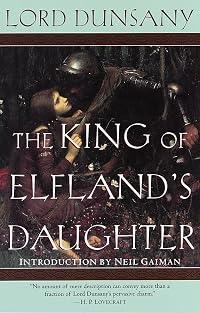
The King of Elfland's Daughter
by Lord Dunsany
On This Page
Description
From "one of the greatest writers of this century," a fantasy masterpiece about the aftermath of a marriage between a mortal prince and an elfin princess. -Arthur C. Clarke Before the fellowships and wardrobes and dire wolves . . . . . . there was the village of Erl and the Kingdom of Elfland. Considered formative to the development of the fairy tale and high fantasy subgenres, The King of Elfland's Daughter follows Alveric, who leaves home on a quest with a few basic instructions: locate show more the Princess Lirazel in Elfland, convince her to return to Erl and marry him, and together produce the first magical Lord of Erl. But what happens when a village gets exactly what it asked for? How does an elf learn to live as a human? Is love lost once, lost forever? The people of Erl are about to find out. Take a walk through the fields we know and see if you can spot the pale-blue peaks of the Elfland Mountains. Fans of J. R. R. Tolkien, C. S. Lewis, and Neil Gaiman will adore Lord Dunsany's influential 1924 classic as much as those authors themselves did. "No amount of mere description can convey more than a fraction of Lord Dunsany's pervasive charm." -H. P. Lovecraft "We find that he has but tranfigured with beauty the common sights of the world." -William Butler Yeats "No one can understand modern fantasy without understanding its roots, and Lord Dunsany's work is immediately significant as well as enjoyable even today." -Katharine Kerr "A fantasy novel in a class with the Tolkien books."-L. Sprague de Camp. show lessTags
Recommendations




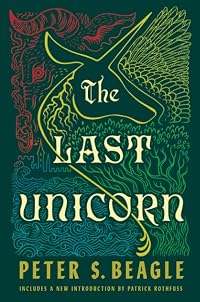


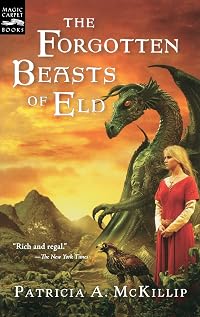
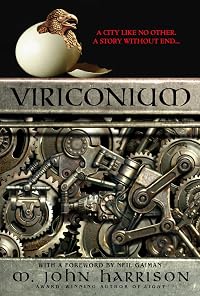


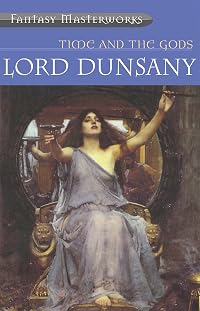




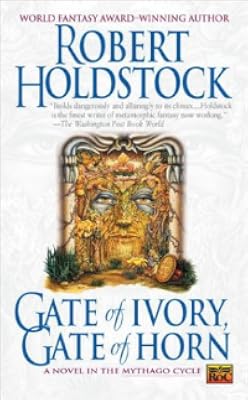

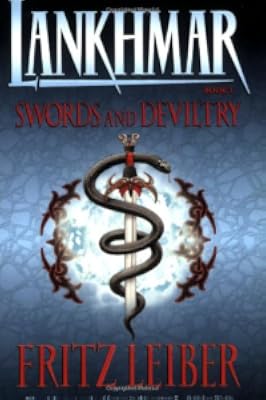
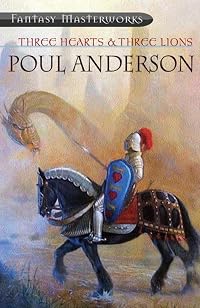
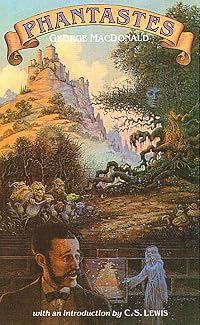








Member Recommendations
billiecat Clarke's descriptions of Faerie share the dreamlike qualities OF Dunsany's novel.
83
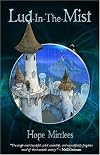
PhoenixFalls Mirrlees wrote Lud-in-the-Mist in response to Dunsany's The King of Elfland's Daughter; they are two opposing takes on Fairyland and what it means to humanity, and both are brilliant.
41
Member Reviews
A beautifully-written, Edwardian faerie story for adults - not that there's any "adult" content, and were it published today, it would probably be classed as YA (despite some rather unpleasant hunting). However, it only gets 3*, as a reflection of my enjoyment of it; I prefer things a little darker, even though the moral is perhaps "Be careful what you wish for".
Plot
It is essentially a tale of young love across a cultural chasm (human Alveric and elfin Lirazel), the quest of Orion (not the Greek god), and features a witch, a faerie, elves, trolls, a magical sword, runes, unicorns and many other staples of the genre.
Language
It is written in a florid style, lauding the beauty and harmony of the natural world ("the autumn-smitten show more garden"), and suggesting the ephemeral, not-quite-there nature of Elfland (the other side of "the rampart of twilight").
The poetic feel is emphasised by some recurring phrases, in particular the contrast between "the fields that we know" (the normal, non-magical world) and places "that may not be told of but in song" (Elfland).
Furthermore, the word "glamour" is often used in its archaic sense, to mean casting enchantment over something. I'm less sure what to make of the two references to the King of Elfland's tower having "brazen steps"!
Then, about half way through, the magic is suddenly broken when the author addresses the reader directly with comments about real history. It jarred.
Elfland - (how) can we know it?
I liked the ideas of how Elfland is occasionally but unconsciously perceivable by mortals:
"now lost to them but for dreams, a song of such memories as lurk and hide along the edges of oblivion, now flashing from beautiful years of glimpse of some golden moment, now passing swiftly out of remembrance again, to go back to the shades of oblivion, and leaving on the mind those faintest traces of little shining feet which when dimly perceived by us are called regrets."
Artists of all kinds are most receptive and "have had many a glimpse of that country, so that sometimes in pictures we see a glamour too wonderful for our fields; it is a memory of theirs that intruded from some old glimpse." Similarly, Elfland's "flowers and lawns, seen only by the furthest travelling fancies of poets in deepest sleep".
As well as being geographically abstract, Elfland exists, to some extent, outside time: time there passes V E R Y slowly in comparison with here. This is understandably disconcerting for the few who travel between the two realms. Coming to the fields that we know, "even the shadows of houses moved" as part of a "vortex of restlessness"
Quotes
• "So strong lay the enchantment... that not only did beasts and men guess each other's meaning well, but there seemed to be an understanding even, that reached from men to trees and from trees to men."
• "a hare, who was lying in a comfortable arrangement of grass, in which he had intended to pass the time till he should have things to see to."
• "The glamour that brightens much of our lives, especially in the early years, comes from rumours that reach us from Elfland" and "all manner of little memories".
• "In a forest wherein it quieted the trembling of myriads of petals of roses, it stilled the pools where the great lilies towered, till they and their reflections slept on in one gorgeous dream. And there below motionless fronds of dream-gripped trees, on the still water dreaming of the still air, where the huge lily-leaves floated green in the calm, was the troll Lurulu, sitting on a leaf."
• "Little he knew of the things that ink may do, how it can mark a dead man's thought for the wonder of later years, and tell of happenings that are gone clean away, and be a voice for us out of the dark time, and save many a fragile thing from the pounding of heavy ages; or carry to us, over the rolling centuries, even a song from lips long dead on forgotten hills."
• Spring is "a mild benediction that blessed the very air and sought out all living things."
• "The hall that was built of moonlight, dreams, music and mirage."
• And a dash of humour when a troll tells others about the world of men, "They listened spell-bound... and then, when he told of hats, there ran through the forest a wave of little yelps of laughter".
See also
Dunsany went darker - and better - in the short story, The Bureau d'Echange de Maux, which I reviewed HERE. show less
Plot
It is essentially a tale of young love across a cultural chasm (human Alveric and elfin Lirazel), the quest of Orion (not the Greek god), and features a witch, a faerie, elves, trolls, a magical sword, runes, unicorns and many other staples of the genre.
Language
It is written in a florid style, lauding the beauty and harmony of the natural world ("the autumn-smitten show more garden"), and suggesting the ephemeral, not-quite-there nature of Elfland (the other side of "the rampart of twilight").
The poetic feel is emphasised by some recurring phrases, in particular the contrast between "the fields that we know" (the normal, non-magical world) and places "that may not be told of but in song" (Elfland).
Furthermore, the word "glamour" is often used in its archaic sense, to mean casting enchantment over something. I'm less sure what to make of the two references to the King of Elfland's tower having "brazen steps"!
Then, about half way through, the magic is suddenly broken when the author addresses the reader directly with comments about real history. It jarred.
Elfland - (how) can we know it?
I liked the ideas of how Elfland is occasionally but unconsciously perceivable by mortals:
"now lost to them but for dreams, a song of such memories as lurk and hide along the edges of oblivion, now flashing from beautiful years of glimpse of some golden moment, now passing swiftly out of remembrance again, to go back to the shades of oblivion, and leaving on the mind those faintest traces of little shining feet which when dimly perceived by us are called regrets."
Artists of all kinds are most receptive and "have had many a glimpse of that country, so that sometimes in pictures we see a glamour too wonderful for our fields; it is a memory of theirs that intruded from some old glimpse." Similarly, Elfland's "flowers and lawns, seen only by the furthest travelling fancies of poets in deepest sleep".
As well as being geographically abstract, Elfland exists, to some extent, outside time: time there passes V E R Y slowly in comparison with here. This is understandably disconcerting for the few who travel between the two realms. Coming to the fields that we know, "even the shadows of houses moved" as part of a "vortex of restlessness"
Quotes
• "So strong lay the enchantment... that not only did beasts and men guess each other's meaning well, but there seemed to be an understanding even, that reached from men to trees and from trees to men."
• "a hare, who was lying in a comfortable arrangement of grass, in which he had intended to pass the time till he should have things to see to."
• "The glamour that brightens much of our lives, especially in the early years, comes from rumours that reach us from Elfland" and "all manner of little memories".
• "In a forest wherein it quieted the trembling of myriads of petals of roses, it stilled the pools where the great lilies towered, till they and their reflections slept on in one gorgeous dream. And there below motionless fronds of dream-gripped trees, on the still water dreaming of the still air, where the huge lily-leaves floated green in the calm, was the troll Lurulu, sitting on a leaf."
• "Little he knew of the things that ink may do, how it can mark a dead man's thought for the wonder of later years, and tell of happenings that are gone clean away, and be a voice for us out of the dark time, and save many a fragile thing from the pounding of heavy ages; or carry to us, over the rolling centuries, even a song from lips long dead on forgotten hills."
• Spring is "a mild benediction that blessed the very air and sought out all living things."
• "The hall that was built of moonlight, dreams, music and mirage."
• And a dash of humour when a troll tells others about the world of men, "They listened spell-bound... and then, when he told of hats, there ran through the forest a wave of little yelps of laughter".
See also
Dunsany went darker - and better - in the short story, The Bureau d'Echange de Maux, which I reviewed HERE. show less
If you’re interested in character development or a fast-moving, action-packed plot, Lord Dunsany’s The King of Elfland’s Daughter will probably disappoint you. On the other hand, if you remain curious about the origins of the fantasy genre beyond Tolkien but were put off by the recurrent battles of Eddison’s Zimiamvian series, then this might be more to your taste.
Yet be forewarned: there is bloodshed here, too. In addition to numerous stags, even unicorns. When I shared this information with a fantasy fan, he gasped, “not unicorns!” But it turns out that the unicorns, because of their stuck-up ways, aren’t beloved of their fellow creatures of Elfland, so the aptly-named Orion has little difficulty recruiting a troll to show more help hunt them.
Orion is the offspring of an earthling, Alveric, prince of Erl, and Lirazel (to whom the book’s title refers). Alveric enters Elfland, which turns out to be just through the hedge at the edge of Erl, to get her as his bride.
The idea was not his to begin with, though. It arose when Erl’s parliament petitioned Alveric’s father, the king of Erl, to liven up Erl with some magic. Alveric’s consent comes readily enough, nor does Lirazel hesitate to take his hand and scamper earthward through the hedge. That surprised me.
This lack of resistance gave me the feeling in the book’s first part that not much was happening. But, of course, Alveric can’t just stroll through the hedge. To hack through the life-threatening ivy that clads the giant oaks beyond, he needs a sword forged from thunderbolts by a helpful witch.
When Lirazel bears their son, Orion, the same witch is deemed the only suitable nurse.
Orion’s dual heritage gradually reveals itself. At first, Erl’s parliament (twelve village elders who do their planning in the evening while imbibing generous bowls of mead) are pleased their desire has come to fruition but then regret it. So in one way, the story illustrates the old adage, be careful what you wish for. Indeed, Lord Dunsany’s portrayal for this group’s ability to get it wrong suggests that he shares fellow fantasist Eddison’s disdain for democracy. We’re overdue for a creative fantasist to imagine a well-working democracy; I think we could use it now.
The book also illustrates a second adage, the one about the grass always greener and so on. This is the aspect of the book I most enjoyed. It’s no surprise that Elfland exerts a pull on some earthlings. It is lit by neither sun nor moon but bathed in perpetual twilight by the king’s effulgence. He has mastered time so that it moves so slowly that seemingly nothing changes (a point stylistically underlined by the author’s generous repetition of descriptive details as motifs whenever he writes about Elfland). The twist is that earth also fascinates some of Elfland’s creatures. Each day is announced by a glorious dawn and seen off by a radiant sunset. Spring seems to pass in a heartbeat. To Lirazel, as well as to Lurulu, the adventurous troll, earth’s transience is part of its beauty.
Is there a way to satisfy this mutual attraction? In Erl, Lirazel had missed her homeland; but then, after she yields to her father’s magical blandishment to return, she longs for her son (and her husband, too—at least a bit). This adds a mood previously unknown in Elfland: Sadness. The only way for her father to assuage it is to risk Elfland’s future survival. show less
Yet be forewarned: there is bloodshed here, too. In addition to numerous stags, even unicorns. When I shared this information with a fantasy fan, he gasped, “not unicorns!” But it turns out that the unicorns, because of their stuck-up ways, aren’t beloved of their fellow creatures of Elfland, so the aptly-named Orion has little difficulty recruiting a troll to show more help hunt them.
Orion is the offspring of an earthling, Alveric, prince of Erl, and Lirazel (to whom the book’s title refers). Alveric enters Elfland, which turns out to be just through the hedge at the edge of Erl, to get her as his bride.
The idea was not his to begin with, though. It arose when Erl’s parliament petitioned Alveric’s father, the king of Erl, to liven up Erl with some magic. Alveric’s consent comes readily enough, nor does Lirazel hesitate to take his hand and scamper earthward through the hedge. That surprised me.
This lack of resistance gave me the feeling in the book’s first part that not much was happening. But, of course, Alveric can’t just stroll through the hedge. To hack through the life-threatening ivy that clads the giant oaks beyond, he needs a sword forged from thunderbolts by a helpful witch.
When Lirazel bears their son, Orion, the same witch is deemed the only suitable nurse.
Orion’s dual heritage gradually reveals itself. At first, Erl’s parliament (twelve village elders who do their planning in the evening while imbibing generous bowls of mead) are pleased their desire has come to fruition but then regret it. So in one way, the story illustrates the old adage, be careful what you wish for. Indeed, Lord Dunsany’s portrayal for this group’s ability to get it wrong suggests that he shares fellow fantasist Eddison’s disdain for democracy. We’re overdue for a creative fantasist to imagine a well-working democracy; I think we could use it now.
The book also illustrates a second adage, the one about the grass always greener and so on. This is the aspect of the book I most enjoyed. It’s no surprise that Elfland exerts a pull on some earthlings. It is lit by neither sun nor moon but bathed in perpetual twilight by the king’s effulgence. He has mastered time so that it moves so slowly that seemingly nothing changes (a point stylistically underlined by the author’s generous repetition of descriptive details as motifs whenever he writes about Elfland). The twist is that earth also fascinates some of Elfland’s creatures. Each day is announced by a glorious dawn and seen off by a radiant sunset. Spring seems to pass in a heartbeat. To Lirazel, as well as to Lurulu, the adventurous troll, earth’s transience is part of its beauty.
Is there a way to satisfy this mutual attraction? In Erl, Lirazel had missed her homeland; but then, after she yields to her father’s magical blandishment to return, she longs for her son (and her husband, too—at least a bit). This adds a mood previously unknown in Elfland: Sadness. The only way for her father to assuage it is to risk Elfland’s future survival. show less
Brilliant novel if you can get through the lack of much conflict and if you can get into the prose which is fairly whimsical and airy. The setting and the way that the events of the world relate to each other are so unique and interesting. Causality is super strange and beautiful and, possibly because it was written before too many modern fantasy conventions had had time to develop, nothing that you think is bound to happen ever does. I loved it.
This book is perhaps the origin of modern fantasy literature, without which the genre might not exist. You get to see what Spenser would have been in the era of the novel. Tolkien and Le Guin and McKillip and Moorcock and so forth are all peeking up at you from this 1924 classic. The King of Elfland's Daughter casts a spell. I felt like everything else I'd read was burgers and fries. I thought I loved fantasy novels...but I'd never tasted salt. Not every reader will want to read an entire chapter about a troll looking out the window on a single day. Not every reader will embrace descriptive repetitiveness as a worthy stylistic choice. But I loved these things. The conclusion of the goals of the Council of Erl, which ends with a speech show more by Ziroonderel, is magnificent. Some threads only come to a head in the final page of the book, where we are asked to believe that everything just sort of works out. So that's not ideal. But the grim resignation of Alveric, the yearning of Orion...the author wanted to explore how this felt and played out in the human heart and not resolve. But this book is not about plot. This book is about Ziroonderel sweeping the earth with her broom, about fancies that fly into our consciousness, about Lirazel praying to the reflection of the stars, about Lurulu leading the will-o-wisps to dry land like the killdeer leads away the fox. It is a book of momentary wisdom on the bridge between the left and right sides of the brain, about asserting our will over nature and all the wonder and calamity that can result. show less
Dunsany's The King of Elfland's Daughter and Mirrlees's Lud-in-the-Mist present two faces of the same coin. If Mirrlees lends her prose a lyrical tone, Dunsany chooses to craft his epic poem in prose. And as well-suited to their separate tales are their varying characters and premises, both authors emphasise theme over plot.
Each novel concerns itself with choices attendant to the separate realms of faery and mankind, where these realms touch, and the attendant friction. The central motif in Mirrlees is that of an opposition between magic and reason, and a society too much driven by commercial calculus. The ending provides a compromise, without any promise of permanence. Dunsany focuses on the rule of time, an opposition between show more relentless change and life's underlying essence. All organic life is circumscribed in Erl: growth, decay, the entire biological and evolutionary process follow the dictates of time. Time brings change but threatens to strip society of its underlying character.
In the end, Dunsany's tale reinforces the ambiguity inherent to compromise between Faery and The Fields We Know: the King of Elfland uses the last Rune to allow Lirazel's return to Erl and reunion with her son Orion, yet any outcome remains unclear. Faery wonders are indeed come again to Erl, without it being wholly absorbed into Elfland. But the King of Elfland has foretold future "dubious years" which may overcome Elfland, and that Rune was Elfland's sole means of withstanding the power of "material things". The balance, it would seem, will soon enough be threatened once again.
//
Dunsany could as easily named the novel after the Erl King's Son as the Elf King's daughter, or even for Orion, the child of Alveric and Lirazel.
Presumably Dunsany alludes to the Danish ballad "Elveskud", variously translated into German and thence into Romanticism: Johann Gottfried Herder's "Erlkönigs Tochter" ("The Erl-king's Daughter") in his collection of folk songs, Stimmen der Völker in Liedern (published 1778), and Goethe's "Der Erlkoenig", part of his 1782 Singspiel Die Fischerin. There is a history of mis-translation into English, where Erlkoenig should be Alder King but is often rendered Elf King. Dunsay would appear to play with this ambiguity, with the human kingdom of Erl set against the kingdom of Elfland.
As with Cabell, I struggle to recall specifics of plot and premise, regretting my inability to bring to mind character names or major scenes. But like the tales of Poictesme, the reward is in the prose, the remove, a certain acceptance of perennial wisdom. It will be just as rewarding to read again. show less
Each novel concerns itself with choices attendant to the separate realms of faery and mankind, where these realms touch, and the attendant friction. The central motif in Mirrlees is that of an opposition between magic and reason, and a society too much driven by commercial calculus. The ending provides a compromise, without any promise of permanence. Dunsany focuses on the rule of time, an opposition between show more relentless change and life's underlying essence. All organic life is circumscribed in Erl: growth, decay, the entire biological and evolutionary process follow the dictates of time. Time brings change but threatens to strip society of its underlying character.
In the end, Dunsany's tale reinforces the ambiguity inherent to compromise between Faery and The Fields We Know: the King of Elfland uses the last Rune to allow Lirazel's return to Erl and reunion with her son Orion, yet any outcome remains unclear. Faery wonders are indeed come again to Erl, without it being wholly absorbed into Elfland. But the King of Elfland has foretold future "dubious years" which may overcome Elfland, and that Rune was Elfland's sole means of withstanding the power of "material things". The balance, it would seem, will soon enough be threatened once again.
//
Dunsany could as easily named the novel after the Erl King's Son as the Elf King's daughter, or even for Orion, the child of Alveric and Lirazel.
Presumably Dunsany alludes to the Danish ballad "Elveskud", variously translated into German and thence into Romanticism: Johann Gottfried Herder's "Erlkönigs Tochter" ("The Erl-king's Daughter") in his collection of folk songs, Stimmen der Völker in Liedern (published 1778), and Goethe's "Der Erlkoenig", part of his 1782 Singspiel Die Fischerin. There is a history of mis-translation into English, where Erlkoenig should be Alder King but is often rendered Elf King. Dunsay would appear to play with this ambiguity, with the human kingdom of Erl set against the kingdom of Elfland.
As with Cabell, I struggle to recall specifics of plot and premise, regretting my inability to bring to mind character names or major scenes. But like the tales of Poictesme, the reward is in the prose, the remove, a certain acceptance of perennial wisdom. It will be just as rewarding to read again. show less
A beautiful and lyrical high fantasy story told in the style of legend. The kingdom of Erl petitions its ruler for more magic. They want a magical ruler. So the king sends his son to Elfland to seek a wife. He goes with the help of the local witch who gives him a magical sword. In Elfland he captures the daughter of the King of Elfland and escapes with her back to Erl.
She consents to be his wife and to leave behind all the magic of Elfland that she has known. They have a child together. But when the boy is still young, the King of Elfland's daughter is called home by her nostalgia and her father's power. Her husband sets out to find her but Elfland has receded like the tide.
The magical prince grows up to be a powerful hunter. He hunts show more the unicorns that wader across the border from Elfland and befriends the trolls that travel across as messengers. But he sometimes hears the horns of his mother's homeland.
Meanwhile, in Elfland, the King of Elfand's daughter misses the kingdom of Erl. She misses her husband and child. She convinces her father to use the last of his magic to join the kingdoms. And then Elfland comes rolling back over the land of Erl. The family is reunited and the people who wished for a magical ruler feel that they've gotten more than they bargained for.
This is a beautiful story that reads like a poem. It's hauntingly beautiful and rich. At its heart, it's a story about mortality, longing, beauty and death. show less
She consents to be his wife and to leave behind all the magic of Elfland that she has known. They have a child together. But when the boy is still young, the King of Elfland's daughter is called home by her nostalgia and her father's power. Her husband sets out to find her but Elfland has receded like the tide.
The magical prince grows up to be a powerful hunter. He hunts show more the unicorns that wader across the border from Elfland and befriends the trolls that travel across as messengers. But he sometimes hears the horns of his mother's homeland.
Meanwhile, in Elfland, the King of Elfand's daughter misses the kingdom of Erl. She misses her husband and child. She convinces her father to use the last of his magic to join the kingdoms. And then Elfland comes rolling back over the land of Erl. The family is reunited and the people who wished for a magical ruler feel that they've gotten more than they bargained for.
This is a beautiful story that reads like a poem. It's hauntingly beautiful and rich. At its heart, it's a story about mortality, longing, beauty and death. show less
Lord Dunsany's The King of Elfland's Daughter, first published in 1924, is widely acknowledged as a classic work of fantasy fiction. This is Dunsany's second novel and probably the most famous among his large body of work. It tells how the parliament of Erl asks its lord Alveric to bring magic to their isolated valley. Alveric crosses over into Elfland and wins the King of Elfland's daughter, but Lirazel is restless in the mortal world. Eventually her father's powerful rune compels her to leave her husband and son Orion for the ageless calm of Elfland. Alveric sets out on a hopeless quest to bring her back, while Orion grows up and becomes a hunter. Everything seems ordinary until Orion begins to hear the horns of Elfland, and hunts his show more first unicorn. And Lirazel languishes amidst the astonishing beauty of her father's realm, sighing for earthly things.
Oh, Dunsany's writing... I can't get over it, and apparently it has taken many other readers the same way. It is full of phrases to savor like the lines of a poem, and almost demands to be read slowly. Its archaic touch is courtesy of Dunsany's abiding love for the language of the King James Bible and his admiration of an earlier fantasy author, William Morris. His graceful style has had a powerful influence on the authors who followed; I saw elements and ideas picked up by Patricia McKillip, J. R. R. Tolkien, and possibly C. S. Lewis, to name a few. I can't describe his distinctive voice adequately; you simply must read it for yourself.
At the core of Dunsany's imagination is the idea that Elfland, or magic/enchantment, is a place bordering our ordinary everyday world ("the fields we know")—and it is far from benign. Its strangeness is not welcoming and its creatures operate under a completely different set of ideas about the world. Sometimes these differences lead to hilarity (like when we get a glimpse of the trolls' perceptions of the human world) and other times the differences are tragic (as when Alveric, angry, is unable to understand his wife's attempts to worship the Christom God by practicing worshiping the stars first). I've only found this sense of profound, unbridgeable otherness in a few other authors (one of whom is Peter S. Beagle, who cites Dunsany as a strong influence).
There is tension that eventually breaks into antagonism between Christianity and Elfland; "For between Elfland and Heaven there is no path, no flight, no way; and neither sends ambassador to the other" (219). The Freer (Christian priest) curses Elfland and all its inhabitants, which carves out a little island of unenchanted ground for him when Erl is taken into Elfland. He isn't a sympathetic figure in his harsh denunciations of magic, but Dunsany calls him "the good man," and the ordinary people who once defied his dictums by longing for magic come to regret it. Christianity isn't benign... but neither is Elfland. Over and over again we are reminded that elvish creatures are "beyond the hope of blessedness" in the Christian Heaven, which, left undescribed, seems pale and unreal next to the lush enchanted lands. I don't like the dichotomy, that the two realms are innately opposed to one another. Interestingly, Dunsany's descriptions of Elfland remind me strongly of Lewis' New Narnia—which of course is his conception of the New Heavens and the New Earth described in the Bible.
I don't usually care for Neil Gaiman, but he writes a nice introduction to this novel. He's right about taking the time to savor it; usually I read at a breakneck speed but something about this book forced me to slow down. This story is a distinctive experience; I will seek out more of Dunsany's strange wine. show less
Oh, Dunsany's writing... I can't get over it, and apparently it has taken many other readers the same way. It is full of phrases to savor like the lines of a poem, and almost demands to be read slowly. Its archaic touch is courtesy of Dunsany's abiding love for the language of the King James Bible and his admiration of an earlier fantasy author, William Morris. His graceful style has had a powerful influence on the authors who followed; I saw elements and ideas picked up by Patricia McKillip, J. R. R. Tolkien, and possibly C. S. Lewis, to name a few. I can't describe his distinctive voice adequately; you simply must read it for yourself.
At the core of Dunsany's imagination is the idea that Elfland, or magic/enchantment, is a place bordering our ordinary everyday world ("the fields we know")—and it is far from benign. Its strangeness is not welcoming and its creatures operate under a completely different set of ideas about the world. Sometimes these differences lead to hilarity (like when we get a glimpse of the trolls' perceptions of the human world) and other times the differences are tragic (as when Alveric, angry, is unable to understand his wife's attempts to worship the Christom God by practicing worshiping the stars first). I've only found this sense of profound, unbridgeable otherness in a few other authors (one of whom is Peter S. Beagle, who cites Dunsany as a strong influence).
There is tension that eventually breaks into antagonism between Christianity and Elfland; "For between Elfland and Heaven there is no path, no flight, no way; and neither sends ambassador to the other" (219). The Freer (Christian priest) curses Elfland and all its inhabitants, which carves out a little island of unenchanted ground for him when Erl is taken into Elfland. He isn't a sympathetic figure in his harsh denunciations of magic, but Dunsany calls him "the good man," and the ordinary people who once defied his dictums by longing for magic come to regret it. Christianity isn't benign... but neither is Elfland. Over and over again we are reminded that elvish creatures are "beyond the hope of blessedness" in the Christian Heaven, which, left undescribed, seems pale and unreal next to the lush enchanted lands. I don't like the dichotomy, that the two realms are innately opposed to one another. Interestingly, Dunsany's descriptions of Elfland remind me strongly of Lewis' New Narnia—which of course is his conception of the New Heavens and the New Earth described in the Bible.
I don't usually care for Neil Gaiman, but he writes a nice introduction to this novel. He's right about taking the time to savor it; usually I read at a breakneck speed but something about this book forced me to slow down. This story is a distinctive experience; I will seek out more of Dunsany's strange wine. show less
Members
- Recently Added By
Lists

Best Fantasy Novels
821 works; 358 members
Favourite High Fantasy Books
113 works; 23 members

Weird and Weirder Fiction
270 works; 35 members

20th Century Literature
1,161 works; 55 members

Favorite Fairy Tale Retellings
210 works; 62 members

Survey of Fantasy Classics
111 works; 23 members

Recommended Faerie books
67 works; 22 members

In and About the 1920s
181 works; 31 members

Ballantine Adult Fantasy Series
85 works; 8 members

Favourite Books
1,819 works; 316 members

Cawthorn and Moorcock's Fantasy: The 100 Best Books
110 works; 7 members

Fantasy Masterworks
66 works; 5 members

Top Five Books of 2015
811 works; 240 members

Faerie Mythology
87 works; 13 members
Survey of Science Fiction and Fantasy
101 works; 13 members

The Seven-League Shelf
57 works; 3 members
Books with Noble Titles
179 works; 11 members

Princess Tales
130 works; 4 members

Classics of Fantasy
14 works; 2 members

Books That Will Take You Out of This World
19 works; 5 members
Read These Too
458 works; 9 members

Best Neglected Fantasy Books 1900-1955
30 works; 6 members

Unread books
1,063 works; 87 members
Talk Discussions
Past Discussions
The King of Elfland’s Daughter LE in Folio Society Devotees (August 2024)
Author Information

Though during his lifetime the Irish nobleman Lord Edward John Moreton Drax Plunkett, the 18th Baron Dunsany, was perhaps regarded as a minor talent, his somber short fantasies and novels had a significant impact on the development of fantasy and horror fiction. In real life, Dunsany was as interesting and versatile as anyone about whom he wrote. show more He was an African big-game hunter, a soldier in both the Boer War and World War I, and was wounded in the 1916 Irish Easter Rebellion. He was also the national chess champion of Ireland. Dunsany's first short story collection, The Gods of Pegana, was published in 1905 and was soon followed by other fantasy anthologies, including Time and the Gods (1906) and The Sword of Welleran and Other Stories (1908), among others. These stories are distinguished by their elegant, fairy tale settings and Dunsany's unique, macabre sense of humor. Dunsany's novels, such as The King of Elfland's Daughter (1924) and The Charwoman's Shadow (1926), are considered fantasy classics. Although Dunsany wrote prodigiously and with great versatility throughout his life, many regard his early, highly stylized short fiction to be his best work, and his most important. (Bowker Author Biography) show less
Some Editions
Awards and Honors
Series
Belongs to Publisher Series
Work Relationships
Is contained in
Is abridged in
Common Knowledge
- Canonical title
- The King of Elfland's Daughter
- Original title
- The King of Elfland's Daughter
- Alternate titles*
- Erufurando no ōjo
- Original publication date
- 1924
- People/Characters
- Alveric; Lirazel; Orion; King of Elfland; Ziroonderel (a witch); Lurulu (a troll) (show all 14); Niv (a mad boy of Alvaric's company); Zend (a moonstruck boy of Alvaric's company); Thyl (a dreamer of songs of Alvaric's company); Vand (a shepherder of Alvaric's company); Rannok (a romantic of Alvaric's company); Oth (a hunter of Erl); Threl (a woodsman of Erl); Narl (a blacksmith)
- Important places
- Erl, England; Castle of Erl, Erl, England; Elfland; Vale of Erl, England
- Dedication
- To Lady Dunsany
- First words
- In their ruddy jackets of leather that reached to their knees the men of Erl appeared before their lord, the stately white-haired man in his long red room.
- Last words
- (Click to show. Warning: May contain spoilers.)For the twelve that were of the parliament of Erl looked through the window of that inner room, wherein they planned their plans by the forge of Narl, and, gazing over their familiar lands, perceived that they were no longer the fields we know.
- Blurbers
- Yeats, William Butler; Clarke, Arthur C.; Kerr, Katharine; de Camp, L. Sprague; Norton, Andre; Flewelling, Lynn (show all 14); Sherman, Delia; Friesner, Esther M.; Duncan, Dave; Yolen, Jane; McKeirnan, Dennis L.; Drake, David; Lovecraft, H. P.; Colum, Padraic
- Original language
- English
- Canonical DDC/MDS
- 823.087661
*Some information comes from Common Knowledge in other languages. Click "Edit" for more information.
Classifications
- Genres
- Fantasy, Fiction and Literature, General Fiction
- DDC/MDS
- 823.087661 — Literature & rhetoric English & Old English literatures English fiction By type Genre fiction Adventure fiction Speculative fiction Fantasy fiction High fantasy
- LCC
- PR6007 .U6 .K5 — Language and Literature English English Literature 1900-1960
- BISAC
Statistics
- Members
- 2,617
- Popularity
- 7,212
- Reviews
- 63
- Rating
- (3.76)
- Languages
- 13 — Dutch, English, Finnish, French, German, Greek, Italian, Japanese, Polish, Spanish, Swedish, Turkish, Portuguese (Portugal)
- Media
- Paper, Audiobook, Ebook
- ISBNs
- 71
- ASINs
- 44