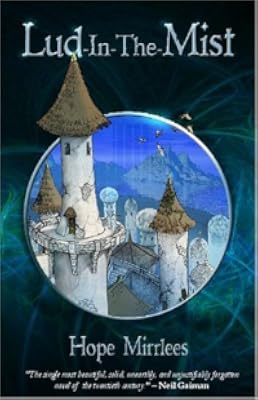
Lud-in-the-Mist
by Hope Mirrlees
On This Page
Description
"Lud-in-the-Mist is a flourishing town and the capital of the Free State of Dorimare, located at the confluence of two rivers, the Dapple and the Dawl. Bordering to the west and said to flow from the Dapple, is Fairyland. Dorimare law has banished Fairyland inhabitants and forbidden all fairy things, but someone is smuggling fairy fruit into the state, causing addiction, fits of delusion, and possibly murder. Despite being one of the first books published in the fantasy genre, show more Lud-in-the-Mist has received surprisingly little attention. Hope Mirrlees' 1926 novel is an enchanting narrative intertwined with folklore and the magical realm of the fairy folk, mysterious intrigue, and rural superstitions. A delightful discovery for lovers of fantasy"-- show lessTags
Recommendations


















Member Recommendations
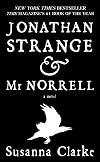
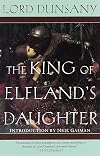
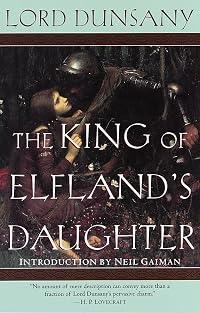
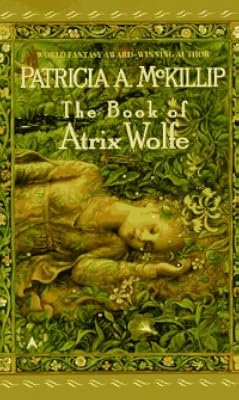
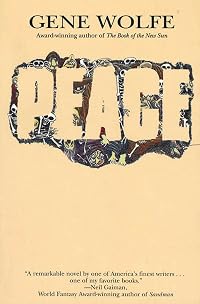
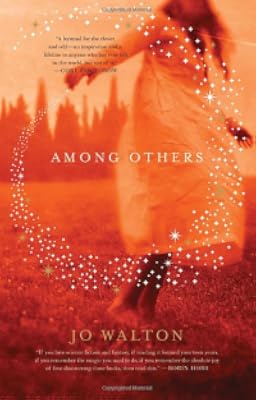
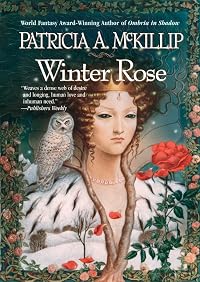
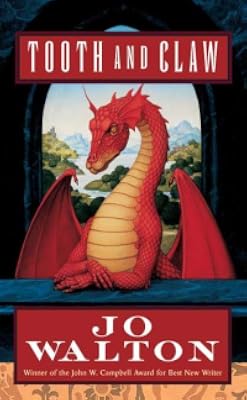
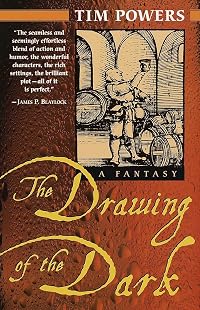
PhoenixFalls Mirrlees wrote Lud-in-the-Mist in response to Dunsany's The King of Elfland's Daughter; they are two opposing takes on Fairyland and what it means to humanity, and both are brilliant.
70



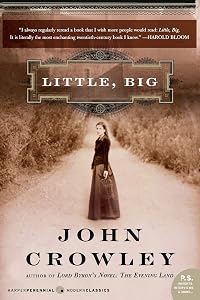
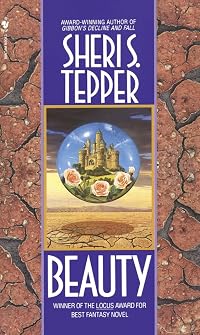
bertilak These are very different books but they both depict communities living in denial.


Member Reviews
Ok, y’all, I know it’s been a hot minute since I’ve posted anything here; I just needed some time away from the socials. HOWEVER, I need to pop in here to talk about LUD-IN-THE-MIST by Hope Mirrlees. Recommended by Emily (@anunexpectedletter) after we discussed our mutual love of Jonathan Strange and Mr. Norrell, I ordered it right away (thanks @a.novel.concept!) and Emily is correct: it’s delightful! Part fairy tale, part mystery, with a dash of the Gothic and some court intrigue thrown in for good measure, all tied up in a story full of whimsy, I enjoyed every page of this book.
Lud-in-the-Mist, the capital of the Free State of Dorimare, is bordered to the west by Fairyland. According to Dorimare law, all things Fairy are show more banned from the land, especially the addictive fairy fruit. Nathaniel Chanitcleer, the mayor of Lud, finds life in his city perfect, yet something seems missing. When fairy fruit is smuggled into the city, and Chanticleer’s children eat some and they both disappear over the Debatable Hills in the direction of Fairyland, he sets out on a journey that will uncover a decades old murder, possibly cost him his position as mayor, and take him to the border of Fairyland and all that has to offer.
Mirrlees’ writing and imagery is gorgeous, and while there are a lot of plot threads woven throughout, everything is brought together in a satisfying finale. It’s clear that many contemporary authors, including Neil Gaiman and Susanna Clarke, who wrote their own stories of cities bordering on the lands of Fairy, drew their inspiration from Mirrlees and LUD-IN-THE-MIST. It’s such a charming novel, it’s not hard to see how this slim volume inspired so many stories that came after it. If you’re a fan of classic fantasy, do yourself a favor and pick up this wonderful book.
🏷️ : #fantasy #hopemirrlees #ludinthemist #fairy #fairyland #anovelconceptlansingmi #bookreview #fantasybooks #booksbooksbooks #bookstagram #booklover #bookdragon #bookworm #frommybookshelf #frommybookshelfblog show less
Lud-in-the-Mist, the capital of the Free State of Dorimare, is bordered to the west by Fairyland. According to Dorimare law, all things Fairy are show more banned from the land, especially the addictive fairy fruit. Nathaniel Chanitcleer, the mayor of Lud, finds life in his city perfect, yet something seems missing. When fairy fruit is smuggled into the city, and Chanticleer’s children eat some and they both disappear over the Debatable Hills in the direction of Fairyland, he sets out on a journey that will uncover a decades old murder, possibly cost him his position as mayor, and take him to the border of Fairyland and all that has to offer.
Mirrlees’ writing and imagery is gorgeous, and while there are a lot of plot threads woven throughout, everything is brought together in a satisfying finale. It’s clear that many contemporary authors, including Neil Gaiman and Susanna Clarke, who wrote their own stories of cities bordering on the lands of Fairy, drew their inspiration from Mirrlees and LUD-IN-THE-MIST. It’s such a charming novel, it’s not hard to see how this slim volume inspired so many stories that came after it. If you’re a fan of classic fantasy, do yourself a favor and pick up this wonderful book.
🏷️ : #fantasy #hopemirrlees #ludinthemist #fairy #fairyland #anovelconceptlansingmi #bookreview #fantasybooks #booksbooksbooks #bookstagram #booklover #bookdragon #bookworm #frommybookshelf #frommybookshelfblog show less
The story holds a pervasive charm even as it treats of somber and malefic aspects of life. Mirrlees simply opts to take it all as evidence of the world's Goodness, I think, and is no Pollyanna. In place of the horror of the young, then, the acceptance of those who have endured as well as enjoyed.
The book does read like Cabell (the notion of the Note, the prose of the story, the dialogue of characters), though for all that hers is a different voice, a different sensibility, if sympathetic. Mirrlees also has a great vocabulary, with a penchant for archaic and rare words like Cabell and Leiber and other fantasists. A stroke of genius to always hint at the fey, at least through the first third, and in this respect not only by talking of show more them rather than featuring them as characters, but also that the Ludites and Dorimarites themselves generally speak of the fey as though the latter were permanently offstage. There are ready sayings and common gestures and traditions, a folklore of the Silent People, but nothing in current society. Even for the characters in the novel, then, the fey are once removed. It is a ready analogue of our world, as different this world she builds might first appear.
Perhaps Mirrlees's most striking invention (if not the Note already mentioned) is her idea that Law is the obverse of fairy fruit, and consequently, the World-in-Law the counter to Faerie.
"But you remember what my father said [Nathaniel to his friend Ambrose] about the Law being man's substitute for fairy fruit? Fairy things are all of them supposed to be shadowy cheats -- delusion. But man can't live without delusion, so he creates for himself another delusion, the world-in-law, subject to no other law than the will of man, where man juggles with facts to his heart's content, and says, 'If I choose I shall make a man old enough to be my father my son, and if I choose I shall turn fruit into silk and black into white, for this is the world I have made myself, and here I am master.' And he creates a monster to inhabit it -- the man-in-law, who is like a mechanical toy and always behaves exactly as he is expected to behave, and is no more like you and me than are the faeries." [162-63]
This is a powerful idea, it embraces both modern economic game theory and the Law of Thelema, and my guess is that Mirrlees attended to more of its nuance and implications than she states explicitly, to her enduring credit.
Mirrlees offers, above or perhaps behind her very engaging tale, a sad critique of Reason, and civilisation. Not in a nihilist sense, but a Romantic sense of hopelessness or disappointment. It is this theme and its relation to the World-in-Law which will reward a rereading, I think.
//
From Lin Carter's preface or foreword to the Ballantine Adult Fantasy imprint:
The novel really begins when Master Nathaniel Chanticleer, one of the most respected burghers of Dorimare, of a fine old family, learns that his young son has been tempted to eat of fairy fruit. The emotional crisis that follows, and Chanticleer's painful re-examination of all the tenets by which he has lived so long, is the heart and crux of Miss Mirrlees' brilliant and deeply moving novel, which culminates in the desperate quest of Master Nathaniel after his wandering exiled son to the very borders of Faerie ... and beyond. [x]
//
A candidate from the novel for the Library of Imaginary Books: Traces of Fairy in the Inhabitant's Customs, Arts, Vegetation and Language of Dorimare [14] show less
The book does read like Cabell (the notion of the Note, the prose of the story, the dialogue of characters), though for all that hers is a different voice, a different sensibility, if sympathetic. Mirrlees also has a great vocabulary, with a penchant for archaic and rare words like Cabell and Leiber and other fantasists. A stroke of genius to always hint at the fey, at least through the first third, and in this respect not only by talking of show more them rather than featuring them as characters, but also that the Ludites and Dorimarites themselves generally speak of the fey as though the latter were permanently offstage. There are ready sayings and common gestures and traditions, a folklore of the Silent People, but nothing in current society. Even for the characters in the novel, then, the fey are once removed. It is a ready analogue of our world, as different this world she builds might first appear.
Perhaps Mirrlees's most striking invention (if not the Note already mentioned) is her idea that Law is the obverse of fairy fruit, and consequently, the World-in-Law the counter to Faerie.
"But you remember what my father said [Nathaniel to his friend Ambrose] about the Law being man's substitute for fairy fruit? Fairy things are all of them supposed to be shadowy cheats -- delusion. But man can't live without delusion, so he creates for himself another delusion, the world-in-law, subject to no other law than the will of man, where man juggles with facts to his heart's content, and says, 'If I choose I shall make a man old enough to be my father my son, and if I choose I shall turn fruit into silk and black into white, for this is the world I have made myself, and here I am master.' And he creates a monster to inhabit it -- the man-in-law, who is like a mechanical toy and always behaves exactly as he is expected to behave, and is no more like you and me than are the faeries." [162-63]
This is a powerful idea, it embraces both modern economic game theory and the Law of Thelema, and my guess is that Mirrlees attended to more of its nuance and implications than she states explicitly, to her enduring credit.
Mirrlees offers, above or perhaps behind her very engaging tale, a sad critique of Reason, and civilisation. Not in a nihilist sense, but a Romantic sense of hopelessness or disappointment. It is this theme and its relation to the World-in-Law which will reward a rereading, I think.
//
From Lin Carter's preface or foreword to the Ballantine Adult Fantasy imprint:
The novel really begins when Master Nathaniel Chanticleer, one of the most respected burghers of Dorimare, of a fine old family, learns that his young son has been tempted to eat of fairy fruit. The emotional crisis that follows, and Chanticleer's painful re-examination of all the tenets by which he has lived so long, is the heart and crux of Miss Mirrlees' brilliant and deeply moving novel, which culminates in the desperate quest of Master Nathaniel after his wandering exiled son to the very borders of Faerie ... and beyond. [x]
//
A candidate from the novel for the Library of Imaginary Books: Traces of Fairy in the Inhabitant's Customs, Arts, Vegetation and Language of Dorimare [14] show less
An excellent but little-known fantasy/fairytale for adults, from early twentieth-century British author Hope Mirrlees. This novel is efficient (especially by fantasy standards), well-written (though the edition I read was not at all well-copyedited), engaging, and thoughtful--sometimes in an unsettling way. As it follows its main character through his evolving relationship with the fairy Other, Lud-in-the-Mist thinks about mortality, the nature of reality, and humans' urges toward both the mundane and the wilder aspects of our minds and worlds.
A side note: The novel's incidental bits of Orientalism are deeply problematic but fascinating, at least from the perspective of a scholar of twentieth-century British literature and culture. It show more would be interesting to think more carefully about what Others and Otherness are here, and about the relationship between the vaguely-mentioned racial/geographic Others and, of course, the Fairies. show less
A side note: The novel's incidental bits of Orientalism are deeply problematic but fascinating, at least from the perspective of a scholar of twentieth-century British literature and culture. It show more would be interesting to think more carefully about what Others and Otherness are here, and about the relationship between the vaguely-mentioned racial/geographic Others and, of course, the Fairies. show less
Nathaniel Chanticleer is the mayor of the titular town, a mercantile and prosaic place whose social order is threatened by the illicit importation of fairy fruit from neighbouring Fairyland. The threat turns personal when the mayor's own son is found to have tasted the forbidden fruit, and Nathaniel - a middle-aged man who by preference devotes his time to committee meetings and formal dinners - is cast on a journey that will transform both himself and his town.
A reflection on the interplay between reason and imagination, the apparent message is that we need a middle way between the excesses of each, between Lud's deadening conventionality and Fairyland's chaos. The story as such is perhaps not the most compelling, but it's beautifully show more written. From the point of view of the retrospective genre assignment as high fantasy, there isn't much action, but a lot of attention to characters, their relationships and foibles.
I came across this because of the LT user recommendation saying it was written as a response to Lord Dunsany's The King of Elfland's Daughter (which I read last year). There's a certain mirror symmetry between them - in Dunsany's book the fields we know and the lands of fairy become entangled due to initiative from our side, and the results are disastrous; in Mirrlees' the initiative comes from the other side, and the consequences overall for the better. Anyone who likes the one is likely to like the other. show less
A reflection on the interplay between reason and imagination, the apparent message is that we need a middle way between the excesses of each, between Lud's deadening conventionality and Fairyland's chaos. The story as such is perhaps not the most compelling, but it's beautifully show more written. From the point of view of the retrospective genre assignment as high fantasy, there isn't much action, but a lot of attention to characters, their relationships and foibles.
I came across this because of the LT user recommendation saying it was written as a response to Lord Dunsany's The King of Elfland's Daughter (which I read last year). There's a certain mirror symmetry between them - in Dunsany's book the fields we know and the lands of fairy become entangled due to initiative from our side, and the results are disastrous; in Mirrlees' the initiative comes from the other side, and the consequences overall for the better. Anyone who likes the one is likely to like the other. show less
Every once in a while my deep dives into my library pull up a treasure. Apparently Neil Gaiman in a foreword to a more recent edition calls this one of his ten favorite books. That's no surprise given that his favorite is Crowley's Little, Big, which this book from 1926 resembles in many ways. There is the distinctive but clear author's voice and rich prose, there is the setting of events in the normal world but near to and constantly affected by the fairy world, there is the deep history behind the events of the story, and there is minimal element of actual magic to perhaps no more than simple delusion.
The book begins in heavy descriptive mode -- both enchanting and exhausting. Since Mirrlees was a poet, I expected that style to show more maintain through the book, but the text became much less dense after a few chapters as plot and characterization took over. Readers looking for a story will not be disappointed, nor will readers looking for highly sympathetic and believable characters, or interesting insights into the ephemeral effects of reason and the "fiction" of law.
Compared to Little, Big which I consider perfect, I had two issues with Lud-in-the-Mist. At the story level, a repeated plot mechanism is the false tale -- pretty much all obstacles for the main characters not of their own doing is caused by someone simply misleading them. At the philosophical level, the themes that motivate the story are hammered a bit too hard, given their obviousness.
But even so this was a wonderful book to finally read. Highly recommended. show less
The book begins in heavy descriptive mode -- both enchanting and exhausting. Since Mirrlees was a poet, I expected that style to show more maintain through the book, but the text became much less dense after a few chapters as plot and characterization took over. Readers looking for a story will not be disappointed, nor will readers looking for highly sympathetic and believable characters, or interesting insights into the ephemeral effects of reason and the "fiction" of law.
Compared to Little, Big which I consider perfect, I had two issues with Lud-in-the-Mist. At the story level, a repeated plot mechanism is the false tale -- pretty much all obstacles for the main characters not of their own doing is caused by someone simply misleading them. At the philosophical level, the themes that motivate the story are hammered a bit too hard, given their obviousness.
But even so this was a wonderful book to finally read. Highly recommended. show less
http://nwhyte.livejournal.com/1464028.html
I was inspired to buy this by Farah Mendlesohn's Rhetorics of Fantasy, which ranks it as a key exemplar of one of the four modes of fantasy story-telling, the 'liminal' in which the boundary with the fantastic is hazy and uncertain; other examples being Little, Big (which I bounced off) and the first two Gormenghast books (which I remember loving as a teenager). I think it also fits a lot of Neil Gaiman's work.
I am firmly on the side of the fans of Lud-In-The-Mist. It is a superb tale of the inhabitants of the eponymous town, trying to sort out their relationship with neighbouring Fairyland, which is in large part a relationship of denial and corruption. It feels amazingly modern for a book show more written in 1926, a time period that I would otherwise associate with Lord Dunsany and H.P. Lovecraft, whose works are classics of their kind but somewhat dated; no such apology is needed for Lud-In-The-Mist (though I suppose one could read a commentary on Prohibition into some of the incidents involving trafficking in forbidden fruit). It is a story of hidden messages from the past, disruption to the social order, uppity women (to a certain extent) and the dangers of questioning what appeared certain. show less
I was inspired to buy this by Farah Mendlesohn's Rhetorics of Fantasy, which ranks it as a key exemplar of one of the four modes of fantasy story-telling, the 'liminal' in which the boundary with the fantastic is hazy and uncertain; other examples being Little, Big (which I bounced off) and the first two Gormenghast books (which I remember loving as a teenager). I think it also fits a lot of Neil Gaiman's work.
I am firmly on the side of the fans of Lud-In-The-Mist. It is a superb tale of the inhabitants of the eponymous town, trying to sort out their relationship with neighbouring Fairyland, which is in large part a relationship of denial and corruption. It feels amazingly modern for a book show more written in 1926, a time period that I would otherwise associate with Lord Dunsany and H.P. Lovecraft, whose works are classics of their kind but somewhat dated; no such apology is needed for Lud-In-The-Mist (though I suppose one could read a commentary on Prohibition into some of the incidents involving trafficking in forbidden fruit). It is a story of hidden messages from the past, disruption to the social order, uppity women (to a certain extent) and the dangers of questioning what appeared certain. show less
I don't usually put too much credence into book blurbs by famous authors, but for some reason Gaiman's blurb got my attention and I'm glad it did. This really is amazing stuff. It feels very British and definitely old school. This isn't anything like modern fantasy, it's very subtle and very character based. The wonder is still there even though there's not magic flying around and there are no epic battles (or actually any battles of any type). The world is simple and needs little description, it's so classic you just kind of find yourself in it without having to read the first six books of the series.
It reminded me of [book:The Gormenghast Novels|39058] from Meryvn Peake but more fun; each character was so colorful, they were so show more absurd in their words and actions that I couldn't help but fall in love with them. The language is archaic and beautiful and that only adds to the feeling of being in a fairy tale you missed while growing up.
Would love to see a BBC adaptation of this. show less
It reminded me of [book:The Gormenghast Novels|39058] from Meryvn Peake but more fun; each character was so colorful, they were so show more absurd in their words and actions that I couldn't help but fall in love with them. The language is archaic and beautiful and that only adds to the feeling of being in a fairy tale you missed while growing up.
Would love to see a BBC adaptation of this. show less
Members
- Recently Added By
Published Reviews
ThingScore 92
The psychologist C. J. Jung maintained that the true purpose of middle age was the integration of all the varying, and sometimes unacknowledged, aspects of our personalities. Perhaps this accounts for the unusual protagonist of Hope Mirrlees’s Lud-in-the-Mist (1925), one of the most admired fantasy novels of the 20th century — and one that is clearly intended for adults. Mirrlees’s book show more explores the need to embrace what we fear, to come to terms with what Jung called the shadow, those sweet and dark impulses that our public selves ignore or repress. There are no elven blades or cursed rings here; no epic battles either, and the novel’s hero resembles the aged Bilbo Baggins more than the charismatic, sword-wielding Aragorn. show less
added by elenchus
Neil Gaiman once said in conversation that Lud-in-the-Mist "deals with the central matter of fantasy -- the reconciliation of the fantastic and the mundane." Which, perhaps, comes as close to the heart of the question as anybody's going to get.
To learn more, you'll simply have to read the book.
To learn more, you'll simply have to read the book.
added by elenchus
The book is a curio, meandering between broad comedy, suspense, murder mystery and adventure, veering from moments of slapstick to moving scenes of pathos. Like all good magic tricks, the charm of the book lies in the craft of its glamour and sleight of hand. While it has its fair share of lo! and behold!, the simplicity of the writing conceals exquisite turns of phrase and an underlying show more intensity that can burst unexpectedly upon the reader. Nevertheless, it is hard to deny the book's weaknesses. Mirrlees' plotting is episodic, and the overwhelming feeling at the end is deflation that the long-promised fireworks of the final confrontation in Faerie should take place offstage. But by this point, it's clear that Lud-in-the-Mist is not all it seems: what at first appears to be a hotchpotch novel reveals itself as a carefully-considered - if not executed - allegory about the nature of 'fantasy'. show less
added by elenchus
Lists

Best Fantasy Novels
821 works; 361 members

Recommended Faerie books
67 works; 22 members

Stories About Other Worlds
145 works; 13 members

20th Century Literature
1,161 works; 55 members

Faerie Mythology
87 works; 13 members

Ballantine Adult Fantasy Series
85 works; 8 members

Survey of Fantasy Classics
111 works; 23 members

Fantasy Masterworks
66 works; 5 members

SomethingAwful TBB BOTM
66 works; 2 members
Speculative Fiction to Read
706 works; 32 members

Recommended Speculative Fiction by Women and People of Color
298 works; 45 members

Works by Authors I have Yet to Read
8 works; 1 member

Michael Dirda's Desert Island Books
62 works; 5 members

KayStJ's to-read list
1,616 works; 11 members

For Further Reading: A List of 160 Novels from 15 Literatures
160 works; 4 members

Tagged Parallel Worlds
43 works; 11 members

Read These Too
458 works; 9 members

Books Read in 2013
1,630 works; 51 members

Best Neglected Fantasy Books 1900-1955
30 works; 6 members

Jean's Sci Fi/Fantasy Reading list
189 works; 12 members

Autumn books
31 works; 8 members

Books Read in 2024
4,727 works; 128 members
Talk Discussions
Past Discussions
Chat about... Lud-in-the-Mist by Hope Mirrlees in The SF&F Book Chat (February 2013)
Author Information

11+ Works 2,429 Members
Some Editions
Awards and Honors
Series
Belongs to Publisher Series
Common Knowledge
- Canonical title
- Lud-in-the-Mist
- Original title
- Lud-in-the-Mist
- Original publication date
- 1926
- People/Characters
- Nathaniel Chanticleer; Marigold Chanticleer; Ranulph Chanticleer; Prunella Chanticleer; Ambrose Honeysuckle; Polydore Vigil (show all 15); Endymion Leer; Hempie; Luke Hempen; Mumchance; Clementina Gibberty; Duke Aubrey; Hazel Gibberty; Ivy Peppercorn; Willy Wisp
- Important places
- Faery; Lud-in-the-Mist, Dorimare
- Epigraph
- The Sirens stand, as it would seem, to the ancient and the modern, for the impulses in life as yet immoralised, impervious longings, ecstasies, whether of love or art, or philosophy, magical voices calling to a man from his "... (show all)Land of Heart's Desire," and to which if he hearken it may be that he will return no more--voices, too, which, whether a man sail by or stay to hearken, still sing on.
-- Jane Harrison - Dedication
- To the Memory of My Father
- First words
- The free state of Dorimare was a very small country, but, seeing that it was bounded on the south by the sea and on the north and east by mountains, while its centre consisted of a rich plain, watered by two rivers, a conside... (show all)rable variety of scenery and vegetation was to be found within its borders.
- Quotations
- Lud-in-the-Mist had all the things that make an old town pleasant. It had an ancient Guild Hall, built of mellow golden bricks and covered with ivy and, when the sun shone on it, it looked like a rotten apricot; it had a har... (show all)bour in which rode vessels with white and red and tawny sails; it had flat brick houses - not the mere carapace of human beings, but ancient living creatures, renewing and modifying themselves with each generation under their changeless antique roofs.
[I]ndeed, it is never safe to classify the souls of one's neighbours; one is apt, in the long run, to be proved a fool. You should regard each meeting with a friend as a sitting he is unwittingly giving you for a portrait -- ... (show all)a portrait that, probably, when you or he die, will still be unfinished. [3]
There were whole chests, too, filled with pieces of silk, embroidered or painted with curious scenes. Who has not wondered in what mysterious forests our ancestors discovered the models for the beasts and birds upon their tap... (show all)estries; and on what planet were enacted the scenes they have portrayed? It in in vain that the dead fingers have stitched beneath them -- and we can picture the mocking smile with which these crafty cozeners of posterity accompanied the action -- the words February, or Hawking, or Harvest, having us believe that they are but illustrations for the activities proper to the different months. We know better. These are not the normal activities of mortal men. What kind of beings peopled the earth four or five centuries ago, what strange lore they had acquired, and what were their sinister doings, we shall never know. Our ancestors keep their secret well. [4]
[A] very ingenious and learned jurist, had drawn in one of his treatises a curious parallel between fairy things and the law. The men of the revolution, he said, had substituted law for fairy fruit. But whereas only the reign... (show all)ing Duke and his priests had been allowed to partake of the fruit [in the pagan days], the law was given freely to rich and poor alike. Again, fairy was delusion, so was the law. At any rate, it was a sort of magic, moulding reality into any shape it chose. But, whereas fairy magic and delusion were for the cozening and robbing of man, the magic of the law was to his intention and for his welfare. [13]
Reason I know, is only a drug, and, as such, its effects are never permanent. But, like the juice of the poppy, it often gives a temporary relief. [Endymion Leer, 49] - Last words
- (Click to show. Warning: May contain spoilers.)And with this final exhortation this book shall close.
- Blurbers
- Gaiman, Neil; Gentle, Mary; Woolf, Virginia; Swanwick, Michael; Kaveney, Roz
- Original language
- English
- Canonical DDC/MDS
- 823.912
Classifications
Statistics
- Members
- 2,278
- Popularity
- 8,818
- Reviews
- 62
- Rating
- (3.87)
- Languages
- 7 — Dutch, English, French, German, Spanish, Swedish, Turkish
- Media
- Paper, Audiobook, Ebook
- ISBNs
- 45
- UPCs
- 1
- ASINs
- 21