
On This Page
Description
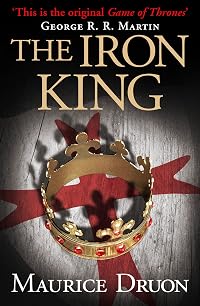
The Iron King - Philip the Fair - governs his realm with an iron hand, but he cannot rule his own family: his sons are weak and their wives adulterous; and his daughter Isabella is unhappily married. Bent on the persecution of the rich and powerful Knights Templar, Philip sentences Grand Master Jacques Molay to be burned at the stake, thus drawing down upon himself a curse that will destroy his entire.Tags
Recommendations








Member Recommendations
Fayries George R. R. Martin himself wrote that "Druon's series was one of my major inspirations".
30
Member Reviews
A fascinating look at the events during the reign of France's Philip IV, and which directly led to the Hundred Years War between England and France. A bit dry, but long on detail and intrigue, and with an impressively large cast, The Iron King's influence on later novels, across genres, is undeniable. Widely read and recognized, Druon's epic work has been published and republished in the 50 years since it first came to be, but its story is as fresh and fascinating as ever. Anyone who enjoys descriptive and detailed historical fiction about France, England and the Hundred Years' War will find a lot to enjoy here.
Much has been made of its particular impact on the popular fantasy world of George R. R. Martin's A Song of Ice and Fire series show more (or A Game of Thrones if you're solely a fan of the tv show). Spanning seven volumes, with a large, disparate cast - from kings to bankers to heretics - the numerous parallels between Druon and Martin's work are easy to spot. While there are (sadly) no dragons to be found in the Iron King, there are she-wolves, betrayals, family curses, torture, court intrigue, and ambition to keep things interesting. Historical fiction is at its best when it makes you curious about the people and times portrayed, and Maurice Druon captures these particular times and these complex people so well, it's hard not to be inquisitive about them once the novel is over.
A Game of Thrones has rival families: The Starks and the Lannisters. The Iron King has the royal rival families of the French Capets and the English Plantagenets. George R. R. Martin wasn't lying when he said his Starks and Lannisters had nothing on the Capets and Plantagenets. Both families are filled with fools, ambitious men, capable and deceptive women, and more. While the first Accursed Kings book lacks the amount of sheer drama that A Game of Thrones packs into one novel, it is admittedly much shorter (by hundreds of pages!). But, thankfully, the author manages to infuse those too-short 275 with enough machinations and manipulations to make Littlefinger himself proud.
A Game of Thrones has the stalwart and rigidly serious Ned Stark. The Iron King has the severe and authoritarian Philip "the Fair" IV of France. Both men are descended from a noble and respected lineage (Ned - Brandon the Builder; Philip - Saint Louis aka Louis IX of France) and both take their responsibilities as leaders very seriously. The comparisons between the two are inevitable for those that have read both works, and it's easy to see how Ned was inspired (and improved upon) Druon's French king. Ned is easier to like, and more personable than the more remote and dispassionate Philip, but they are two men cut from the same cloth.
A Game of Thrones has a family matriarch with steel and determination in Catelyn Tully. The Iron King has Isabella, She-Wolf of France (and reigning Queen of England with Edward II). You may know her best (and inaccurately) as William Wallace's weepy lover in the 1995 movie Braveheart, but that film does her character a disservice. Cold, calculating, and highly intelligent, Isabella and her actions have more of an impact on the history of two countries than one would guess. Much like Catelyn, Isabella has goals and ambitions of her own - for her children, she will start a war that will kill thousands of people before it is all said and done. Both Isabella and Catelyn are remote and hard to like and can be traced as the imitators of huge struggles, but each are thoroughly fascinating to read.
A Game of Thrones has Cersei Lannister, a woman determined to have the love she wants regardless of the constraints society - and marriage - would put upon her. The Iron King has Marguerite of Burgundy, who, like Cersei, is unfaithful (and eventually found out) to her royal husband, which casts the paternity and thus the rights of her children in serious doubt and helps set off the series of dynastic disputes. SPOILER for later ASOIAF novels: And, like the Lannister lioness, Marguerite finds herself imprisoned against her will, without hope of freedom or redemption. Cersei may be easier to label as outright evil rather than selfish and short-sighted, but the similarities between the two women are apparent.
A Song of Ice and Fire is set to be published in a series of seven novels. Druon's series The Accursed Kings is a seven volume work. They are hard to come across, especially in English, but Harper Collins seems to be in the long process of republishing them in 2013. I, for one, am eagerly awaiting the day I can continue this series and see how it all plays out in Druon's version of the Hundred Year's War.
The story that has begun to unfold here in the first novel continues in book two, The Strangled Queen. If it is anything like its predecessor I will be a big fan. show less
Much has been made of its particular impact on the popular fantasy world of George R. R. Martin's A Song of Ice and Fire series show more (or A Game of Thrones if you're solely a fan of the tv show). Spanning seven volumes, with a large, disparate cast - from kings to bankers to heretics - the numerous parallels between Druon and Martin's work are easy to spot. While there are (sadly) no dragons to be found in the Iron King, there are she-wolves, betrayals, family curses, torture, court intrigue, and ambition to keep things interesting. Historical fiction is at its best when it makes you curious about the people and times portrayed, and Maurice Druon captures these particular times and these complex people so well, it's hard not to be inquisitive about them once the novel is over.
A Game of Thrones has rival families: The Starks and the Lannisters. The Iron King has the royal rival families of the French Capets and the English Plantagenets. George R. R. Martin wasn't lying when he said his Starks and Lannisters had nothing on the Capets and Plantagenets. Both families are filled with fools, ambitious men, capable and deceptive women, and more. While the first Accursed Kings book lacks the amount of sheer drama that A Game of Thrones packs into one novel, it is admittedly much shorter (by hundreds of pages!). But, thankfully, the author manages to infuse those too-short 275 with enough machinations and manipulations to make Littlefinger himself proud.
A Game of Thrones has the stalwart and rigidly serious Ned Stark. The Iron King has the severe and authoritarian Philip "the Fair" IV of France. Both men are descended from a noble and respected lineage (Ned - Brandon the Builder; Philip - Saint Louis aka Louis IX of France) and both take their responsibilities as leaders very seriously. The comparisons between the two are inevitable for those that have read both works, and it's easy to see how Ned was inspired (and improved upon) Druon's French king. Ned is easier to like, and more personable than the more remote and dispassionate Philip, but they are two men cut from the same cloth.
A Game of Thrones has a family matriarch with steel and determination in Catelyn Tully. The Iron King has Isabella, She-Wolf of France (and reigning Queen of England with Edward II). You may know her best (and inaccurately) as William Wallace's weepy lover in the 1995 movie Braveheart, but that film does her character a disservice. Cold, calculating, and highly intelligent, Isabella and her actions have more of an impact on the history of two countries than one would guess. Much like Catelyn, Isabella has goals and ambitions of her own - for her children, she will start a war that will kill thousands of people before it is all said and done. Both Isabella and Catelyn are remote and hard to like and can be traced as the imitators of huge struggles, but each are thoroughly fascinating to read.
A Game of Thrones has Cersei Lannister, a woman determined to have the love she wants regardless of the constraints society - and marriage - would put upon her. The Iron King has Marguerite of Burgundy, who, like Cersei, is unfaithful (and eventually found out) to her royal husband, which casts the paternity and thus the rights of her children in serious doubt and helps set off the series of dynastic disputes. SPOILER for later ASOIAF novels: And, like the Lannister lioness, Marguerite finds herself imprisoned against her will, without hope of freedom or redemption. Cersei may be easier to label as outright evil rather than selfish and short-sighted, but the similarities between the two women are apparent.
A Song of Ice and Fire is set to be published in a series of seven novels. Druon's series The Accursed Kings is a seven volume work. They are hard to come across, especially in English, but Harper Collins seems to be in the long process of republishing them in 2013. I, for one, am eagerly awaiting the day I can continue this series and see how it all plays out in Druon's version of the Hundred Year's War.
The story that has begun to unfold here in the first novel continues in book two, The Strangled Queen. If it is anything like its predecessor I will be a big fan. show less
Philip IV of France is putting an end to the Templars, in a bid to grasp their fortune for the crown, and he gets his lineage cursed in the process. Given the preponderance of Templars in fiction, I was happy that they don't long hold the stage. The story quickly progresses to illicit affairs among the princesses in line for the throne, and the subsequent fallout. It offers some closure but leaves several balls in the air for the rest of the series to untangle.
This is written in the style of my favourite historical fiction, steering close to the actual record. Druon explores the thoughts and feelings of real people who experienced these events, embellishing only where it serves to fill in the blanks. Occasionally his narrator's voice show more offers comment, speaking from a perspective 700 years in the future, but for the most part he stands back and merely portrays. There are some fantastic end notes well worth reading, that I wish more fiction authors playing with the past would trouble themselves to include. It's a far cry from fantasy fiction like Game of Thrones, an often cited comparison, but the influence of this 1950s work on George Martin is clear in large and small ways: nobility caught up in earthly pleasures, people in high positions experiencing grim and dramatic falls, the recitation of enemies' names. It hasn't nearly the breadth of that saga, despite the huge number of names who appear, and only a small measure of the atmosphere. If you appreciate the history it's teaching you, you won't mind those shortcomings. show less
This is written in the style of my favourite historical fiction, steering close to the actual record. Druon explores the thoughts and feelings of real people who experienced these events, embellishing only where it serves to fill in the blanks. Occasionally his narrator's voice show more offers comment, speaking from a perspective 700 years in the future, but for the most part he stands back and merely portrays. There are some fantastic end notes well worth reading, that I wish more fiction authors playing with the past would trouble themselves to include. It's a far cry from fantasy fiction like Game of Thrones, an often cited comparison, but the influence of this 1950s work on George Martin is clear in large and small ways: nobility caught up in earthly pleasures, people in high positions experiencing grim and dramatic falls, the recitation of enemies' names. It hasn't nearly the breadth of that saga, despite the huge number of names who appear, and only a small measure of the atmosphere. If you appreciate the history it's teaching you, you won't mind those shortcomings. show less
I struggled through this book and only kept reading because the language deserved it even though the subject matter rarely did. A sequence of stupid court intrigues and the author’s stubborn insistence on perceived inferiority of women got on my nerves. I put the book away multiple times. Yet closer to the end the novel became less annoying, when the iron king turned out to be a human being after all. It almost seemed like going through the muck and the filth was not so meaningless, when you get there to the unexpected expression of self-doubt coming from the strongest of men.
Despite of a somewhat redeeming ending I have no patience for more Druon or his accursed kings, or whatever kind of thrones.
Despite of a somewhat redeeming ending I have no patience for more Druon or his accursed kings, or whatever kind of thrones.
I CAN FINALLY REVIEW THIS.
4 stars
Historical fiction = win. Historical fiction written well = an even bigger win.
GRRM was right - this book does have a ton of the political intrigue and familial backstabbing we all know and love on ASoIaF, only not as bloody (maybe not yet...?). Regardless, it was a great read. Druon brought to life the reigns of the last remaining Capetian kings. While still a patriarchal society, I loved that all the females, Isabella especially, used their cunning or womanly charms, to get what they wanted, whether it was payback or a secret lover. And how some of the men were just plain useless; I feel so bad for Philip since his successor is going to be his dimwit son.
Now some people may think, it's just going to show more be another history lesson, and it's going to be boring and unexciting because nothing interesting happened in the past (for those who hate history). But this may not have the brutality of death like ASoIaf. But it has strong females (Isabella, why can't you be Queen and kick everyone's butts and make everything right), a curse that will last thirteen generations, and a whole country and family about to crumble because Philip messed up that one time...
The characters (or rather the real people) come to life in The Accursed Kings I just love reading them all. Mahaut and Robert duking it out over land and rule and Isabella having to deal with her husband who actually loves men.
I can't wait to read the next book, The Strangled Queen, for more deceit and poison and murder.
Highly recommend! show less
4 stars
Historical fiction = win. Historical fiction written well = an even bigger win.
GRRM was right - this book does have a ton of the political intrigue and familial backstabbing we all know and love on ASoIaF, only not as bloody (maybe not yet...?). Regardless, it was a great read. Druon brought to life the reigns of the last remaining Capetian kings. While still a patriarchal society, I loved that all the females, Isabella especially, used their cunning or womanly charms, to get what they wanted, whether it was payback or a secret lover. And how some of the men were just plain useless; I feel so bad for Philip since his successor is going to be his dimwit son.
Now some people may think, it's just going to show more be another history lesson, and it's going to be boring and unexciting because nothing interesting happened in the past (for those who hate history). But this may not have the brutality of death like ASoIaf. But it has strong females (Isabella, why can't you be Queen and kick everyone's butts and make everything right), a curse that will last thirteen generations, and a whole country and family about to crumble because Philip messed up that one time...
The characters (or rather the real people) come to life in The Accursed Kings I just love reading them all. Mahaut and Robert duking it out over land and rule and Isabella having to deal with her husband who actually loves men.
I can't wait to read the next book, The Strangled Queen, for more deceit and poison and murder.
Highly recommend! show less
Disclosure: I received this book as part of the LibraryThing Early Reviewers program. Some people think this may bias a reviewer so I am making sure to put this information up front. I don't think it biases my reviews, but I'll let others be the judge of that.
In the forward of the The Iron King, George R.R. Martin states that this series of historical fiction books by French author Maurice Druoun served as one of the inspirations for Martin's now wildly popular Song of Ice and Fire series. And when one reads this volume, which takes place during the last few years of the reign of Philip the Fair, one can see that Martin's work does indeed have Druon's fingerprints all over it, at least as far as the bitter and deadly courtly intrigue is show more concerned. As Martin observes, despite the obscurity of the series in the English speaking world, it is wildly popular in France, and has been made into a television series more than once, in effect making it the original Game of Thrones.
As the book opens, France is strong and Philip is the most powerful man in Europe. He had transformed France from a disorganized feudal state into a centralized kingdom. His sons had been placed in powerful position, his daughter was married to the King of England, and his brother had been given the impressive sounding but mostly empty title of Byzantine Emperor. Philip had quarreled with the papacy and won, and the current Pope resided in Avignon and was beholden to the king. Starting with Philip in this enviable position of power and prestige, Druon's story follows three loosely related threads that tie together around what seems to have been the most important issue in medieval politics: money. Philip had already tried to keep the royal coffers filled by ejecting the Jews from his kingdom and confiscating their property, and then he condemned the Knights Templar, and took their property. But as is shown in The Iron King, coffers must be refilled, and the squabbling over income can bring even the mightiest nations to their knees and cause a generations long war.
The central plot revolves around Philip's three sons Louis, Philippe and Charles and his daughter Isabella, motivated by Isabella's dislike of her three sisters-in-law, Margaret, Blanche, and Joan, who she believes are cuckolding their husbands. She conspires with her cousin Robert of Artois to lay a trap for the three women and their lovers, sending him with some very pretty and noticeable purses to bestow upon the princesses. The plot winds along until it culminates with what has since become known as the Tour de Nesle affair as two of the princesses' dalliances and the third's complicity are revealed. This portion of the book is not compelling for the plot itself - after all, the disgrace of the three Capetian princesses is a matter of historical record so it really isn't a surprise - but rather the hidden elements that Druon imparts that fill in the gaps in the story. Margaret and Blache, the two princesses convicted of adultery, are shown as almost careless in their decision to engage in what for them is a treasonous act. The decision to take a lover is especially puzzling when one considers that Margaret is portrayed as loving her husband (whereas Blanche appears to have nothing but disdain for hers).
But the critical decision, and one that had the most implications for the future of France was deliberate: Philip decides to exile the three women rather than execute them. All three women remain princesses of France, although they are disgraced and sent away to imprisonment within nunnerys. This means that all three of his sons, who have one child between them, continue to be married, and are thus unable to take new wives and produce heirs to ensure the continuation of the Capetian dynasty. And the decision to exile the women is driven by money: Philip's sons derive income through their wives' holdings - Philippe is dependent upon his wife's holdings - and to execute their wives or obtain a divorce from them would hurt them all financially, and bankrupt Philippe. And so Philip makes what seems to be the expedient choice that preserves his sons' immediate wealth, but also sets the stage for a dynastic crisis that leads to the Hundred Years War and the virtual ruination of France. Against this scheming over money, the savage torture and dismemberment of the two young men who were unfortunate enough to become the playthings of the adulterous princesses is almost an afterthought.
Interwoven with the main plot are two smaller plots, both focused in their own way on the quest for money. Philip the Fair famously destroyed the Templar Order, arresting them and imprisoning them for heresy. The Templars were accused of a number of ecclesiastical crimes, and Druon follows Jacques de Molay, the last Grand Master of the Order, as he endures imprisonment, torture, and condemnation. It becomes clear that the torment is not because of any particular heretical actions that were taken by the Grand Master or his followers, but rather because they were wealthy, and the King needed money. Or rather, the king owed them a lot of money and didn't want to pay his debts. Given the chance by the ecclesiastical court to accept the charges against him in return for perpetual imprisonment, de Molay accompanied by one other Templar, Geoffrey de Cahrney, refuse, and instead Philip orders them burned at the stake. This leads to one of the legendary scenes from the history of the era as de Molay curses his persecutors, telling them that they will be called before "God's tribunal" within a year of his own death. Whether de Molay actually uttered such a curse or not is not particularly important, because it makes for great theater and a riveting scene in the book.
The final plot line in the book focuses on the business affairs of Spinello Tolomei, a merchant and banker originally from Sienna. After Philip had exiled the Jews in 1290 (and appropriated their property for the crown), Italian merchants had come to France to take their place. This story, like the others in the book, is about money, but it highlights he fine balance that the mercantile classes had to strike. The merchants and bankers have money, which the landholding nobility want to borrow to finance their activities, but the nobility often don't want to repay the loans they take out. Because they have political power, the nobles established a practice of borrowing money, and then figuring out a way to avoid repaying their debts - by exiling the Jews, or by destroying a crusader order for example - which means that in this story, Tolomei is painfully aware of the fine line he must tread. Throughout the story involving Tolomei and his son who he sends on business errands, this tension is readily apparent. And coupled with the resentment that the nobles around Philip express towards the non-noble civil servants such a de Marigny and de Nogaret that the king has placed his trust in, this story brings to the fore the changes happening in French society as the moneyed classes are just beginning to assert their power, and the reaction of the established political movers and shakers.
The book culminates with Philip's death, setting the stage for the chaos that ensues, driven by the serial exhaustion of the royal treasury and the uncertain succession following the Tour de Nesle affair. Druon's book shows France at the apex of its power, with an inflexible iron hand guiding the nation and exerting influence that extends across Europe, even holding sway over the Pope himself. But it also shows the cracks in the seemingly solid edifice presented to the world, revealing the deep flaws that will destroy the Capetian dynasty and undermine the French monarchy itself. The Iron King is the opening act that sets the stage for the events in the succeeding books, and as such, it does an excellent job of showing the apparently stable beginning, which serves to make the coming collapse that much more dramatic.
This review has also been posted to my blog Dreaming About Other Worlds. show less
In the forward of the The Iron King, George R.R. Martin states that this series of historical fiction books by French author Maurice Druoun served as one of the inspirations for Martin's now wildly popular Song of Ice and Fire series. And when one reads this volume, which takes place during the last few years of the reign of Philip the Fair, one can see that Martin's work does indeed have Druon's fingerprints all over it, at least as far as the bitter and deadly courtly intrigue is show more concerned. As Martin observes, despite the obscurity of the series in the English speaking world, it is wildly popular in France, and has been made into a television series more than once, in effect making it the original Game of Thrones.
As the book opens, France is strong and Philip is the most powerful man in Europe. He had transformed France from a disorganized feudal state into a centralized kingdom. His sons had been placed in powerful position, his daughter was married to the King of England, and his brother had been given the impressive sounding but mostly empty title of Byzantine Emperor. Philip had quarreled with the papacy and won, and the current Pope resided in Avignon and was beholden to the king. Starting with Philip in this enviable position of power and prestige, Druon's story follows three loosely related threads that tie together around what seems to have been the most important issue in medieval politics: money. Philip had already tried to keep the royal coffers filled by ejecting the Jews from his kingdom and confiscating their property, and then he condemned the Knights Templar, and took their property. But as is shown in The Iron King, coffers must be refilled, and the squabbling over income can bring even the mightiest nations to their knees and cause a generations long war.
The central plot revolves around Philip's three sons Louis, Philippe and Charles and his daughter Isabella, motivated by Isabella's dislike of her three sisters-in-law, Margaret, Blanche, and Joan, who she believes are cuckolding their husbands. She conspires with her cousin Robert of Artois to lay a trap for the three women and their lovers, sending him with some very pretty and noticeable purses to bestow upon the princesses. The plot winds along until it culminates with what has since become known as the Tour de Nesle affair as two of the princesses' dalliances and the third's complicity are revealed. This portion of the book is not compelling for the plot itself - after all, the disgrace of the three Capetian princesses is a matter of historical record so it really isn't a surprise - but rather the hidden elements that Druon imparts that fill in the gaps in the story. Margaret and Blache, the two princesses convicted of adultery, are shown as almost careless in their decision to engage in what for them is a treasonous act. The decision to take a lover is especially puzzling when one considers that Margaret is portrayed as loving her husband (whereas Blanche appears to have nothing but disdain for hers).
But the critical decision, and one that had the most implications for the future of France was deliberate: Philip decides to exile the three women rather than execute them. All three women remain princesses of France, although they are disgraced and sent away to imprisonment within nunnerys. This means that all three of his sons, who have one child between them, continue to be married, and are thus unable to take new wives and produce heirs to ensure the continuation of the Capetian dynasty. And the decision to exile the women is driven by money: Philip's sons derive income through their wives' holdings - Philippe is dependent upon his wife's holdings - and to execute their wives or obtain a divorce from them would hurt them all financially, and bankrupt Philippe. And so Philip makes what seems to be the expedient choice that preserves his sons' immediate wealth, but also sets the stage for a dynastic crisis that leads to the Hundred Years War and the virtual ruination of France. Against this scheming over money, the savage torture and dismemberment of the two young men who were unfortunate enough to become the playthings of the adulterous princesses is almost an afterthought.
Interwoven with the main plot are two smaller plots, both focused in their own way on the quest for money. Philip the Fair famously destroyed the Templar Order, arresting them and imprisoning them for heresy. The Templars were accused of a number of ecclesiastical crimes, and Druon follows Jacques de Molay, the last Grand Master of the Order, as he endures imprisonment, torture, and condemnation. It becomes clear that the torment is not because of any particular heretical actions that were taken by the Grand Master or his followers, but rather because they were wealthy, and the King needed money. Or rather, the king owed them a lot of money and didn't want to pay his debts. Given the chance by the ecclesiastical court to accept the charges against him in return for perpetual imprisonment, de Molay accompanied by one other Templar, Geoffrey de Cahrney, refuse, and instead Philip orders them burned at the stake. This leads to one of the legendary scenes from the history of the era as de Molay curses his persecutors, telling them that they will be called before "God's tribunal" within a year of his own death. Whether de Molay actually uttered such a curse or not is not particularly important, because it makes for great theater and a riveting scene in the book.
The final plot line in the book focuses on the business affairs of Spinello Tolomei, a merchant and banker originally from Sienna. After Philip had exiled the Jews in 1290 (and appropriated their property for the crown), Italian merchants had come to France to take their place. This story, like the others in the book, is about money, but it highlights he fine balance that the mercantile classes had to strike. The merchants and bankers have money, which the landholding nobility want to borrow to finance their activities, but the nobility often don't want to repay the loans they take out. Because they have political power, the nobles established a practice of borrowing money, and then figuring out a way to avoid repaying their debts - by exiling the Jews, or by destroying a crusader order for example - which means that in this story, Tolomei is painfully aware of the fine line he must tread. Throughout the story involving Tolomei and his son who he sends on business errands, this tension is readily apparent. And coupled with the resentment that the nobles around Philip express towards the non-noble civil servants such a de Marigny and de Nogaret that the king has placed his trust in, this story brings to the fore the changes happening in French society as the moneyed classes are just beginning to assert their power, and the reaction of the established political movers and shakers.
The book culminates with Philip's death, setting the stage for the chaos that ensues, driven by the serial exhaustion of the royal treasury and the uncertain succession following the Tour de Nesle affair. Druon's book shows France at the apex of its power, with an inflexible iron hand guiding the nation and exerting influence that extends across Europe, even holding sway over the Pope himself. But it also shows the cracks in the seemingly solid edifice presented to the world, revealing the deep flaws that will destroy the Capetian dynasty and undermine the French monarchy itself. The Iron King is the opening act that sets the stage for the events in the succeeding books, and as such, it does an excellent job of showing the apparently stable beginning, which serves to make the coming collapse that much more dramatic.
This review has also been posted to my blog Dreaming About Other Worlds. show less
 This review was written for LibraryThing Early Reviewers.
The first of seven volumes in the Accursed Kings series, this book focuses on the last year or so of the reign of Philippe IV le Bel (Philip the Fair), father of Isabelle, queen of England whose husband was Edward II. Specifically, we see the destruction of the last Knights Templar and the fallout from the Tour de Nesle Affair, in which two of the king’s daughters-in-law were accused of adultery. This latter incident is ripe for some rather lurid imagery on Druon’s part with regard to both sex and violence. The violence, in the form of torturing and executing the princesses’ lovers, seemed more historically accurate than the sex, which I’m not sure we can know in quite that detail. I learned a LOT of new French words from this show more book, but not really ones that can be used in general conversation…
As far as historical fiction goes, this is a densely packed but efficient specimen, clocking in at about 250 pages in my edition. This includes historical notes, which are endnotes in the novel itself, and some biographical information about the key players. I also liked the careful use of Italian (with French translation provided) to set the scene among the Lombard bankers: maybe three sentences total. It was well paced, and the shifts in scenery were well done. I’m looking forward to continuing the series just as soon as I get my hands on books 2, 3, and 4 (I have this one, and 5, 6, and 7). show less
As far as historical fiction goes, this is a densely packed but efficient specimen, clocking in at about 250 pages in my edition. This includes historical notes, which are endnotes in the novel itself, and some biographical information about the key players. I also liked the careful use of Italian (with French translation provided) to set the scene among the Lombard bankers: maybe three sentences total. It was well paced, and the shifts in scenery were well done. I’m looking forward to continuing the series just as soon as I get my hands on books 2, 3, and 4 (I have this one, and 5, 6, and 7). show less
I hate the word unputdownable. I really do. But I'm going to use it, because that's exactly what The Iron King is: terribly difficult to put down once the cover is cracked. I shouldn't be surprised as the series comes highly recommended by none other than George R. R. Martin himself, and it's easy to see how Martin was inspired by this historical epic.
Humphrey Hare has done an excellent job of translating this French epic into English, and although I haven't read the originals, I can see that he has kept, as much as possible, to the tone and texture of Druon's narrative. The story reads almost lyrically and I found it simply gorgeous. Druon, understandably, makes multiple references to quirks of European history which would have been show more lost to me without the aid of the footnotes Hare adds, and I deeply appreciated them, although I concede that there is a potential to distract readers.
Set in the turbulent year of the collapse of the Templars at the hands of the French monarchy and the Papalcy, The Iron King combines political and family intrigue with hints of magic and witchcraft that will have readers on their edge of their seats. There's enough assassination, treachery, adultery and corruption to keep readers entertained, and it's not hindered, as many historical epics are, by overexposure of every detail of like in the 14th century. In fact, the story is refreshingly sparse when it comes to details about gowns and costumes, food, furnishings and other trappings of noble life.
King Philip, his two brothers, three sons, and his daughter (the wife of King Edward II of England) are wonderfully realised and realistically portrayed - displaying relatable shortcomings, fears and motivations. Of the many intertwined story lines, the most compelling, for me, are those of Queen Isabella, unhappily married to a homosexual King, and her cousin, Robert of Valois, who seeks revenge against his aunt for taking away his inheritance. I also enjoyed the adventures the young Guccio has as the protégé of his uncle, a Lombard banker who lends money to nobles, churches and the King himself. Considering the emphasis the blurb places on the adultery of the Princes' wives, I felt I didn't get to know the three princesses very well, but I feel I will get to know them a lot better in the coming books. The treachery of the royal wives is, surprisingly, a small stone among many others that starts the avalanche that cripples the royal family.
Around the stories of these individuals lie deeper, more subtle concerns: the shift in social thought to give the people, the bourgeoisie, the power to take part in the governing process; the power the Lombards, the bankers, have over the Crown, and the question of how to fund the French kingdom, when the money of the persecuted Jews, and now the Templars, has been spent. I think that Druon has admirably drawn attention to these issues without turning his novel into a historical exposition on French politics and interests at the time. He keeps it light, easy to read and entertaining, but at the same time it's clear that a lot of research has gone into the book.
The Iron King is not to be missed by admirers of the likes of George R. R. Martin, Robin Hobb and Joe Abercrombie, and is a great starting point for readers who like their stories magic-light. I am eagerly awaiting the publication of the second volume of the series, The Strangled Queen, which looks like it will be released in April 2013.
A copy of this book was provided by the publisher for review.
You can read more of my reviews at Speculating on SpecFic. show less
Humphrey Hare has done an excellent job of translating this French epic into English, and although I haven't read the originals, I can see that he has kept, as much as possible, to the tone and texture of Druon's narrative. The story reads almost lyrically and I found it simply gorgeous. Druon, understandably, makes multiple references to quirks of European history which would have been show more lost to me without the aid of the footnotes Hare adds, and I deeply appreciated them, although I concede that there is a potential to distract readers.
Set in the turbulent year of the collapse of the Templars at the hands of the French monarchy and the Papalcy, The Iron King combines political and family intrigue with hints of magic and witchcraft that will have readers on their edge of their seats. There's enough assassination, treachery, adultery and corruption to keep readers entertained, and it's not hindered, as many historical epics are, by overexposure of every detail of like in the 14th century. In fact, the story is refreshingly sparse when it comes to details about gowns and costumes, food, furnishings and other trappings of noble life.
King Philip, his two brothers, three sons, and his daughter (the wife of King Edward II of England) are wonderfully realised and realistically portrayed - displaying relatable shortcomings, fears and motivations. Of the many intertwined story lines, the most compelling, for me, are those of Queen Isabella, unhappily married to a homosexual King, and her cousin, Robert of Valois, who seeks revenge against his aunt for taking away his inheritance. I also enjoyed the adventures the young Guccio has as the protégé of his uncle, a Lombard banker who lends money to nobles, churches and the King himself. Considering the emphasis the blurb places on the adultery of the Princes' wives, I felt I didn't get to know the three princesses very well, but I feel I will get to know them a lot better in the coming books. The treachery of the royal wives is, surprisingly, a small stone among many others that starts the avalanche that cripples the royal family.
Around the stories of these individuals lie deeper, more subtle concerns: the shift in social thought to give the people, the bourgeoisie, the power to take part in the governing process; the power the Lombards, the bankers, have over the Crown, and the question of how to fund the French kingdom, when the money of the persecuted Jews, and now the Templars, has been spent. I think that Druon has admirably drawn attention to these issues without turning his novel into a historical exposition on French politics and interests at the time. He keeps it light, easy to read and entertaining, but at the same time it's clear that a lot of research has gone into the book.
The Iron King is not to be missed by admirers of the likes of George R. R. Martin, Robin Hobb and Joe Abercrombie, and is a great starting point for readers who like their stories magic-light. I am eagerly awaiting the publication of the second volume of the series, The Strangled Queen, which looks like it will be released in April 2013.
A copy of this book was provided by the publisher for review.
You can read more of my reviews at Speculating on SpecFic. show less
Members
- Recently Added By
Lists

Best Historical Fiction
620 works; 261 members

501 Must-Read Books
529 works; 72 members

Recommend the 20 best books you've read in the last five years
2,168 works; 606 members

Historical Fiction
889 works; 89 members

EU Fiction: 1950-2022
223 works; 70 members

501 Must-Read Books
10 works; 1 member

french letters
18 works; 1 member

Jean's Sci Fi/Fantasy Reading list
189 works; 12 members

al.vick-series
381 works; 2 members
Author Information

128+ Works 7,076 Members
Maurice Druon was a French resistance hero, a Knight of the British Empire and a holder of the Grand Croix de la Légion d'Honneur. He was also a member of the Académie française and a celebrated novelist, best known for his series of seven historical novels under the title of The Accursed Kings, which were twice adapted for television. A show more passionate Anglophile, he was a great expert on all things English, including its medieval history, which provides great inspiration for the series. His many and diverse fans include George RR Martin, Nicolas Sarkozy and Vladimir Putin. (Bowker Author Biography) show less
Some Editions
Awards and Honors
Series

Work Relationships
Is contained in
The Accursed Kings, Books 1-3: The Iron King, The Strangled Queen, The Poisoned Crown by Maurice Druon
The Accursed Kings, Books 1-6: Iron King; Strangled Queen; Poisoned Crown; Royal Succession; She-Wolf of France; The Lily and the Lion by Maurice Druon
Has as a student's study guide
Common Knowledge
- Canonical title
- The Iron King
- Original title
- Le Roi de fer
- Alternate titles
- The Ardent Infidels
- Original publication date
- 1955
- People/Characters
- Philippe IV, King of France (Philip the Fair); Jacques de Molay; Robert III of Artois (Count of Artois); Isabella of France, Queen Consort of England (daughter of Philippe IV); Edward III, King of England; Alain de Pareilles (Captain of the King's Archers) (show all 37); Geoffroy de Charney ("Charnay" | Preceptor of Normandy); Guccio Baglioni (nephew of Spinello Tolomei); Arnaud d'Aux (Cardinal-bishop of Albano); Hugues de Payraud (Brother Visitor of the Temple in France); Jean de Marigny (Archbishop of Sens); Jean Ployebouche (Provost of Paris); Brother Renaud (King's Confessor and Grand Inquisitor of France); Marguerite of Burgundy (Queen of Navare); Madame de Comminges; Philippe d'Aunay; Jeanne of Burgundy (Countess of Poitiers, wife of Phillipe of Poitiers); Blanche of Burgundy (wife of Charles); Charles of Valois, Count of Valois (brother of King Philippe IV); Louis I (King of Navarre, husband of Marguerite); Philippe V, King of France (King of Navarre, Count of Poitiers); Joan Mortimer, Lady Mortimer ( | Jeanne de Joinville); Spinello Tolomei (Siennese banker in Paris); Hugues de Bouville (Grand Chamberlain); Enguerrand de Marigny (Coadjutor and Rector); Guillaume de Nogaret (Keeper of the Seals); Raoul de Presles (Lord Chief Justice); Albizzi (Banker in Dover); Boccaccio's father; Eleanor de Clare, lady le Despenser (wife of Hugh Despenser the younger); Portefruit, Provost of Neauphle-le-Vieux; Marie de Cressay; Eliabel de Cressay; Jean de Cressay; Louis, Count of Evreux (brother of Philippe IV); Mahaut, Countess of Artois (mother of Jeanne and Blanche of Burgundy); Beatrice D'Hirson (lady-in-waiting to Mahout)
- Important places
- France; Hotel-de-Nesle; Island of Jews; London, England, UK (as London, England)
- Important events
- Execution of Jacques de Molay (1314-03-18); Tour de Nesle Affair (1314); Death of Pope Clement V (1314-04-20); Death of Philippe IV (1314-11-29)
- Epigraph
- "History is a novel that has been lived." - E. & J. de Goncourt
- First words
- The Grand Master felt surging within him one of those half crazy rages which had so often come upon him in his prison, making him shout aloud and beat the walls.
- Quotations
- There is a singular strand running through history, always renewing itself, that of fanatics for the general good and for the written law. Logical to the point of inhumanity, pitiless towards others as towards themselves, the... (show all)se servants of abstract gods and of absolute law accept the role of executioners, because they wish to be the last executioner. They deceive themselves because, once dead, the world no longer obeys them.
- Original language
- French
Classifications
- Genres
- Fiction and Literature, General Fiction, Historical Fiction, Fantasy
- DDC/MDS
- 843.92 — Literature & rhetoric French Literature French fiction 1900- 2000-
- LCC
- PQ2607 .R75 .R58 — Language and Literature French, Italian, Spanish and Portuguese literatures French literature Modern literature 1900-1960
- BISAC
Statistics
- Members
- 1,722
- Popularity
- 12,835
- Reviews
- 62
- Rating
- (3.90)
- Languages
- 17 — Czech, Danish, Dutch, English, Estonian, Finnish, French, German, Hungarian, Italian, Lithuanian, Norwegian (Bokmål), Polish, Portuguese, Russian, Serbian, Spanish
- Media
- Paper, Audiobook, Ebook
- ISBNs
- 52
- ASINs
- 36
