On This Page
Description
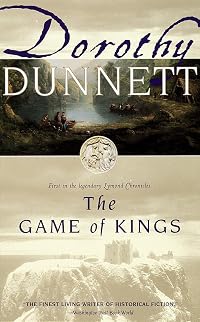
In this first book in the legendary Lymond Chronicles, Francis Crawford of Lymond, traitor, murderer, nobleman, returns to Scotland to redeem his reputation and save his home. It is 1547 and Scotland has been humiliated by an English invasion and is threatened by machinations elsewhere beyond its borders, but it is still free. Paradoxically, her freedom may depend on a man who stands accused of treason. He is Francis Crawford of Lymond, a scapegrace nobleman of crooked felicities and show more murderous talents, posessed of a scholar's erudition and a tongue as wicked as a rapier. In The Game of Kings, this extraordinary antihero returns to the country that has outlawed him to redeem his reputations even at the risk of his life. show lessTags
Recommendations
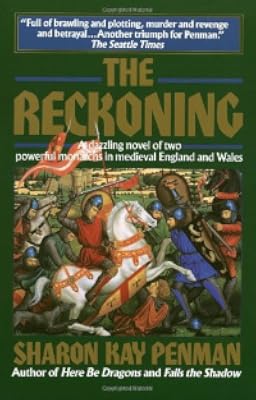
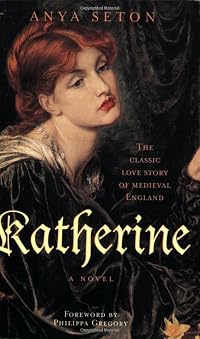
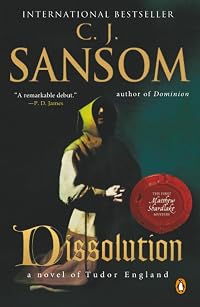
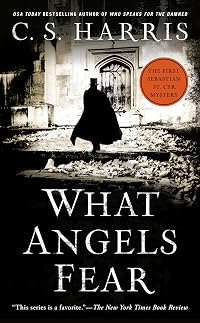
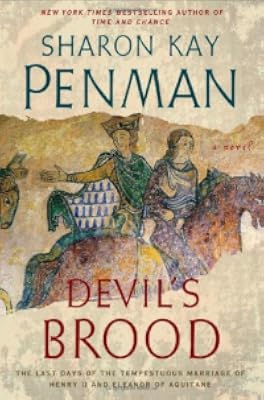
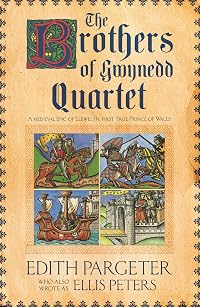
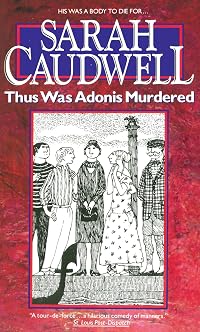
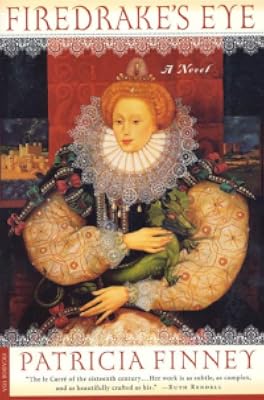
Member Recommendations

Member Reviews
I am a very happy reader right now. And why, oh why have I not read Dorothy Dunnett before? Some books come to you in their own time, and in unfathomable ways. Perhaps this is the case here.
The prose is lovely. I want to quote every gorgeous, vibrant, surprising sentence and turn of phrase, but then I might end up just writing the whole book down right here. This will get me nowhere, obviously ;) (I will put some quotes in, because it’s impossible not to.)
The Game of Kings makes you look a lot of things up, and I am the kind of reader that loves this. There are quotes from La Fontaine and Rabelais, there is Latin, there is Old English and Old French, references to Medieval and Renaissance poetry and plays, ancient philosophy and old show more nursery rhymes. There are dialogues where characters quote poetry while trying to outsmart and outwit each other. Yes, please, give me more.
There are also double and triple layers of intrigue, backstories, double-crossing and double-dealing, and a mystery to solve. Following the tangled threads is both enjoyable and demanding. This invites rereads – I am sure that I missed quite a few cleverly hidden clues.
Can I gush about the characters now? This book wouldn’t have been such an amazing reading experience if it weren’t for the characters. Complex, compelling, clever (not all of them ;)), tragic, sometimes infuriating, and always changing, developing, becoming more themselves. I could hardly breathe and felt the tears coming during some of the emotionally wrecking confrontations. Sometimes it became too much and I tried to force myself not to care – “some of these people haven’t even existed, ever, come on!” It didn’t work, of course ;)
Lymond: a wunderkind, a polyglot, a leader of men, a swordsman, a philosopher… chivalrous, twisted, unhappy, bitter… and so many other things. He needs a psychologist very badly, but the psychologist might not come away from the encounter unscathed, so he shall have to do without. At times I was convinced that Lymond was an incarnation of some trickster god who got bored with godly stuff and decided to live in the 16th century for a while. And no, he cannot speak like a normal human being:
“I am used to being taken for a cross between Gilles de Reis and a sort of international exchange in young mammals, but I draw the line somewhere.”
…………..
“ ‘I wish to God’, said Gideon with mild exasperation, ‘that you’d talk – just once – in prose like other people.’ “
I loved, loved, loved Lymond’s speech on patriotism:
“Patriotism is fine hothouse for maggots. It breeds intolerance; it forces a spindle-legged, spurious riot of colour… ‘Patriotism’, said Lymond again. ‘It’s an opulent word, a mighty key to a royal Cloud-Cuckoo-Land. Patriotism; loyalty; a true conviction that of all the troubled and striving world, the soil of one’s fathers is noblest and best. A celestial competition for the best breed of man; a vehicle for shedding boredom and exercising surplus power or surplus talent or surplus money; an immature and bigoted intolerance which becomes the coin of barter in the markets of power – ‘ “
And now there is hardly any space left for everyone else I loved, quoting is a dangerous business..
Christian: your bravery and resilience are incredible, and you are the only person who is a match for Lymond in wit, erudition, and cleverness. I wish there was more of you. (Sometimes I wonder why authors do certain things.)
Will Scott: what a coming of age story, what a character arc (probably the best in the book), and, yes, indeed “What a game. God! What a game.”
Richard: oh, you brave, stubborn, clever, foolish, hurt and redeemed man. I hope to see you again. (After nearly drowning: “My God, we need practice at that. Shall we do it again?" Go, Richard!)
Also I’d love to have Kate and Gideon over for tea. No wait, they did not drink tea in England at the time, they will be confused. Food and wine it is, then. Anyway, I want to invite them.
The final chapter was almost impossibly tense, I kept reading until late in the evening. That ending… :)))))))
Five. More. Books. Five! *Me doing a happy dance around the room.*
Huge thanks to Nastya, Nataliya, Marquise, Roman Clodia, Ryan, Temperance for having me in the epic buddy read. This book and this series wouldn’t have happened to me without you. show less
The prose is lovely. I want to quote every gorgeous, vibrant, surprising sentence and turn of phrase, but then I might end up just writing the whole book down right here. This will get me nowhere, obviously ;) (I will put some quotes in, because it’s impossible not to.)
The Game of Kings makes you look a lot of things up, and I am the kind of reader that loves this. There are quotes from La Fontaine and Rabelais, there is Latin, there is Old English and Old French, references to Medieval and Renaissance poetry and plays, ancient philosophy and old show more nursery rhymes. There are dialogues where characters quote poetry while trying to outsmart and outwit each other. Yes, please, give me more.
There are also double and triple layers of intrigue, backstories, double-crossing and double-dealing, and a mystery to solve. Following the tangled threads is both enjoyable and demanding. This invites rereads – I am sure that I missed quite a few cleverly hidden clues.
Can I gush about the characters now? This book wouldn’t have been such an amazing reading experience if it weren’t for the characters. Complex, compelling, clever (not all of them ;)), tragic, sometimes infuriating, and always changing, developing, becoming more themselves. I could hardly breathe and felt the tears coming during some of the emotionally wrecking confrontations. Sometimes it became too much and I tried to force myself not to care – “some of these people haven’t even existed, ever, come on!” It didn’t work, of course ;)
Lymond: a wunderkind, a polyglot, a leader of men, a swordsman, a philosopher… chivalrous, twisted, unhappy, bitter… and so many other things. He needs a psychologist very badly, but the psychologist might not come away from the encounter unscathed, so he shall have to do without. At times I was convinced that Lymond was an incarnation of some trickster god who got bored with godly stuff and decided to live in the 16th century for a while. And no, he cannot speak like a normal human being:
“I am used to being taken for a cross between Gilles de Reis and a sort of international exchange in young mammals, but I draw the line somewhere.”
…………..
“ ‘I wish to God’, said Gideon with mild exasperation, ‘that you’d talk – just once – in prose like other people.’ “
I loved, loved, loved Lymond’s speech on patriotism:
“Patriotism is fine hothouse for maggots. It breeds intolerance; it forces a spindle-legged, spurious riot of colour… ‘Patriotism’, said Lymond again. ‘It’s an opulent word, a mighty key to a royal Cloud-Cuckoo-Land. Patriotism; loyalty; a true conviction that of all the troubled and striving world, the soil of one’s fathers is noblest and best. A celestial competition for the best breed of man; a vehicle for shedding boredom and exercising surplus power or surplus talent or surplus money; an immature and bigoted intolerance which becomes the coin of barter in the markets of power – ‘ “
And now there is hardly any space left for everyone else I loved, quoting is a dangerous business..
Christian: your bravery and resilience are incredible, and you are the only person who is a match for Lymond in wit, erudition, and cleverness. I wish there was more of you. (Sometimes I wonder why authors do certain things.)
Will Scott: what a coming of age story, what a character arc (probably the best in the book), and, yes, indeed “What a game. God! What a game.”
Richard: oh, you brave, stubborn, clever, foolish, hurt and redeemed man. I hope to see you again. (After nearly drowning: “My God, we need practice at that. Shall we do it again?" Go, Richard!)
Also I’d love to have Kate and Gideon over for tea. No wait, they did not drink tea in England at the time, they will be confused. Food and wine it is, then. Anyway, I want to invite them.
The final chapter was almost impossibly tense, I kept reading until late in the evening. That ending… :)))))))
Five. More. Books. Five! *Me doing a happy dance around the room.*
Huge thanks to Nastya, Nataliya, Marquise, Roman Clodia, Ryan, Temperance for having me in the epic buddy read. This book and this series wouldn’t have happened to me without you. show less
It’s 1547, and as the first line states, Francis Crawford, Master of Lymond, “is back.” He’s been in prison for reasons not immediately revealed, and is now living the life of a swashbuckling outlaw, appearing unannounced and often in disguise to influence political events between Scotland and England. The English are keen to arrange a marriage between two child monarchs: Edward VI (son of the notorious King Henry VIII), and Mary Queen of Scots. The Scots aren’t having it, which has led to repeated armed conflict at the border. Lymond’s role and motives are unclear: whose side is he on, anyway? Can we, the readers, trust him? Would he be the hero of this story if we couldn’t? Well, maybe.
The Game of Kings is the first of show more Dorothy Dunnett’s Lymond Chronicles, and Dunnett expects a lot from her readers. First, there’s the history, which is clearly well-researched but not provided as background. And then, there are characters. So. many. characters. Lymond is clearly fictional, as is his family and many of his cronies, but plenty of historic figures play important roles in the story. And finally, through Lymond, a well-read polyglot, Dunnett infuses the story with literary references, songs, and sayings, often in French or Latin.
But don’t be put off by these complexities. Readers who are willing to invest effort into understanding these elements will be rewarded with a rollicking story, filled with so many twists and turns that I often had to re-read passages to figure out what just happened. But it was fun! Just trust me, and start reading this series. show less
The Game of Kings is the first of show more Dorothy Dunnett’s Lymond Chronicles, and Dunnett expects a lot from her readers. First, there’s the history, which is clearly well-researched but not provided as background. And then, there are characters. So. many. characters. Lymond is clearly fictional, as is his family and many of his cronies, but plenty of historic figures play important roles in the story. And finally, through Lymond, a well-read polyglot, Dunnett infuses the story with literary references, songs, and sayings, often in French or Latin.
But don’t be put off by these complexities. Readers who are willing to invest effort into understanding these elements will be rewarded with a rollicking story, filled with so many twists and turns that I often had to re-read passages to figure out what just happened. But it was fun! Just trust me, and start reading this series. show less
Dorothy Dunnett is well-known in historical fiction circles for her well-written historical fiction. In [The Game of Kings] she has taken the backdrop of 16th century Scotland and created a fictional hero, Francis Crawford of Lymond. Lymond is a fantastic, complex character - it's hard to tell even half way through the book if he's good or bad at heart. The women in the book are great - good character development and clever dialogue. There is a ton of action that is really well written. You can see the fighting as you read. She also manages to write some really funny scenes.
So, lots of great parts, but for me it didn't quite add up to the standard of Sharon Kay Penman or Margaret George. There was just a bit too much reliance on action show more scenes and I thought the plot was a bit unnecessarily convoluted.
I can see why people love these books, and by the end I sort of wanted to read the next in the series even with my misgivings. We'll see, maybe I'll give another one a try sometime but I'm not planning on it right now. show less
So, lots of great parts, but for me it didn't quite add up to the standard of Sharon Kay Penman or Margaret George. There was just a bit too much reliance on action show more scenes and I thought the plot was a bit unnecessarily convoluted.
I can see why people love these books, and by the end I sort of wanted to read the next in the series even with my misgivings. We'll see, maybe I'll give another one a try sometime but I'm not planning on it right now. show less
'He was a bastard, but she loved him.' That was the first parody of romance fiction I ever encountered, and I'm not sure I understood it until I read the Lymond Chronicles, and I certainly wouldn't have bothered if I hadn't read Niccolo first. Because Lymond is a supreme bastard, a villain, a traitor, a rogue, with a tongue like a flaying knife and utterly unremitting and remorseless. Or is he? Well, yes, but in service to a greater strategy which Dunnett unfolds, move by move, in this, her extraordinary first novel, a brilliant, occasionally clumsy, (but clumsy in way that would make experienced novelists green with envy) rigorously intelligent examination of a brilliant soul under severe duress and inflicting pressures and show more complications on people who he desires to protect, in his almost ridiculously backhanded way, or who come under, or place themselves under, his influence. Dunnett's skills and subtelties only get more impressive as she develops as a writer, but everything that follows is influenced by the introduction of the magnificent batsard who, despite everything, we come to love. show less
It's been almost ten years since I last read this, but so much of it is, after at least 3 reading prior to that, still fresh. Re-reading is such a different experience than the original whiplash impact of the story and it characters, but no less satisfying as the richness and depth of a 16th century world is rolled out before us. It may not be the real 16th century world, but it has a real, immediate feel, with real stakes and unmistakable dangers. Most of the historical persons brought on as characters seem truly capable of the actions recorded and the invented ones worthy to move among them, and often vibrantly interesting. Dunnett was unparalleled in her presentation a believable Renaissance world in which adventure seems natural if show more not inevitably romantic. show less
In 1547, Francis Crawford, the Master of Lymond, wanted by the Scottish government for treason, is back in Edinburgh. I started this five years ago but didn’t make much headway, and when I noticed the library had acquired the audiobooks I decided to try again.
The audiobook turned out to be the perfect way to experience this story! Because it’s told from the perspective of characters who don’t know everything that’s going on or who keep their suspicions and conclusions to themselves, the reader just has to pay attention and wait for things to be revealed. But the narrator gives the characters different voices, making it easier to follow who is speaking, and, in the tone of voice he uses, highlights clues in the text about a show more conversation’s subtext, how characters are attempting to portray themselves and what people’s emotions might be. That helped me to follow the story even when I was feeling confused!
I enjoyed the Scottish accents, the clever wit, the ambiguity about Lymond’s plans and motives, and the way many of Dunnett’s characters are very intelligent, perceptive people. I was interested in the historical political intrigue. I loved the twists and revelations, which are brilliant -- incredibly clever and satisfying.
“You don’t owe me anything, except a little amusement. Why not bite back?”
“Because,” said Lymond, lifting his eyes suddenly, “I’m a constant practitioner of the art and you are not.”
“I don’t mind,” said Kate wistfully. “Won’t you bite?”
“Like a shark. It’s a habit. And habits are hell’s own substitute for good intentions. Habits are the ruin of ambition, of initiative, of imagination. They’re the curse of marriage and the after-bane of death.”
Katherine surveyed the indifferent face critically. “For an advocate of chaos, you’re quite convincing. There is such a thing, you know, as habitual disorder—as of course you know: few have had such a permanently unsettled regime as you have. Suppose you had a chance to lead a normal life?”
“Let’s leave my sordid affairs out of this, shall we?” he said. “You’ve missed a point. There’s a nice difference between rootless excitement and careful variety.”
“If I can’t be personal, I don’t want to argue,” said his hostess categorically. “I may be missing your points, but you’re much too busy dodging mine.” show less
The audiobook turned out to be the perfect way to experience this story! Because it’s told from the perspective of characters who don’t know everything that’s going on or who keep their suspicions and conclusions to themselves, the reader just has to pay attention and wait for things to be revealed. But the narrator gives the characters different voices, making it easier to follow who is speaking, and, in the tone of voice he uses, highlights clues in the text about a show more conversation’s subtext, how characters are attempting to portray themselves and what people’s emotions might be. That helped me to follow the story even when I was feeling confused!
I enjoyed the Scottish accents, the clever wit, the ambiguity about Lymond’s plans and motives, and the way many of Dunnett’s characters are very intelligent, perceptive people. I was interested in the historical political intrigue. I loved the twists and revelations, which are brilliant -- incredibly clever and satisfying.
“You don’t owe me anything, except a little amusement. Why not bite back?”
“Because,” said Lymond, lifting his eyes suddenly, “I’m a constant practitioner of the art and you are not.”
“I don’t mind,” said Kate wistfully. “Won’t you bite?”
“Like a shark. It’s a habit. And habits are hell’s own substitute for good intentions. Habits are the ruin of ambition, of initiative, of imagination. They’re the curse of marriage and the after-bane of death.”
Katherine surveyed the indifferent face critically. “For an advocate of chaos, you’re quite convincing. There is such a thing, you know, as habitual disorder—as of course you know: few have had such a permanently unsettled regime as you have. Suppose you had a chance to lead a normal life?”
“Let’s leave my sordid affairs out of this, shall we?” he said. “You’ve missed a point. There’s a nice difference between rootless excitement and careful variety.”
“If I can’t be personal, I don’t want to argue,” said his hostess categorically. “I may be missing your points, but you’re much too busy dodging mine.” show less
This novel is an unmitigated delight! After an initial period of establishing what, who, and where, I became fully immersed. Dunnett is one of those rare authors of historical fiction who can effectively evoke an atmosphere of times past and people this past with characters that convince. Being able to do so whilst writing and plotting gloriously well is so rare that I can only think of two other authors I know to manage it: Patrick O’Brian and Hilary Mantel. What Dunnett brings to the table that neither of those two do, though, is a extravagant dose of melodrama. In fact, the pace of events was at times so swift that I had to stop and take a breath in order to be sure of who was double-crossing who, etc. At the centre of this show more whirlwind of 16th century intrigue and family drama is Francis Lymond of Crawford, a blond-haired outlaw of incredible charm and proficiency in almost everything. He communicates almost exclusively in pointed comments, a trait he appears to have inherited from his mother.
I’m not sure which aspects of 'The Game of Kings' I should praise first, frankly. The dialogue is brilliant and often hilarious. The balance between serious plot developments and utter farce is so neatly done that the two often overlap entirely, this only becoming clear in retrospect. A stand out sequence for me was Lymond bringing his band of Scottish outlaws to an English bawdy house, appearing to seduce his red-headed lieutenant Will, instead conducting some political intrigue whilst Will lurks in the background feeling slighted, then getting a bagpiper to wake up everyone in the place from their drunken stupors. When some fellow objects to this cacophony, and who wouldn’t, Lymond suggests that they wrestle for the right to shut up the piper; various people get thrown through windows. These sort of shenanigans follow Lymond around as he stylishly and sarcastically rampages around Scotland. He’s a character whose near-infallibility should grate yet the reader cannot help falling in love with him. Or at the very least revelling in his outlandish exploits. (A blond Tom Hiddleston comes recommended as your mental image for Lymond, incidentally.)
Yet Lymond is but one character in a complex story and there is space for many others, notably an excellent cast of women young and old. I especially enjoyed the Philosopher’s Stone subplot and its conclusion. Also the word 'papingo' (for parrot) is a lovely discovery. Having finished this novel, I immediately want to re-read it for the many plot nuances and details I doubtless missed. Simultaneously I have a clear and present need to locate the next in the series. As an account of a fractious period in the relationship between Scotland and England, these novels seem ironically timely to read. Mainly, though, I want to know what Lymond and his associates get up to next. In short, this novel was a treat for both the intellect and the emotions. show less
I’m not sure which aspects of 'The Game of Kings' I should praise first, frankly. The dialogue is brilliant and often hilarious. The balance between serious plot developments and utter farce is so neatly done that the two often overlap entirely, this only becoming clear in retrospect. A stand out sequence for me was Lymond bringing his band of Scottish outlaws to an English bawdy house, appearing to seduce his red-headed lieutenant Will, instead conducting some political intrigue whilst Will lurks in the background feeling slighted, then getting a bagpiper to wake up everyone in the place from their drunken stupors. When some fellow objects to this cacophony, and who wouldn’t, Lymond suggests that they wrestle for the right to shut up the piper; various people get thrown through windows. These sort of shenanigans follow Lymond around as he stylishly and sarcastically rampages around Scotland. He’s a character whose near-infallibility should grate yet the reader cannot help falling in love with him. Or at the very least revelling in his outlandish exploits. (A blond Tom Hiddleston comes recommended as your mental image for Lymond, incidentally.)
Yet Lymond is but one character in a complex story and there is space for many others, notably an excellent cast of women young and old. I especially enjoyed the Philosopher’s Stone subplot and its conclusion. Also the word 'papingo' (for parrot) is a lovely discovery. Having finished this novel, I immediately want to re-read it for the many plot nuances and details I doubtless missed. Simultaneously I have a clear and present need to locate the next in the series. As an account of a fractious period in the relationship between Scotland and England, these novels seem ironically timely to read. Mainly, though, I want to know what Lymond and his associates get up to next. In short, this novel was a treat for both the intellect and the emotions. show less
Members
- Recently Added By
Lists

Best Historical Fiction
620 works; 261 members

Recommend the 20 best books you've read in the last five years
2,168 works; 606 members

Books Read in 2023
5,547 works; 145 members

Books Read in 2015
3,299 works; 126 members

Read This Next
120 works; 3 members

Huxley's reading log 2017
45 works; 1 member

Set in the 15th and 16th Centuries
28 works; 4 members

Most Popular Books Tagged Scotland
35 works; 2 members

Mustich's 1000 Books to Read Before You Die: A Life Changing List
1,001 works; 19 members
Author Information

35+ Works 18,088 Members
Dorothy Dunnett was born on August 25, 1923 in Dunfermline, Fife, Scotland. She attended Gillespie's High School for Girls. After graduation she attended Edinburgh College of Art, and transferred, upon her marriage, to Glasgow School of Art. From 1940-1955, she worked for the Civil Service as a press officer. Her first novel, The Game of Kings, show more was published in the United States in 1961 and in the United Kingdom the year after. During her lifetime, she wrote over 20 books including King Hereafter, the six-part Lymond Chronicles, and the eight-part House of Niccolo series. She was also a professional portrait painter and exhibited at the Royal Scottish Academy. In 1992 she was awarded the Office of the British Empire for services to literature. She died from cancer on November 9, 2001 at the age of 78. (Bowker Author Biography) show less
Some Editions
Awards and Honors
Series

Work Relationships
Is contained in
Has as a reference guide/companion
Has as a student's study guide
Common Knowledge
- Canonical title
- The Game of Kings
- Original publication date
- 1961
- People/Characters
- Francis Crawford of Lymond and Sevigny; Sybilla Crawford, Dowager Baroness Culter; Archibald Campbell, 4th Earl of Argyll; Richard Crawford, Baron Culter; Archibald Douglas, 6th Earl of Angus; Margaret Douglas, Countess of Lennox (show all 12); James Hamilton, 2nd Earl of Arran; Marie de Guise; Mary, Queen of Scots (as a child); Wat Scott of Buccleugh; Will Scott of Buccleuch; Philippa Somerville
- Important places
- Edinburgh, Scotland, UK; Coulter, South Lanarkshire, Scotland, UK (Likely location of the fictional Midculter); Midculter, South Lanarkshire, Scotland, UK (fictional)
- Dedication
- The Game of Kings is jointly dedicated as may seem fitting to an Englishwoman and a Scot FOR ALASTAIR MACTAVISH DUNNETT AND DOROTHY EVELINE MILLARD HALLIDAY
- First words
- "Lymond is back."
- Last words
- (Click to show. Warning: May contain spoilers.)She saw her son's eyes, and flung open her arms.
Classifications
Statistics
- Members
- 2,896
- Popularity
- 6,209
- Reviews
- 89
- Rating
- (4.28)
- Languages
- English, German, Italian, Spanish
- Media
- Paper, Audiobook, Ebook
- ISBNs
- 40
- ASINs
- 17