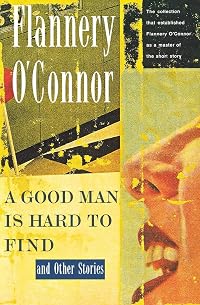
A Good Man Is Hard to Find and Other Stories
by Flannery O'Connor 
On This Page
Description
An essential collection of classic stories that established Flannery O'Connor's reputation as an American master of fiction-now with a new introduction by New York Times bestselling author Lauren Groff In 1955, with the title story and others in this critical edition, Flannery O'Connor firmly laid claim to her place as one of the most original and provocative writers of her generation. Steeped in a Southern Gothic tradition that would become synonymous with her name, these stories show show more O'Connor's unique view of life-infused with religious symbolism, haunted by apocalyptic possibility, sustained by the tragic comedy of human behavior, confronted by the necessity of salvation. These classic stories-including "The Life You Save May Be Your Own," "Good Country People," and "The Displaced Person," among others, are sure to inspire future generations of fans and remind existing readers why she remains a master of the short story. show lessTags
Recommendations

















Member Recommendations
Member Reviews
I read the first short story in this collection by Flannery O'Connor and sat back, astonished. If you haven't read A Good Man is Hard to Find and Other Stories, grab a copy right now and read the title story. You'll know then exactly where you stand with O'Connor's stories after that first one has slammed into you like a hammer to the back of the head.
In A Good Man is Hard to Find, a family prepares for and sets off for a vacation in Florida. Even Grandma, who has much to say about how much better it would be to visit family in east Tennessee and how the trip might be dangerous, what with escaped felons and other perils, comes along to narrate the ride. And off they go, stopping at bbq joints for lunch and staring at the sights outside show more the car windows. It begins as one sort of story and ends as quite another and it's one of the most brilliant things I've ever read.
Each story is finely honed and reads as surprisingly contemporary, for all it's written about a rural South that is long gone. O'Connor is insightful and cutting and unafraid to allow the worst to happen. There is a dark comedy underlying her work and a deep understanding of people, albeit a somewhat grim one. People in this collection die. They're drowned, or shot, or simple run over. They look into someone else's eyes and see how badly they've misjudged things. They are callous and cruel and lonely and disillusioned. Their hopes are inevitably dashed, usually because of their own flaws. There's so much packed into each of these tightly written stories that each feels like an entire world. show less
In A Good Man is Hard to Find, a family prepares for and sets off for a vacation in Florida. Even Grandma, who has much to say about how much better it would be to visit family in east Tennessee and how the trip might be dangerous, what with escaped felons and other perils, comes along to narrate the ride. And off they go, stopping at bbq joints for lunch and staring at the sights outside show more the car windows. It begins as one sort of story and ends as quite another and it's one of the most brilliant things I've ever read.
Each story is finely honed and reads as surprisingly contemporary, for all it's written about a rural South that is long gone. O'Connor is insightful and cutting and unafraid to allow the worst to happen. There is a dark comedy underlying her work and a deep understanding of people, albeit a somewhat grim one. People in this collection die. They're drowned, or shot, or simple run over. They look into someone else's eyes and see how badly they've misjudged things. They are callous and cruel and lonely and disillusioned. Their hopes are inevitably dashed, usually because of their own flaws. There's so much packed into each of these tightly written stories that each feels like an entire world. show less
"Mrs. Hopewell had no bad qualities of her own but she was able to use other people's in such a constructive way that she never felt the lack."
I quite enjoyed this collection of short stories. O'Connor's characters are all so awful that you kind of don't mind watching the story tilt and run off the page. Things will end badly - this is guaranteed. And yet, I can't help wanting to watch it play out, to see how far she will go. There is something about O'Connor's writing that gets under your skin. Ugly stories that reflect ugly truths that are so perfectly delivered that they might surprise a laugh out of you from time to time at the sheer audacity of the dark humor that is allowed to creep in intermittently. I have read that her writing show more and her Catholic faith were intertwined, and yet, there is no mercy here. No kindness. No light. Definitely Southern Gothic and not for everyone, but if you like this type of thing, then highly recommended.
"She would have to be a saint because that was the occupation that included everything you could know; and yet she knew she would never be a saint.... but she thought she could be a martyr if they killed her quick."show less
My reactions as I read:
"In case of an accident, anyone seeing her dead on the highway would know at once that she was a lady."
Yes, girl. Always dress like the Doctor will appear and whisk you away!
“In my time,” said the grandmother, folding her thin veined fingers, “children were
more respectful of their native states and their parents and everything else.
Immediately proceeds to NOT practice what she preaches...oof, ick. Exasperating woman.
“Gone With the Wind,” said the grandmother. “Ha. Ha.”
I actually loled at this...snorted more like. Both love and hate grandma...
She was sitting against the side of the red gutted ditch, holding the screaming baby, but she only had a cut down her face and a broken shoulder.
Like it's only show more a flesh wound. What is wrong with this grandma?
"Why you're one of my babies. You're one of my own children!"
Trying to place ourselves above the lowly criminal, I see.
"She would of been a good woman," The Misfit said, "if it had been somebody there to shoot her every minute of her life."
PREACH MR. CRIMINAL-MAN, SIR!!!
Ok, racist, petty, self-sentric old lady gets her entire family killed and her own abrupt end because she can't shut her mouth. She views the criminal as "not good" and the criminal views her as "not good." Is "goodness" only in the eyes of the beholder? Is "goodness" purely subjective? Perspective is individual reality. Perception is 9/10ths of the law... show less
"In case of an accident, anyone seeing her dead on the highway would know at once that she was a lady."
Yes, girl. Always dress like the Doctor will appear and whisk you away!
“In my time,” said the grandmother, folding her thin veined fingers, “children were
more respectful of their native states and their parents and everything else.
Immediately proceeds to NOT practice what she preaches...oof, ick. Exasperating woman.
“Gone With the Wind,” said the grandmother. “Ha. Ha.”
I actually loled at this...snorted more like. Both love and hate grandma...
She was sitting against the side of the red gutted ditch, holding the screaming baby, but she only had a cut down her face and a broken shoulder.
Like it's only show more a flesh wound. What is wrong with this grandma?
"Why you're one of my babies. You're one of my own children!"
Trying to place ourselves above the lowly criminal, I see.
"She would of been a good woman," The Misfit said, "if it had been somebody there to shoot her every minute of her life."
PREACH MR. CRIMINAL-MAN, SIR!!!
Ok, racist, petty, self-sentric old lady gets her entire family killed and her own abrupt end because she can't shut her mouth. She views the criminal as "not good" and the criminal views her as "not good." Is "goodness" only in the eyes of the beholder? Is "goodness" purely subjective? Perspective is individual reality. Perception is 9/10ths of the law... show less
Amazingly written and utterly original Southern Gothic short stories. They're simultaneously utterly dark, full of unsympathetic people in dire situations, and yet full of funny and brilliantly observed little comments -
the cantankerous centenarian who "would not wear teeth because he thought his profile was more striking without them";
the seemingly gormless youth selling Bibles door-to-door who finally gets a woman in the hayloft; opening his valise "there were only two Bibles in it. He took one of these and opened the cover of it. It was hollow and contained a pocket flask of whiskey, a pack of cards and a small blue box with printing on it...He put the blue box in her hand. THIS PRODUCT ONLY TO BE USED FOR THE PREVENTION OF DISEASE, show more she read and dropped it."
Intriguing scenarios abound...a family on a roadtrip encounter a serial killer; a child from a bad home goes to the river to re-live the healing that a neighbour took him to see; an old woman tries to marry off her retarded daughter to a drifter; a young wife with a horror of doctors discovers she is pregnant.
Utterly engrossing and very very strange. show less
the cantankerous centenarian who "would not wear teeth because he thought his profile was more striking without them";
the seemingly gormless youth selling Bibles door-to-door who finally gets a woman in the hayloft; opening his valise "there were only two Bibles in it. He took one of these and opened the cover of it. It was hollow and contained a pocket flask of whiskey, a pack of cards and a small blue box with printing on it...He put the blue box in her hand. THIS PRODUCT ONLY TO BE USED FOR THE PREVENTION OF DISEASE, show more she read and dropped it."
Intriguing scenarios abound...a family on a roadtrip encounter a serial killer; a child from a bad home goes to the river to re-live the healing that a neighbour took him to see; an old woman tries to marry off her retarded daughter to a drifter; a young wife with a horror of doctors discovers she is pregnant.
Utterly engrossing and very very strange. show less
The New York Times, in a review of O'Connor's stories, referred to her as an American Guy de Maupassant. This is an apt description. O'Connor's stories paint a dark yet spot-on picture of the human condition. She takes the quaint out of southern living and shines a spotlight on the ignorance and prejudice with a razor-sharp and truly wicked sense of humor. Reading her stories left me amazed by her literary ability yet also a bit nauseated. What depresses me the most is that current events seem to bear out O'Connor's less than flattering assessment of human nature. Nothing else can explain Donald Trump's success in the polls.
“The sun was a huge red ball like an elevated Host drenched in blood and when it sank out of sight, it left a line in the sky like a red clay road hanging over the trees.”
The ninth story, “Good Country People”, would have made the perfect title for this collection written in the late 40s and early 50s and all set deep in the bible-belt South.
This was my first foray into the unsettling, racist, often brilliant, world of Flannery O’ Connor. These are dark, disturbing tales, told with insight and a wicked edge. Yes, the casual use of the “N” word or other very derogatory terms, made me uncomfortable, especially in the story “The Artificial Nigger” but her prose is so deft and sure that even that can be show more overlooked.
“…but the face on the moon was a grave one. It gazed across the room and out the window where it floated above the horse stall and appeared to contemplate itself with the look of a young man who sees his old age before him”. show less
The ninth story, “Good Country People”, would have made the perfect title for this collection written in the late 40s and early 50s and all set deep in the bible-belt South.
This was my first foray into the unsettling, racist, often brilliant, world of Flannery O’ Connor. These are dark, disturbing tales, told with insight and a wicked edge. Yes, the casual use of the “N” word or other very derogatory terms, made me uncomfortable, especially in the story “The Artificial Nigger” but her prose is so deft and sure that even that can be show more overlooked.
“…but the face on the moon was a grave one. It gazed across the room and out the window where it floated above the horse stall and appeared to contemplate itself with the look of a young man who sees his old age before him”. show less
A Good Man Is Hard to Find and Other Stories (1955), O'Connor's first collection of published short stories, is a stunning, disturbing and often hilarious set of tales about life in the small town Deep South after World War II. Her characters are mean-spirited and devious, shifty and low down, but utterly human and somehow lovable and understandable. A typical example is the centenarian "general" in the story A Late Encounter With the Enemy:
Other stories include A Good Man Is Hard to Find, in which a family encounters a psychopathic killer, The Artificial Nigger, where a country boy comes to the big city of Atlanta for a visit to the place "where I come from", and The Displaced Person, in which a Polish immigrant and his family come to a small struggling farm to work, to the consternation of the whites and blacks that already toil there. These are amazing, outrageous and unforgettable stories, and I cannot recommend this collection, or her first novel, Wise Blood, highly enough. show less
"General Sash was a hundred and four years old. He lived with his granddaughter, Sally Poker Sash, who was sixty-two years old and who prayed every night on her knees that he would live until her graduation from college. The General didn't give two slaps for her graduation but he never doubted heshow more
would live for it. Living had got to be such a hait with him that he couldn't conceive of any other condition. A graduation exercise was not exactly his idea of a good time, even if, as she said, he would be expected to sit on the stage in his uniform. She said there would be a long procession of teachers and students in their robes but that there wouldn't be anything to equal him in his uniform. He knew this well enough without her telling him, and as for the damm procession, it could march to hell and back and not cause him a quiver. He liked parades with floats full of Miss Americas and Miss Daytona Beaches and Miss Queen Cotton Products. He didn't have any use for processions and a procession full of schoolteachers was about as deadly as the River Styx to his way of thinking. However, he was willing to sit on the stage in his uniform so that they could see him."
Other stories include A Good Man Is Hard to Find, in which a family encounters a psychopathic killer, The Artificial Nigger, where a country boy comes to the big city of Atlanta for a visit to the place "where I come from", and The Displaced Person, in which a Polish immigrant and his family come to a small struggling farm to work, to the consternation of the whites and blacks that already toil there. These are amazing, outrageous and unforgettable stories, and I cannot recommend this collection, or her first novel, Wise Blood, highly enough. show less
Members
- Recently Added By
Lists

Classics you know you should have read but probably haven't
421 works; 409 members

Southern Fiction
212 works; 52 members

501 Must-Read Books
529 works; 72 members

Best Gothic Fiction
110 works; 31 members
Favourite Books
1,820 works; 316 members

20th Century Literature
1,161 works; 55 members

1950s
340 works; 22 members

Favorite Short Fiction
228 works; 99 members
National Book Award Finalists - Fiction
377 works; 12 members

Dark Books for Winter Reading
71 works; 11 members

Dishonourable Mentions of 2013
189 works; 62 members
500 Great Books by Women
507 works; 60 members

100 Most Recommended Works
100 works; 11 members

Short Story Collections and Anthologies
261 works; 42 members

Five star books
1,767 works; 110 members

Elena Ferrante's 40 favourite books by female authors
40 works; 10 members

Religious Fiction
58 works; 13 members

To Read - Literature / Fiction
26 works; 1 member

Stephen King's 'Danse Macabre' reading list
111 works; 25 members
The College Board: 101 Great Books Recommended for College-Bound Readers
111 works; 7 members
USA Road Trip
50 works; 3 members
Overdue Podcast
808 works; 9 members

Books Set in Georgia
11 works; 4 members

Nifty Fifties
129 works; 14 members

American Lit for Eng 11 Research Project
368 works; 6 members

Short Story and Novella Collections
47 works; 6 members

bound
100 works; 1 member

.
396 works; 1 member
On the pile
20 works; 1 member

Recommended Reading : 600 Classics Reviewed, Editors of Salem Press, 2015
634 works; 6 members

N.T. McQueen's Inspiration List
23 works; 1 member
Read These Too
458 works; 9 members

Favorite Book Titles
35 works; 1 member
Best Books of the 20th Century
193 works; 5 members

Beginner's Guide to Southern Gothic
22 works; 4 members

Literary Works Read in College
316 works; 15 members

Books Read in 2001
199 works; 4 members

Books With Complete Sentence Titles
501 works; 17 members

Books Read in 2026
2,198 works; 71 members
Author Information

181+ Works 30,064 Members
Flannery O'Connor was born in Savannah, Georgia. She had a quiet, bookish life as a child before attending Georgia State College for Women and going on tot he Writers Workshop at the State University of Iowa, where she earned a Master of Fine Arts degree. Her 1949 dissertation consisted of six short stories, one of which she developed into her show more first novel, Wise Blood (1952). Wise Blood is the story of a fanatical, wandering preacher who sets out to found a "church of truth without Jesus Christ crucified." The book introduces some of the religious themes that run throughout O'Connor's later work. Her second novel, The Violent Bear It Away (1960), is the story of murder involving a Tennessee backwoods preacher and a small boy. Once again, O'Connor explores unusual manifestation of religion and human eccentricities. Although O'Connor produced only a small body of work during her relatively brief lifetime, she has received much critical attention. O'Connor suffered from lupus, an inherited disease, which crippled her and cut short her life, and so her creative work was largely compressed within a decade of the 1950's. Her father also dies of Lupus when she was 15 years old. O'Connor is frequently praised as being the most creative and distinctive writer of this period. The two most notable aspects of her fiction are its religious themes and its commentary on the oppressive traditions of the mid-twentieth-century Deep South. (Bowker Author Biography) show less
Flannery O'Connor has a Legacy Library. Legacy libraries are the personal libraries of famous readers, entered by LibraryThing members from the Legacy Libraries group.
Some Editions
Awards and Honors
Awards
Distinctions
Notable Lists
Series
Belongs to Publisher Series
Gallimard, Folio (1258)
Work Relationships
Is contained in
Contains
Common Knowledge
- Alternate titles
- The Artificial Nigger and Other Tales
- Original publication date
- 1955
- People/Characters
- The Grandmother; Bailey; Bailey's wife; John Wesley; June Star; The Baby (show all 14); Red Sammy Butts; Red Sammy's wife; The Misfit; Hiram; Bobby Lee; Edgar Atkins Teagarden; Pitty Sing; Gray Monkey
- Important places
- Florida, USA; Tennessee, USA; Georgia, USA; Southern States, USA
- Related movies
- Black Hearts Bleed Red (1992)
- Dedication
- For Sally and Robert Fitzgerald
- First words
- The grandmother didn't want to go to Florida.
- Quotations
- She would have been a good woman if it had been somebody there to shoot her every minute of her life.
...an end that would be welcome because it would be the end. - Last words
- (Click to show. Warning: May contain spoilers.)He came regularly once a week with a bag of breadcrumbs and, after he had fed these to the peacock, he would come in and sit by the side of her bed and explain the doctrines of the Church.
- Blurbers
- Lowell, Robert
- Original language
- English
Classifications
Statistics
- Members
- 4,744
- Popularity
- 3,040
- Reviews
- 110
- Rating
- (4.14)
- Languages
- 12 — Dutch, English, French, German, Italian, Russian, Croatian, Slovenian, Spanish, Swedish, Turkish, Portuguese (Portugal)
- Media
- Paper, Audiobook, Ebook
- ISBNs
- 54
- ASINs
- 24