On This Page
Description
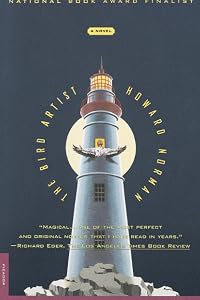
Howard Norman's The Bird Artist, the first book of his Canadian trilogy, begins in 1911. Its narrator, Fabian Vas is a bird artist: He draws and paints the birds of Witless Bay, his remote Newfoundland coastal village home. In the first paragraph of his tale Fabian reveals that he has murdered the village lighthouse keeper, Botho August. Later, he confesses who and what drove him to his crime--a measured, profoundly engrossing story of passion, betrayal, guilt, and redemption between men and show more women. The Bird Artist is a 1994 National Book Award Finalist for Fiction. show lessTags
Recommendations
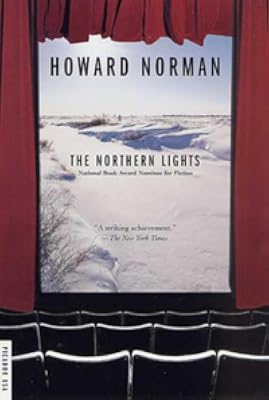
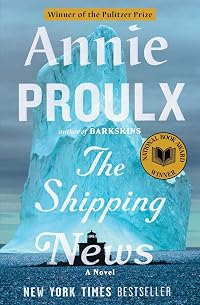
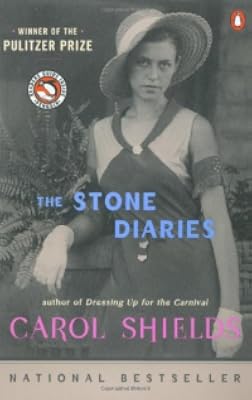

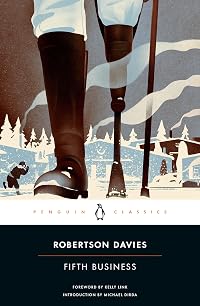
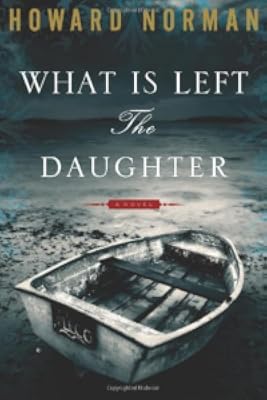
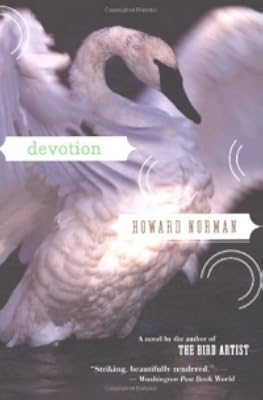
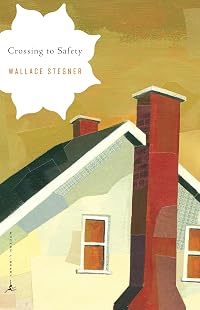
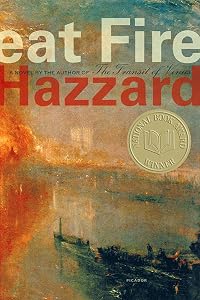





Member Recommendations

Member Reviews
Set amidst the backdrop of Newfoundland in the early twentieth century, The Bird Artist is an interesting read full of writing contradictions which probably shouldn't work yet somehow do. The writing is spare yet the atmosphere of the small coastal town's natural environment is an enveloping combination of the wilds of the natural coastal environment and the suffocating smallness of the local community. Pace of life on the island is slow and the writing reflects this, despite the reader finding out in the first paragraph that the protagonist has murdered the lighthouse keeper. It's an interesting juxtaposition; the gravity of the felony versus the unhurried first person narration through a protagonist who seems quietly honest and show more uncomplicated and at odds with the crime he admits to the reader he has committed.
For some the pace of this book may challenge their attention, but I really enjoyed it. The characters were really well developed - flawed and complex yet at the same time wholly simple and honest in what they're expecting from life. Norman created an an especially wonderful feisty female character who lives by her own rules and morals, to hang with the opinions of the gossiping villagers. A young Helena Bonham Carter would have played a wonderful Margaret if ever they'd made a film of this novel.
Another hit from my personal selections out of Bowie's 100 list. I'll look out for more from this author.
4.5 stars - a great read if you enjoy slow, spare writing with brooding atmosphere. show less
For some the pace of this book may challenge their attention, but I really enjoyed it. The characters were really well developed - flawed and complex yet at the same time wholly simple and honest in what they're expecting from life. Norman created an an especially wonderful feisty female character who lives by her own rules and morals, to hang with the opinions of the gossiping villagers. A young Helena Bonham Carter would have played a wonderful Margaret if ever they'd made a film of this novel.
Another hit from my personal selections out of Bowie's 100 list. I'll look out for more from this author.
4.5 stars - a great read if you enjoy slow, spare writing with brooding atmosphere. show less
Fabian Vas discovered at a young age his talent for drawing the birds of his small Newfoundland village. He cultivated his talent and began making a little money from his artwork while still a teenager. He also began secretly seeing Margaret, the older, alcoholic daughter of the local mail boat captain, a girl his mother dislikes.
When Fabian is twenty, his father leaves for a hunting trip, one that is expected to last many months, where he will earn money from killing birds. Fabian's mother immediately begins an affair with the lighthouse keeper, Botho August. The two conduct their affair without discretion, so that the entire village is aware, which humiliates Fabian. It's Margaret, always drunk and bold, who puts the idea in Fabian's show more mind for avenging his father.
I had to get a copy of this after seeing some comments in the group read here a few months back. It was one of David Bowie's favorites!
This story of Fabian delivers to the reader a young man who would likely have led a quiet life if not for his mother's actions, which in turn leads him to follow Margaret's advice. Or perhaps Fabian is so easily manipulated that he was destined to get into trouble. Either way, this is really well-written. 4.5 stars show less
When Fabian is twenty, his father leaves for a hunting trip, one that is expected to last many months, where he will earn money from killing birds. Fabian's mother immediately begins an affair with the lighthouse keeper, Botho August. The two conduct their affair without discretion, so that the entire village is aware, which humiliates Fabian. It's Margaret, always drunk and bold, who puts the idea in Fabian's show more mind for avenging his father.
I had to get a copy of this after seeing some comments in the group read here a few months back. It was one of David Bowie's favorites!
This story of Fabian delivers to the reader a young man who would likely have led a quiet life if not for his mother's actions, which in turn leads him to follow Margaret's advice. Or perhaps Fabian is so easily manipulated that he was destined to get into trouble. Either way, this is really well-written. 4.5 stars show less
From the very first page of The Bird Artist, Howard Norman wants to draw you into the story by having his main character, Fabian Vas, nonchalantly admit that he murdered lighthouse keeper Botho August. The hook is why. Why did seemingly quiet and charming Vas kill August? Why does he admit to it so readily and so casually? Norman will drop other mysteries along the way to keep the reader strung along. Like, why is it risky to write about Fabian's aunt? Fabian lives in Witless Bay, Newfoundland. Ir all begins when Fabian befriends town troublemaker Margaret. As a thirteen year old she accidentally killed a man. Soon their relationship blossoms into the "with benefits" type despite his arranged marriage to a distant cousin. Maybe it is a show more cultural thing, but the curious thing about Fabian is that nothing seems to really faze him. His apprenticeship with bird artist Isaac Sprague is shortlived when Sprague disappears in the spring of 1911. Fabian blames himself for being too much a critic of his mentor's work. When he is moments away from marrying a complete stranger and being arrested for murder almost at the same time, Fabian shows little emotion. His emotion amounts to getting a little nervous when law enforcement shows up. For all of Fabian's calm, Margaret is his exact opposite. She was my favorite character. Motherless and meandering, Margaret sets fire to life's challenges. You end up rooting for their dysfunctional relationship no matter what the cost. show less
Set in Newfoundland in the second decade of the 20th century (when Newfoundland was a semi-autonomous British territory, and NOT Canadian, as its inhabitants frequently make clear), it's the story of Fabian Vas, a young man with a modest talent for sketching and painting waterfowl. Through Fabian's narration, we meet many rare birds including a mail boat operator and his hard-drinking daughter; an old woman who hoards milk; a stiff-necked preacher; Fabian's own tormented parents; and the lighthousekeeper, Botho August. We know from the first page that Fabian will murder Botho. We keep reading to discover why. It's a simple story of complex emotions, told in a slightly drifting style that always seems to come back to the point just when show more you think you've lost the thread. It has sex, murder, adultery, deception, and betrayal, but you won't find an obvious "moral" in it anywhere. There is also plenty of symbolism, which I may revisit at leisure one of these days. I assume it did its job on me subconsciously; I was too engrossed in reading to parse it. Recommended. show less
One wants to be gracious in these columns, but honesty must trump grace. Besides that, there are far more readers than writers, so my sense of The Greater Good compels me to say quite simply that this novel is hands-down the most pretentious and worthless English-langauge novel I have ever encountered, in nearly six decades of reading serious fiction. Howard Norman has appointed himself in some sense the Official Explainer of the Canadian Maritimes, to which I can only say that even in that comparatively narrow niche, his inadequacies are an afront to the subject-matter, the reader, and ultimately himself. The only trace of vitality in this silly fable is the characterization of the alcoholic nymphomaniac, though in its psychology and show more its prose-style, even that groans with an adolescence which ill-suits a writer in his middle age. One recalls Dr Johnson's stricture "it has not wit enough to keep it from putrifcation." Were he alive to read this little opus, he would, as the saying goes, be glad he wad dead. I paid a buck for my copy, and even at that price I feel cheated. LT is long overdue to install a scale reflecting negative as well aspositive reactions. show less
Several years ago, when I was having a reading drought, my friend Elli recommended this book. Unfortunately, it arrived just around the time my brother was murdered, and I was too tender to take up any book that had murder so blatantly in the story. I still choose my reading carefully, but am able to once again delve into books that I could not read when wounds were fresh.
The Bird Artist is set in the early 1900's in a small place called Witless Bay, Newfoundland. Howard Norman skillfully takes us there in his descriptions and in the very way he crafts his sentences. Reading it is almost like time travelling. There is an "old-fashionedness" to the words he chose and the words he places in his characters minds and on their lips. He also show more has a gift of description, a dress being sequined with dried sea salt, or cormorants with wings of black neckties drying in the sun. Cormorants frequent the lake behind our home, and the description is genius.
As carefully as Fabian drew his birds, Norman draws the characters in the book. The lines may not be perfect, but there's no doubt of the uniqueness, the "realness" of each character. The story too, though involving passions, is gentle. And the birds, oh the birds! To an amateur birder, this was heaven. I wanted to see the seabirds and land fowl, to see the beauty of the bay, and to see Fabian's paintings. But since such travel is not in the cards for me, I'll instead see them in my minds eye. I'll be like Helen (one of my favorite characters) when she said"Nowadays, people have to travel to get important memories. Not me." I can stay home and travel with a gracious thanks to Howard Norman. Even after reading, I have a difficult time calling this a book about a murder, or Fabian a murderer. And I suppose that's a question that remains open. This book will remain in my mind more for the birds, the bay and the people.
Edited to add that after I wrote this, I read some other reviews. Katherine had captured many of the wonderful lines I'd marked with sticky notes to remember. http://www.goodreads.com/review/show/152689528 show less
The Bird Artist is set in the early 1900's in a small place called Witless Bay, Newfoundland. Howard Norman skillfully takes us there in his descriptions and in the very way he crafts his sentences. Reading it is almost like time travelling. There is an "old-fashionedness" to the words he chose and the words he places in his characters minds and on their lips. He also show more has a gift of description, a dress being sequined with dried sea salt, or cormorants with wings of black neckties drying in the sun. Cormorants frequent the lake behind our home, and the description is genius.
As carefully as Fabian drew his birds, Norman draws the characters in the book. The lines may not be perfect, but there's no doubt of the uniqueness, the "realness" of each character. The story too, though involving passions, is gentle. And the birds, oh the birds! To an amateur birder, this was heaven. I wanted to see the seabirds and land fowl, to see the beauty of the bay, and to see Fabian's paintings. But since such travel is not in the cards for me, I'll instead see them in my minds eye. I'll be like Helen (one of my favorite characters) when she said"Nowadays, people have to travel to get important memories. Not me." I can stay home and travel with a gracious thanks to Howard Norman. Even after reading, I have a difficult time calling this a book about a murder, or Fabian a murderer. And I suppose that's a question that remains open. This book will remain in my mind more for the birds, the bay and the people.
Edited to add that after I wrote this, I read some other reviews. Katherine had captured many of the wonderful lines I'd marked with sticky notes to remember. http://www.goodreads.com/review/show/152689528 show less
Narrator and protagonist Fabian Vas, an illustrator of birds, lives in a small town in Newfoundland in 1911. He admits to killing Botho August, the town’s lighthouse keeper. The novel reads as his confession – what led up to the murder, and what happened in the years afterward. It is not a traditional mystery, since we know Fabian killed August from the first page. The reader is drawn into the story in trying to figure out why Fabian would have done such a thing.
The harsh landscape plays a key role in this story – the sea, the cliffs, the elements. The imagery and descriptions of Fabian’s artworks are well-done. The narrative, like the setting, feels remote and cold. Fabian seems to be drifting through life with no direction. show more This is a book about decisions and choices, and that the lack of choosing is also a decision.
I felt a sense of vague discomfort in reading this book. Perhaps this is due to the author’s skill in creating a menacing tone. The characters are not particularly likeable, and it was difficult to care about them. At the end I did not feel I knew Fabian any better than at the start. I found it at times engaging and at other times frustrating. show less
The harsh landscape plays a key role in this story – the sea, the cliffs, the elements. The imagery and descriptions of Fabian’s artworks are well-done. The narrative, like the setting, feels remote and cold. Fabian seems to be drifting through life with no direction. show more This is a book about decisions and choices, and that the lack of choosing is also a decision.
I felt a sense of vague discomfort in reading this book. Perhaps this is due to the author’s skill in creating a menacing tone. The characters are not particularly likeable, and it was difficult to care about them. At the end I did not feel I knew Fabian any better than at the start. I found it at times engaging and at other times frustrating. show less
Members
- Recently Added By
Lists

David Bowie's Top 100
97 works; 23 members

Top Five Books of 2021
604 works; 181 members

National Book Award Finalists - Fiction
377 works; 12 members

Books Set in Canada
57 works; 10 members

David Bowie's List of Top 100 Books
94 works; 6 members

Books Read in 2016
4,666 works; 199 members

Canadian Historical Fiction 🇨🇦
157 works; 8 members

Lighthouses in literature
23 works; 6 members
David Bowie’s Top 100 Favourite Reads
100 works; 3 members
Talk Discussions
Past Discussions
The Bird Artist (Bowie's Top 100) in 75 Books Challenge for 2016 (May 2016)
Author Information

31+ Works 3,858 Members
Howard Norman was born in Toledo, Ohio, in 1949 and grew up in Grand Rapids, Michigan. He attended Western Michigan University, the Folklore Institute of Indiana University, and the University of Michigan. His work with the Cree Indians created an interest and he then got a job as a translator of Native American poems and folktales. He put show more together a collection of his translations in the book, The Wishing Bone Cycle: Narrative Poems of the Swampy Cree Indians, which was named the co-winner of the Harold Morton Landon Translation Award by the Academy of American Poets. With the Help of a Whiting Award, he has also written The Northern Lights as well as Kiss in the Hotel, Joseph Conrad and Other Stories, and The Bird Artist, which was named one of Time Magazine's Best Five Books of 1994 and won the New England Booksellers Association Prize in Fiction. (Bowker Author Biography) show less
Awards and Honors
Awards
Distinctions
Notable Lists
Series

Common Knowledge
- Canonical title
- The Bird Artist
- Original title
- The bird artist
- Original publication date
- 1994
- People/Characters
- Fabian Vas; Margaret Handle; Enoch Handle; Romeo Gillette; Botho August; Alaric Vas (show all 7); Orkney Vas
- Important places
- Witless Bay, Newfoundland, Canada; Halifax, Nova Scotia, Canada; Newfoundland, Canada; Nova Scotia, Canada
- Epigraph
- Suddenly, with extreme violence, he felt himself seized by the desire to be, rain or no rain, at any price, in the midst of the valleys: alone. - Giorgio Bassani, The Heron
- Dedication
- For Jane and Emma
For George - First words
- My name is Fabian Vas.
- Last words
- (Click to show. Warning: May contain spoilers.)Isabel was just out for a walk, I imagine, lost in thought, when she saw me and was overcome.
- Blurbers
- Eder, Richard; Kakutani, Michiko; Whitehouse, Anne
Classifications
- Genres
- Fiction and Literature, General Fiction, Historical Fiction
- DDC/MDS
- 813.54 — Literature & rhetoric American literature in English American fiction in English 1900-1999 1945-1999
- LCC
- PR9199.3 .N564 .B57 — Language and Literature English English Literature English literature: Provincial, local, etc.
- BISAC
Statistics
- Members
- 1,142
- Popularity
- 22,059
- Reviews
- 35
- Rating
- (3.79)
- Languages
- 6 — Dutch, English, German, Italian, Spanish, Swedish
- Media
- Paper, Ebook
- ISBNs
- 15
- ASINs
- 6