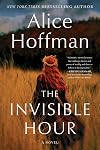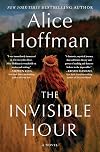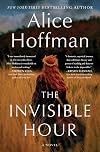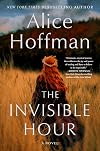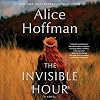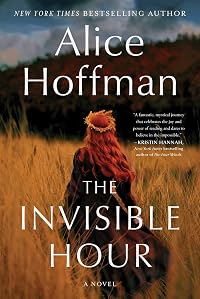
The Invisible Hour
by Alice Hoffman
On This Page
Description
"One brilliant June day when Mia Jacob can no longer see a way to survive, the power of words saves her. The Scarlet Letter was written almost two hundred years earlier, but it seems to tell the story of Mia's mother, Ivy, and their life inside the Community--an oppressive cult in western Massachusetts where contact with the outside world is forbidden, and books are considered evil. But how could this be? How could Nathaniel Hawthorne have so perfectly captured the pain and loss that Mia show more carries inside her? Through a journey of heartbreak, love, and time, Mia must abandon the rules she was raised with at the Community. As she does, she realizes that reading can transport you to other worlds or bring them to you, and that readers and writers affect one another in mysterious ways. She learns that time is more fluid than she can imagine, and that love is stronger than any chains that bind you. As a girl Mia fell in love with a book. Now as a young woman she falls in love with a brilliant writer as she makes her way back in time. But what if Nathaniel Hawthorne never wrote The Scarlet Letter? And what if Mia Jacob never found it on the day she planned to die?"-- show lessTags
Recommendations



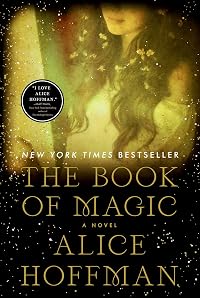


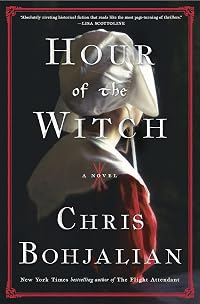
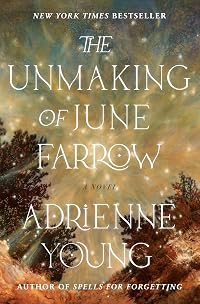
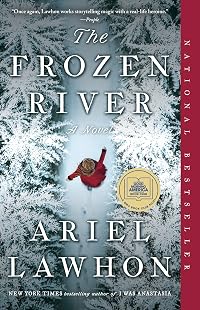
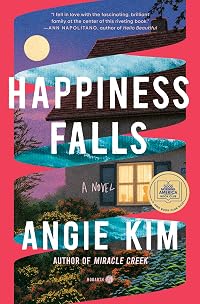
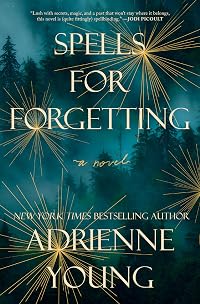
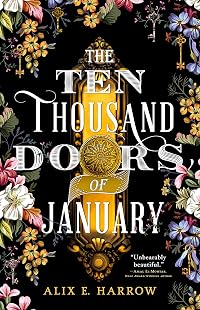
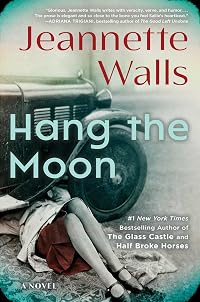
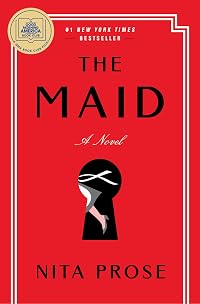



Member Reviews
Considering that I’ve never had any patience for Nathaniel Hawthorne’s “classic” novel The Scarlet Letter, nor am I a fan of stories that centre on cult communities, this novel didn’t have much going for it initially. And yet, Alice Hoffman’s melodic narration, colourful characters, and weaving together of historical and modern storylines made this an absolutely enthralling book. The tale begins in an affluent neighbourhood, with a teenage protagonist in rebellion against her traditional and stifled upbringing - a story with recognizable thematic elements which plays out again and again for women throughout time who remain unsatisfied with living within the male-dominated scope that society has dictated. After Ivy makes a show more break for freedom, she finds herself caught up in a cult-like community, led by an expectedly enigmatic leader who quickly falls in love with her and who will do anything to ensure that she remains trapped in the new prison that she thought would be her salvation. For a time, the historical arc of this narrative remains hidden, only surfacing when Ivy’s daughter, Mia, makes an unexpected foray into the magical worlds contained in the books at the nearby community’s library and discovers her name in a first edition of Hawthorne’s famous novel. Mia loses the book soon after finding it, and must discover the magic of words in a multitude of other books (and the dreams of freedom that they hold) before The Scarlet Letter returns to her - just in time to save her life as she reaches her darkest moment with a spark that will bring about the rebellion that will begin her new life and bring her back in time to meet the author that she immediately falls in love with through his writing. Hoffman is definitely playing with the expected time travel romance tropes throughout the story - using tension with Mia’s cult leader “father” and a found family to ground the story into something with slightly more depth - but it’s hard not to get swept up in Mia’s story in spite of the fluffy premise. Sometimes we need an invisible hour to revel in our pleasures, simple as they may be, and an ending where everything turns out as it should, and Hoffman gives us exactly that - a gloriously simple story with surprising heart and just the right amount of depth, that leaves us with a small smile on our faces as we turn it’s final pages. show less
In time-travel romances, it is generally the man who goes back in time — or sometimes forward in time —and finds the love of his life. Consider the film “Somewhere in Time” or that wonderful Jack Finney novel “Time and Again.” In Alice Hoffman's 2023 novel “The Invisible Hour,” a woman makes that journey and finds that lover. And like the hero of Somewhere in Time, she knows exactly who she is looking for.
Mia is born into a New England cult. Her mother, a pregnant teenager, ran away from home and joined the cult, then married its dictatorial leader, Joel. Rarely is anyone allowed to leave the farm. Parents cannot raise their own children. No books are allowed. Everyone must work hard for the good of the community. Joel show more controls everything and everyone.
Even so, as a teenager Mia sneaks away to a nearby library, where she finds an old copy of Nathaniel Hawthorne's “The Scarlet Letter,” inscribed, amazingly enough, to her. She steals the book and reads it over and over again.
Later, after her mother's death and with the help of a librarian, Mia manages to escape the farm, but with Joel always in pursuit. She finds refuge back in time in the arms of a young Nathaniel Hawthorne, still struggling to write something worthwhile.
The theme of invisibility runs through Hoffman's book until, near the end, Mia sees the words of her favorite book disappearing and, looking into a mirror, sees that she herself is disappearing. She must return to her own time and let Hawthorne write his great book.
The novel may be about time travel, but don't call it science fiction. It is romantic fantasy, of the kind Alice Hoffman does so well. show less
Mia is born into a New England cult. Her mother, a pregnant teenager, ran away from home and joined the cult, then married its dictatorial leader, Joel. Rarely is anyone allowed to leave the farm. Parents cannot raise their own children. No books are allowed. Everyone must work hard for the good of the community. Joel show more controls everything and everyone.
Even so, as a teenager Mia sneaks away to a nearby library, where she finds an old copy of Nathaniel Hawthorne's “The Scarlet Letter,” inscribed, amazingly enough, to her. She steals the book and reads it over and over again.
Later, after her mother's death and with the help of a librarian, Mia manages to escape the farm, but with Joel always in pursuit. She finds refuge back in time in the arms of a young Nathaniel Hawthorne, still struggling to write something worthwhile.
The theme of invisibility runs through Hoffman's book until, near the end, Mia sees the words of her favorite book disappearing and, looking into a mirror, sees that she herself is disappearing. She must return to her own time and let Hawthorne write his great book.
The novel may be about time travel, but don't call it science fiction. It is romantic fantasy, of the kind Alice Hoffman does so well. show less
En un resplandeciente día de junio, cuando Mia Jacob no encuentra ya ninguna razón para seguir viviendo, el poder de las palabras le salva la vida. La letra escarlata fue escrito hace casi doscientos años, pero parece contar la historia de Ivy, la madre de Mia, y de su vida dentro de la Comunidad, una tiránica secta en el oeste de Massachusetts donde está prohibido el contacto con el mundo exterior, y donde los libros son considerados como el demonio. Pero, ¿cómo es posible? ¿Cómo puede ser que Nathaniel Hawthorne capturara de forma tan perfecta el dolor y la pérdida que Mia lleva en su interior? A través de un viaje de dolor, amor y tiempo, Mia debe dejar atrás las reglas con las que creció en la Comunidad. Al hacerlo, se show more da cuenta de que leer puede transportarte a otros mundos, o traer esos mundos hasta ti, y que los lectores y escritores pueden tener un efecto los unos en los otros de manera enigmática. Mia aprende que el tiempo es más fluido de lo que jamás podría imaginar, y que el amor es más fuerte que todas las cadenas que te aprisionan. De niña, Mia se enamora de un libro. Ahora, de adulta, se enamora de un brillante escritor cuando viaja en el tiempo. Pero, ¿y si Nathaniel Hawthorne no hubiese escrito jamás La letra escarlata? ¿Y si Mia Jacob jamás hubiese encontrado ese libro el día en que planeaba morir? show less
I go into every Alice Hoffman book thinking it is going to be as magical and perfect as Practical Magic, and I am always "slightly" let down. But really, I loved this - it was just different from what I was expecting. Alice Hoffman always writes BEAUTIFULLY and her words are like a warm bath on a cold night. They just roll over you. The Invisible Hour is about a mother and daughter both trapped in a commune. Told in alternating storylines, the reader discovers how Ivy could be tricked into joining such a cult like community and the repercussions it has on her daughter. When her daughter starts sneaking out to walk to the library in the next town, she discovers a whole new world in books. And when she reads The Scarlett Letter which has show more striking similarities to her childhood she feels connected to the long dead, Nathaniel Hawthorn. I don't want to say anything else and risk spoiling the plot. Just know that it is beautiful magical realism. I love me some Alice Hoffman! show less
If there is one book I have never enjoyed it’s The Scarlet Letter and I have a high school English teacher who can attest to it! However I really enjoyed this book. I loved the way the author chose to tell the story! We got a quick little snippet of the pivotal moment before she shifts back to giving us the big picture. She does a wonderful job of creating the world of The Community and how it stifles people by taking away choices. I think at the heart of this novel are really having choices and a mother’s love for her child. Mia finds The Scarlet Letter and her whole life is changed. I will admit that I loved that most of the motivation in the beginning of this book was about saving yourself. Mia knew that she would have to save show more herself if she wanted to change her story and she actively tries to do this.
I was really invested in most of the story with Mia trying to find herself. It had some found family elements and some heartbreaking moments. I will admit I got a bit lost when suddenly Mia and Hawthorne’s lives seem to overlap. I honestly was confused on how this was working. I just found the Hawthorne element took me out of the story some. It was strange and at times didn't make much sense to be honest. I think it could have been more interesting if it had been built up to some more. It just felt kind of rushed, like one minute she's in her time and then somehow in another. I would have liked clarification of the how. I also found that all the events when she is back in time felt rushed. I don't know I just think the story was better without this element. I also wish the ending had been more… well resolved. Overall it was a beautiful story though. show less
I was really invested in most of the story with Mia trying to find herself. It had some found family elements and some heartbreaking moments. I will admit I got a bit lost when suddenly Mia and Hawthorne’s lives seem to overlap. I honestly was confused on how this was working. I just found the Hawthorne element took me out of the story some. It was strange and at times didn't make much sense to be honest. I think it could have been more interesting if it had been built up to some more. It just felt kind of rushed, like one minute she's in her time and then somehow in another. I would have liked clarification of the how. I also found that all the events when she is back in time felt rushed. I don't know I just think the story was better without this element. I also wish the ending had been more… well resolved. Overall it was a beautiful story though. show less
Even as a HUGE fan of Alice Hoffman, I must confess THE INVISIBLE HOUR didn’t do that much for me. Awarded three stars on Goodreads.
Like all of her books, it’s well written and the characters are multi-dimensional. The issue I had was with the unity of this book. I found it jarring to arrive at a new chapter and have the story shift so dramatically. After making an emotional connection with a particular character, I wasn't ready to drop that character so abruptly. Let me try to explain.
It begins with Ivy, a privileged pregnant teenager in Boston whose entitled Harvard boyfriend abandons her. Her wealthy parents don’t provide much help either. Concerned primarily with reputation, they start making plans for Ivy without even show more including her in the discussion. So, what would a teenager do in those circumstances? Ivy runs away.
Determined to keep her baby, Ivy winds up living in an isolated community/cult ruled by a single, hyper-controlling man, with a hidden history. We live there with Ivy for a while, learning about the community. Then suddenly years have passed and the book is now focused on the story of Ivy’s daughter, Mia.
Mia, now a teen, begins to wonder about the world outside the community, starts to question their rules, explores a nearby library (where she finds a particular book that speaks directly to who she is) and the story takes off from there in another direction. Significant shifts in story and content happen at other points in the book too.
Magical realism gets incorporated, which, I admit, is not a favorite genre of mine. The story eventually moves Into a different time period, becoming more of a romance. So for me, it felt more like a series of separate stories, loosely connected. Even at the end, I’m not quite sure what THE INVISIBLE HOUR is supposed to be about. It just didn’t hold together as well as other books I’ve read by Alice Hoffman. show less
Like all of her books, it’s well written and the characters are multi-dimensional. The issue I had was with the unity of this book. I found it jarring to arrive at a new chapter and have the story shift so dramatically. After making an emotional connection with a particular character, I wasn't ready to drop that character so abruptly. Let me try to explain.
It begins with Ivy, a privileged pregnant teenager in Boston whose entitled Harvard boyfriend abandons her. Her wealthy parents don’t provide much help either. Concerned primarily with reputation, they start making plans for Ivy without even show more including her in the discussion. So, what would a teenager do in those circumstances? Ivy runs away.
Determined to keep her baby, Ivy winds up living in an isolated community/cult ruled by a single, hyper-controlling man, with a hidden history. We live there with Ivy for a while, learning about the community. Then suddenly years have passed and the book is now focused on the story of Ivy’s daughter, Mia.
Mia, now a teen, begins to wonder about the world outside the community, starts to question their rules, explores a nearby library (where she finds a particular book that speaks directly to who she is) and the story takes off from there in another direction. Significant shifts in story and content happen at other points in the book too.
Magical realism gets incorporated, which, I admit, is not a favorite genre of mine. The story eventually moves Into a different time period, becoming more of a romance. So for me, it felt more like a series of separate stories, loosely connected. Even at the end, I’m not quite sure what THE INVISIBLE HOUR is supposed to be about. It just didn’t hold together as well as other books I’ve read by Alice Hoffman. show less
Even as a HUGE fan of Alice Hoffman, I must confess THE INVISIBLE HOUR didn’t do that much for me. Awarded three stars on Goodreads.
Like all of her books, it’s well written and the characters are multi-dimensional. The issue I had was with the unity of this book. I found it jarring to arrive at a new chapter and have the story shift so dramatically. After making an emotional connection with a particular character, I wasn't ready to drop that character so abruptly. Let me try to explain.
It begins with Ivy, a privileged pregnant teenager in Boston whose entitled Harvard boyfriend abandons her. Her wealthy parents don’t provide much help either. Concerned primarily with reputation, they start making plans for Ivy without even show more including her in the discussion. So, what would a teenager do in those circumstances? Ivy runs away.
Determined to keep her baby, Ivy winds up living in an isolated community/cult ruled by a single, hyper-controlling man, with a hidden history. We live there with Ivy for a while, learning about the community. Then suddenly years have passed and the book is now focused on the story of Ivy’s daughter, Mia.
Mia, now a teen, begins to wonder about the world outside the community, starts to question their rules, explores a nearby library (where she finds a particular book that speaks directly to who she is) and the story takes off from there in another direction. Significant shifts in story and content happen at other points in the book too.
Magical realism gets incorporated, which, I admit, is not a favorite genre of mine. The story eventually moves Into a different time period, becoming more of a romance. So for me, it felt more like a series of separate stories, loosely connected. Even at the end, I’m not quite sure what THE INVISIBLE HOUR is supposed to be about. It just didn’t hold together as well as other books I’ve read by Alice Hoffman. show less
Like all of her books, it’s well written and the characters are multi-dimensional. The issue I had was with the unity of this book. I found it jarring to arrive at a new chapter and have the story shift so dramatically. After making an emotional connection with a particular character, I wasn't ready to drop that character so abruptly. Let me try to explain.
It begins with Ivy, a privileged pregnant teenager in Boston whose entitled Harvard boyfriend abandons her. Her wealthy parents don’t provide much help either. Concerned primarily with reputation, they start making plans for Ivy without even show more including her in the discussion. So, what would a teenager do in those circumstances? Ivy runs away.
Determined to keep her baby, Ivy winds up living in an isolated community/cult ruled by a single, hyper-controlling man, with a hidden history. We live there with Ivy for a while, learning about the community. Then suddenly years have passed and the book is now focused on the story of Ivy’s daughter, Mia.
Mia, now a teen, begins to wonder about the world outside the community, starts to question their rules, explores a nearby library (where she finds a particular book that speaks directly to who she is) and the story takes off from there in another direction. Significant shifts in story and content happen at other points in the book too.
Magical realism gets incorporated, which, I admit, is not a favorite genre of mine. The story eventually moves Into a different time period, becoming more of a romance. So for me, it felt more like a series of separate stories, loosely connected. Even at the end, I’m not quite sure what THE INVISIBLE HOUR is supposed to be about. It just didn’t hold together as well as other books I’ve read by Alice Hoffman. show less
Members
- Recently Added By
Author Information

74+ Works 61,432 Members
Alice Hoffman, an American novelist and screenwriter, was born in New York City on March 16, 1952. She earned a B.A. from Adelphi University in 1973 and an M.A. in creative writing from Stanford University in 1975 before publishing her first novel, Property Of, in 1977. Known for blending realism and fantasy in her fiction, she often creates show more richly detailed characters who live on society's margins and places them in extraordinary situations as she did with At Risk, her 1988 novel about the AIDS crisis. Her other works include The Drowning Season, Seventh Heaven, The River King, Blue Diary, The Probable Future, The Ice Queen, and The Dovekeepers. Her book, The Third Angel, won the 2008 New England Booksellers' Award for fiction. Two of her novels, Practical Magic and Aquamarine, were made into films. She has also written numerous screenplays, including adaptations of her own novels and the original screenplay, Independence Day. Her title's The Museum of Exteaordinary Things, The Marriage of Opposites, Seventh Heaven, and The Rules of Magic made The New York Times Best Seller List. (Bowker Author Biography) show less
Awards and Honors
Awards
Distinctions
Common Knowledge
- Canonical title
- The Invisible Hour
- Original publication date
- 2023
- People/Characters
- Mia Jacob; Ivy Jacob; Joel Davis; Evangeline; Sarah Mott; Constance Allen (show all 10); Nathaniel Hawthorne; Elizabeth “Ebe” Hawthorne; Louisa Hawthorne; Robert Manning
- Important places
- Western Massachusetts, USA; Boston, Massachusetts, USA; Blackwell, Massachusetts, USA; Concord, Massachusetts, USA; Salem, Massachusetts, USA; New York, New York, USA
- First words
- I began my life for the second time on a June night in the year I turned fifteen.
- Quotations
- Worse than never having had something was to have had it and then have it taken away.
A fish cannot live in the world of a sparrow. One will gasp for air and the other will drown. - Last words
- (Click to show. Warning: May contain spoilers.)We can go as far as we need to, even if it's west of the moon. Sometimes walking away is the bravest thing you can do. When you get there, you'll know where you are.
- Blurbers
- Hannah, Kristin; King, Stephen; Marshall, Megan; Trigiani, Adriana
Classifications
- Genres
- General Fiction, Fiction and Literature, Historical Fiction, Science Fiction, Fantasy
- DDC/MDS
- 813.54 — Literature & rhetoric American literature in English American fiction in English 1900-1999 1945-1999
- LCC
- PS3558 .O3447 — Language and Literature American literature American literature Individual authors 1961-
- BISAC
Statistics
- Members
- 854
- Popularity
- 32,157
- Reviews
- 31
- Rating
- (3.59)
- Languages
- English, Spanish
- Media
- Paper, Audiobook, Ebook
- ISBNs
- 17
- ASINs
- 5