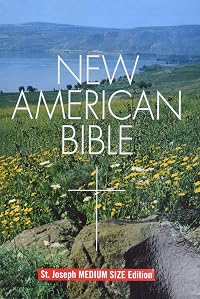
The New American Bible
by Confraternity of Christian Doctrine, Memorial Bible Publishers (Author), NAB
On This Page
Description
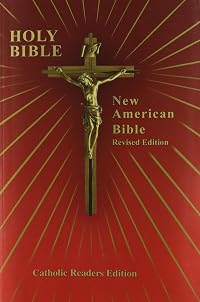
Saint Benedict Press is a proud publisher of the New American Bible Revised Edition (NABRE), the first major update to the New American Bible (NAB) text in twenty years. Reflecting the work of nearly 100 scholars and extensively reviewed and approved by the USCCB, the NABRE takes into account the best current scholarship as well as the new discovery of ancient manuscripts that improve our knowledge and understanding of the Biblical text. With its extensive notes, commentary, and show more cross-references, the NABRE will promote a deeper love and understanding of Scripture in the home, parish and school. In addition to its wealth of study material, each Saint Benedict Press NABRE features a 3-year liturgical cycle of Sunday readings, a 2-year liturgical cycle of daily Mass readings, a listing of Popes, and a manual of favorite Catholic prayers. Features include: Extensive notes, commentary and cross-references, elegant, readable typesetting, gilded page edges, beautiful Old Masters art and full color maps, Presentation and Family Record sections, Premium UltraSoft cover. show lessTags
Recommendations








Member Recommendations


by anonymous user

by anonymous user

by anonymous user

by anonymous user
by anonymous user

by anonymous user

by anonymous user

by anonymous user

by anonymous user

by anonymous user

by anonymous user

by anonymous user

divinepeacelutheran My go-to version of the Bible. No additions or deletions. Easy to read.
by anonymous user
Member Reviews
My copy of The New American Bible, 1971 edition, is the cheap version, missing the dictionary and appendices mentioned on the copyright page. The signatures are sewn, but the cover is a limp imitation leather. My parents gave it to me for my 20th birthday, and I wish they had sprung for a sturdier, complete copy. The dictionary and appendices would have been nice to have, but my main reason is that my copy has not stood up well to daily reading for 40 years. The cover fell apart and off years ago, and some of the pages are loose. It sits in a folding book holder to keep it together.
On the other hand, the introductions, footnotes, and each page's box listing which verses on the page correlate with other Biblical books or epistles are show more helpful. I appreciate being told about puns in the original languages, customs, scientific information about miracles, inconsistencies between books, etc. (We Catholics are not required to take the Bible literally. Some footnotes or introductions even state that the language is figurative, not literal.)
I don't always agree with footnotes or introductions' conclusions, but I do like the fact that this Bible expects its readers to have brains and know how to use them. show less
On the other hand, the introductions, footnotes, and each page's box listing which verses on the page correlate with other Biblical books or epistles are show more helpful. I appreciate being told about puns in the original languages, customs, scientific information about miracles, inconsistencies between books, etc. (We Catholics are not required to take the Bible literally. Some footnotes or introductions even state that the language is figurative, not literal.)
I don't always agree with footnotes or introductions' conclusions, but I do like the fact that this Bible expects its readers to have brains and know how to use them. show less
A note for this review: This is not a review base on the stories contained inside the Bible, as doing so is probably best done by someone who studies religion/theology which this reviewer does not, nor is it based on any of the reviewer's personal faith/beliefs. Instead this review is based of the particular version's construction, organization, and additional explanatory content.
Reviewers copy printing: 2006-2007 leather bound edition.
Overall Fireside's New American (Catholic) Bible is a very well constructed and organized edition with the chapter neatly separated and bolded that can be useful when looking for a particular passage. Each page also has references to other passages and footnotes that give extra context or an alternative show more lay persons translation that allows for better extending reading and accessibility respectively. The only issue (and this is a tiny nitpick) is the text font is fairly small and compact (not surprising for a Bible of this version's size) and can be a minor issue if the reader had sight problems. This particular version also contains a impressive amount of additional content apart from scriptures including but not limited to; an expansive dictionary/encyclopedia of terms, maps. a yearly rotation calendar with reading for specifics days/feasts, a guide for the celebration of the Eucharist, and prefacing explaining the origins and history of the creation of the Bible. A very comprehensive and accessible (in other words understandable) version that would useful to students and practicing church goers alike. show less
Reviewers copy printing: 2006-2007 leather bound edition.
Overall Fireside's New American (Catholic) Bible is a very well constructed and organized edition with the chapter neatly separated and bolded that can be useful when looking for a particular passage. Each page also has references to other passages and footnotes that give extra context or an alternative show more lay persons translation that allows for better extending reading and accessibility respectively. The only issue (and this is a tiny nitpick) is the text font is fairly small and compact (not surprising for a Bible of this version's size) and can be a minor issue if the reader had sight problems. This particular version also contains a impressive amount of additional content apart from scriptures including but not limited to; an expansive dictionary/encyclopedia of terms, maps. a yearly rotation calendar with reading for specifics days/feasts, a guide for the celebration of the Eucharist, and prefacing explaining the origins and history of the creation of the Bible. A very comprehensive and accessible (in other words understandable) version that would useful to students and practicing church goers alike. show less
GENESIS: I love this stuff. 5/4. 2006(?).
EXODUS: The first half or so, enjoyable and interesting. The rest is lists of laws and instructions. 3/4. 2006(?).
LEVITICUS, NUMBERS & DEUTERONOMY: Essentially the law books of ancient Israel, and about as good a read as you might expect from a list of laws. 2/4. 2006(?).
JOSHUA, JUDGES and RUTH: Respectively: genocide at God's command, 300-years of genocide at God's command, and praise for a girl who seduces her dead husband's uncle. 4/4. 8-2007(?).
1 and 2 SAMUEL: Samuel is a sort of historical epic covering 3 generations, with most of the focus on wars, and although I don't really like that sort of thing, it's not bad. 4/4. 10-2007(?).
1 and 2 KINGS: These books are an impossible mess. The facts show more presented concerning the years of Kings' reigns (which makes up most of the book) are impossible and/or contradictory (according to the scholarly folk who wrote the footnotes). Peoples' names are inconsistent and often duplicated to the point where the (modern) editors gave up and just changed the wording to 'the king of such and such' wherever possible. I happened to get a trivia question about something from one of these books, maybe two days after reading the pertinent chapter, and failed to answer the question correctly. 0.5/4. 10-2007(?).
1 and 2 CHRONICLES: I don't understand why this is in the Bible. Basically, it's just information copied out of Samuel and Kings. 0.5/4. 1-2008(?)
EZRA and NEHEMIA: The author of Chronicles talks about the return of Israel from exile, the rebuilding of the temple and re-instituting of Mosaic law in Israel. To sum up the morals of these books: Persian Kings love Jews, and any man in a mixed marriage should abandon his family. 2.5/4. 1-2008(?)
TOBIT, JUDITH and ESTHER: Three short (relative to the historical books) folktales, and the first books in the bible to have traditional narrative structures. 3/4. 1-2008.
1 and 2 MACCABEES: Historic war epic, similar to Samuel. Not very well-written compared with Samuel, though, and the story's not nearly as interesting. Also, the cruelty and violence of the Israelite heroes is starting to disturb me more than a little (this coming from someone who likes games like GTA and movies like Kill Bill). 2.5/4. 3-2008(?).
JOB: God makes a pious man's (Job's) life miserable, basically on a dare from Satan. Job argues about the situation with his friends (this makes up most of the book). Then God shows up and talks about how awesome crocodiles are. No, seriously, there is more than one chapter about how awesome crocodiles are. This book is a major stylistic change from the rest of the Bible so far. It's not a history or mythology or lawbook or whatever which has become literature because of its significance; it's poetic, straight-up literature. 4/4. 3-31-09.
PSALMS: Really, really dull. 150 ways to blather on about how wonderful God is without ever saying anything. 1/4. 9-9-09.
PROVERBS: There are a handful of interesting proverbs, but most of them repeat the same thing over and over again, sometimes even using the same wording. 1.5/4. 1-2-10.
ECCLESIASTES: A poetic and short but kind of horrible book. A so-called wise man has an existential crisis and wants you to know that there's no point to anything you do, since you're just going to die anyway. The Catholic editors admit that the "moral teaching of the book is imperfect." That's a bit of an understatement... 1/4. 3-7-10.
THE SONG OF SONGS: Enjoyable for all the wrong reasons. It contains such gems as, "Your teeth are like a flock of ewes," "Your nose is like the tower of Lebanon that looks toward Damascus," and, "Your body is a heap of wheat." 3/4. 3-31-10.
WISDOM: The author argues that wisdom is, apparently, a good thing. Pretty boring, except for the occasional ridiculously-flowery language. 2.5/4. 5-10-10.
SIRACH: Inconsistent. Some of it’s pretty good. Some of it’s amusingly bad. Some of it’s boring. Mostly, I’m just glad to finally be through the “Wisdom” books; hopefully the prophets will have more of a sense of narrative. 2.5/4. 7-28-10.
ISAIAH: Interesting stuff, written in striking, memorable language. 4/4. 5-26-12
JEREMIAH: Very repetitive, slow reading, but it has its moments. Jeremiah is a kind of amusing character, what with the wanting God to get on with the death and destruction already, and his tendency to ramble and rant. 2.5/4. 8-2-12
LAMENTATIONS and BARUCH: Lamentations is about as fun as you'd expect from a book called "Lamentations." Baruch is more of the same, but not written as well. 1.5/4. 9-13-12
EZEKIEL: It starts off pretty cool and interesting, with unique language and a description of the appearance of God. But it eventually settles down into the usual long and repetitive doom-saying. Near the end it gets really boring, with a whole section that's basically a verbal blueprint. 2.5/4. 10-26-12
DANIEL: Half the book is folktale-like stories, which are nice. The other half is apocalyptic visions, which are nowhere near as fun or interesting as I'd expect apocalyptic visions to be; everything's very specific to the author's time. 2.5/4. 11-20-12
HOSEA, OBADIAH, MICAH & ZEPHANIAH: Generic prophecy. There's nothing here that isn't in one of the earlier books. 2/4. 11-29-12, 12-2-12, 12-17-12, 1-16-13
JOEL: Some nice apocalyptic imagery. I don't really understand it, though; I can't tell what's meant to be literal and what's metaphor. 2.5/4. 11-30-12
AMOS: Nothing new to say. The language is poetic and direct. 2.5/4. 12-1-12
JONAH: Great, but too short. It reads like a summary of the story. 4/4. 12-17-12
NAHUM: A joyful celebration of the violent destruction of a city. 1/4. 12-18-12
HABAKKUK: The prophet asks God some reasonable questions about justice. God basically responds, "Don't worry about it, your country will be destroyed by ruthless invaders and everyone will get what they deserve." Then there's a trippy song about how terrifying God is. It's hard to follow in places, but loaded with interesting ideas and imagery. 4/4. 12-19-12
HAGGAI: Haggai wants you to know that the new temple is going to be totally awesome. 1.5/4. 1-16-13
ZECHARIAH: Poorly written (for the most part), with lots of incomprehensible symbolism. It has its moments. 1.5/4. 1-22-13
MALACHI: "Hey, behave yourselves. Also, Messiah/Apocalypse coming up, so watch out for that." 2/4. 1-23-13
MATTHEW: The centerpiece of the most popular book of all time. Not surprisingly, it's pretty good. In this edition the footnotes are about twice as long as the actual text - very informative, but a chore to read. 3/4. 1-22-15
MARK: Very little of Jesus's actual teaching is in this gospel, which is nice. The focus is on the events and, best of all, the characters. Jesus is always depicted in popular culture as calm, stoic and dignified. But in the book, he's human. He's frustrated and impatient with everyone around him, and in the end he's heartbroken that he has to die. 4/4. 4-2-15
LUKE: It's basically just a compiling and mangling of the previous two gospels, adapted to conveniently suit the needs of the Church. 1/4. 9-12-15
JOHN: It's much more poetic than the other gospels, but it has almost no narrative. 2.5/4. 10-5-15
ACTS: It's a sort of history of how Christianity split from Judaism, mostly focusing on Paul's travel plans. I can see how it's important, but nothing here really interests me. 1.5/4. 2-27-16.
ROMANS, 1 and 2 CORINTHIANS, GALATIANS, EPHESIANS, PHILIPPIANS, COLOSSIANS, & 1 and 2 THESSALONIANS: Very dull sermons, poorly written and buried in a mountain of pointless footnotes. 0.5/4. 4-5-16, 5-1-16, 5-9-16, 5-17-16, 5-29-16, 6-1-16, 6-22-16.
1 TIMOTHY & TITUS: Paul gives instructions to his subordinates about how to be a dick. 0.5/4. 6-24-16.
2 TIMOTHY: Much more well written than the previous letters - this is poetic, where those were barely readable. 2.5/4. 6-24-16.
PHILEMON: Paul asks a slave-owner to let him have his slave. It's well-written like 2 Timothy, but, yeah... 0.5/4. 6-24-16.
HEBREWS: Another dull sermon. Not quite as terrible as the proper Paul letters, but definitely a chore to get through. 0.5/4. 2-24-17.
JAMES, 1 and 2 PETER & 1 JOHN: More sermons - sleeping pills in book form. 0.5/4. 8-14-17.
2 and 3 JOHN: Short, specific correspondence. I don't know why these are in the bible, but it's kind of interesting. 1.5/4. 8-14-17.
JUDE: Another sermon, but written better, and with references to weird, apocryphal books. 2.5/4. 8-14-17.
REVELATIONS: Not nearly as weird or interesting as movies made me think it would be. It's mostly just symbolic praise. 2.5/4. 11-13-17. show less
EXODUS: The first half or so, enjoyable and interesting. The rest is lists of laws and instructions. 3/4. 2006(?).
LEVITICUS, NUMBERS & DEUTERONOMY: Essentially the law books of ancient Israel, and about as good a read as you might expect from a list of laws. 2/4. 2006(?).
JOSHUA, JUDGES and RUTH: Respectively: genocide at God's command, 300-years of genocide at God's command, and praise for a girl who seduces her dead husband's uncle. 4/4. 8-2007(?).
1 and 2 SAMUEL: Samuel is a sort of historical epic covering 3 generations, with most of the focus on wars, and although I don't really like that sort of thing, it's not bad. 4/4. 10-2007(?).
1 and 2 KINGS: These books are an impossible mess. The facts show more presented concerning the years of Kings' reigns (which makes up most of the book) are impossible and/or contradictory (according to the scholarly folk who wrote the footnotes). Peoples' names are inconsistent and often duplicated to the point where the (modern) editors gave up and just changed the wording to 'the king of such and such' wherever possible. I happened to get a trivia question about something from one of these books, maybe two days after reading the pertinent chapter, and failed to answer the question correctly. 0.5/4. 10-2007(?).
1 and 2 CHRONICLES: I don't understand why this is in the Bible. Basically, it's just information copied out of Samuel and Kings. 0.5/4. 1-2008(?)
EZRA and NEHEMIA: The author of Chronicles talks about the return of Israel from exile, the rebuilding of the temple and re-instituting of Mosaic law in Israel. To sum up the morals of these books: Persian Kings love Jews, and any man in a mixed marriage should abandon his family. 2.5/4. 1-2008(?)
TOBIT, JUDITH and ESTHER: Three short (relative to the historical books) folktales, and the first books in the bible to have traditional narrative structures. 3/4. 1-2008.
1 and 2 MACCABEES: Historic war epic, similar to Samuel. Not very well-written compared with Samuel, though, and the story's not nearly as interesting. Also, the cruelty and violence of the Israelite heroes is starting to disturb me more than a little (this coming from someone who likes games like GTA and movies like Kill Bill). 2.5/4. 3-2008(?).
JOB: God makes a pious man's (Job's) life miserable, basically on a dare from Satan. Job argues about the situation with his friends (this makes up most of the book). Then God shows up and talks about how awesome crocodiles are. No, seriously, there is more than one chapter about how awesome crocodiles are. This book is a major stylistic change from the rest of the Bible so far. It's not a history or mythology or lawbook or whatever which has become literature because of its significance; it's poetic, straight-up literature. 4/4. 3-31-09.
PSALMS: Really, really dull. 150 ways to blather on about how wonderful God is without ever saying anything. 1/4. 9-9-09.
PROVERBS: There are a handful of interesting proverbs, but most of them repeat the same thing over and over again, sometimes even using the same wording. 1.5/4. 1-2-10.
ECCLESIASTES: A poetic and short but kind of horrible book. A so-called wise man has an existential crisis and wants you to know that there's no point to anything you do, since you're just going to die anyway. The Catholic editors admit that the "moral teaching of the book is imperfect." That's a bit of an understatement... 1/4. 3-7-10.
THE SONG OF SONGS: Enjoyable for all the wrong reasons. It contains such gems as, "Your teeth are like a flock of ewes," "Your nose is like the tower of Lebanon that looks toward Damascus," and, "Your body is a heap of wheat." 3/4. 3-31-10.
WISDOM: The author argues that wisdom is, apparently, a good thing. Pretty boring, except for the occasional ridiculously-flowery language. 2.5/4. 5-10-10.
SIRACH: Inconsistent. Some of it’s pretty good. Some of it’s amusingly bad. Some of it’s boring. Mostly, I’m just glad to finally be through the “Wisdom” books; hopefully the prophets will have more of a sense of narrative. 2.5/4. 7-28-10.
ISAIAH: Interesting stuff, written in striking, memorable language. 4/4. 5-26-12
JEREMIAH: Very repetitive, slow reading, but it has its moments. Jeremiah is a kind of amusing character, what with the wanting God to get on with the death and destruction already, and his tendency to ramble and rant. 2.5/4. 8-2-12
LAMENTATIONS and BARUCH: Lamentations is about as fun as you'd expect from a book called "Lamentations." Baruch is more of the same, but not written as well. 1.5/4. 9-13-12
EZEKIEL: It starts off pretty cool and interesting, with unique language and a description of the appearance of God. But it eventually settles down into the usual long and repetitive doom-saying. Near the end it gets really boring, with a whole section that's basically a verbal blueprint. 2.5/4. 10-26-12
DANIEL: Half the book is folktale-like stories, which are nice. The other half is apocalyptic visions, which are nowhere near as fun or interesting as I'd expect apocalyptic visions to be; everything's very specific to the author's time. 2.5/4. 11-20-12
HOSEA, OBADIAH, MICAH & ZEPHANIAH: Generic prophecy. There's nothing here that isn't in one of the earlier books. 2/4. 11-29-12, 12-2-12, 12-17-12, 1-16-13
JOEL: Some nice apocalyptic imagery. I don't really understand it, though; I can't tell what's meant to be literal and what's metaphor. 2.5/4. 11-30-12
AMOS: Nothing new to say. The language is poetic and direct. 2.5/4. 12-1-12
JONAH: Great, but too short. It reads like a summary of the story. 4/4. 12-17-12
NAHUM: A joyful celebration of the violent destruction of a city. 1/4. 12-18-12
HABAKKUK: The prophet asks God some reasonable questions about justice. God basically responds, "Don't worry about it, your country will be destroyed by ruthless invaders and everyone will get what they deserve." Then there's a trippy song about how terrifying God is. It's hard to follow in places, but loaded with interesting ideas and imagery. 4/4. 12-19-12
HAGGAI: Haggai wants you to know that the new temple is going to be totally awesome. 1.5/4. 1-16-13
ZECHARIAH: Poorly written (for the most part), with lots of incomprehensible symbolism. It has its moments. 1.5/4. 1-22-13
MALACHI: "Hey, behave yourselves. Also, Messiah/Apocalypse coming up, so watch out for that." 2/4. 1-23-13
MATTHEW: The centerpiece of the most popular book of all time. Not surprisingly, it's pretty good. In this edition the footnotes are about twice as long as the actual text - very informative, but a chore to read. 3/4. 1-22-15
MARK: Very little of Jesus's actual teaching is in this gospel, which is nice. The focus is on the events and, best of all, the characters. Jesus is always depicted in popular culture as calm, stoic and dignified. But in the book, he's human. He's frustrated and impatient with everyone around him, and in the end he's heartbroken that he has to die. 4/4. 4-2-15
LUKE: It's basically just a compiling and mangling of the previous two gospels, adapted to conveniently suit the needs of the Church. 1/4. 9-12-15
JOHN: It's much more poetic than the other gospels, but it has almost no narrative. 2.5/4. 10-5-15
ACTS: It's a sort of history of how Christianity split from Judaism, mostly focusing on Paul's travel plans. I can see how it's important, but nothing here really interests me. 1.5/4. 2-27-16.
ROMANS, 1 and 2 CORINTHIANS, GALATIANS, EPHESIANS, PHILIPPIANS, COLOSSIANS, & 1 and 2 THESSALONIANS: Very dull sermons, poorly written and buried in a mountain of pointless footnotes. 0.5/4. 4-5-16, 5-1-16, 5-9-16, 5-17-16, 5-29-16, 6-1-16, 6-22-16.
1 TIMOTHY & TITUS: Paul gives instructions to his subordinates about how to be a dick. 0.5/4. 6-24-16.
2 TIMOTHY: Much more well written than the previous letters - this is poetic, where those were barely readable. 2.5/4. 6-24-16.
PHILEMON: Paul asks a slave-owner to let him have his slave. It's well-written like 2 Timothy, but, yeah... 0.5/4. 6-24-16.
HEBREWS: Another dull sermon. Not quite as terrible as the proper Paul letters, but definitely a chore to get through. 0.5/4. 2-24-17.
JAMES, 1 and 2 PETER & 1 JOHN: More sermons - sleeping pills in book form. 0.5/4. 8-14-17.
2 and 3 JOHN: Short, specific correspondence. I don't know why these are in the bible, but it's kind of interesting. 1.5/4. 8-14-17.
JUDE: Another sermon, but written better, and with references to weird, apocryphal books. 2.5/4. 8-14-17.
REVELATIONS: Not nearly as weird or interesting as movies made me think it would be. It's mostly just symbolic praise. 2.5/4. 11-13-17. show less
St. Joseph New American (Catholic) Bible from Catholic Book Publishing contains the complete Old and New Testaments in easy-to-read type, as well as many helpful aids for easy Bible reading, including new maps, full-color illustrations, and Family Record. The beautiful and elegant features of this high-quality, medium-size (5-1/2 x 8) St. Joseph New American Bible include supple material, blind embossing, foil stamping, precise stitching, and decorative gilding to provide an exquisite and unique package for the Word of God. Flexible black imitation leather cover. An unparalleled Catholic Bible gift from Catholic Book Publishing.
-lots of notes and background info, thus less confusing than some versions
Excellent study text for Catholics.
Bible was part of becoming member of Catholic Faith.
Members
- Recently Added By
Lists

Bible Translations
56 works; 1 member
The Great Courses: The Old Testament
78 works; 1 member

You Couldn't Pay Me to Read That (Take 2)
203 works; 86 members
Author Information

60 Works 5,694 Members
1 Work 3,334 Members
Some Editions
Work Relationships
Is an adaptation of
Has the adaptation
Has as a commentary on the text
Common Knowledge
- Canonical title
- The Holy Bible: New American Bible (NAB) (NAB); The New American Bible
- Alternate titles
- Holy Bible
- Original publication date
- 1970
- Disambiguation notice
- The New American Bible should not be confused with the New American Standard Bible, the Catholic New Revised Standard Version, or bibles printed by the American Bible Society.
In 1991 the Book of Psalms was completely rewritten to introduce the use of extensive gender-neutral language. Controversy ensued because of its use of vertical gender-neutral language (God and Christ) and some uses of horizo... (show all)ntal gender-neutral language ("human beings" or "they" instead of "men" or "he"). These Psalms were rejected for liturgical use.
Study Bible should be listrd separate;y.
Classifications
Statistics
- Members
- 3,373
- Popularity
- 5,016
- Reviews
- 14
- Rating
- (4.10)
- Languages
- English
- Media
- Paper, Audiobook, Ebook
- ISBNs
- 172
- UPCs
- 7
- ASINs
- 196
