
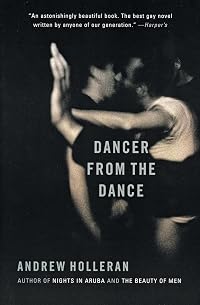
Dancer from the Dance
by Andrew Holleran
On This Page
Description
"An astonishingly beautiful book. The best gay novel written by anyone of our generation."-Harper's "Through the sweat and haze of longing come piercing insights - about the closeness of gay male friendship, about the vanity and imperfections of men. The more one reads the novel, we realise that what Holleran has given us is our very own queer (queerer?) Great Gatsby: its decadence, its fear, its violence, its ecstasy, its transience."-The Guardian Andrew Holleran's landmark novel of a young show more man's search for love and companionship in New York's emerging gay world in the 1970s, with a new introduction by Garth Greenwell. Young, astonishingly beautiful, and tired of living a lie, Anthony Malone trades life as a seemingly straight small-town lawyer for the decadence of New York's emerging gay scene-an odyssey that takes him from Manhattan's Everard baths and after hour discos, to lavish orgies on Fire Island and parks after dark. Rescuing Malone from a possessive lover and shepherding him through his immersion in this life of fierce joys and cheap truths is the flamboyant Sutherland, a high-camp quintessential queen. But for Malone, the endless city nights and Fire Island days are close to burning out, and despite Sutherland's abundant attentiveness and glittering world-weary wisdom, Malone soon realizes what he is truly looking for may not be found in these beautiful places, where life is crowded, and people are forever outrunning their own desires and death. show lessTags
Recommendations

















Member Recommendations
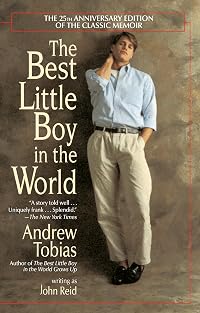
amberwitch Wild Swans contain a fairy tale retelling of the Hans Christian Anderson story "The Wild Swans". Entwined with this, but only tangentially related, is the coming of age story of a gay youth in New York. This is the aftermath of the wild 70'es described in Dancer from the Dance.
13
Member Reviews
I read this book for a 20th Century Queer project, where I am reading 100 books for 100 years, one for each year in the 20th century.
I adored this novel. Which, I realise now, at the end of lots of period-accurate racism and fetishisation, is a position of privilege. This project has taught me that although reading 100 books from 100 years of LGBTQ history seems like a great idea and a wonderful exploration of my ancestors, uh, a lot of the people published during that time were cis, white, able-bodied, gay and for the most part racist, transphobic, biphobic and ableist. And whether it's the characters or the author, it hurt then, and it hurts now.
(Hence why I am determined to read, purchase and support LGBTQ living authors as well, show more but this is a train of thought you're not here for, you're here for the review).
Behold, Dancer from the Dance by Andrew Holleran. Dancer from the Dance begins with two letters between friends. One, still living in New York City, is updating his friend on the drama, the gossip and the hook ups and break ups. On page 12, it reads:
"I am in fact so depressed that last night while Bob Cjaneovic was sitting on my face, I began to think how futile life is, no matter what you do - it all ends in Death, we are given such a short time, and everything truly is, as Ecclesiastes says, Vanity, Vanity, Vanity. Of course, that only made be burrow deeper, but still - to have the thought!"
And from page 12, I was hooked. So many readers these days are tired of New York City as a setting for a book, and that I understand, but listen. Holleran brings New York to life in this novel. Few authors have so artfully rendered New York as the hot and heaving beast of my memory.
This long, sprawling book goes on and on and on about men shirtless in the summer, sleeping in parks because it's too hot to sleep in their apartment. Fire hydrants spewing water out into the street, and soda cans cooling in fridges of bodegas.
There's something Proustian about Holleran's writing, which feels odd to say, but he writes in such a worshipful way, going over every detail again and again with such care and attention that you can really feel the craft of it all.
“The greatest drug of all, my dear, was not one of those pills in so many colours that you took over the years, was not the opium, the hash you smoked in houses at the beach, or the speed or smack you shot up in Sutherland's apartment, no, it wasn't any of these. It was the city, darling, it was the city, the city itself. And do you see why I had to leave? As Santayana said, dear, artists are unhappy because they are not interested in happiness; they live for beauty. God, was that steaming, loathsome city beautiful!!! And why finally no human lover was possible, because I was in love with all men, with the city itself.”
The book certainly has its flaws. A lot of it sounds the same. The racism, the sex, and the characters just go on and on and ON. Sometimes it feels a little bit self-important, but somehow still satirical. It's a hard book to recommend, because either you'd love it or you wouldn't.
That is to say, this book is not a fast read, but a slow, meandering one. Complete with a nameless narrator in the style of Daphne du Maurier and I have to say it reminds me more of Henry James or any other great American author, perhaps a little like F Scott for all the excessive drinking, drugs and beautiful parties surrounded by beautiful people.
Glittering, gluttonous, how will we ever tell the dancer from the dance?
tw: racism, fetishisation, suicide (p. 220 or so) show less
I adored this novel. Which, I realise now, at the end of lots of period-accurate racism and fetishisation, is a position of privilege. This project has taught me that although reading 100 books from 100 years of LGBTQ history seems like a great idea and a wonderful exploration of my ancestors, uh, a lot of the people published during that time were cis, white, able-bodied, gay and for the most part racist, transphobic, biphobic and ableist. And whether it's the characters or the author, it hurt then, and it hurts now.
(Hence why I am determined to read, purchase and support LGBTQ living authors as well, show more but this is a train of thought you're not here for, you're here for the review).
Behold, Dancer from the Dance by Andrew Holleran. Dancer from the Dance begins with two letters between friends. One, still living in New York City, is updating his friend on the drama, the gossip and the hook ups and break ups. On page 12, it reads:
"I am in fact so depressed that last night while Bob Cjaneovic was sitting on my face, I began to think how futile life is, no matter what you do - it all ends in Death, we are given such a short time, and everything truly is, as Ecclesiastes says, Vanity, Vanity, Vanity. Of course, that only made be burrow deeper, but still - to have the thought!"
And from page 12, I was hooked. So many readers these days are tired of New York City as a setting for a book, and that I understand, but listen. Holleran brings New York to life in this novel. Few authors have so artfully rendered New York as the hot and heaving beast of my memory.
This long, sprawling book goes on and on and on about men shirtless in the summer, sleeping in parks because it's too hot to sleep in their apartment. Fire hydrants spewing water out into the street, and soda cans cooling in fridges of bodegas.
There's something Proustian about Holleran's writing, which feels odd to say, but he writes in such a worshipful way, going over every detail again and again with such care and attention that you can really feel the craft of it all.
“The greatest drug of all, my dear, was not one of those pills in so many colours that you took over the years, was not the opium, the hash you smoked in houses at the beach, or the speed or smack you shot up in Sutherland's apartment, no, it wasn't any of these. It was the city, darling, it was the city, the city itself. And do you see why I had to leave? As Santayana said, dear, artists are unhappy because they are not interested in happiness; they live for beauty. God, was that steaming, loathsome city beautiful!!! And why finally no human lover was possible, because I was in love with all men, with the city itself.”
The book certainly has its flaws. A lot of it sounds the same. The racism, the sex, and the characters just go on and on and ON. Sometimes it feels a little bit self-important, but somehow still satirical. It's a hard book to recommend, because either you'd love it or you wouldn't.
That is to say, this book is not a fast read, but a slow, meandering one. Complete with a nameless narrator in the style of Daphne du Maurier and I have to say it reminds me more of Henry James or any other great American author, perhaps a little like F Scott for all the excessive drinking, drugs and beautiful parties surrounded by beautiful people.
Glittering, gluttonous, how will we ever tell the dancer from the dance?
tw: racism, fetishisation, suicide (p. 220 or so) show less
This is a beautifully-written novel about gay life in Manhattan in the decadent years. About the "pleasure-seekers, so bent on pleasure that they were driving right through Happiness" on their way to Fire Island as the season was ending. The story of Malone's descent is told with believable details and facets of the fabulous life--dancing and pretending that everything is brilliant and gay. With vivid imagery, lush language, and captivating depiction the gay men searching for love and acceptance in harsh, dreamlike urban landscape become as real as their life in the nineteen-seventies. The novel is notable for its literary quality and its fine portrayal of the party atmosphere of Fire Island, a summer community on Long Island.
The title show more of the novel is from the last line of William Butler Yeats's poem "Among School Children" which ends, "O chestnut-tree, great-rooted blossomer,/ Are you the leaf, the blossom or the bole?/ O body swayed to music, O brightening glance,/ How can we know the dancer from the dance?" show less
The title show more of the novel is from the last line of William Butler Yeats's poem "Among School Children" which ends, "O chestnut-tree, great-rooted blossomer,/ Are you the leaf, the blossom or the bole?/ O body swayed to music, O brightening glance,/ How can we know the dancer from the dance?" show less
This is a truly amazing pre-AIDS novel suffused with suffering and death but full of hope, almost as if Holleran was preparing the community for the on-slaught waiting in its wings. He has a lot of say about what's superficial and what's important in life and ultimately how they're intertwined, not to mention distorted by drugs. I've read and heard first-hand accounts of the circuit scene in New York in the 70s, and I thought Holleran added nuance and insight into a period that I think is a really important on in the history of sexual liberation.
Oh, and the writing is gorgeous.
Oh, and the writing is gorgeous.
Remarkable how influential this novel was, how so much of its tone has shaped gay consciousness and discourse over the last two generations. It's set in the fast and furious sexual and social world of lower Manhattan and Fire Island in the 1970s. "Dancer" pre-dates the onslaught of AIDS/HIV, but even so, an elegaic atmosphere of memory and loss pervades its pages. Certainly the novel reflects the rampant coupling and promiscuity that was the rule in the post-1960s era of Gay Liberation. But in a larger sense, "Dancer from the Dance" is about the Education of Americans. It echoes earlier novels about initiation and enlightenment set in New York, most notably "The Great Gatsby." Like the Fitzgerald, "Dancer" is terribly disillusioning. In show more American culture, those who seek to go "over the rainbow" ultimately realize that Oz is an illusionary world of people wearing green-tinted glasses.... show less
Once upon a time, I didn’t know there was a genre called gay literature. Not being gay myself, perhaps this is understandable—but not forgivable. When I discovered this rich world, the first book I read was this one. It’s not likely that anyone who knows anything about gay lit hasn’t read this book, so I’ll just offer the ways in which it affected me rather than try to describe the book itself.
The Stonewall riots weren’t even a decade behind the timeframe of this story, and in the eyes of someone outside the gay community, this book depicts how people who had been cruelly restrained by persecution and societal shame began to express themselves explosively and unabashedly, even as they carried their past shame with them. show more Certainly, the main character, Malone, seems to struggle to express his true nature while wallowing in shame that was forced on him from external sources, and he carries both to extremes.
This book, along with the next books I read from this genre (by authors such as Edmund White and John Rechy), are the reason I didn’t go to see Brokeback Mountain. By the time that film came out, not only did I not need to be told what happens when people are forced to live lives that are against their natures, but also I was chomping at the bit for stories in which gay people had promising futures, stories in which their fortunes were not dictated by their sexual orientation alone, but by the entirety of who they are as people. And these are the stories I write. So to Holleran’s classic I owe the impetus for my own work in a genre I didn’t even know about before I read this book. show less
The Stonewall riots weren’t even a decade behind the timeframe of this story, and in the eyes of someone outside the gay community, this book depicts how people who had been cruelly restrained by persecution and societal shame began to express themselves explosively and unabashedly, even as they carried their past shame with them. show more Certainly, the main character, Malone, seems to struggle to express his true nature while wallowing in shame that was forced on him from external sources, and he carries both to extremes.
This book, along with the next books I read from this genre (by authors such as Edmund White and John Rechy), are the reason I didn’t go to see Brokeback Mountain. By the time that film came out, not only did I not need to be told what happens when people are forced to live lives that are against their natures, but also I was chomping at the bit for stories in which gay people had promising futures, stories in which their fortunes were not dictated by their sexual orientation alone, but by the entirety of who they are as people. And these are the stories I write. So to Holleran’s classic I owe the impetus for my own work in a genre I didn’t even know about before I read this book. show less
It took me a while to get into it, the language can be a bit overwrought (especially at the beginning -- it cools down quite a bit after like the first 30 pages). But also the book primarily concerns itself with a man so beautiful, everyone in NYC desires him. Unfortunately, beauty doesn't come across on the page, and he's a bit dull as a character. However, he has a best friend who is an impeccably fabulous queen, and that's the real heart of the book. But every time the friend disappears for a chapter or two, the book becomes a bit tiresome again.
But it's all a great document of gay life and culture in NYC in the 70s. Park cruising, bath houses, flop houses, speed and poppers, and endless dance parties...
show more target="_top">https://donut-donut.dreamwidth.org/850324.html show less
But it's all a great document of gay life and culture in NYC in the 70s. Park cruising, bath houses, flop houses, speed and poppers, and endless dance parties...
show more target="_top">https://donut-donut.dreamwidth.org/850324.html show less
This book pulls the reader into the rhythm of the narrative and does not let you go, and does an interesting thing with framing the story with people on the outside.
Members
- Recently Added By
Published Reviews
Lists

Top Five Books of 2013
1,562 works; 721 members

Books Set in New York City
127 works; 21 members

Best LGBT Fiction
144 works; 25 members

1970s
657 works; 23 members

LibraryThingers' 1001 Books You Must Read Before You Die
442 works; 29 members

Publishing Triangle 100 Best Lesbian and Gay Novels
97 works; 6 members

Urban Fiction
74 works; 7 members

Five star books
1,755 works; 108 members

Books Set on Islands
190 works; 24 members
Best Books of the 20th Century
193 works; 5 members

Good LGBT fiction for LGBT folk and friends
545 works; 54 members

What are your favourite books?
121 works; 11 members

Favorite Books from the 1970s
28 works; 3 members
5 Best 5 Years
71 works; 4 members

Books Read in 2008
335 works; 8 members

Books Read in 2013
1,630 works; 51 members

Favorite Epistolary Fiction
143 works; 144 members

Swinging Seventies
255 works; 18 members
Books With Our Favorite First Lines
168 works; 104 members

The Atlantic's The Great American Novel
136 works; 12 members

Books Read in 2024
4,623 works; 126 members

Books Read in 2001
194 works; 4 members
Author Information

14+ Works 2,959 Members
Some Editions
Awards and Honors
Distinctions
The Guardian Book of the Day (2019-06-17)
Notable Lists
Common Knowledge
- Canonical title
- Dancer from the Dance
- Original publication date
- 1978
- People/Characters
- Malone; Sutherland; Paul
- Important places
- New York, New York, USA; Fire Island, New York, USA; Georgia, USA; New York, USA; Suffolk County, New York, USA; USA
- Epigraph
- Labor is blossoming or dancing where / The body is not bruised to pleasure soul, / Nor beauty born out of its own despair, / Nor bleary-eyed wisdom our to midnight oil. / O chestnut tree, great rooted blossomer, / Are you th... (show all)e leaf, the blossom or the bole? / O body swayed to the music, O brightening glance, / How can we know the dancer from the dance? (Yeats, "Among the schoolchildren")
- First words
- By his own account, the letters that begin Dancer from the Dance - which which two circuit queens, one of them retired to Florida, gossip about their exploits and their friends - saved Andrew Holleran's career. For t... (show all)en years he had been trying and failing to write a publishable novel; he had given himself one last summer, at his parents' home, before calling it quits. It occurred to him to try to fashion a kind of voice that hadn't existed, quite, in American literature to that point, molding it out of letters he was exchanging with friends in New York and newsletters passed around at gay clubs. He wanted to capture a specifically queer expressiveness, what he calls, in an essay written decades later, "campy exuberance." Once he found it, the novel came with ease; the queer aesthetic he crafted served, he says, as an "Open Sesame" for the book. -Introduction, Garth Richard Greenwell
Midnight
The Deep South
Ecstasy,
It's finally spring down here on the Chattahoochee - the azaleas are in bloom, and everyone is dying of cancer. I am writing you very late at night. We have just one keros... (show all)ine lamp, and the bugs outside are positively battering the screen at my elbow, trying to get at the light - like so many people we knew in New York trying to get Love, n'est-ce pas? - pushy, pushy, pushy. - Quotations
- --- What I said earlier was wrong: We don't have to do anything with our lives. As long as you are alive, there's an end to it. (Paul, last page)
- Last words
- (Click to show. Warning: May contain spoilers.)Go out dancing tonight, my dear, and go home with someone, and if the love doesn't last beyond the morning, then know I love you.
- Canonical DDC/MDS
- 813.54
- Canonical LCC
- PS3558.O3496
Classifications
Statistics
- Members
- 1,160
- Popularity
- 21,609
- Reviews
- 13
- Rating
- (3.91)
- Languages
- 6 — Dutch, English, French, German, Italian, Spanish
- Media
- Paper, Audiobook, Ebook
- ISBNs
- 27
- ASINs
- 10