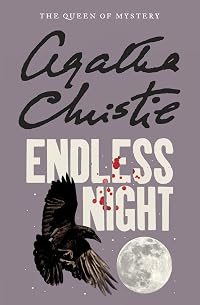
Endless Night
by Agatha Christie
On This Page
Description
One of Agatha Christie's personal favorites, Endless Night is a critically acclaimed classic crime thriller from the beloved queen of mystery. When penniless Michael Rogers discovers the beautiful house at Gypsy's Acre and then meets the heiress Ellie, it seems that all his dreams have come true at once. But he ignores an old woman's warning of an ancient curse, and evil begins to stir in paradise. As Michael soon learns: Gypsy's Acre is the place where fatal "accidents" happen.Tags
Recommendations



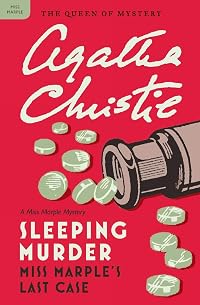
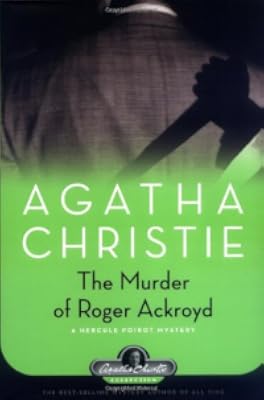
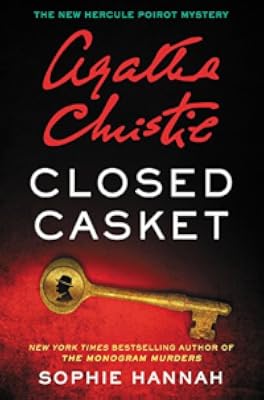


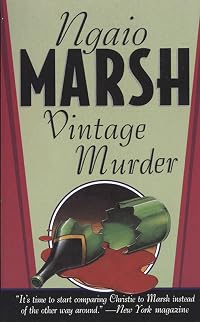

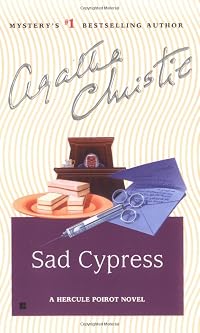
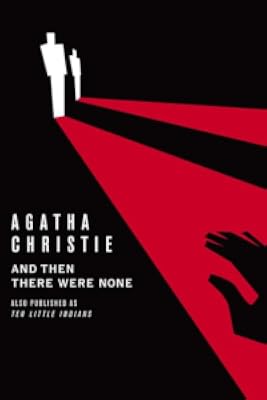
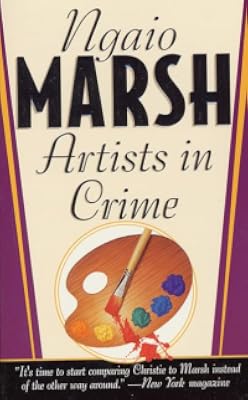










Member Recommendations
by anonymous user
arielfl Another story about a psychopath who believes he deserves the good life and will go to any ends, including murder, to achieve it.
02
Member Reviews
This surprised me! The reading experience felt so different from others I've read by the Queen of Crime! Here, instead of following Poirot or Miss Marple, we have a sexy young man as our protagonist! He's irreverent, free spirited, and smart. I was also curious about the exploration of gypsy life at the time of publication in the UK (or the period leading up to publication). Amanda and I had a lot of fun with this one. A possible frenemy added to the suspense and intrigue. The actual murder took me by surprise too, even to the identity of the victim!
'Endless Night' was a wonderful surprise. It was original, modern, and remarkably cinematic. It felt like watching the most recent film versions of 'The Talented Mr Ripley' or 'My Cousin Rachel'. In a blind test, I wouldn't have guessed this was Christie's work, except for how twisty the plot is, and how blindsided I was by the ending.
This was a very contemporary novel for 1967, written about and from the point of view of Michael Rogers, a young man who is very much of his time. That Christie could, in her seventies, write such a compelling story entirely as a first-person account by a twenty-something Englishman is a mark of her skill.
There are no clever detectives in this book. No interviews with suspects to garner clues to who did show more what. For most of the book, it's not even clear what there is for any detective to investigate. And yet, there is from the start a sense of doom, a feeling that a curse has been unleashed or a geas challenged, perhaps from the moment that Michael Rogers met Ellie Goodman in the woods at Gipsey's Acre. The tone of Michael Rogers' storytelling makes it sound as if he has an albatross around his neck, and all that remains is to discover how it came to be placed there.
Although this tale is told from Michael Roger's point of view, there isn’t much introspection in his storytelling. From the start, he felt to me like a man who habitually puts on a show. He seemed callow, reflexively mendacious and quietly secretive. He's a man who harbours deep longings for things he doesn't have. He can be passionate about art and architecture. He woos the young Ellie Goodman gently but persistently, seeming to see in her something he would like to see in himself but is unable to find. He sees her as living in the light while he is doomed to the endless night.
The sense of a doom yet to be revealed is created partly by extensive foreshadowing, especially of the character of Greta, the capable young woman who manages Ellie's life for her, winning her freedom from the constraints her family places on her. I found myself looking forward to the first meeting between Greta and Michael. I knew there would be fireworks. I'd hoped that the jealous, controlling side of his character that I thought he was trying to hide might show itself and give Ellie fair warning. Greta turned out to be everything that I expected and more.
I won't go into the plot. It's clever and stays the reader's mind, but it's hard to discuss without spoiling the impact of the story for the first-time reader.
I think the thing that most marks this as a Christie novel, despite the variation in style, is how she lays out the whole story on the first page, but does it in such a way that when you re-read the first page after finishing the book, your understanding of the text has completely changed. There's no cheating involved. Just a subtle shift in perspective. Here's the passage I'm thinking of:
"In my end is my beginning … That’s a quotation I’ve often heard people say. It sounds all right—but what does it really mean?
Is there ever any particular spot where one can put one’s finger and say: ‘It all began that day, at such a time and such a place, with such an incident?’
Did my story begin, perhaps, when I noticed the Sale Bill hanging on the wall of the George and Dragon, announcing Sale by Auction of that valuable property ‘The Towers’, and giving particulars of the acreage, the miles and furlongs, and the highly idealized portrait of ‘The Towers’ as it might have been perhaps in its prime, anything from eighty to a hundred years ago?
I was doing nothing particular, just strolling along the main street of Kingston Bishop, a place of no importance whatever, killing time. I noticed the Sale Bill. Why? Fate up to its dirty work? Or dealing out its golden handshake of good fortune? You can look at it either way.
Or you could say, perhaps, that it all had its beginnings when I met Santonix, during the talks I had with him; I can close my eyes and see: his flushed cheeks, the over-brilliant eyes, and the movement of the strong yet delicate hand that sketched and drew plans and elevations of houses. One house in particular, a beautiful house, a house that would be wonderful to own!
My longing for a house, a fine and beautiful house, such a house as I could never hope to have, flowered into life then. It was a happy fantasy shared between us, the house that Santonix would build for me—if he lasted long enough …
A house that in my dreams I would live in with the girl that I loved, a house in which just like a child’s silly fairy story we should live together ‘happy ever afterwards’. All pure fantasy, all nonsense, but it started that tide of longing in me. Longing for something I was never likely to have.
Or if this is a love story—and it is a love story, I swear—then why not begin where I first caught sight of Ellie standing in the dark fir trees of Gipsy’s Acre?"
I think this is one of Christie's best novels. If you haven't read anyt show less
This was a very contemporary novel for 1967, written about and from the point of view of Michael Rogers, a young man who is very much of his time. That Christie could, in her seventies, write such a compelling story entirely as a first-person account by a twenty-something Englishman is a mark of her skill.
There are no clever detectives in this book. No interviews with suspects to garner clues to who did show more what. For most of the book, it's not even clear what there is for any detective to investigate. And yet, there is from the start a sense of doom, a feeling that a curse has been unleashed or a geas challenged, perhaps from the moment that Michael Rogers met Ellie Goodman in the woods at Gipsey's Acre. The tone of Michael Rogers' storytelling makes it sound as if he has an albatross around his neck, and all that remains is to discover how it came to be placed there.
Although this tale is told from Michael Roger's point of view, there isn’t much introspection in his storytelling. From the start, he felt to me like a man who habitually puts on a show. He seemed callow, reflexively mendacious and quietly secretive. He's a man who harbours deep longings for things he doesn't have. He can be passionate about art and architecture. He woos the young Ellie Goodman gently but persistently, seeming to see in her something he would like to see in himself but is unable to find. He sees her as living in the light while he is doomed to the endless night.
The sense of a doom yet to be revealed is created partly by extensive foreshadowing, especially of the character of Greta, the capable young woman who manages Ellie's life for her, winning her freedom from the constraints her family places on her. I found myself looking forward to the first meeting between Greta and Michael. I knew there would be fireworks. I'd hoped that the jealous, controlling side of his character that I thought he was trying to hide might show itself and give Ellie fair warning. Greta turned out to be everything that I expected and more.
I won't go into the plot. It's clever and stays the reader's mind, but it's hard to discuss without spoiling the impact of the story for the first-time reader.
I think the thing that most marks this as a Christie novel, despite the variation in style, is how she lays out the whole story on the first page, but does it in such a way that when you re-read the first page after finishing the book, your understanding of the text has completely changed. There's no cheating involved. Just a subtle shift in perspective. Here's the passage I'm thinking of:
"In my end is my beginning … That’s a quotation I’ve often heard people say. It sounds all right—but what does it really mean?
Is there ever any particular spot where one can put one’s finger and say: ‘It all began that day, at such a time and such a place, with such an incident?’
Did my story begin, perhaps, when I noticed the Sale Bill hanging on the wall of the George and Dragon, announcing Sale by Auction of that valuable property ‘The Towers’, and giving particulars of the acreage, the miles and furlongs, and the highly idealized portrait of ‘The Towers’ as it might have been perhaps in its prime, anything from eighty to a hundred years ago?
I was doing nothing particular, just strolling along the main street of Kingston Bishop, a place of no importance whatever, killing time. I noticed the Sale Bill. Why? Fate up to its dirty work? Or dealing out its golden handshake of good fortune? You can look at it either way.
Or you could say, perhaps, that it all had its beginnings when I met Santonix, during the talks I had with him; I can close my eyes and see: his flushed cheeks, the over-brilliant eyes, and the movement of the strong yet delicate hand that sketched and drew plans and elevations of houses. One house in particular, a beautiful house, a house that would be wonderful to own!
My longing for a house, a fine and beautiful house, such a house as I could never hope to have, flowered into life then. It was a happy fantasy shared between us, the house that Santonix would build for me—if he lasted long enough …
A house that in my dreams I would live in with the girl that I loved, a house in which just like a child’s silly fairy story we should live together ‘happy ever afterwards’. All pure fantasy, all nonsense, but it started that tide of longing in me. Longing for something I was never likely to have.
Or if this is a love story—and it is a love story, I swear—then why not begin where I first caught sight of Ellie standing in the dark fir trees of Gipsy’s Acre?"
I think this is one of Christie's best novels. If you haven't read anyt show less
Reading through the opening chapters of this mystery, I had to double check the author's name on the cover. I love Christie, and this book seemed so different from every other work I had read from her before. Not in a bad way, simply different. The story is about a boy meeting a girl, falling in love, and building their dream home ... supposedly. Michael is a charming dilettante, unwilling to stick at any job for long but loving his roving life. He stumbles upon Gypsy's Acre, and is intrigued. Later, he meets legendary architect Rudolf Santonix, and begins to fantasize about the perfect house he could build to replace the dilapidated building on Gypsy's Acre. Within a few months, he happens to be back in the same village, and he meets show more Ellie, a young American heiress. From the moment they see each other, they are madly in love.
The reason I was surprised I was reading an Agatha Christie novel is because these events - the meeting between Michael and Ellie, their romance and eventual marriage despite protests from both families, and the building of their dream home on Gypsy's acre - occupy at least half the novel. I was used to Christie's more usual format of introducing the characters and setting up a murder right away. Not that the change was a bad one; I found the story engaging from the beginning, and was eager to keep reading, even without any mystery in sight. The story is told in a first person point of view, from Michael's perspective, and his voice was compelling. The book just didn't seem like a mystery. However, from the start ominous notes present themselves, beginning with the notorious background of Gypsy Acre, the name of both the home and the land around it, and the frantic warnings of a gypsy woman.
As the romance between Michael and Ellie deepens, and they marry and move into their home, the darker elements start to bubble up more frequently. Certainly events are headed to a bad end. Someone throws a rock through their window the first night they stay in the house, and a shard of glass cuts Ellie's cheek. Ellie sprains her ankle. The gypsy woman returns, with more dire warnings, and Ellie is frightened. Even so, I wondered if the novel would end as a tragedy, rather than a mystery. And then, one of them is killed.
Even after the death, the normal mystery formula is not followed. Although some of the characters are suspicious, and interesting possibilities for foul play are presented, most people accept the official verdict that the death was accidental. No detectives people these pages; instead, the reader is the detective, trying to sort through the various lies and deceptions to find the awful truth buried in this tale of love. At the end, the truth is revealed, in a surprising way, and the reader is made to reevaluate everything she had read before. In this aspect, the novel remains faithful to Christie's other work, in that the ending has several surprises, and makes the reader realize that the clues were there from the beginning, they just needed organizing with the right interpretation. The story is a fast read, and cleverly evokes a creepy atmosphere the permeates even the brightest moments in the narrative. While some Christie novels are a bit too unhappy at the end for me, I have yet to read one that wasn't taut and compelling. This book is no exception, and even with the grim ending, I found it a highly entertaining read. show less
The reason I was surprised I was reading an Agatha Christie novel is because these events - the meeting between Michael and Ellie, their romance and eventual marriage despite protests from both families, and the building of their dream home on Gypsy's acre - occupy at least half the novel. I was used to Christie's more usual format of introducing the characters and setting up a murder right away. Not that the change was a bad one; I found the story engaging from the beginning, and was eager to keep reading, even without any mystery in sight. The story is told in a first person point of view, from Michael's perspective, and his voice was compelling. The book just didn't seem like a mystery. However, from the start ominous notes present themselves, beginning with the notorious background of Gypsy Acre, the name of both the home and the land around it, and the frantic warnings of a gypsy woman.
As the romance between Michael and Ellie deepens, and they marry and move into their home, the darker elements start to bubble up more frequently. Certainly events are headed to a bad end. Someone throws a rock through their window the first night they stay in the house, and a shard of glass cuts Ellie's cheek. Ellie sprains her ankle. The gypsy woman returns, with more dire warnings, and Ellie is frightened. Even so, I wondered if the novel would end as a tragedy, rather than a mystery. And then, one of them is killed.
Even after the death, the normal mystery formula is not followed. Although some of the characters are suspicious, and interesting possibilities for foul play are presented, most people accept the official verdict that the death was accidental. No detectives people these pages; instead, the reader is the detective, trying to sort through the various lies and deceptions to find the awful truth buried in this tale of love. At the end, the truth is revealed, in a surprising way, and the reader is made to reevaluate everything she had read before. In this aspect, the novel remains faithful to Christie's other work, in that the ending has several surprises, and makes the reader realize that the clues were there from the beginning, they just needed organizing with the right interpretation. The story is a fast read, and cleverly evokes a creepy atmosphere the permeates even the brightest moments in the narrative. While some Christie novels are a bit too unhappy at the end for me, I have yet to read one that wasn't taut and compelling. This book is no exception, and even with the grim ending, I found it a highly entertaining read. show less
An excellent late Christie, a tale of love and obsession, obsession with a woman and obsession with a piece of land and the house that they build on it. Told through the eyes of an angry, ambitious young man, a true rolling stone in the swinging sixties, this unreliable narration will keep you enthralled, and ultimately shock you. This is anything but cosy. A similar plot is used in the Miss Marple tale "The Case of the Caretaker" published originally in 1942 - don't read that before you read this one.
Endless Night is Agatha Christie's take on the gothic novel (a cursed property, a fortune-telling gypsy, a wealthy young woman manipulated by her extended family, a talented architect wasting away from some blood disease, etc.) but set in the 1960s. Our narrator is Michael "Mike" Rogers, a charming, working-class, ne'er-do-well, who is just floating through life until he meets Fenella "Ellie" Guteman, who just happens to be one of the wealthiest young women in America. They fall in love and build their dream house on Gipsy's Acre, a spot that's said to be cursed. We know from the beginning that things will not end well, but Mike meanders through the story, building suspense along the way. How will it all end? Was there anything he could show more have done differently? As a matter of fact, it was all a set-up from the beginning, to get Ellie's money so that Mike and Greta (who had previously met in Germany) could finance the lifestyle of their dreams. But Mike goes crazy in the end, kills Greta, and goes to jail.
Old Agatha really had a grudge against those hippie kids and it comes out in her writing. This has that same vibe as some of her later Poirot mysteries, where those kids are just too modern and lazy for their own good, with their drugs and their free love. It's entertaining in the same way as listening to Boomers complain about how Millennials could afford a house if they'd just give up their avocado toast and lattes. There's an interesting, but somewhat jarring, juxtaposition between this crotchety take on the main characters and the excellent use of gothic tropes to build suspense. Definitely not the same old thing she'd been doing for 50 years, but not one of her best (even though it was apparently one of her favorites). show less
Old Agatha really had a grudge against those hippie kids and it comes out in her writing. This has that same vibe as some of her later Poirot mysteries, where those kids are just too modern and lazy for their own good, with their drugs and their free love. It's entertaining in the same way as listening to Boomers complain about how Millennials could afford a house if they'd just give up their avocado toast and lattes. There's an interesting, but somewhat jarring, juxtaposition between this crotchety take on the main characters and the excellent use of gothic tropes to build suspense. Definitely not the same old thing she'd been doing for 50 years, but not one of her best (even though it was apparently one of her favorites). show less
I'm a huge fan of Agatha Christie books, but this novel just doesn't work for me. First of all, at 185 pages its still too long, which is odd as Christie always knew what stories deserved to be a novel and which were better as short stories. This would have been served much better as a short story. Moreover, I've rarely read a book with such an unlikable protagonist, who always narrates the novel in the first person. It makes for a very unenjoyable reading experience. And the solution of the mystery didn't come across as the exciting twist I think it was meant to be.
Superb, one of the best Christie's I've read, far exceeding any of her more famous detective stories.
For a long time it's not at all clear what the 'crime' or the title blurbs "most devastating suspense ever" is going to be. The hero is one Michael Rogers, a bit of a layabout. He's from a poor upbringing with a mother who worked hard to provide the best he could. Michael's never been quite so committed or keen on the hard work bit, and lived pretty much hand to mouth, doing odd jobs for a few months before moving on to something new. He's always had an eye for a bargain and looking smart, and an easy way with the girls. The story starts with Mike having just abandoned his last job, and sauntering through a village somewhere in the SE. show more He see's a house up for auction and wanders along to have a look. The sale falls through failing to reach the reserve due apparently to buyers nervous of a lingering gypsy curse. Mike day dreams what he's do with such a property, and happens to recall that he knows a famous architect who could do the job right proper. He strolls off to have a look at the grounds and there he chances into a young and pretty american girl who has escaped her chaperones for brief while. Ellie and Mike make an instant connection and arrange to meet again. And again. Only after Mike's proposed to her does Ellie reveal that she's a rich american heiress, shortly to be come into her inheritance. She's already bought the house where they met, and Mike arranges for his friend to build them a dream home. Only the occasional warning from the local gypsy sours the mood. Even the rest of Elie's family, condensending to the local bumpkin she's married can't spoil a good thing. Ellie is particularly delighted when her long-time maid Greta comes to stay, although Mike is less keen.
The style is very light and totally different to Christies' other works. Mike has a simple voice he knows what he likes and carefree to admit what he doesn't know or understand. It's a refreshing and easy reading style full of gentle good humour. The setting is never clear, but sometime probably in the 60s boom when the nation was feeling good, but old traditions continued especially in the more remote villages. I don't quite know when the practice of having staff in the house faded away, but both Ellie and Mike take it for granted that there should be some.
You're a more astute reader than me if you spot the antagonist before the reveal. But in many ways it doesn't matter as the lilting style is so enjoyable. show less
For a long time it's not at all clear what the 'crime' or the title blurbs "most devastating suspense ever" is going to be. The hero is one Michael Rogers, a bit of a layabout. He's from a poor upbringing with a mother who worked hard to provide the best he could. Michael's never been quite so committed or keen on the hard work bit, and lived pretty much hand to mouth, doing odd jobs for a few months before moving on to something new. He's always had an eye for a bargain and looking smart, and an easy way with the girls. The story starts with Mike having just abandoned his last job, and sauntering through a village somewhere in the SE. show more He see's a house up for auction and wanders along to have a look. The sale falls through failing to reach the reserve due apparently to buyers nervous of a lingering gypsy curse. Mike day dreams what he's do with such a property, and happens to recall that he knows a famous architect who could do the job right proper. He strolls off to have a look at the grounds and there he chances into a young and pretty american girl who has escaped her chaperones for brief while. Ellie and Mike make an instant connection and arrange to meet again. And again. Only after Mike's proposed to her does Ellie reveal that she's a rich american heiress, shortly to be come into her inheritance. She's already bought the house where they met, and Mike arranges for his friend to build them a dream home. Only the occasional warning from the local gypsy sours the mood. Even the rest of Elie's family, condensending to the local bumpkin she's married can't spoil a good thing. Ellie is particularly delighted when her long-time maid Greta comes to stay, although Mike is less keen.
The style is very light and totally different to Christies' other works. Mike has a simple voice he knows what he likes and carefree to admit what he doesn't know or understand. It's a refreshing and easy reading style full of gentle good humour. The setting is never clear, but sometime probably in the 60s boom when the nation was feeling good, but old traditions continued especially in the more remote villages. I don't quite know when the practice of having staff in the house faded away, but both Ellie and Mike take it for granted that there should be some.
You're a more astute reader than me if you spot the antagonist before the reveal. But in many ways it doesn't matter as the lilting style is so enjoyable. show less
Members
- Recently Added By
Lists

Best Crime Fiction
262 works; 39 members

Crime and Mysteries to Read
746 works; 31 members

British Mystery
469 works; 14 members

Read the book and saw the movie
1,170 works; 192 members

Best Crime Fiction
48 works; 3 members

Agatha Christie
28 works; 3 members

Books About Murder
313 works; 7 members

Favorite Books from the 1960s
34 works; 3 members

Detective Stories
343 works; 5 members

Allie's Favourite 150 Books
145 works; 3 members

Books Read in 2023
5,547 works; 145 members

Agatha Christie Chronology
93 works; 1 member

TBR
77 works; 1 member

Books With Time Words in the Title
160 works; 4 members

Books With Our Favorite First Lines
168 works; 104 members

My favourite books
96 works; 3 members

Allie's Wishlist
217 works; 2 members

Authors' Favourites
18 works; 5 members
Author Information

2,151+ Works 439,774 Members
One of the most successful and beloved writer of mystery stories, Agatha Mary Clarissa Christie was born in 1890 in Torquay, County Devon, England. She wrote her first novel, The Mysterious Affair at Styles, in 1920, launching a literary career that spanned decades. In her lifetime, she authored 79 crime novels and a short story collection, 19 show more plays, and six novels written under the name of Mary Westmacott. Her books have sold over a billion copies in the English language with another billion in 44 foreign languages. Some of her most famous titles include Murder on the Orient Express, Mystery of the Blue Train, And Then There Were None, 13 at Dinner and The Sittaford Mystery. Noted for clever and surprising twists of plot, many of Christie's mysteries feature two unconventional fictional detectives named Hercule Poirot and Miss Jane Marple. Poirot, in particular, plays the hero of many of her works, including the classic, The Murder of Roger Ackroyd (1926), and Curtain (1975), one of her last works in which the famed detective dies. Over the years, her travels took her to the Middle East where she met noted English archaeologist Sir Max Mallowan. They married in 1930. Christie accompanied Mallowan on annual expeditions to Iraq and Syria, which served as material for Murder in Mesopotamia (1930), Death on the Nile (1937), and Appointment with Death (1938). Christie's credits also include the plays, The Mousetrap and Witness for the Prosecution (1953; film 1957). Christie received the New York Drama Critics' Circle Award for 1954-1955 for Witness. She was also named Dame Commander of the Order of the British Empire in 1971. Christie died in 1976. (Bowker Author Biography) show less
Some Editions
Series
Belongs to Publisher Series
Öölane (8)
Selecciones de Biblioteca Oro (libro 276)
Work Relationships
Is contained in
1960s Omnibus: Endless Night, By the Pricking of My Thumbs, Passenger to Frankfurt, Postern of Fate by Agatha Christie
Seven Deadly Sins: The ABC Murders / A Murder Is Announced / Sparkling Cyanide / Evil Under the Sun / At Bertram's Hotel / Endess Night / Five Little Pigs by Agatha Christie
Has the adaptation
Common Knowledge
- Canonical title
- Endless Night
- Original title
- Endless Night
- Original publication date
- 1967-10-30
- People/Characters
- Michael Rogers; Rudolf Santonix; Major Phillpot; Ellie Guteman (Fennella); Greta Andersen; Claudia Hardcastle (show all 9); Andrew Lippincott; Stanford Lloyd; Mrs Esther Lee
- Important places
- Gipsy's Acre, England, UK (fictional); Kingston Bishop, England, UK (fictional)
- Related movies
- Endless Night (1972 | IMDb)
- Epigraph
- Every Night and every Morn
Some to Misery are born.
Every Morn and every Night
Some are born to Sweet Delight.
Some are born to Sweet Delight,
Some are born to Endless Night.
William Blake
A... (show all)uguries of Innocence - Dedication
- To Nora Prichard, from whom I first heard the legend of Gipsy's Acre
- First words
- In my end is my beginning. . . . That's a quotation I've often heard people say.
- Last words
- (Click to show. Warning: May contain spoilers.)I must try and think ...
- Original language*
- englanti
*Some information comes from Common Knowledge in other languages. Click "Edit" for more information.
Classifications
Statistics
- Members
- 3,551
- Popularity
- 4,617
- Reviews
- 85
- Rating
- (3.61)
- Languages
- 25 — Chinese, Danish, Dutch, English, Estonian, Finnish, French, German, Greek, Hungarian, Indonesian, Italian, Japanese, Lithuanian, Norwegian (Bokmål), Polish, Romanian, Russian, Serbian, Croatian, Slovak, Spanish, Swedish, Turkish, Portuguese (Portugal)
- Media
- Paper, Audiobook, Ebook
- ISBNs
- 145
- UPCs
- 1
- ASINs
- 61