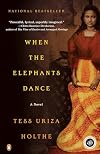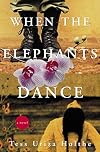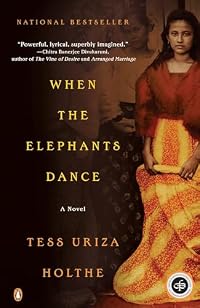
When the Elephants Dance
by Tess Uriza Holthe
On This Page
Description
In the final weeks of the brutal Japanese occupation of the Philippines during World War II, three different Filipino narrators-- a thirteen-year-old boy, his older sister, and a guerrilla commander- -recount the experiences of a people desperately struggling in the midst of the horrors of war, in a dTags
Recommendations
Member Reviews
At its core When the Elephants Dance celebrates the audacity of the human spirit in the most horrific, dehumanizing situations. It shows a people who refused to let go of their hope and love even while they were being tortured, raped, murdered. Their stories demonstrated a self-awareness I rarely read in folklore or magical realism: they so willingly admitted to their flaws and mistakes, all for the sake of the listener - the next generation - who they hoped would take those stories to heart and make a better choice, have a happier life.
In the author's introduction she mentioned how, growing up, she longed to find a book that told her story, that featured her people, but she never could. I'm grateful she's writing the books she always show more wanted to read.
Without When the Elephants Dance I might never have known about the Filipino experience during World War II. Such a haunting yet hopeful story, and a debut no less! Highly recommended to history buffs, especially the Asian experience during World War II.
5 stars
Disclaimer: As one might expect in a book set during a war, it's brutal. Graphic scenes of torture, rape and murder, involving both adults and children. However, the author breaks up that reality of war with the characters telling each other stories from their past steeped in folklore, which gives the reader a chance to catch their breath in between what's happening to the characters in the present. show less
In the author's introduction she mentioned how, growing up, she longed to find a book that told her story, that featured her people, but she never could. I'm grateful she's writing the books she always show more wanted to read.
Without When the Elephants Dance I might never have known about the Filipino experience during World War II. Such a haunting yet hopeful story, and a debut no less! Highly recommended to history buffs, especially the Asian experience during World War II.
5 stars
Disclaimer: As one might expect in a book set during a war, it's brutal. Graphic scenes of torture, rape and murder, involving both adults and children. However, the author breaks up that reality of war with the characters telling each other stories from their past steeped in folklore, which gives the reader a chance to catch their breath in between what's happening to the characters in the present. show less
"When the elephants dance, the chickens must be careful." The elephants here are the Japanese and American forces, vying for control of the Philippines in the waning days of World War II. The chickens are the Filipino people, caught in the crossfire of complete devastation. A family hides in their cellar, surrounded by their neighbors. Food supplies are low and morale is even lower as their loved ones go missing. But this is not merely a novel about the desperation of war. As they hunker in the cellar together, they tell stories - brilliant stories of the magic within the jungle, ghosts without rest, Spanish oppression, and the importance of hope.
This novel is magic. The historical elements and dark fairy tales blend together well . The show more suspense is intense throughout as you wonder if the family - the children in particular - will survive the brutal treatment of the Japanese and the bombings by the Americans. My knowledge of the Philippines during the war consists of Bataan, the death march, MacArthur's vow and his eventual return. The Filipino people themselves are lost and forgotten. I found this book educational and enlightening, and will keep it in my library. Holthe created a masterpiece. show less
This novel is magic. The historical elements and dark fairy tales blend together well . The show more suspense is intense throughout as you wonder if the family - the children in particular - will survive the brutal treatment of the Japanese and the bombings by the Americans. My knowledge of the Philippines during the war consists of Bataan, the death march, MacArthur's vow and his eventual return. The Filipino people themselves are lost and forgotten. I found this book educational and enlightening, and will keep it in my library. Holthe created a masterpiece. show less
The opening of the novel references and explains the title:
Papa explains the war like this: ‘When the elephants dance, the chickens must be careful.’ The great beasts, as they circle one another, shaking the trees and trumpeting loudly, are the Amerikanos and the Japanese as they fight. And our Philippine Islands? We are the small chickens."
So yes, this is a story of the Philippines during World War II. And at first, I didn't think I'd like this novel much. Just before I'd read What is the What about genocide in the Sudan and then First They Killed My Father about genocide in Cambodia. I admit I found it a bit off-putting when I saw that like both of them, this was being told in first person present. God, I thought, not another show more story of misery wrapped in literary gauze! I've grown a bit wary (and weary) of the present tense in fiction. At first that was a technique that seemed fresh and often read lyrically--but I've seen it used so many times it now tends to strike me more as gimmicky and pretentious. But I was thoroughly won over by the end. Holthe said about the only thing she could find in the library about the Philippines were travel guides. She wanted to fill that gap and tell not only the stories she got first hand from her family about the Japanese Occupation, but interweave stories like those she was told as a child, tales of "ghosts and witches, always told with delicious darkness and magic." And though the mainline of the narrative is far from a mere frame a la Arabian Nights, interspersed throughout are several tales told by characters of ghosts and witches and dark spells and curses. Yes, there are also stories of atrocities here--graphic depictions of rape and torture and the brutal necessities of war.
But the novel always kept sight of love and family and hope. Holthe weaves in a beautiful portrait of the Philippines and its people: Filipinos, Spanish, Chinese, Japanese, Americans, both rich and poor, old and young, especially in those short story interludes. She gives you a sense of the landscape, the cuisine, even a flavor of the different languages. And I felt surprisingly at home--my mother's family is Puerto Rican and the Philippines Holthe described reminded me a lot of Puerto Rico. Both are tropical islands and have had centuries of Spanish and decades of American colonization influencing their culture. Holthe also enriches her tale with a lot of Filipino history. I never knew the very name of the country came from King Philip of Spain. Or that there was a war of independence fought against Americans in the early 20th century. So I felt I learned a lot and I was entertained. All good. show less
Papa explains the war like this: ‘When the elephants dance, the chickens must be careful.’ The great beasts, as they circle one another, shaking the trees and trumpeting loudly, are the Amerikanos and the Japanese as they fight. And our Philippine Islands? We are the small chickens."
So yes, this is a story of the Philippines during World War II. And at first, I didn't think I'd like this novel much. Just before I'd read What is the What about genocide in the Sudan and then First They Killed My Father about genocide in Cambodia. I admit I found it a bit off-putting when I saw that like both of them, this was being told in first person present. God, I thought, not another show more story of misery wrapped in literary gauze! I've grown a bit wary (and weary) of the present tense in fiction. At first that was a technique that seemed fresh and often read lyrically--but I've seen it used so many times it now tends to strike me more as gimmicky and pretentious. But I was thoroughly won over by the end. Holthe said about the only thing she could find in the library about the Philippines were travel guides. She wanted to fill that gap and tell not only the stories she got first hand from her family about the Japanese Occupation, but interweave stories like those she was told as a child, tales of "ghosts and witches, always told with delicious darkness and magic." And though the mainline of the narrative is far from a mere frame a la Arabian Nights, interspersed throughout are several tales told by characters of ghosts and witches and dark spells and curses. Yes, there are also stories of atrocities here--graphic depictions of rape and torture and the brutal necessities of war.
But the novel always kept sight of love and family and hope. Holthe weaves in a beautiful portrait of the Philippines and its people: Filipinos, Spanish, Chinese, Japanese, Americans, both rich and poor, old and young, especially in those short story interludes. She gives you a sense of the landscape, the cuisine, even a flavor of the different languages. And I felt surprisingly at home--my mother's family is Puerto Rican and the Philippines Holthe described reminded me a lot of Puerto Rico. Both are tropical islands and have had centuries of Spanish and decades of American colonization influencing their culture. Holthe also enriches her tale with a lot of Filipino history. I never knew the very name of the country came from King Philip of Spain. Or that there was a war of independence fought against Americans in the early 20th century. So I felt I learned a lot and I was entertained. All good. show less
First sentence: Papa explains the war like this: “When the elephants dance, the chickens must be careful.”. I first picked up this book because of the title and this opening line. The elephants in this tale are the Japanese and Americans fighting over the Philippines. The Filipinos are the chickens.
The novel takes place during WWII, towards the end of the Japanese invasion of the Philippines. The Filipinos had suffered greatly during those three years of occupation. They were starving, and subject to being picked up by the Japanese, seemingly at random, only to be tortured or killed. The book focuses on an extended family living in the basement of an apparently abandoned house. They venture out, one or two at a time, only to forage show more for food or medicine. To comfort themselves and each other they tell stories – sometimes traditional Filipino folk tales, and sometimes stories from their own past. These are intended to help each other understand and endure their situation, or to teach a lesson they will need to survive.
It’s an interesting idea and it could have been a really good book, but Holthe just wasn’t quite up to the task. The basic plot of the family’s enduring/surviving the occupation is a riveting one, and Holthe really shines in those sections of the book. However, it seems she was trying too hard to impress, or that she was determined to include every possible Filipino tradition and folk tale in an effort to educate the reader about her parents’ homeland. When she interrupts the plot line to tell another story, she loses momentum, and the attention of the reader. show less
The novel takes place during WWII, towards the end of the Japanese invasion of the Philippines. The Filipinos had suffered greatly during those three years of occupation. They were starving, and subject to being picked up by the Japanese, seemingly at random, only to be tortured or killed. The book focuses on an extended family living in the basement of an apparently abandoned house. They venture out, one or two at a time, only to forage show more for food or medicine. To comfort themselves and each other they tell stories – sometimes traditional Filipino folk tales, and sometimes stories from their own past. These are intended to help each other understand and endure their situation, or to teach a lesson they will need to survive.
It’s an interesting idea and it could have been a really good book, but Holthe just wasn’t quite up to the task. The basic plot of the family’s enduring/surviving the occupation is a riveting one, and Holthe really shines in those sections of the book. However, it seems she was trying too hard to impress, or that she was determined to include every possible Filipino tradition and folk tale in an effort to educate the reader about her parents’ homeland. When she interrupts the plot line to tell another story, she loses momentum, and the attention of the reader. show less
When the Elephants Dance weaves together Filipino folklore, family narratives, and the Japanese occupation of the Philippines during World War II. The novel follows three primary narrators — siblings Alejandro and Isabelle, along with resistance leader Domingo. In 1945, a group of neighbors hide in an abandoned cellar. They share traditional folktales and personal stories to pass the time. Holthe includes a note indicating that she heard many of these stories from her older relatives.
It is not your typical WWII story, since it takes place in the Philippines and is focused on the local people. It explores resistance, collaboration, and the moral compromises required for survival. The tales contain magical elements of Filipino culture. show more They occasionally feel a bit like they were “inserted” rather than flowing naturally. Parts of this novel are riveting, especially Domingo’s narrative, but I think the personal stories could have been shortened.
3.5 show less
It is not your typical WWII story, since it takes place in the Philippines and is focused on the local people. It explores resistance, collaboration, and the moral compromises required for survival. The tales contain magical elements of Filipino culture. show more They occasionally feel a bit like they were “inserted” rather than flowing naturally. Parts of this novel are riveting, especially Domingo’s narrative, but I think the personal stories could have been shortened.
3.5 show less
compelling for the story itself, the mythology, and the filipino history that i'm ashamed to say i was completely unaware of. i'll need to read up on it after reading this book.
I loved this book. This book takes place in the Philippines as WWII is nearing the end. Japan occupies them, having driven the Americans out. The Americans want control back and fight to get it. The book centers around the Karangalan family, who with some of their neighbors, hide away from the conflict in their small, cramped basement. The author weaves the stories of three of the occupants: a teenage boy, his older sister and a militant guerilla to tell of their current struggles. As their story unfolds, others in the basement share stories from their past, some folktales and mystical, others hidden secrets. Together this all blends to give insight into the islands history, beliefs, and resilience. Really good book.
Members
- Recently Added By
Author Information
2 Works 661 Members
She grew up in San Francisco, California, the only one of four siblings born and raised in the United States. She received her B.S. degree in Accounting from Golden Gate University in San Francisco, and is a controller in Marin County California. She lives in Corte Madera with her husband Jason and their dog Nellie. (Bowker Author Biography)
Awards and Honors
Notable Lists
Work Relationships
Has as a student's study guide
Common Knowledge
- Original publication date
- 2002
- Important places
- The Philippines
- First words
- Papa explains the war like this: "When the elephants dance, the chickens must be careful."
- Last words
- (Click to show. Warning: May contain spoilers.)It is up to me now to keep our pride intact. We faced the enemy without weapons. We did not let them defeat us. I am proud to be a Filipino. I shall lift my fist forever in honor of my country. Mabuhay, my Philippines! Long life!
- Blurbers
- Baker, Kevin; Fleischman, Lisa Huang; Park, Jacqueline; Fox, Laurie; Smith, Peter Moore
Classifications
Statistics
- Members
- 586
- Popularity
- 49,898
- Reviews
- 20
- Rating
- (3.76)
- Languages
- English
- Media
- Paper, Audiobook, Ebook
- ISBNs
- 6
- ASINs
- 6