On This Page
Description
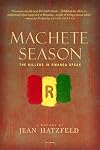
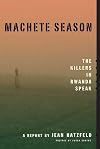
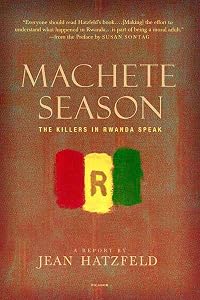
In April-May 1994, 800,000 Rwandan Tutsis were massacred by their Hutu fellow citizens - about 10,000 a day, mostly being hacked to death by machete. Jean Hatzfeld reports on the results of his interviews with nine of the Hutu killers, all of whom are now in prison, some awaiting execution. Hatzfeld elicits extraordinary testimony from these men about the genocide they perpetrated. Each describes what it was like the first time he killed someone, what he felt like when he killed a mother and show more child, and how he reacted when he killed a cordial acquaintance. Each reflects on his feelings of moral responsibility, his guilt, remorse, or indifference to the crimes. Especially since the Holocaust, it has been conventional to presume that only depraved and monstrous evil incarnate could perpetrate such crimes, but it may be, Hatzfeld suggests, that such actions are within the realm of ordinary human conduct. To read this disturbing, enlightening and very brave book is to consider in a new light the foundation of human morality and ethics. show lessTags
Recommendations


















Member Reviews
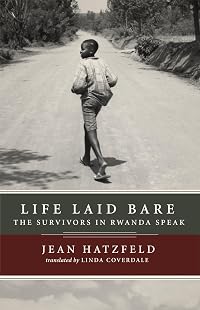
Jean Hatzfeld is a French journalist who spent quite a bit of time in Rwanda, interviewing first the victims of the horrendous genocide there for his book Life Laid Bare, then, for this book, some of their neighbors, a group of nine friends from the same area who grew up together, drank, played and worked together, killed together and now are in prison together. Between April 11 and May 14, 1994, all but 9,000 of 59,000 Tutsis were murdered in the district of Nyama, mostly by being chopped up, quickly or slowly by men like these with machetes. Hatzfeld elicits quite a lot of information from these men as to why and how they did what they did and how they felt about it afterward. Getting past their lies was his first challenge as a show more reporter; trying to understand their complete self-centeredness was the last. Several things contributed to these men and almost all other Tutu men in Rwanda being able to kill as they did, cruelly, unmercifully, relentlessly for 100 days, singing as they marched off each morning to do their grisley work. One was that anyone showing the slightest mercy to a Tutsi was usually killed by a neighbor or even relative Hutu. Another was that they enjoyed the spoils of those they slaughtered -- feasting on their cattle each night, taking their furniture, land, houses, clothes, money, cooking pots, everything. The ground had been prepared for these atrocities by relentless hate-filled radio "talk shows," by the way. And they saw the foreigners, the West, withdraw, showing indifference to the fate of the Tutsis. Nor did any church leaders speak out; instead, many priests and pastors joined in the killing. Also they fully expected to kill every single Tutsi, and expected no witness left, no punishment, only rewards, for what they were doing. The killers actually found satisfaction in cutting Tutsi's (especially the women) "down to size" -- quite literally, chopping off their legs and arms, which had been considered attractively long limbed, extending their suffering. The opening massacres in the Rwandan genocide in this region in April, 1994, took place in two churches, each of which sheltered 5,000 Tutsis, mostly women and children. In this country where 70% are Christian, the killers chopped up women and children, again literally, at the foot of the cross. In the afternoon, they poured gasoline on the surviving children and set them aflame. After that, it was off to the hills and swamps to try to kill every Tutsi in the country. This book is a troubling, powerful testimony to the horrible truths of how ordinary people are capable of doing extraordinary evil. show less
A story so horrific I’m almost sorry to have read the book. At the same time a story so gut-wrenching I believe everyone needs to read it. In just 100 days in 1994 800,000-1,000,000 Tutsis were killed in the Republic of Rwanda. These people were mostly killed by their machete wielding Hutu neighbors.”What we do goes beyond human imagination,” reports one of the murderers. Jean Hatzfeld, a Belgian reporter, interviewed 10 of the killers. These men though fairly open in their responses, were in prison at the time they were interviewed. Hatzfeld's Rwandan translator was a Tutsi. Both of these factors may have affected their responses. This book has a map of Rwanda and a four page timeline but no index. There is a chapter at the end show more of the book with a half page biography of each of the interviewees. I wish there were more information about the actual interviews. This should not be the first book you read about the tragedy in Rwanda.
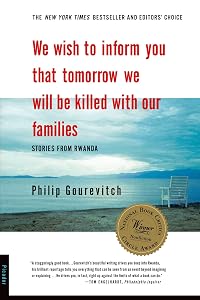
Machete Season shows in terrifying detail how ordinary people can go along with mob brutality. Faced with the same mentality would one have the strength to actively fight the violence or at the least resist being swept up in it? This book and “We wish to inform you that tomorrow we will be killed with our families”, (Gourevitch, P. 1998) would be a great start for a dialogue with high school or college students about violence and personal responsibility. show less
Machete Season shows in terrifying detail how ordinary people can go along with mob brutality. Faced with the same mentality would one have the strength to actively fight the violence or at the least resist being swept up in it? This book and “We wish to inform you that tomorrow we will be killed with our families”, (Gourevitch, P. 1998) would be a great start for a dialogue with high school or college students about violence and personal responsibility. show less
The author first wrote a book where he interviewed 14 survivors of the genocide in Rwanda. I haven’t read it, though I've read plenty of other books about it. It was only later that he thought to interview some of those who killed during the genocide. In this book, the interviews were interspersed with history, sometimes a description of interview process and how it came about that the author decided to write this one, sometimes the voices of some of the survivors are included.
The killers just came across to me as very cold, no remorse – to them, it was a job. I wonder if that’s why the book didn’t affect me all that much? I felt detached while reading it. Overall, I’m rating it ok, but for me, there are much better books show more about Rwanda out there. show less
The killers just came across to me as very cold, no remorse – to them, it was a job. I wonder if that’s why the book didn’t affect me all that much? I felt detached while reading it. Overall, I’m rating it ok, but for me, there are much better books show more about Rwanda out there. show less
This is a seriously depressing book. Jean Hatzfeld goes into a prison in Rwanda and interviews a dozen killers from the 1994 Rwandan genocide. This book was fascinating and insightful. It explores how ordinary people can be swept up into inhumane acts. It's chilling really.
This book is simply astonishing.
Writer Philip Gourevitch has chosen to discuss Jean Hatzfeld’s Machete Season: The Killers in Rwanda Speak on FiveBooks as one of the top five on his subject - Rwanda, saying that:
“…Hatzfeld wound up going back to Rwanda and the whole group of killers who had been pursuing the survivors he’d been writing about in his first book were all in one prison nearby. And he arranged to meet with them on a regular basis, individually and collectively, to hear their stories. And it’s the most direct (I guess you could say honest) account, by people who took part in the genocide, of the excitement and thrill of the hunt and the kill that motivated a lot of them…”
The full interview is available here: show more target="_top">http://five-books.com/interviews/philip-gourevitch show less
“…Hatzfeld wound up going back to Rwanda and the whole group of killers who had been pursuing the survivors he’d been writing about in his first book were all in one prison nearby. And he arranged to meet with them on a regular basis, individually and collectively, to hear their stories. And it’s the most direct (I guess you could say honest) account, by people who took part in the genocide, of the excitement and thrill of the hunt and the kill that motivated a lot of them…”
The full interview is available here: show more target="_top">http://five-books.com/interviews/philip-gourevitch show less
Members
- Recently Added By
Lists

Read These Too
458 works; 9 members
Author Information

15+ Works 959 Members
Some Editions
Awards and Honors
Series

Belongs to Publisher Series
Work Relationships
Is contained in
Common Knowledge
- Canonical title
- Machete Season: The Killers in Rwanda Speak
- Original title
- Une Saison de Machettes
- Original publication date
- 2003
- People/Characters
- Joseph-Desire Bitero; Leopord Twagirayezu; Elie Mizinge; Fulgence Bunani; Pio Mutugirehe; Alphonse Hitiyaremye (show all 10); Jean-Baptiste Murangira; Ignace Rukiramacumu; Pancrace Hakiamungili; Adalbert Munzigura
- Important places
- Rwanda
- Important events
- Rwandan Genocide (1994)
- First words
- In April the nocturnal rains often leave in their wake black clouds that mask the first rays of the sun.
- Quotations
- The killer has no idea of the ordeal that begins for the victims once they have agreed to forgive, for in doing so they not only reopen old wounds but also lose the possibility of gaining relief through revenge. The killer d... (show all)oes not understand that in seeking forgiveness, he is demanding that the victim make an extraordinary effort, and he remains oblivious to the survivor's dilemma, anguish, and courageous altruism. The killer does not realize the when he asks for forgiveness as though it were a simple formality, his attitude increases the victim's pain by ignoring it.
The killer does not grasp that truth, sincerity, and forgiveness are bound together. For him, more or less telling the truth is a recommended ploy for more or less diminishing his offense and, thus, his punishment, even his guilt. Asking for pardon is thus a selfish act invested in the future, because it facilitates his reunion with family and friends, promotes his rehabilitation, and helps him renew former relationships. (“Bargaining for Forgiveness”) - Last words
- (Click to show. Warning: May contain spoilers.)But deep down, we were not tired of anything.
- Original language*
- Français
- Disambiguation notice
- Originally published by Editions de Seuil, Frances as "Une Saison de Machettes"
*Some information comes from Common Knowledge in other languages. Click "Edit" for more information.
Classifications
- Genres
- Nonfiction, History, General Nonfiction
- DDC/MDS
- 967.57104 — History & geography History of Africa Central Africa: Congo, Angola, Chad Democratic Republic of the Congo (Congo-Kinshasa); Rwanda & Burundi Rwanda and Burundi Rwanda 1962-
- LCC
- DT450.435 .H3914 — History of Europe, Asia, Africa and Oceania Africa History of Africa Eastern Africa Burundi History
- BISAC
Statistics
- Members
- 526
- Popularity
- 56,902
- Reviews
- 8
- Rating
- (4.09)
- Languages
- 8 — Dutch, English, French, German, Italian, Polish, Portuguese, Spanish
- Media
- Paper, Ebook
- ISBNs
- 16
- ASINs
- 5