
Dina Temple-Raston
Author of A Death in Texas: A Story of Race, Murder, and a Small Town's Struggle for Redemption
About the Author
Dina Temple-Raston was a long-time White House reporter for Bloomberg Business News before becoming a correspondent for USA Today. She lives in Washington, DC. (Bowker Author Biography)
Works by Dina Temple-Raston
A Death in Texas: A Story of Race, Murder, and a Small Town's Struggle for Redemption (2002) 121 copies, 1 review
In Defense of Our America: The Fight for Civil Liberties in the Age of Terror (2007) 65 copies, 1 review
Justice on the Grass: Three Rwandan Journalists, Their Trial for War Crimes and a Nation's Quest for Redemption (2005) 46 copies
The Jihad Next Door: The Lackawanna Six and Rough Justice in an Age of Terror (2007) 46 copies, 5 reviews
Tagged
Common Knowledge
- Birthdate
- 1965-08-25
- Gender
- female
- Education
- Columbia University (MA|Journalism|2006)
Northwestern University (BA, honors, 1986) - Occupations
- journalist
writer - Organizations
- National Public Radio
- Agent
- John Thornton
- Nationality
- Belgium (birth)
- Birthplace
- Brussels, Belgium
- Associated Place (for map)
- Brussels, Belgium
Members
Reviews

My overall evaluation of this book is that it is confused. The author doesn't develop one theme throughout this book, but jumps around between several different themes. Worse, some of these themes have merit and some don't. Some examples:
Theme 1: The Yemenite community in Lackawanna was typical of an ethnic/immigrant community anywhere in America in the past 100 years until this incident and its fallout. - One wishes this were true, but apparently it isn't, and Temple-Raston herself can't show more help but note things like this community's general celebration of the attack on the U.S. Cole (p.30), their insularity, the susceptibility of their youth to religious radicals, and their celebration of the escape of one of the "6" [really 9] from Yemenite authorities. Comparing this with the "illegal" Mexican-American community where I live, I don't see any similarity at all. My Mexican-American neighbors are rabidly pro-American [curiously, even when being chased by Homeland Security] and would like nothing better than for the U.S. model to be emulated everywhere.
Theme 2: The 6 [or 9] subjects of this book ywere just young alienated youth who really weren't at all interested in terrorism, but just wanted "to belong" and reaffirm their ethnic identity. They were misled into going to the Al Queda camps under the guise that they would be training to fight Russians and Serbs, not Americans. It was "an adventure" for the 9, not a serious taking up of arms. - The author adduces some evidence for this theme, but then, again, notes facts like the Lackawanna youth who ended up staying in the Middle East clearly declared to his fellows that he wanted to be a martyr and die for the cause. [One wonders why things were so clear to this young man but purportedly weren't at all clear to the other 8.] By the time that most of these youth had declared that the life of a Jihad warrior wasn't for them, it had been made clear to all 9 [if it wasn't crystal clear before - and it should have been crystal clear before] that the enemy was the U.S. and Israel, not the Russians and the Serbs. But was that their motivation for leaving the camp, or was their motivation that they didn't REALLY want to dedicate their lives and future to a cause, even the cause of "defending" fellow Muslims? The author doesn't seem to really know.
Theme 3: America is turning into a police state and giving up basic civil liberties gained from hundreds of years of struggle against tyranny. - This is the theme the author should have been emphasizing to start with and returning to throughout the book, yet she doesn't really get around to it until Chapter 14. The simple fact of the matter is that, although the 6 [or 9] may not have been, and may not be, very good Americans, they would not have been criminals under our laws of 50 years ago. They didn't actually DO anything to harm other Americans or their property. They would have had the same standing under previous American law as those people who were members of the German American Bund [or Henry Ford] before WWII [disgusting people, but not people we want littering our jails for their stupid views] But somehow the author seems "fuzzy" about this very basic point until nearly the end of her book.
So my evaluation is simple: Buy this book if you want somewhat disjointed sketches of the lives and some of the surroundings of the 6, with little more. Don't buy it if you are looking for a case study of this incident to accompany the many fine more theoretical studies of the loss of our civil liberties. You might borrow it from a friend and read Chapter 14, but if you are a civil libertarian there is not a lot more in the book to interest you. show less
Theme 1: The Yemenite community in Lackawanna was typical of an ethnic/immigrant community anywhere in America in the past 100 years until this incident and its fallout. - One wishes this were true, but apparently it isn't, and Temple-Raston herself can't show more help but note things like this community's general celebration of the attack on the U.S. Cole (p.30), their insularity, the susceptibility of their youth to religious radicals, and their celebration of the escape of one of the "6" [really 9] from Yemenite authorities. Comparing this with the "illegal" Mexican-American community where I live, I don't see any similarity at all. My Mexican-American neighbors are rabidly pro-American [curiously, even when being chased by Homeland Security] and would like nothing better than for the U.S. model to be emulated everywhere.
Theme 2: The 6 [or 9] subjects of this book ywere just young alienated youth who really weren't at all interested in terrorism, but just wanted "to belong" and reaffirm their ethnic identity. They were misled into going to the Al Queda camps under the guise that they would be training to fight Russians and Serbs, not Americans. It was "an adventure" for the 9, not a serious taking up of arms. - The author adduces some evidence for this theme, but then, again, notes facts like the Lackawanna youth who ended up staying in the Middle East clearly declared to his fellows that he wanted to be a martyr and die for the cause. [One wonders why things were so clear to this young man but purportedly weren't at all clear to the other 8.] By the time that most of these youth had declared that the life of a Jihad warrior wasn't for them, it had been made clear to all 9 [if it wasn't crystal clear before - and it should have been crystal clear before] that the enemy was the U.S. and Israel, not the Russians and the Serbs. But was that their motivation for leaving the camp, or was their motivation that they didn't REALLY want to dedicate their lives and future to a cause, even the cause of "defending" fellow Muslims? The author doesn't seem to really know.
Theme 3: America is turning into a police state and giving up basic civil liberties gained from hundreds of years of struggle against tyranny. - This is the theme the author should have been emphasizing to start with and returning to throughout the book, yet she doesn't really get around to it until Chapter 14. The simple fact of the matter is that, although the 6 [or 9] may not have been, and may not be, very good Americans, they would not have been criminals under our laws of 50 years ago. They didn't actually DO anything to harm other Americans or their property. They would have had the same standing under previous American law as those people who were members of the German American Bund [or Henry Ford] before WWII [disgusting people, but not people we want littering our jails for their stupid views] But somehow the author seems "fuzzy" about this very basic point until nearly the end of her book.
So my evaluation is simple: Buy this book if you want somewhat disjointed sketches of the lives and some of the surroundings of the 6, with little more. Don't buy it if you are looking for a case study of this incident to accompany the many fine more theoretical studies of the loss of our civil liberties. You might borrow it from a friend and read Chapter 14, but if you are a civil libertarian there is not a lot more in the book to interest you. show less
The Jihad Next Door: The Lackawanna Six and Rough Justice in an Age of Terror, Library Edition by Dina Temple-Raston
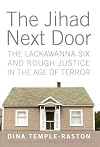
This is a fascinating story of the half-dozen New York state men driven to an Al Qaeda traing camp, apparently by ennui. I have to admit, especially since once ended up a forensically identified suicide bomber (chained to his steering whhel), seeing these men as guileless dupes that invested cash and commitment to travel around the world without really knowing the base tenets of their trainers... Well... Well, by the end of the book I was convinced probably most of the young men were show more directionless and disillusioned and pre-9/11 made a very serious mistake and compounded it by being among thouse that had clues to 9/11, but acted not... show less
Were the six young men who lived in Lackawanna, NY members of the first homegrown "sleeper cell" discovered during America's War on Terror? Or were these men born of Yemeni families merely confused and mis-guided friends who ended up traveling overseas to spend time in an al-Qaeda training camp? Journalist Dina Temple-Raston does an excellent job tracing the facts in this complex case. In all candor, part of the satisfaction I received in reading the book came from the fact that I'm a show more journalist in Western New York who knows a good number of the key players in this saga -- including some of the lawyers, prosecutors and investigators. But even if the names and geographic turf were unfamiliar territory, I think I would have found "The Jihad Next Door" quite interesting. The author delves into issues that include cultural/ethnic bias. There's no doubt that critics might accuse her of unfairly depicting some of the defendants as casualties in America's fight against terrorism. But she backs up her assertions with compelling facts, presenting them in an intriguing fashion. True, she also weaves in other cases that tend to weaken the tome's overall cohesion. But it's a worthy read. show less
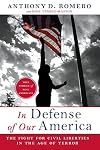
This book looks at the current state of civil liberties in America, by exploring case studies of several different types of cases.
Matthew Limon is a gay teenager from Kansas who was sentenced to a seventeen-year prison term for having consensual sex with a boy three years younger. If his sex partner had been female, the sentence would have been much less. As a way to lessen the impact of a proposed total abortion ban in South Dakota, Cecilia Fire Thunder, the President of the Sioux Nation, show more advocated putting an abortion clinic on Sioux land. The school board of Dover, Pennsylvania attempted to force the local high school to include “intelligent design” into the biology curriculum. A middle-age science teacher named Bertha Spahr led the fight against the plan. Kot Hordynski is part of a non-violent anti-war group at the University of California, Santa Clara. The Pentagon put him on a terrorist watch list and called him a "credible threat."
Before anyone thinks that the American Civil Liberties Union, of which Romero is the Executive Director, is an anti-conservative or anti-Catholic group, consider: the ACLU defended Rush Limbaugh’s right to privacy when prosecutors wanted his medical records to prosecute his drug bust; they argued that anti-abortion protestors have a right to march and be heard; the ACLU stood up for Oliver North’s constitutional rights during Iran-Contra; when a high school senior wanted to put a quote from the Bible in her yearbook, the ACLU argued that she had a right to free speech-even religious speech. Also, the ACLU helped strike the provision in the Virginia constitution that denied Jerry Falwell’s church the right to incorporate in Virginia.
This is a gem of a book. It does a good job of showing how civil liberties were not in good shape, entangling average people, even before 9/11; since then, things have gotten noticeably worse. It is very much worth reading. show less
Matthew Limon is a gay teenager from Kansas who was sentenced to a seventeen-year prison term for having consensual sex with a boy three years younger. If his sex partner had been female, the sentence would have been much less. As a way to lessen the impact of a proposed total abortion ban in South Dakota, Cecilia Fire Thunder, the President of the Sioux Nation, show more advocated putting an abortion clinic on Sioux land. The school board of Dover, Pennsylvania attempted to force the local high school to include “intelligent design” into the biology curriculum. A middle-age science teacher named Bertha Spahr led the fight against the plan. Kot Hordynski is part of a non-violent anti-war group at the University of California, Santa Clara. The Pentagon put him on a terrorist watch list and called him a "credible threat."
Before anyone thinks that the American Civil Liberties Union, of which Romero is the Executive Director, is an anti-conservative or anti-Catholic group, consider: the ACLU defended Rush Limbaugh’s right to privacy when prosecutors wanted his medical records to prosecute his drug bust; they argued that anti-abortion protestors have a right to march and be heard; the ACLU stood up for Oliver North’s constitutional rights during Iran-Contra; when a high school senior wanted to put a quote from the Bible in her yearbook, the ACLU argued that she had a right to free speech-even religious speech. Also, the ACLU helped strike the provision in the Virginia constitution that denied Jerry Falwell’s church the right to incorporate in Virginia.
This is a gem of a book. It does a good job of showing how civil liberties were not in good shape, entangling average people, even before 9/11; since then, things have gotten noticeably worse. It is very much worth reading. show less
Lists
el (1)
Awards


You May Also Like


Associated Authors
Statistics
- Works
- 5
- Members
- 288
- Popularity
- #81,141
- Rating
- 3.4
- Reviews
- 8
- ISBNs
- 20