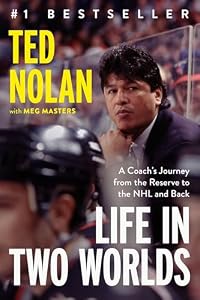
Life in Two Worlds: A Coach's Journey from the Reserve to the NHL and Back
by Ted Nolan
On This Page
Description
"Despite the personal rivalries, lies, bad intentions, and discrimination, Ted Nolan made it from a small northern reservation to the NHL. But after he won the Jack Adams Award as the best coach in the NHL, he didn't work in the NHL again for a decade. Why? Nolan's story is one of succeeding against the odds. He grew up in poverty outside Sault St. Marie, on the Garden River reserve, in a small house that had no running hot water or electricity. He made his own backyard rink and fell in love show more with the game. That love was enough to take him to the pros. It was the classic Canadian story: small-town kid makes it to the NHL. Nolan was drafted in 1978 by the Detroit Red Wings. But his real talent lay in coaching. Teams always got better when he was behind the bench. As a very young coach, he coached the Sault St. Marie Greyhounds to three consecutive Memorial Cup Finals. When he got his shot in the NHL, Nolan immediately turned around the Buffalo Sabres, earning them the title of "hardest-working team in professional sports." He took them deep into the playoffs. That was enough to convince the league that he was the best coach in the NHL. And yet, the Sabres failed to re-sign their star coach. In fact, Nolan didn't coach in the NHL again for an incredible ten years. This despite coaching the Moncton Wildcats to the Memorial Cup and shocking the hockey world by coaching tiny Latvia to a near-draw with mighty Team Canada. So why wasn't Nolan back behind an NHL bench? "If my skin were white," says Nolan, "I'd be coaching." This is a story then, of succeeding against the odds, and then having success stripped away. It is partly an angry story, a story of injustice, that makes this memoir a story of learning. It is a fierce look at one man's journey as he comes to know the wider world--with the courage to reach for the previously unattained, and the humility to recognize what really matters in the end."-- show lessTags
Recommendations







Member Recommendations
Member Reviews
I don't know hockey but I do know the name Ted Nolan, and the Garden River area. He figured large in our local news when he went on to NHL fame, then faded from view again afterwards. Everyone had an opinion about what happened with the Sabres, but few had any knowledge. It was great to read the whole story from Nolan's own point of view, but that particular incident is only a small component of the larger story he has to tell.
Garden River in the 1960s presented a rougher upbringing than I had ever imagined - no indoor plumbing, poor heating and insulation. Multiple generations were traumatized from their residential school experience, turning to drink to drown their memories. These were a people in need of assistance and healing, not show more the scorn they received. Nolan was very fortunate in his parents, who were significant figures in their community and set a strong example for maintaining pride in one's culture and heritage. They also taught him the value of hard work.
Racism enters the story faster than hockey does, and it is always in the background. Nolan explores the stereotypes, does not shy away from instances where they were true but backs them with the circumstances, and abundantly demonstrates their harm. The lowest days were his playing years in Kenora, Ontario, and much later an unbelievably bad experience as a coach during a match in Chicoutimi, Quebec. He required police escort out of the building to protect him from the spewing racist hatred of 'fans' who seemed more interested in attacking his culture than in the game. The incident left him understandably shaken.
How great a role racism played in the most infamous incident of his life - being let go by Buffalo in the 1990s - is difficult for him to evaluate. He dismisses all the rumours, which I find credible given how much else he openly confesses. A more clear point surfaces: there are seasons in which NHL management feels motivated to have their team finish in the basement for the sake of getting better picks in the next draft. When this happens, as it did during those key seasons, it's an enormous clash with the desires, striving and morale of the players, and of their coach. Nolan was determined to push his underdog team as far as it could go while management wanted him to lose.
The writing is excellent, I think any celebrity who doubts their writing skills would do well to team up with Meg Masters based on this. His wife Sandra is a major hero in this story, stood by him through everything. Last to mention, I have seen the railway bridge with those words spraypainted on it all my life, and always wondered. The extra bits of information provided here were very satisfying. show less
Garden River in the 1960s presented a rougher upbringing than I had ever imagined - no indoor plumbing, poor heating and insulation. Multiple generations were traumatized from their residential school experience, turning to drink to drown their memories. These were a people in need of assistance and healing, not show more the scorn they received. Nolan was very fortunate in his parents, who were significant figures in their community and set a strong example for maintaining pride in one's culture and heritage. They also taught him the value of hard work.
Racism enters the story faster than hockey does, and it is always in the background. Nolan explores the stereotypes, does not shy away from instances where they were true but backs them with the circumstances, and abundantly demonstrates their harm. The lowest days were his playing years in Kenora, Ontario, and much later an unbelievably bad experience as a coach during a match in Chicoutimi, Quebec. He required police escort out of the building to protect him from the spewing racist hatred of 'fans' who seemed more interested in attacking his culture than in the game. The incident left him understandably shaken.
How great a role racism played in the most infamous incident of his life - being let go by Buffalo in the 1990s - is difficult for him to evaluate. He dismisses all the rumours, which I find credible given how much else he openly confesses. A more clear point surfaces: there are seasons in which NHL management feels motivated to have their team finish in the basement for the sake of getting better picks in the next draft. When this happens, as it did during those key seasons, it's an enormous clash with the desires, striving and morale of the players, and of their coach. Nolan was determined to push his underdog team as far as it could go while management wanted him to lose.
The writing is excellent, I think any celebrity who doubts their writing skills would do well to team up with Meg Masters based on this. His wife Sandra is a major hero in this story, stood by him through everything. Last to mention, I have seen the railway bridge with those words spraypainted on it all my life, and always wondered. The extra bits of information provided here were very satisfying. show less
Ratings
Members
- Recently Added By
Lists

Globe and Mail | Canadian Non-Fiction: October 21, 2023
10 works; 1 member
Globe and Mail | Canadian Non-Fiction: October 28, 2023
10 works; 1 member

Globe and Mail | Canadian Non-Fiction: November 4, 2023
10 works; 1 member

Globe and Mail | Canadian Non-Fiction: November 11, 2023
10 works; 1 member
Globe and Mail | Canadian Non-Fiction: November 18, 2023
10 works; 1 member

Globe and Mail | Canadian Non-Fiction: November 25, 2023
10 works; 1 member
Globe and Mail | Canadian Non-Fiction: December 2, 2023
10 works; 1 member
Globe and Mail | Canadian Non-Fiction: December 9, 2023
10 works; 1 member
Globe and Mail | Canadian Non-Fiction: December 16, 2023
10 works; 1 member
Globe and Mail | Canadian Non-Fiction: December 23, 2023
10 works; 1 member
Globe and Mail | Canadian Non-Fiction: January 6, 2024
10 works; 1 member
Author Information
2 Works 137 Members
Common Knowledge
- Canonical title
- Life in Two Worlds: A Coach's Journey from the Reserve to the NHL and Back
- Original publication date
- 2023
- Important places
- Sault Ste. Marie, Ontario, Canada; Buffalo, New York, USA; Pittsburgh, Pennsylvania, USA; Glens Falls, New York, USA; Detroit, Michigan, USA
- Dedication
- To Mom and Dad. The words I never had a chance to say: "Thank you and I love you." Your son, Teddy.
- First words
- I opened the door and felt a stab of anxiety.
- Last words
- (Click to show. Warning: May contain spoilers.)Perhaps this book can play a small part in that.
Classifications
- Genres
- Sports and Leisure, Biography & Memoir, Nonfiction
- DDC/MDS
- 796.962092 — Arts & recreation Recreation, sports, and performing arts Sports Winter sports Ice games and sports Ice hockey Biography And History
- LCC
- GV848.5 .N65 .A3 — Geography, Anthropology and Recreation Recreation. Leisure Recreation. Leisure Sports
- BISAC
Statistics
- Members
- 25
- Popularity
- 1,071,166
- Reviews
- 1
- Rating
- (4.00)
- Languages
- English
- Media
- Paper, Ebook
- ISBNs
- 4