
The Indian Clerk
by David Leavitt
On This Page
Description
Leavitt's novel centers on the relationship between mathematicians G.H. Hardy (1877-1947) and Srinivasa Ramanujan (1887-1920). In January of 1913, Cambridge-based Hardy receives a nine-page letter filled with prime number theorems from S. Ramanujan, a young accounts clerk in Madras. Intrigued, Hardy consults his colleague and collaborator, J.E. Littlewood; the two soon decide Ramanujan is a mathematical genius and that he should emigrate to Cambridge to work with them. Hardy recruits the show more young, eager don, Eric Neville, and his wife, Alice, to travel to India and expedite Ramanujan's arrival; Alice's changing affections, WWI and Ramanujan's enigmatic ailments add obstacles. Meanwhile, Hardy, a reclusive scholar and closeted homosexual, narrates a second story line cast as a series of 1936 Harvard lectures, some of them imagined. Ramanujan comes to renown as the the Hindu calculator discussions of mathematics and bits of Cambridge's often risqué academic culture (including D.H. Lawrence's 1915 visit) add authenticity. show lessTags
Recommendations
















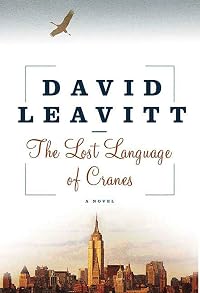















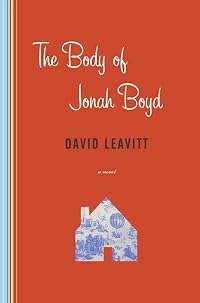














Member Recommendations
Limelite Part of the "Baroque Cycle" featuring appearances by Isaac Newton and Liebniz, non-collaborating mathematical contemporaries.
Member Reviews
I found this novel very interesting but I could not stop feeling it was not the book I'd been expecting based on the blurb. By focusing the narrative on GH Hardy (and occasionally, some other characters), it kept Ramanujan as the unknowable exotic Other throughout. And that seemed increasingly jarring in a novel where he's in the title and Hardy is not.
I love those instances of synchronicity discovered through reading.
Until I read this book I had never heard of mathematician Ramanujan and certainly never heard of his contributions to mathematics.
This is despite studying mathematics for my Bachelor of Science major.
And then, within a week of finishing the book I ran across mention of him in this article from Nature: https://www.nature.com/articles/s41586-021-03229-4
I suppose the story of a mathematics genius from India who was brought to England by some of the greatest minds of the early 20th century would not appeal to everyone but I was quite fascinated by it. Not only do we learn about Ramanujan and his mentor, Hardy, but we get a glimpse of pre-war England especially as it was show more experienced in the halls of Cambridge. Names such as Rupert Brooke and Bertrand Russell and John Maynard Keynes pop up at parties and dinners. Many of them belong to the Apostles Club, a discussion group of current and former Cambridge students. It appears that many of the members were homosexual according to this book. Certainly G. H. Hardy is portrayed as one. Women play an important part in this story although their position in society at that time was certainly subservient to men. There is the married woman, Mrs. Chase, who is the mistress of one of Hardy's collaborator; there is Hardy's unmarried sister; and there is Mrs. Norton, wife of another mathematician. It is Mr. and Mrs. Norton who meet Ramanujan in India and persuade him to come to England where they host him at their house for some months. Ramanujan is a strict vegetarian and Mrs. Norton special meals for him, although they don't seem to be to Ramanujan's taste and certainly are not liked by Hardy and the other guests. In the process Mrs. Norton becomes infatuated with Ramanujan but he does not return her attention. When Ramanujan moves out into rooms at the college he cooks for himself possibly giving himself lead poisoning from the cookware he uses. Leavitt doesn't definitively say that lead poisoning was the cause of Ramanujan's early death but it seems as good a theory as any. While Ramanujan did not prove the Reimann Hypothesis that fascinated Hardy (in fact it still remains unproven) but he did contribute to the fields of number theory, infinite series and continued fractions. For someone who had no formal training in mathematics that was miraculous. It may have been that lack of formal training that allowed him to branch out into new approaches and achieve the breakthroughs that he did.
Truly a fascinating portrayal. show less
Until I read this book I had never heard of mathematician Ramanujan and certainly never heard of his contributions to mathematics.
This is despite studying mathematics for my Bachelor of Science major.
And then, within a week of finishing the book I ran across mention of him in this article from Nature: https://www.nature.com/articles/s41586-021-03229-4
I suppose the story of a mathematics genius from India who was brought to England by some of the greatest minds of the early 20th century would not appeal to everyone but I was quite fascinated by it. Not only do we learn about Ramanujan and his mentor, Hardy, but we get a glimpse of pre-war England especially as it was show more experienced in the halls of Cambridge. Names such as Rupert Brooke and Bertrand Russell and John Maynard Keynes pop up at parties and dinners. Many of them belong to the Apostles Club, a discussion group of current and former Cambridge students. It appears that many of the members were homosexual according to this book. Certainly G. H. Hardy is portrayed as one. Women play an important part in this story although their position in society at that time was certainly subservient to men. There is the married woman, Mrs. Chase, who is the mistress of one of Hardy's collaborator; there is Hardy's unmarried sister; and there is Mrs. Norton, wife of another mathematician. It is Mr. and Mrs. Norton who meet Ramanujan in India and persuade him to come to England where they host him at their house for some months. Ramanujan is a strict vegetarian and Mrs. Norton special meals for him, although they don't seem to be to Ramanujan's taste and certainly are not liked by Hardy and the other guests. In the process Mrs. Norton becomes infatuated with Ramanujan but he does not return her attention. When Ramanujan moves out into rooms at the college he cooks for himself possibly giving himself lead poisoning from the cookware he uses. Leavitt doesn't definitively say that lead poisoning was the cause of Ramanujan's early death but it seems as good a theory as any. While Ramanujan did not prove the Reimann Hypothesis that fascinated Hardy (in fact it still remains unproven) but he did contribute to the fields of number theory, infinite series and continued fractions. For someone who had no formal training in mathematics that was miraculous. It may have been that lack of formal training that allowed him to branch out into new approaches and achieve the breakthroughs that he did.
Truly a fascinating portrayal. show less
L’ultima fatica di David Leavitt è un romanzo molto particolare. SI tratta della storia, curiosa per molti versi, della vita del matematico inglese G. H. Hardy, e del suo incontro col genio matematico indiano Srinivasa Ramanujan. Il romanzo, ambientato a cavallo della Prima Guerra Mondiale nell’Inghilterra dei grandi college (gran parte del testo è ambientato al Trinity College di Cambrudge), riscotruisce, romanzandola, la storia dei due grandi matematici, delle loro ricerche, della voglia di risolvere i grandi rompicapi matematici. Ma questo romanzo non è solo questo. Offre uno spaccato acuto e senza veli della società inglese, specie di quella universitaria, prima della Guerra, stretta tra grandi nomi della scienza (nel show more romanzano si incrociano le vite di Bertrand Russel, D.H. Lawrence, Wittgenstein, Keynes… che diventano “reali” nelle loro passioni e nei loro piccoli difetti), società segrete, tensioni politiche legate alla Guerra stessa e voglia di andare avanti. Certo, per Leavitt questa è un’esperienza nuova. Siamo lontani da Ballo in Famiglia, il libro è più maturo per certi versi, e il frutto di una approfondita ricerca bibliografica. Però il tocco del grande autore è presente: la storia si dipana in un susseguirsi di eventi che lo rendono vivo, lontano da un mero sforzo biografico. show less
The recognition and description of genius is a tricky enterprise, so I applaud the author for the skillful account of events (true and invented) surrounding the short and brilliant life of the great Indian mathematician Ramanujan. One also gets a great feel of the period, masterfully portrayed through the eyes and feelings of Hardy who was the instrument of bringing Ramanujan to England and also his collaborator. The overall feeling is that of melancholy and human frailness, though, and it was with me throughout the reading of the book...
This review was written for LibraryThing Member Giveaways.
If there were a "truth in book titles" law, this novel should really be called "The Cambridge Don."
Bravo to David Leavitt for doing a lot of research on Cambridge intellectuals in the period immediately before and during the First World War. Who would have thought you could write a 500 page novel about early 20th century mathematics and make it interesting? Here's the rub: based upon Leavitt's effort here, it's probably not possible. Actually, the "campus politics" aspect of the book keeps the plot simmering for the first 200 pages or so. It's fun to read about the "naughty" Cambridge Apostles, and the conflicting egos of Bertrand Russell, D.H. Lawrence, Ludwig Wittgenstein, and other intellectual bigwigs who make their appearances show more here. And the Indian mathematician of the title, Srinivasa Ramanujan, is fascinating enough, even though he is treated entirely from the outside. The problem is there's not enough of interest - not enough plot - to justify the lengthy treatment that the author provides. And the central character through whom the novel is refracted, a cranky bachelor don named G.H. Hardy, becomes tiresome company halfway through the book. show less
Bravo to David Leavitt for doing a lot of research on Cambridge intellectuals in the period immediately before and during the First World War. Who would have thought you could write a 500 page novel about early 20th century mathematics and make it interesting? Here's the rub: based upon Leavitt's effort here, it's probably not possible. Actually, the "campus politics" aspect of the book keeps the plot simmering for the first 200 pages or so. It's fun to read about the "naughty" Cambridge Apostles, and the conflicting egos of Bertrand Russell, D.H. Lawrence, Ludwig Wittgenstein, and other intellectual bigwigs who make their appearances show more here. And the Indian mathematician of the title, Srinivasa Ramanujan, is fascinating enough, even though he is treated entirely from the outside. The problem is there's not enough of interest - not enough plot - to justify the lengthy treatment that the author provides. And the central character through whom the novel is refracted, a cranky bachelor don named G.H. Hardy, becomes tiresome company halfway through the book. show less
A very interesting book about the mathematician GH Hardy, at the time when the untaught Indian mathematical genius Ramanujan, entered his life. Thi story has been told in a number of places (I first came across it in the marvellous play by Complicite - a disappearing number) and speaks to many contemporary obsessions - colonialism, sexuality, the second world war, religion, maths and science, to name but a few. Leavitt draws a very compelling and convincing picture of the very strange world of Cambridge in the early years of the 1900s - a bizarre cultish place that produced a strange harvest of geniuses - and also produces sympathetic characterisations. Notable for me was Hardy's collaborator Littlewood, a very 'normal' man who happens show more to be an outstanding mathematician. Leavitt's first person narrative is impeccable, his narrator fallible yet likeable, and we are drawn into the world of this extraordinary story and given a glimpse of the alien but beguiling world of maths show less
Set in the period just before and during the First World War, this novel tells the story of a mathematician G. H. Hardy and the untrained Indian mathematical genius, Srinivasa Ramanujan, who he arranges to come and work with him at Trinity College, Cambridge.
The story is based on true events, and despite the title, the focus is very much on Hardy, who acts as the narrator. I never felt particularly engaged with any of the characters (to the point I would forget who was who at times) but as a portrayal of an era, I found it very interesting, particularly in the earlier parts of the book describing the cultural milieu of the intellectuals at Cambridge
The story is based on true events, and despite the title, the focus is very much on Hardy, who acts as the narrator. I never felt particularly engaged with any of the characters (to the point I would forget who was who at times) but as a portrayal of an era, I found it very interesting, particularly in the earlier parts of the book describing the cultural milieu of the intellectuals at Cambridge
Members
- Recently Added By
Lists

The Immigrant's Stories
74 works; 19 members

International IMPAC Dublin Literary Award
179 works; 6 members

Pen/Faulkner Winners and Finalists
178 works; 9 members

Books Read in 2007
326 works; 8 members

Authors from the United States
245 works; 3 members

HS Mathematics class library
79 works; 6 members
Author Information

59+ Works 8,780 Members
David Leavitt's first collection of stories, "Family Dancing," was a finalist for both the National Book Critics Circle Award & the PEN/Faulkner Prize. "The Lost Language of Cranes" was made into a BBC film, & "While England Sleeps" was shortlisted for the Los Angeles Times Fiction Prize. Leavitt is also the author of "Equal Affections," "A Place show more I've Never Been," "Arkansas," & "The Page Turner." With Mark Mitchell, he coedited "The Penguin Book of Short Stories" & "The Pages Passed from Hand to Hand" & cowrote "Italian Pleasures." He is recipient of fellowships from the John Simon Guggenheim Foundation & the National Endowment for the Arts. He divides his time between Italy and Florida. (Bowker Author Biography) show less
Awards and Honors
Common Knowledge
- Canonical title
- The Indian Clerk
- Original publication date
- 2007
- People/Characters
- Srinivasa Ramanujan; G. H. Hardy; Ludwig Wittgenstein; D. H. Lawrence; John Edensor Littlewood; Bertrand Russell (show all 10); Eric Neville; John Maynard Keynes; Lytton Strachey; Alice Neville
- Important places
- Cambridge, Cambridgeshire, England, UK; University of Cambridge, Cambridge, Cambridgeshire, England, UK; London, England, UK; Oxford, Oxfordshire, England, UK; Madras, India
- Important events
- World War I
- Epigraph
- Archimedes will be remembered when Aeschylus is forgotten, because languages die and mathematical ideas do not. "Immortality" may be a silly word, but probably a mathematician has the best chance of whatever it may mean.
<... (show all)br>- G.H. Hardy, A Mathematician's Apology - First words
- The man sitting next to rhe podium appeared to be very old, at least in the eyes of the members of his audience, most of whom were very young.
- Last words
- (Click to show. Warning: May contain spoilers.)And when he went to bed, a darting radiance suffused his dreams, like the light reflected off a varnished cricket bat, or a Gurkha's raised sword.
- Blurbers
- Suri, Manil
- Original language
- English
Classifications
- Genres
- Fiction and Literature, General Fiction, LGBTQ+, Historical Fiction
- DDC/MDS
- 813.54 — Literature & rhetoric American literature in English American fiction in English 1900-1999 1945-1999
- LCC
- PS3562 .E2618 .I63 — Language and Literature American literature American literature Individual authors 1961-
- BISAC
Statistics
- Members
- 813
- Popularity
- 33,884
- Reviews
- 30
- Rating
- (3.80)
- Languages
- 7 — Dutch, English, French, Hungarian, Italian, Portuguese, Spanish
- Media
- Paper, Audiobook, Ebook
- ISBNs
- 20
- ASINs
- 8