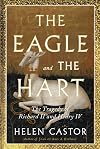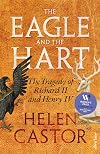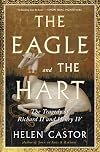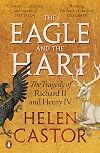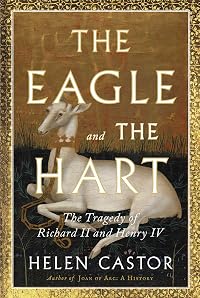
The Eagle and the Hart: The Tragedy of Richard II and Henry IV
by Helen Castor
On This Page
Description
"The dual biography of Richard II and Henry IV, two cousins whose lives played out in extraordinary parallel, until Henry deposed the tyrant Richard and declared himself King of England"-- "From an acclaimed historian and author comes an epic history: the dual biography of Richard II and Henry IV, two cousins whose lives played out in extraordinary parallel, until Henry deposed the tyrant Richard and declared himself King of England.Richard of Bordeaux and Henry of Bolingbroke, cousins born show more just three months apart, were ten years old when Richard became king of England. They were thirty-two when Henry deposed him and became king in his place. Now, the story behind one of the strangest and most fateful events in English history (and the inspiration behind Shakespeare's most celebrated history plays) is brought to vivid life by the acclaimed author of Blood and Roses, Helen Castor. Richard had birthright on his side, and a profound belief in his own God-given majesty. But beyond that, he lacked all qualities of leadership. A narcissist who did not understand or accept the principles that underpinned his rule, he was neither a warrior defending his kingdom, nor a lawgiver whose justice protected his people. Instead, he declared that "his laws were in his own mouth," and acted accordingly. He sought to define as treason any resistance to his will and recruited a private army loyal to himself rather than the realm-and he intended to destroy those who tried to restrain him. Henry was everything Richard was not: a leader who inspired both loyalty and friendship, a soldier and a chivalric hero, dutiful, responsible, principled. After years of tension and conflict, Richard banished him and seized his vast inheritance. Richard had been crowned a king but he had become a tyrant, and as a tyrant-ruling by arbitrary will rather than established law-he was deposed by his cousin Henry, the only possible candidate to take his place. Henry was welcomed as a liberator, a champion of the people against his predecessor's paranoid despotism. But within months he too was facing rebellion. Men knew that a deposer could in turn be deposed, and the new king found himself buffeted by unrest and by chronic ill-health until he seemed a shadow of his former self, trapped by political uncertainty and troubled by these signs that God might not, after all, endorse his actions. Captivating, immersive, and highly relevant to today's times, The Eagle and the Hart is a story about what happens when a ruler prioritizes power over the interests of his own people. When a ruler demands loyalty to himself as an individual, rather than duty to the established constitution, and when he seeks to reshape reality rather than concede the force of verifiable truths. Above all, it is a story about how a nation was brought to the brink of catastrophe and disintegration-and, in the end, how it was brought back"-- show lessTags
Recommendations
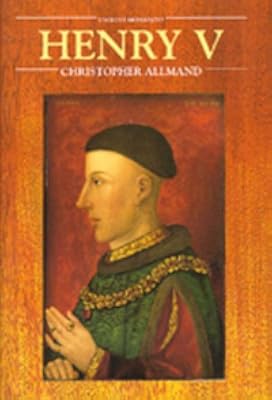
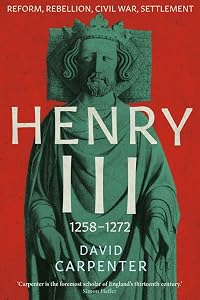
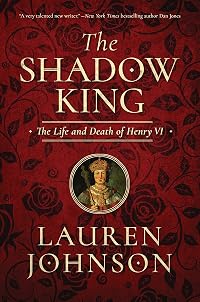

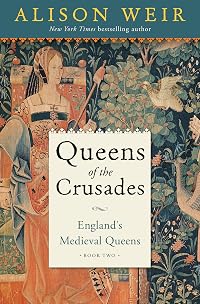



Member Recommendations

Member Reviews
I liked this book enough that I'm having trouble trying to review it. There is just too much I want to talk about and I can't, you know, sum up. This is fascinating history where one cousin, after a lifetime of loyal service to his cousin the king of the same age, usurps the throne. It's famous in Shakespeare, covered in four plays (Richard II, Henry IV Part I, Henry IV Part II, and Henry V). Richard II, the infamous crazy king who kept getting crazier in the midst of the 100 years war with France. This is also the post-plague era. The English language was first becoming prominent, instead of simply the language of the commoners. Chaucer, Gower, William Langland and the Pearl Poet were all writing major Middle English works. And it the show more era of the massive Peasants Revolt
Castor's interest, as she tells up front, is in the nature of power. Richard was not exactly born into it, but upon the death of his father, The Black Prince, he became the natural heir. And he inherited the throne at age ten. There was no good choice for a regent, so he didn't have one. He just had advisers who tried very hard to control him. He spent his rule not thinking about England or its people, but how to get past all the obstacles full power, so that his will was always done. This led to a lot of weird situations. His first selected set of royal advisers were all convicted of treason. He was only not dethroned because there was no natural heir to replace it. So having a bad king was better than the alternative.
Henry, meanwhile, was raised to be a leading loyal servant to the king. His father, John of Guant, younger brother of the Black Prince, was the most powerful person in England when Richard became king. He never overstepped. He was always loyal to England. He was also the next in line to Richard. Upon his death, with Richard still childless, Henry became the next in line.
When Henry rebelled, there were no battles. Key lords immediately joined Henry without a fight. And those loyal to Richard pretty much all surrendered, leaving Richard without an army. Henry took the kingship in the name of good government. This is also fascinating. First, it's really hard to run a good government, especially where there are rebellions against you everywhere, and that's a big problem if that is your main claim to the throne. And second it meant Henry felt it was important for him to work with the parliament in ways previous kings hadn't. He accepted huge criticism and actually compromised. For example, he allowed Parliament to monitor his spending, and to nominate some of his advisers.
See what I mean. Sorry guys. That's too much. Ok, some of the most interesting stuff to me in this book was, first, that Richard was never crazy. It's just mythology. He was pretty much the same narrowly focused person his whole life. He just wasn't interested in the state of England, or that war. The second thing is how sophisticated the political world of England was. Parliament was very complex. The peasant revolt, notorious for its murderous mob, actually had some intelligent ideas, if not realistic. They wanted to end serfdom, confiscate church land, end their loyalty to their local lords, and instead give it directly to the king. So, they merely wanted to overturn the unjust social structure of England. But the constant interplay of the different leading figures with each other and the realities their world was always so complicated and fascinating.
I've seen reviewers say this book was boring and they got lost. But I never got lost on audio. I was pretty rivetted the entire time I listened, for 20 hours. Fun stuff. Recommended to Shakespeare people...and Chaucer people...and anyone else curious.
2025
https://www.librarything.com/topic/369129#8819309 show less
Castor's interest, as she tells up front, is in the nature of power. Richard was not exactly born into it, but upon the death of his father, The Black Prince, he became the natural heir. And he inherited the throne at age ten. There was no good choice for a regent, so he didn't have one. He just had advisers who tried very hard to control him. He spent his rule not thinking about England or its people, but how to get past all the obstacles full power, so that his will was always done. This led to a lot of weird situations. His first selected set of royal advisers were all convicted of treason. He was only not dethroned because there was no natural heir to replace it. So having a bad king was better than the alternative.
Henry, meanwhile, was raised to be a leading loyal servant to the king. His father, John of Guant, younger brother of the Black Prince, was the most powerful person in England when Richard became king. He never overstepped. He was always loyal to England. He was also the next in line to Richard. Upon his death, with Richard still childless, Henry became the next in line.
When Henry rebelled, there were no battles. Key lords immediately joined Henry without a fight. And those loyal to Richard pretty much all surrendered, leaving Richard without an army. Henry took the kingship in the name of good government. This is also fascinating. First, it's really hard to run a good government, especially where there are rebellions against you everywhere, and that's a big problem if that is your main claim to the throne. And second it meant Henry felt it was important for him to work with the parliament in ways previous kings hadn't. He accepted huge criticism and actually compromised. For example, he allowed Parliament to monitor his spending, and to nominate some of his advisers.
See what I mean. Sorry guys. That's too much. Ok, some of the most interesting stuff to me in this book was, first, that Richard was never crazy. It's just mythology. He was pretty much the same narrowly focused person his whole life. He just wasn't interested in the state of England, or that war. The second thing is how sophisticated the political world of England was. Parliament was very complex. The peasant revolt, notorious for its murderous mob, actually had some intelligent ideas, if not realistic. They wanted to end serfdom, confiscate church land, end their loyalty to their local lords, and instead give it directly to the king. So, they merely wanted to overturn the unjust social structure of England. But the constant interplay of the different leading figures with each other and the realities their world was always so complicated and fascinating.
I've seen reviewers say this book was boring and they got lost. But I never got lost on audio. I was pretty rivetted the entire time I listened, for 20 hours. Fun stuff. Recommended to Shakespeare people...and Chaucer people...and anyone else curious.
2025
https://www.librarything.com/topic/369129#8819309 show less
Cousins born within months of each other, Richard of Bordeaux and Henry of Bolingbroke became enemies and powerful rivals. Known as Richard II and Henry IV their true stories are just as tragic as Shakespeare portrayed them and the medieval politics around their reigns is complex. Castor is a superb historian, able to find and interpret the minutiae as well as create a compelling narrative to entertain. I read this book after the Dan Jones biography of Henry V and wish I'd read them in the chronological order as they make good companion pieces.
although interesting and well researched, I could not finish listening to this book because the author decided to read it herself and was unable to keep my attention.
Ratings
Members
- Recently Added By
Author Information

11+ Works 2,466 Members
Helen Castor is a historian, writer, and broadcaster. She is the author of Blood and Roses, winner of the English Association's Beatrice White Prize, and presents BBC Radio 4's Making History. She is a fellow of Sidney Sussex College, Cambridge University, and lives in London.
Awards and Honors
Common Knowledge
- People/Characters
- Richard II, King of England; Henry IV, King of England; Henry V, King of England; John of Gaunt, Duke of Lancaster; Thomas of Woodstock, 1st Duke of Gloucester, 1st Earl of Buckingham, 1st Earl of Essex; Charles VI, King of France (show all 196); Thomas Arundel, Archbishop of Canterbury; Joan of Kent, 4th Countess of Kent, 5th Baroness Wake of Liddell; Eleanor de Bohun, Duchess of Glouchester; Edward, the Black Prince (Prince of Wales and Aquitaine); Charles V, King of France; Philippa of Hainault, Queen Consort of England; Henry of Grosmont, 1st Duke of Lancaster; Blanche, Duchess of Lancaster; Ralph Stafford, 1st Earl of Stafford; Constance of Castile, Duchess of Lancaster; Peter, King of Castile and León (aka Peter the Cruel); Henry II, King of Castile and León (aka Henry the Fratricidal); Isabella of Castile, Duchess of York; Edmund of Langley, 1st Duke of York; John Holland, 1st Duke of Exeter; Thomas Walsingham (English Chronicler); Jean Froissart; Thomas Holland, 1st Earl of Kent; Sir Ralph Stafford; Sir John Annesley; Alice Perrers; Sir Thomas Catterton; Lionel of Antwerp, Duke of Clarence; Jean III de Grailly, Captal de Buch; Edward II, King of England; Isabella of France, Queen Consort of England; Thomas de Mowbray, 1st Duke of Norfolk; Roger Mortimer, 4th Earl of March; Katherine Swynford, born Katherine de Roët; Mary de Bohun; Robert de Vere, 9th Earl of Oxford; Simon Sudbury, Archbishop of Canterbury; Wat Tyler; Sir William Walworth; Henry le Despenser, Bishop of Norwich; Sir Robert Hales; Anne of Bohemia, Queen Consort of England; Violante Visconti, Duchess of Clarence; Edmund Mortimer, 3rd Earl of March; Enguerrand VII de Coucy, Lord of Coucy; Isabella, Countess of Bedford; John Beaufort, 1st Earl of Somerset; Henry Beaufort, Bishop of Winchester; Thomas Beaufort, Duke of Exeter; Joan Beaufort, Countess of Westmorland; Joan Holland, Duchess of Brittany; Maud Holland, Countess of St Pol (aka Lady Courtenay); Sir Hugh de Courtenay, Earl of Devon; Philip the Bold, Duke of Burgundy; John the Fearless, Duke of Burgundy; John, Duke of Berry; Louis I, Duke of Orleans; William Courtenay, Archbishop of Canterbury; John Wycliffe; Louis II, Duke of Anjou and Count of Provence; Louis I, Duke of Anjou; Clement VII, Antipope; Anne of Burgundy, Duchess of Bedford; John of Lancaster, 1st Duke of Bedford; Richard Fitzalan, 4th Earl of Arundel; William Appleton; John Arderne; Charles I, Duke of Orléans; Bernard VII, Count of Armagnac; John I, Duke of Bourbon; John Badby; Richard le Scrope, Bishop of Coventry and Lichfield and Archbishop of York; Thomas de Mowbray, 4th Earl of Norfolk, 2nd Earl of Nottingham, 8th Baron Segrave, 7th Baron Mowbray; Elizabeth Fitzalan, Duchess of Norfolk; Henry Percy, 1st earl of Northumberland; Sir Henry Percy (Henry Hotspur); Owain Glyndŵr (Owen Glendower); Philippa of Lancaster, Queen of Portugal; Philippa of England, Queen of Denmark, Sweden, and Norway; Sir Thomas Erpingham; William le Scrope, 1st Earl of Wiltshire; Richard le Scrope, 1st Baron Scrope of Bolton; Henry le Scrope, 3rd Baron Scrope of Masham; James Douglas, 2nd Earl of Douglas; Ralph Neville, 1st Earl of Westmorland; John I, King of Portugal; John I, King of Castile and León; Leo V of Lusignan, King of Armenia; Sir John de Bampton; Thomas Percy, 1st Earl of Worcester; Richard Whittington, Lord Mayor of London; John Whitelock; Henry Wharton; Wenceslaus IV, King of Bohemia; Sir Hugh Waterton; John Waterton; Robert Waterton; Katherine Waterton; Maud of Lancaster, Countess of Ulster; Thomas de Beauchamp, 12th Earl of Warwick; Richard de Beauchamp, 13th Earl of Warwick, Count of Aumale; Robert Waldby; Violante Visconti, Duchess of Clarence; Lucia Visconti; Valentina Visconti, Duchess of Orleans; Gian Galeazzo Visconti, 1st Duke of Milan; Jean de Vienne; John Scarle; Sir Arnold Savage of Bobbing; Edward of Langley, 2nd Duke of York; Rupert II, Count Palatine of the Rhine; Katherine Swynford; Robert III, King of Scots; Robert II, King of Scots; Robert of Knaresborough (St Robert); Henry Roper; Sir Thomas Rempston; John Pelham (English parliamentarian); Maud de Ufford, Countess of Oxford; Aubrey de Vere, 10th Earl of Oxford; Richard de Vere, 11th Earl of Oxford; William II, Duke of Bavaria-Straubing and count of Holland; Charles I, Duke of Orléans; Sir John Oldcastle (English Lollard leader); Alexander Neville, Archbishop of York; John de Mowbray, 1st Earl of Nottingham; Roger Mortimer, 3rd Baron Mortimer, 1st Earl of March; Edmund de Mortimer, 5th Earl of March and 7th Earl of Ulster; Lady Philippa Mortimer; Anne de Mortimer; John IV the Conqueror, Duke of Brittany; John Montagu, 3rd Earl of Salisbury; Sir William II Montague, 2nd Earl of Salisbury; Philippa de Mohun, Duchess of York; Enguerrand de Monstrelet; Thomas Merke, Bishop of Carlisle; Blanche of Lancaster, Baroness Wake of Liddell; John Massey (poet); Richard Maidstone (Carmelite friar, theologian, and poet); Art Óg Mac Murchadha Caomhánach, King of Leinster; Tadhg na Mainistreach Mac Carthaigh Mór, King of Desmond; Louis II, Count of Flanders; Walter Skirlaw, Bishop of Durham; John Burghill, Bishop of Coventry and Lichfield.; Sir Roger Leche; William Latimer, 4th Baron Latimer; Henry Knighton; Charles IV, Holy Roman Emperor; John of Orléans, Count of Angoulème and Périgord; John of Luxembourg, King of Bohemia; Isabella of Valois, Queen of England and Duchess of Orléans; James I, King of Scots; Mary of Waltham, Duchess Of Brittany; Margaret of England, Countess of Pembroke; John Hastings, 2nd Earl of Pembroke; Humphrey, 2nd Earl of Buckingham; Humphrey of Lancaster, Duke of Gloucester; Thomas Despenser, 1st Earl of Gloucester; Sir Bernard Brocas; Thomas Fitzalan, 5th Earl of Arundel, 10th Earl of Surrey; Sir Thomas Blount; Ralph Lumley, 1st Baron Lumley; Thomas Holland, 1st Duke of Surrey, 3rd Earl of Kent; Edmund Holland, 4th Earl of Kent; Alice Holland, Countess of Kent; John Cornwall, 1st Baron Fanhope and Milbroke; Elizabeth of Lancaster, Duchess of Exeter; Richard le Despenser, 4th Baron Burghersh; Edward Despenser, 1st Baron Despenser; Hugh Despenser, 1st Baron Despenser (Hugh Despenser the Younger); Hugh Despenser the Elder; Thomas Usk; John More (MP for City of London); Sir Robert Tresilian; Sir Richard Lyons; Sir John Cockayne; Sir Walter Blount; Hugh de Stafford, 2nd Earl of Stafford; Ralph de Stafford, 1st Earl of Stafford; Sir Ralph Stafford; William Stafford, 4th Earl of Stafford; Edmund Stafford, 5th Earl of Stafford; Edmund Stafford, Bishop of Exeter; Anne of Gloucester, Countess of Stafford; Humphrey de Bohun, 7th Earl of Hereford; Michael de la Pole, 1st Earl of Suffolk; Michael de la Pole, 2nd Earl of Suffolk; Sir Hugh Segrave; William Serle; Sir Richard Stanhope; John Strecche; William Ufford, 2nd Earl of Suffolk; Thomas of Lancaster, 1st Duke of Clarence; John Tiptoft, 1st Baron Tiptoft; Adam of Usk
- Important places
- England, UK; London, England, UK; Gloucester, Gloucestershire, England, UK; York, North Yorkshire, England, UK; Aberystwyth, Ceredigion, Wales, UK; Flint Castle, Flint, Flintshire, Wales, UK (show all 63); Carmarthen Castle, Carmarthen, Carmarthenshire, Wales; Ardres, Hauts-de-France, France; Avignon, Vaucluse, Provence-Alpes-Côte d'Azur, France; Oxford, Oxfordshire, England, UK; Bayonne, Pyrénées-Atlantiques, Nouvelle-Aquitaine, France; Warwick Castle, Warwick, Warwickshire, England, UK; Pontefract Castle, Wakefield, West Yorkshire, England, UK; Beaumaris Castle, Beaumaris, Anglesey, Wales, UK; Berwick-upon-Tweed, Northumberland, England, UK; Paris, Île-de-France, France; Boulogne-sur-Mer, Pas-de-Calais, Hauts-de-France, France; Calais, Pas-de-Calais, Hauts-de-France, France; Leulinghem, Pas-de-Calais, Hauts-de-France, France; Bolingbroke, Lincolnshire, England, UK; Bordeaux, Gironde, Nouvelle-Aquitaine, France; Boston, Lincolnshire, England, UK; Bourges, Cher, Centre-Val de Loire, France; Brest, Finistère, Brittany, France; Bristol, England, UK; Bruges, West Flanders, Belgium; Caernarfon Castle, Caernarfon, Gwynedd, Wales, UK; Canterbury, Kent, England, UK; Carisbrooke Castle, Isle of Wight, England, UK; Cherbourg, Manche, Normandy, France; Chester, Cheshire, England, UK; Conwy Castle, Conwy, Conwy County Borough, Wales, UK; Damme, West Flanders, Belgium; Sluis, Zeeland, the Netherlands; Danzig, Poland; Dover, Kent, England, UK; Dublin, Ireland; Durham, County Durham, England, UK; Ravenspur, East Riding of Yorkshire, England, UK; Harlech Castle, Gwynedd, Wales, UK; Holt Castle, Holt, Wrexham County Borough, Wales; Pleshey Castle, Pleshey, Essex, England, UK; Kenilworth Castle, Kenilworth, Warwickshire, England, UK; Cologne, North Rhine-Westphalia, Germany; Kilkenny, County Kilkenny, Ireland; Kaliningrad, Kaliningrad Oblast, Russia; Kingston upon Thames, London, England, UK; Hull, East Riding of Yorkshire, England, UK; Lincoln, Lincolnshire, England, UK; Milan, Lombardy, Italy; Milford Haven, Pembrokeshire, Wales, UK; Nottingham, Nottinghamshire, England, UK; Edinburgh, Scotland, UK; Newcastle upon Tyne, Tyne and Wear, England, UK; Plymouth, Devon, England, UK; Queenborough Castle, Queenborough, Isle of Sheppey, Kent, England, UK; Reigate, Surrey, England, UK; Shrewsbury, Shropshire, England, UK; Southampton, Hampshire, England, UK; Venice, Veneto, Italy; Tutbury Castle, Tutbury, Staffordshire, England, UK; Cooling Castle, Cooling, Kent, England, UK; Waterford, Munster, Ireland
- Important events
- Abdication of Richard II of England (1399-09-29); Hundred Years' War; Peasants' Revolt (1381); Northern Rising (1405); Epiphany Rising (1400); Glyndŵr rebellion (show all 10); Assassination of Louis I, Duke of Orléans; Armagnac–Burgundian Civil War; Southampton Plot (1415); Merciless Parliament (1388)
Classifications
- Genres
- History, Nonfiction, General Nonfiction, Biography & Memoir
- DDC/MDS
- 942.038 — History & geography History of Europe England and Wales England Plantagenet 1154-1399 Richard II 1377-99
- LCC
- DA235 .C37 — History of Europe, Asia, Africa and Oceania Great Britain History of Great Britain England History By period Early and medieval to 1485 1154-1485. Angevins. Plantagenets.
- BISAC
Statistics
- Members
- 247
- Popularity
- 131,764
- Reviews
- 3
- Rating
- (4.36)
- Languages
- English
- Media
- Paper, Audiobook, Ebook
- ISBNs
- 12
- ASINs
- 4