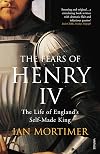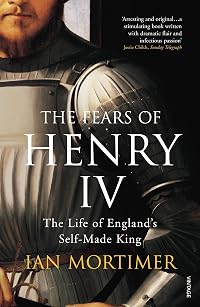
The Fears of Henry IV: The Life of England's Self-Made King
by Ian Mortimer
On This Page
Description
The real life story of the Plantagenet ruler, by "the most remarkable medieval historian of our time" ( The Times, London). The talented, confident, and intelligent son of John of Gaunt, Henry IV started his reign as a popular and charismatic king after he dethroned the tyrannical and wildly unpopular Richard II. But six years into his reign, Henry had survived eight assassination and overthrow attempts. Having broken God's law of primogeniture by overthrowing the man many people saw as the show more chosen king, Henry IV left himself vulnerable to challenges from powerful enemies about the validity of his reign. Even so, Henry managed to establish the new Lancastrian dynasty and a new rule of law-in highly turbulent times. In this book, noted historian Ian Mortimer, bestselling author of The Time Traveler's Guide to Medieval England and The Time Traveler's Guide to Elizabethan England, goes beyond the legend portrayed in Shakespeare's history play, and explores the political and social forces that transformed Henry IV from his nation's savior to its scourge. show lessTags
Recommendations










Member Recommendations

Member Reviews
This is a standard Ian Mortimer book: Meticulously researched, well-written, fixated on minor details, and (probably partly as a result) full of enough crazy hypotheses to staff a whole compound full of survivalists.
One example will have to serve. Mortimer's Appendix II is about the question of who was Richard II's lawful heir. In an extremely irritating act, on p. 366, Mortimer says to go read some magazine article he wrote for his real proof. You know, do you not, Mr. Mortimer, that we paid for this book to get the answers, not to be fobbed off on some magazine we may not be able to find?
But Mortimer offers some of the basis for his argument, in a claim that a certain source is actually a modified copy of an earlier source, and that show more the modified copy contains an incorrect date. So he's hypothesized an earlier source, and then corrected its reading -- and then bases the rest of his argument on the exact force of the Latin word autem.
It's an interesting reconstruction, but it's simply too long a chain of logic to be compelling. At least to me.
The result of this sort of opinion-itis is that Mortimer seems almost to turn the 1390s into a persistent duel between King Richard II and his cousin Henry of Derby (the future Henry IV). I frankly don't buy it.
It all depends on what sort of person Richard II was. In this, I agree with Mortimer: Richard II was an egotistical, narcissistic, empathy-free, irrational, bigoted ignoramus (if it sounds like a description of a certain twenty-first century American president -- yes, I think Richard II does resemble President Narceissistic Personality Disorder).
But the thing about a king with a personality disorder is that things don't have to be personal. Richard II's behavior toward Henry is sufficiently explained by Richard's "It's All About Me" attitude. Anything that interfered with his status -- such as Henry's wealth, or the fact that Henry was a fine soldier and Richard wasn't good at much of anything -- was a threat, and was treated as such.
This is not to deny Henry's multiple skills. He does seem to have been unusually learned for a member of the fourteenth century nobility, and he was indeed a fine soldier, and he had seen more of the world than almost anyone. Perhaps it was all the risks he had survived up to 1399 that made him take the supreme risk of overthrowing Richard II.
For that, we should all be grateful. The overthrow of Richard II was hardly a Glorious Revolution, but it did move England a little more toward a representative government.
Once Henry became king, he made mistakes. Mortimer admits some of them, but he really doesn't pay enough attention to others. When he executed Archbishop Scrope of York and instantly became sick, it left the impression of heaven's judgment upon him. Mortimer, I think, badly under-appreciates this. Do I think Henry's sickness was actually divine punishment? No. Do I think most Englishmen viewed it so? You bet they did. It was an incredibly damaging mistake, and yet Mortimer seems to view it as necessary and reasonable.
Henry IV's real triumph was not so much his reign as the fact that he survived to die in his bed, and to have his son succeed peacefully. In a period when overthrowing monarchs was almost a British sport (with Edward II, Richard II, Henry VI, Edward IV, Edward V, and Richard III all being overthrown at least one, and Henry being overthrown twice), that is in itself a substantial accomplishment. I can't help but think that a better biography would have shown that more clearly. show less
One example will have to serve. Mortimer's Appendix II is about the question of who was Richard II's lawful heir. In an extremely irritating act, on p. 366, Mortimer says to go read some magazine article he wrote for his real proof. You know, do you not, Mr. Mortimer, that we paid for this book to get the answers, not to be fobbed off on some magazine we may not be able to find?
But Mortimer offers some of the basis for his argument, in a claim that a certain source is actually a modified copy of an earlier source, and that show more the modified copy contains an incorrect date. So he's hypothesized an earlier source, and then corrected its reading -- and then bases the rest of his argument on the exact force of the Latin word autem.
It's an interesting reconstruction, but it's simply too long a chain of logic to be compelling. At least to me.
The result of this sort of opinion-itis is that Mortimer seems almost to turn the 1390s into a persistent duel between King Richard II and his cousin Henry of Derby (the future Henry IV). I frankly don't buy it.
It all depends on what sort of person Richard II was. In this, I agree with Mortimer: Richard II was an egotistical, narcissistic, empathy-free, irrational, bigoted ignoramus (if it sounds like a description of a certain twenty-first century American president -- yes, I think Richard II does resemble President Narceissistic Personality Disorder).
But the thing about a king with a personality disorder is that things don't have to be personal. Richard II's behavior toward Henry is sufficiently explained by Richard's "It's All About Me" attitude. Anything that interfered with his status -- such as Henry's wealth, or the fact that Henry was a fine soldier and Richard wasn't good at much of anything -- was a threat, and was treated as such.
This is not to deny Henry's multiple skills. He does seem to have been unusually learned for a member of the fourteenth century nobility, and he was indeed a fine soldier, and he had seen more of the world than almost anyone. Perhaps it was all the risks he had survived up to 1399 that made him take the supreme risk of overthrowing Richard II.
For that, we should all be grateful. The overthrow of Richard II was hardly a Glorious Revolution, but it did move England a little more toward a representative government.
Once Henry became king, he made mistakes. Mortimer admits some of them, but he really doesn't pay enough attention to others. When he executed Archbishop Scrope of York and instantly became sick, it left the impression of heaven's judgment upon him. Mortimer, I think, badly under-appreciates this. Do I think Henry's sickness was actually divine punishment? No. Do I think most Englishmen viewed it so? You bet they did. It was an incredibly damaging mistake, and yet Mortimer seems to view it as necessary and reasonable.
Henry IV's real triumph was not so much his reign as the fact that he survived to die in his bed, and to have his son succeed peacefully. In a period when overthrowing monarchs was almost a British sport (with Edward II, Richard II, Henry VI, Edward IV, Edward V, and Richard III all being overthrown at least one, and Henry being overthrown twice), that is in itself a substantial accomplishment. I can't help but think that a better biography would have shown that more clearly. show less
It is not an easy task to write a full scale biography of an early 15th century medieval King, especially one that has been given a bad press by William Shakespeare. There were of course a few chroniclers and writers of events at the time, or a little time afterwards but much of this information would have been written for a patron and would have been biased in accordance with the patron’s views. Shakespeare himself could not have written a play that would in any way be sympathetic to a usurper and murderer of an anointed king, therefore a biographer today, must examine the primary sources: none of which would be in biographical form but would normally be official documents and official letters, in French, Latin or medieval English. A show more narrative story can be pieced together, but it is Mortimer’s aim to go further: he wants to get to the emotional development of his subject, he wants to bring out the character of the man from the historical background and he wants us to see the world through Henry’s Eyes. This will inevitably mean a somewhat sympathetic view, but Ian Mortimer has convinced me that Henry IV deserves some of our sympathy.
Mortimer has delved deeply into the primary sources, but just as importantly he has presented a believable portrait of Medieval times. He has previously written biographies of Edward III and Sir Roger Mortimer that successfully incorporated the historical background to the earlier Plantagenet Kings into his character studies, he is an author steeped in the history of the times and he has used this to great effect in providing a portrait of a king seen in the terms of a medieval world view.
Henry of Bolingbroke was the son of John of Gaunt Duke of Lancaster son of King Edward III. Edward The Black Prince was the eldest son, and heir to the throne, but he died before his father, but secured the right to have his son Richard to be first in line of succession. Richard became King Richard II, but remained childless, therefore the next in succession in accordance with Edward III’s wishes was Henry Bolingbroke. Richard and Henry grew up together as children and Mortimer does a fine job of piecing together their relationship and development. Richard was just 14 when he became king and court officials were appointed to carry out the kings business until he became of age and Henry’s father John of Gaunt was the first among equals. Richard’s kingship soon started to run into trouble, he was not the strong warrior leader that was sought at the time and his reliance on court favourites led to in-fighting and disputes. Richard became increasingly autocratic and worked towards being an absolute monarch, with a view that if anyone disagreed with him he did so ‘on pain of death’. Henry’s position at court became increasingly tenuous and following a dispute with Mowbray (Duke of Norfolk) Richard had him banished from the realm.
Henry spent nearly a year in France and then learned that Richard had made his banishment permanent. Henry was the leader of the Lancaster family the richest and most powerful landed family in England and his effective disinheritance would fracture the Lancaster dynasty. He took ship back to England and encouraged by popular support overthrew Richard and took the crown for himself. Henry IV had a troubled reign as factions in support of Richard hatched plots against him, the most serious resulted in the battle of Shrewsbury one of the bloodiest battles on English soil. Henry won that one, but was plagued by his inability to subdue the Welsh and the Scots from encroaching on English soil and was always under threat from Invasion from France The treasury could not afford to finance his wars and the Commons resisted his attempts to levy taxes and attempted to curtail the Kings powers at every opportunity.
When Henry died in 1413 he had largely turned things around. He had stayed in power and secured the succession for his sons. He had subdued the Scots and had their King in the Tower of London. The Welsh threat had largely dissipated and France was tearing itself apart in a civil war. He had come to some accommodation with Parliament and his finances were in better order. A successful reign by any yardstick, but not an outstanding one. Mortimer says in a fine summary:
“There is almost no sense in which his reign can be considered great: it was dogged by financial problems and rebellion, so that defeating or outlasting all his enemies is his sole claim to greatness as a ruler. But in terms of his status as a man, those judgements do not apply. His rule may have been characterised by crisis and opposition, but he was one of the most courageous, conscientious, personally committed and energetic man ever to rule England. It is unfortunate that he has historically been judged solely as a king and not as a man”
Mortimer has achieved what he had set out to do he has made the reader see Henry IV as a man. The biography includes notes of all the sources a select bibliography, family trees and an excellent index. There are seven appendices on issues that don’t quite fit into the narrative and an excellent introduction and summary. I have read Mortimer’s previous books on the Plantagenets and to my mind they have got better and better. The narrative flows well and quietly holds the attention. I really cannot fault this and found it a superb read: 5 stars. show less
Mortimer has delved deeply into the primary sources, but just as importantly he has presented a believable portrait of Medieval times. He has previously written biographies of Edward III and Sir Roger Mortimer that successfully incorporated the historical background to the earlier Plantagenet Kings into his character studies, he is an author steeped in the history of the times and he has used this to great effect in providing a portrait of a king seen in the terms of a medieval world view.
Henry of Bolingbroke was the son of John of Gaunt Duke of Lancaster son of King Edward III. Edward The Black Prince was the eldest son, and heir to the throne, but he died before his father, but secured the right to have his son Richard to be first in line of succession. Richard became King Richard II, but remained childless, therefore the next in succession in accordance with Edward III’s wishes was Henry Bolingbroke. Richard and Henry grew up together as children and Mortimer does a fine job of piecing together their relationship and development. Richard was just 14 when he became king and court officials were appointed to carry out the kings business until he became of age and Henry’s father John of Gaunt was the first among equals. Richard’s kingship soon started to run into trouble, he was not the strong warrior leader that was sought at the time and his reliance on court favourites led to in-fighting and disputes. Richard became increasingly autocratic and worked towards being an absolute monarch, with a view that if anyone disagreed with him he did so ‘on pain of death’. Henry’s position at court became increasingly tenuous and following a dispute with Mowbray (Duke of Norfolk) Richard had him banished from the realm.
Henry spent nearly a year in France and then learned that Richard had made his banishment permanent. Henry was the leader of the Lancaster family the richest and most powerful landed family in England and his effective disinheritance would fracture the Lancaster dynasty. He took ship back to England and encouraged by popular support overthrew Richard and took the crown for himself. Henry IV had a troubled reign as factions in support of Richard hatched plots against him, the most serious resulted in the battle of Shrewsbury one of the bloodiest battles on English soil. Henry won that one, but was plagued by his inability to subdue the Welsh and the Scots from encroaching on English soil and was always under threat from Invasion from France The treasury could not afford to finance his wars and the Commons resisted his attempts to levy taxes and attempted to curtail the Kings powers at every opportunity.
When Henry died in 1413 he had largely turned things around. He had stayed in power and secured the succession for his sons. He had subdued the Scots and had their King in the Tower of London. The Welsh threat had largely dissipated and France was tearing itself apart in a civil war. He had come to some accommodation with Parliament and his finances were in better order. A successful reign by any yardstick, but not an outstanding one. Mortimer says in a fine summary:
“There is almost no sense in which his reign can be considered great: it was dogged by financial problems and rebellion, so that defeating or outlasting all his enemies is his sole claim to greatness as a ruler. But in terms of his status as a man, those judgements do not apply. His rule may have been characterised by crisis and opposition, but he was one of the most courageous, conscientious, personally committed and energetic man ever to rule England. It is unfortunate that he has historically been judged solely as a king and not as a man”
Mortimer has achieved what he had set out to do he has made the reader see Henry IV as a man. The biography includes notes of all the sources a select bibliography, family trees and an excellent index. There are seven appendices on issues that don’t quite fit into the narrative and an excellent introduction and summary. I have read Mortimer’s previous books on the Plantagenets and to my mind they have got better and better. The narrative flows well and quietly holds the attention. I really cannot fault this and found it a superb read: 5 stars. show less
This is a very well written and comprehensive biography of this King, who is little studied these days, probably less so than any other late Medieval King. The author paints a picture of Henry which is at variance with the image of him as a usurper of the rightful ruler, Richard II (an image particularly favoured, for obvious reasons, by the Yorkists later in the fifteenth century). Richard was undoubtedly a tyrant in almost a modern totalitarian sense, in that he wanted to eliminate any and all criticism of his rule, redefining it all as treason. His final overthrow in 1399 was very understandable, though Henry's starving him to death seems unnecessarily cruel.
Henry wanted to rule in a much more positive and consensual way, but was show more faced by near constant rebellion, caused in large part by lack of funds leading to unpopular taxation. At the same time, Parliament was becoming more powerful and self confident and Henry could never feel totally safe, now that he himself had broken a precedent by deposing his predecessor, showing that such a previously pretty unthinkable action could indeed be taken. He survived by adapting to changing situations and being more flexible than Richard. His final years racked by painful illness, his reputation was rapidly overshadowed by that of his son and heir, the victor of Agincourt. This book provides a much needed reassessment of this neglected ruler. 5/5 show less
Henry wanted to rule in a much more positive and consensual way, but was show more faced by near constant rebellion, caused in large part by lack of funds leading to unpopular taxation. At the same time, Parliament was becoming more powerful and self confident and Henry could never feel totally safe, now that he himself had broken a precedent by deposing his predecessor, showing that such a previously pretty unthinkable action could indeed be taken. He survived by adapting to changing situations and being more flexible than Richard. His final years racked by painful illness, his reputation was rapidly overshadowed by that of his son and heir, the victor of Agincourt. This book provides a much needed reassessment of this neglected ruler. 5/5 show less
Actual Rating: 3.75/5 stars
Review: Initially, I gave this book a 4 of 5 stars because I felt like 3.5 of 5 stars was too low, but I think I found the right middle ground at 3.75 of 5 stars (my first 3.75 rating). This is also where I get a little annoyed with Goodreads because we only can do full star ratings, which sucks. I have enjoyed Ian Mortimer’s work, but this book fell just short of a 4 star rating for me. While I can understand where Mortimer got the inspiration for this book — literary representations of Henry IV by authors like Shakespeare — I felt like he focused a little too much on those works and trying to build Henry IV up from those. While Mortimer did use a good source base, I feel the focus was leaning a little show more too far to the literary works that portrayed Henry IV in a negative light. Other than that, I did enjoy this book. show less
Review: Initially, I gave this book a 4 of 5 stars because I felt like 3.5 of 5 stars was too low, but I think I found the right middle ground at 3.75 of 5 stars (my first 3.75 rating). This is also where I get a little annoyed with Goodreads because we only can do full star ratings, which sucks. I have enjoyed Ian Mortimer’s work, but this book fell just short of a 4 star rating for me. While I can understand where Mortimer got the inspiration for this book — literary representations of Henry IV by authors like Shakespeare — I felt like he focused a little too much on those works and trying to build Henry IV up from those. While Mortimer did use a good source base, I feel the focus was leaning a little show more too far to the literary works that portrayed Henry IV in a negative light. Other than that, I did enjoy this book. show less
This is a measured, well researched biography of the often overlooked King Henry IV. Despite the large cast of characters and complicated politics, it was very readable and clear.
Henry IV is a shadowy historical figure these days, his reign overtaken by that of his superstar son Henry V. He also tends to be cast solely as the man who usurped the throne of Richard II. In this biography, Ian Mortimer tries to shed light on the true Henry, the pressing motives that caused him to dethrone his cousin, the enormous effort it took to keep what he had taken. Mortimer presents a pretty comprehensive picture of Henry, as well as the violent times in which he lived. An interesting book.
This is reasonably competent but, to me, marred by very frank pro-Henry IV anti Richard II bias.
Members
- Recently Added By
Author Information

30+ Works 8,144 Members
Dr. Ian Mortimer is best known as the author of The Time Traveler's Guide to Medieval England and The Time Traveler's Guide to Elizabethan England, which were both national bestsellers. He was awarded the Alexander Prize by the Royal Historical Society and is a Fellow of the Royal Historical Society and a Fellow of the Society of Antiquaries. He show more latest novel is the acclaimed The Outcasts of Time Please visit his website at www.ianmortimer.com. show less
Common Knowledge
- Alternate titles
- Henry IV: The Righteous King
- Original publication date
- 2007
- People/Characters
- Henry IV, King of England; Richard II, King of England; John of Gaunt, Duke of Lancaster; Thomas Arundel, Archbishop of Canterbury; Edward, the Black Prince (Prince of Wales and Aquitaine); Thomas of Woodstock, 1st Duke of Gloucester (show all 156); Richard FitzAlan, 11th Earl of Arundel and 9th Earl of Surrey; Thomas de Beauchamp, 12th Earl of Warwick; Thomas de Mowbray, 1st Duke of Norfolk; Robert de Vere, 9th Earl of Oxford; Edward III, King of England; Edmund of Langley, 1st Duke of York; Michael de la Pole, 1st Earl of Suffolk; Alexander Neville, Archbishop of York; Sir Robert Tresilian; Sir Nicholas Brembre; John de Beauchamp, 1st Baron Beauchamp of Kidderminster; Sir James Berners; Sir John Salisbury; Sir Simon Burley; John Holland, 1st Duke of Exeter; Hugh de Stafford, 2nd Earl of Stafford; Blanche of Lancaster; Mary de Bohun; Joan of Navarre, Queen of England; Katherine Swynford; John Beaufort, 1st Earl of Somerset; Henry Beaufort, Bishop of Winchester; Thomas Beaufort, 1st Duke of Exeter; Philippa of Lancaster, Queen of Portugal; Roger Mortimer, 4th Earl of March; Sir Thomas Molineux; Sir Thomas Mortimer; Henry Knighton; Sir Henry Percy (Henry Hotspur); Henry Percy, 1st Earl of Northumberland; Sir Ralph Percy; James Douglas, 2nd Earl of Douglas; Richard le Scrope, Archbishop of York; Sir William Plumpton; John Wycliffe; Ralph Neville, 1st Earl of Westmorland; Jean de Waurin; Sir Robert Waterton; Sir Hugh Waterton; Thomas Walsingham (chronicler); Waleran III, Count of Ligny and Saint Pol; Vytautas the Great; Lucia Visconti; Gian Galeazzo Visconti, 1st Duke of Milan; Adam of Usk; John Tiptoft, 1st Baron Tiptoft; Thomas of Lancaster, 1st Duke of Clarence; Thomas, 2nd Earl of Lancaster; Henry of Grosmont, 1st Duke of Lancaster; Sir Thomas Swynford; Simon Sudbury, Archbishop of Canterbury; Sir John Stanley (titular King of the Isle of Man); Sir Ralph de Stafford; Edmund Stafford, Bishop of Exeter; Edmund Stafford, 5th Earl of Stafford; Walter Skirlaw, Bishop of Durham; Sigismund, Holy Roman Emperor; William le Scrope, 1st Earl of Wiltshire; Richard le Scrope, 1st Baron Scrope of Bolton; Henry le Scrope, 3rd Baron Scrope of Masham; William Sawtrey; Jean de Saimpy; Rupert II, Count Palatine of the Rhine; Renaud de Roye; Philippa Roet; Geoffrey Chaucer; Robert III, King of Scots; Richard of Conisburgh, 3rd Earl of Cambridge; Philip Repyngdon, Bishop of Lincoln; Sir Thomas Rempston; Engelhard Rabe, Grand Master of the Order of Teutonic Knights; Philippa of England, Queen of Denmark, Sweden, and Norway; Philip the Bold, Duke of Burgundy; Alice Perrers; Thomas Percy, 1st Earl of Worcester; Henry Percy, 2nd Earl of Northumberland; Roger Mortimer, 3rd Baron Mortimer, 1st Earl of March; Anne of Bohemia; Joan Fitzalan, Countess of Hereford; John Badby; Sir William Bagot; Thomas Bardolf, 5th Baron Bardolf; Sultan Bayezid I of the Ottoman Empire; Richard de Beauchamp, 13th Earl of Warwick, Count of Aumale; Joan Beaufort, Countess of Westmorland; John Beaumont, 4th Baron Beaumont; Blanche of England; Sir Thomas Blount; Sir Walter Blount; Eleanor de Bohun, Duchess of Glouchester; Henry V, King of England; Boniface IX, Pope (Pietro Tomacelli, c. 1350-1404); Jean II Le Maingre, Marshal of France; Henry Bowet, Bishop of Bath and Wells, Archbishop of York; Nicholas Bubwith, Bishop of Bath and Wells; Sir Peter Buckton; John the Fearless, Duke of Burgundy; Sir John Bussy; John Capgrave; Catherine of Lancaster, Queen of Castile; Charles VI, King of France; Thomas Chaucer; Richard Clifford, Bishop of London; John de Cobham, 3rd Baron Cobham; Constance of Castile, Duchess of Lancaster; John Cornewall, 1st Baron Fanhope; Sir Peter Courtenay; William Courtenay, Archbishop of Canterbury; Sir Philip Courtenay of Powderham; Jean Creton (chronicler); Thomas le Despenser, 1st Earl of Gloucester; Archibald Douglas, 4th Earl of Douglas; George de Dunbar, 10th Earl of Dunbar and March; Edward the Confessor; Edward II, King of England; Edward I, King of England; Edward of Langley, 2nd Duke of York; Elizabeth of Lancaster, Duchess of Exeter; Owain Glyndŵr (Owen Glendower); Eric of Pomerania, King of Norway, Sweden and Denmark; Sir Thomas Erpingham; Thomas Fitzalan, 12th Earl of Arundel and 10th Earl of Surrey; Jean Froissart; John Gower; Reginald Grey, 3rd Baron Grey de Ruthyn; Sir Robert Hales; Henry III, King of England; Thomas Holland, 1st Duke of Surrey, 3rd Earl of Kent; Humphrey of Lancaster, 1st Duke of Gloucester, 1st Earl of Pembroke; Isabella of Valois; Władysław II Jagiełło, Grand Duke of Lithuania and King of Poland; James I, King of Scots; John, King of England; Joan of Kent, 4th Countess of Kent, 5th Baroness Wake of Liddell; John II, King of France; John, Duke of Berry; John of Lancaster, 1st Duke of Bedford; Richard Kingston (priest); Thomas Langley, Bishop of Durham; Edmund Lebourde; Lionel of Antwerp, 1st Duke of Clarence; Louis I, Duke of Orleans; Thomas Merke, Bishop of Carlisle (or Merks); Guy Mone, Bishop of St David's; John Montagu, 3rd Earl of Salisbury; John IV the Conqueror, Duke of Brittany (aka John of Montfort); Sir Edmund Mortimer; Edmund de Mortimer, 5th Earl of March and 7th Earl of Ulster; Edmund Mortimer, 3rd Earl of March; John Norbury
- Important places
- Calais, Pas-de-Calais, Hauts-de-France, France; London, England, UK; Paris, Île-de-France, France; Cambridge, Cambridgeshire, England, UK; Oxford, Oxfordshire, England, UK; Canterbury, Kent, England, UK (show all 67); Woodstock, Oxfordshire, England, UK; Jerusalem; Venice, Veneto, Italy; Vilnius, Lithuania; Aberystwyth, Ceredigion, Wales, UK; Banbury, Oxfordshire, England, UK; Berkeley Castle, Berkeley, Gloucestershire, England, UK; Berkhamstead, Hertfordshire, England, UK; Berwick-upon-Tweed, Northumberland, England, UK; Bishopthorpe, North Yorkshire, England, UK; Bolingbroke, Lincolnshire, England, UK; Bordeaux, Gironde, Nouvelle-Aquitaine, France; Bristol, England, UK; Burton upon Trent, Staffordshire, England, UK; Carmarthen, Wales, UK; Caernarfon, Gwynedd, Wales, UK (Caernarfon Castle); Chester, Cheshire, England, UK; Cirencester, Gloucestershire, England, UK; Conwy, Wales, UK (Conwy Castle); Coventry, England, UK; Gdańsk, Pomeranian Voivodeship, Poland; Dartmouth, Devon, England, UK; Daventry, Northamptonshire, England, UK; Doncaster, South Yorkshire, England, UK; Dover, Kent, England, UK; County Durham, England, UK; Eltham Palace, Royal Borough of Greenwich, London, England, UK; Exeter, Devon, England, UK; Harlech, Gwynedd, Wales, UK; Hereford, Herefordshire, England, UK; Hertford, Hertfordshire, England, UK; Jaffa, Israel; Kenilworth Castle, Kenilworth, Warwickshire, England, UK; Kennington, London, England, UK; Kings Langley, Hertfordshire, England, UK; King's Lynn, Norfolk, England, UK; Knaresborough, North Yorkshire, England, UK; Lambeth Palace, Lambeth, London, England, UK; Lancaster, Lancashire, England, UK; Leicester, Leicestershire, England, UK; Lincoln, Lincolnshire, England, UK; Milan, Lombardy, Italy; Monmouth, Monmouthshire, Wales, UK; Newcastle upon Tyne, England, UK; Northampton, Northamptonshire, England, UK; Nottingham, Nottinghamshire, England, UK; Peterborough, Cambridgeshire, England, UK; Plymouth, Devon, England, UK; Pontefract Castle, Wakefield, West Yorkshire, England, UK; Prague, Czech Republic; Vienna, Austria; Richmond Palace, Richmond upon Thames, London, England, UK; St Albans, Hertfordshire, England, UK; Salisbury, Wiltshire, England, UK; Shrewsbury, Shropshire, England, UK; Tutbury, Staffordshire, England, UK; Warkworth Castle, Warkworth, Northumberland, England, UK; Welshpool, Powys, Wales, UK; Windsor Castle, Windsor, Berkshire, England, UK; Worcester, Worcestershire, England, UK; York, North Yorkshire, England, UK
- Important events
- Peasants' Revolt (1381); Merciless Parliament (1388); Battle of Radcot Bridge (1387); Battle of Otterburn (1388); Percy Rebellion (1402–1408); Epiphany Rising (1400) (show all 9); Glyndŵr Rising (1400-1415); Battle of Nicopolis (1396); Battle of Shrewsbury (1403)
- Epigraph
- Necessitas non habet legem
('Necessity has no law' or 'Necessity is above the law': a maxim quoted in French by the chronicler Jean Creton on the arrest of Richard II, and which Henry himself wrote in Lati... (show all)n on a letter in 1403) - Dedication
- This book is dedicated to my mother, Judy, mindful of the fact that Henry IV never knew his mother.
In one respect, at least, I have been more fortunate than a king. - First words
- INTRODUCTION
Shakespeare has a lot to answer for. - Blurbers
- Strohm, Paul; Childs, Jessie; Sumption, Jonathan
Classifications
- Genres
- History, Nonfiction, Biography & Memoir, General Nonfiction
- DDC/MDS
- 942.041092 — History & geography History of Europe England and Wales England Lancaster and York 1400-85 Henry IV 1399-1413
- LCC
- DA255 .M67 — History of Europe, Asia, Africa and Oceania Great Britain History of Great Britain England History By period Early and medieval to 1485 1154-1485. Angevins. Plantagenets.
- BISAC
Statistics
- Members
- 296
- Popularity
- 108,755
- Reviews
- 7
- Rating
- (3.97)
- Languages
- English
- Media
- Paper, Audiobook, Ebook
- ISBNs
- 9
- ASINs
- 5